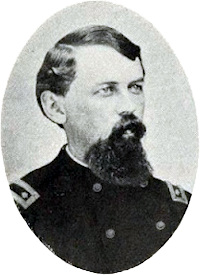
“The 27th Regt officers and men are now restricted to their own ‘lines.'”—Horatio Nelson Taft

Diary of US patent clerk Horatio Nelson Taft.

SUNDAY 4

The heat has been greater than ever today. Went to Church with wife and the boys. Lieut Swan & Lieut Gould took breakfast with with [sic] us & Chaplin Buck took dinner with us. He preached at the Capitol this morning. It was too hot for any of us to go out to church this afternoon. The 27th Regt officers and men are now restricted to their own “lines.” The Col or rather Lieut Col must have a pass from Genl Mansfield.

______

The three diary manuscript volumes, Washington during the Civil War: The Diary of Horatio Nelson Taft, 1861-1865, are available online at The Library of   Congress.

0 comments

K. G. C.

Miscellaneous document sources, News of the Day

Daily Times [Leavenworth, Ks], August 4, 1861

The Louisville Journal publishes a complete exposition of the objects and rites of the Knights of the Golden Circle, taken from their secret documents. Of these documents, the Journal says: “That they are authentic, we give our solemn assurance as an editor and as a man.” It appears that the primary design of the order, is the conquest of a portion of Mexico, and its conversion into a slave-holding monarchy. But the order has also been a valuable auxiliary to the secession movement, and has been the chief instrument in precipitating the people of the South into rebellion and revolution.

A leading feature of this infamous association is the proscription of foreigners and Catholics. This is in perfect harmony with the spirit of aristocracy and intolerance prevalent among the leaders of the chivalry, and shows that they aim at the destruction of every liberal principle in our form of government. Such doctrines will increase the abhorrence in which they are held by the people of the loyal States. For, we rejoice to say, that the patriotic devotion of the foreign-born citizens to their adopted land, as exhibited by their recent brave services in its defence, has swept from the North the last vestige of Know Nothing bigotry and prejudice.

That feature of the K. G. C., which looks to the establishment of a monarchial government in the territory they propose to seize, is also important and suggestive. It is another evidence that the public sentiment of the South is gradually becoming hostile to republican institutions. Thus slavery and political despotism go hand in hand.

0 comments

Female Hession and Her Companion

Miscellaneous document sources, News of the Day

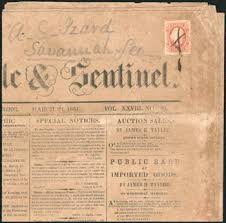
Daily Chronicle & Sentinel [Augusta, GA],
August 4, 1861

Capt. Fremaux and Wm. S. Read, of the 8th Louisiana Regiment, arrived on Wednesday evening, with the first female prisoner, a Mrs. Curtis, who was captured at Fall’s Church on Sunday last, dressed in military clothes. She belongs, it appears, to the 2d N. Y. Regiment. The woman was on horseback at the time.–Richmond Dispatch, 2d.

0 comments

William Howard Russell’s Diary: Intense Heat.—Military adventurers from all parts of the world.

My Diary North and South – William Howard Russell

August 4th.–I had no idea that the sun could be powerful in Washington; even in India the heat is not much more oppressive than it was here to-day. There is this extenuating circumstance, however, that after some hours of such very high temperature, thunder-storms and tornadoes cool the air. I received a message from General McClellan, that he was about to ride along the lines of the army across the river, and would be happy if I accompanied him; but as I had many letters to write for the next mail, I was unwillingly obliged to abandon the chance of seeing the army under such favourable circumstances. There are daily arrivals at Washington of military adventurers from all parts of the world, some of them with many extraordinary certificates and qualifications; but, as Mr. Seward says, “It is best to detain them with the hope of employment on the Northern side, lest some really good man should get among the rebels.” Garibaldians, Hungarians, Poles, officers of Turkish and other contingents, the executory devises and remainders of European revolutions and wars, surround the State department, and infest unsuspecting politicians with illegible testimonials in unknown tongues.

0 comments

Civil War Day-By-Day

Civil War Day-by-Day

August 4, 1861

A Chronological History of the Civil War in America1

  • Skirmish at Point of Rocks, Va.
  • Rebels routed at Athens, Mo.

  1. A Chronological History of the Civil War in America by Richard Swainson Fisher, New York, Johnson and Ward, 1863
0 comments

John B. Jones: “…the war will be a terrible one before they can be convinced that a reduction of the rebellion is not a practicable thing.”

Civil War Day-by-Day

AUGUST 3d.—Conversed with some Yankees to-day who are to be released to-morrow. It appears that when young Lamar lost his horse on the plains of Manassas, the 4th Alabama Regiment had to fall back a few hundred yards, and it was impossible to bear Col. Jones, wounded, from the field, as he was large and unwieldy. When the enemy came up, some half dozen of their men volunteered to convey him to a house in the vicinity. They were permitted to do this, and to remain with him as a guard. Soon after our line advanced, and with such impetuosity as to sweep everything before it. Col. Jones was rescued, and his guard made prisoners. But, for their attention to him, he asked their release, which was granted. They say their curiosity to see a battle-field has been gratified, and they shall be contented to remain at home in safety hereafter. They regarded us as rebels, and believed us divided among ourselves. If this should be true, the rebellion would yet be crushed; but if we were unanimous and continued to fight as we did at Manassas, it would be revolution, and our independence must some day be acknowledged by the United States. But, they say, a great many Northern men remain to be gratified as they had been; and the war will be a terrible one before they can be convinced that a reduction of the rebellion is not a practicable thing.

0 comments

Maps and Information—Rutherford B. Hayes

Diary and Letters of Rutherford Birchard Hayes

August 3, 1861.–Called on James T. Jackson, a Secessionist, for a map of Virginia–one of the Board of Public Works maps. He said he once had one but his brother had sold it to a captain in [the] Seventh Regiment. Called then on William E. Arnold, a lawyer and Union man. He offered every facility for getting information and gave such as he could; also lent us a good map. Hottest day yet. Dr. Joe ailing. Young Jewett doing well, but getting tired and sore.

0 comments

Extracts from the journal of Commander Semmes, C.S. Navy, commanding C.S.S. Sumter

War of the Rebellion: from the Official Records of the Union and Confederate Armies and Navies
Saturday, August 3.—Not so much rain to-day. Finished coaling, although I am not full, to avoid being further cheated in the measure by the scoundrel who is putting it in. Got off and got up the new main yard. Am again ready for sea.
0 comments

“One of our neighbors boys Willie Lowry fell and was badly hurt today. The Father is at sea.”—Horatio Nelson Taft

Diary of US patent clerk Horatio Nelson Taft.

SATURDAY 3

Hot still. Went over to the Navy Yard with Julia and Miss Hartly. Went round the shops and on board the Steamer Pensacola which will be completed in a few days. Nothing but cannon, and shot and shells, fill the workshops. Everything there looks warlike. No troops are quartered in the Yard now, four hundred Marines in the Barraks. One of our neighbors boys Willie Lowry fell and was badly hurt today. The Father is at sea. Was down to the camp with wife.

______

The three diary manuscript volumes, Washington during the Civil War: The Diary of Horatio Nelson Taft, 1861-1865, are available online at The Library of   Congress.

0 comments

Texas Flour

Miscellaneous document sources, News of the Day

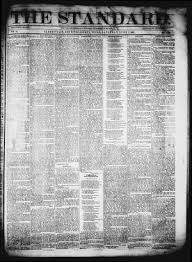
Standard [Clarksville], Tx, August 3, 1861

We are not likely to suffer for good sweet bread. Mr. Williams, from near Bonham, Texas, arrived in this place last Saturday evening, who informs us that he has 17 wagons heavily loaded with flour, which are expected to arrive during the present week. If Mr. W. does not meet with ready sale for the whole of his flour in this town, he designs sending a part of it to Alexandria and New Orleans. Mr. Williams informs us that he has an excellent mill, running four pair of Burr stones by steam power, and further adds, that he can make as good flour as ever made in Missouri or Illinois. Mr. W. was raised in the wheat region of Virginia, and understands the milling business thoroughly. He furthermore informs us that the citizens of his section of country are taking the greatest pains in raising hogs. So our prediction made years since, that we would live to see flour and meat descend Red River instead of being brought up, is being realized.–South Western.

0 comments

William Howard Russell’s Diary: Georgetown.—Intense Heat.

My Diary North and South – William Howard Russell

August 3rd.–McClellan orders regular parades and drills in every regiment, and insists on all orders being given by bugle note. I had a long ride through the camps, and saw some improvement in the look of the men. Coming home by Georgetown, met the Prince driving with M. Mercier, to pay a visit to the President. I am sure that the politicians are not quite well pleased with this arrival, because they do not understand it, and cannot imagine a man would come so far without a purpose. The drunken soldiers now resort to quiet lanes and courts in the suburbs. Georgetown was full of them. It is a much more respectable and old-world looking place than its vulgar, empty, overgrown, mushroom neighbour, Washington. An officer who had fallen in his men to go on duty was walking down the line this evening when his eye rested on the neck of a bottle sticking out of a man’s coat. “Thunder,” quoth he,” James, what have you got there?” “Well, I guess, captain, it’s a drop of real good Bourbon.” “Then let us have a drink,” said the captain; and thereupon proceeded to take a long pull and a strong pull, till the man cried out, “That is not fair, Captain. You won’t leave me a drop.”–a remonstrance which had a proper effect, and the captain marched down his company to the bridge.

It was extremely hot when I returned, late in the evening. I asked the boy for a glass of iced water. “Dere is no ice, massa,” he said. “No ice? What’s the reason of that?” “De Sechessers, massa, block up de river, and touch off deir guns at de ice-boats.” The Confederates on the right bank of the Potomac have now established a close blockade of the river. Lieutenant Wise, of the Navy Department, admitted the fact, but said that the United States gunboats would soon sweep the rebels from the shore.

0 comments

“But for such conduct on the part of thousands, the day would have been lost, and our State would now have been in the possession of our enemies.”–Letters from Elisha Franklin Paxton.

Elisha Franklin Paxton – Letters from camp and field while an officer in the Confederate Army

Manassas, August 3,1861.

I reached here last night after spending a day in Staunton. When I reached there I found the militia of Rockbridge, and some of the officers insisted upon my remaining a day to aid them in raising the necessary number of volunteers (270) to have the others disbanded and sent home. I was very glad, indeed, that it was accomplished and the others permitted to return home and attend to their farms. I found, upon reaching Manassas, that our encampment had been removed eight miles from there, in the direction of Alexandria; and after a walk of some three hours I reached here about nine o’clock at night, somewhat fatigued. I do not know what our future operations are to be; but think it probable that we shall remain here for some time in idleness. I am free to confess that I don’t like the prospect; without any employment or amusement, the time will pass with me very unpleasantly, and such soldiering, if long continued, I fear, will make most of us very worthless and lazy; perhaps send us home at last idle loafers instead of useful and industrious citizens. Such a result I should regard as more disastrous than a dozen battles. In passing along the road from Manassas, the whole country seemed filled with our troops, and I understand that our encampment extends as far as eight miles this side of Alexandria. I think we have troops enough to defend the country against any force which may he brought against us.

Since this much of my letter was written, Lewis has handed me your note of 25th ult. You say you are almost tempted, from my short and far between letters, to think that I do not love you as well as I ought. You are a mean sinner to think so. Just think how hard I fought at Manassas to make you the widow of a dead man or the wife of a live one, and this is all the return my darling wife makes for it. If I was near enough I would hug you to death for such meanness. In truth, Love, I may say that I never closed one of my short notes until my eyes began to smart. Sometimes I did not wish to write. When we were for some time on the eve of a battle I did not wish to write lest you might be alarmed for my safety. Until the last month, when danger seemed so threatening, I think I have written once a week. But, Love, when you doubt my affection, you must look to the past, and if the doubt is not dispelled, I can’t satisfy you, and you must continue in the delusion that the truest and steadiest feeling my heart has ever known–my love for you–has passed away.

I know, Love, you think I exposed myself too much in the battle. But for such conduct on the part of thousands, the day would have been lost, and our State would now have been in the possession of our enemies. When I think of the result, and the terrible doom from which we are saved, I feel that I could have cheerfully yielded up my life, and have left my wife and little ones draped in mourning to have achieved it. Our future course must be the same, if we expect a like result.

0 comments

Civil War Day-By-Day

Civil War Day-by-Day

August 3, 1861

  • Off the coast of Virginia, a Union naval officer ascends in a tethered balloon to look at Confederate-controlled Hampton Roads. It is the first balloon ascent from a ship in naval history

A Chronological History of the Civil War in America1

  • U. S. blockading ?eet threw a few shells into Galveston, Tex.; foreign consuls protest, etc.

  1. A Chronological History of the Civil War in America by Richard Swainson Fisher, New York, Johnson and Ward, 1863
0 comments

Mary Chesnut’s Diary: “One would think there were Yankees enough and to spare for any killing to be done.”

Civil War Day-by-Day

August 2d.–Prince Jerome ¹ has gone to Washington. Now the Yankees so far are as little trained as we are; raw troops are they as yet. Suppose France takes the other side and we have to meet disciplined and armed men, soldiers who understand war, Frenchmen, with all the élan we boast of.

Ransom Calhoun, Willie Preston, and Doctor Nott’s boys are here. These foolish, rash, hare-brained Southern lads have been within an ace of a fight with a Maryland company for their camping grounds. It is much too Irish to be so ready to fight anybody, friend or foe. Men are thrilling with fiery ardor. The red-hot Southern martial spirit is in the air. These young men, however, were all educated abroad. And it is French or German ideas that they are filled with. The Marylanders were as rash and reckless as the others, and had their coat-tails ready for anybody to tread on, Donnybrook Fair fashion. One would think there were Yankees enough and to spare for any killing to be done. It began about picketing their horses. But these quarrelsome young soldiers have lovely manners. They are so sweet-tempered when seen here among us at the Arlington.

______

¹ Jerome Napoleon Bonaparte, a grandson of Napoleon Bonaparte’s brother Jerome and of Elizabeth Patterson of Baltimore. He was a graduate of West Point, but had entered the French Army, where he saw service in the Crimea, Algiers, and Italy, taking part in the battle of Balaklava, the siege of Sebastopol, and the battle of Solferino. He died in Massachusetts in 1893.

0 comments

Rebel War Clerk

Civil War Day-by-Day

AUGUST 2d.—After some brilliant and successful fights, we have a dispatch to-day stating that Gen. Wise has fallen back in Western Virginia, obeying peremptory orders.

0 comments

“We are now in telegraphic communication with the world.”—Rutherford B. Hayes

Diary and Letters of Rutherford Birchard Hayes

WESTON, August 1, 1861.

DEAREST:–Do you remember a year ago today we were riding on the Grand Trunk Railroad from Detroit by Sarnia eastwardly? Jolly times those. If you were here, these would be as pleasant. The water in the river below our camp flows past you in the Ohio; in these low water days, about a month after they leave here.

We are now in telegraphic communication with the world. Dr. Joe receives dispatches about medicines and Colonel Scammon about military matters from Columbus and Cincinnati. We had the two county court clerks before the colonel taking the oath of allegiance to the United States and to the new Government of Virginia. They squirmed a little, but were required to do it or go to Camp Chase.

Colonel Matthews left this noon with five companies–right wing–for Sutton, a place forty-four miles south of this place. We suspect that Wise has left western Virginia. If so, our campaigning here is likely to be pacific and uninteresting.

August 2.–I have been out to report myself at reveille, and not feeling like resuming my nap, am seated on my trunk jotting down these lines to my darling. Colonel Jewett arrived last night from Zanesville. He finds his boy doing well. It is still very uncertain what is to be the result. It is probable that no amputation will be necessary, and there is hope that he may not be more than very slightly crippled, He will be unable to use his foot, however, for perhaps months.

Our news is that Wise has continued his retreat burning the bridges after him. This confirms our suspicions as to his abandoning all west of the mountains. There is, however, a report from the East that General Lee is to be sent out here to look after General Rosecrans, with a considerable force. I do not believe it, but if so, we shall have lively times. Colonel Ammen with the Twenty-fourth is reported in our neighborhood. We shall be glad to be with them again.

Puds, here it is Saturday, the 3d, and my foolishness isn’t off yet and won’t be until Monday. It is so hot and pleasant. I am so lazy and good-natured. Joe says, “I wish Webb was here”; I say, I wish you were all here. We may be ordered to move any hour, and it may be [we] shall be here a week hence. We have got our camp into good order–clean and pretty. Joe was pretty sick last night, but is under a nice shade today, as lazy and comfortable as possible. The effect is curious of this fine mountain air. Everybody complains of heat, but everybody is in a laughing humor. No grumbling reaches me today.

I have called on divers leading lawyers and politicians, generally Union men, and find them agreeable people. The courthouse here is a good one and is used as a hospital for all these regiments. About one hundred sick are there. When Joe gets perfectly well, which I advise him not to do, he will have charge of all of them. We have four or six there.

Very affectionately, your

R.

“Love me?” I have heard nothing from Ohio except an occasional newspaper. Write about Uncle and everybody. Our men sing beautifully tonight.

MRS. HAYES.

_______

Diary

August 2, 1861.–A. M. fired pistol with Captain Zimmerman and P. M. Enfield rifle with Captain Sperry. My pistol shooting rather poor. Rifle shooting at one hundred yards good, at three hundred yards, tolerable. Weather hot. In the evening passed the sentinels to try them, back and forth several times. Found them generally defective; they took instruction kindly and I hope they may do well yet.

0 comments

Extracts from the journal of Commander Semmes, C.S. Navy, commanding C.S.S. Sumter

War of the Rebellion: from the Official Records of the Union and Confederate Armies and Navies
Friday, August 2.—Early morning clear; too soon the clouds gathered and the heavy rains of the season set in, in the interval of the showers the tropical scenery showing out in the most attractive colors. Several ships have departed, leaving only some half dozen in the harbor. The master of a Baltimore brig called on board to learn whether I would capture him. Told him to depart freely, as our declaration of war exempted all Maryland vessels from capture. Received a visit from a couple of English officers in citizen’s dress. The governor has not returned the visit of my lieutenant.
0 comments

“I have been cleaning out my drawers and throwing away unimportant papers and letters.”—Horatio Nelson Taft

Diary of US patent clerk Horatio Nelson Taft.

FRIDAY, AUGUST 2, 1861.

The weather is hot now adays, the M. ranging about 90. I have been at the office part of the day writing letters &c at my old table. Doct King has been packing up his books. I have been cleaning out my drawers and throwing away unimportant papers and letters. Chas heard from Fort Leavinworth today. He wrote to one of the officers enquiring for Frank. He is with Genl Lyons Command near Springfield M.O. Wa[l]ked with wife up to Col Smalls camp, called on our return upon Mr & Miss Reynolds.

______

The three diary manuscript volumes, Washington during the Civil War: The Diary of Horatio Nelson Taft, 1861-1865, are available online at The Library of   Congress.

0 comments

William Howard Russell’s Diary: Visit from Mr. Olmsted

My Diary North and South – William Howard Russell

August 2nd.–Mr. Olmsted visited me, in company with a young gentleman named Ritchie, son-in-law of James Wadsworth, who has been serving as honorary aide-de-camp on M’Dowell’s staff, but is now called to higher functions. They dined at my lodgings, and we talked over Bull Bun again. Mr. Ritchie did not leave Centreville till late in the evening, and slept at Fairfax Court House, where he remained till 8.30 a.m. on the morning of July 22nd, Wadsworth not stirring for two hours later. He said the panic was “horrible, disgusting, sickening,” and spoke in the harshest terms of the officers, to whom he applied a variety of epithets. Prince Napoleon has arrived.

0 comments

Army Life of an Illinois Soldier, Charles Wright Wills.

Civil War Day-by-Day

Cairo, August 2, 1861.

Hot! You don’t know what that word means. I feel that I have always been ignorant of its true meaning till this week, but am posted now, sure. The (supposed-to-be) “never failing cool, delicious breeze” that I have talked about so much, seems to be at “parade rest” now and—I can’t do justice to the subject. The health of the camp is much better now than at any time before, since we have been here. There is not a sick man in our company. My health remains gorgeous. We drill now five hours a day, under a sun that cooks eggs in 13 minutes, but we think we feel the heat no more walking than lying around the quarters.

The seceshers this morning took the packet that has been plying between here and Columbus, and have run her off down to Memphis. I thought that Prentiss stopped her sometime since, but this at last closes all communication between the North and South at this point. Our “ossifers” we think are really scared about an attack here, but you could not make the soldiers believe in the like till they see the fight begin. About a thousand of our men were rushed off to Bird’s Point to-day to work on intrenchments, and won’t they sweat?

My chum heard Colonel Oglesby tell an officer two hours ago that there were 17,000 Rebels within 15 miles of the Point. The scouts reported this body at New Madrid, 40 mile’s down the Mississippi, two days since. Yesterday 12 men from the Pekin company and 12 from our’s with some artillerymen went 30 miles up the Mississippi to collect all the boats we could find on the Missouri shore. We found three large flats tied up to trees along the shore which we confiscated. One of them wasn’t very good so we sunk it. The object was to prevent marauders from visiting Illinois. I had charge of the men from our company.

0 comments

Civil War Day-By-Day

Civil War Day-by-Day

August 2, 1861

A Chronological History of the Civil War in America1

  • War-Tax and Tarif bill passed Congress—500,000 men and $500,000,000 to be raised.
  • Battle of Dug Spring, Mo. (Lyon v. McCulloch.)
  • Fort Fillmore, New Mexico, traitorously surrendered, with 750 men, by Major Lynde.
  • Rebel vessels and stores destroyed in Pocomoke Sound.

  1. A Chronological History of the Civil War in America by Richard Swainson Fisher, New York, Johnson and Ward, 1863
0 comments

Mary Chesnut’s diary: “We stopped to plunder that rich convoy, and somehow, for a day or so, everybody thought the war was over and stopped to rejoice: so it appeared here.”

Civil War Day-by-Day

August 1st.–Mrs. Wigfall, with the “Lone Star” flag in her carriage, called for me. We drove to the fair grounds. Mrs. Davis’s landau, with her spanking bays, rolled along in front of us. The fair grounds are as covered with tents, soldiers, etc., as ever. As one regiment moves off to the army, a fresh one from home comes to be mustered in and take its place.

The President, with his aides, dashed by. My husband was riding with him. The President presented the flag to the Texans. Mr. Chesnut came to us for the flag, and bore it aloft to the President. We seemed to come in for part of the glory. We were too far off to hear the speech, but Jeff Davis is very good at that sort of thing, and we were satisfied that it was well done.

Heavens! how that redoubtable Wigfall did rush those poor Texans about! He maneuvered and marched them until I was weary for their sakes. Poor fellows; it was a hot afternoon in August and the thermometer in the nineties. Mr. Davis uncovered to speak. Wigfall replied with his hat on. Is that military?

At the fair grounds to-day, such music, mustering, and marching, such cheering and flying of flags, such firing of guns and all that sort of thing. A gala day it was, with double-distilled Fourth-of-July feeling. In the midst of it all, a messenger eame to tell Mrs. Wigfall that a telegram had been received, saying her children were safe across the lines in Gordonsville. That was something to thank God for, without any doubt.

These two little girls came from somewhere in Connecticut, with Mrs. Wigfall’s sister–the one who gave me my Bogotsky, the only person in the world, except Susan Rutledge who ever seemed to think I had a soul to save. Now suppose Seward had held Louisa and Fanny as hostages for Louis Wigfall’s good behavior; eh?

Excitement number two: that bold brigadier, the Georgia General Toombs, charging about too recklessly, got thrown. His horse dragged him up to the wheels of our carriage. For a moment it was frightful. Down there among the horses’ hoofs was a face turned up toward us, purple with rage. His foot was still in the stirrup, and he had not let go the bridle. The horse was prancing over him, tearing and plunging; everybody was hemming him in, and they seemed so slow and awkward about it. We felt it an eternity, looking down at him, and expecting him to be killed before our very faces. However, he soon got it all straight, and, though awfully tousled and tumbled, dusty, rumpled, and flushed, with redder face and wilder hair than ever, he rode off gallantly, having to our admiration bravely remounted the recalcitrant charger.

Now if I were to pick out the best abused one, where all catch it so bountifully, I should say Mr. Commissary-General Northrop was the most “cussed” and villified man in the Confederacy. He is held accountable for everything that goes wrong in the army. He may not be efficient, but having been a classmate and crony of Jeff Davis at West Point, points the moral and adorns the tale. I hear that alluded to oftenest of his many crimes. They say Beauregard writes that his army is upon the verge of starvation. Here every man, woman, and child is ready to hang to the first lamp-post anybody of whom that army complains. Every Manassas soldier is a hero dear to our patriotic hearts. Put up with any neglect of the heroes of the 21st July–never!

And now they say we did not move on right after the flying foe because we had no provisions, no wagons, no ammunition, etc. Rain, mud, and Northrop. Where were the enemy’s supplies that we bragged so of bagging? Echo answers where? Where there is a will there is a way. We stopped to plunder that rich convoy, and somehow, for a day or so, everybody thought the war was over and stopped to rejoice: so it appeared here. All this was our dinnertable talk to-day. Mr. Mason dined with us and Mr. Barnwell sits by me always. The latter reproved me sharply, but Mr. Mason laughed at “this headlong, unreasonable woman’s harangue and female tactics and their war-ways.” A freshet in the autumn does not compensate for a drought in the spring. Time and tide wait for no man, and there was a tide in our affairs which might have led to Washington, and we did not take it and lost our fortune this round. Things which nobody could deny.

McClellan virtually supersedes the Titan Scott. Physically General Scott is the largest man I ever saw. Mrs. Scott said, “nobody but his wife could ever know how little he was.” And yet they say, old Winfield Scott could have organized an army for them if they had had patience. They would not give him time.
0 comments

Rebel War Clerk

Civil War Day-by-Day

AUGUST 1st.—Col. Bledsoe again threatens to resign, and again declares he will get the President to appoint me to his place. It would not suit me.

0 comments

Extracts from the journal of Commander Semmes, C.S. Navy, commanding C.S.S. Sumter

War of the Rebellion: from the Official Records of the Union and Confederate Armies and Navies
Thursday, August 1.—Rain, rain, rain, with occasional intervals of sunshine. Receiving coal very slowly. The governor, as appears from the Gazette newspaper, took the opinion of the law officers of the Crown as to the legality of my being permitted to coal. A long editorial upon our arrival, and hints thrown out that we may be a “privateer.”
0 comments

“But it is also said that General Lee is coming with a large force…”—Rutherford B. Hayes

Diary and Letters of Rutherford Birchard Hayes

August 1, [1861].–Another hot, moist day; deep fogs in the night. Two gentlemen, suspected of secession proclivities, clerks of the courts, were required to take the oath of allegiance to the new State Government of Virginia and to the United States.

They say it is not always so rainy here; they lay it to the presence of our troops.

Colonel Matthews left with the five right-wing companies for Bulltown and Sutton at 1 P. M. today. I felt a little melancholy to see the fine fellows leaving us.

A year ago today was with Lucy travelling from Detroit on the Grand Trunk Railroad eastwardly for pleasure. A telegraph line is completed to this point connecting us with all the world.

Governor Wise, it is said, has continued his retreat up the Kanawha towards eastern Virginia. It is said that he has left Gauley River and burnt the bridge. If so western Virginia is now in our undisputed possession. But it is also said that General Lee is coming with a large force to look after General Rosecrans. I suspect that all the movements of the Southern army look to operations about Washington and Baltimore, and that all movements of troops in other directions are merely feints.

0 comments