Civil War Day-By-Day

Civil War Day-by-Day

August 7, 1861

  • John Bankhead Magruder burns the village of Hampton, near Fort Monroe. General Benjamin Butler had been planning to use it to house “contraband.” (Butler’s word for slaves)
  • The Maryland legislature adjourns without seceding, but votes to reconvene in September

A Chronological History of the Civil War in America1

  • Hampton, Va., burned by the rebels.
  • C. S. privateer “York” burned by the gun-boat “ Union.”

  1. A Chronological History of the Civil War in America by Richard Swainson Fisher, New York, Johnson and Ward, 1863
0 comments

“…held a sort of police court.”—Rutherford B. Hayes

Diary and Letters of Rutherford Birchard Hayes

August 6.–Warm, beautiful weather. A busy day, settling disputes between citizens and their quarrels. I held a sort of police court. Dr. Joe also decided cases. The parties under arrest, we hear their stories and discharge or put on bread and water as the case seems to require. All local tribunals suppressed or discontinued. We also are full of courier and express duty. Colonel Withers, a Union citizen of the old-fashioned Intelligencer reading sort, called. He is a true patriot. We sent out a courier to meet Colonel Ammen with the Twenty-fourth, preparatory to greeting and escorting him. But he isn’t coming yet. Colonel Scammon is policing and disciplining in a good way. The colonel improves. As soon as taps sounds he has the lights put out and all talk suppressed.

When we came to Weston, Colonel Lytle was here with four companies. The Seventeenth returning home (three-months men) passed through here about the second or third. The Nineteenth about the first. Colonel E. B. Tyler with the Seventh is beyond Sutton. Colonel Bosley with the Sixth is at Beverly.

_______

WESTON, VIRGINIA, Tuesday P. M., August 6, 1861.

DEAR MOTHER:–I have just read your letter, with Brother William’s of the 2nd,–the first I have had from anybody since we came to Virginia. I am sitting in my tent looking out on the same beautiful scene I have so often referred to. It is a bright and very warm afternoon, but a clear, healthful mountain air which it is a happiness to breathe. . . .

My horse shows a little weakness in the fore shoulders, but as he can probably work well in an ambulance, I can exchange him for a good government horse, if he gets worse. We have plenty of business. A good deal of it is a sort of law business. As all civil authority is at an end, it is our duty to keep the peace and do justice between the citizens, who, in these irregular times, are perhaps a little more pugnacious than usual. Dr. Joe and I, under direction of the colonel, held courts on divers cases all the forenoon. It was rather amusing, and I think we dispensed very exact justice. As there is no appeal, a case decided is for good and all.

I am so glad you and Uncle are both getting well. If Uncle wishes to travel, and we remain here, he couldn’t please himself better than by a trip this way. He would enjoy a few days very much in our camp, or at the hotel in the village.

Young Jewett leaves with his father for Zanesville tonight. I hope he will stand the trip well. I will hand them this letter to mail when they get out of these woods. Send me sometime a neat little New Testament. I have nothing of the sort. I have clothes enough. I am cut short by business. Good-bye.

Affectionately,

R. B. HAYES.

MRS. SOPHIA HAYES.

0 comments

Extracts from the journal of Commander Semmes, C.S. Navy, commanding C.S.S. Sumter

War of the Rebellion: from the Official Records of the Union and Confederate Armies and Navies
Tuesday, August 6.—Weather very fine, with light breezes from about E. N. E., making good way over the smooth sea. At about 10 a.m. passed a brigantine on the weather beam , distant some 12 or 14 miles. As I was anxious to make my run and had no fuel to spare upon chases and the delay incident to capture, I permitted this lonely wayfarer to pursue his course unmolested, for which some Yankee may no doubt thank his stars and my circumstances, not my forbearance. No current experienced. Latitude, 9°14′; longitude, 59°10′.
0 comments

Mary Chesnut: 1,100 men sick in Charlottsville; many with typhoid; 8 dead in the hospital there.

Civil War Day-by-Day

Tuesday.–The North requires 600,000 men to invade us. Truly we are a formidable power! The Herald says it is useless to move with a man less than that. England has made it all up with them, or rather, she will not break with them. Jerome Napoleon is in Washington and not our friend.

Doctor Gibbes is a bird of ill omen. To-day he tells me eight of our men have died at the Charlottesville Hospital. It seems sickness is more redoubtable in an army than the enemy’s guns. There are 1,100 there hors de combat, and typhoid fever is with them. They want money, clothes, and nurses. So, as I am writing, right and left the letters fly, calling for help from the sister societies at home. Good and patriotic women at home are easily stirred to their work.

Mary Hammy has many strings to her bow–a fiancé in the army, and Doctor Berrien in town. To-day she drove out with Major Smith and Colonel Hood. Yesterday, Custis Lee was here. She is a prudent little puss and needs no good advice, if I were one to give it.

Lawrence does all our shopping. All his master’s money has been in his hands until now. I thought it injudicious when gold is at such a premium to leave it lying loose in the tray of a trunk. So I have sewed it up in a belt, which I can wear upon an emergency. The cloth is wadded and my diamonds are there, too. It has strong strings, and can be tied under my hoops about my waist if the worst comes to the worst, as the saying is. Lawrence wears the same bronze mask. No sign of anything he may feel or think of my latest fancy. Only, I know he asks for twice as much money now when he goes to buy things.

0 comments

Rebel War Clerk

Civil War Day-by-Day

AUGUST 6th.—Custis arrived and entered upon the discharge of his duties.

0 comments

“The Lincoln boys were both up here after mine by 9 o’clock, they make themselves quite at home in the house.”—Horatio Nelson Taft

Diary of US patent clerk Horatio Nelson Taft.

TUESDAY 6

M. at 92. at 10. this morning with but little air stirring. The Lincoln boys were both up here after mine by 9 o’clock, they make themselves quite at home in the house. Packed up my books at the Pat office today, shall try to get out some Patents on my own ac[coun]t. Saw the Comr again, cannot move him yet. He showed me the act current [?] for July, deficit $8000. Walked down to the Camp with Julia, saw the officers, returned about 9 o’clock.

______

The three diary manuscript volumes, Washington during the Civil War: The Diary of Horatio Nelson Taft, 1861-1865, are available online at The Library of   Congress.

0 comments

1000 Colored Men Wanted

Civil War Day-by-Day

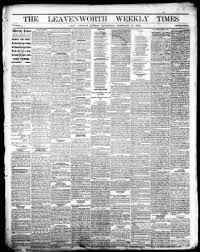
August 6, 1862, Daily Times (Leavenworth, Kansas)

War for the Union!
and for
Freedom for All.
1000 Colored Men Wanted
for the
1st K. R. of the Liberating Army.

                      All able bodied colored men, between the age of eighteen and forty-five, can now have an opportunity of voluntarily enrolling their names in this regiment.
Ten dollars per month will be paid, good quarters, rations and clothing provided.   Apply at No. 17 ½ Shawnee street.
Leavenworth,   August 5th, 1862.
Etham Earle,
1st K. R. C. M.

0 comments

The Letters of Samuel Ryan Curtis

The Letters of Samuel Ryan Curtis

St Louis August 6. 1861

My dear wife & daughters

I have a little more leasure than I ought to have in these times of troubles; but not being here long enough to learn the ropes I can find a little more time to write you. I have been busy writing and telegraphing to get troops forward, as this seems to be the main business of Genl Fremont at present. I see however that both our Keokuk Regiments have gone out to Athens where a fight took place yesterday. I hope Green will now be Satisfied and I trust his army will go to their homes and behave themselves or go off to hunt Claib Jackson.1 We want all the Iowa troops down here and must get the Home guards so well armed and ready that they can take care of the rebels in North Missouri.

The success at Athens2 will help to strengthen the union men at the right time and place. I want to hear the particulars. Hope our men took the cannon from the rebils, but the Telegraph does not say any thing about the matter.

I feel great anxiety about Geni Lyons command. Pillow, Haris, Hardie and McCullough are all according to accounts, pressing the south part of this state and we have very little force to check them with. General Fremont is moving Heaven and Earth to get troops so as to repel them but we are evidently behind the times. A few days of doubt and danger evidently exists in Southern Missouri. Many think this city is to be taken, but I cannot bring myself to the belief that Pillow and Hardie will venture so far North.

There are evidently, however, great numbers of Secessionists in this city, and in the event of Pillows success there may be trouble here.

I shall evidently be here a few days. Have a nice room on 4th Street with little back room for William who busys himself taking care of my clothes &c &c If it were not so very hot I could wish indeed you were here with me, all of you. I see however none of our old friends that I cared most for. The Aristocracy here are very generally secessionists and keep very shy

General Fremont is so busy he can hardly find time to speak even to his Generals but seems very cordial when we do meet.

Keep me well informed of all of yourselves as that is what I most desire to know. The Athens matter will no doubt give occasion to much talk and the Tableau party too that will no doubt be subject of interest. Telegraphed Harry today about troops

Affectionately yours
S.R.Curtis


1. Claiborne Fox Jackson, Governor of Missouri, 1860-1861, was a compromise, pro-slavery, advocate. He was frustrated at the outbreak of war in the seizure of government posts in St. Louis by Lyons and F. P. Blair, Jr.

2. The battle of Athens, listed officially as a skirmish and of which no reports were filed, took place near that town Aug. 5, 1861. Less than 600 Union men were reportedly attacked by between 1400 and 1500 of the opposing forces.

0 comments

William Howard Russell’s Diary: Prince Napoleon.—Mr. Brekinridge.

My Diary North and South – William Howard Russell

August 6th.–Prince Napoleon, anxious to visit the battle-field at Bull Run, has, to Mr. Seward’s discomfiture, applied for passes, and arrangements are being made to escort him as far as the Confederate lines. This is a recognition of the Confederates, as a belligerent power, which is by no means agreeable to the authorities. I drove down to the Senate, where the proceedings were very uninteresting, although Congress was on the eve of adjournment, and returning visited Mr. Seward, Mr. Bates, Mr. Cameron, Mr. Blair, and left cards for Mr. Brekinridge. The old woman who opened the door at the house where the latter lodged said, “Massa Brekinridge pack up all his boxes; I s’pose he not cum back here again.”

0 comments

Civil War Day-By-Day

Civil War Day-by-Day

August 6, 1861

  • First Confiscation Act or The Confiscation Act of 1861 allows federals to seize property used in the insurrection, essentially freeing slaves forced to participate in the Confederate war effort.
  • Second Session of the Second Wheeling Convention is called to order
  • Lt. Bull Nelson of the U. S. Navy is ordered to build a camp where Kentucky residents can train for service in the Kentucky militia. Nelson names the camp for the owner of the property in Garrard County, Captain Dick Robinson

A Chronological History of the Civil War in America1

  • U. S. Congress in extra session adjourned sine die.

  1. A Chronological History of the Civil War in America by Richard Swainson Fisher, New York, Johnson and Ward, 1863
0 comments

Shooting, Rumors of Wise—Rutherford B. Hayes

Diary and Letters of Rutherford Birchard Hayes

August 5.–Cloudy and showery and sunny at intervals this Monday morning. Went out shooting pistol with Adjutant C. W. Fisher. No good shooting by either. I did the worst, pistol dirty –cleaned it.–More couriers, more rumors of Wise down towards Greenbrier County.

0 comments

Extracts from the journal of Commander Semmes, C.S. Navy, commanding C.S.S. Sumter

War of the Rebellion: from the Official Records of the Union and Confederate Armies and Navies
Monday, August 5.—Weather clear and fine. At 11 a.m. I was visited by Captain Hillyar, of the Cadmus, who brought me a New York Express of the 12th July, and made himself very agreeable. The war appeared a very extraordinary affair to him, and he could not suppose that it would continue long. He rather thought the supplying us with coal was touching upon the contraband, but this, he said, was a question for the law officers of the Crown, and might be decided differently in different places. I complained to him of the injustice of the neutral rule excluding us from bringing in our prizes, and he acknowledged that it did work unequally as I explained it, and ended by asking why I did not sell prizes in the ports of the [Spanish] Main, these fellows not being very particular. At 1 p.m. we got up steam and went to sea, passing out of the Eastern or Mona [Monos] Island Passage [Gulf of Paria], very narrow, about the third of a mile, with a rock standing off the northeast end of Mona [Monos]. Running along the very picturesque coast during the afternoon, many huts, but little or no cultivation being visible on the mountain sides. Passed out of the strait between Trinidad and Tobago at 10:30 p.m. and entered upon the broad South Atlantic.
0 comments

“In the meantime we seem to be resting on our oars, debating in Congress, while the enterprising Yankees are quadrupling their army at their leisure.”—Mary Chesnut’s diary.

Civil War Day-by-Day

August 5th.–A heavy, heavy heart. Another missive from Jordan, querulous and fault-finding; things are all wrong–Beauregard’s Jordan had been crossed, not the stream “in Canaan’s fair and happy land, where our possessions lie.” They seem to feel that the war is over here, except the President and Mr. Barnwell; above all that foreboding friend of mine, Captain Ingraham. He thinks it hardly begun.

Another outburst from Jordan. Beauregard is not seconded properly. Hélas! To think that any mortal general (even though he had sprung up in a month or so from captain of artillery to general) could be so puffed up with vanity, so blinded by any false idea of his own consequence as to write, to intimate that man, or men, would sacrifice their country, injure themselves, ruin their families, to spite the aforesaid general! Conceit and self-assertion can never reach a higher point than that. And yet they give you to understand Mr. Davis does not like Beauregard. In point of fact they fancy he is jealous of him, and rather than Beauregard shall have a showing the President (who would be hanged at least if things go wrong) will cripple the army to spite Beauregard. Mr. Mallory says, “How we could laugh, but you see it is no laughing matter to have our fate in the hands of such self-sufficient, vain, army idiots.” So the amenities of life are spreading.

In the meantime we seem to be resting on our oars, debating in Congress, while the enterprising Yankees are quadrupling their army at their leisure. Every day some of our regiments march away from here. The town is crowded with soldiers. These new ones are fairly running in; fearing the war will be over before they get a sight of the fun. Every man from every little precinct wants a place in the picture.

0 comments

“He thinks he made a mistake in removing me but cannot retract just yet on account of others.”—Horatio Nelson Taft

Diary of US patent clerk Horatio Nelson Taft.

MONDAY, AUGUST 5, 1861.

Weather continues extremely hot. M. at 92 in the middle of the day. Surgeon Barnes took breakfast with us. He is attending the Lowry boy who fell (our neighbor). The boy is doing extremely well. I was at the Pat office awhile today, saw and talked with the Comr. He thinks he made a mistake in removing me but cannot retract just yet on account of others. Spent the evening at the quarters of Capt Adams, “Camp Anderson.”

______

The three diary manuscript volumes, Washington during the Civil War: The Diary of Horatio Nelson Taft, 1861-1865, are available online at The Library of   Congress.

0 comments

Rebel War Clerk

Civil War Day-by-Day

AUGUST 5th.—Col. Bledsoe has a job directly from the President: which is to adapt the volume of U. S. Army Regulations to the service of the Confederate States. It is only to strike out U. S. and insert C. S., and yet the colonel groans over it.

0 comments

The Letters of Samuel Ryan Curtis

The Letters of Samuel Ryan Curtis

St Louis Mo. August 5. 1861

My dear wife

I arrived here some time last night, and had a very comfortable rest on a good large bed in the Ladies Cabin till 6 ½ Oclock. On opening the mornings papers, I found General Fremont1 had returned to this city yesterday: so I was fortunate in being here, just right to meet him. I called at ½ past 7 and found him at Mrs. Brand’s house, a large new residence of hers on Cheandean Avenue. The General said he was glad to see me and told me all his difficulties. Besides the general fuss throughout Northern Missouri he is threatened with three armies in the South. Pillow is near Bird’s Point, Hardie is near Pilot Knob and McCulIough still further West.2 As a further vexation, he has but few troops, many of them without arms and no arms to give those who are being mustered into the service. He says they are diverting towards Washington all the troops and arms that he had coming this way. The General seemed excited and perplexed, and I confess things look a little squally.

He directed me to remain here in order to aid in procuring further organization and arms. I have therefore taken rooms here at the Everett House, on 4th Street, where I can have convenient intercourse with the Commanding General and arrange for more active duty. He thinks Birds Point is now safe enough but in order to act offensively against Pillow and others, he must have more force and will try to secure it by arming Home guards and drawing off the mustered Regiments. He told me when I met him, he had just ordered down the two regiments at Keokuk and the Cavelry regiment forming at Burlington.

I know their [illegible] ungainly appearance, and really feel sorry they have to come in such an unprepared condition. But we must try to get equipment and fix them up as soon as possible. While I am everywhere trying make excuses for our Government I confess it is humiliating to see how destitute we now are when the enemy is at our very doors.

William3 has a room adjoining mine. The weather is still very hot but probably no worse than you have it at Keokuk.

I hope you are making yourselves as comfortable as possible. I am trying to do so. I hope Sadie is relieved of her lingering head ache. If I stay here long I shall want some of you to come down and spend a few days with me. I have not had time to call on Henry yet. Hope to do so soon. William is well and trying to make himself useful. Kiss our dear daughters for Pa and give my love to I am

Affectionately yours
Saml R. Curtis

What I write about our troops and the enemy must not be published

S.R.C.


1. John C. Fremont, explorer, political figure, and soldier, earned early fame as an explorer and as a politician in the Republican race for President in 1856. Appointed maj. gen. in command of the Dept. of the West, he arrived at his post July 25, 1861, and held the position about 100 days. Much criticism arose over his administration. See Nicolay & Hay, Abraham Lincoln, 4, 411-439.

2. Gideon Johnson Pillow, brig. gen. vols, Mexican War, raised to maj. gen. May 13. 1847, served the C. S. A. as brig. gen. 1861-1865; William J. Hardee, U. S. Military Academy, 1838, held the rank of It. coL in the regular cavalry at outbreak of war, resigned commission Jan. 31. 1861, and served as a It. gen. C. S. A. from 1861-1865; Benjamin McCullough, veteran of the Mexican War, with rank of maj. gen., served the C. S. A. as brig. gen until killed in the battle of Pea Ridge, March, 1862.

3. A son of Brig. Gen. Curtis

0 comments

“The men feel that they were wronged, and are discontented; officers feel that they were insulted, and have resigned.”—War Letters of William Thompson Lusk.

War Letters of William Thompson Lusk.

Aug. 5th, 1861.

My dear Mother:

Living now quietly without excitement, the events of two weeks ago have become like a dream. Our camp is beautifully situated on Meridian Hill in the suburbs of Washington, and overlooks an enchanting prospect of the city, and the green banks of the Potomac. The air is fresh and healthy, and sickness which has been very prevalent among the men, is now breaking up, and a better appearance is beginning to be seen in the camp. Still the shock we received in the last battle was very great. I have written how great our loss was, and that the same was most heavy among our officers. Fifteen of them, six Captains and nine Lieutenants, nearly half of the entire number, were lost to us that day. On our return to Fort Corcoran after the battle, having walked over thirty miles from the battlefield, having been thirty-six hours without food or sleep, consequently exhausted from fatigue, hunger, and want of rest, we hoped to be allowed to throw ourselves anywhere, and to get a mouthful of anything to eat. The rain poured in torrents and we were soaked to our skins. There was not a cracker to be had at the quarters; there was not a tent to shelter us. We crawled into an old barn. Sherman, the commander of our brigade, ordered us to come out and stand in the rain. Many of the men were desperate. They became clamorous for food. Sherman sneered at them for such unsoldierly conduct. They begged for some place to rest. He bade them sleep on the ground. They had no blankets, many not even a jacket, and all were shivering in the wet. The soil was oozy with water, and deep puddles lay everywhere. The men became querulous. Sherman grew angry, called them a pack of New York loafers and thieves.

Oh ye Patriots, was not this a spectacle! Afterward Sherman visited the camp with President Lincoln. The men had grown sullen. As he drove by, they besieged his carriage, hooted him, and reminded him who it was that first basely deserted us on the battlefield, turning his horse’s head from us, and leaving us to our fate.

President Lincoln ordered his coachman to drive away.

Affairs were now interesting. Lieut.-Col. Elliott visited the Secretary of War – denounced the conduct of Sherman in the plainest language. Everything served to corroborate his testimony. The Secretary of War then removed us to our present encampment, and placed us in the Brigade of Gen’l Mansfield. We are now doing well, but the past is not forgotten. The men feel that they were wronged, and are discontented; officers feel that they were insulted, and have resigned. Those of us who remain by the Regiment are a mere handful. Under these circumstances, and because the men fought well at Manassas, the Government has concluded to send us to some one of the forts near New-York for a short time, there to recruit, and restore the organization of the Regiment. As it is now, whole companies are without officers. [continue reading…]

0 comments

William Howard Russell’s Diary: McClellan and the Newspapers.—Confederate privateer Sumter.

My Diary North and South – William Howard Russell

August 5th. – The roads from the station are crowded with troops, coming from the North as fast as the railway can carry them. It is evident, as the war fever spreads, that such politicians as Mr. Crittenden, who resist the extreme violence of the Republican party, will be stricken down. The Confiscation Bill, for the emancipation of slaves and the absorption of property belonging to rebels, has, indeed, been boldly resisted in the House of Representatives; but it passed with some trifling amendments. The journals are still busy with the affair of Bull Run, and each seems anxious to eclipse the other in the absurdity of its statements. A Philadelphia journal, for instance, states to-day that the real cause of the disaster was not a desire to retreat, but a mania to advance. In its own words, “the only drawback was the impetuous feeling to go a-head and fight.” Because one officer is accused of drunkenness a great movement is on foot to prevent the army getting any drink at all.

General McClellan invited the newspaper correspondents in Washington to meet him to-day, and with their assent drew up a treaty of peace and amity, which is a curiosity in its way. In the first place, the editors are to abstain from printing anything which can give aid or comfort to the enemy, and their correspondents are to observe equal caution; in return for which complaisance, Government is to be asked to give the press opportunities for obtaining and transmitting intelligence suitable for publication, particularly touching engagements with the enemy. The Confederate privateer Sumter has forced the blockade at New Orleans, and has already been heard of destroying a number of Union vessels.

0 comments

“I wish you, then, on the receipt of this to go to some one in authority and get a commission for me, if you can;”–Adams Family Letters, Henry Adams, private secretary to the US Minister to the UK, to his brother, Charles Francis Adams.

Civil War Day-by-Day

London, August 5, 1861 We received yesterday the news of our defeat at Bull’s Run, and today your letter and John’s with some papers have arrived. Though I do not see that this check necessarily involves all the serious consequences that you draw from it, I am still sufficiently impressed by it to decide me to take a step that I have for some time thought of. If you and John are detained from taking part in the war, the same rule does not apply to me. I am free to act as I please, and from the taste I have had of London life, I see no reason for my sacrificing four years to it. . . .

I wish you, then, on the receipt of this to go to some one in authority and get a commission for me, if you can; no matter what, second, third Lieutenant or Ensign, if you can do no better. They ought to be willing to let me have as much as that. If you can induce the Governor to promise this, see if you can find some fellow I know for a Captain. They say Horace Sargent is going home immediately to raise a regiment. I would serve under him and perhaps other Boston fellows would be mustered under him so as to make it pleasant. If you decide ultimately to go in as Captain, I could serve under you. At any rate I wish to have a commission, and if you succeed in arranging it, let me know at once, by telegraph, if you can. I can be on the way home in three weeks from this time, almost. A day’s notice is ample for me here, and as I know nothing of war or drill and don’t care to learn a drill here that I might have to unlearn, it will be necessary for me to begin at once. I don’t know that I should n’t start tomorrow and march in on you with this letter, if it were n’t that I don’t like to be precipitate, and that I want to watch things here for a while. I presume there will be restlessness here, though I still believe that England will prove herself more our friend than we suppose. . . .

I wish you to understand that I am in earnest and that if you can get me the place and don’t, I shall try to get it by other means. As for reasons for it, your own arguments apply with double force to me. Until now I have thought it my duty to do what I have done. But as the reasons why I should stay decrease, the reasons for going into the army increase, and this last battle turns the scale. It makes no difference whether you go or not. I am the youngest and the most independent of all others, and I claim the right to go as younger son, if on no other grounds.

You need not apprehend difficulty on this side. . . . If [your reply] is favorable I shall leave here in the first steamer, and the first positive knowledge they will have of it here, will be simultaneous with my departure. Papa will not interfere. He never does, in cases where his sons choose to act on their own responsibility, whatever he may think. Mamma has been preaching the doctrine too long to complain if it hits her at last.

We are going on as usual here except that we have got into our new house which is a great improvement. I have two large rooms on the third story which I have been making comfortable. Braggiotti is here; dines with us tomorrow.

0 comments

Joe offered the Colonelcy.—Woosey family letters; Eliza to Joseph Howland in camp.

Woolsey family letters during the War for the Union

Washington, August –.

Hurrah for you, to be offered the Colonelcy of the regiment! I am glad, however, that you have no wish to take it. I shrink from any such responsibility for you.

Dr. Bacon came in last evening and we had a nice pleasant chat. His regiment, the 2nd Connecticut, goes home to-day to be mustered out. We saw them march down yesterday to give up their arms and were struck with their fine manly appearance and precision in marching. Dr. Bacon is anxious to come back to the army and hopes that one regiment at least may be formed of the three just returning, in which he may serve. He has left one of his patients at the new Columbian College Hospital and commended him to our care. We shall see him this afternoon and take him jelly, slippers, etc. The slippers are from a large boxful which Lenox Hodge has sent us, our commission. They are scarce at the hospitals and in great demand. Cousin M. Hodge writes of her happiness at hearing of your safety and welfare. Columbian College Hospital is just opened and only half organized, but already crowded. It will be nice, but now they have few comforts or conveniences, scarcely any sheets, no water, etc. One of G’s nurse friends is there working like a slave, as are the other five women nurses. We spent the morning there helping them, reading to the men, writing letters for them, etc.

0 comments

Civil War Day-By-Day

Civil War Day-by-Day

August 5, 1861

  • In order to help pay for the war effort, the United States government levies the first income tax as part of the Revenue Act of 1861 (3% of all incomes over US$800; rescinded in 1872).
  • The United States Army abolishes flogging.
  • Abraham Lincoln approves a wide variety of bills passed during a special session of Congress including a new issue of bonds, tariff increase and the first direct income and real estate tax.
0 comments

Rebel War Clerk

Civil War Day-by-Day

AUGUST 4th.—To-day Mr. Walker inquired where my son Custis was. I told him he was with his mother at Newbern, N. C. He authorized me to telegraph him to return, and he should be appointed to a clerkship.

0 comments

Hospital, injuries, prisoners, telegraph, news—Rutherford B. Hayes

Diary and Letters of Rutherford Birchard Hayes

August 4. Sunday.–Visited the hospital. It is airy and comfortable–the court-house of the county, a large good building. The judge’s bench was full of invalids, convalescent, busily writing letters to friends at home. Within the bar and on the benches provided for the public were laid straw bedticks in some confusion, but comfortable. A side room contained the very sick, seven or eight in number. The total inmates about seventy-five. Most of them are able to walk about and are improving; very few are likely to die there. One poor fellow, uncomplaining and serene, with a good American face, is a German tailor, Fifth Street, Cincinnati; speaks little English, was reading a history of the Reformation in German. I inquired his difficulty. He had been shot by the accidental discharge of a musket falling from a stack; a ball and several buckshot pierced his body. He will recover probably. My sympathies were touched for a handsome young Canadian, Scotch or English. He had measles and caught cold. A hacking cough was perhaps taking his life. Nobody from the village calls to see them!

A hot day but some breeze. We hear that Colonel Matthews with the right wing was, on the morning of the third day from here, near Bulltown, twenty-seven miles distant. Governor Wise is somewhere near Lewisburg in Greenbrier County. Cox [General J. D.] is in no condition to engage him and I hope will not do it. I rather hope we shall raise a large force and push on towards Lynchburg and east Tennessee. Jewettt is doing well.

_______

WESTON, VIRGINIA, August 4, 1861.

DEAR MOTHER:–I write often now, as we soon pass out of reach of mails. We hear the news by telegraph here now from all the home towns, but mails are uncertain and irregular. We are very healthy, but the weather is hotter than any I have known in a great while. Our wounded lieutenant, Jewett, is doing well. His father is here nursing him. The fine large hospital for all this region of country, having one hundred patients belonging to different regiments, is in charge of Dr. Joe. It is the courthouse. The people here do not find us much of a nuisance. Of course, in some respects we are so, but all things considered, the best of the people like to see us. I mean to go to church this pleasant Sunday. My only clerical acquaintance here is an intelligent Catholic priest who called to see Colonel Scammon. I have been cross-examining a couple of prisoners–one a Methodist preacher–both fair sort of men, and I hope not guilty of any improper acts. Good-bye.

Affectionately,

R. B. HAYES.

MRS. SOPHIA HAYES.

_______

NEAR WESTON, VIRGINIA, August 4, 1861.

DEAR LAURA:–As we ride about this exceedingly pretty country and through this reasonably decent village, I am reminded of young ladies in Ohio by occasionally meeting a damsel wearing a stars-and-stripes apron, or by seeing one who turns up her nose at the said stars, etc.

We are leading camp life again–watching Secessionists, studying geography, sending and receiving scouts and couriers and sich like. Colonel Matthews has gone with the five companies of the right wing forty-four miles further up into the hills. We shall follow him if there are any hostile signs up there, and he will return to us if such sign fail him.

You and Jeanie Ahave been of use. The bandages are used in dressing the shocking wound of young Jewett of Zanesville– a lieutenant, handsome, gallant, and intelligent. Just the person you would wish to serve in this way. Dr. Joe hopes he will not be crippled. At first it seemed that he must lose his foot; but your bandages or something else are bringing him up. It will be perhaps months before he can walk.

The court-house here (about like yours) is a hospital for the sick and wounded of all the regiments hereabouts. It would be a glorious thing if some Florence Nightingales would come here. They could be immensely useful, and at the same time live pleasantly in a pretty mountain village, safe as a bug in a rug. Won’t you come? It is easy getting here and cheap staying. Too hot under canvas to write much. Love to all.

Your uncle,

R.

MISS LAURA PLATT,

Columbus.

0 comments

Extracts from the journal of Commander Semmes, C.S. Navy, commanding C.S.S. Sumter

War of the Rebellion: from the Official Records of the Union and Confederate Armies and Navies
Sunday, August 4.—Morning calm and clear. The chimes of the church bells from the shore fall pleasantly and suggestively on the ear. A U.S. schooner came in from some point up the bay. At 10:30 gave the order to get up steam, but the paymaster reporting some of his vouchers not in form, the order was countermanded and he was permitted to go on shore to rectify the mistake; and the English steam frigate Cadmus coming into the bay a short time after, I gave up the idea of going to sea to-day. Sent an officer to call on the captain of the Cadmus. The visit was returned soon after by a lieutenant from that vessel, who, after saying that he came to return my visit, said that his captain had directed him to say to me that as this ship was the first vessel of the Confederate States he had fallen in with, he would be glad if I would show him my commission, to which I replied I could have no objection, but that the courtesy of the case required that he should first show me his commission. This he immediately did, whereupon I showed him mine. In strictness, perhaps, the captain (Hillyar) should have sent his own commission on board instead of that of his lieutenant, but I did not wish to appear captious, and as the courtesy of the case was satisfied, this was all that was necessary.
0 comments

“The 27th Regt officers and men are now restricted to their own ‘lines.'”—Horatio Nelson Taft

Diary of US patent clerk Horatio Nelson Taft.

SUNDAY 4

The heat has been greater than ever today. Went to Church with wife and the boys. Lieut Swan & Lieut Gould took breakfast with with [sic] us & Chaplin Buck took dinner with us. He preached at the Capitol this morning. It was too hot for any of us to go out to church this afternoon. The 27th Regt officers and men are now restricted to their own “lines.” The Col or rather Lieut Col must have a pass from Genl Mansfield.

______

The three diary manuscript volumes, Washington during the Civil War: The Diary of Horatio Nelson Taft, 1861-1865, are available online at The Library of   Congress.

0 comments