Wednesday, August 14.—The Twenty-eighth Pennsylvania, commanded by Col. Geary, occupied the town1. We established our camp about five o’clock, P. M., close to that of the Twenty-eighth Pennsylvania Volunteers.
- Berlin, Virginia, now West Virginia
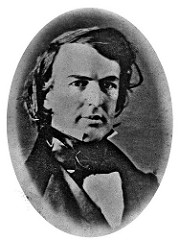
AUGUST 14th.—Zollicoffer has been appointed a brigadier-general; and although not a military man by education, I think he will make a good officer.

“Boston rockers” were an untold comfort to the men able to sit up. The first of the many sent to us were from Daniel Gilman’s father and placed as follows:—
Alexandria Hospital,
Aug. 14, 1861.
My dear Miss Woolsey: The eight chairs are very thankfully received and shall be disposed of precisely as you proposed.
Yours in haste,
Nurse in charge.
WEDNESDAY, AUGUST 14, 1861.
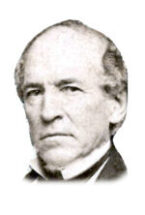
Got up this morning and went to market. Doct Barnes and Lieut Gould to Breakfast. Doct Vanslyck to dinner. The “27th” left this morning for V.A. I was at the Pat office awhile & on the Ave. Witnessed this evening the quelling of a mutiny among the 79th Regt. A strong force of Infantry and Cavalry and four pieces of Artillery were brought to bear upon them when they “fell in” and were paraded on 14th St, the ring leaders picked out, 36 in number who will be punished, some of them probably shot. Gov Stevens is now their Col.
______
The three diary manuscript volumes, Washington during the Civil War: The Diary of Horatio Nelson Taft, 1861-1865, are available online at The Library of Congress.
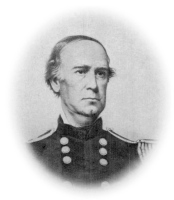
[By Special Order No. 42, Head Quarters Western Dept. St. Louis, dated Aug. 9, 1861, Curtis was ordered to “command a Camp of Instruction for Volunteers at Jefferson Barracks. General Curtis will use the utmost expedition in drilling and disciplining the Regiments which will be directed to report to him. The School of the Company and Battalion will be commenced at once.” By order of Genl Fremont.]
[By Special Order No 43, dated as above Aug 11, 1861, Curtis’ command “is extended to include Jefferson Barracks where he will establish his Head Quarters.” The former commander, Lt. Col. Burbank1 assigned to the Arsenal.]
Jefferson Barracks August 14, 1861
My dear wife
You have no doubt heard the sad news of the death of General Lyon and the reverses of our troops under his command.2 I deplore the divided Condition of our force which seems to expose us to defeat in all portions of our line. It is so contrary to first principles I cannot help feeling disposed to join in the general clammer against the Commander in chief who ought to admonish his Generals everywhere against such detachments. This has been a day of toil and anxiety here. At 12 Oclock I had orders to have my entire force ready to move to the Arsenal and was informed transports would be furnished this after noon. I had about 6 thousand troops in aal forms and conditions Cavelry horses without riders and Cavelry Companies without horses All without arms except some 300. As the order was to move all the troops my first trouble was to dispose of the stores which are very extensive and the sick and dead for we had two of the latter without Coffins and no lumber to make them. I set to work having everything Carried to the landing. At ¼ of 1 I received an order to send three Regiments to town. This I did very promptly. At 2 I received directions that one of these should go to the Depot on 7th Street St. Louis. The rest of the force is still (5 PM) waiting transports which I hope are not going to arrive. I dislike the Arsenal for many reasons, and especially as a place to meet a foe. [continue reading…]
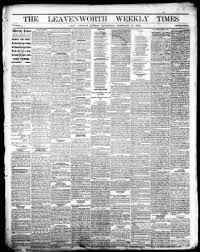
Daily Times [Leavenworth, Ks], August 14, 1861
Mr. Collins, son of Dr. Collins, a noted Methodist, who escaped from the South some time since, relates the following:
“Miss Geirnstein, a young woman from Maine, who had been teaching near Memphis, became an object of suspicion, and left for Cairo, on the cars. One of the firemen overheard her say to some Northern men: “Thank God, we shall soon be in a land where there is freedom of thought and speech.” The fellow summoned the Vigilance Committee, and the three Northern men were stripped and whipped till their flesh hung in strips. Miss G. was stripped to her waist and thirteen lashes given her bare back.”
Mr. Collins says the brave girl permitted no cry or tear to escape her, but bit her lips through and through. With head shaved, scarred and disfigured, she was at length permitted to resume her journey toward civilization.–New York Tribune.
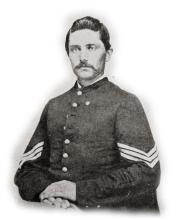
During the months of July and August, 1861, the country was greatly aroused over the prospects of war. Excitement rose high when the news of the battle of Bull Run, July 21st, was flashed over the wires. I was then almost 19 and living at home on a farm near Inland, Cedar county, Iowa. Naturally I was deeply stirred over the question of war. Some of our neighbors and friends had earlier opposed the use of force in preventing secession, but I distinctly remember that my father and many neighbors and friends entertained no doubt as to the righteousness of such a course.
During these days we were at work in the harvest field. We had finished cutting our wheat and oats and during the first two weeks of August were engaged in stacking the grain. Everyone had some part in the work. Father did the stacking, while John was on the stack with him, placing the sheaves at his right hand. Albert and George drove the teams to and from the fields, while Paul and Andrew attended to watering the stock during the day.[1] Tom Toly, a strong Irishman, who had worked for us three or four summers, pitched the sheaves to father from the wagon, and Dave Cole pitched the sheaves from the shocks in the field to me on the wagon, while I arranged them on the load.
There had been some talk of raising a company of troops at Inland, but nothing had come of it. At Tipton, the county seat, a company of one hundred men was raised when the first call for volunteers was made. But as they were not then needed, they went out under the call of July 23, 1861, and became Company A of the Fifth Iowa Infantry.
I had been pondering in my mind the matter of going to join the army. On the evening of Saturday, August 10th, news came of the battle of Wilson’s Creek, and that General Lyon had been killed. The First Iowa Infantry was in that battle and made glorious history for itself and for Iowa. That fact, with the excitement over the battle itself, stirred us boys in the neighborhood, and I practically reached a decision as to what I should do.
The next day was Sunday, and everybody was talking about the battle of Wilson’s Creek. Ministers spoke of it in their sermons and prayers. It was the all-important topic of the day, and for the next three days–the 12th, 13th and 14th of August, it was the topic of conversation while we were finishing our work in the harvest field. On the next day, my birthday, I began my diary and shall now let it speak.
[1] The five boys, John, Albert, George, Paul and Andrew, are Mr. Downing’s half-brothers. They are all living at this time (March, 1916) and all reside in Iowa–Ed.
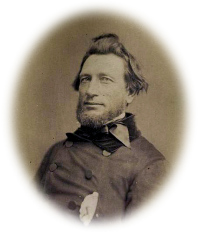
14th.–I left the camp to-day, and have determined to make my headquarters at Barnum’s Hotel, for a few days, till I recover some of the strength lost by my sickness and over-exertion. My ward master, on whom I have mainly to rely for assistance as a nurse, has been drunk every night, which has made me much extra trouble. Oh the misery resulting from whisky!
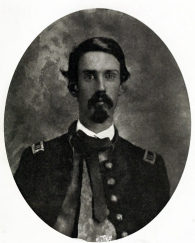
Meridian Hill, Washington.
Aug. 11th, 1861.
My dear Mother:
I have been overjoyed by a visit from Hunt, who has now probably returned home and reports me hearty and well. I have been fortunate in meeting several friends most unexpectedly during the last few days. Miss Woolsey was at our encampment on some errand of mercy yesterday evening. I saw her for a few moments, and promised to call upon her and Mrs. Howland soon, which I shall do if allowed to leave the camp. The laws are very strict though now, and I doubt whether I shall be able to leave the camp for some time to come. We are now going through a stage dreaded by all officers in the army, viz: that immediately following upon pay-day. Notwithstanding the utmost precautions the men contrive to obtain liquor, and when intoxicated are well-nigh uncontrollable, so that the utmost vigilance is needful. As the number of our officers is but small we are kept almost constantly active. When the money is once spent we will then breathe more freely. To-morrow I am to be the officer commanding the Guard, so I am scribbling a few lines rapidly to-night, as I shall be too busy to attend to such things to-morrow, and the following day too exhausted to do much after twenty-four hour’s exertion. You see all the labors of an officer generally are compressed into short seasons of unexampled labor, and long periods of repose. We have now a new Colonel – Governor Stevens of Washington Territory. He seems to be a first class man. His advent among us was inaugurated by an order for us young officers to leave the pleasant rooms we occupied when Hunt was with us, and to return to our tents. This was as it should be; and other strict measures toward officers and men show that he is the right sort of a commander for a Regiment like ours, requiring a strong firm hand to govern it. I trust we may continue to be satisfied with him as our chief officer.
I begin to regard it as a little doubtful as to whether we really return to New York. Military men regard such a movement as unprecedented, and as affording a dangerous example. We will see how it is to end. You ask me regarding Gen’l Tyler! I will answer with all candor that he acted with the utmost bravery on the day of the fight. It was owing to his prompt and energetic action that once, after our Regiment was scattered, when weary and exhausted, having also (Elliott assisting) the additional burden of our wounded Captain to bear away, we escaped a cavalry charge in which many of our men were taken prisoners. When the cavalry came in sight, and all was in confusion, you could hear his quick, sharp voice rallying the disheartened to make such a stand as alone would ensure them victory. The men rallied, poured a volley of musketry into the foe galloping upon us, at the same time giving them two fatal shots from a couple of artillery pieces which luckily were in our possession– at which time I must mention the activity displayed by Ned Harland too. The fire was effective, the cavalry retreated and we marched on unharmed. Such things should shut the mouths of slander. Gen’l Tyler unfortunately played a leading part in a fatal engagement, and consequently must bear an undue share of blame. His great fault seems to have been an overweening confidence in our strength, and a great undervaluation of the enemy. Since the fight I regret to say a spirit of bitterness pervades his conversation as well as his official report of the battle.
I have just seen Lieut.-Col. Elliott, and feel more reason to hope we may return, as was before promised. Give the best of love to all,
And believe me,
Very Affec’y-,
William T. Lusk.
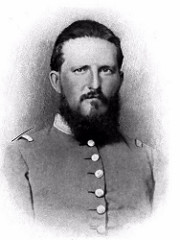
Camp Harmon, August –, 1861.
I had a chance to show my gallantry last week. I was directed one night to pass a Mr. Pendleton and his party through, our line of sentinels. I reached the party about ten o’clock, and found the party consisting of an old gentleman driving the carriage, and in it the wife of his son with three or four children. She told me they were going to stay a mile beyond, with a lady to whom she had a letter, and were on their way to Virginia from Washington. Knowing the difficulty they would have in passing the sentinels of the other camps, I volunteered to accompany them. But when they reached the house where they expected to stay all night I delivered their letter and was told they could not be taken in, as the house was full of sick people, and that there was no other house in the village where there was any prospect of getting them in. The only chance then was to take the road and run the chance of getting into a farm-house or travel all night. I went with them, and succeeded in getting them lodging at a farm-house three miles further on. She was profuse in her expressions of gratitude, and I took leave of them and walked back four miles to our camp, which I reached about one o’clock, well paid for my trouble in feeling conscious that I had done a good deed.

August 14, 1861
A Chronological History of the Civil War in America1
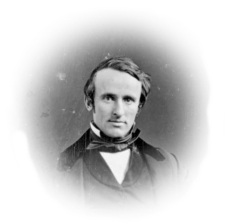
August 13.–Still rain. My horse hitched to a tree on the brow of a hill very near my tent broke loose during the night, and, it is said, rolled down the steep hill and swam the river. This morning he was seen trotting about in high feather on the opposite side of the river. He was caught and brought back unhurt, to the surprise of all who saw the place he must have gone down. Our right wing has been sent for to return to Bulltown. Captains Drake and Woodward who are out guerrilla hunting are still absent and not heard from for twenty-four hours.–P. M. Still raining. Captains Drake and Woodward have returned. They caught two of the pickets of the guerrilla party they were after but failed in surprising them, owing to a boy who gave information of their coming. They found a few good Union men; the mass of the people most ignorant. [They] describe the country in the edge of Webster County as precipitous and difficult; the people timid but cunning. They also brought two other prisoners, men who have been in the secession army.
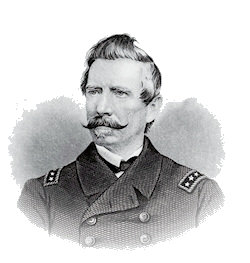
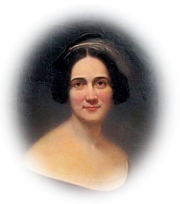
August 13th.–Hon. Robert Barnwell says, “The Mercury’s influence began this opposition to Jeff Davis before he had time to do wrong. They were offended, not with him so much as with the man who was put into what they considered Barnwell Rhett’s rightful place. The latter had howled nullification and secession so long that when he found his ideas taken up by all the Confederate world, he felt he had a vested right to leadership.”
Jordan, Beauregard’s aide, still writes to Mr. Chesnut that the mortality among the raw troops in that camp is fearful. Everybody seems to be doing all they can. Think of the British sick and wounded away off in the Crimea. Our people are only a half-day’s journey by rail from Richmond. With a grateful heart I record the fact of reconciliation with the Wigfalls. They dined at the President’s yesterday and the little Wigfall girls stayed all night.
Seward is fêting the outsiders, the cousin of the Emperor, Napoleon III., and Russell, of the omnipotent London Times.
AUGUST 13th.—The President sent to the department an interesting letter from Mr. Zollicoffer, in Tennessee, relating to the exposed condition of the country, and its capacities for defense.

New Haven, August, ‘61.
The Second Connecticut Regiment returned on Monday and Willy and I rushed out to see them pass, poor, way-worn, tired fellows, as they were; and in their ranks we saw Dr. Bacon prance by, much to our surprise as well as pleasure. His family are all spending the summer in the country, and as the last duties of his place would detain him here for a few days, we offered him the shelter of our roof till they should be over, and so have had him to ourselves all the week–too tired and unwell to be as entertaining as usual, but still invaluable as a guide-book and interpreter to all the recent war movements. I am hoping that a large blue pill which he swallowed publicly last night may make him even more graphic and interesting. . . . He gave me a charming description of his calls on you and Georgy and what you said and did, and what you meant to say and do. Oh, girls, don’t I envy you, being so in the thick of everything!
. . . The reports from Lenox–(where Jenny and Harry Yardley, newly married, were settled) –are charming; the little house is just like a bower, transformed into such by all simple means and expedients. I am really getting appalled by the smartness of the girls. Dora and Lilly put carpets down themselves the other day in three rooms and did it as well as a professional. The last addition to the ornaments of the rooms was the pretty picture which Carry and Hatty brought from Rome for Jenny. Carry and Charley walked in upon them on Monday evening to their delight and surprise, having come up in search of rooms for the family–found at once quite near the Parsonage, and occupied by them to-day.
TUESDAY 13
News today of the battle at Springfield Missori and death of Genl Lyon. My son Frank was in his Army, Co. E, 2nd Regt US Infantry, Capt Steel. Have been at the Camp much of the day seeing the soldiers pack up and get in readiness to leave. They go tomorrow morning. Doct Barnes here to tea. He presented Julia with a beautiful pocket pistol, “Elliotts self cocking” (very small) Six Shooter. I was at “Willards” an hour today, not a great crowd there. The City is patroled daily and nightly by mounted men.
______
The three diary manuscript volumes, Washington during the Civil War: The Diary of Horatio Nelson Taft, 1861-1865, are available online at The Library of Congress.
 Democrat and Planter [Columbia, TX],
August 13, 1861
We see very much in the Northern prints, says the Montgomery Advertiser, about the flag of the Union. The speeches of northern orators are full of allusions to the starry banner, and the people are appealed to by all the sacred memories that cluster about that banner, to stand by and defend it to the last. Ignorant people are deluded with the idea that the flag is the same as that which floated over the battle fields of the Revolution, and their remembrance of the many glorious victories achieved under its folds is called upon to arouse their patriotism. This uproar about the sacredness of the flag is all gammon. There is no peculiar interest attaching to the Star-Spangled Banner. It is not the flag under which our fathers fought the battles of the Revolution; neither is it the same as the one that floated over the field of battle in the war of 1812. The present flag of the United States was adopted in 1818–less than fifty years ago–from a design by Capt. Samuel C. Reid.
There was nothing in its adoption to render it sacred in the eyes of any one, and there has been nothing in its history since to make it so. This professed devotion to the flag of the Union is pure bunkum.
There is another fact also worth knowing in regard to the old song known as “The Star-Spangled Banner.” Every male descendant and relative of the author of this beautiful song, liable to do military duty are now in the Confederate army. At least fifteen members of that patriotic family are at this time doing service against the unconstitutional and tyrannical Government at Washington; and rightfully claim to be fighting for the principles to which that song was originally dedicated.
13th.–H. S. S. arrived at my hospital to-day, with orders, as I was sick, to take charge of and bring forward all the men left here. From the tenor of our Colonel’s letter of instructions to his messenger, I should take him to be a little “miffed” at the men’s not being sent forward earlier. What in the name of heaven can he wish to do with sick men in camp? However, I have no discretion, but shall turn over the men to S., and see how he will carry out instructions. I had already sent forward to-day, before his arrival, quite a number, leaving me only ten here.
August 13, 1861
A Chronological History of the Civil War in America1
Astoria, August 12th.
Dear Girls: If mother and the remaining three kept to the programme, they all left for Lenox on Saturday and are at last settled in their summer quarters, much to my relief. So long as they would not come to us, I think it was highly necessary for them to go somewhere, as the city grew hotter and smellier and more unbearable every day.
Knowing what New York is at this season, and inferring what Washington must be, I am sure you will consider my proposition reasonable when I beg that you will come on and freshen up a little here at Astoria “by the side of a river so clear.” . . . When you come Robert will sail you up to Riker’s Island, in order to make you feel more at home, where the Anderson Zouaves are encamped. We went up there the other day with some illustrated papers sent by Jane to the men, and were enthusiastically received by a company of bathers, who swam round the boat for whatever we had to offer, and whom we left seated on the rocks reading Frank Leslie, with not so much as a button or an epaulette on by way of dress.
August 12. Monday.–Showery all day. Sent to Clarksburg H. T. Martin. He will probably be sent to Columbus for safe keeping. I gave him a letter to my brother-in-law to insure him attention there in case he should need. It is impossible to avoid mistakes in these cases. Union men may make charges merely to gratify personal animosity, knowing that in the nature of things a full investigation is impossible.
During Monday night a squad of the Tenth Regiment returned from the Buckhannon road with the body of one of the wild men of the mountains found in this country. He followed their regiment, shooting at them from the hills. They took him in the Bulltown region. He wore neither hat nor shoes, was of gigantic size–weighing two hundred and thirty pounds; had long hooked toes, fitted to climb–a very monster. They probably killed him after taking him prisoner in cold blood–perhaps after a sort of trial. They say he was attempting to escape.
_______
WESTON, VIRGINIA, August 12, 1861.
DEAR UNCLE:–We are still getting on nicely. We have a good deal more excitement now than usual. Wagon and cattle trains and small parties are fired on by guerrillas from the hills on two of the roads leading from here. Dr. Joe has about eight or ten in charge who have been wounded in this way. Two only have been killed. None in our regiment. The men all laugh at “squirrel guns” and the wounds they make. Several would have been killed if shot in the same part by the conical balls of our military guns. The “deadly rifle” of olden times shoots too small a bullet, and is too short in its range; but as Cassio says, it is often “sufficient.” We send out parties who bring in prisoners– sometimes the right men, sometimes not. All this keeps up a stir. In a week or two we shall get up a regular system of scouring the country to get rid of these rascals. The Union men here hate and fear them more than our men.
The threatened invasion by Lee from eastern Virginia hangs fire. They will hardly venture in, unless they come in a few days, as we are daily getting stronger. I hope you are still getting better.
Good-bye,
R. B. HAYES.
S. BIRCHARD.
MONDAY 12
Went down to the Pat office this morning and saw the Comr, could get nothing definite from him in reference to my restoration to the office. Business there is still dull. Few soldiers are seen in the streets now and none without a “pass.” The 27th Regt have rcd orders to cross the River into Virginia and go into Camp. Troops are accumulating here and also at Mannasses Junction. Another collision must soon take place, it will be a life struggle with both parties. Doct Barnes to Bkfst & tea.
______
The three diary manuscript volumes, Washington during the Civil War: The Diary of Horatio Nelson Taft, 1861-1865, are available online at The Library of Congress.