AUGUST 12th.—There is trouble with Mr. Tochman, who was authorized to raise a regiment or so of foreigners in Louisiana. These troops were called (by whom?) the Polish Brigade, though, perhaps, not one hundred Polanders were on the muster-rolls; Major Tochman being styled General Tochman by “everybody,” he has intimated to the President his expectation of being commissioned a brigadier. The President, on his part, has promptly and emphatically, as is sometimes his wont, declared his purpose to give him no such commission. He never, for a moment, thought of making him more than a colonel. To this the major demurs, and furnishes a voluminous correspondence to prove that his claims for the position of brigadier-general had been recognized by the Secretary of War.
American Civil War Chronicles
I am directed to establish “a school instruction,” “to teach the young ideas how to shoot”.
August 12, 2021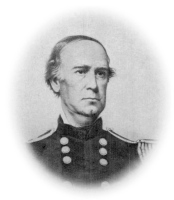
Head Quarters Jefferson Barracks Mo
August 12th 1861
My dear wife
Being ordered to take command at this post I came down here yesterday evening, and stayed all night with Major Macrae1 the for[mer] commandant. Being senior officer I am entitled to choice of quarters, and have taken rooms (5 or 6) here within the enclosure.
William is up town trying to get some necessary articles and I am busy issuing orders, seeing friends and preparing for business operations generally.
It is cool and pleasant. About 4000 troops are camped around me, under my command. I am directed to establish “a school instruction,” “to teach the young ideas how to shoot“. Jack Falstaffs Regiment was a dress parade compared to my command. Some have guns but none have uniforms, and many are destitute of shoes. They lay round loose on the side hills, without tents or covering, and generally bear their trials with becoming patience and forbearance. I felt ashamed of myself last night, for while I was sleeping on a nice matress, the pelting rain was pouring down on thousands who slept without roof or even a blanket.
Certain it is we have reason to be ashamed of our country that after so much preparation has no accommodation for the assembling troops.
It is cool and pleasant here. Major Macrae and other officers have their family arrangements, & think I ought to have mine. How long or short my stay is to be is just as uncertain as the wind; still I do not know but I may as well have your company when I can. I have a cooking stove & utensils. A kitchen table, and a rough table which does for the dining room. I have ordered a cot and half dozen camp stools. A few more kitchen, din’g, and sleeping arrangements; would make it nice for you and the children to be with me. Transportation would cost little or nothing, except the transportation to the S. boat. If I am to stay many weeks I am sure you would prefer to be with me, and it would not be much trouble to go back when I am ordered forward, as I hope to be when the grand army goes South. You can think of this and write me. In the mean time I will think more of it and write you. We have no fears of being taken by Pillow or any body else soon, but the State of Missouri is in a disturbed condition and that may be a serious objection to leaving our quiet home.
I hope you will write very often. The franking- privilege extends for at least six months and I may therefore write and receive letters without cost till December.
I telegraphed Henry2 to “Come soon via of Keo’k” I meant by that to give him a chance to make you a visit and remit his health if need be. When convenient I should like to have him here, but he need not hurry, and if you and the children come I will assign him the duty of giving you transports from our door to my head quarters. Everything should be packed carefully, and the contents of each box should be put down on the box or in a little book corresponding in great care. Then you can bring, leave, or otherwise dispose of boxes as you may see proper. The house must not be rented till we can get a proper tenant. Better close it with “To Let” marked on the door.
I have seen H H Curtis daily almost but I have not had time to enjoy much visiting and expect hereafter to be as busy as possible. None of my staff have made their appearance yet. If any come to Keokuk tell them they had better report to me soon.
Affectionately & ever yours
Saml. R. Curtis
1. Probably D. McRae, later col. Arkansas vols.
2. Son of S. R. Curtis
“Rubeolous fever”–Journal of Surgeon Alfred L. Castleman.
August 12, 2021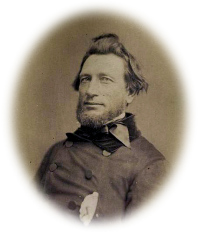
12th.–Sixteen of my sick have so far recovered that I sent them to-day to join their regiment at Kalorama Heights, near Washington. I have quite recovered from my attack, which was rubeolous fever. I had been so much mixed up with measles that, notwithstanding I had passed through the disease in childhood, the system in some degree yielded to its contagious influence, and I have had all the symptoms of measles, except the eruption. I have termed this rubeoloid, or rubeolous fever. It is common in camp.
William Howard Russell’s Diary: Sudden Death of an English Officer.
August 12, 2021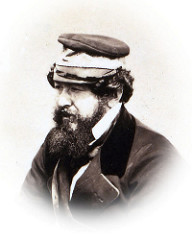
On returning from my ride next morning, I took up the Baltimore paper, and saw a paragraph announcing the death of an English officer at the station; it was the poor fellow whom I saw sitting at General Mansfield’s steps yesterday. The consul was absent on a short tour rendered necessary by the failure of his health consequent on the discharge of his duties. Finding the Legation were anxious to see due care taken of the poor fellow’s remains, I left for Baltimore at a quarter to three o’clock, and proceeded to inquire into the circumstances connected with his death. He had been struck down at the station by some cerebral attack, brought on by the heat and excitement; had been carried to the police station and placed upon a bench, from which he had fallen with his head downwards, and was found in that position, with life quite extinct, by a casual visitor. My astonishment may be conceived when I learned that not only had the Coroner’s inquest sat and returned its verdict, but that the man had absolutely been buried the same morning, and so my mission was over, and I could only report what had occurred to Washington. Little value indeed has human life in this new world, to which the old gives vital power so lavishly, that it is regarded as almost worthless. I have seen more “fuss” made over an old woman killed by a cab in London than there is over half a dozen deaths with suspicion of murder attached in New Orleans or New York.
“General Scott, too, has been almost superseded by General McClellan, who seems just now to be the idol of the North.”—Diary of a Southern Refugee, Judith White McGuire.
August 12, 2021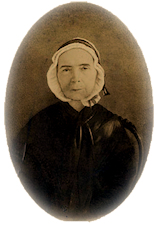
12th.—Still nothing from the army. We go on here quietly and happily—as happily as the state of the country will allow. The household peaceful and pleasant. The ladies—all of us collect in one room—work, while one reads some pleasant book. We are mercifully dealt with, and I hope we are grateful for such blessings.
The Northern papers tell us that General Patterson has withdrawn from the Northern army. The reason thereof is not mentioned; but we shrewdly suspect that the powers at Washington are not entirely satisfied that he was so completely foiled by General Johnston. General Johnston was fighting the battle of Manassas before General P. knew that he had left the Valley. The rumour that he had gone to join McDowell was unfounded. For many days there was no intercourse between the section occupied by the Federal army and that occupied by ours; pickets were placed on every road, to prevent any one from passing towards General P. Gentlemen who had come to Winchester and Berryville on business for a few hours, were not allowed to return home for days. So how could the poor man know what was going on? We only fear that his place may be supplied by one more vigilant. General Scott, too, has been almost superseded by General McClellan, who seems just now to be the idol of the North. The Philadelphia papers give a glowing description of his reception in that city. It was his luck, for it seems to me, with his disciplined and large command, it required no skill to overcome and kill the gallant General Garnett at Rich Mountain. For this he is feted and caressed, lionized and heroized to the greatest degree. I only hope that, like McDowell and Patterson, he may disappoint their expectations.
Civil War Day-By-Day
August 12, 2021
August 12, 1861
A Chronological History of the Civil War in America1
- Arrest of Hon. C. J. Faulkner, late U. S. Minister to France.
- Of?ce of the Bangor (Me) Democrat, a secession paper, entirely destroyed by a mob.
- A Chronological History of the Civil War in America by Richard Swainson Fisher, New York, Johnson and Ward, 1863
“We have sent two captains and eighty men after the guerrillas.”—Rutherford B. Hayes
August 11, 2021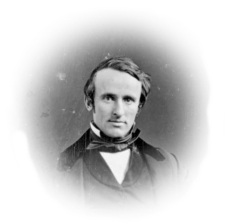
August 11. Sunday.–Raining this morning, very warm. Arrested, on complaint of a Union man, H. T. Martin, a secession editor, who is charged with holding communication with James and William Bennett, leaders of a guerrilla party. He was formerly from Ohio. Is a Southern state’s-right Democrat in talk, and makes a merit of holding secession opinions. Having been engaged in getting up troops for the Southern army, the colonel will probably send him to Ohio.
Colonel Lytle’s men fired on near Bulltown; one killed, four wounded; guerrilla party in the hills out of reach. Our regiment did not destroy records. We have sent two captains and eighty men after the guerrillas.
Extracts from the journal of Commander Semmes, C.S. Navy, commanding C.S.S. Sumter
August 11, 2021
“It would not much surprise us to hear a genl cannonade over there any day, as an attack may be expected anytime.”—Horatio Nelson TaftHoratio Nelson Taft
August 11, 2021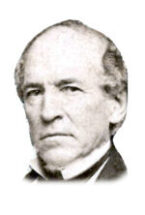
SUNDAY, AUGUST 11, 1861.
A very hot day. Went to church this morning with Julia, Willie, and Surgeon Barnes of the 27th. Doct Smith preached. It commenced to rain about 5 o’clock and rained till near night very hard, flooding the lower part of the City. Guns were heard over the River, some fighting probably. It would not much surprise us to hear a genl cannonade over there any day, as an attack may be expected anytime. The air is quite cool since the rain and more rain in prospect.
______
The three diary manuscript volumes, Washington during the Civil War: The Diary of Horatio Nelson Taft, 1861-1865, are available online at The Library of Congress.
Answer all questions that we ask about supplies for hospital and regiment.—Woolsey family letters; Caroline Carson Woolsey to Georgeanna and Eliza.
August 11, 2021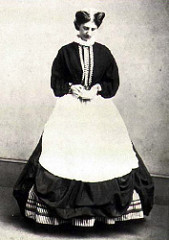
August, ‘61.
Dear Girls: I have wrenched this opportunity from Abby to take my turn in writing you. It is as good as a fight to attempt to do anything useful in this family. Each one considers it her peculiar province, and if I manage to tuck in a handkerchief or two in the next box of hospital supplies I shall consider myself successful beyond expectation–speaking of which, T. D. brought in a splended lot last night that we had commissioned him to get the night before. . . . Abby says, “would you like three or four hundred brown duck havelocks for any of the brigade?” They can be bought ready-made. If so, find out from the quartermaster of the DeKalb regiment which pattern he thinks best, and let us know. In this connection I would advise that you answer all questions that we ask, and don’t suppose that they are put in to fill up. Mother and Charley are still in Astoria; they drove out in C’s little wagon Tuesday evening. I think mother repented before she got to the corner. I arranged her toes under the iron bar of the dash-board so that she could have that at least to hold on by, in case the horse went off the slow walk which Charley promised to keep to. . . . We have been holding a family conclave down in Mother’s room in which it has been decided,–that is, after bullying the girls into consent,–that Charley and I go up to Lenox on Monday, and engage rooms for the following Friday somewhere, if not in Lenox then in Lebanon. But go we must–the girls will slave themselves to death if we stay in town, and nothing short of heroic decision on our part will induce them to leave.
Rumor of a rupture between the President and Gen. Beauregard—Rebel War Clerk
August 11, 2021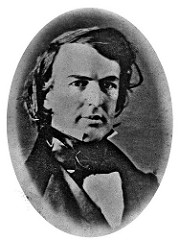
AUGUST 11th.—There is a whisper that something like a rupture has occurred between the President and Gen. Beauregard; and I am amazed to learn that Mr. Benjamin is inimical to Gen. B. I know nothing of the foundation for the report; but it is said that Beauregard was eager to pass with his army into Maryland, immediately after the battle, and was prevented. It is now quite apparent, from developments, that a small force would have sufficed to take Washington, a few days or weeks after the battle. But was Beauregard aware of the fact, before the opportunity ceased to exist? It is too late now!
“As soon as the train pulled out and the soldier boys could not see, the scene changed. Sobs and tears, wild outbursts of grief…”—Susan Bradford Eppes.
August 11, 2021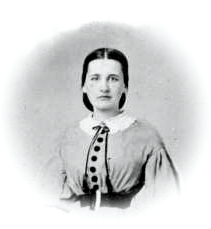
August 12th, 1861.—It is late at night but I cannot sleep so will write up the events of the day. The Howell Guards left on the mid-day train. A crowd had gathered around the depot to see them off. Mothers, wives, sisters, sweethearts and friends—all were there. Standing on the platform and looking around I marveled at what I saw. Women with bright, smiling faces, looking tenderly on the soldiers, who were ready to depart. Saying fond, loving words of advice and of hope; pressing the beloved gray-clad figure in a parting embrace; kissing the dear lips, maybe for the last time, and yet those brave women smiled. As soon as the train pulled out and the soldier boys could not see, the scene changed. Sobs and tears, wild outbursts of grief on every side, and yet, this had been suppressed lest it grieve those brave hearts, who were going forth to battle for home and country.
On the way home Eddie seemed to try to see how entertaining he could be, he took my handkerchief and wiped his mother’s eyes, he kissed her over and over, then he put on somebody’s big glove and gravely offered her his hand, saying, “Tell de popes howty.” That brought a smile; Niobe herself could not have resisted the bright little baby face and the piping little voice.
Many a prayer goes up tonight from anxious hearts. May God bless our dear soldiers and may God bless the South.
Susan Bradford is 15 years old when this entry was made.
Overworked and sick.–Journal of Surgeon Alfred L. Castleman.
August 11, 2021
11th.–I was sick yesterday. Last night took an opiate. This morning, when I awoke, I turned over and looked upon a dirty tin cup, and a greasy tin plate, sitting on a chair beside my bed. It required quite a rubbing of the eyes to recall my faculties, so as to realize where, and what I was. But at last I awoke fairly to the contrast between what I looked on, and the little waiter with its spotless napkin, its cup of beautiful drab-colored coffee, and its nicely browned toast, presented to me by loving ones who had sometimes watched over my restless slumbers in sickness, and waited at early morn with these delicious antidotes to the prostrating effects of opiates. Had there have been “music in my soul” I should have sung, “Carry me back, oh! carry me back.” But I arose, went to work, and am better to-night. I think, however, that it will be some time before I hunger for another meal from a tin cup and tin plate.
Received to-day, from Miss M. H. C, a draft on New York for fifty dollars, to be used for the relief of the sick under my care. This is a bright spot in the darkness around me.
“How far that little candle throws its beams!”
William Howard Russell’s Diary: A sudden storm.
August 11, 2021
August 11th.–On the old Indian principle, I rode out this morning very early, and was rewarded by a breath of cold, fresh air, and by the sight of some very disorderly regiments just turning out to parade in the camps; but I was not particularly gratified by being mistaken for Prince Napoleon by some Irish recruits, who shouted out, “Bonaparte forever,” and gradually subsided into requests for “something to drink your Royal Highness’s health with.” As I returned I saw on the steps of General Mansfield’s quarters, a tall, soldierly-looking young man, whose breast was covered with Crimean ribbons and medals, and I recognised him as one who had called upon me a few days before, renewing our slight acquaintance before Sebastopol, where his courage was conspicuous, to ask me for information respecting the mode of obtaining a commission in the Federal army.
Towards mid-day an ebony sheet of clouds swept over the city. I went out, regardless of the threatening storm, to avail myself of the coolness to make a few visits; but soon a violent wind arose bearing clouds like those of an Indian dust-storm down the streets. The black sheet overhead became agitated like the sea, and tossed about grey clouds, which careered against each other and burst into lightning; then suddenly, without other warning, down came the rain–a perfect tornado; sheets of water flooding the streets in a moment, turning the bed into watercourses and the channels into deep rivers. I waded up the centre of Pennsylvania Avenue, past the President’s house, in a current which would have made a respectable trout stream; and on getting opposite my own door, made a rush for the porch, but forgetting the deep channel at the side, stepped into a rivulet which was literally above my hips, and I was carried off my legs, till I succeeded in catching the kerbstone, and escaped into the hall as if I had just swum across the Potomac.
“We are now drilling about six hours a day, but the greenhorns act as though they think it fun.”–Army Life of an Illinois Soldier, Charles Wright Wills.
August 11, 2021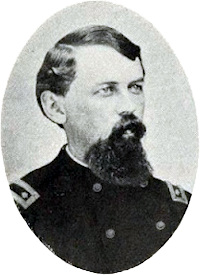
Cairo, August 11, ’61.
Our Canton boys came down on time, and right glad I am to have them here. Colonel Ross’s 17th Regiment got here the same day by the river. The boys were sworn into our company the day after they arrived, and the day following a lieutenant in the Fulton Blues came over to get them to join his company. I am glad he was too late. We have all been over to the Point to visit the Canton boys of the 17th, and found them looking very well. Will Trites, alone, looks unwell. A few weeks at home is what he really needs, for he will not give up work and go on the sick list as he ought to, as long as he can stand. Billy Stockdale, Chancey Black, George Shine, Billy Resor and Jesse Beeson are in No. 1 condition. Their tents are pitched in old Bird’s cornfield from which the corn has just been cut and you can imagine that the stubble is not equal to feathers to lie upon. They call us boys that live in barracks in Cairo, Sunday soldiers and Fourth of July braves; the same names we applied to them when they were in Camp Mather. The Canton boys in our company get along finely. They are in the best of spirits and already appear quite soldierly. They are well satisfied with the company which now numbers 90 men and will be full this week. We all room together except John Wallace and Milo Farewell. We are now drilling about six hours a day, but the greenhorns act as though they think it fun. We don’t suffer from the heat as much as one would think, and can you believe it the health of the camp is better now than ever before. We have not in our company a man on the sick list. Major Smith (our old friend Marion), says that the 17th have been healthier at Bird’s Point than they ever were before; and so every regiment says that comes here. If there are any very old people in Canton that want to live 50 or 60 years longer, advise them to come to Cairo. Mosquitoes and fleas are around these times. The whole family are here.
Civil War Day-By-Day
August 11, 2021
August 11, 1861
A Chronological History of the Civil War in America1
- Rebel company captured at Georgetown, Mo.
- A Chronological History of the Civil War in America by Richard Swainson Fisher, New York, Johnson and Ward, 1863
“Quiet…”—Diary of a Southern Refugee, Judith White McGuire.
August 10, 2021
The Briars, August 10.—Nothing new from the army. All seems quiet; no startling rumours within the past week. The family somewhat scattered: M. P. has gone to the “Hot Springs,” J. to Capon Springs, both in quest of health; E. P. and E. M. are at “Long Branch” (Mr. H. N’s) on a visit to a young friend.
J. P. has just called, having resigned his commission in the United States Navy, and received one in the Confederate; he is on his way to Richmond for orders. He tells me that my dear W. B. P. has come in from Kentucky, with the first Kentucky Regiment, which is stationed near Centreville. It is right he should come; and I am glad he has, though it is another source of painful anxiety to me.
Mr Grimball applied to Gov. Pic for a Commission for Lewis
August 10, 2021
10 August
We heard from Lewis, a full account of his fatigue & the Victory. Henry Middleton, a private in Hampton’s Legion was Mortally wounded during the fight, since dead, a great lose to his family. He managed all the Large Planting interest brought home and interrod at the Magnolia.
The Town since the Battle has been divided into societies for the Relief of the Wounded & Clothing for the troops. Elizabeth belongs to both. Miss Hayne requested me to be one of the managers to the Aid Society which I declined, but we made some long hospital shirts and when they were sent to Miss Hayne, 10 of them, she said they were very nice and afterwards meeting Elizabeth on the Batery said they were the best sent to them & should be ticketed for “Officers”. It is amusing for when we made them we all said as we sewed this is for a Col. &c. &c. E. goes to Miss Drayton’s twice a week to cut & to sew I think she will learn to sew &c which she does not know much about. Mr Grimball applied to Gov. Pic for a Commission for Lewis and got an answer to day , he could not offer him anything but an Assistant Sergeant’s Place. I don’t know if Lewis will accept it.—
Prepaid.—Chaplains.—Seeds of sickness.—Letter to Lincoln.—Woolsey family letters; Abby Howland Woolsey to Georgeanna and Eliza.
August 10, 2021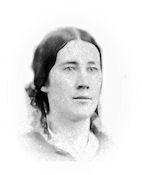
August, ‘61.
Dear Girls: Did you give the company captains my little books by Ordronneaux? If not, please do so. They have much useful advice, and as each captain ought to be the father of his company, and look after its welfare in every respect, some such little manual might be useful to them.
In regard to your enquiry about sending the Tribune and Independent to the hospitals regularly from the publication office, I would say that I have already so ordered 10 copies of the Independent sent every week for the coming three months, beginning with this week’s issue. It is prepaid and will be delivered free by Adams Express at the hospital. Charlie has gone down this morning to order the Semiweekly World or Tribune sent in the same way. . . You will receive 12 Independents which he has put up for the Columbia or any other hospital, and some packages for the chaplain of the 16th. . . .
The young men of the New York Christian Association who have been in Washington and Alexandria making the rounds of the hospitals, writing letters for the men and ministering generally, send word that they have never known a single chaplain of any regiment present himself to enquire for his sick or wounded, that there is no resident chaplain, and no one at hand to read or pray for a dying man, or to conduct the funeral services of the dead in the city hospitals. This must be especially the case with the Alexandria hospital–for in that town hardly any clergymen are left. . . . It would be encouraging to know that somebody was detailed in each hospital for special chaplain’s duty. Cannot some arrangement be made? . . .
You must tell us something more about the men of the 16th. . . . How do they cook their food and how is it distributed? Is the camp kept drained and clean? What do the men sleep on? Have they chances for bathing, washing clothes, etc.? . . . Two-thirds of the New York regiments as examined by the Sanitary Commission are crowded too many in a tent–regardless of ventilation–and liable next month to some terrible pestilence. The only sign, so far, that I can see of God’s mercy and the justice of our cause, is the absence as yet of any serious epidemic. . . . But as carelessness, bad habits, hot weather, etc., only sow seeds of sickness to ripen in autumn, we may yet have that plague too, overtake us.
 Abby’s informant was right. Up to this time there were no special chaplains in the Washington and Alexandria hospitals. G. and E. felt the need and wrote of it to Abby, who answers as follows:
August, ‘61.
I think that the best you can do is to make your own private arrangement for missionary work two days a week, say, in the Columbia College and two in the Alexandria hospital. I mention these because I suppose they are the two you would be likely to have best access to, and where your suggestions would be best received. You would have to do it with the consent of, or knowledge of, the head physician, superintendent, or whatever Cerberus it is who guards the portals. . . . You need not wait to find out what anybody else is doing. You have a grand scheme on hand for making the hospitals military posts and so entitled to chaplains, but I hardly think you will succeed. . . .
Shall I not apply to Professor Smith for information about a graduate of Union Theological Seminary who would be glad of such an appointment and who has qualifications for such special missionary work?–some one who could be set to work at once, under the “young men’s” auspices or your private patronage, and afterward get a government commission if such are granted. . . .
How strange some of the statements in Russel’s last letter are! That there was no hand to hand fighting at Bull Run. No batteries charged and taken by the Federalists. No masked batteries at all on the side of the rebels, etc., and then that horrid, insulting, false editorial from the London Times in yesterday’s Tribune! I am sure that is aiding and abetting our enemies if anything is, and Russell as the representative of such a paper ought not to be allowed within our lines again. . . .
Do you two ever refresh yourselves by a drive out into the country–for pleasure purely,–with your thoughts so busy always?
Eliza, following up the Hospital Chaplain plan, wrote to General Van Rensselaer, of General Scott’s staff and received the following note:
Headquarters of the Army,…….
Washington, Aug. , 1861.
My dear Mrs. Howland: If you will send me the names of the persons you want appointed to act as Chaplains for the Hospitals, I will get the Lieutenant-General to give them (not a regular commission) but an authority to visit and have free access to the Hospital at all times.
This will invest with full authority, but no rank or emolument.
Yours very truly,
H. Van Rensselaer.
Georgeanna, also wrote a private letter to President Lincoln asking that Hospital Chaplains should be appointed and handed it in herself at the back door of the White House; and, acting upon Abby’s idea, E. wrote Prof. H. B. Smith of the Union Theological Seminary, asking him to suggest the right person, and soon received the following answer:
. . I hope I have found the right man. Young Hopkins, son of President Mark Hopkins of Williams College, has just been in, and will think of it. If he can and will accept, he is as near being just the man as need be. He is not ordained, but I suppose can be, if necessary. Will you write me, if it is so? He is a Christian gentleman, every way, and a very able man intellectually. If you think well of him, and he agrees, when shall he come? Please write soon.
I have the most entire confidence in Mr. Hopkins’ discretion and courtesy. He does not seek mere position, he only wants to do good.
Yours truly,
H. B. Smith.
Mr. Henry Hopkins took the position, to our great and lasting pleasure, and the friendship so begun has remained one of the best things the war brought to us.
When he sent up his letter of introduction from Professor Smith to a and E. in Washington, he expected to be descended upon in the Ebbitt House parlor by two elderly women all ready to superintend him. A year later he wrote to Georgeanna. in acknowledging her photograph, “ It is the very identical countenance which demolished so delightfully my ideal Miss Woolsey with iron grey curls, black silk dress and spectacle-case.”
Mr. Hopkins did most admirable work in the voluntary unofficial position he consented to occupy at first. Later, wishing a more formal connection with the army service, he secured proper official recognition in the General Hospital, and still later he accepted an appointment in the field as regimental Chaplain.
“Disgraceful! What a stigma on our regiment if true!”—Rutherford B. Hayes
August 10, 2021
August 10. Saturday.–Rained a good part of the night. We learned that while the right wing of our regiment occupied the court-house at Sutton, many records, etc., etc., were torn up. It is said the old clerk cried when he saw what had been done. Disgraceful! What a stigma on our regiment if true! We have had and deserved to have a good name for our orderly conduct, respect for rights of citizens, etc., etc. I hope nothing has been done to forfeit our place.
The Prince, McDowell, and McClellan himself.—Woolsey family letters; Eliza Woolsey Howland to Joseph Howland.
August 10, 2021
Ebbitt House, Washington, August 10, 1861.
Dear Joe: We had a very successful journey in from camp yesterday, for who should be on the boat but the Prince (called by the public “Captain Paris,”) McDowell, and McClellan himself, whom Mrs. Franklin introduced to us, and who helped us all into the carriage when we reached Washington. He and General Franklin are old and dear friends. He is singularly young and boyish-looking for so important a position, but at the same time has a look and manner that inspire respect. The Prince is exactly like the picture of his uncle. We hoped they would all discuss secrets of state, but the topic was persistently the range of different kinds of cannon. . . . Georgeanna goes to Alexandria this morning to look up a hospital Mr. Vernon told her of and take them some comforts. . . . There is no news except the sad story of Lyon’s death in Missouri, and the mutiny here in the 79th, which was put down summarily by the display of six cannon, three companies of cavalry and a good many infantry, which came down upon them yesterday afternoon. The ringleaders, about 26, were put under arrest last night and in irons, and the rest marched off into the darkness somewhere. The trouble was that they did not like their new Colonel, and would not serve under Sickles as Brigadier. In the latter we sympathize with them.
Letters from home report all well in Lenox. . . . I send one from Mary. We shan’t think of going North at present.
“…that in fact within three miles of the City, deadly enemies are ready to cut our throats.”—Horatio Nelson Taft
August 10, 2021
SATURDAY 10
We hear of no particular news today. The “papers” are not allowed to publish army news. We see Regts moving every day but hardly know where they are going to. It seems hard to realize that we are in the midst of a Civil War of gigantic proportions, that in fact within three miles of the City, deadly enemies are ready to cut our throats.
______
The three diary manuscript volumes, Washington during the Civil War: The Diary of Horatio Nelson Taft, 1861-1865, are available online at The Library of Congress.
Aspirations to become Secretary of War.—John B. Jones Diary.
August 10, 2021
AUGUST 10th.—Mr. Benjamin is a frequent visitor at the department, and is very sociable: some intimations have been thrown out that he aspires to become, some day, Secretary of War. Mr. Benjamin, unquestionably, will have great influence with the President, for he has studied his character most carefully. He will be familiar not only with his “likes,” but especially with his “dislikes.” It is said the means used by Mr. Blair to hold Gen. Jackson, consisted not so much in a facility of attaching strong men to him as his friends, but in aiming fatal blows at the great leaders who had incurred the enmity of the President. Thus Calhoun was incessantly pursued.
Extracts from the journal of Commander Semmes, C.S. Navy, commanding C.S.S. Sumter
August 10, 2021
Battle of Wilson’s Creek, Mo., August 10, 1861. Gen. Lyon leading into action the Iowa Regiment, whose colonel had been disabled.
August 10, 2021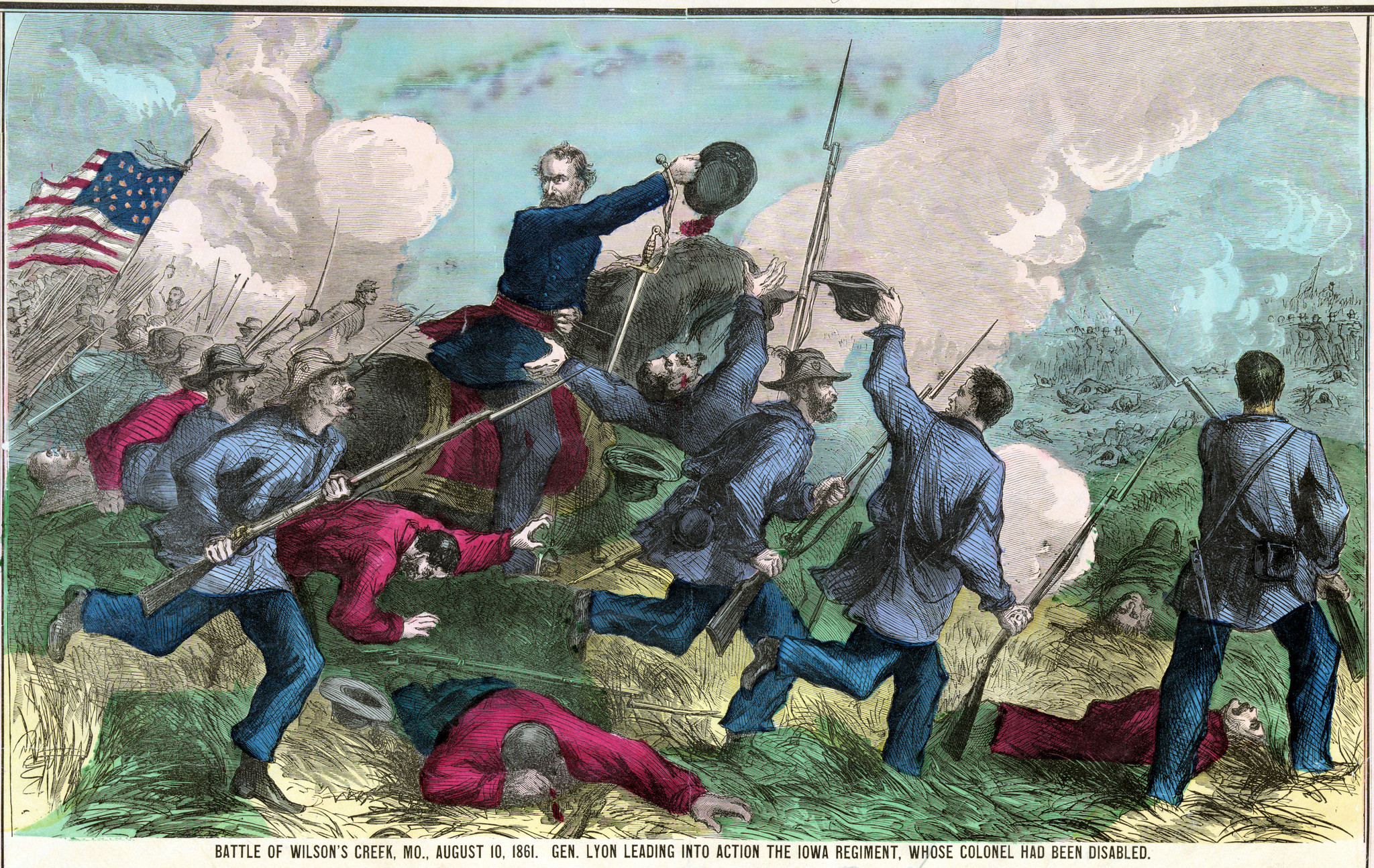 This battle, fought on the 10th of August, was, in some respects, the severest thus far in the present war, and one which, though resulting in the loss of one of our ablest generals, and the subsequent withdrawal of our troops to a position of greater safety, had yet the moral effect of a victory. The facts of the battle, as derived from official sources, were these: Gen. Lyon, finding the Confederate troops assembling in his vicinity in large force, under Gen’ls McCullough, Rains, and Price, and daily receiving re-inforcements, resolved to give them battle before they had time to make the attack they were contemplating. Accordingly, on the 10th of August, he marched out of Springfield with 5,200 men, (900 of whom subsequently re-treated in disorder, and took no part in the fight,) and, soon after sunrise, at a place called Wilson’s Creek, nine miles from Springfield, met and attacked the enemy, who were 23,000 strong. Gen. Sigel was detached to turn the enemy’s flank, while Gen. Lyon and Major Sturgis led up their columns in front. The fight raged from sunrise till one or two o’clock P. M. The Confederate troops charged Capt. Totten’s Battery three times, but each time were repulsed with terrible slaughter. Early in the day, General Lyon was twice wounded, once in the leg, and once in the scalp, but he maintained his position on horse-back, and the Colonel of one of the Iowa regiments having been disabled, and the men offering, he would give them a leader, to charge the enemy with the bayonet, he replied, “my brave boys, I will lead you,” and headed their charge, when he was struck by a bullet in the left breast, and fell from his horse; he was asked if he was much hurt, and replied no, not much,” but soon expired, without a struggle. The other leaders, Gen. Sigel and Major Sturgis, continued the fight until the enemy withdrew, after burning their baggage, to prevent its falling into the hands of our troops. Apprehending that they would endeavor to cut him off from Springfield, Major Sturgis then retreated, in good order, to Springfield, taking as many of his wounded as he could, with him, and the next day, marched with his little force to Rolla, where there were reinforcements. The loss of the Federal troops was 921 killed, wounded, and missing; that of the Confederates, according to their own statement, 517 killed, and 720 wounded, besides prisoners.
Battle Scenes, no. 1
published at H.H. Lloyd & Co., c1861
handcolored lithograph
Library of Congress image