August 16th.–Mr. Barnwell says, Fame is an article usually home made; you must create your own puffs or superintend their manufacture. And you must see that the newspapers print your own military reports. No one else will give you half the credit you take to yourself. No one will look after your fine name before the world with the loving interest and faith you have yourself.
American Civil War Chronicles
New battery
August 16, 2021
Friday, August 16.—Return of Capt. Reynolds, with the Third Battery, afterwards Battery B, Rhode Island Light Artillery, and some recruits for ours. The newly raised battery should have relieved us, and taken our pieces, as we had the promise of entirely new ones. We all expected to return to Washington; but Col. Geary, being in the immediate neighborhood of rebel troops, remonstrated against our departure, saying he would not rely on a new battery at such a critical moment. Owing to this, the Third Battery returned to Washington the same evening, in command of Lieut. Vaughan, he being promoted to Captain. Sergeant-Major Randolph was promoted to Lieutenant. All quiet up to [next entry, August 21]
Rebel War Clerk
August 16, 2021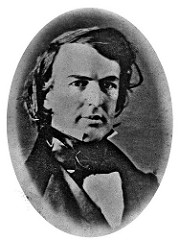
AUGUST 16th.—The President is sick, and goes to the country. I did not know until to-day that he is blind of an eye. I think an operation was performed once in Washington.
“Went with Westfall to the Provost Marshall office (Col Porter) for ‘pass’ to Virginia.”—Horatio Nelson Taft
August 16, 2021
FRIDAY 16
Went down to the Navy Yard this forenoon with F Sickels. The “Pensacola” Steamer is nearly completed. The little Tug Boat “Resolute” lay near her with three dead men on board who were killed near Mathias Point last night by the Rebels. Met Jas Westfall and Mr [Vanstetyne?] of Lyons, at the “Yard.” Went with Westfall to the Provost Marshall office (Col Porter) for “pass” to Virginia. Met Mr Redfield of Elmira at Willards. At home before dark. It has been cold today and somewhat rainy.
______
The three diary manuscript volumes, Washington during the Civil War: The Diary of Horatio Nelson Taft, 1861-1865, are available online at The Library of Congress.
Diary—Rutherford B. Hayes
August 16, 2021
August 16. Friday.–A morning of small excitements. A wagon train stopped on its way towards Sutton to search for arms or ammunition concealed in boxes of provisions. . . . Drake, Captain, and Woodward search train in vain for contraband.
The Letters of Samuel Ryan Curtis
August 16, 2021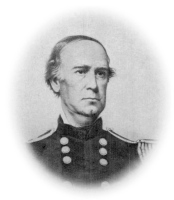
Jefferson Barracks Mo
August 16 1861
My dear wife
Since my last letter matters have quieted down a little, and I still remain here in Command of the unarmed and undisciplined regiment that remains after I have sent away everything that could be of use for fighting purposes.
Henry telegraphed that he would start over to Keokuk on the 14th He need not hurry down although I will be glad to see him when he comes. He ought to have a comfort a blanket and a pillow for his bed. I will have a cot made for him. We ought to have two good horses, and if he brings two with him it would be well enough for him to bring them down We may get them exchanged for better ones there or here and probably his little wagon could be used to advantage. Transportation will be allowed on the steamboat upon his order or requisition.
Of course you lament with me the disastrous aspect of our affairs: but we must hope on and hope ever. If arms can be had, the tables can be turned against the rebels and must be.
I am utterly astonished at the falling back [retreat– crossed out] of Iowa troops from the face of their enemies in and about the Iowa border.1
I have not seen the Commanding General to enquire after it but General Pope2 should be called on by your people to know the why and wherefore they have to do the fighting when several hundred United States troops under pay fall back to a safe position.
Poor fellows, I suppose they had to go to Burlington to give Fitz Henry Warren a grand reception!3 [continue reading…]
Special Correspondence from the Georgia Volunteers
August 16, 2021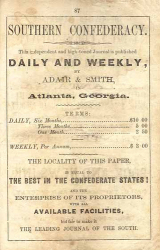
Southern Confederacy [Atlanta, Ga], August 16, 1861
Camp Davis, Lynchburg, Va.,
Aug. 13th, 1861.
Dear Confederacy: …
What a spirit animates all the people here! They even shed tears on our arrival, cheered us all the way; and when they heard we were from Georgia, all along the line of railroads at every station the people flocked and gave us the best their stentorian lungs could afford. Every house had a flag; everybody had a flag, and the ladies had their dresses made like flags, with the red and the blue predominant. I began to think that secession flags was one of the produces of the soil, or of spontaneous growth. The girls would talk to the boys, and the boys would talk to the girls, and with no parlor reserve either; but they would utter sentiments of the heart, and coming, as they did, from pretty, pouting lips, and beautiful women to say them, no wonder the boys (some of them) lost their hearts, and will leave them with the Virginia lassies, instead of those of dear old Georgia. Well, no matter, our women and children are all we are fighting for in this war, and if future generations will reap the benefit and thank us for it, ’tis all we claim. . . .
T. D. W.
“I am thinking some of enlisting and going to war.”–Alexander G. Downing.
August 16, 2021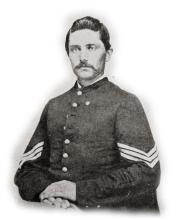
Friday, 16th–I, with Tom Toly, mowed grass all day. Swinging the scythe was hard work for me and I did not cut as wide a swath as Tom did. Father went to Tipton in the afternoon and upon his return told us the war news. I am thinking some of enlisting and going to war.
“There must be great imbecility too, somewhere, in the management of our affairs.”–Journal of Surgeon Alfred L. Castleman.
August 16, 2021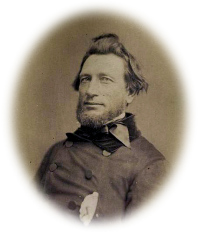
16th-–I am still at Barnum’s, and having transferred my sick to the charge of Mr. S., I have a little more time to think, and to journalize my thoughts. I have looked around a little to-day, and my observations have almost made me wish I had no country. When every right which freemen hold dear is at stake, to see men calculating the pecuniary cost of preserving them, sickens the heart, and shakes our confidence in human nature. When the poorer classes are laboring day and night, and exposing their lives in the cause of that government on which the rich lean for protection in the possession of their wealth, to see these loud mouthed patriotic capitalists’ cheating them in the very clothes they wear to battle, the soul revolts at the idea of human nature civilized into a great mass of money-makers. May we not expect, ere long, that these same patriots will be found opposing the war because it will require a tax on the riches which they shall have amassed from it, to defray its expenses ? We shall see.
There must be great imbecility too, somewhere, in the management of our affairs. We are 20,000,000 of people fighting against 6,000,000.[1] We boast that we are united as one man, whilst our enemies are divided. Congress has voted men and money ad libitum. We boast of our hundreds of thousands of soldiers in the field, whilst the rebel army is far inferior. Yet Sumter yielded to the superiority of numbers. Pickens dares not venture out of her gates, on account of the hosts surrounding her. At Big Bethel we fought against great odds in numbers. At Martinsburg we were as one to three. At Bull Run the united forces of Beauregard and Johnston bore down on and almost annihilated our little force; whilst even in the west we see the brave Lyon sacrificed, and Sigel retreating before superior numbers. And yet we seem insecure even in the defences of our great cities. We are in daily apprehension of an attack on Washington. Baltimore is without an army. St. Louis is in danger, and even Cairo defended by a handful of men compared to the number threatening to attack her. Surely the god of battles cannot have made himself familiar to our leaders.
[1] I assume that the slave population are not of those against whom we fight.
William Howard Russell’s Diary: The Maryland Club.—A Prayer and Past Day.—Financial Difficulties.—”We can… bear delays. The rebels will be ruined by it.”
August 16, 2021
I remained in Baltimore a few days, and had an opportunity of knowing the feelings of some of the leading men in the place. It may be described in one word–intense hatred of New England and black republicans, which has been increased to mania by the stringent measures of the military dictator of the American Warsaw, the searches of private houses, domiciliary visits, arbitrary arrests, the suppression of adverse journals, the overthrow of the corporate body–all the acts, in fact, which constitute the machinery and the grievances of a tyranny. When I spoke of the brutal indifference of the police to the poor officer previously mentioned, the Baltimoreans told me the constables appointed by the Federal general were scoundrels who led the Plug Uglies in former days–the worst characters in a city not sweet or savoury in repute–but that the old police were men of very different description. The Maryland Club, where I had spent some pleasant hours, was now like a secret tribunal or the haunt of conspirators. The police entered it a few days ago, searched every room, took up the flooring, and even turned up the coals in the kitchen and the wine in the cellar. Such indignities fired the blood of the members, who are, with one exception, opposed to the attempt to coerce the South by the sword. Not one of them but could tell of some outrage perpetrated on himself or on some members of his family by the police and Federal authority. Many a delator amici was suspected but not convicted. Men sat moodily reading the papers with knitted brows, or whispering in corners, taking each other apart, and glancing suspiciously at their fellows.
There is a peculiar stamp about the Baltimore men which distinguishes them from most Americans – a style of dress, frankness of manner, and a general appearance assimilating them closely to the upper classes of Englishmen. They are fond of sport and travel, exclusive and high-spirited, and the iron rule of the Yankee is the more intolerable because they dare not resent it, and are unable to shake it off.
I returned to Washington on 15th August. Nothing changed; skirmishes along the front; McClellan reviewing. The loss of General Lyon, who was killed in an action with the Confederates under Ben McCullough, at Wilson’s Creek, Springfield, Missouri, in which the Unionists were with difficulty extricated by General Sigel from a very dangerous position, after the death of their leader, is severely felt. He was one of the very few officers who combined military skill and personal bravery with political sagacity and moral firmness. The President has issued his proclamation for a day of fast and prayer, which, say the Baltimoreans, is a sign that the Yankees are in a bad way, as they would never think of praying or fasting if their cause was prospering. The stories which have been so sedulously spread, and which never will be quite discredited, of the barbarity and cruelty of the Confederates to all the wounded, ought to be set at rest by the printed statement of the eleven Union surgeons just released, who have come back from Richmond, where they were sent after their capture on the field of Bull Run, with the most distinct testimony that the Confederates treated their prisoners with humanity. Who are the miscreants who tried to make the evil feeling, quite strong enough as it is, perfectly fiendish, by asserting the rebels burned the wounded in hospitals, and bayoneted them as they lay helpless on the field?
The pecuniary difficulties of the Government have been alleviated by the bankers of New York, Philadelphia, and Boston, who have agreed to lend them fifty millions of dollars, on condition that they receive the Treasury notes which Mr. Chase is about to issue. As we read the papers and hear the news, it is difficult to believe that the foundations of society are not melting away in the heat of this conflict. Thus, a Federal judge, named Garrison, who has issued his writ of habeas corpus for certain prisoners in Fort Lafayette, being quietly snuffed out by the commandant, Colonel Burke, desires to lead an army against the fort and have a little civil war of his own in New York. He applies to the commander of the county militia, who informs Garrison he can’t get into the fort as there was no artillery strong enough to breach the walls, and that it would require 10,000 men to invest it, whereas only 1400 militiamen were available. What a farceur Judge Garrison must be! In addition to the gutting and burning of newspaper offices, and the exercitation of the editors on rails, the republican grand juries have taken to indicting the democratic journals, and Fremont’s provost marshal in St. Louis has, propria motu, suppressed those which he considers disaffected. A mutiny which broke out in the Scotch Regiment 79th N. Y. has been followed by another in the 2nd Maine Regiment, and a display of cannon and of cavalry was required to induce them to allow the ringleaders to be arrested. The President was greatly alarmed, but McClellan acted with some vigour, and the refractory volunteers are to be sent off to a pleasant station called the “Dry Tortugas” to work on the fortifications.
Mr. Seward, with whom I dined and spent the evening on 16th August, has been much reassured and comforted by the demonstrations of readiness on the part of the people to continue the contest, and of confidence in the cause among the moneyed men of the great cities. “All we want is time to develope our strength. We have been blamed for not making greater use of our navy and extending it at once. It was our first duty to provide for the safety of our capital. Besides, a man will generally pay little attention to agencies he does not understand. None of us knew anything about a navy. I doubt if the President ever saw anything more formidable than a river steamboat, and I don’t think Mr. Welles, the Secretary of the Navy, knew the stem from the stern of a ship. Of the whole Cabinet, I am the only member who ever was fairly at sea or crossed the Atlantic. Some of us never even saw it. No wonder we did not understand the necessity for creating a navy at once. Soon, however, our Government will be able to dispose of a respectable marine, and when our army is ready to move, co-operating with the fleet, the days of the rebellion are numbered.”
“When will that be, Mr. Secretary?”
“Soon; very soon, I hope. We can, however, bear delays. The rebels will be ruined by it.”
Adams Family Letters, Charles Francis Adams, U.S. Minister to the U.K., to his son, Charles
August 16, 2021
London, August 16, 1861
We have now gone through three stages of this great political disease. The first was the cold fit, when it seemed as if nothing would start the country. The second was the hot one, when it seemed almost in the highest continual delirium. The third is the process of waking to the awful reality before it. I do not venture to predict what the next will be. I hope anything but distraction. Thus far the favorable feature has been union. Maintaining that, we can bear a great deal. But unless we can have a principle to contend for, the money question will infallibly shake us to pieces. I am for this reason anxious to grapple with the slave question at once. I wish to settle it in the District of Columbia, to dispose of it prospectively in Maryland, and wherever else we have a hold in the slave states. Money spent in smoothing that road is far better used than in war. It will spread our real strength which mere military supremacy will not. . . .
Civil War Day-By-Day
August 16, 2021
August 16, 1861
A Chronological History of the Civil War in America1
- President Lincoln declared by proclamation the States of Virginia, North Carolina, Tennessee, and Arkansas in insurrection, and ordered all commercial intercourse between the North and seceded States to cease.
- Rebel camp at Fredericktown, Md., attacked, and 12 of the enemy taken prisoners.
- Several newspapers in New York presented by the grand jury for hostility to the Government.
- A Chronological History of the Civil War in America by Richard Swainson Fisher, New York, Johnson and Ward, 1863
“More rumors of attacks by guerrillas, or “bushwhackers” as they are here called, on our couriers and trains.”—Rutherford B. Hayes
August 15, 2021
August 15. Thursday.–A bright, lovely day and the prettiest evening of the month. The bright moonlight exhibits the landscape enough to show its loveliness and the lights and shadows. The hills and woods are very picturesque. It makes me long for wife and boys and friends behind. How Lute would enjoy roaming with me through camp tonight.
More rumors of attacks by guerrillas, or “bushwhackers” as they are here called, on our couriers and trains. A courier and captain and some wagoners are reported killed or taken below Sutton.
My box containing pistols and sash, etc., by mistake sent from Clarksburg to Buckhannon. Made arrangements to send Lieutenant Richardson and two men with ambulance after it.
WESTON, VIRGINIA, August 15, 1861.
Thursday Morning.
DEAREST L–:–We had four days of rain ending yesterday morning–such rain as this country of hills and mountains can afford. It was gloomy and uncomfortable but no harm was done. It cleared off beautifully yesterday morning and the weather has been most delicious since. This is a healthful region. Nobody seriously sick and almost everybody outrageously healthy. I never was better. It is a luxury to breathe. Dr. Joe–but don’t he go into the corn? He has it three times a day, reminding me of Northampton a year ago and your order for supper on our return from Mount Holyoke. [continue reading…]
Extracts from the journal of Commander Semmes, C.S. Navy, commanding C.S.S. Sumter
August 15, 2021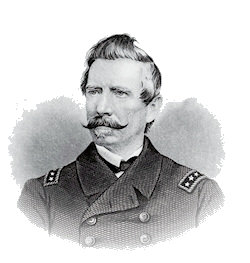
Thursday, August 15.—During the past night made the Great Constable, a small island off the coast some 40 miles to the eastward of Cayenne. Anchored at midnight in 141 fathoms water, the island bearing west, distant about 6 miles. At daylight this morning, after waiting for the passage of a rain squall, we got underway and stood outside of the Constable to avoid a shoal some 4 miles to the N. N. W. In the afternoon the breeze freshened finely, and we ran up to the Remire Islets, where we took on board a pilot from a French lugger that was waiting for us, and ran in and anchored to the northward of the Child [Enfant Perdu]in 31 fathoms. We have thus finely accomplished what I feared two days ago the currents and the calms would render impossible. The approach to Cayenne is pretty, the island being picturesque. The batteries at the town fired an evening salute as we came to anchor, in honor of the birth of Napoleon, this being the 15th day of August.
Mary Chesnut’s diary.—”The discrepancies in all these private memories amuse him, but he (Mr. Chesnut) smiles pleasantly and lets every man tell the tale in his own way.”
August 15, 2021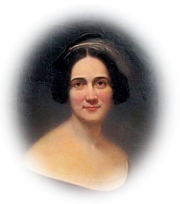
August 15th.–Mrs. Randolph came. With her were the Freelands, Rose and Maria. The men rave over Mrs. Randolph’s beauty; called her a magnificent specimen of the finest type of dark-eyed, rich, and glowing Southern woman-kind. Clear brunette she is, with the reddest lips, the whitest teeth, and glorious eyes; there is no other word for them. Having given Mrs. Randolph the prize among Southern beauties, Mr. Clayton said Prentiss was the finest Southern orator. Mr. Marshall and Mr. Barnwell dissented ; they preferred William C. Preston. Mr. Chesnut had found Colquitt the best or most effective stump orator.
Saw Henry Deas Nott. He is just from Paris, via New York. Says New York is ablaze with martial fire. At no time during the Crimean war was there ever in Paris the show of soldiers preparing for the war such as he saw at New York. The face of the earth seemed covered with marching regiments.
Not more than 500 effective men are in Hampton’s Legion, but they kept the whole Yankee army at bay until half-past two. Then just as Hampton was wounded and half his colonels shot, Cash and Kershaw (from Mrs. Smith Lee audibly, ”How about Kirby Smith?”) dashed in and not only turned the tide, but would have driven the fugitives into Washington, but Beauregard recalled them. Mr. Chesnut finds all this very amusing, as he posted many of the regiments and all the time was carrying orders over the field. The discrepancies in all these private memories amuse him, but he smiles pleasantly and lets every man tell the tale in his own way.
Drummed out.
August 15, 2021
Thursday, August 15.—Witnessed the drumming out of a soldier of the Twenty-eighth Pennsylvania for stealing from his comrades.
Rebel War Clerk
August 15, 2021
AUGUST 15th.—No clew yet to the spies in office who furnish the Northern press with information. The matter will pass uninvestigated. Such is our indifference to everything but desperate fighting. The enemy will make good use of this species of information.
“All military movements are now kept as secret as possible by Genl McClellan.”—Horatio Nelson Taft
August 15, 2021
THURSDAY 15
The 3rd Regt of Regulars are cleaning up the Camp on F[ranklin] Square, “Camp Anderson,” for occupation. I was in the Pat office awhile today but staid at Home most of the day. The weather is quite cool and a fire in the dining room is comfortable in the morning. Doct Barnes was over from Alexandria and took dinner with us. No particular news afloat. All military movements are now kept as secret as possible by Genl McClellan.
______
The three diary manuscript volumes, Washington during the Civil War: The Diary of Horatio Nelson Taft, 1861-1865, are available online at The Library of Congress.
Downing’s Civil War Diary.–Sergeant Alexander G. Downing.
August 15, 2021
Thursday, 15th–We capped our grain stacks against rain and windstorms, and then commenced mowing wild grass for hay. This is my birthday; am nineteen years old.
Unanticipated Kindness of Baltimoreans.–Journal of Surgeon Alfred L. Castleman.
August 15, 2021
15th.–I wish to record, what I have omitted, an acknowledgment to many of the people of Baltimore during our stay here, for such kindness as I never expected to meet with amongst strangers. On the morning of our arrival, at the depot, in this city, I was detained some time in looking after the sick who were brought forward, and in getting them into conveyances to the depot where we were to re-embark. The regiment marched forward and left me, so that I must pass through the city alone. I armed myself well, expecting to be insulted at every corner, and, perhaps, to meet with personal violence. My dress showed me to be a member of the regiment which had just passed. Scarcely a rod did I walk without being accosted with kind greetings and “Godspeeds;” scarcely a corner did I pass without being stopped by gentlemen, inviting me to their houses to partake of their hospitality, in the shape of a cup of coffee, a breakfast, a little rest. Ladies, as I passed, would come to the door, or send out their servants to know if they could do anything for the comfort of myself or regiment.
Since I have been left here with the sick of the regiment, their kindness and attention have, if possible, been even more marked. The house which I use for both hospital and headquarters, is constantly crowded by ladies, gentlemen, children, pressing in to see what they can do for the relief of the sufferers. The tables groan under the delicacies brought in, and citizens beg for permission to take my sick and care for them at their houses. Nor is this done from the novelty of seeing a regiment pass through. There are always from ten to twenty thousand volunteer troops here, and from one to twenty new regiments pass through daily.
I confess to myself that this is a discouraging feature in the war. This is a Southern city, and this is a type of Southern character. They become interested, and their whole heart is wrapped up in the subject. It is a representation of the character of the people against whom we fight, and on this earnestness for what they believe to be right, is based much of their opinion that the Southerner will prove himself so far superior to the Northern man in battle. I fear there is more truth in it than we of the North are willing to admit. Whatever may be the result of the struggle now going on, to the people of Baltimore I shall ever remember that I am under deep obligations for their kindness to me personally, as well as to the sufferers under my care, and for their interest in the cause which I believe to be not only right, but sacred. I leave Baltimore with much regret, and beg its kind citizens to remember that at least one soldier, a recipient of their kindness, will ever treasure in his heart a grateful remembrance of them.
Civil War Day-By-Day
August 15, 2021
August 15, 1861
- General George McClellan assumes command of the Army of the Potomac.
- The Department of Kentucky and the Department of the Cumberland are combined under General Robert Anderson.
A Chronological History of the Civil War in America1
- President Davis ordered all Northern men to leave the Confederacy within 40 days.
- A Chronological History of the Civil War in America by Richard Swainson Fisher, New York, Johnson and Ward, 1863
Bravo for her
August 14, 2021
Southern Confederacy [Atlanta, Ga], August 14, 1861, p. 1, c. 1
From the Petersburg Express.
Charles H. Foster–To the Public.
Murfreesboro’, N. C.,
Messrs. Editors: As a woman true to the South whose heart beats in unison with those of our patriotic sons now struggling for our altars and our firesides, and as one whose sympathies and prayers are enlisted in behalf of a free people, now threatened with subjugation at the hands of corrupt functionaries, and mercenary outlaws, I am prompted to write the following lines, however embarrassing and unpleasant it may be to thus bring my name before the public. I am desirous that my indignation and contempt should be known for the course of Charles H. Foster, formerly of Orono, Maine, late of this place, and now of Washington city.
All persons know, who have been acquainted with Mr. Foster, for the last six months, that he left this place in the month of February last, for his desk in the Post Office Department at Washington–a position obtained under Mr. Buchanan’s administration, and remained there until the 3rd of May last, when he returned to this place. His presence to this town caused great excitement immediately upon the fact of his arrival being known, as his conduct in a great measure, I am frank to confess, reasonably justified. He was accused of being untrue to the South–a Black Republican–and some went so far as to believe him a spy, sent out directly from under the roof of the White House. To all of these accusations he plead not guilty, and went so far as to say to me that he intended to return to Washington and prove himself a Southern man.
Mr. Foster finally did return, and to my great surprise, I have found that man upon whom I had centered my whole affections, and who had won the confidence of my heart, has proved himself recreant to his pledges, false to his vows, and indifferent as to the life or death of his own wife and child.
From the Sunday Morning Chronicle, published in Washington, I learn that on the occasion of a serenade given to Mr. Foster soon after his arrival, he said in addition to other odious things, that he intended to head a Brigade as soon as arrangements could be made, and come to North Carolina to relieve the oppressed friends of the Union living among us. The import of which language is that he would see my own people exterminated, our own homes outraged, desecrated and destroyed. Without reference to anything else that this man has said or done, which has proven him a traitor, to his adopted home, I conclude this card by saying, that as painful as a separation would be under other circumstances that I now declare every tie severed which has heretofore bound me to Charles H. Foster, and from this day I consider the relation formerly existing between us as husband and wife, virtually dissolved forever.
I shall no longer bear his name and will take advantage of the earliest opportunity offered by our laws of having it legally changed to what I now sign it.
Sue A. Carter.
“…accused by their Union neighbors with divers acts of violence against law-and-order citizens.”—Rutherford B. Hayes
August 14, 2021
August 14. Wednesday.–The weather has changed to cool, and although the sky is still clouded I hope this long rain is now over. Our prisoners turn out to be Hezekiah and Granville Bennett, cousins of the notorious James and William Bennett, aged forty-nine and twenty-two, father and son, and Moss and George W. Brothers, aged fifty-eight and forty-eight. Our information is not definite as to their conduct. One or more of them belonged to the Southern army, and all are accused by their Union neighbors with divers acts of violence against law-and-order citizens.
Last evening Lieutenant Milroy came over from Glenville reporting that Captain R. B. Moore feared an attack from three companies of well armed Secessionists in the region west of them, say Spencer, and was fortifying himself. The people immediately around him are friendly, he having conducted himself with great prudence and good sense and by kindness and justice made friends of the people of all parties.
Extracts from the journal of Commander Semmes, C.S. Navy, commanding C.S.S. Sumter
August 14, 2021
Wednesday, August 14.—Morning beautiful, with fleecy trade clouds, promising a fine breeze, but the breeze never came; the clouds passed on sluggishly and changed their forms and positions, but no wind. A livelong, calm day, with nothing but cat’s paws and currents, the latter setting about W. N. W. We have lessened our soundings somewhat, being in 23 fathoms at 4 p.m. The silver mountains in sight, bearing S. W. ½ S. Saw a sail during the morning afar off under the land, but could not make her out. Gained a little on the northerly current to-day. Latitude, 4 ° 49′ N .; longitude,51° 19′. Cayenne bearing about west, distant 55 miles.
“Our people are lashing themselves into a fury against the prisoners. Only the mob in any country would do that.”—A Diary From Dixie
August 14, 2021
August 14th.–Last night there was a crowd of men to see us and they were so markedly critical. I made a futile effort to record their sayings, but sleep and heat overcame me. To-day I can not remember a word. One of Mr. Mason’s stories relates to our sources of trustworthy information. A man of very respectable appearance standing on the platform at the depot, announced, “I am just from the seat of war.” Out came pencil and paper from the newspaper men on the qui vive. “Is Fairfax Court House burned?” they asked. “Yes, burned yesterday.” “But I am just from there,” said another; “left it standing there all right an hour or so ago.” “Oh! But I must do them justice to say they burned only the tavern, for they did not want to tear up and burn anything else after the railroad.” “There is no railroad at Fairfax Court House,” objected the man just from Fairfax. “Oh! Indeed!” said the seat-of-war man, “I did not know that; is that so?” And he coolly seated himself and began talking of something else.
Our people are lashing themselves into a fury against the prisoners. Only the mob in any country would do that. But I am told to be quiet. Decency and propriety will not be forgotten, and the prisoners will be treated as prisoners of war ought to be in a civilized country.