Monday, 19th–I helped haul and stack hay this forenoon, and in the afternoon went to Inland with the other boys who enlisted yesterday, to see about going to Camp McClellan, at Davenport.
American Civil War Chronicles
Journal of Surgeon Alfred L. Castleman.
August 19, 2021
19th.–To-day came from Baltimore and joined my regiment at Meridian Hill, where I find the whole country a vast city of camps.
William Howard Russell’s Diary: “‘Battle expected to-morrow’ has been a heading in the papers for the last fortnight.”
August 19, 2021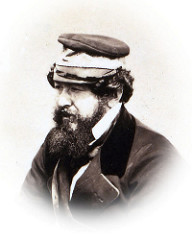
Next day (19th) the rain fell incessantly. The mail was brought in by a little negro boy on horseback, and I was warned by my letters that an immediate advance of McClellan’s troops was probable. This is an old story. “Battle expected to-morrow” has been a heading in the papers for the last fortnight. In the afternoon I was driven over a part of the estate in a close carriage, through the windows of which, however, I caught glimpses of a beautiful country, wooded gloriously, and soft, sylvan, and well-cultivated as the best parts of Hampshire and Gloucestershire, the rolling lands of which latter county, indeed, it much resembled in its large fields, heavy with crops of tobacco and corn. The weather was too unfavourable to admit of a close inspection of the fields; but I visited one or two tobacco houses, where the fragrant Maryland was lying in masses on the ground, or hanging from the rafters, or filled the heavy hogsheads with compressed smoke.
“Our ‘ossifers’ we think are really scared about an attack here..,”–Army Life of an Illinois Soldier, Charles Wright Wills.
August 19, 2021
Cairo, August 19, 1861.
The boys are writing to-day for some butter and things from home. The expense by express from Peoria is not worth speaking of and the other boys have things sent them often. We have made up our minds to lying here six weeks longer at least, and conclude that time will pass better with a few home extras to grace our table.
Civil War Day-By-Day
August 19, 2021
August 19, 1861
- Henry Halleck promoted to Major General.
A Chronological History of the Civil War in America1
- U. S. Sec. of War issued an order calling upon governors of States to send immediately to Washington all regiments and parts of regiments within their respective jurisdictions.
- U. S. Sec. of State ordered that all persons leaving or entering the United States shall be possessed of a passport.
- Editor of the Essex County (Mass) Democrat was tarred and feathered for rebel sentiments.
- O?ices of the Jeffersonian, Westchester, Pa, and of the People’s Friend, Covington, Ind., cleaned out by mobs—both secession.
- A Chronological History of the Civil War in America by Richard Swainson Fisher, New York, Johnson and Ward, 1863
“Beauregard is quite a ‘bug bear’ to many of the inhabitants just now.”—Horatio Nelson Taft
August 18, 2021
SUNDAY 18
This has been a wet disagreable day. Did not go to church, have been reading & writing most of the day. E’d Dickerson and Owen Klink called today. They are just from the other side of the River. All quiet there. There seems to be an ominous stillness all round the City soon to be broken by a desperate battle near by. At least 200000 men are within a few miles of the City, rebels & all, probably more. Called at Doct Everitts this evening. Beauregard is quite a “bug bear” to many of the inhabitants just now.
______
The three diary manuscript volumes, Washington during the Civil War: The Diary of Horatio Nelson Taft, 1861-1865, are available online at The Library of Congress.
“There is a general rising among the Rebels. They rob and murder the Union men, and the latter come to us for help.”—Rutherford B. Hayes
August 18, 2021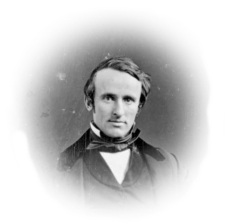
August 18. Sunday.–Last night, about ten or eleven, five companies of Colonel Moor’s (Second German Regiment) Twenty-eighth Regiment arrived from Clarksburg under Lieutenant-Colonel Becker. My partner, L. Markbreit, is sergeant-major. This morning, raining hard. Exciting rumors and news. A Tennessee regiment and force coming through the mountains east of Sutton–a battery of four guns, one thirty-two-pounder!! What an anchor to drag through the hills! Absurd! Danger of all provisions below here with vast stores being taken by the enemy. We are ordered to cook three days’ rations and be ready to move at a moment’s warning, with forty rounds of ammunition. All trains on the route to Sutton are ordered back or to take the way to Buchanan [Buckhannon] via Frenchtown. Eighty thousand rations are ordered to same place from here. All is war. I pack my portmanteau and prepare to move. Oh, for a horse which wouldn’t founder, or get lame, or stumble! At night no order to move yet.
_______
HEADQUARTERS, 23D REG’T, O. V. INF., U. S. A.,
August 17, 1861.
DEAREST:–Your letter to Dr. Joe did me much good. Bless the boys. I love to read your talk about them.
I had just started this letter when a dispatch came from Captain Zimmerman. He had a little brush with some guerrillas in the mountains twenty-five miles from here and had three men wounded. This is the first blood of our regiment shed in fight. He scattered the rascals without difficulty, making some prisoners. We have had a picquet wounded on guard and accidental wounding but no fighting blood-letting before. This is the expedition I expected to go with when I wrote you last, but the accounts of the enemy not justifying the sending of more than one company, I was not sent.
There is a general rising among the Rebels. They rob and murder the Union men, and the latter come to us for help. We meet numbers of most excellent people. We have out all the time from two to six parties of from ten to seventy-five or one hundred men on scouting duty. [continue reading…]
Mary Chesnut’s diary: “The idea that we want to invade or subjugate anybody; we would be only too grateful to be left alone. We ask no more of gods or men.”
August 18, 2021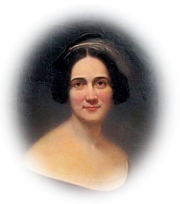
August 18th.–Found it quite exciting to have a spy drinking his tea with us–perhaps because I knew his profession. I did not like his face. He is said to have a scheme by which Washington will fall into our hands like an overripe peach.
Mr. Barnwell urges Mr. Chesnut to remain in the Senate. There are so many generals, or men anxious to be. He says Mr. Chesnut can do his country most good by wise counsels where they are most needed. I do not say to the contrary; I dare not throw my influence on the army side, for if anything happened!
Mr. Miles told us last night that he had another letter from General Beauregard. The General wants to know if Mr. Miles has delivered his message to Colonel Kershaw. Mr. Miles says he has not done so; neither does he mean to do it. They must settle these matters of veracity according to their own military etiquette. He is a civilian once more. It is a foolish wrangle. Colonel Kershaw ought to have reported to his commander-in-chief, and not made an independent report and published it. He meant no harm. He is not yet used to the fine ways of war.
The New York Tribune is so unfair. It began by howling to get rid of us: we were so wicked. Now that we are so willing to leave them to their overrighteous self-consciousness, they cry: “Crush our enemy, or they will subjugate us.” The idea that we want to invade or subjugate anybody; we would be only too grateful to be left alone. We ask no more of gods or men.
Went to the hospital with a carriage load of peaches and grapes. Made glad the hearts of some men thereby. When my supplies gave out, those who had none looked so wistfully as I passed out that I made a second raid on the market. Those eyes sunk in cavernous depths and following me from bed to bed haunt me.
Wilmot de Saussure, harrowed my soul by an account of a recent death by drowning on the beach at Sullivan’s Island. Mr. Porcher, who was trying to save his sister’s life, lost his own and his child’s. People seem to die out of the army quite as much as in it.
Mrs. Randolph presided in all her beautiful majesty at an aid association. The ladies were old, and all wanted their own way. They were cross-grained and contradictory, and the blood mounted rebelliously into Mrs. Randolph’s clear-cut cheeks, but she held her own with dignity and grace. One of the causes of disturbance was that Mrs. Randolph proposed to divide everything sent on equally with the Yankee wounded and sick prisoners. Some were enthusiastic from a Christian point of view; some shrieked in wrath at the bare idea of putting our noble soldiers on a par with Yankees, living, dying, or dead. Fierce dames were some of them, august, severe matrons, who evidently had not been accustomed to hear the other side of any question from anybody, and just old enough to find the last pleasure in life to reside in power–the power to make their claws felt.
Extracts from the journal of Commander Semmes, C.S. Navy, commanding C.S.S. Sumter
August 18, 2021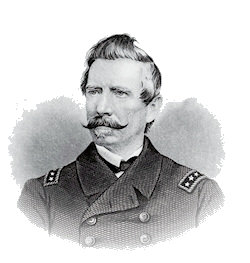
Sunday, August 18.—Weather clear, with a light breeze from the eastward, which freshened as the day advanced, and gave us a fresh breeze toward nightfall. After passing Port Orange we ran over another 3-fathom bank, the water deepening beyond, enabling us to head in toward the coast as we approached Bram Point, off which we anchored (near the buoy on the bar) at 5:20 p.m. in 4 fathoms. Mustered the crew and read the articles of war. I had much perplexity in finding the mouth of the Surinam, such is the sameness of the coast. At 6 p.m. a steamer was described in the west, steering for the harbor. Night setting in soon afterwards, we could not make her out. Went to quarters and cleared for action. Got up the smokestack and lighted the fires and made preparations for slipping the chain. At about 10:30 the stranger came up and anchored outside of us at the distance of about 4 miles. I concluded from the movement that she must be an enemy, as probably a mail steamer would have run the bar without waiting for daylight. I therefore directed all hands to be called at 4:30 a.m., and all preparations renewed for battle, with steam up, etc.
A Good Move
August 18, 2021
Daily Times [Leavenworth, Ks],
August 18, 1861
Many robberies and depredations have been committed in the Southern border counties recently, under pretense of operating against Secessionists. A trial which took place in Olathe, revealed the fact that a regularly organized gang existed, who, taking advantage of the political troubles, had banded together to “confiscate” property, in the name of the Constitution and the Union. Under these circumstances, Gov. Robinson has appointed E. S. Lowman, Esq., his Aid, and placed him in charge of Johnson, Lykins and Bourbon counties. He is authorized to call out the full military force of the counties afflicted, if need be, to put down and bring the thieves to punishment, as well as to protect the borders from Secession surprise. This is a good move.
“About fifty-five boys enlisted and we are to go in Company E of the Eighth Iowa.”–Alexander G. Downing.
August 18, 2021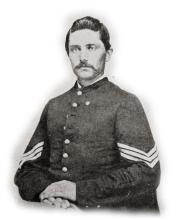
Sunday, 18th–This morning attended the Methodist church and Sunday school at Posten’s Grove. Several Methodist brethren were received into the church. In the afternoon Mr. Wharton, the minister, delivered a patriotic speech and spoke of the war. He then called for volunteers and I put my name down to go for three years or during the war. About fifty-five boys enlisted and we are to go in Company E of the Eighth Iowa.
William Howard Russell’s Diary: A Priest’s view of the Abolition of Slavery.—Slavery in Maryland.
August 18, 2021
(18th) On the day after my arrival the rain fell in torrents. The weather is as uncertain as that of our own isle. The torrid heats at Washington, the other day, were succeeded by bitter cold days; now there is a dense mist, chilly and cheerless, seeming as a sort of strainer for the even down pour that falls through it continuously. The family after breakfast slipped round to the little chapel which forms the extremity of one wing of the house. The coloured people on the estate were already trooping across the lawn and up the avenue from the slave quarters, decently dressed for the most part, having due allowance for the extraordinary choice of colours in their gowns, bonnets, and ribbons, and for the unhappy imitations, on the part of the men, of the attire of their masters. They walked demurely and quietly past the house, and presently the priest, dressed like a French cure, trotted up, and service began. The negro houses were of a much better and more substantial character than those one sees in the south, though not remarkable for cleanliness and good order. Truth to say, they were palaces compared to the huts of Irish labourers, such as might be found, perhaps, on the estates of the colonel’s kinsmen at home. The negroes are far more independent than they are in the south. They are less civil, less obliging, and, although they do not come cringing to shake hands as the field hands on a Louisianian plantation, less servile. They inhabit a small village of brick and wood houses, across the road at the end of the avenue, and in sight of the house. The usual swarms of little children, poultry, pigs, enlivened by goats, embarrassed the steps of the visitor, and the old people, or those who were not finely dressed enough for mass, peered out at the strangers from the glassless windows.
When chapel was over, the boys and girls came up for catechism, and passed in review before the ladies of the house, with whom they were on very good terms. The priest joined us in the verandah when his labours were over, and talked with intelligence of the terrible war which has burst over the land. He has just returned from a tour in the Northern States, and it is his belief the native Americans there will not enlist, but that they will get foreigners to fight their battles. He admitted that slavery was in itself an evil, nay, more, that it was not profitable in Maryland. But what are the landed proprietors to do? The slaves have been bequeathed to them as property by their fathers, with certain obligations to be respected, and duties to be fulfilled. It is impossible to free them, because, at the moment of emancipation, nothing short of the confiscation of all the labour and property of the whites would be required to maintain the negroes, who would certainly refuse to work unless they had their masters’ land as their own. “Where is white labour to be found? Its introduction must be the work of years, and meantime many thousands of slaves, who have a right to protection, would canker the land.
In Maryland they do not breed slaves for the purpose of selling them as they do in Virginia, and yet Colonel Carroll and other gentlemen who regarded the slaves they inherited almost as members of their families, have been stigmatised by abolition orators as slave-breeders and slave-dealers. It was these insults which stung the gentlemen of Maryland and of the other Slave States to the quick, and made them resolve never to yield to the domination of a party which had never ceased to wage war against their institutions and their reputation and honour.
A little knot of friends and relations joined Colonel Carroll at dinner. There are few families in this part of Maryland which have not representatives in the other army across the Potomac; and if Beauregard could but make his appearance, the women alone would give him welcome such as no conqueror ever received in liberated city.
“I would prefer to move into Maryland for an assault upon Washington and a speedy close of the war.”–Letters from Elisha Franklin Paxton.
August 18, 2021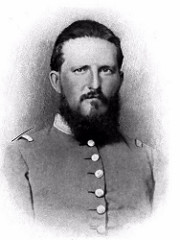
Camp Harmon, Manassas, August 18, 1861.
I promised in my letter of last Sunday to write to you every Sunday, and I will to-day, but I ought not, as you have not answered my last. I find abundance of employment in my new position, but I like it all the better on this account. The last week has been almost one continuous dreary rain, making soldier life more comfortless than usual. I think I shall quit the use of tobacco altogether, as I am inclined to believe that it injures me. I am very glad that my duties require of me very little writing, for what little I do satisfies me that my eyes have not improved, and that it is not safe to use them much. They pained after the writing which I did last Sunday to Wm. White and yourself. I think we have the prospect of an idle life here for some time to come. I am free to say I don’t like it. I would prefer to move into Maryland for an assault upon Washington and a speedy close of the war. But I suppose those in command know best what should be done.
Civil War Day-By-Day
August 18, 2021
August 18, 1861
A Chronological History of the Civil War in America1
- Gen. Wool took command of Fortress Monroe. Skirmishes at Charleston, Mo.
- Sentinel office at Easton, Pa., destroyed by a mob—cause, secession proclivities.
- A Chronological History of the Civil War in America by Richard Swainson Fisher, New York, Johnson and Ward, 1863
Rebel War Clerk
August 17, 2021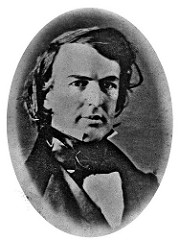
AUGUST 17th.—Some apprehension is felt concerning the President’s health. If he were to die, what would be the consequences? I should stand by the Vice-President, of course, because “it is so nominated in the bond,” and because I think he would make as efficient an Executive as any other man in the Confederacy. But others think differently; and there might be trouble.
The President has issued a proclamation, in pursuance of the act of Congress passed on the 8th instant, commanding all alien enemies to leave in forty days; and the Secretary of War has indicated Nashville as the place of exit. This produces but little excitement, except among the Jews, some of whom are converting their effects into gold and departing.
Col. Bledsoe’s ankles are much too weak for his weighty body, but he can shuffle along quite briskly when in pursuit of a refractory clerk; and when he catches him, if he resists, the colonel is sure to leave him.
“If any of my men kill prisoners, I’ll kill them.”—Rutherford B. Hayes
August 17, 2021
August 17. Saturday.–Dispatches came last [night] from Colonel Matthews. He can’t return as ordered for fear of losing his command between Summersville and Sutton; rumors of Wise, etc., etc. Colonels Tyler and Smith go with him nine miles back towards Gauley Bridge to fortify. The colonel thinks this is a mistake of judgment and is disgusted with it. I think Colonel Scammon is right.
Lieutenant Rice’s men report that three men named Stout were taken near Jacksonville by some of Captain Gaines’ men and part of his command and that afterwards Gaines’ men killed them, alleging orders of Captain Gaines, etc., etc. This is too bad. If any of my men kill prisoners, I’ll kill them.
Captain McMullen with four mountain howitzers arrived this morning–12-pounders. Good! My horse, not Webb first but Webb second, by hard riding foundered or stiffened. Mem.:– Lend no horse; see always that your horse is properly cared for, especially after a hard ride.
_______
HEADQUARTERS 23D REG’T, O. V. INF., U. S. A.,
August 17, 1861.
DEAR UNCLE:–We are kept very busy, hunting up guerrillas, escorting trains, etc., etc. Attacking parties are constantly met on the roads in the mountains, and small stations are surrounded and penned up. We send daily parties of from ten to one hundred on these expeditions, distances of from ten to forty miles. Union men persecuted for opinion’s sake are the informers. The Secessionists in this region are the wealthy and educated, who do nothing openly, and the vagabonds, criminals, and ignorant barbarians of the country; while the Union men are the middle classes–the law-and-order, well-behaved folks. Persecutions are common, killings not rare, robberies an every-day occurrence. [continue reading…]
“Long trains of Army wagons were loading and leaving.”—Horatio Nelson Taft
August 17, 2021
SATURDAY, AUGUST 17, 1861.
This day has passed off without any particular incident occuring. I was at the RR Depot. A Regt of Cavalry from P.A. came in while I was there. Troops are coming all the while but nothing is said or known about it publicly. Long trains of Army wagons were loading and leaving. Saw a vast quantity of Govt Stores there in Boxes — arms, harness, &c. At Willards in the evening. Chas Marriage with Miss Sally Woodward was published in the “Star” this evening. Married on the 23rd July.
______
The three diary manuscript volumes, Washington during the Civil War: The Diary of Horatio Nelson Taft, 1861-1865, are available online at The Library of Congress.
Extracts from the journal of Commander Semmes, C.S. Navy, commanding C.S.S. Sumter
August 17, 2021
Saturday, August 17.—Morning clear, with a fresh breeze (from) the southward and eastward. Running along the coast in 10 fathoms water, the soundings very regular. Observed in latitude 5° 56′. Passed the mouth of the Maroni at about noon, and at 4 p.m. ran across a sand bank in very muddy water some 15 miles to the north ward and eastward of the entrance; having only 3 fathoms, hauled out N. N. W.until we deepened into 5 fathoms, which we did pretty soon, when we hauled in W. S. W. for the coast, carrying in 5 fathoms within 7 or 8 miles. At 9 p.m. anchored in 5 fathoms water about 7 miles from the land.
“I made up my mind to enlist and go and fight our Southern brethren.”–Alexander G. Downing.
August 17, 2021
Saturday, 17th–I mowed grass all forenoon and in the afternoon went to a Sunday school celebration down at Posten’s Grove. I made up my mind to enlist and go and fight our Southern brethren. In the evening I went to Mr. Willey’s to stay all night with Ward. Later in the evening we attended a peace meeting at Inland.
The Mutiny in the 79th Regiment, New-York Volunteers.—War Letters of William Thompson Lusk, at the time a lieutenant in the 79th.
August 17, 2021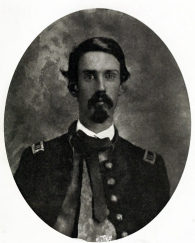
Maryland,
Camp Causten, Aug. 17th, 1861.
My dear Mother:
This has been a busy and painful week for the officers of the Highland Regiment. You have seen various accounts of our troubles in the papers, but they contain nothing authentic, although perhaps about as much as an outsider can understand. The mutiny of Thursday is only the legacy of a quarrel begun among the officers before the Regiment left for the seat of war. The quarrel ended after the battle of Bull Run, in the resignation of several of the officers whose ambition was disappointed as to governing the affairs of the Regiment. Not content with withdrawing their services, these men resolved to undermine the Regiment itself. Their plans were well laid. In an underhand way they conveyed papers among the men purporting that as State Militia they were entitled to return home at the expiration of three months service, but that an effort would be made to detain them for the war. By going home, it was represented the men would receive a grand ovation, would meet their families, and be enabled to tell their tale of the Bull Run battle. Those who had had enough of fighting could resume their old employments, while the greater part who were ready to re-enlist for the war, would be entitled to the re-enlistment bounty of $30. A Government which would give $30 bounty for re-enlisted three month soldiers must place a high value upon them. “Now,” the men were told, “a secret plan has been formed to prevent your return home at all. Lieut.-Col. Elliott has received from Government $10,000.00 to sell you all for the war, and to cheat you of your rights and privileges.” Some little things occurred which, as far as the men were concerned, seemed corroborative of these statements, viz: – An order which had been issued by the Secretary of War for us to return to New-York to recruit was recalled as inexpedient on the day the three-month service of our men expired. This was sufficient for them. They believed they had been sold; and the train which had been carefully laid exploded upon our being ordered, not into the boat for home, but onto the road into Maryland. Since the battle, owing to the loss through resignations or deaths, of our Colonel, Major and 9 of the 10 Captains, besides that of many of the Lieutenants, we were left in a condition peculiarly unfavorable to discipline; and this much is to be said, that the companies of Captain Ellis (my own) and that of Captain Elliott, which were provided with officers, obeyed their orders, and refused to join the mutineers. The mutiny commenced in the morning by the men’s refusing to strike their tents as commanded. They were to have been struck at 5 a.m. and the Regiment was to move at 6 o’clock. Col. Stevens repeated the orders, but they were still silently and sullenly neglected. He then went among the men and used all his powers of persuasion, but they had been told that they had the law on their side, and, if they only persevered, they would be able to return home as a militia regiment. Col. Stevens next went to each company singly and read the articles of war, appending to them such remarks as would enforce in the men the danger of their course; but by this time, the camp, left without sentry, became exposed to the whiskey dealers,who made good use of their opportunities. Soon a scene of the wildest confusion took place. The soldiers, throwing off all authority, presented the hideous and disgusting spectacle of a debauched and drunken Helotry. It was a time trying to one’s nerves – more trying far than the musketry or cannonading of Bull Run. The Colonel ordered the officers to strike the tents themselves. This we did amid the jeers, the taunts, and the insults of an infuriated mob. One man brought me his gun, cocked it, showed me it was capped, and reminded me it was intended for one officer at least to die, should our release be attempted. Still we worked quietly on, obeying our orders. Some of the Lieutenants were allowed to take down the tents undisturbed, but on leaving them a moment, they were again pitched by the men. Everywhere we were threatened, and it [continue reading…]
William Howard Russell’s Diary: Return to Baltimore.—Colonel Carroll.
August 17, 2021
On the 17th August I returned to Baltimore on my way to Drohoregan Manor, the seat of Colonel Carroll, in Maryland, where I had been invited to spend a few days by his son-in-law, an English gentleman of my acquaintance. Leaving Baltimore at 5.40 P.m., in company with Mr. Tucker Carroll, I proceeded by train to Ellicott’s Mills, a station fourteen miles on the Ohio and Baltimore railroad, from which our host’s residence is distant more than an hour’s drive. The country through which the line passes is picturesque and undulating, with hills and valleys and brawling streams, spreading in woodland and glade, ravine, and high uplands on either side, haunted by cotton factories, poisoning air and water; but it has been a formidable district for the engineers to get through, and the line abounds in those triumphs of engineering which are generally the ruin of shareholders.
All these lines are now in the hands of the military. At the Washington terminus there is a guard placed to see that no unauthorised person or unwilling volunteer is going north; the line is watched by patrols and sentries; troops are encamped along its course. The factory chimneys are smokeless; half the pleasant villas which cover the hills or dot the openings in the forest have a deserted look and closed windows. And so these great works, the Carrolton viaduct, the Thomas viaduct, and the high embankments and great cuttings in the ravine by the river side, over which the line passes, have almost a depressing effect, as if the people for whose use they were intended had all become extinct. At Ellicott’s Mills, which is a considerable manufacturing town, more soldiers and Union flags. The people are Unionists, but the neighbouring gentry and country people are Seceshers. [continue reading…]
A Diary From Dixie
August 17, 2021
August 17th.–Captain Shannon, of the Kirkwood Rangers, called and stayed three hours. Has not been under fire yet, but is keen to see or to hear the flashing of the guns; proud of himself, proud of his company, but proudest of all that he has no end of the bluest blood of the low country in his troop. He seemed to find my knitting a pair of socks a day for the soldiers droll in some way. The yarn is coarse. He has been so short a time from home he does not know how the poor soldiers need them. He was so overpoweringly flattering to my husband that I found him very pleasant company.
Civil War Day-By-Day
August 17, 2021
August 17, 1861
- George Thomas appointed brigadier general of volunteers, Army of the Cumberland.
Extracts from the journal of Commander Semmes, C.S. Navy, commanding C.S.S. Sumter
August 16, 2021
Friday, August 16.— Morning clear, with passing trade clouds and a fresh wind from E. S. E., which has continued all the past night. At 5 a.m. dispatched the junior lieutenant and the paymaster to pay my respects to the governor, and ascertain whether I could be supplied with coal. These officers having proceeded to the town in a boat, were not permitted to land for want, as was alleged, of a bill of health certified from our last port, the governor rejecting as insufficient the certificate signed by surgeon and countersigned by myself, of the perfect state of health of the crew. The officers were informed that we might communicate with the town if we would undergo a quarantine of five days, but as they were also informed (by the captain of the port) that there was no coal to be had, the government yards not containing a sufficient supply for the steamers on the station, which were, on the contrary, awaiting the arrival of seven coal-laden ships from France, I did not think it worth while to pay the penalty of five days to visit the penal settlement of Cayenne, as I had no hobby on prisoners and prisons. In this matter of the coal there was a little discrepancy withal between the pilot and the officials, as the latter had told us there was plenty of coal on hand and of the best quality at two or three places in the colony. Coupling this with the fact that there was a Yankee consul at hand (the dealer in beef of the station) and two or three Yankee skippers, it may be just possible that the Frenchman lied politely when he said there was coal in the dockyard. The boat on her return to the ship had a hard pull against the wind and current. In one hour after her return we were under way. About 6 p.m. passed Salut (three islands), a French military station. Running along the coast toward Surinam in 9 and 10 fathoms water. Cayenne and health laws were certainly a novelty! The coolie trade flourishes here, a ship having arrived a few days before us with 500 onboard. Humane Louis Napoleon! to substitute the white slave for the black!