Saturday, August 24.—Clear and pleasant; some passing clouds and in the evening slight squalls and rain. The Dutch steamer with the mail arrived to-day from Demerara. We were looking anxiously for news from home, as at last accounts ( July 20, from New York) a battle near Manassas Junction seemed imminent. Demerara papers to the 19th instant contain nothing except that some skirmishing had commenced between the two armies. The French steamer of war Abeille went to sea.
American Civil War Chronicles
Extracts from the journal of Commander Semmes, C.S. Navy, commanding C.S.S. Sumter
August 24, 2021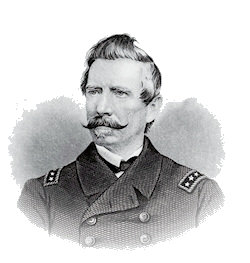
Mary Chesnut’s diary: “A fiasco: an aide engaged to two young ladies in the same house.”
August 24, 2021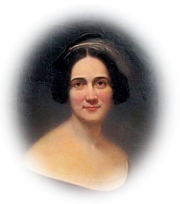
August 24th.–Daniel, of The Examiner, was at the President’s. Wilmot de Saussure wondered if a fellow did not feel a little queer, paying his respects in person at the house of a man whom he abused daily in his newspaper.
A fiasco: an aide engaged to two young ladies in the same house. The ladies had been quarreling, but became friends unexpectedly when his treachery, among many other secrets, was revealed under that august roof. Fancy the row when it all came out.
Mr. Lowndes said we have already reaped one good result from the war. The orators, the spouters, the furious patriots, that could hardly be held down, and who were so wordily anxious to do or die for their country–they had been the pest of our lives. Now they either have not tried the battleield at all, or have precipitately left it at their earliest convenience: for very shame we are rid of them for a while. I doubt it. Bright’s speech ¹ is dead against us. Reading this does not brighten one.

______
¹ The reference is to John Bright, whose advocacy of the cause of the Union in the British Parliament attracted a great deal of attention At the time.
Confederate Colonel Alexander R. Chisolm, aide-de-camp to General P.G.T. Beauregard
August 24, 2021Civil War Era Photographic Portraiture No. 10
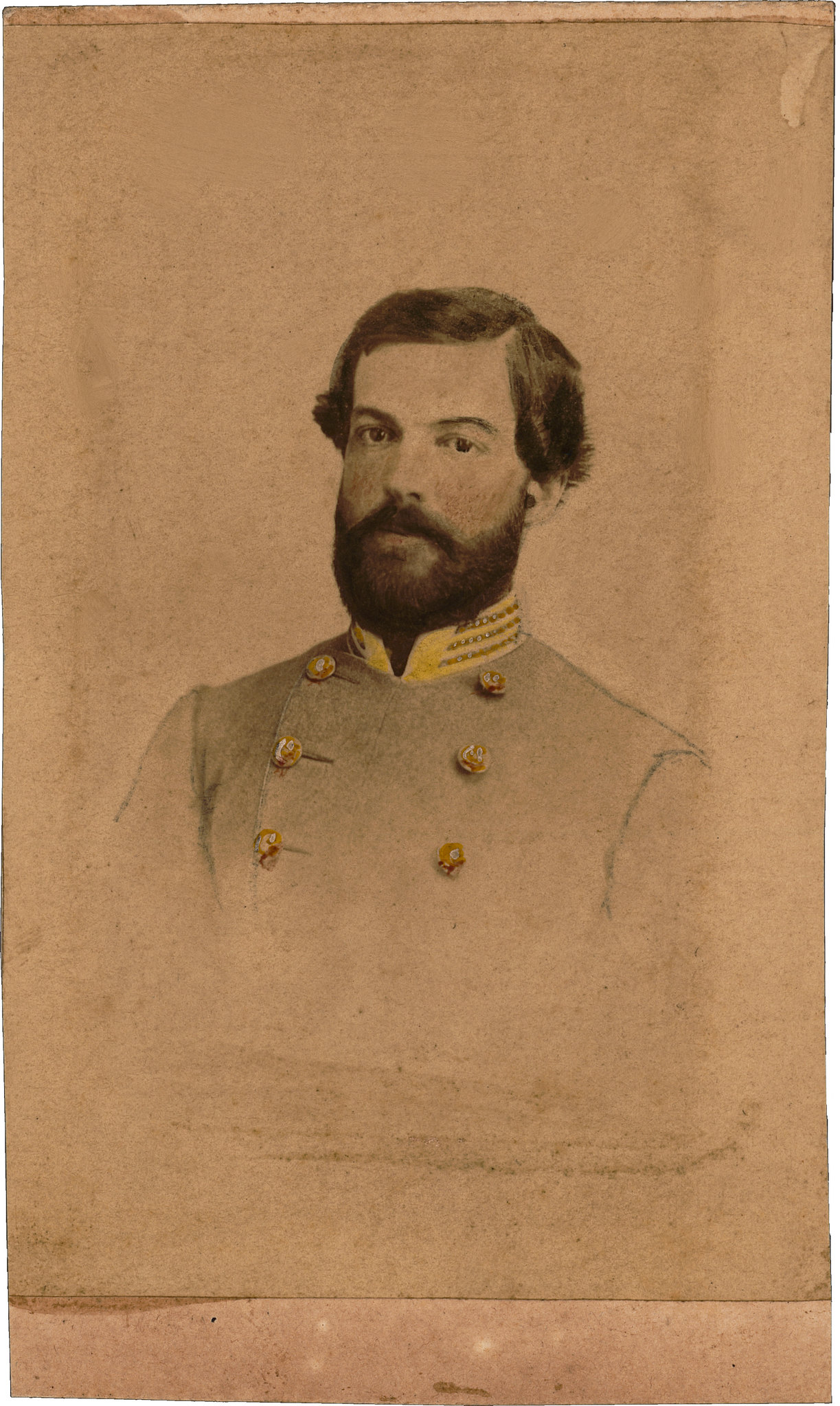 Title: [Confederate Colonel Alexander R. Chisolm, aide-de-camp to General P.G.T. Beauregard, in uniform]
Date Created/Published: [between 1861 and 1865]
Medium: 1 photograph : albumen print on card mount ; mount 11 x 7 cm (carte de visite format)
Summary: Photograph shows identified soldier.
Reproduction Number: LC-DIG-ppmsca-58421 (digital file from original, front)
Rights Advisory: No known restrictions on publication.
Call Number: LOT 14043-2, no. 1084 [P&P]
Repository: Library of Congress Prints and Photographs Division Washington, D.C. 20540 USA http://hdl.loc.gov/loc.pnp/pp.print
Notes:
…..Title devised by Library staff.
…..Soldier’s last name is sometimes spelled Chisholm.
…..Gift; Tom Liljenquist; 2018; (DLC/PP-2017:171-2, formerly deposit D074)
…..Purchased from: The Historical Shop, Metairie, Louisiana, June 2018.
…..Forms part of: Liljenquist Family Collection of Civil War Photographs (Library of Congress). —
Uncorrected image
Library of Congress file permalink
___________
Mike’s notes:
Note – This image has been digitally adjusted for one or more of the following:
– fade correction,
– color, contrast, and/or saturation enhancement
– selected spot and/or scratch removal
– cropped for composition and/or to accentuate subject
Downing’s Civil War Diary.–Alexander G. Downing.
August 24, 2021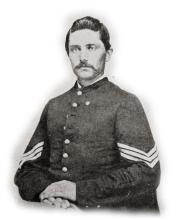
Saturday, 24th–I reached home this morning at daylight, having left Davenport late yesterday afternoon, riding out with a farmer to “the forks” of the Hickory Grove and the Allen’s Grove roads, and from there walked the twenty-one miles home, after night, all alone.
This is a fine day. I went over to Mr. Sparks’ and accompanied him to the grove out southwest of Tipton, to a camp meeting which is being conducted by the Christian church. We got there in time for the meeting.
William Howard Russell’s Diary: Punishment for killing a black boy.—Washington navy yard.
August 24, 2021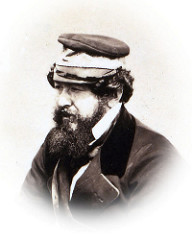
Note: This particular diary entry–a document written in 1861–includes terms and topics that may be offensive to many today. No attempt will be made to censor or edit 19th century material to today’s standards.
August 24th.–My servant came in this morning, to announce a trifling accident–he was exercising my horse, and at the corner of one of those charming street crossings, the animal fell and broke its leg. A “vet” was sent for. I was sure that such a portent had never been born in those Daunian woods. A man about twenty-seven or twenty-eight stone weight, middle-aged and active, with a fine professional feeling for distressed horse-flesh; and I was right in my conjectures that he was a Briton, though the vet had become Americanised, and was full of enthusiasm about “our war for the Union,” which was yielding him a fine harvest. He complained there were a good many bad characters about Washington. The matter is proved beyond doubt by what we see, hear, and read. To-day there is an account in the papers of a brute shooting a negro boy dead, because he asked him for a chew of tobacco. Will he be hanged? Not the smallest chance of it. The idea of hanging a white man for killing a nigger! It is more preposterous here than it is in India, where our authorities have actually executed whites for the murder of natives.
Before dinner I walked down to the Washington navy yard. Captain Dahlgren was sorely perplexed with an intoxicated Senator, whose name it is not necessary to mention, and who seemed to think he paid me a great compliment by expressing his repeated desire “to have a good look at” me. “I guess you’re quite notorious now. You’ll excuse me because I’ve dined, now–and so you are the Mr. &c, &c, &c.” The Senator informed me that he was “none of your d___d blackfaced republicans. He didn’t care a d___ about niggers–his business was to do good to his fellow white men, to hold our glorious Union together, and let the niggers take care of themselves.”
I was glad when a diversion was effected by the arrival of Mr. Fox, Assistant-Secretary of the Navy, and Mr. Blair, Postmaster-General, to consult with the Captain, who is greatly looked up to by all the members of the Cabinet–in fact he is rather inconvenienced by the perpetual visits of the President, who is animated by a most extraordinary curiosity about naval matters and machinery, and is attracted by the novelty of the whole department, so that he is continually running down “to have a talk with Dahlgren” when he is not engaged in “a chat with George.” The Senator opened such a smart fire on the Minister that the latter retired, and I mounted and rode back to town. In the evening Major Clarence Brown, Lieutenant Wise, a lively, pleasant, and amusing little sailor, well-known in the States as the author of ” Los Gringos,” who is now employed in the Navy Department, and a few of the gentlemen connected with the Foreign Legations came in, and we had a great international reunion and discussion till a late hour. There is a good deal of agreeable banter reserved for myself, as to the exact form of death which I am most likely to meet. I was seriously advised by a friend not to stir out unarmed. The great use of a revolver is that it will prevent the indignity of tarring and feathering, now pretty rife, by provoking greater violence. I also received a letter from London, advising me to apply to Lord Lyons for protection, but that could only be extended to me within the walls of the Legation.
“Here Jackson and his gallant men fought. Here the work of that memorable Sabbath was finished.”–Letters from Elisha Franklin Paxton.
August 24, 2021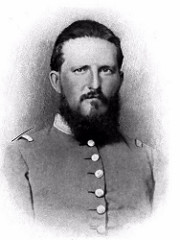
Letter To The Editor Of The Lexington “Gazette.”
Camp Harmon, August 24, 1861.
I do not merit the compliment paid me in a paragraph contained in a recent number of your paper, which gives me the position of leading a portion of the 4th Va. and 7th Geo. in the charge upon the enemy’s batteries. The 4th Va. was led by its gallant officers, Preston, Moore and Kent, and it was by order of Col. Preston, who was the first to reach the battery, that I placed the flag upon it. The 7th Geo. was led by one whom history will place among the noblest of the brave men whose blood stained the field of Manassas–the lamented Bartow; when he fell, then by its immediate commander, Col. Gartrell, until he was carried, wounded, from the field; and then, until the close of the day, by Major Dunwoodie, the next in command.
If the paragraph means, not leading, but foremost, the compliment is equally unmerited. In the midst of the terrible shower of ball and shell to which we were subjected, and whilst our men, dead and wounded, fell thick and fast around us, my associates in the command of our company, Letcher, Edmondson and Lewis, were by my side; the dead bodies of my comrades, Fred Davidson and Asbury McClure, attest their gallantry; and the severe wounds which Bowyer, Moodie, Northern, Neff and P. Davidson carried home show where they were. I witnessed, on the part of many of our company around me, heroism equal to that of those I have named; but as others whom, in the excitement of the occasion, I do not remember to have seen, did quite as well, I may do injustice to name whom I saw. Compared with the terrible danger to which we were exposed at this time, that seems trifling when, at a later hour and in another part of the field, the flag was placed on some of the guns of the Rhode Island battery, which the enemy were then leaving in rapid retreat, the day being already won, and the glories of Manassas achieved.
Again, I did not get the flag when Bartow fell, but sometime after, from the color-sergeant of the regiment, who, wounded, was no longer able to bear it.
The work done by Jackson’s Brigade and the 7th Geo., and the credit to which they are entitled, is stated in the following extract from the official report of Gen. McDowell: “The hottest part of the contest was for the possession of this hill with a house on it.” Here Jackson and his gallant men fought. Here the work of that memorable Sabbath was finished.
Civil War Day-By-Day
August 24, 2021
August 24, 1861
- President Davis names James M. Mason as commissioner to Great Britain and John Slidell as commissioner to France.
A Chronological History of the Civil War in America1
- Of?ces of the Bridgeport (Ct) Farmer and of the Cumberland (Md) Alleghanian (secession papers) destroyed by mobs.
Mayor Berrett, of Washington, D. C., arrested on charge of treason, and conveyed to Fort Lafayette. - Gov. Gamble, of Missouri, issued a proclamation calling for 42,000 troops to assist in driving the rebels from the State.
- Transmission of secession journals through the mails prohibited.
- A Chronological History of the Civil War in America by Richard Swainson Fisher, New York, Johnson and Ward, 1863
“I was not able to see him in private. Genl McClellan was there and Col Baker and Col Duryee and Genl J.W. Denver and other distinguished characters.”—Horatio Nelson Taft
August 23, 2021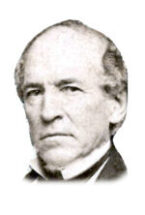
FRIDAY, AUGUST 23, 1861.
A fine bright day. Went to the Presidents at 1/2 past 8. Many members of the Cabinet there to see him and officers of the Army. I was not able to see him in private. Genl McClellan was there and Col Baker and Col Duryee and Genl J.W. Denver and other distinguished characters. Rcd letter from C R Taft today. Called at Willards, officers plenty there. N P Willis there and Doct Russell, the corrispondant of the “London Times.” Went down to see the dress Parade of the “Regulars” with Julia and Chas and Sallie.
______
The three diary manuscript volumes, Washington during the Civil War: The Diary of Horatio Nelson Taft, 1861-1865, are available online at The Library of Congress.
On the March—Rutherford B. Hayes
August 23, 2021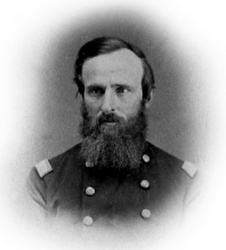
Friday 23.–Clear, bright day; mud and water in the road but a bracing air and blue sky overhead. Men marched with spirit. Lovely mountain views and clear mountain streams always in sight. Camped on the mountainside in the road; no tents pitched. Colonel and Dr. Joe slept in ambulance. I fixed up our cots under the blue canopy, near a roaring mountain stream, and with Adjutant Fisher watched the bright star near the Great Bear, perhaps one of that constellation, which I conjectured was Arcturus, until the moon came in sight. Slept in snatches and was refreshed.
Rebel War Clerk: Prospect of Arms from Europe.
August 23, 2021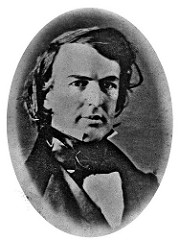
AUGUST 23d.—No arms yet of any amount from Europe; though our agent writes that he has a number of manufactories at work. The U. S. agent has engaged the rest. All the world seems to be in the market buying arms. Mr. Dayton, U. S. Minister in Paris, has bought 30,000 flint-locks in France; and our agent wants authority to buy some too. He says the French statisticians allege that no greater mortality in battle occurs from the use of the percussion and the rifled musket than from the old smooth-bore flint-lock musket. This may be owing to the fact that a shorter range is sought with the latter.
You need not attempt to come to see us.
August 23, 2021MANASSAS JUNCTION, August 23, 1861.
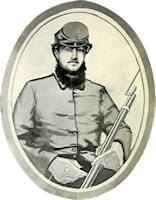 My Dear Mother:
We received your letter this morning when John Clark came. George wrote a day or two ago, which you had hardly received when you last wrote. There is no news of any kind worth writing. George and myself are both well at present. It has been raining here for nearly a week, and it is tolerably cool. This morning was very cool and chilly. It begins to feel like winter is fast approaching. You spoke of sending us some winter clothing. We would be very glad to have a good supply, as we shall suffer if not well clothed in this cold country. I can almost imagine now how cold it will be on top of these high hills when the winter winds come whistling around them. The following list of clothes will be as many as we shall need and can take care of conveniently. Two pairs of thick woolen shirts each, such as can be worn either next to the skin or over other shirts; two pairs of red flannel drawers each, and some woolen socks, that is everything that we shall need for the present. You can send them by express, and we shall get them. You need not attempt to come to see us, for it will be impossible for you to get here. Men are not even allowed to come after their sons to carry them home when they die with sickness in the service. I tell you this to save you the trouble and expense of coming so far and then having to go back without seeing us. It is a great deal harder to get back after you get here than it is to come.
Ed Harris is now here with us, he came day before yesterday. He will leave in the morning, and I shall send this letter by him. He got here through the influence of some members of Congress of his acquaintance in Richmond.
Give my love to all. Tell them to write often and let us hear all the news.
Good bye.
Your devoted son,
WALTER.
P. S. Please name my dog Nero and try to make him of some account. What is sister’s address?
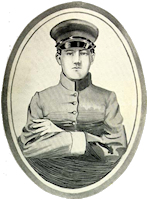 Dear Mother:
As Walter has told you everything, I shall be at a loss what to say, but I cannot help writing when an opportunity presents itself. Our fare is bread and butter and occasionally a little honey. The two latter articles we buy. The nights have been rather cool of late, but we have not suffered any yet.
I wish some of you would write every day, for I do love to hear from home so much. I do not know what else to say, I only thought I would write to let you know that I was still in the land of the living. Write soon, some of you. Tell Dr. Harrell that I shall endeavor to write to him soon. If you have an opportunity, I wish you would send some paper and envelopes, as every letter we send costs about ten cents, and that is too exorbitant a price. Give my love to all. Goodbye.
Your loving son,
GEORGE.
Letters from two brothers who served in the 4th North Carolina Infantry during the Civil War are available in a number of sources online. Unfortunately, the brothers are misidentified in some places as Walter Lee and George Lee when their names were actually Walter Battle and George Battle. See The Battle Brothers for more information on the misidentification.
Extracts from the journal of Commander Semmes, C.S. Navy, commanding C.S.S. Sumter
August 23, 2021
Friday, August 23.—Weather clear; squally, with some rain at night. Our coal comes off very slowly, a little work going a great way with the negroes here. The French steamer of war Vulture went to sea to-day.
A Diary From Dixie
August 23, 2021
August 23d.–A brother of Doctor Garnett has come fresh and straight from Cambridge, Mass., and says (or is said to have said, with all the difference there is between the two), that “recruiting up there is dead.” He came by Cincinnati and Pittsburg and says all the way through it was so sad, mournful, and quiet it looked like Sunday.
I asked Mr. Brewster if it were true Senator Toombs had turned brigadier. “Yes, soldiering is in the air. Every one will have a touch of it. Toombs could not stay in the Cabinet.” “Why?” “Incompatibility of temper. He rides too high a horse; that is, for so despotic a person as Jeff Davis. I have tried to find out the sore, but I can’t. Mr. Toombs has been out with them all for months.” Dissension will break out. Everything does, but it takes a little time. There is a perfect magazine of discord and discontent in that Cabinet; only wants a hand to apply the torch, and up they go. Toombs says old Memminger has his back up as high as any.
Oh, such a day! Since I wrote this morning, I have been with Mrs. Randolph to all the hospitals. I can never again shut out of view the sights I saw there of human misery. I sit thinking, shut my eyes, and see it all; thinking, yes, and there is enough to think about now, God knows. Gilland’s was the worst, with long rows of ill men on cots, ill of typhoid fever, of every human ailment; on dinner-tables for eating and drinking, wounds being dressed; all the horrors to be taken in at one glance.
Then we went to the St. Charles. Horrors upon horrors again; want of organization, long rows of dead and dying; awful sights. A boy from home had sent for me. He was dying in a cot, ill of fever. Next him a man died in convulsions as we stood there. I was making arrangements with a nurse, hiring him to take care of this lad; but I do not remember any more, for I fainted. Next that I knew of, the doctor and Mrs. Randolph were having me, a limp rag, put into a carriage at the door of the hospital. Fresh air, I dare say, brought me to. As we drove home the doctor came along with us, I was so upset. He said: “Look at that Georgia regiment marching there; look at their servants on the sidewalk. I have been counting them, making an estimate. There is $16,000–sixteen thousand dollars’ worth of negro property which can go off on its own legs to the Yankees whenever it pleases.”
Downing’s Civil War Diary.–Alexander G. Downing.
August 23, 2021
Friday, 23d–There is so much delay in completing the company that the boys are beginning to think there is no hope of getting our company full. Some of the boys are joining other companies. While waiting, those who wish may leave camp on passes. I got a pass to go home for two or three days.
“Since I came here, I think I can tell a man’s calibre by his shoulder-straps. The amount of brain is generally in inverse proportion to the size of his straps.”–Journal of Surgeon Alfred L. Castleman.
August 23, 2021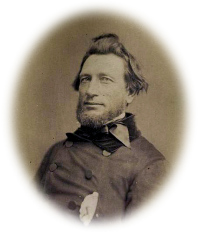
23d.–Colonel _______ to-day complains that I have too much force employed in the hospital, and says that he will cut it down. The regulations allow ten nurses and two cooks to the regiment, besides Surgeons, and Hospital Steward. All I have, are three nurses and two cooks. Will he dare to cut that down? Should he do so I will “try conclusions” as to his authority to do it. Three nurses, for one hundred sick, and that must be cut down! Nor is this all. The Quartermaster, taking his cue from the Colonel, refuses to acknowledge our right to a hospital fund, and I therefore get but few comforts for the sick, except through charity or a fight for it. It is to be hoped that these officers will, by a little more experience, become better posted in their duties, and that the sick will not then be considered interlopers, or intruders on the comforts of the regiment. I forgot to say, in the proper place, that we are brigaded, forming a part of Gen. Rufus King’s brigade, composed of four regiments.
I have not yet donned the full uniform of my rank, and there is scarcely a day passes that I do not get a reproving hint on the subject from our Colonel. A few days ago, whilst in Baltimore, he came to me almost railing at certain army officers for appearing in citizens’ dress. “There,” said he, “is Major B., Major K., Gen. D., Doct. N. P., all of the regular army, and not one of whom can be distinguished from a private citizen.” “Colonel,” I replied, “they probably fear being mistaken for volunteer officers. He did not feel flattered, but dropped the subject. Since I came here, I think I can tell a man’s calibre by his shoulder-straps. The amount of brain is generally in inverse proportion to the size of his straps.
Hate mail.—William Howard Russell’s Diary.
August 23, 2021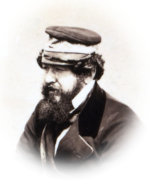
August 23rd.–The torrent is swollen to-day by anonymous letters threatening me with bowie knife and revolver, or simply abusive, frantic with hate, and full of obscure warnings. Some bear the Washington post-mark, others came from New York, the greater number–for I have had nine–are from Philadelphia. Perhaps they may come from the members of that “gallant” 4th Pennsylvania Regiment.
“You fight our battle in England and let us alone to fight it here.”–Adams Family Letters; Charles Francis Adams, Jr., To Henry Adams
August 23, 2021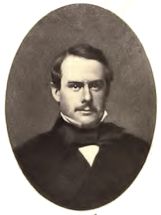
Boston, August 23, 1861
I did n’t get your letter of the 5th until the steamer of the 21st was gone, so I telegraphed to Mr. Motley at Halifax, as I did n’t want to have you come blundering home under the impression that I had been ordered off, and now I will at once answer your letter. If you insist upon coming home and getting a commission, of course you are of age and no one can gainsay you. I don’t favor the idea myself for reasons which I will give you presently; but still if you insist I shall be glad to aid you and will do so. In this war some things are getting clear every day and one is that volunteers won’t do, and another that haste makes waste. If you insist on going, Ritchie advises that you should get a commission in the regular army and go into that. It will be cut down at the end of the war and meanwhile you’ll escape the curse, nuisance and danger of volunteers. If your mind is made up I will apply for you and you can doubtless get your commission and be ready for a winter campaign. Meanwhile you’ll gain nothing but blunders by rushing ahead so like the devil.
So much for that; and now allow me to state some considerations which should prevent your coming home at all. I have three in my mind, and first one relates to myself. I am trying, as well as I may, to do what strikes me as my first duty at home. It is very hard for me to stay here, and no one gives me credit for doing it for any cause save fear; but the truth is the Governor is abroad in the public service, and property was never so difficult of management as it now is. . .. Under these circumstances I concluded very reluctantly I ought to stay at home if I could, and I think you ‘ll agree I was right.
Have n’t I difficulties enough without your piling up new ones? If you insist on this step, I have no election but, at any sacrifice, must go too. The reason is obvious, for while I am single and robust and John remains at home, the world cannot go into these domestic questions, and your coming home in a hurry to get a commission, while I remained in Boston, would be regarded as a most decided implication on my courage. You can’t but see this, and as for your taking a commission under me, it’s bad enough to have a hundred men you don’t care for to look after; but when it comes to looking after a brother and having your attention taken up by what may be occurring to him, it would be intolerable. Besides I expect drafting will have to begin before long and then I have made up my mind to go, and if I go, I think the family in supplying two out of four to the public service does enough, and you ought to stay at home.
In the next place I think decidedly you ought to stay abroad and remain with your father and mother. No one knows what may happen in these days–a foreign war is possible, even an English war – and difficulties you do not now see may any day spring up, and for one I think most decidedly that while times are so troubled our father and mother have got to an age when they ought not to be deserted abroad by all of their children.
Finally, the most weighty consideration to my mind I reserve for the last. Of course you make this a question of usefulness and duty. You are not particularly well fitted for the army and your object, is to be of service to your country. As for distinction and all that sort of thing, when the whole country is rushing into the army it is hardly the place to look for a chance. Where can you be most useful in this emergency? The answer is to my mind too clear to admit of discussion. The rush for commissions is tremendous and you can only get one by shoving somebody equally capable with yourself aside, and you can really do no service, if you get one, which would not be equally well done if you were away. Where you now are you are useful to the whole country and, like a coward, you want to run home because our reverses make the post abroad into which fortune has thrown you very uncomfortable. You fight our battle in England and let us alone to fight it here. There are men enough here, but there your place, if you leave it, must remain empty.
You’ll say, you can’t do anything and have no opening. What could a second lieutenant in an infantry regiment do that would be so immense? Is that a prodigious opening? Go to work at once in England with all your energy and force your way into magazines and periodicals there and in America, so that you can make yourself heard. For there is going to be difficulty about this blockade and much bad feeling, though, God grant, no blows. For heaven’s sake try to influence that and don’t throw yourself away by rushing into this mob of bruisers. Try to raise people up a little. Look into the cotton supply question and try to persuade the English that our blockade is their interest. If they raise it and transfer it to our coasts, they have the power to do so, but they ally themselves with slavery – give it the victory, give the lie to their own protestations and secure to the South for years with the advantage of their system of labor and production that monopoly of cotton under which England groans. If the blockade lasts and forces supply, England will purchase, at the price of one year’s suffering, freedom and plenty for ever. Touch England through her pocket and help your country that way.
Then write to the Atlantic of the way fighting America appears in English eyes, of her boasting and bragging, her running and terror; tell us of the pain she causes her children abroad and how foolish her angry threats sound, and help your country that way. Here is your field, right before your nose, in which you could be of real service, and you want to rush away to do what neither education nor nature fitted you for – what others could do as well or better, and get your head knocked off without doing the least good. If you have any energy use it where you are and where it can be of value. If you have n’t any keep out of the army. Talk of backing the Governor up in the Times in these days! We’ve got beyond all that, I hope. For God’s sake take a broader view and make yourself heard where a voice is wanted. Don’t talk of your connection with the legation to me; cut yourself off if necessary from it and live in London as the avowed Times correspondent and force your way into notice of the London press that way. Wake up and look about you and make yourself useful and don’t jog on in this cart horse way, or brag over your harness and wish yourself a blood-horse, with McClellan, instead of a jackass who can’t break his traces. There, I have blown my blast and have done, and you can do as you see fit. Free from the legation you could earn a living by your pen in London and be independent, busy, happy and eminently useful. If you come home you won’t be of the slightest use to any one, and you will have deserted your post. Now if you want a commission let me know and I’ll do my best for you; but have nothing to say to Horace Sargent. He is n’t the man and I know him.’
We’ve had a bad panic, but it seems to be over now and I think they were wise in refusing the battle.
Civil War Day-By-Day
August 23, 2021
August 23, 1861
A Chronological History of the Civil War in America1
- A large portion of the Cherokee Indians seceded and joined the Confederates.
- A Chronological History of the Civil War in America by Richard Swainson Fisher, New York, Johnson and Ward, 1863
“Sent a line to the President by H N Jr — requesting a private interview. Will see him in the morning 1/2 past 8 o’clock.”—Horatio Nelson Taft
August 22, 2021
THURSDAY 22
Another rainy day. Went down to the Provost Marshalls Office, great crowd there for passes across the River. Saw Capt Fowler and Capt [Huron?] there (of the 12 Regt). Sent a line to the President by H N Jr — requesting a private interview. Will see him in the morning 1/2 past 8 o’clock. Was at home most of the day, but at the Pat office awhile. The 3rd Regt of the Regular Army is now on Franklin Square.
______
The three diary manuscript volumes, Washington during the Civil War: The Diary of Horatio Nelson Taft, 1861-1865, are available online at The Library of Congress.
“… and we push off for the supposed point of the enemy’s approach.”—Rutherford B. Hayes
August 22, 2021
[August] 22. Thursday.–At our nice camp. P. M. rained and blew violently. In the midst of it we got orders from General Rosecrans to prepare to march to Beverly. “Early” in the morning would do. Slept in my wet boots. Wrote home and to mother and Uncle.
_______
BUCKHANNON, August 22, 1861.
DEAR JIM:–I have written hastily to Mr. Warren. I hope he will not be so much disturbed after he reflects on matters. Have you had a formal application before the governor for a place? It should be done by yourself or by a friend in person. I suppose examination may be required. If so, attend to it. Dr. Joe is well. We are expecting an enemy soon.
Sincerely,
R. B. HAYES.
DR. JAMES D. WEBB.
_______
BUCKHANNON, VIRGINIA, August 22, 1861.
DEAREST:–It is a cold, rainy, dismal night. We are all preparing for an early march. I have made up a large bundle of duds–all good of course–which must be left here, to be got possibly some day but not probably. All are cut down to regulation baggage. Many trunks will stop here. A tailor sits on one end of my cot sewing fixings. All is confusion. The men are singing jolly tunes. Our colonel takes his half regiment, the left wing, and half of McCook’s Germans, and we push off for the supposed point of the enemy’s approach. We shall stop and camp at Beverly a while, and then move as circumstances require.
How are the dear boys ? Will Scott writes me that he goes into the Kentucky Union regiments.
Good-bye, darling. Joe wishes to write and wants my pen.
Affectionately,
R. B. HAYES.
MRS. HAYES.
Rebel War Clerk
August 22, 2021
AUGUST 22d.—”Immediate” is still there; but the Secretary has not yet been to the council board, though yesterday was cabinet day. Yet the President sends Capt. Josselyn regularly with the papers referred to the Secretary. These are always given to me, and after they are “briefed,” delivered to the Secretary. Among these I see some pretty sharp pencil marks. Among the rest, the whole batch of Tochman papers being returned unread, with the injunction that “when papers of such volume are sent to him for perusal, it is the business of the Secretary to see that a brief abstract of their contents accompany them.”
Extracts from the journal of Commander Semmes, C.S. Navy, commanding C.S.S. Sumter
August 22, 2021
Thursday, August 22.—Clear and pleasant. Landed with Mr. Smith and my cockswain and took a walk, stopping at the hotel and reading such of the Yankee newspapers as I could ?nd. The privateer Sumter made some ?gure111 these lying sheets. Have received in the last two days just 18 tons of coal. The Yankee consul here is named Sawyer. He is a Connecticut man married to a dark mulatto who is the owner of slaves. He has exerted himself greatly to prevent our receiving coal. A worthy representative of Yankeedom and negrophilism. He has also tampered with the pilot, and otherwise shown himself worthy of himself and his cause.
“At 1 o’clock in the afternoon we marched down…”–Alexander G. Downing.
August 22, 2021
Thursday, 22d–Received orders this morning to get ready for review. At 1 o’clock in the afternoon we marched down into town and through the streets for a while and then back to camp. General Baker, Adjutant General of Iowa, is in charge of the camp. Our camp was named for General McClellan in the East.
The blues–Journal of Surgeon Alfred L. Castleman.
August 22, 2021
22nd.–I do not know but that I have the blues to-day. However that may be, it is sad to contemplate the selfishness of our officers. When I witness the political manÅ“uvreing here, the conducting affairs for political effect at home, I am almost inclined to believe our war a humbug, and our Government a failure. I must not talk this, but I must not forget it.
“Officers have deserted, and the men have followed the base example.”—War Letters of William Thompson Lusk of the 79th.
August 22, 2021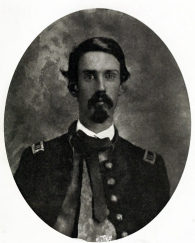
Camp Causten, Aug. 22d, 1861.
My dear Cousin Lou:
What a pleasant thing it is to live, and how I do enjoy it here on the banks of the Potomac. I do not believe God ever made a more beautiful land than this. How I would fight for it if I believed it threatened by an unscrupulous foe! Cousin Lou, I used to think the “booty and beauty” allusion a sort of poor joke, too sorry even for ridicule, but I now see it as the cunning work of the far-sighted master who knew his people.
By-the-way do you know we are now encamped on the Kosciusko farm, and near by the house still stands where the patriot lived? I was walking in a cornfield today, and spied the silk drooping from one of the ears, dyed a deep red. I plucked it, and send it now to you in memory of Kosciusko, or if you like it better, in memory of Cousin Will. Bother! I was getting sentimental, when a gust of wind tore up the tent pins and blew out the candle. One has great experiences in camp. The other night I was softly slumbering, dreaming of Dolly Ann or of cutting a Secessionist’s throat, or something agreeable at any rate, when I heard a sound like that of mighty waters – I felt the waves washing over me – then followed a chilly sensation. I awoke. The stars were above me and by my side lay a sea of canvas – “in short,” as Mr. Micawber would say, my tent was blown down. Another night my tent was pitched on the side of a steep hill. I wrapped myself in my blanket, braced my feet against the tent-pole and fell asleep. In the night my knees relaxed, and no longer prevented by the prop, I slid quietly downward, awaking in the morning at a good night’s march from the point at which I first lay down to rest.
Much obliged for the information you send me regarding that youngest son of the Earl of Montrose, who came to America and graduated at Yale College. I always knew I was of noble degree, and have felt my blood preeminently Scotch since the first time I heard Aunt Caroline singing “Where, and oh where is my Highland Laddie gone?” I look too, admiringly upon the queenly Julia, and I say, “Nay, nay, but there’s no churl’s blood there.” In beatific vision the sisters five file past me; then comes long lanky Sylvester Vegetable Graham, leanest of men, with a bag of oatmeal, and I say to myself, “Verily my blood is very Scotch.”
Give my best love to that wee mite of a little lady who is to have the delightful honor of taking charge of my wooden leg when I return from the wars a garrulous one-legged old soldier. Imagine me, Cousin Lou, tripping it at my own wedding not on the light fantastic, but on timber toes. Now let us consider the matter, Cousin Lou. Shall the leg be a real timber one though, or shall a compromise be made with Nature, and one of the flexible Anglesea pattern be chosen?
Alas, alas! All day long we have heard guns firing in the distance. Some poor fellows must have fallen, though we get no intelligence of movements made. We are left out of the question. There is a great battle soon to take place, but I fear the 79th is too much crippled to make a great show. We numbered once a thousand gallant hearts – we number now 700 men capable for action; to such a pass we have been reduced by death and what is worse, by desertion. Officers have deserted, and the men have followed the base example. I have seen enough to convince me that this is no war for foreigners. It is our war, and let us cheerfully bear the burden ourselves. The South sends its best blood to fight for a phantom, but we, in the North, send our scum and filth to fight for a reality. It is not thus we are to gain the victory. I would have all our Northern youth not talk, but act – not deem their lives so precious as their honor. Have you read the names of those who resigned their commissions after the Battle of Manassas? The names of over 250 cowards. Life is sweet to all, but have they no trust in God that they fear the bitterness of death? Love to all friends in Enfield. I must say good-night.
Au-Revoir,
Will.
I did not serve as a private but in the capacity of Lieut. at Bull Run.