SEPTEMBER 29th.—To-day Mr. Benjamin issued several passports himself, and sent several others to me with peremptory orders for granting them.
American Civil War Chronicles
Letters of Rutherford B. Hayes.
September 29, 2021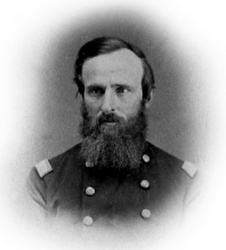
Sewell Mountain, September 29, 1861.
Dearest L –: – A beautiful bright Sunday morning after a cold, bitter, dismal storm of three days. It finds me in perfect health, although many a poor fellow has succumbed to the weather. The bearer of this goes home sick – a gentlemanly German. I am still living with McCook, my regiment being back ten miles. We are in doubt as to whether we shall fight the enemy ahead of us or not. We are compelled now by roads and climate to stop and return to the region of navigable waters or railroads. No teams can supply us up here much longer. In this state of things we shall probably be content with holding the strong points already taken without fighting for more until another campaign.
We have three generals here. Rosecrans, Cox, and Schenck. General Cox is a great favorite, deservedly I think, with his men. We suppose, but don’t know, that there are three generals in the enemy’s camp, viz: Lee, Wise, and Floyd. Their force is believed to be much larger than ours, and many more cannon, but they dare not attack. They are industriously fortifying hills which we care nothing about.
My regards to the family. Love and kisses to the boys. The bearer, Mr. Harries, will, I hope, call on you.
Affectionately as ever, your
R.
Mrs. Hayes.
War Diary of Luman Harris Tenney.
September 29, 2021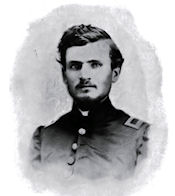
29th. Went over to see Thede. Attended Mr. White’s church –Thede the Cathedral. Took tea at Byron’s. Heard Mr. Van Meter again in the evening.
A bible for the duration.–Alexander G. Downing.
September 29, 2021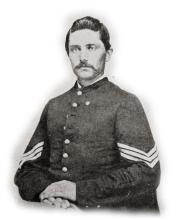
Sunday, 29th–I went to meeting once more before leaving for camp. After preaching I went to Mr. Moore’s, remaining there the rest of the day and stayed over night with John Moore. John presented me with a pocket Bible which he asked me to carry with me.[i]
[i] I carried this Bible during my four years’ service and read it through four times.–A. G. D.
A Diary of American Events.
September 29, 2021
September 29.–General Price, commander of the rebel forces at Lexington, Mo., commenced the evacuation of that place.–Baltimore American, October 5.
–Governor Moore, of Louisiana, issued orders to compel all persons subject to the militia laws to drill every evening, these refusing or evading to be recorded on the black list as suspicious and enemies to the South. No home guards allowed unless foreigners or over age. Full authority to enforce discipline by court martial was given; the men to bring such arms as they had.– Cincinnati Commercial, Oct. 7.
–Tub Ninth regiment of Iowa Volunteers, Col. Vandeveer, arrived at St. Louis, Mo., from Dubuque, on two steamers–the Denmark and the Canada. Soon after arriving they marched from the boats, at the foot of Washington avenue, to the levee. They are a splendid body of men, hardy and muscular, and are fine material for the campaign in Missouri. Their exact concert of motion, their steady, solid tread, betoken superior drill. They are only partially uniformed, and had no arms on their arrival. This regiment–officers and men–are a quiet-looking, steady, determined set of men. Captain Hayden’s company of artillery, with six pieces, accompany the Iowa Ninth.–St. Louis Democrat, September 30.
–This morning, about one o’clock, as some of the Federal regiments were advancing in the neighborhood of Munson’s Hill, Va., Colonel Owen’s Irish regiment mistook a portion of Colonel Baker’s for secessionists, and commenced firing upon them. The fire was returned, and before the mistake was discovered nine men were killed and about Twenty-five wounded. Among the killed were three officers.
During the day some disgraceful acts were committed by a portion of the Federal troops, such as the burning of several houses, stables, &c. These acts met the decided reprobation of General McClellan.–National Intelligencer, September 30.
–A brisk fight took place at the bridge across James Bayou, six miles southwest of Norfolk, Ky. A force of about one hundred Federals were guarding the bridge, when a force of rebels, some two or three hundred strong, infantry and cavalry, approached with the intention of destroying it. The Federals came back to the side of the bayou, and after heavy firing on each side for a while, the rebels withdrew, leaving one man badly wounded and several dead bodies in the field.–Dubuque Times, Oct. 2.
–Acting Governor Root, of Kansas, issued orders that every man in the State, between eighteen and forty-five years, should enroll himself in the militia, and that each company be ready for immediate marching orders.–National Intelligencer, Sept. 30.
Civil War Day-By-Day
September 29, 2021
September 29, 1861
A Chronological History of the Civil War in America1
- Two advance bodies of the Union troops came into collision by mistaking each other for the enemy, near Falls Church, and before the error was discovered 15 were killed and 30 or 40 wounded.
- A Chronological History of the Civil War in America by Richard Swainson Fisher, New York, Johnson and Ward, 1863
“We hear the booming of cannon every day at the Forts (practicing).”—Horatio Nelson Taft
September 28, 2021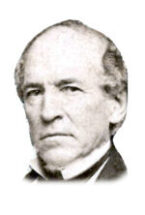
SATURDAY, SEPTEMBER 28, 1861.
A cool delightful day. Have been looking for a residence some. Houses very scarce at present. The fact indicates confidence in the stability of our Govt. The Hotels are not overcrowded but but the City is unusualy full for this season of the year. I was on the “Island” today, also called at the Presidents. Julia is staying at Mr Hartlys with “Matty” by invitation. Quite a movement of troops today in the City, but all seems to be quiet over the River as yet. We hear the booming of cannon every day at the Forts (practicing).
______
The three diary manuscript volumes, Washington during the Civil War: The Diary of Horatio Nelson Taft, 1861-1865, are available online at The Library of Congress.
Rebel War Clerk
September 28, 2021
SEPTEMBER 28th.—I sent the paper containing my article to J. R. Davis, Esq., nephew of the President, avowing its authorship, and requesting him to ask the President’s attention to the subject.
Fremont’ Hundred Days in Missouri
September 28, 2021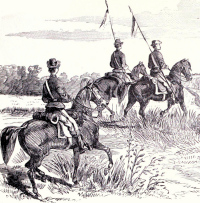
Jefferson City, September 28th. Yesterday, at eleven o’clock, we were informed that the General would leave for Jefferson City at noon; and that those members of the staff who were not ready would be left behind, and their places filled in the field. At the appointed hour we were all gathered at the depot. The General drove down entirely unattended. Most of the train was occupied by a battalion of sharp-shooters, but in the rear car the General and his staff found seats. The day was cloudy and damp; there was no one to say farewell; and as the train passed through the cold hills, a feeling of gloom seemed to pervade the company. Nature was in harmony with the clouded fortunes of our General, and the laboring locomotive dragged us at a snail’s pace, as if it were unwilling to assist us in our adventure.
Those who were strangers in the West looked out eagerly for the Missouri, hoping to find the valley of the river rich in scenery which would relieve the tedium of the journey. But when we came out upon the river-bank and looked at the dull shores, and the sandy bed, which the scant stream does not cover, but through which it creeps, treacherous and slimy, in half a dozen channels, there was no pleasure to the eye, no relief for the spirit. Late in the afternoon we approached a little village, and were greeted with music and hearty cheers, –the first sign of hospitality the day had furnished. It was the German settlement of Hermann, famous for good cheer and good wines. The Home-Guard was drawn up at the station, files of soldiers kept the passage clear to the dining-room, and through an avenue of muskets, and amidst the shouts of an enthusiastic little crowd, the General passed into a room decorated with flowers, through the centre of which was stretched a table groaning under the weight of delicious fruits and smoking viands. With little ceremony the hungry company seated themselves, and vigorously assailed the tempting array, quite unconscious of the curious glances of a motley assemblage of men, women, and children who assisted at the entertainment. The day had been dark, the journey dull, and the people we had seen silent and sullen but here was a welcome, the hearty, generous welcome of sympathizing friends, who saw in their guests the defenders of their homes. They were Germans, and our language came broken from their lips. But they are Germans who fill the ranks of our regiments. Look where you will, and the sturdy Teuton meets your eye. If Missouri shall be preserved for the Union and civilization, it will be by the valor of men who learned their lessons of American liberty and glory upon the banks of the Rhine and the Elbe. We think of this at Hermann, and we pledge our German hosts and our German fellow-soldiers in strong draughts of delicious Catawba, – not such Catawba as is sent forth from the slovenly manufactories of Cincinnati, for the careful vintners of Hermann select the choice grapes, and in the quiet cellars of Hermann the Catawba has time to grow old and to ripen.
We at length extricate ourselves from the maze of corn-cakes and pancakes, waffles and muffins and pies without number, with which our kind friends of Hermann tempt and tantalize our satiated palates, and once more set forth after the wheezing, reluctant locomotive, over the rough road, through the dreary hills, along the bank of the treacherous river.
At ten o’clock, in ten weary hours, we have accomplished one hundred and twenty miles, and have reached Jefferson City. The train backs and starts ahead, halts and backs and jerks, and finally, with a long sigh of relief, the locomotive stops, and a gentleman in citizen’s dress enters the car, carrying a lantern in his hand. It was Brigadier-General Price, commanding at Jefferson City. He took possession of the General, and, with us closely following, left the car. But leaving the train was a somewhat more difficult matter. We went alongside the train, over the train, under the train, but still those cars seemed to surround us like a corral. We at length outflanked the train, but still failed to extricate ourselves from the labyrinth. Informed, or rather deluded, by the “lantern dimly burning,” we floundered into ditches and scrambled out of them, we waded mud-puddles and stumbled over boulders, until finally the ever-present train disappeared in the darkness, we rushed up a steep hill, heard the welcome sound as our feet touched a brick walk, and, after turning two or three corners, found ourselves in the narrow hall of the “principal hotel.” We were tired and disgusted, and no one stood upon the order of his going, but went at once to sleep upon whatever floor, table, or bed offered itself.
This morning we are pleased to hear that the General has resolved to go into camp. Of course the best houses in the place are at our disposal, but it is wisely thought that our soldier life will not begin until we are fairly under canvas.
All day we have had an exhibition of a Missouri crowd. The sidewalk has been fringed with curious gazers waiting to catch a glimpse of the General. Foote, the comedian, said, that, until he landed on the quays at Dublin, he never knew what the London beggars did with their old clothes. One should go to Missouri to see what the New-York beggars do with their old clothes. But it is not the dress alone. Such vacant, listless faces, with laziness written in every line, and ignorance seated upon every feature! Is it for these that the descendants of New England and the thrifty Germans are going forth to battle? If Missouri depended upon the Missourians, there would be little chance for her safety, and, indeed, not very much to save.
Fremont’s Hundred Days in Missouri was published in three installments in The Atlantic Monthly. The anonymous author appears to have been a member of Fremont’s staff with a disdainful bias towards Missourians, even those who were pro-Union.
Military Hospitals
September 28, 2021
Daily Times [Leavenworth, Ks],
September 28, 1861
A number of the Iowa Third, on the sick list, were sent here night before last, from Kansas City. A portion of these were afflicted with the measles. The others were received into the hospital at the Fort, but owing to the lateness of the hour and the limited accommotions of the hospital building, those having the measles, were compelled to remain on the portico of the hospital all night, for fear of communicating the disease to the other patients. At an early hour in the morning, Marshal McDowall visited the Fort, and learning the facts from Captain Prince, both these gentlemen came to the city and secured a building to be used as a hospital, to which the patients were removed, and are now comfortable. Another building has also been secured and is being fitted up for use.
Soldiers Relief Society
September 28, 2021
Southern Confederacy [Atlanta, Ga],
September 28, 1862
Written expressly for the Southern Confederacy.
These organizations are springing up thickly around us; nearly every county in the State has one, and some have half a dozen. So far so good — we cannot do too much for our soldiers. But just where there are so many societies, there is, strange to say, great danger that the least good will be done. This arises from the fact that while they are in the same county, formed for the same purpose, and working, perhaps, for the very same companies, there is a lack of disposition on the part of the members to have any correspondence with each other, or to establish a communication in common with some central Society, through which unanimity of action, and equality of distributions to each Company might be secured.
A letter has just been handed to me, written by a friend in a distant part of the country, who is resident in a large town where one of these Societies has been organized; and she tells me that though it is at the county site, and is a most advantageous point for transportation, it is difficult to obtain any cooperation from the smaller district associations. There appears to exist among them a species of jealousy–a fear lest they should not get due credit for their contributions in money and clothing, were they forwarded through other hands than their own. More counties than one are afflicted with false notions on this head, and a serious affliction it will prove to be, unless they can be done away with. Is there not a different, a more correct view?
Suppose an association has been formed in a central village, for the whole county: It does not supersede the necessity for District Societies, nor do its members arrogate to themselves any superiority over such societies–Neither would they take one iota of the praise which their efforts deserve. All they ask is for full information as to their proceedings.
“Let us know,” they say, “what you are doing and for whom. Some of you are in portions of the country far from the railroad and find it inconvenient to transmit your packages. If you will send them to us, with the names of the donors attached thereto, and the names and location of the soldiers for whom they are designed, we will carefully pack them for you and forward them exactly according to your order. We do not want the name of doing your work, but we want to prevent confusion that must arise if we work in a scattered, unsystematic way. We will take special pains to have it known that the donation is yours, not ours.”
Correspondence and cooperation in some such manner is absolutely necessary. Several companies go from one county. Each society works more or less for these, as choice and fancy dictate. The consequence is, that in one company there is a deficiency of clothing that the society of which it is the favorite cannot supply; in another a superfluity of garments has been provided by a wealthier association, while yet another is but poorly accoutered, even by the utmost efforts of some little band devoted to its service. Now, if this were reported at the headquarters of a central association, and the distribution of clothing regulated accordingly, the extra quantity might be so divided, and the individual efforts of the association so applied as to furnish every company with what is needful, without waste of money or effort. And we should remember that if this war continues long, every cent uselessly expended may prove a bitter loss–every misdirected effort will be a cruel mockery of the wants of some perishing soldier.
My friend’s letter has furnished me a text for the times. Is it possible that now, when everything depends upon united, energetic action, some people are standing aloof from one another, in fear that, if they band together, some little scraps of credit may be detached from their good deeds as individuals! And, after all, some of them have only half fulfilled their real duty. For shame!
Our volunteers appeal to us for aid–“Yes, yes, you shall have it, all we can give; but we will have no connection with this society, and that shall not know what we are doing, and we cannot promise you much.” So, the winter closes in, and these rambling donations are sent off. An ill-assorted variety, they are worse divided–some soldiers are amply supplied, others are almost destitute.
As one by one they yield to the effects of the piercing blasts, and the soil of Virginia is dotted with the graves of those slain, not by the sword, not by pestilence, but by exposure alone, whose will the fault be?
Had this principle, established by some of our aid societies, prevailed in our political administration, we should have to-day no combined forces to oppose our foes, and no united leaders to command them, were they banded. David would stand aloof from Stephens and the Cabinet; Beauregard and the rest of the Generals would be wrangling for the “credit” of the victory of Manassas Plains, and ere the last Autumn sunset could cast its shadows over our landscape, Lincoln would be triumphant, and the “Southern Confederacy” live only in dreams.
Cooperation is indispensable to harmony of action; harmony is the soul of collective energy and efficiency.
Unanimity and success, discord and failure, or, at best, but partial achievements. There is our choice.
ZIOLA.
A Word to the Ladies
September 28, 2021
Southern Confederacy [Atlanta, Ga],
September 28, 1861
God bless them! We always love to write, or talk, to and about the dear creatures.
The men love you all–this you know. They have told you so a thousand times.
But these are war times, and we must give up romancing for a while. We desire a short business chat with you this morning–have but a few moments to spare from our constant labor–you have no idea how hard we work. Then to the point. Don’t be excited, we are not courting.
We want you with a ready hand and a willing heart to help your husbands, fathers and brothers protect our sunny homes from an invading foe, who are waging a cruel and relentless war upon our sacred rights–seeking to deprive us of all that men hold dear–liberty of person, rights of property, and peace at home.
We do not expect you to shoulder a gun. Oh, no! not yet; but you can be very useful, nevertheless. You can work. You can card and spin; you can weave; you can cook; you can wash, (your Sunday clothes, at least); you can iron; you can “clean up” your house; you can knit, sew, quilt, and we could not, in a month, think of the thousand and one useful things you can do, which you never dreamed of when you were at boarding school.
But you say, “what’s the use?” You have servants to do all your house work. Very well; but this is the idea: Send all the male servants to the farm, to raise provisions, and all your house girls to the garden and field to work, and you do all you can at home, while they make something out doors to satisfy the cravings of hunger. Your husband will love you more, and esteem you as a priceless jewel–far above all rubies–and labor all the more to make himself worthy of such a treasure.
But you say your husband does love you, and ought to love you anyhow. Granted; but dismiss your careless, negligent servants; pitch in and do your work yourself, and see how much more attractive home will soon be to your husband! The coffee will be better–not as unsettled as usual, the cakes will be browner, the waffles more tender. It won’t take half as many eggs; the sugar will last longer; you won’t have so many chipped cups and saucers; you won’t have so many dishes and glasses broken; brandy peaches and preserves will hold out longer; pickles won’t disappear so fast; and we don’t know what all will be the better.
Make your children sweep the yards and gather your vegetables for dinner, it will improve their health and elevate their character. Encourage them; speak kindly to them; never scold them, and keep them at their lessons, or at work, a good deal more than you do. (Let them play some, of course–just enough–not too much.) It will make them feel proud that they can help you and do something useful; and when grown up, they will not be the poor helpless creatures that the victims of wicked servants, careless parents, and idle bringing up, always are, when they leave you to take charge of a home of their own.
Then, again; by performing the duties we have indicated, yourself, you not only have everything nicer and more satisfactory and agreeable to yourself, your husband, and all concerned; but you will be better pleased with yourself. You will sleep better, be better contented, have less use for Spalding’s Glue and Cephalic Pills. You will enjoy better health, have a sweeter temper, feel more independent, be a better wife, a kinder mother, and be more useful to your country. You can save money; have more to give away to those in need, and thereby cherish and cultivate one of the most lovely and distinguishing traits of Christian character–charity.
If you cannot at once enter fully into the plan we have marked out, you can do this: less extravagance in dress. The fact is fine dressing is becoming hateful to all sensible persons, and the extent to which it was carried by some, before the blockade, never was genteel. If we can get salt and powder enough, it will not matter if we are blockaded till every old French hat and gaudy flower is as dim as a faded dogwood blossom. You can re-trim, the best of you, three or four cast off bonnets. You can cut up your last fall dresses, and out of the skirts make the children nice new dresses; and, rather than miss doing a good thing, you can wear some of them yourself this fall and winter.
You can “take in” your hoops (to suit the hard times–shorten sail in this storm,) and save several yards in making a new dress for yourself. There are a thousand little plans which a thrifty house-wife can adopt to save money, and look well too.
With these remarks we will close on the part of the married women, for the present. At our earliest opportunity, (by your permission,) we will have a half hour’s chat with the young ladies.
War Diary of Luman Harris Tenney.
September 28, 2021
28th. Went down and tried some horses. Took one that John Devlin chose for me. I stayed in camp. Thede at Uncle’s.
Last evening at home.–Alexander G. Downing.
September 28, 2021
Saturday, 28th–We had regular drill this morning and in the afternoon our election of officers. The election resulted as follows: Captain, Samuel S. McLoney; First Lieutenant, John F. Compton; Second Lieutenant, Lorenzo D. Durbin; Orderly Sergeant, Joel H. Clark. I went home this evening for the last time before leaving for Camp McClellan.[i]
[i] It proved to be the last time for two years and six months.–A. G. D
“The Southerners were refused recognition…”–Adams Family Letters, Henry Adams, private secretary of the US Minister to the UK, to his brother, Charles.
September 28, 2021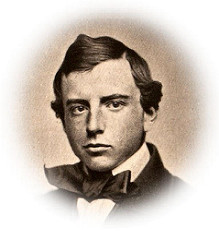
London, September 28, 1861
Time goes precious fast and yet seems to leave very little behind it. I have been very busy for the last three weeks but now am at leisure again though I have some ideas of beginning a new tack. Papa got back late last night from a visit to Lord Russell’s in Scotland. I must say I think Lord Russell was rather hard in making him take all the journey, but as it could n’t well be helped I am glad it has happened, and especially so as it will have an excellent effect on the relations of the two countries. When I last wrote things looked threatening if I recollect right. Since then they have wonderfully cleared away. Lately, except for the Bunch affair and the negotiation business, England has behaved very well. The Southerners were refused recognition and we are no longer uneasy about the blockade. Lord Russell has explained the Mexican business very satisfactorily and it appears that England is trying to check Spain, not to help her. Lord Russell was very open and confidential towards the Chief and showed him confidential despatches proving the truth of the matter with regard to Spain, besides treating him in every way extremely kindly and confidentially. You know that these are state secrets which no one knows out of the immediate circle here, so you must be very careful not to let it out, even to write back here that you know about it, as it might shake confidence in me….
I have no news for you beyond what I’ve told. We are all right here, strong and confident. If you win us a victory on your side, the thing’s finished. Rosecrans seems to be a good deal of a man, if I understand his double victory over Floyd and Lee. The Lee business has not wholly reached us yet, but seems to be a first-rate thing, as he was one of their great guns.
I occasionally worry a newspaper writer, but advance slowly. Called on Tom Brown Hughes the other day but he was out of town and won’t be back for some time. No one is in London, but in about a month I suppose the country visiting will begin and then one may make a few more acquaintances. . . .
We are settling down into the depths of a London autumn. The fogs are beginning and the streets look as no streets in the world do look out of England. Berlin was never so gloomy as London. Every now and then, when things go wrong, I feel a good deal as though I would like to cut and run, but on the whole my position is much better than it was three months ago. I saw a little article of yours (I suppose) in the Transcript a short time ago, and I hope that you will see in some of the London newspapers if not my writing, at least my hand. They need it, confound ’em.
I enclose an order on the Times. I did n’t know precisely how to word it for I don’t know how many of my letters he has published. Fourteen or parts of fourteen I know of, but there may be more. I wish you could manage to get the money from Raymond without letting the subordinates into the matter. I doubt if I can carry it on much longer without being known.
“In November I suppose we shall find comfortable winter quarters somewhere, or shall build log cabins and stay here.”–Letters from Elisha Franklin Paxton.
September 28, 2021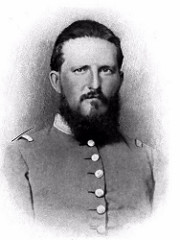
Camp near Fairfax C. H., September 28, 1861.
I will close a delightful Sunday evening in answering your last letter, received a few days since. I heartily sympathize with you, Love, and our dear little Matthew in your wish for my return. My absence does not press more heavily upon your heart than upon my own. But we must not suffer ourselves to grieve over the necessity which compels our separation. We must bear it in patience, in the hope that when I return we shall love each other all the better for it. I have had the offer from Gov. Letcher of a Commission as Major. I was much flattered by the compliment, but declined it, as I would be assigned to duty at Norfolk. Feeling that I was more pleasantly situated and could render more efficient service here, I preferred to remain. I was very much tempted to accept it, from the consideration that it would probably afford me an opportunity of passing by home on my way; but I thought this should not make me deviate from what my judgment approved as my proper course. I replied that I would accept the appointment if assigned to duty in this brigade, but would not leave it for the sake of promotion.
The weather begins to feel like frost, and hereafter we shall, I fear, find a soldier’s life rather uncomfortable. Sleeping in the open air or thin tents was comfortable a few weeks since; but when the frost begins to fall freely, and the night air becomes more chilly, lying upon the ground and looking at the stars will not be so pleasant. Then we shall think in earnest of home, warm fires, and soft beds. I think I shall get used to it. I have seen many ups and downs and begin to fancy that I can bear almost anything. In November I suppose we shall find comfortable winter quarters somewhere, or shall build log cabins and stay here. I went down to see Mat some days since, but did not find him.
Jim Holly came this evening and tells me he has the pair of pants which you sent me, and that Waltz will bring some more things for me. You need not get the overcoat; my coat for the present answers a very good purpose, and if I find hereafter that I need an overcoat, I will send to Richmond for it.
And now, Love, as I have taxed my eye about enough, I will bid you good-bye. I trust that you will make yourself contented. I shall be all the happier knowing that you are so. Give a kiss to our dear little boys for me; for yourself accept a fond husband’s best love.
A Diary of American Events.
September 28, 2021
September 28.–A foraging expedition from Gen. Franklin’s division was sent out in considerable force from their encampment. They went eight miles from Alexandria to Edsall’s Hill, on the Orange and Alexandria railroad. The pickets of the rebels retired to Springfield station, a mile and a half beyond Edsall’s Hill. The detachments which went out for forage, had s fine view of the country, but saw no signs of the enemy having had defences of any kind. The foraging party was quite successful in obtaining large quantities of hay, corn, and oats, which they removed to camp. There was no molestation from the enemy. A company visited the Mount Vernon estate of John A. Washington, and brought away about eight hundred bushels of wheat, near five hundred bushels of oats, and seventy-five barrels of fish; all of which was stored in the commissary’s depot at Alexandria.–National Intelligencer, Oct. 1.
–At Cumberland, Md., a Union meeting was held. Speeches were delivered by Messrs. Bradford and Maffit. The “wickedness of the rebellion was portrayed in its true colors; and the deceitfulness of secession under the hypocritical guise of a ‘peace party,’ was fully exposed.”– Cumberland Civilian, October 3.
–The Fourth regiment of New Hampshire Volunteers, under the command of Colonel Thomas J. Whipple, passed through Jersey City, N. J., en route to Washington. The regiment is well provided with all the necessaries peculiar to the movable soldier, and has twenty-two baggage-wagons, one ambulance, one hospital, and ninety-five horses, which are provided entirely for accommodation and comfort. It numbers one thousand men, who are armed with the Enfield rifle.
Colonel Whipple is well known as having bravely borne himself in the Mexican war. He is from the same State as the volunteers he now commands. On the 9th of April, 1847, he was made a First Lieutenant of the Ninth infantry, and in the following month he was placed on the staff of his regiment as Adjutant. He was appointed Volunteer Aide-de-camp to Brigadier-General Lane, and distinguished himself in the battle of Atlixco. He resigned from the service on the 23d of February, 1848; but now he is again found ready to take the field.
–Munson’s Hill, Va., was evacuated by the rebels this morning. About ten o’clock the pickets reported to General Richardson that the rebel pickets had been drawn in, and subsequent observation confirmed the report. Information of this fact was telegraphed this afternoon to General McClellan, who at once crossed the ferry at Georgetown with his Staff, and rode to Bailey’s Cross Roads. They then followed the course of the railroad to Upton House and Hill. They saw only half a dozen horsemen on Munson’s Hill. General Wadsworth moved to the right and front with a body of skirmishers, and Captain Colburn, of General McClellan’s Staff, skirmished to the left, without encountering any of the enemy. General Richardson then moved forward with a body of troops toward the hill, the rebel horsemen retiring as they approached. They entered the work with out difficulty, and found that the rebels had taken every thing of value with them. Eight regiments were moved forward to the outposts. A portion of Richardson’s Brigade and a portion of McDowell’s Division occupy Munson’s Hill.
The fort on Munson’s Hill is a closed work, and a great deal of laber has been expended upon it. The site was not well selected, as it is fully commanded by Upton’s Hill, which is now held by the national forces.–(Doc. 61.)
Civil War Day-By-Day
September 28, 2021
September 28, 1861
A Chronological History of the Civil War in America1
- Rebel forces fall back from their positions before Washington, and the U. S. troops again occupied Munson’s and Upton’s Hills and Falls Church, Va.
- A Chronological History of the Civil War in America by Richard Swainson Fisher, New York, Johnson and Ward, 1863
Wrote editorial—Rebel War Clerk
September 27, 2021
SEPTEMBER 27th.—To-day I prepared a leading editorial article for the Enquirer, taking ground directly opposite to that advocated by Mr. Benjamin. It was written with the law before me, which gave no warrant, as I could perceive, for the assumption of the Secretary.
“He says that Mrs L. always succeeds, and is enlisted in my behalf.”—Horatio Nelson Taft
September 27, 2021
FRIDAY 27
It has rained nearly all day and is very windy tonight. Called at office of Sec’y Chase. He and the Assistant Sec’y (Harrington) have both gone to NY. I was at the “White House.” Mr Scheopf, who is soon to be a Brigadier Genl, was there waiting to see the Prest. I had a conversation with Maj Watt. He says that Mrs L. always succeeds, and is enlisted in my behalf. I was at the pat office an hour, business very dull there. Spent evening at home.
______
The three diary manuscript volumes, Washington during the Civil War: The Diary of Horatio Nelson Taft, 1861-1865, are available online at The Library of Congress.
Fremont’ Hundred Days in Missouri
September 27, 2021
St. Louis, September 27th, 1861. For four days the headquarters have been ready to take the field at an hour’s notice. The baggage has been packed, the wagons loaded, horses have stood saddled all through the day, and the officers have been sitting at their desks, booted and spurred, awaiting the order for their departure. It is not unlikely that the suspense in which they are held and the constant condition of readiness which is required of them are a sort of preliminary discipline to which the General is subjecting them. Yesterday the bodyguard left by the river, and the staff-horses went upon the same steamer, so that we cannot be detained much longer.
Fremont’s Hundred Days in Missouri was published in three installments in The Atlantic Monthly. The anonymous author appears to have been a member of Fremont’s staff with a disdainful bias towards Missourians, even those who were pro-Union.
In leaky tents, with wornout blankets, insufficient socks and shoes, many without overcoats.—This is no joke.Letters of Rutherford B. Hayes.
September 27, 2021
Sewell Mountain, General Cox’s Camp,
September 27 (Saturday or Friday, I am told), 1861.
Dear L –: – We are in the midst of a very cold rain-storm; not farther south than Lexington or Danville and on the top of a high hill or small mountain. Rain for fifteen hours; getting colder and colder, and still raining. In leaky tents, with wornout blankets, insufficient socks and shoes, many without overcoats. This is no joke. I am living with McCook in a good tent, as well provided as anybody in camp; better than either General Cox or Rosecrans.
I write this in General Cox’s tent. He sits on one cot reading, or trying to read, or pretending to read, Dickens’ new novel, “Great Expectations.” McCook and General Rosecrans are in the opposite tent over a smoke, trying to think they are warmed a little by the fire under it. Our enemy, far worse provided than we are, are no doubt shivering on the opposite hill now hidden by the driving rain and fog. We all suspect that our campaign in this direction is at an end. The roads will be miry, and we must fall back for our supplies. My regiment is fourteen miles back on a hill. When clear we can see their tents.
Just now my position is comparatively a pleasant one. I go with the generals on all reconnaissances, see all that is to be seen, and fare as well as anybody. We were out yesterday P. M. very near to the enemy’s works; were caught in the first of this storm and thoroughly soaked. I hardly expect to be dry again until the storm is over.
Good-bye, dearest.
Affectionately,
R.
Mrs. Hayes.
I regard the colonel as a very fine man, and an able military commander.
September 27, 2021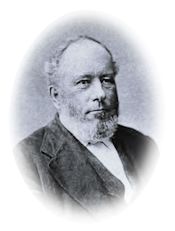
Sept. 27. Ten companies are now on the ground. Colonel Upton made us a visit today. He is to be our commander. I have known the colonel for several years past at our militia musters. He commanded the old 9th regiment, one which stood second to none in the state. I regard the colonel as a very fine man, and an able military commander. Under his command I have no fears but that our regiment will make a record that not only themselves, but the state will be proud of.
Election of officers tomorrow.–Alexander G. Downing.
September 27, 2021
Friday, 27th–Fine weather again. Our company was completed today and we have arranged for election of officers tomorrow.
A Diary of American Events.
September 27, 2021
September 27.–To-day Major-General Dix and staff, Brig.-General Duryea and Major Belger proceeded to the Relay House, Md., for the purpose of reviewing and presenting the Fourth Wisconsin regiment, Col. Paine, with a stand of colors. The regiment was drawn up in line and presented a truly martial appearance. When the presentation was about to take place, the divisions on each flank of the battalion were wheeled to the left and right, forming a three-sided square. The color guard was marched forward from the line, the colors then brought forward, when Gen. Dix addressed the regiment in the most patriotic and impassioned language. Col Paine replied in the same lofty sentiments and with burning eloquence, which spontaneously drew from his regiment acclamations of eternal fidelity to the emblem of our country’s glory–after which the colors took their place in line.–Baltimore American, Sept. 28.
——-
Late addition to Volume 3:
September 27.–A battle was fought near Shanghai, in Benton County, Missouri, between a body of Kansas troops, under Montgomery and Jamison, and the advance guard of Ben. McCulloch’s army and some of the State Guard, under Judge Cheneault. The rebels were driven back with considerable loss, and pursued forty miles, when Montgomery fell back on Greenfield. Great alarm was felt by the rebels in Springfield lest Montgomery should attack that place, and the troops there rested on their arms for several nights.–(Doc. 75.)