Thursday, 29.–Moved into the Presbyterian church to await our tents and train.
American Civil War Chronicles
Rebel War Clerk: “They are making this war; we must make it terrible.”
August 29, 2021
AUGUST 29th.—We have intelligence from the North that immense preparations are being made for our destruction; and some of our people begin to say, that inasmuch as we did not follow up the victory at Manassas, it was worse than a barren one, having only exasperated the enemy, and stimulated the Abolitionists to renewed efforts. I suppose these critics would have us forbear to injure the invader, for fear of maddening him. They are making this war; we must make it terrible. With them war is a new thing, and they will not cease from it till the novelty wears off, and all their fighting men are sated with blood and bullets. It must run its course, like the measles. We must both bleed them and deplete their pockets.
Indians
August 29, 2021
Daily Times [Leavenworth, Ks],
August 29, 1861
A large number of Osages, in full war costume, came into town last Thursday to offer their services to their Father at Washington. They rode around the plaza several times singing their war song, and followed by large numbers of curious soldiers. In the evening they gave a war dance, in the Plaza, which was witnessed by a large concourse of soldiers and citizens. They offer their services on condition that they be furnished with “wabusca” (flour) and “pacheney” (whisky.)–Fort Scott Democrat.
Downing’s Civil War Diary.–Alexander G. Downing.
August 29, 2021
Thursday, 29th–News came that they had a fight at Keokuk; the boys that went down had a lively skirmish with the “secesh” just across the river in Missouri.[i]
[i] This was doubtless what is known as the battle of Athens.–Ed
William Howard Russell’s Diary: The American journalist.—Threats of assassination.
August 29, 2021
August 29th.–It is hard to bear such a fate as befalls an unpopular man in the United States, because in no other country, as De Tocqueville remarks (p. 200, Spencer’s American edition, New York, 1858), is the press so powerful when it is unanimous. And yet he says, too, “The journalist of the United States is usually placed in a very humble position, with a scanty education and a vulgar turn of mind. His characteristics consist of an open and coarse appeal to the passions of the populace, and he habitually abandons the principles of political science to assail the characters of individuals, to track them into private life, and disclose all their weaknesses and errors. The individuals who are already in possession of a high station in the esteem of their fellow citizens are afraid to write in the newspapers, and they are thus deprived of the most powerful instrument which they can use to excite the passions of the multitude to their advantage. The personal opinions of the editors have no kind of weight in the eyes of the public. The only use of a journal is that it imparts the knowledge of certain facts; and it is only by altering and distorting those facts that a journalist can contribute to the support of his own views.” When the whole of the press, without any exception in so far as I am aware, sets deliberately to work, in order to calumniate, vilify, insult, and abuse a man who is at once a stranger, a rival, and an Englishman, he may expect but one result, according to De Tocqueville.
The teeming anonymous letters I receive are filled with threats of assassination, tarring, feathering, and the like; and one of the most conspicuous of literary sbirri is in perfect rapture at the notion of a new “sensation” heading, for which he is working as hard as he can. I have no intention to add to the number of his castigations.
In the afternoon I drove to the waste grounds beyond the Capitol, in company with Mr. Olmsted and Captain Haworth, to see the 18th Massachusetts Regiment, who had just marched in, and were pitching their tents very probably for the first time. They arrived from their state with camp equipments, waggons, horses, harness, commissariat stores complete, and were clad in the blue uniform of the United States; for the volunteer fancies in greys and greens are dying out. The men were uncommonly stout young fellows, with an odd, slouching, lounging air about some of them, however, which I could not quite understand till I heard one sing out, “Hallo, sergeant, where am I to sling my hammock in this tent?” Many of them, in fact, are fishermen and sailors from Cape Cod, New Haven, and similar maritime places.
Civil War Day-By-Day
August 29, 2021
August 29, 1861
- The Battle of Hatteras Inlet Batteries gives Federal forces control of Pamlico Sound.
A Chronological History of the Civil War in America1
- Lexington, Mo., attacked by 2,000 rebels. The place was defended by 250 men, who successfully beat off their assailants.
- Twenty~three rebels captured at Greytown, Mo.
- A Chronological History of the Civil War in America by Richard Swainson Fisher, New York, Johnson and Ward, 1863
A Virginia Heroine
August 28, 2021 Dallas Herald, August 28, 1861
The following says a Montgomery (Ala.) paper, is an extract of a letter received by a gentleman in this city, written by a friend living in the vicinity of Martinsburg. Read it:
“As Cadwallader was passing through Martinsburg, Virginia, one of the officers seeing a handsome young lady, (a Miss Boyd1) standing at her window, saluted her with his sabre. She hissed him. She promptly replied, that if he dared enter she would shoot him. He heeded not her warning, but passed in. As soon as he entered the room, the lady, true to her threat, and the virtuous impulse of the moment, pulled trigger and the foul villain fell in his tracks. The lady was arrested, tried, and acquitted. At night the band serenaded her, and played Yankee Doodle. She called for “Dixie.”
1 Belle Boyd, Confederate spy — Wikipedia, Library of Congress image
Extracts from the journal of Commander Semmes, C.S. Navy, commanding C.S.S. Sumter
August 28, 2021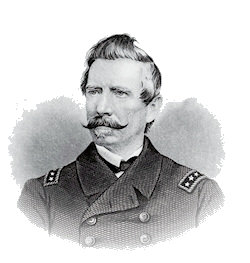
Wednesday, August 28.—Bright, elastic morning, with a gentle breeze
from the S. E. Suspended the second lieutenant from duty for remaining out of the ship during his watch without leave and sending off a midshipman to keep it, in violation of the general orders of the ship, and justifying the act when called on in my cabin for an explanation. Coaling and watering. To-day the story of two men-of-war being off the bar, said to have been brought by a fisherman, is discredited. It dwindles down to one merchant ship having been seen. As no sail has been signaled it is probably the story of the three white crows. At all events we are nearly ready for sea and shall try to get out tomorrow. In the afternoon I took a walk on shore, strolling along the beautiful avenue leading from the Government house northward. It is a fine beaten track lined with cottages on either side, many in a very dilapidated condition. Nature seemed unwilling to admit of even the intrusion of so much cleared space as was necessary for the road, and the rich, dark soil on either hand pushed its magnificent forest trees and undergrowth in a wilderness of green to the very margin of the road, and little or no cultivated land enclosed, and this wilderness seemed to be alive with birds and insects; among the former, the parrot seemed to be the most numerous and most lively, with its cheerful note. Evening, black clouds, threatening rain.
from the S. E. Suspended the second lieutenant from duty for remaining out of the ship during his watch without leave and sending off a midshipman to keep it, in violation of the general orders of the ship, and justifying the act when called on in my cabin for an explanation. Coaling and watering. To-day the story of two men-of-war being off the bar, said to have been brought by a fisherman, is discredited. It dwindles down to one merchant ship having been seen. As no sail has been signaled it is probably the story of the three white crows. At all events we are nearly ready for sea and shall try to get out tomorrow. In the afternoon I took a walk on shore, strolling along the beautiful avenue leading from the Government house northward. It is a fine beaten track lined with cottages on either side, many in a very dilapidated condition. Nature seemed unwilling to admit of even the intrusion of so much cleared space as was necessary for the road, and the rich, dark soil on either hand pushed its magnificent forest trees and undergrowth in a wilderness of green to the very margin of the road, and little or no cultivated land enclosed, and this wilderness seemed to be alive with birds and insects; among the former, the parrot seemed to be the most numerous and most lively, with its cheerful note. Evening, black clouds, threatening rain.
Horatio Nelson Taft
August 28, 2021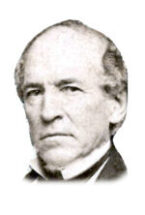
WEDNESDAY 28
Went to the Patent office this morning with Brownson to help him along with his knapsack application. We got it before the Examr in an hour. Went then with him up to the War Dept to see the Qr Master Genl about knapsacks for the Army. Then went up to see the Washington Statue and the “Meigs Bridge” over Rock Creek. Got home to dinner at 2 o’clock. It rained all the afternoon, did not go out. Cap Fowler & Drum Majr Smith of the old 12th called.
______
The three diary manuscript volumes, Washington during the Civil War: The Diary of Horatio Nelson Taft, 1861-1865, are available online at The Library of Congress.
Long march—Rutherford B. Hayes
August 28, 2021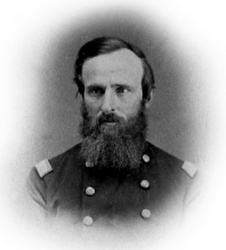
Wednesday, 28.–A long march over a bad path–thirty miles–to French Creek, or Scotchtown. Boarded with Mrs. Farrell. A fine Union settlement. Forty years ago a Massachusetts colony came here, and their thrift, morality, and patriotism are the salt of this region. Slept in tent of Culbertson and Lieutenant–of Captain Remley’s Fifth Regiment. Noble and generous treatment from them.
Rebel War Clerk’s diary. “Generals Johnston, Wise, and Floyd are sending here, daily, the Union traitors they discover to be in communication with the enemy. “
August 28, 2021
AUGUST 28th.—Beauregard offers battle again on the plains of Manassas; but it is declined by the enemy, who retire behind their fortifications. Our banners are advanced to Munson’s Hill, in sight of Washington. The Northern President and his cabinet may see our army, with good glasses, from the roof of the White House. It is said they sleep in their boots; and that some of them leave the city every night, for fear of being captured before morning.
Generals Johnston, Wise, and Floyd are sending here, daily, the Union traitors they discover to be in communication with the enemy. We have a Yankee member of Congress, Ely, taken at Manassas; he rode out to witness the sport of killing rebels as terriers kill rats, but was caught in the trap himself. He says his people were badly whipped; and he hopes they will give up the job of subjugation as a speculation that won’t pay. Most of the prisoners speak thus while in confinement.
Foundry
August 28, 2021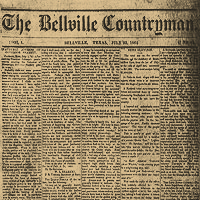
Bellville [Tx] Countryman, August 28, 1861
We, last Wednesday, visited the Foundry, and witnessed the process of making cannon. We saw one fine 6-pounder run–it was perfect in all its parts, and of beautiful shape. A large number of balls, six and twelve pound were also run. There is no telling what a people can do until they try–with material and machinery picked up around town, our enterprising citizens have shown that they can manufacture their own defensive projectiles.–Lavaca Gulf Key.
Salt
August 28, 2021
Bellville [Tx] Countryman, August 28, 1861
The Corpus Christi Ranchero extra, of the 10th inst., says a large number of wagons from Bastrop arrived there for salt, and were loaded without delay. The supply is inexhaustible, and Corpus is bound to enjoy an immense trade. The Ranchero says Clark is largely ahead in that district for Governor. The publication of the Ranchero is suspended for want of paper.
Downing’s Civil War Diary.–Alexander G. Downing.
August 28, 2021
Wednesday, 28th–There is nothing of importance. The camp looks as if it were deserted. There are just a few convalescents here, who were not able to go with the boys to Keokuk; there are also a few recruits coming in.
William Howard Russell’s Diary: Lord A. Vane Tempest.
August 28, 2021
August 28th.–Raining. Sundry officers turned in to inquire of me, who was quietly in bed at Washington, concerning certain skirmishes reported to have taken place last night. Sold one horse and bought another; that is, I paid ready money in the latter transaction, and in the former, received an order from an officer on the paymaster of his regiment, on a certain day not yet arrived.
To-day, Lord A. V. Tempest is added to the number of English arrivals; he amused me by narrating his reception at Willard’s on the night of his arrival. When he came in with the usual ruck of passengers, he took his turn at the book, and wrote down Lord Adolphus Vane Tempest, with possibly M.P. after it. The clerk, who was busily engaged in showing that he was perfectly indifferent to the claims of the crowd who were waiting at the counter for their rooms, when the book was finished, commenced looking over the names of the various persons, such as Leonidas Buggs, Rome, N. Y.; Doctor Onesiphorous Bowells, D.D., Syracuse; Olynthus Craggs, Palmyra, Mo.; Washington Whilkes, Indianopolis, writing down the numbers of the rooms, and handing over the keys to the waiters at the same time. When he came to the name of the English nobleman, he said, “Vane Tempest, No. 125.” “But stop,” cried Lord Adolphus. “Lycurgus Siccles,” continued the clerk, “No. 23.” “I insist upon it, sir,”–broke in Lord Adolphus,–”you really must hear me. I protest against being put in 125. I can’t go up so high.” “Why,” said the clerk, with infinite contempt, “I can put you at twice as high–I’ll give you No. 250 if I like.” This was rather too much, and Lord Adolphus put his things into a cab, and drove about Washington until he got to earth in the two-pair back of a dentist’s, for which no doubt, tout vu, he paid as much as for an apartment at the Hotel Bristol.
A gathering of American officers and others, amongst whom was Mr. Olmsted, enabled him to form some idea of the young men’s society of Washington, which is a strange mixture of politics and fighting, gossip, gaiety, and a certain apprehension of a wrath to come for their dear republic. Here is Olmsted prepared to lay down his life for free speech over a united republic, in one part of which his freedom of speech would lead to irretrievable confusion and ruin; whilst Wise, on the other hand, seeks only to establish a union which shall have a large fleet, be powerful at sea, and be able to smash up abolitionists, newspaper people, and political agitators at home.
Civil War Day-By-Day
August 28, 2021
August 28, 1861
- Union forces attack Cape Hatteras, North Carolina in the Battle of Hatteras Inlet Batteries which lasts for two days.
- Ulysses S. Grant is given command of federal forces in Southern Illinois and Southeastern Missouri.
A Chronological History of the Civil War in America1
- Bombardment and capture of forts Clark and Hatteras on the coast of North Carolina; rebel loss— 765 prisoners, 1,000 stand of arms, two vessels loaded with cotton and coffee, and a large amount of ammunition and stores. Union commanders: Stringham of the navy, and Butler of the army.
- A Chronological History of the Civil War in America by Richard Swainson Fisher, New York, Johnson and Ward, 1863
Downing’s Civil War Diary.–Alexander G. Downing.
August 27, 2021
Tuesday, 27th–I went to Davenport today and returned to Camp McClellan. A force of about five hundred men was sent down the river by boat to Keokuk, for the purpose of reinforcing the troops at that place. It is expected that they will have a fight there. I was too late in returning to camp to go with them.
Mary Chesnut’s Diary.—”I do not know when I have seen a woman without knitting in her hand. Socks for the soldiers is the cry.”
August 27, 2021
August 27th.–Theodore Barker and James Lowndes came; the latter has been wretchedly treated. A man said, “All that I wish on earth is to be at peace and on my own plantation,” to which Mr. Lowndes replied quietly, “I wish I had a plantation to be on, but just now I can’t see how any one would feel justified in leaving the army.” Mr. Barker was bitter against the spirit of braggadocio so rampant among us. The gentleman who had been answered so completely by James Lowndes said, with spitefulness: “Those women who are so frantic for their husbands to join the army would like them killed, no doubt.”
Things were growing rather uncomfortable, but an interruption came in the shape of a card. An old classmate of Mr. Chesnut’s–Captain Archer, just now fresh from California–followed his card so quickly that Mr. Chesnut had hardly time to tell us that in Princeton College they called him “Sally” Archer he was so pretty–when he entered. He is good-looking still, but the service and consequent rough life have destroyed all softness and girlishness. He will never be so pretty again.
The North is consolidated; they move as one man, with no States, but an army organized by the central power. Russell in the Northern camp is cursed of Yankees for that Bull Rim letter. Russell, in his capacity of Englishman, despises both sides. He divides us equally into North and South. He prefers to attribute our victory at Bull Run to Yankee cowardice rather than to Southern courage. He gives no credit to either side; for good qualities, we are after all mere Americans! Everything not “national” is arrested. It looks like the business of Seward.
I do not know when I have seen a woman without knitting in her hand. Socks for the soldiers is the cry. One poor man said he had dozens of socks and but one shirt. He preferred more shirts and fewer stockings. We make a quaint appearance with this twinkling of needles and the everlasting sock dangling below.
They have arrested Wm. B. Reed and Miss Winder, she boldly proclaiming herself a secessionist. Why should she seek a martyr’s crown? Writing people love notoriety. It is so delightful to be of enough consequence to be arrested. I have often wandered if such incense was ever offered as Napoleon’s so-called persecution and alleged jealousy of Madame de Stael.
.……..……..……..……..……..……..……..…….
Russell once more, to whom London, Paris, and India have been an every-day sight, and every-night, too, streets and all. How absurd for him to go on in indignation because there have been women on negro plantations who were not vestal virgins. Negro women get married, and after marriage behave as well as other people. Marrying is the amusement of their lives. They take life easily; so do their class everywhere. Bad men are hated here as elsewhere.
“I hate slavery. I hate a man who– You say there are no more fallen women on a plantation than in London in proportion to numbers. But what do you say to this–to a magnate who runs a hideous black harem, with its consequences, under the same roof with his lovely white wife and his beautiful and accomplished daughters? He holds his head high and poses as the model of all human virtues to these poor women whom God and the laws have given him. From the height of his awful majesty he scolds and thunders at them as if he never did wrong in his life. Fancy such a man finding his daughter reading Don Juan. ‘You with that immoral book!’ he would say, and then he would order her out of his sight. You see Mrs. Stowe did not hit the sorest spot. She makes Legree a bachelor.” “Remember George II. and his likes.”
“Oh, I know half a Legree–a man said to be as cruel as Legree, but the other half of him did not correspond. He was a man of polished manners, and the best husband and father and member of the church in the world.” “Can that be so?”
“Yes, I know it. Exceptional case, that sort of thing, always. And I knew the dissolute half of Legree well. He was high and mighty, but the kindest creature to his slaves. And the unfortunate results of his bad ways were not sold, had not to jump over ice-blocks. They were kept in full view, and provided for handsomely in his will.”
“The wife and daughters in the might of their purity and innocence are supposed never to dream of what is as plain before their eyes as the sunlight, and they play their parts of unsuspecting angels to the letter. They profess to adore the father as the model of all saintly goodness.” “Well, yes; if he is rich he is the fountain from whence all blessings flow.”
“The one I have in my eye–my half of Legree, the dissolute half–was so furious in temper and thundered his wrath so at the poor women, they were glad to let him do as he pleased in peace if they could only escape his everlasting fault-finding, and noisy bluster, making everybody so uncomfortable.” “Now–now, do you know any woman of this generation who would stand that sort of thing? No, never, not for one moment. The make-believe angels were of the last century. We know, and we won’t have it.”
“The condition of women is improving, it seems.” “Women are brought up not to judge their fathers or their husbands. They take them as the Lord provides and are thankful.”
“If they should not go to heaven after all; think what lives most women lead.” “No heaven, no purgatory, no– the other thing? Never. I believe in future rewards and punishments.”
“How about the wives of drunkards? I heard a woman say once to a friend of her husband, tell it as a cruel matter of fact, without bitterness, without comment, ‘Oh, you have not seen him! He has changed. He has not gone to bed sober in thirty years.’ She has had her purgatory, if not ‘the other thing,’ here in this world. We all know what a drunken man is. To think, for no crime, a person may be condemned to live with one thirty years.” “You wander from the question I asked. Are Southern men worse because of the slave system and the facile black women?” “Not a bit. They see too much of them. The barroom people don’t drink, the confectionery people loathe candy. They are sick of the black sight of them.”
“You think a nice man from the South is the nicest thing in the world?” “I know it. Put him by any other man and see!”
.……..……..……..……..……..……..……..…….
Have seen Yankee letters taken at Manassas. The spelling is often atrocious, and we thought they had all gone through a course of blue-covered Noah Webster spelling-books. Our soldiers do spell astonishingly. There is Horace Greeley: they say he can’t read his own handwriting. But he is candid enough and disregards all time-serving. He says in his paper that in our army the North has a hard nut to crack, and that the rank and file of our army is superior in education and general intelligence to theirs.
My wildest imagination will not picture Mr. Mason ¹ as a diplomat. He will say chaw for chew, and he will call himself Jeems, and he will wear a dress coat to breakfast. Over here, whatever a Mason does is right in his own eyes. He is above law. Somebody asked him how he pronounced his wife’s maiden name: she was a Miss Chew from Philadelphia.
They say the English will like Mr. Mason; he is so manly, so straightforward, so truthful and bold. “A fine old English gentleman,” so said Russell to me, “but for tobacco.” “I like Mr. Mason and Mr. Hunter better than anybody else.” “And yet they are wonderfully unlike.” “Now you just listen to me,” said I. “Is Mrs. Davis in hearing–no? Well, this sending Mr. Mason to London is the maddest thing yet. Worse in some points of view than Yancey, and that was a catastrophe.”

______
¹ James Murray Mason was a grandson of George Mason, and hud been elected United States Senator from Virginia in 1847. In 1851 he drafted the Fugitive Slave Law. His mission to England in 1861 was shared by John Slidell. On November 8, 1861, while on board the British steamer Trent, in the Bahamas, they were captured by an American named Wilkes, and imprisoned in Boston until January 2, 1862. A famous diplomatic difficulty arose with England over this affair. John Slidell was a native of New York, who had settled in Louisiana and became a Member of Congress from that State in 1843. In 1853 he was elected to the United States Senate.
Extracts from the journal of Commander Semmes, C.S. Navy, commanding C.S.S. Sumter
August 27, 2021
Tuesday, August 27.—Morning cloudy, clearing as the day advanced. Got sights for my chronometers, which gave me satisfactory results. Still coaling and watering. We hear a report that there are two ships of war off the entrance, keeping themselves out of sight, hoping to waylay us. A fisherman is said to have supplied one of them with fish. He also reports them to have sent in for water to one of the seacoast plantations. We shall be ready for sea in a couple of days, when we will verify this report. The codfish and cheese community, with the Yankee consul who has the negro wife at their head, has been in a great stew ever since we have been here, endeavoring to frustrate our coaling by carrying on the big business of buying off lighters, etc. The nightly gatherings of skippers and small shopkeepers must keep the little town of Paramaribo in an unwonted state of excitement. The governor sends me to-day a “clean bill of health” by way of a sort of leave-taking. Poor man, he would no doubt be glad to have me go, that he may get rid of the awful responsibility reposed upon him and his company of soldiers by my presence here. Evening breezeless and warm, inviting those pestiferous little insects, the mosquitoes, to board us. We have rumors of a battle having been fought at Manassas (in a private letter from Demerara) and of our having driven back the Northern hordes. As this news comes through the enemy’s own channels, he must be badly beaten.
Oaths and passes; Woolsey family letters.
August 27, 2021
The nurses were required to take the oath of allegiance to the government, and to secure passes, in all of which G(eorgeanna). helped them, also securing government ambulances to carry them to their destination:–
0 comments
“Dr. Asch begs to inform Miss Woolsey that he has seen the officer in charge of the passes into Virginia. It will be impossible to procure them this evening as the office closes at 3 p. m., and in addition it will be necessary for the nurses to present themselves at General Porter’s office for the purpose of making affirmation as to their loyalty,–when, on presenting the accompanying note, Dr. Asch trusts that there will be no delay in the accomplishment of their object.”
– – – – –
Surg.-General’s Office, Aug. 27, 1861.
Dr. Wood has requested Dr. Spencer to attend to the wishes of Miss Woolsey (in regard to the ambulances).
He very much regrets he is prevented from attending personally.
Visit to troops at Alexandria (cont.)—Horatio Nelson Taft
August 27, 2021
TUESDAY 27
A tent was pitched expressly for Julia which she occupied alone during the night with a sentinel pacing before her tent all night. I occupied a couch in Doct Barnes tent where we had taken tea. Julia was very much “lionized” by the officers while we staid in the camp. We took dinner with Col Bartlett, left the camp about 2 P.M., and rode to Fort Runyon, Fort Albany and to Arlington House, and from there to the “long Bridge.” Capt Albergen of Buffalo passed us over the Bridge. We got home before dark, had a pleasant trip.
______
The three diary manuscript volumes, Washington during the Civil War: The Diary of Horatio Nelson Taft, 1861-1865, are available online at The Library of Congress.
Rebel War Clerk
August 27, 2021
AUGUST 27th.—We have news of a fight at Hawk’s Nest, Western Virginia. Wise whipped the Yankees there quite handsomely.
Forced March.—Rutherford B. Hayes
August 27, 2021
Tuesday, [August] 27.–Ordered to make a forced march, without tents, knapsacks, or cooking utensils, to French Creek by a mountain path scarcely practicable for horsemen. At about 3 P. M. set out. I led the column afoot, Captain Sperry on Webby. Reached a river over the mountain after dark; kindled fires and slept on ground. Thirteen miles.
William Howard Russell’s Diary: Probable duration of the war.
August 27, 2021
August 27th.–Fever and ague, which Gen. McDowell attributes to water-melons, of which he, however, had eaten three times as much as I had. Swallowed many grains of quinine, and lay panting in the heat in-doors. Two English visitors, Mr. Lamy and a Captain of the 17th, called on me; and, afterwards, I had a conversation with M. Mercier and M. Stoeckl on the aspect of affairs. They are inclined to look forward to a more speedy solution than I think the North is weak enough to accept. I believe that peace is possible in two years or so, but only by the concession to the South of a qualified independence. The naval operations of the Federals will test the Southern mettle to the utmost. Having a sincere regard and liking for many of the Southerners whom I have met, I cannot say their cause, or its origin, or its aim, recommends itself to my sympathies; and yet I am accused of aiding it by every means in my power, because I do not re-echo the arrogant and empty boasting and insolent outbursts of the people in the North, who threaten, as the first-fruits of their success, to invade the territories subject to the British crown, and to outrage and humiliate our flag.
It is melancholy enough to see this great republic tumbling to pieces; one would regret it all the more but for the fact that it re-echoed the voices of the obscene and filthy creatures which have been driven before the lash of the lictor from all the cities of Europe. Assuredly it was a great work, but all its greatness and the idea of its life was of man, not of God. The principle of veneration, of obedience, of subordination, and self-control did not exist within. Washington-worship could not save it. The elements of destruction lay equally sized, smooth, and black at its foundations, and a spark suffices to blow the structure into the air.
“Bull-run was a blessing to us, for it startled the people from the conceit, arrogance and pride which must have proved their ruin.”–Adams Family Letters; Charles Francis Adams, Jr., to his Father
August 27, 2021
Boston, August 27, 1861
Your tone is too dull in your letters and I feel for you sincerely in your Bull-run panic in England. Here things certainly look much better and people feel much better. The money market is easy and our exportation of breadstuffs seems likely to continue. Finally, this steamer will advise you that at least the government is thoroughly in earnest and that spies and traitors can no longer enjoy immunity. Nor is this all. Last week we were in a terrible panic and Monday was the blackest day I ever saw; but now the Government is working for its life. McClellan has the complete confidence of the people, government securities are rising, money is plenty, and finally the indications are strong that the confederates are being ground to atoms by the very weight of their defensive preparations. Bull-run was a blessing to us, for it startled the people from the conceit, arrogance and pride which must have proved their ruin. There is a universal feeling of confidence abroad, and England may refuse our loan if she chooses to; but I don’t think she will for seven and three-tenths per cent is too much of the flesh-pots not to be longed for, and our securities must drift to England. . . .