William Howard Russell’s Diary: —A gun levelled at me in fun.—Increase of odium against me.—Success of the Hatteras expedition.

My Diary North and South – William Howard Russell

September 1st.–Took a ride early this morning over the Long Bridge. As I was passing out of the earthwork called a fort on the hill, a dirty German soldier called out from the parapet, “Pull-Run Russell! you shall never write Pulls’ Runs again,” and at the same time cocked his piece, and levelled it at me. I immediately rode round into the fort, the fellow still presenting his firelock, and asked him what he meant, at the same time calling for the sergeant of the guard, who came at once, and, at my request, arrested the man, who recovered arms, and said, “It was a choake –I vant to freeken Pull-Run Russell.” However, as his rifle was capped and loaded, and on full cock, with his finger on the trigger, I did not quite see the fun of it, and I accordingly had the man marched to the tent of the officer, who promised to investigate the case, and make a formal report of it to the brigadier, on my return to lay the circumstances before him. On reflection I resolved that it was best to let the matter drop; the joke might spread, and it was quite unpleasant enough as it was to bear the insolent looks and scowling faces of the guards at the posts, to whom I was obliged to exhibit my pass whenever I went out to ride.

On my return I heard of the complete success of the Hatteras expedition, which shelled out and destroyed some sand batteries guarding the entrance to the great inland sea and navigation called Pamlico Sound, in North Carolina, furnishing access to coasters for many miles into the Confederate States, and most useful to them in forwarding supplies and keeping up communications throughout. The force was commanded by General Butler, who has come to Washington with the news, and has [continue reading…]

0 comments

“We have about 50 prisoners here now.”–Army Life of an Illinois Soldier, Charles Wright Wills.

Civil War Day-by-Day

Cairo, September 1, 1861.

We had blankets given us this last week and new accoutrements throughout. If they would only change our guns now we would have nothing but a move to ask for. A uniform was also furnished us last week. It is of excellent all-wool goods, and not so heavy as to be uncomfortable. The color is very fine grey, the pants are fashionably cut and equal to such as would cost six dollars in Peoria. The coats have short skirts and are rather fancifully trimmed with blue. It is much the best uniform I have seen yet, although it costs but $13. We will have a fatigue suit shortly. Yesterday we were mustered for pay. We will get our first month’s wages this week “they say.” There are wagons and mules here now by the hundreds, and when our tents are ready (they are here now) we will be ready to move. I think there must be near 10,000 men here now. Logan’s, Pugh’s, Buford’s, and another’s regiment; Hick’s and Raritan’s came in last week. The first three belong to McCormick’s1 Brigade. General McClernand is here now. Every one thinks we will move in a very few days. I kind o’ feel it in my bones, too, but it is too good to be true, so I’m taking all the bets I can from 10 cents worth of peanuts to a half bushel of apples, I betting that we are here two weeks from now. I’ve got them any way, for if we move, I hope to be able to borrow apples, etc., from the seceshers to pay my little bills, and if I stay here I’ll have some eatables free for consolation. We Canton boys have hired a cook for ourselves and are living much better than I ever did before in camp.

Our cook is a jewel, and by trading off rations keeps us in clover all the time. He sets a better table for us than the Peoria house boarders eat from, honestly. An old schoolmate of mine in our mess furnishes us with milk. He and John Wallace go out every night about 2 or 3 o’clock and—somebody’s cow don’t milk well next morning. We’ll never have such times sojering again, but you can’t imagine how we do want to get over into Missouri or Arkansas. We don’t have half as easy times as these at home and but for the discipline it wouldn’t seem like soldiering. I’ve been bored like sin the last two weeks drilling new recruits, but I’m glad of it, for it is rather pleasant to me to have something disagreeable when I’m bored feeling good. [continue reading…]

0 comments

“…but we never dreamed that such a struggle would result as that in which we are now engaged…”–Letters from Elisha Franklin Paxton.

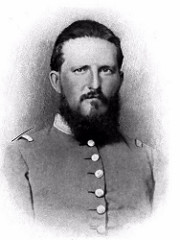
Elisha Franklin Paxton – Letters from camp and field while an officer in the Confederate Army

Camp Harmon, September 1,1861.

I wish very much this war was over, and I could be with you again at our home. There you remember, Love, you used to read, last December, to me of the stirring events in South Carolina; but we never dreamed that such a struggle would result as that in which we are now engaged, that the husbands and fathers among our people would be called upon to leave wives and children at home to mourn their absence whilst mingling in such a scene of blood and carnage as that through which we passed on the 21st of July. But so it is. How little we know of the future and our destiny! Dark as the present is, I indulge the hope it may soon change, and I may be with you again, not for a short visit, but to stay. Whilst such is the fond hope, when I look within my heart I find an immovable purpose to remain until the struggle ends in the establishment of our independence. Can the fond love which I cherish for you and our dear little children be reconciled with such a purpose? If I know myself, such is the fact. But, Love, my eye hurts me. It is sad to think of it, and that it disables me for life. It deprives me of the pleasure of reading for information and pleasure, unfits me for most kinds of business, and deprives me of the means of earning an independent support, which I feel I could do if I had my sight. The present is dark enough, but the future seems darker still, when I think of my return home, possibly made a bankrupt by the confiscation of my Ohio land, and then without means of earning a support or paying for my farm. I must not think of it now; it will be bad enough when it comes. I ought not to press my weak eye any farther. Kiss our dear little ones for me. Speak of me often to them. Never let them forget their “papa gone,” who loves them so well.

0 comments

Civil War Day-By-Day

Civil War Day-by-Day

September 1, 1861

A Chronological History of the Civil War in America1

  • Fight at Boone Court House, Va.; rebels routed and village burned.
  • Fight at Bennett’s Mills, Mo.

  1. A Chronological History of the Civil War in America by Richard Swainson Fisher, New York, Johnson and Ward, 1863
0 comments

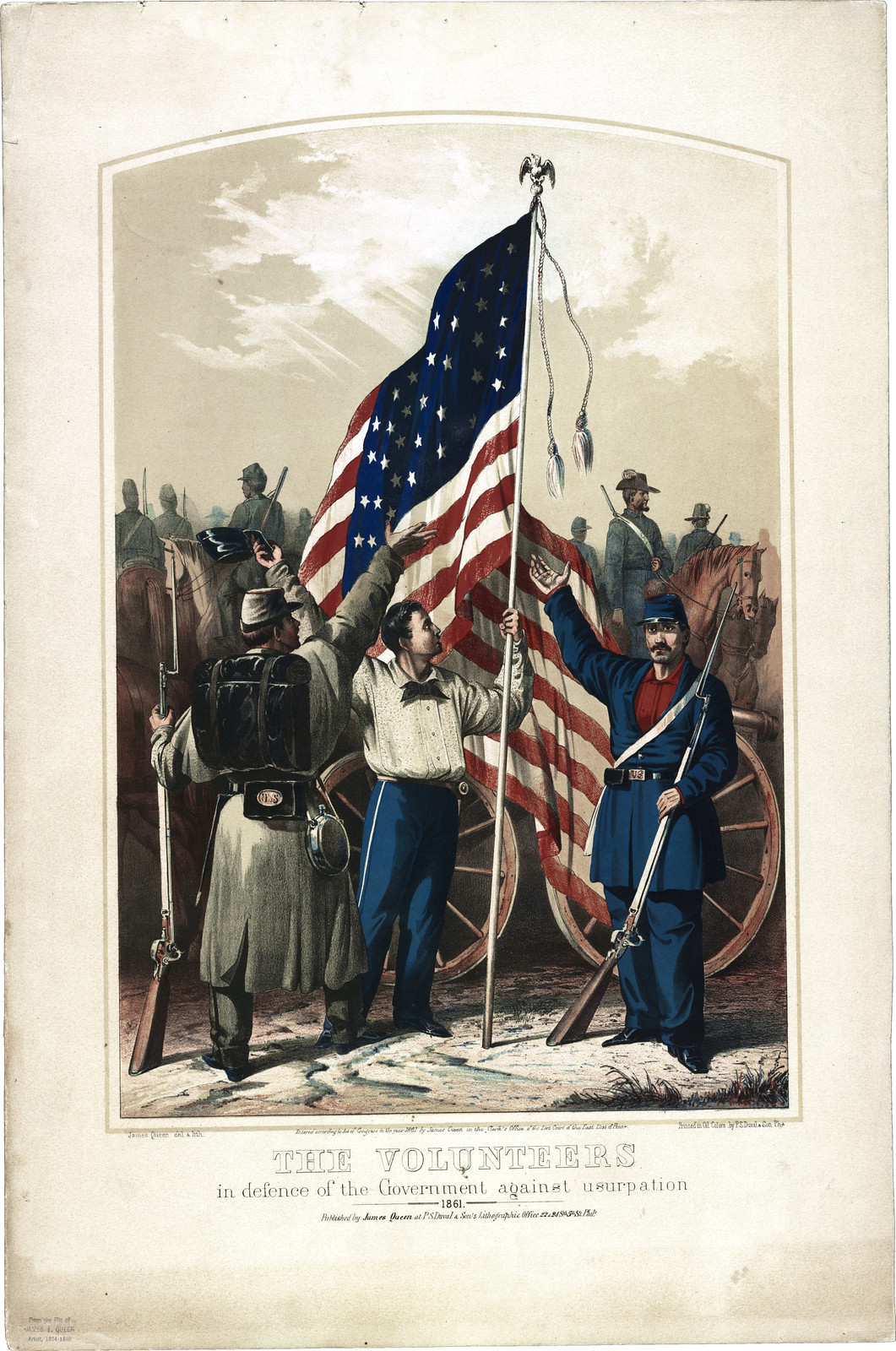
The volunteers in defence of the government against usurpation, 1861

Library of Congress, Miscellaneous document sources
The volunteers in defence of the government against usurpation, 1861


Title: The volunteers in defence of the government against usurpation, 1861 / James Queen del. & lith. ; printed in oil colors by P.S. Duval & Son Ph’a.
Creator(s): Queen, James Fuller, 1820 or 1821-1886, artist
Related Names: P.S. Duval & Son , printer
Date Created/Published: Phila. : Published by James Queen at P.S. Duval & Son’s Lithographic Office, 22 & 24 Sth. 5th St., c1861.
Medium: 1 print : lithograph, tinted (tan) ; 55.6 x 36.7 cm (sheet)
Summary: Print shows a man standing at center, holding an American flag, with two soldiers in uniform and holding rifles, standing to the right and left in the foreground; behind them are the wheels of a wagon attached to horses on the left, and soldiers on horseback in the background.
Reproduction Number: LC-DIG-pga-05797 (digital file from original print)
Rights Advisory: No known restrictions on publication.
Call Number: PGA – Duval–Volunteers in defence … (C size) [P&P]
Repository: Library of Congress Prints and Photographs Division Washington, D.C. 20540 USA
Notes:
…..Title from item.
…..Stamped on lower left: From the file of James F. Queen artist, 1824-1889.
…..Entered according to Act of Congress in the year 1861 by James Queen in the Clerk’s Office of the Dist. Court of the East. Dist. of Penna.
…..Forms part of: Marian S. Carson collection at the Library of Congress.

Library of Congress item permalink https://www.loc.gov/pictures/item/2013650021/

Mike’s notes:

Image restoration note – This image has been digitally adjusted for one or more of the following:
– fade correction,
– color, contrast, and/or saturation enhancement
– selected spot and/or scratch removal
– cropped for composition and/or to accentuate subject matter
– straighten image

Image restoration is the process of using digital restoration tools to create new digital versions of the images while also improving their quality and repairing damage.

0 comments

“Some Companies of German Cavalry were giving Senator Latham a vocal Seranade.”—Horatio Nelson Taft

Diary of US patent clerk Horatio Nelson Taft.

SATURDAY 31

This has been a delightful day, cool and bright. Large numbers of troops crossed the river last night, 30,000 at least, but we have heard nothing of any fight as yet. I have been model making part of the day. Was at the Pat office awhile. Went to market before dark. In the evening Julia and I went down to the Ave. We went into “Gautiers” and got ice cream, came up 13th St. Some Companies of German Cavalry were giving Senator Latham a vocal Seranade.

______

The three diary manuscript volumes, Washington during the Civil War: The Diary of Horatio Nelson Taft, 1861-1865, are available online at The Library of   Congress.

0 comments

Cape Hattaras August 1861

Civil War Day-by-Day

Capture of the Forts at Cape Hatteras inlet-First day, fleet opening fire and troops landing in the surfCapture of the Forts at Cape Hatteras inlet-First day, fleet opening fire and troops landing in the surf.

Waud, Alfred R. , Artist. [1861] Image. Retrieved from the Library of Congress, www.loc.gov/pictures/item/2004660375/. (Accessed August 31, 2016.)

0 comments

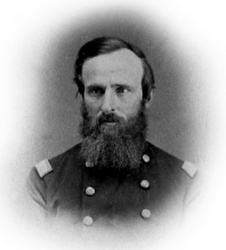
Diary of Rutherford B. Hayes

Diary and Letters of Rutherford Birchard Hayes

Saturday, [August] 31,–Mustered today. I called the roll of our five companies and of McMullen’s Battery.

0 comments

Rebel War Clerk

Civil War Day-by-Day

AUGUST 31st.—We have bad news to-day. My wife and children are the bearers of it. They returned to the city with the tidings that all the women and children were ordered to leave Newbern. The enemy have attacked and taken Fort Hatteras, making many prisoners, and threaten Newbern next. This is the second time my family have been compelled to fly. But they are well.

0 comments

A Diary From Dixie

Civil War Day-by-Day

August 31st.–Congress adjourns to-day. Jeff Davis ill. We go home on Monday if I am able to travel. Already I feel the dread stillness and torpor of our Sahara of a Sand Hill creeping into my veins. It chills the marrow of my bones. I am reveling in the noise of city life. I know what is before me. Nothing more cheering than the cry of the lone whippoorwill will break the silence at Sandy Hill, except as night draws near, when the screech-owl will add his mournful note.

0 comments

The country has been in great commotion and the gloom that has overshadowed us does not seem to lessen.

The Letters of Samuel Ryan Curtis

Jefferson Barracks Mo
August 31 1861

My dear wife

This is the last day of the long month which closes another summer. It has been full of stirring events in which I have extensively participated. The country has been in great commotion and the gloom that has overshadowed us does not seem to lessen. On the contrary the “combat deepens” and grows wider and longer and more and more interminable.

This day General Fremont proclaims Martial law1 as extended throughout Missouri which of course gives him a kind of supreme command over everything in this state a specious of Despotic power which in some mens hands may be made extremely oppressive.

I being subordinate, must yield, and aid in carrying it out; but I here record my entire disapproval, believing the exigencies do not require it, and the prudent fraught with too much peril to the future liberties of the people. Indeed I doubt the success of it in a military point of view for I fear it will involve the Military officers in all the police regulations of the state that could be better supervised by the civil power and absorb the time of military men that should be employed in commanding soldiers.

The proclamation too is carelessly worded and open to a thousand objections which in after times will meet with severe reprehensions. But thiese are revolutionary times and the justification may at present rest on a revolutionary necessity which the world may never take the trouble to investigate. It is a short quick way we have here of sliding into a Military Government, which has no parallel in the history of this war elsewhere and which I privately condemn. [continue reading…]

0 comments

Remember the Soldier

Miscellaneous document sources, News of the Day

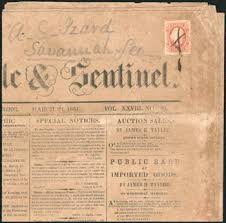
Daily Chronicle & Sentinel [Augusta, GA],
August 31, 1861

. . . The weather has recently been very wet in Virginia, and it is even now getting quite cool, especially in the mountains. And right now the soldiers need good blankets and flannel shirts almost as much as they every will. Woolen shirts, next to the skin, and a small ration of whisky each day, are the best preventatives of malarious fever, in our opinion, whatever the medical men may say. In an army, of course, it is absolutely important to prevent excessive drinking, and drunkenness, in officers or men, should be severely punished. But we think the soldiers ought to have a gill of pure cheap whisky a day. Some do not drink, and while it might look harsh to give them whisky as a preventative medicine against their will, they might be given money instead, so as to prevent their selling the whisky ration to their comrades. In typhoid fever we would rather trust to pure spirits, as a preventive and as a cure, than all the medicines in the shops.

It has been urged that as blankets are very scarce, if indeed it be possible to buy them at all, the people should give their own to the soldiers. We agree to this heartily, and when families can not afford to give them, let them sell their blankets. Every family can readily furnish from one to half a dozen, and use comforts, or something of that sort for themselves. Blankets are the only covering that will answer for the soldier in camp, and these ought to be lined with oil-cloth if possible. Comforts, sheets, coverlets and such like, should be contributed for hospital purposes, but the blankets alone for the soldiers in service. Remember the soldier, and provide liberally and fully for all the wants of those who are fighting for us who stay at home.

0 comments

Downing’s Civil War Diary.–Alexander G. Downing.

Diary of Alexander G. Downing; Company E, Eleventh Iowa Infantry

Saturday, 31st–Our men arrived from Keokuk this morning. They did not get into action with the “secesh” while at Keokuk as reported. The companies for the Eighth Iowa Infantry are almost completed and the regiment will be ready to leave for the South at a moment’s notice. They are to receive the clothing and arms at St. Louis.

0 comments

William Howard Russell’s Diary: Personal unpopularity.—American naval officers.

My Diary North and South – William Howard Russell

August 31st.–A month during which I have been exposed to more calumny, falsehood, not to speak of danger, than I ever passed through, has been brought to a close. I have all the pains and penalties attached to the digito monstrari et dicier hie est, in the most hostile sense. On going into Willard’s the other day, I said to the clerk behind the bar, “Why I heard, Mr. So-and-so, you were gone?”Well, sir, I’m not. If I was, you would have lost the last man who is ready to say a word for you in this house, I can tell you.” Scowling faces on every side–women turning up their pretty little noses–people turning round in the streets, or stopping to stare in front of me–the proprietors of the shops where I am known pointing me out to others; the words uttered, in various tones, ” So, that’s Bull-Run Russell!”–for, oddly enough, the Americans seem to think that a disgrace to their arms becomes diminished by fixing the name of the scene as a sobriquet on one who described it–these, with caricatures, endless falsehoods, rumours of duels, and the like, form some of the little désagrémens of one who was so unfortunate as to assist at the retreat, the first he had ever seen, of an army which it would in all respects have suited him much better to have seen victorious.

I dined with Lieutenant Wise, and met Captain Dahlgren, Captain Davis, U.S.N., Captain Foote, U.N.S., and Colonel Fletcher Webster (since killed in action), son of the great American statesman, now commanding a regiment of volunteers. The latter has a fine head and face; a full, deep eye; is quaint and dry in his conversation, and a poet, I should think, in heart and soul, if outward and visible signs may be relied on. The naval captains were excellent specimens of the accomplished and able men who belong to the United States Navy. Foote, who is designated to the command of the flotilla which is to clear the Mississippi downwards, will, I am certain, do good service–a calm, energetic, skilful officer. Dahlgren, who, like all men with a system, very properly watches everything which bears upon it, took occasion to call for Captain Foote’s testimony to the fact, that he battered down a six-foot granite wall in China with Dahlgren shells. It will run hard against the Confederates when they get such men at work on the rivers and coasts, for they seem to understand their business thoroughly, and all they are not quite sure of is the readiness of the land forces to co-operate with their expeditionary movements. Incidentally I learned from the conversation–and it is a curious illustration of the power of the President–that it was he who ordered the attack on Charleston harbour, or, to speak with more accuracy, the movement of the armed squadron to relieve Sumter by force, if necessary; and that he came to the conclusion it was feasible principally from reading the account of the attack on Kinburn by the allied fleets. There was certainly an immense disproportion between the relative means of attack and defence in the two cases; but, at all events, the action of the Confederates prevented the attempt.

0 comments

Civil War Day-By-Day

Civil War Day-by-Day

August 31, 1861

  • Samuel Cooper, Robert E. Lee, Albert Sidney Johnston, Joseph E. Johnston and P. G. T. Beauregard are promoted to full general.
0 comments

Guerilla

Civil War Day-by-Day

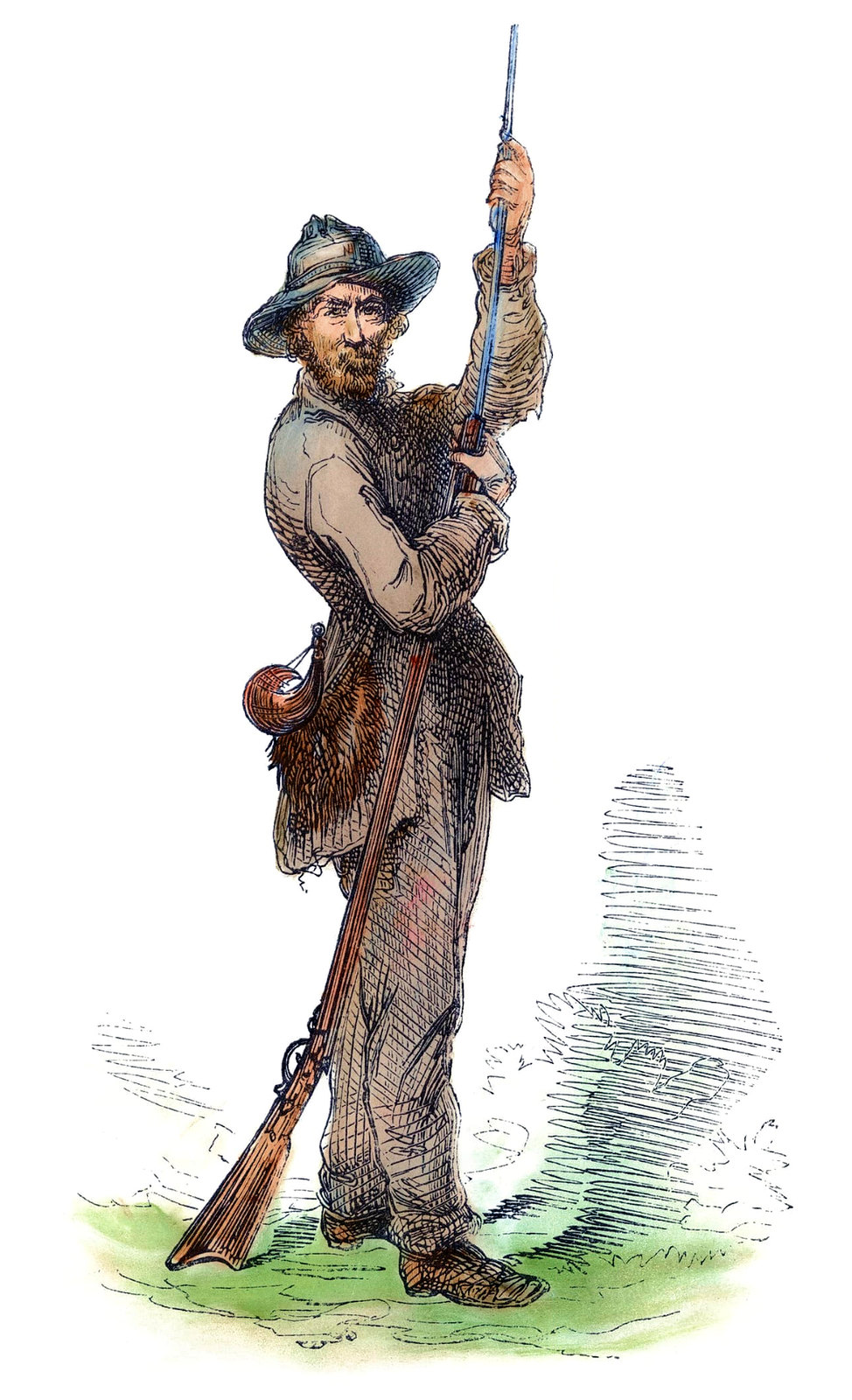
A bushwhacker, or Confederate guerilla fighter. Wood engraving, American, 1867

“Civil War Guerilla, Engraving, 1667.” Granger. Accessed August 29, 2021. www.granger.com/results.asp?inline=true&image=0066702….

0 comments

“Skirmishing among the sentries occurs daily. The Newspapers here say nothing.”—Horatio Nelson Taft

Diary of US patent clerk Horatio Nelson Taft.

FRIDAY 30

Excitement is again on tiptoe as a general battle is expected now day by day on the other side of the River. The entrenchments of the rebels can be seen from the top of the Capitol dome with a good Spyglass. Skirmishing among the sentries occurs daily. The Newspapers here say nothing. I was at the Pat office awhile today, came home and made a small model of Door fastener. Went down to Willards with Doct Everitt, saw Maj Chase. Called for Julia at Chas rooms at 10.

______

The three diary manuscript volumes, Washington during the Civil War: The Diary of Horatio Nelson Taft, 1861-1865, are available online at The Library of   Congress.

0 comments

Description of difficult march through the mountains.—Rutherford B. Hayes

Diary and Letters of Rutherford Birchard Hayes

Friday, 30.–Last night Dr. Joe and I did our best to house in Mrs. Sea’s barn (a good Union lady, two sons in the army), the Germans of the Ninth, who lay in the mud, without shelter. Spent today in a jolly way, resting.

______

FRENCH CREEK, August 30, 1861, Friday Night.

DEAREST:–”The best laid schemes of mice and men,” etc., especially in war. That beautiful camp at the head of the valley, where we were to stay so long, had just been gotten into fine order, when the order to leave came: “Make a forced march to French Creek by a mountain path, leaving tents, baggage, and knapsacks to be sent you.” We obeyed, and are yet alive. A queer life. We are now as jolly as if we never saw trouble or hardship. Two nights ago and three nights ago we lay in the rain in the woods without shelter, blankets, and almost without food, and after such hard days’ toil that we slept on the mountains as soundly as logs. All the horses used up, Uncle Joe’s Birch among the rest, except my pretty little sorrel, Webby, which came through better than ever.

Let me describe my kit: Portmanteau containing two pair socks, one shirt, a towel containing bread and sugar, a tin cup, a pistol in one holster and ammunition in the other, a blanket wrapped in the India-rubber you fixed, and a blue (soldier’s) overcoat. Seven miles we made after 2:30 P. M. on a good road to Huttonsville, then by a bridle-path part of the way and no path the rest, following a guide six miles over a steep, muddy, rocky mountain. At the foot of the mountain I put Captain Sperry, who was footsore, on Webby, and pushed ahead afoot. I could see we would not get over the mountain to a stream we wished to camp on until after night, unless we pushed. I put on ahead of [the] guide and reached the top with Lieutenant Bottsford, the keen-eyed snare-drummer, Gillett (Birch remembers him, I guess), a soldier, and the guide alone in sight. We waited till the head of the column came in sight, got full instructions from the guide, directed him to wait for the column, and leaving him, re-enforced, however, by the silver cornet player, we hurried down. In half an hour it was dark as tar. I led the little party blundering sometimes, but in the main, right, until [continue reading…]

0 comments

Rebel War Clerk

Civil War Day-by-Day

AUGUST 30th.—Gen. Floyd has had a fight in the West, and defeated an Ohio regiment. I trust they were of the Puritan stock, and not the descendants of Virginians.

0 comments

Downing’s Civil War Diary.–Alexander G. Downing.

Diary of Alexander G. Downing; Company E, Eleventh Iowa Infantry

Friday, 30th–No news of importance. There are still some companies arriving in camp for the Eighth Iowa, and they are still adding new recruits to the Second Iowa Cavalry, which is in camp at the Fair Grounds.

0 comments

Out-Generaling Us.–Journal of Surgeon Alfred L. Castleman.

Journal of Surgeon Alfred L Castleman.

30th.–It is now between two and three months since our regiment went into camp. We have had nearly three hundred cases of measles, with about as many of diarrhœa, dysentery and fever. Not one quarter of the regiment but has been sick in some way, and yet last night every man who left home with the regiment slept in camp–not one death by sickness or accident, none left behind, not one lost by desertion ! May we not challenge the armies of the world for a parallel? We are sleeping on our arms every night, in anticipation of an attack on Washington, and it seems to be the general belief that we shall be attacked here. I am no military man, and my opinion here is of no account to the world, but to me, for whose especial benefit it is written, it is worth as much as would be the opinion of a Napoleon. That opinion is, that we shall have no fight here–that the enemy is out-generaling us by feints to induce us to concentrate our forces here, whilst he makes a strike and overpowers us elsewhere.

0 comments

Civil War Day-By-Day

Civil War Day-by-Day

August 30, 1861

  • John C. Fremont declares martial law in Missouri and frees slaves of Missouri Confederates.

A Chronological History of the Civil War in America1

  • Fort Morgan, at Okracoke, abandoned by the rebels. (Alabama)
  • Major-Gen. Fremont issued a proclamation declaring martial law throughout Missouri, and also declaring that the property of rebels should be confiscated, their slaves freed, and themselves, if found guilty by court-martial, shot.2

  1. A Chronological History of the Civil War in America by Richard Swainson Fisher, New York, Johnson and Ward, 1863
  2. Swainson’s A Chronological History of the Civil War in America gives the 31st as the date of Fremont’s declaration
0 comments

Zouave Fatality, 1861

Civil War Day-by-Day


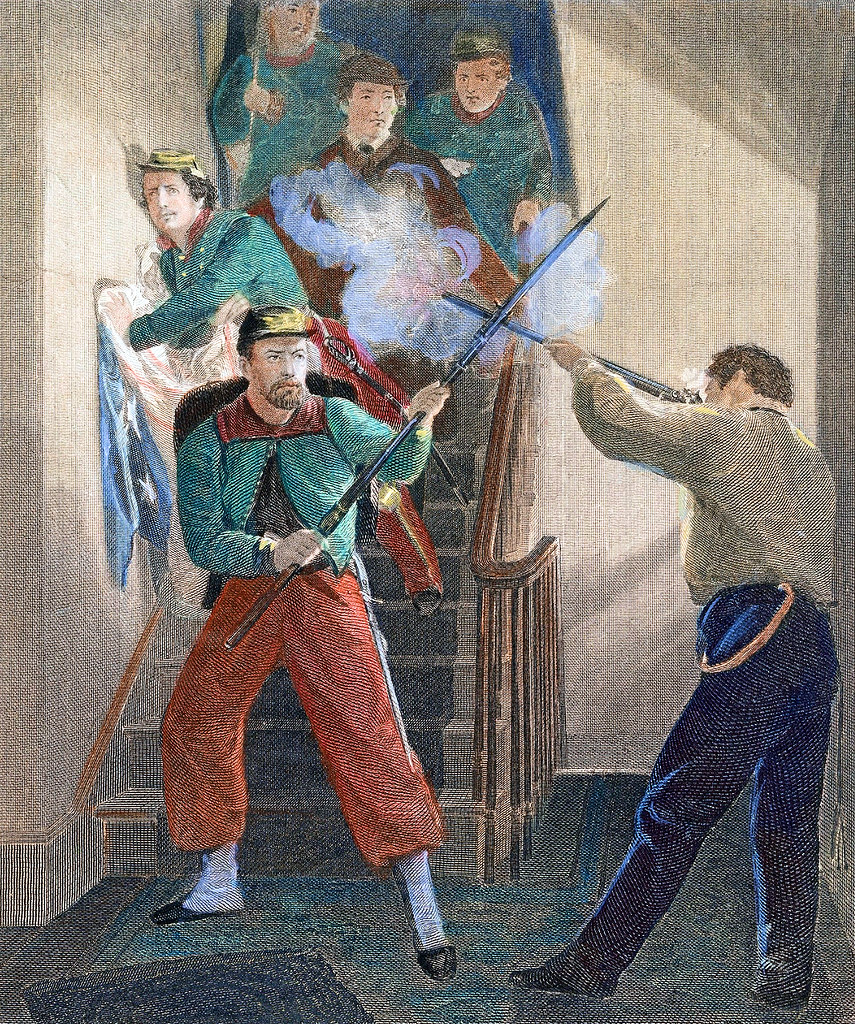
The fatal shooting of Elmer Ephraim Ellsworth, Colonel of the New York Fire Zouaves and the first notable Northern fatality of the Civil War, in Alexandria, Virginia on 24 May 1861. Steel engraving, 19th century.

“Zouave Fatality, 1861.” Granger. Accessed August 29, 2021. www.granger.com….

Mike’s notes:

Image restoration note – This image has been digitally adjusted for one or more of the following:
– fade correction,
– color, contrast, and/or saturation enhancement
– selected spot and/or scratch removal
– cropped for composition and/or to accentuate subject matter
– straighten image

Image restoration is the process of using digital restoration tools to create new digital versions of the images while also improving their quality and repairing damage.

0 comments

Mary Chesnut’s Diary.—”To men, glory, honor, praise, and power, if they are patriots. To women, daughters of Eve, punishment comes still in some shape, do what they will.”

Civil War Day-by-Day

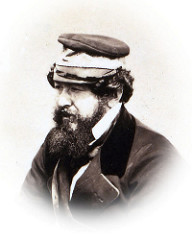
August 29th.–No more feminine gossip, but the licensed slanderer, the mighty Russell, of the Times. He says the battle of the 21st was fought at long range: 500 yards apart were the combatants. The Confederates were steadily retreating when some commotion in the wagon train frightened the “Yanks,” and they made tracks. In good English, they fled amain. And on our side we were too frightened to follow them–in high-flown English, to pursue the flying foe.

In spite of all this, there are glimpses of the truth sometimes, and the story leads to our credit with all the sneers and jeers. When he speaks of the Yankees’ cowardice, falsehood, dishonesty, and braggadocio, the best words are in his mouth. He repeats the thrice-told tale, so often refuted and denied, that we were harsh to wounded prisoners. Dr. Gibson told me that their surgeon-general has written to thank our surgeons: Yankee officers write very differently from Russell. I know that in that hospital with the Sisters of Charity they were better off than our men were at the other hospitals: that I saw with my own eyes. These poor souls are jealously guarded night and day. It is a hideous tale–what they tell of their sufferings.

Women who come before the public are in a bad box now. False hair is taken off and searched for papers. Bustles are “suspect.” All manner of things, they say, come over the border under the huge hoops now worn; so they are ruthlessly torn off. Not legs but arms are looked for under hoops, and, sad to say, found. Then women are used as detectives and searchers, to see that no men slip over in petticoats. So the poor creatures coming this way are humiliated to the deepest degree. To men, glory, honor, praise, and power, if they are patriots. To women, daughters of Eve, punishment comes still in some shape, do what they will.

Mary Hammy’s eyes were starting from her head with amazement, while a very large and handsome South Carolinian talked rapidly. “What is it? ” asked I after he had gone. “Oh, what a year can bring forth–one year! Last summer you remember how he swore he was in love with me? He told you, he told me, he told everybody, and if I did refuse to marry him I believed him. Now he says he has seen, fallen in love with, courted, and married another person, and he raves of his little daughter’s beauty. And they say time goes slowly” –thus spoke Mary Hammy, with a sigh of wonder at his wonderful cure.

“Time works wonders,” said the explainer-general. “What conclusion did you come to as to Southern men at the grand pow-wow, you know?” “They are nicer than the nicest–the gentlemen, you know. There are not too many of that kind anywhere. Ours are generous, truthful, brave, and–and–devoted to us, you know. A Southern husband is not a bad thing to have about the house.”

Mrs. Frank Hampton said: “For one thing, you could not flirt with these South Carolinians. They would not stay at the tepid degree of flirtation. They grow so horridly in earnest before you know where you are.” “Do you think two married people ever lived together without finding each other out? I mean, knowing exactly how good or how shabby, how weak or how strong, above all, how selfish each was?” “Yes; unless they are dolts, they know to a tittle; but you see if they have common sense they make believe and get on, so so.” Like the Marchioness’s orange-peel wine in Old Curiosity Shop.

A violent attack upon the North to-day in the Albion. They mean to let freedom slide a while until they subjugate us. The Albion says they use lettres de cachet, passports, and all the despotic apparatus of regal governments. Russell hears the tramp of the coming man–the king and kaiser tyrant that is to rule them. Is it McClellan?– “Little Mac?” We may tremble when he comes. We down here have only “the many-headed monster thing,” armed democracy. Our chiefs quarrel among themselves.

McClellan is of a forgiving spirit. He does not resent Russell’s slurs upon Yankees, but with good policy has Russell with him as a guest.

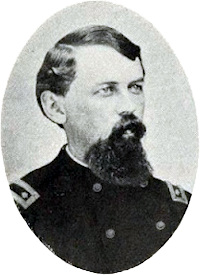
The Adonis of an aide avers, as one who knows, that “Sumter” Anderson’s heart is with us; that he will not fight the South. After all is said and done that sounds like nonsense. “Sumter” Anderson’s wife was a daughter of Governor Clinch, of Georgia. Does that explain it? He also told me something of Garnett (who was killed at Rich Mountain). ¹ He had been an unlucky man clear through. In the army before the war, the aide had found him proud, reserved, and morose, cold as an icicle to all. But for his wife and child he was a different creature. He adored them and cared for nothing else.

One day he went off on an expedition and was gone six weeks. He was out in the Northwest, and the Indians were troublesome. When he came back, his wife and child were underground. He said not one word, but they found him more frozen, stern, and isolated than ever; that was all. The night before he left Richmond he said in his quiet way: “They have not given me an adequate force. I can do nothing. They have sent me to my death.” It is acknowledged that he threw away his life– “a dreary-hearted man,” said the aide, “and the unluckiest.”

.……..……..……..……..……..……..……..……..…….

On the front steps every evening we take our seats and discourse at our pleasure. A nicer or more agreeable set of people were never assembled than our present Arlington crowd. To-night it was Yancey ² who occupied our tongues. Send a man to England who had killed his father-in-law in a street brawl! That was not knowing England or Englishmen, surely. Who wants eloquence? We want somebody who can hold his tongue. People avoid great talkers, men who orate, men given to monologue, as they would avoid fire, famine, or pestilence. Yancey will have no mobs to harangue. No stump speeches will be possible, superb as are his of their kind, but little quiet conversation is best with slow, solid, common-sense people, who begin to suspect as soon as any flourish of trumpets meets their ear. If Yancey should use his fine words, who would care for them over there?

Commodore Barron, when he was a middy, accompanied Phil Augustus Stockton to claim his bride. He, the said Stockton, had secretly wedded a fair heiress (Sally Cantey). She was married by a magistrate and returned to Mrs. Grillaud’s boarding-school until it was time to go home –that is, to Camden.

Lieutenant Stockton (a descendant of the Signer) was the handsomest man in the navy, and irresistible. The bride was barely sixteen. When he was to go down South among those fire-eaters and claim her, Commodore Barron, then his intimate friend, went as his backer. They were to announce the marriage and defy the guardians. Commodore Barron said he anticipated a rough job of it all, but they were prepared for all risks. “You expected to find us a horde of savages, no doubt,” said I. “We did not expect to get off under a half-dozen duels.” They looked for insults from every quarter and they found a polished and refined people who lived en prince, to say the least of it. They were received with a cold, stately, and faultless politeness, which made them feel as if they had been sheep-stealing.

The young lady had confessed to her guardians and they were for making the best of it; above all, for saving her name from all gossip or publicity. Colonel John Boykin, one of them, took Young Lochinvar to stay with him. His friend, Barron, was also a guest. Colonel Deas sent for a parson, and made assurance doubly sure by marrying them over again. Their wish was to keep things quiet and not to make a nine-days’ wonder of the young lady.

Then came balls, parties, and festivities without end. He was enchanted with the easy-going life of these people, with dinners the finest in the world, deer-hunting, and foxhunting, dancing, and pretty girls, in fact everything that heart could wish. But then, said Commodore Barron, “the better it was, and the kinder the treatment, the more ashamed I grew of my business down there. After all, it was stealing an heiress, you know.”

I told him how the same fate still haunted that estate in Camden. Mr. Stockton sold it to a gentleman, who later sold it to an old man who had married when near eighty, and who left it to the daughter born of that marriage. This pretty child of his old age was left an orphan quite young. At the age of fifteen, she ran away and married a boy of seventeen, a canny Scotchman. The young couple lived to grow up, and it proved after all a happy marriage. This last heiress left six children; so the estate will now be divided, and no longer tempt the fortune-hunters.

The Commodore said: “To think how we two youngsters in our blue uniforms went down there to bully those people.” He was much at Colonel Chesnut’s. Mrs. Chesnut being a Philadelphian, he was somewhat at ease with them. It was the most thoroughly appointed establishment he had then ever visited.

.……..……..……..……..……..……..……..……..…….

Went with our leviathan of loveliness to a ladies’ meeting. No scandal to-day, no wrangling, all harmonious, everybody knitting. Dare say that soothing occupation helped our perturbed spirits to be calm. Mrs. C is lovely, a perfect beauty. Said Brewster: “In Circassia, think what a price would be set upon her, for there beauty sells by the pound!”

Coming home the following conversation: “So Mrs. Blank thinks purgatory will hold its own–never be abolished while women and children have to live with drunken fathers and brothers.” “She knows.” “She is too bitter. She says worse than that. She says we have an institution worse than the Spanish Inquisition, worse than Torquemada, and all that sort of thing.” “What does she mean?” “You ask her. Her words are sharp arrows. I am a dull creature, and I should spoil all by repeating what she says.”

“It is your own family that she calls the familiars of the Inquisition. She declares that they set upon you, fall foul of you, watch and harass you from morn till dewy eve. They have a perfect right to your life, night and day, unto the fourth and fifth generation. They drop in at breakfast and say, ‘Are you not imprudent to eat that?’ ‘Take care now, don’t overdo it.’ ‘I think you eat too much so early in the day.’ And they help themselves to the only thing you care for on the table. They abuse your friends and tell you it is your duty to praise your enemies. They tell you of all your faults candidly, because they love you so; that gives them a right to speak. What family interest they take in you. You ought to do this; you ought to do that, and then the everlasting ‘you ought to have done,’ which comes near making you a murderer, at least in heart. ‘Blood’s thicker than water,’ they say, and there is where the longing to spill it comes in. No locks or bolts or bars can keep them out. Are they not your nearest family? They dine with you, dropping in after you are at soup. They come after you have gone to bed, when all the servants have gone away, and the man of the house, in his nightshirt, standing sternly at the door with the huge wooden bar in his hand, nearly scares them to death, and you are glad of it.”

“Private life, indeed!” She says her husband entered public life and they went off to live in a far-away city. Then for the first time in her life she knew privacy. She never will forget how she jumped for joy as she told her servant not to admit a soul until after two o’clock in the day. Afterward, she took a fixed day at home. Then she was free indeed. She could read and write, stay at home, go out at her own sweet will, no longer sitting for hours with her fingers between the leaves of a frantically interesting book, while her kin slowly driveled nonsense by the yard–waiting, waiting, yawning. Would they never go? Then for hurting you, who is like a relative? They do it from a sense of duty. For stinging you, for cutting you to the quick, who like one of your own household? In point of fact, they alone can do it. They know the sore, and how to hit it every time. You are in their power. She says, did you ever see a really respectable, responsible, revered and beloved head of a family who ever opened his mouth at home except to find fault? He really thinks that is his business in life and that all enjoyment is sinful. He is there to prevent the women from such frivolous things as pleasure, etc., etc.

I sat placidly rocking in my chair by the window, trying to hope all was for the best. Mary Hammy rushed in literally drowned in tears. I never saw so drenched a face in my life. My heart stopped still. “Commodore Barron is taken prisoner,” said she. “The Yankees have captured him and all his lieutenants. Poor Imogen–and there is my father scouting about, the Lord knows where. I only know he is in the advance guard. The Barron’s time has come. Mine may come any minute. Oh, Cousin Mary, when Mrs. Lee told Imogen, she fainted! Those poor girls; they are nearly dead with trouble and fright.”

“Go straight back to those children,” I said. “Nobody will touch a hair of their father’s head. Tell them I say so. They dare not. They are not savages quite. This is a civilized war, you know.”

Mrs. Lee said to Mrs. Eustis (Mr. Corcoran’s daughter) yesterday: “Have you seen those accounts of arrests in Washington?” Mrs. Eustis answered calmly: “Yes, I know all about it. I suppose you allude to the fact that my father has been imprisoned.” “No, no,” interrupted the explainer, “she means the incarceration of those mature Washington belles suspected as spies.” But Mrs. Eustis continued, “I have no fears for my father’s safety.”

______

¹ The battle of Rich Mountain, in Western Virginia, was fought July 11, 1861, and General Garnett, Commander of the Confederate forces, pursued by General McClellan, was killed at Carrick’s Ford, July 13th, while trying to rally his rear-guard.

² William Lowndes Yancey was a native of Virginia, who settled in Alabama, and in 1844 was elected to Congress, where he became a leader among the supporters of slavery and an advocate of secession. He was famous in his day as an effective public speaker.
0 comments

“A battle is expected soon over the River. Skirmishing yesterday and the guns heard by us nearly all day.”—Horatio Nelson Taft

Diary of US patent clerk Horatio Nelson Taft.

THURSDAY, AUGUST 29, 1861.

It has rained almost incessantly today and I have done but little but stay in the house. Mr Brownson and myself went down to the Pat office and found that the “knapsack” had passed. Mr B. left for home on the 21/2 train. I went to the Depot with him. The 18th 19th 20th & 21st Regts from Mass were arriving, all expected before tomorrow morning. Capt McCormick, who resides cor[ner] 40th St & 8th Ave NY, and Lieut Martin 12th Regt called today. A battle is expected soon over the River. Skirmishing yesterday and the guns heard by us nearly all day.

______

The three diary manuscript volumes, Washington during the Civil War: The Diary of Horatio Nelson Taft, 1861-1865, are available online at The Library of   Congress.

0 comments