October 4th.–The new expedition, of which I have been hearing for some time past, is about to sail to Port Royal, under the command of General Burnside, in order to reduce the works erected at the entrance of the Sound, to secure a base of operations against Charleston, and to cut in upon the communication between that place and Savannah. Alas, for poor Trescot! his plantations, his secluded home! What will the good lady think of the Yankee invasion, which surely must succeed, as the naval force will be overwhelming? I visited the division of General Egbert Viele, encamped near the Navy-yard, which is bound to Annapolis, as a part of General Burnside’s expedition. When first I saw him, the general was an emeritus captain, attached to the 7th New York Militia; now he is a Brigadier-General, if not something more, commanding a corps of nearly 5000 men, with pay and allowances to match. His good lady wife, who accompanied him in the Mexican campaign, –whereof came a book, lively and light, as a lady’s should be,–was about to accompany her husband in his assault on the Carolinians, and prepared for action, by opening a small broadside on my unhappy self, whom she regarded as an enemy of our glorious Union; and therefore an ally of the Evil Powers on both sides of the grave. The women, North and South, are equally pitiless to their enemies; and it was but the other day, a man with whom I am on very good terms in Washington, made an apology for not asking me to his house, because his wife was a strong Union woman. A gentleman who had been dining with Mr. Seward to-night told me the Minister had complained that I had not been near him for nearly two months; the fact was, however, that I had called twice immediately after the appearance in America of my letter dated July 22nd, and had met Mr. Seward afterwards, when his manner was, or appeared to me to be, cold and distant, and I had therefore abstained from intruding myself upon his notice; nor did his answer to the Philadelphian petition–in which Mr. Seward appeared to admit the allegations made against me were true, and to consider I had violated the hospitality accorded me–induce me to think that he did not entertain the opinion which these journals which set themselves up to be his organs had so repeatedly expressed.
American Civil War Chronicles
William Howard Russell’s Diary: Poor Trescot! (at Port Royal).—Mr. Seward and myself.
October 4, 2021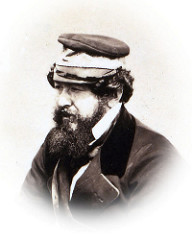
“We are in Secessia and the meanest part of it, too, and anything the boys can forage they consider as theirs.”–Army letters of Oliver Willcox Norton.
October 4, 2021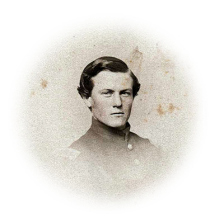
Camp Leslie, near Falls Church,
Fairfax County, Va., Oct. 4th, 1861.
Dear Friends at Home:–
I last wrote from Camp Corcoran and once before from Camp Casey, and you see by date we have moved again. The Colonel here presented us to McClellan as a well drilled regiment and asked the privilege of taking a position in the advance, which, I suppose, is granted. You have read of the taking of Hall’s Hill, in the late papers. Our camp is right there on the scene of the skirmish. Falls Church lies at the foot of the hill, to the southwest. We came here Wednesday last from Fort Corcoran. Munson’s, of which we have all heard so much, is two miles to our left on the southeast. Mr. Reed is with his regiment on the same hill; the rebel pickets are about a mile from Falls Church, so you see we are not far from them.
My time is so limited that you must not wait for me to answer each letter individually, but I must write to all at once and hope each will write in return. I did not think you had forgotten me, but I have been five weeks from home and not a letter till to-day. I have been anxious to hear, full as much so as you, I presume. I hope you will write very often. The last letter I sent I did not pay the postage, because I could not. We can get no stamps here, and no one will take charge of postage not in stamps, so the letters have to be franked by the Major and sent on. I wish you could send a few stamps. My money is all gone, and although pay is due us now, I can’t tell when we will get it.
General McClellan and his staff, General McDowell, General Porter, Prince de Joinville, Due de Chartres and other notables visited us last night. They stayed only a short time. I heard McClellan remark as he rode up, “There, those boys haven’t got their pants yet. That’s a shame.”
A Diary of American Events.
October 4, 2021
October 4.–The Federal forces to the number of four hundred occupied Pohick church, sixteen miles from Alexandria, on the Fairfax road, Virginia. A force of rebel cavalry, which had held the place, retired hastily with the loss of several wounded. A reconnoissance was then made toward Occoquan, during which important discoveries were made.
–A balloon was seen passing over Washington, and it was thought by many to have started from the rebel camp, on an aerial reconnoissance; but as it subsequently descended in Maryland it proved to be the air ship of La Mountain, which had ascended from the Union camp of the Potomac. It appears that when La Mountain rose to a certain distance he cut the rope which connected his balloon with the earth, regardless of the danger, and soared up to an elevation of a mile and a half, and got directly over the rebel lines. Here he was enabled to make a perfect observation of their position and all their movements, the results of which he has communicated to head-quarters, and which are said to be of the utmost importance. When La Mountain completed his observation, he threw out sufficient ballast to enable him to rise to a height of three miles, when befell in with a counter current which carried him back in the direction of Maryland, thus passing over Washington.
–Commander Alden, of United States steamer South Carolina, reports to Flag-officer McKean, Gulf Squadron, the capture of two schooners off the Southwest Pass of the Mississippi, with from four to five thousand stand of arms.–(Doc. 68.)
–A party of New Mexican Union volunteers, under Captain Mink, was surprised at Alimosa, thirty-five miles below Fort Craig, by one hundred and ten Texan rebels, and their horses stampeded. Captain Mink proposed to surrender his company; but his men dissented, secured their horses, and retreated to Fort Craig. Subsequently about one hundred United States troops, from Fort Craig, pursued the rebels, overtook them, killed their captain and ten men, wounded about thirty, and killed thirty horses. The balance of the Texans escaped to Mesilin.
Downing’s Civil War Diary.–Alexander G. Downing.
October 3, 2021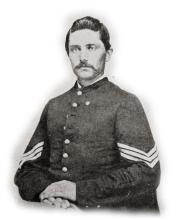
Thursday, 3d–It rained again all day, and although our camp is on high ground, on the bluff just east of town, yet it is a jelly of mud. It couldn’t be otherwise with three or four thousand men tramping over it.
“Feel quite “used up” with the heat.”—Horatio Nelson Taft
October 3, 2021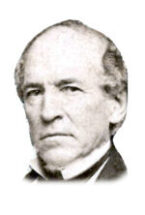
THURSDAY 3
This has been a hot day for the season. M. at 86 in the middle of the day. It has passed away without any particular incident occurring. Met John T McKenzie on the Ave. He agreed to meet me at Willards this evening, but he probably took the 6 o’clock train, as I did not see him. Met Genl Scheopf there. Called at the Treasury to see the Sec’y but did not succeed. He has just returned from the East. Feel quite “used up” with the heat.
______
The three diary manuscript volumes, Washington during the Civil War: The Diary of Horatio Nelson Taft, 1861-1865, are available online at The Library of Congress.
Rebel War Clerk
October 3, 2021
OCTOBER 3d.—The President not having taken any steps in the matter, I have no alternative but to execute the order of the Secretary.
…we owned the whole plantation of that old rebel Peters.
October 3, 2021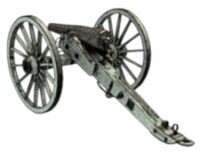
Thursday, October 3.—Left the picket line again, returned to Camp Jackson, started for Darnestown by six o’clock, and arrived there by eight o’clock P. M. Thus ended our stay at Seneca Mills, the most pleasant period of our three years service. Vegetables and fruit, chickens and pigs, were plenty, for we owned the whole plantation of that old rebel Peters, who was sent to Fort Lafayette for treason. The Thirty-fourth New York, having the picket line on the river, always proved good companions. The view of the surrounding country is really imposing, including Sugar Loaf Mountain, the natural observatory of the signal corps. Some remarkable items must not be forgotten—for instance, novel songs of “The Nice Legs;” “Jimmy Nutt’s Measuring the Guard Time by the Moon;” “Griffn’s Apple Sauce,” and “Doughnuts for Horses.”
Letters of Rutherford B. Hayes.
October 3, 2021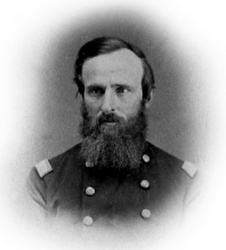
Up Gauley River, Camp Sewell, October 3, 1861.
Dear Uncle: – I should have written you, if I had known where you were. We are in the presence of a large force of the enemy, much stronger than we are, but the mud and floods have pretty much ended this campaign. Both the enemy and ourselves are compelled to go back to supplies soon. I think, therefore, there will be no fight. We shall not attack their entrenchments now that they are reinforced, and I suspect they will not come out after us. Donn Piatt just peeped in. He always has funny things. I said, quoting Webster, “I still live.” “Yes,” said he, “Webster – Webster. He was a great man. Even the old Whigs about Boston admit that!” And again, speaking of the prospect of a fight, he said: “This whistling of projectiles about one’s ears is disagreeable. It made me try to think at Bull Run of all my old prayers; but I could only remember, ‘Oh Lord, for these and all thy other mercies, we desire to be thankful.'”
We shall soon go into winter quarters at posts chosen to hold this country, Gauley Bridge, Charleston, etc., etc. Who will get into a better place, is the question. We all want to go to Washington or to Kentucky or Missouri. We are in General Schenck’s brigade, and hope he will make interest enough to get us into good quarters. There is much sickness among officers and men. My health was never better than during these four months. I hope you will continue to improve.
I am still in General Rosecrans’ staff; but having just finished an extensive tour of court-martial, am again in camp with my regiment in good order. It is like going home to get back. Still this practicing on the circuit after the old fashion, only more so – an escort of cavalry and a couple of wagons with tents and grub – has its attractions. I shall get out of it soon, but as a change, I rather enjoy it.
Between you and Platt, I must get a strong, fleet, sure-footed horse for the next campaign. If the paymaster comes, I shall be able to pay from one hundred and fifty to two hundred dollars. My present horse turns out well, very well, but the winter will probably use him up, and I must get another.
Hereafter, direct to me, Gauley Bridge, instead of Clarksburg.
We have just learned that McClellan has had a success at Washington. If so, whatever happens here, the cause is safe. I hope the news is true.
Sincerely,
R. B. Hayes.
S. Birchard.
Letters of Rutherford B. Hayes.
October 3, 2021
Camp Sewell, October 3, 1861.
Dearest: – This is a pleasant morning. I yesterday finished the work of a court-martial here; am now in my own tent with my regiment “at home.” It does seem like home. I have washed and dressed myself, and having nothing to do I hope to be able today to write to all. I begin, of course, with my darling wife, of whom I think more and more affectionately the longer we are separated. And the dear boys too – kiss and hug them warmly.
We are evidently at the end of our campaign in this direction for this season. The bad roads and floods make it impossible longer to supply an army so far from railroads and navigable waters. How soon we shall begin our backward march, I do not know. If the enemy were not immediately in front of us we should leave instantly but, no doubt, our leaders dislike to make a move that will look like a retreat from an enemy that we care nothing about. But there is nothing to be gained by staying so far in the mountains, and the danger of starving will send us back to Gauley Bridge long before this reaches you. We shall, no doubt, garrison and fortify the strong points which control western Virginia, and the question with us all is, who is to stay and who go to some pleasanter scene.
We are now in General Schenck’s brigade, and hope he will have influence enough to get us a place in the Kentucky or some other army. We are, no doubt, the crack American regiment of all this region, and think we should have the conspicuous place. I think we shall get out of here, but we shall see. I think there will be no battle here. The enemy are strongly entrenched and far superior to us in numbers. Besides there is no object in attacking them. They have twenty-two pieces of artillery. They will not attack us, unless encouraged to do so by our apparent retreat. If they come out of their entrenchments to fight us we think we have got them. So if our retreat is prudently managed, I suspect there will be nothing but skirmishing. That we have a little of daily.
Since we passed into the mountains, we are out of reach of mails. It is almost a month since the date of your last letter. I am still on General Rosecrans’ staff although with my regiment, and [continue reading…]
William Howard Russell’s Diary: “The federal armies are not handled easily.”
October 3, 2021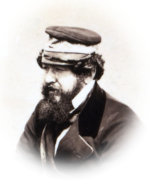
October 3rd.–In Washington once more–all the world laughing at the pump and the wooden guns at Munson’s Hill, but angry withal because McClellan should be so befooled as they considered it, by the Confederates. The fact is McClellan was not prepared to move, and therefore not disposed to hazard a general engagement, which he might have brought on had the enemy been in force; perhaps he knew they were not, but found it convenient nevertheless to act as though he believed they had established themselves strongly in his front, as half the world will give him credit for knowing more than the civilian strategists who have already got into disgrace for urging McDowell on to Richmond. The federal armies are not handled easily. They are luxurious in the matter of baggage, and canteens, and private stores; and this is just the sort of war in which the general who moves lightly and rapidly, striking blows unexpectedly and deranging communications, will obtain great results.
Although Beauregard’s name is constantly mentioned, I fancy that, crafty and reticent as he is, the operations in front of us have been directed by an officer of larger capacity. As yet McClellan has certainly done nothing in the field to show he is like Napoleon. The value of his labours in camp has yet to be tested. I dined at the Legation, and afterwards there was a meeting at my rooms, where I heard of all that had passed during my absence.
A Diary of American Events.
October 3, 2021
October 3.–The Memphis Argus of to-day contains the following proclamation by Thomas O. Moore, Governor of Louisiana:
“Concurring entirely in the views expressed by the cotton factors of New Orleans, in the annexed communication and petition from business men here, praying that no cotton be sent to New Orleans during the existence of the blockade, I have determined to take the most decided means to prevent the landing of any cotton in this city. Notice is therefore hereby given to all masters and owners of steamboats and other water-craft, that from and after the 10th of October no cotton must be brought to New Orleans, or within the lines embracing that section of the country between the fortifications above Carrollton and these below the city, and extending back to the lake.
“All steamboats or other water-craft arriving within the prescribed limits, will be forthwith placed in charge of an armed force, and escorted above the point indicated. This course will be adopted in all cases, whether the quantity of cotton brought be large or small. The railroad companies have already issued orders in furtherance of the object of this proclamation, and no violation of them will be permitted.”
–At St. Louis, Mo., a report of the removal of Major-General Fremont created intense indignation among the mass of Unionists, and great rejoicing among the secessionists. The recruiting rendezvous for an Irish regiment was closed on receipt of the news, and a meeting for the formation of a Home Guard adjourned without action.–N. Y. Herald, October 5.
–The First Massachusetts Light Battery, reorganized since its return from the three months’ service, left Boston this afternoon for the war, under the command of Captain Josiah Porter.
–General Reynolds with a body of Indiana and Ohio troops made a reconnoissance from his position at Cheat Mountain, and met a rebel force under General Lee at Greenbriar, Va., dispersing them after a severe fight of over an hour. The Union loss was eight killed and thirty wounded.–(Doc. 67.)
Civil War Day-By-Day
October 3, 2021 October 3, 1861
- Battle of Greenbriar WV
A Chronological History of the Civil War in America1
- Battle at Greenbrier, Va.; rebels defeated after an hour’s fighting, and a large number of cattle and horses taken by the U. S. troops.
- Ex-Street Commissioner of New York, Gustavus W. Smith, appointed a brig.-general in the rebel army.
- Rebels evacuated Lexington, Mo.
- Skirmish at Buffalo Hill, Ky.; Union loss 10 killed and 10 wounded; rebel loss 52 killed, etc.
- A Chronological History of the Civil War in America by Richard Swainson Fisher, New York, Johnson and Ward, 1863
Election this afternoon for choosing non-commissioned officers, sergeants and corporals.–Alexander G. Downing.
October 2, 2021
Wednesday, 2d–It rained all day. The band from Tipton left for home this morning. Our company held an election this afternoon for choosing non-commissioned officers, sergeants and corporals. It was quite a political battle, the way the boys strove for the different offices.
“Troops keep coming from the North and some are moveing over the River every day.”—Horatio Nelson Taft
October 2, 2021
WEDNESDAY 2
Called at the Treasury, could not see the Sec’y. Was at the Pat office an hour or so. Mr Scheopf has got his Commission as Brigadier Genl of Volunteers for the War. Troops keep coming from the North and some are moveing over the River every day. Unpacked our Boxes today and have been settling matters in the house somewhat, bought a few articles of furniture but as little as possible. Nothing new in the City.
______
The three diary manuscript volumes, Washington during the Civil War: The Diary of Horatio Nelson Taft, 1861-1865, are available online at The Library of Congress.
United States corporal in 1859-1861 service dress uniform
October 2, 2021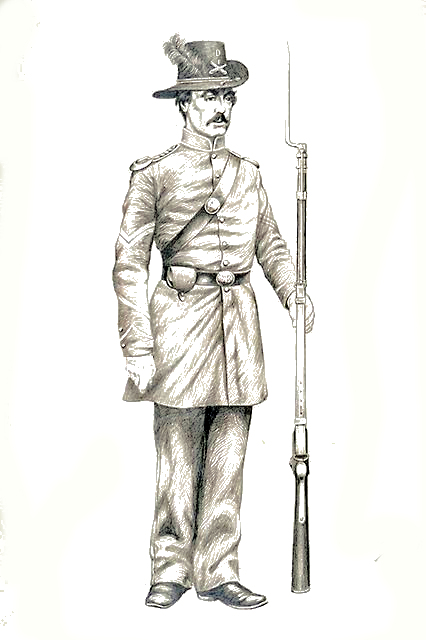
Title: United States corporal in 1859-1861 service dress uniform
Publisher: U.S. National Park Service
Comment: Reflective Art
Copyright: Government owns art and all reproduction rights.
Constraints Information: Public domain
Keywords: soldier, Military Affairs, Graphite on paper
Resource Type: Image
NPS Units: Fort Washington Park, Code: FOWA
Locations: Fort Washington Park, Prince George’s County, Maryland
Latitude: 38.7122001647949, Longitude: -77.0287017822266
National Park Service item permalink
Mike’s notes:
Image restoration note – This image has been digitally adjusted for one or more of the following:
– fade correction,
– color, contrast, and/or saturation enhancement
– selected spot and/or scratch removal
– cropped for composition and/or to accentuate subject matter
– straighten image
Image restoration is the process of using digital restoration tools to create new digital versions of the images while also improving their quality and repairing damage.
Rebel War Clerk
October 2, 2021
OCTOBER. 2d.—A day or two ago Col. Bledsoe, who visits me now very seldom, sent an order by Mr. Brooks for me to furnish a list of the names of alien enemies for publication. This was complied with cheerfully; and these publications have produced some excitement in the community.
“There are many refugees in this neighbourhood, like ourselves, wandering and waiting. Mrs. General Lee has been staying at Annfield, and at Media, sick, and without a home.”—Diary of a Southern Refugee, Judith White McGuire.
October 2, 2021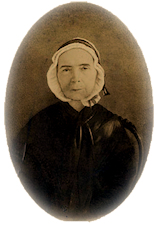
“The Briars,” October 2d.—We returned yesterday, everybody anxious and apprehensive. Battles seem to be imminent, both in Western Virginia and on the Potomac. Constant skirmishing reported in both places.
General Price, it is said, has taken Lexington, Missouri, with a large number of prisoners. Our army in Fairfax has fallen back from “Munson’s Hill” to the Court-House; thus leaving our dear homes more deeply buried in the shades of Yankeeism than ever. There are many refugees in this neighbourhood, like ourselves, wandering and waiting. Mrs. General Lee has been staying at Annfield, and at Media, sick, and without a home. All Virginia has open doors for the family of General Lee; but in her state of health, how dreadful it is to have no certain abiding place. She is very cheerful, and showed me the other day a picture of “Arlington,” in a number of Harpers’ Magazine, which had mistaken its way and strayed to Dixie. She thought the representation good, as it certainly is of what Arlington was; but it is said that those fine trees are living trees no more—all felled to make room for the everlasting fortifications. She clings to the hope of getting back to it; but I [continue reading…]
“I never was so well satisfied in my life as I have been since I joined the army.”–Army Life of an Illinois Soldier, Charles Wright Wills.
October 2, 2021
Bird’s Point, October 2, ’61.
Just at noon yesterday orders came to strike tents and in an hour we were under way and have come to a halt in this forsaken hole. It seems that the 8th can’t get out of hearing of the Cairo morning and evening gun anyway. Our major says they are talking of chucking us into Cairo and making us garrison it this winter. I’ll be tempted to desert if ’tis so. The 22d call us the featherbed regiment now, and if they keep us this way much longer we will be tender as women. It was late and we were tired when we pitched our tents last night and we didn’t “ditch round” as usual, trusting to providence for a dry night. But ’twas confidence misplaced and some of the boys found the ground slightly damp under them this morning. It has been raining like the devil all a.m. and the mud is quite salubrious. I find my old Havana schoolmate, Jem Walker, here in the 28th, Ritter’s company. Haven’t seen Smith yet. The Rebels came right up to Norfolk after we left last night, and about 3 I heard the cavalry called out, and this morning I see the 2d Iowa and 11th Illinois are gone. Suppose they all went down that way. I have disposed of all my surplus baggage and now have two shirts, two pair socks, one blanket, one pair pants, one coat, one pair shoes, one hat, toothbrush and one pocket comb. That’s all I’m worth. I can get all the clothing I want of the quartermaster any time. You scout the idea of one’s liking such a life as this. I tell you that I never was so well satisfied in my life as I have been since I joined the army. I do really enjoy it all the time, and if our boys here write the truth home they will say the same. Nobody ever heard me grumble a word about soldiering and never will if they don’t station us in Cairo.
Woolsey family letters; Eliza Woolsey Howland to Joseph Howland.
October 2, 2021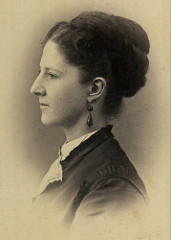
Oct. 1, 1861
Very little to tell you about except a few calls, including one from Mrs. General Franklin to ask us to take tea with her to-night. Lieutenant Lusk of the 79th, whom we used to know as “Willy” Lusk, also came. He seems to have grown up into a very fine young fellow, handsome and gentlemanly, and with the same sweet expression he had as a child. He was studying medicine in Europe when the war broke out, but came home at once and enlisted as Lieutenant in the 79th, where he is now Acting Captain–so many of the regiment were either killed or taken prisoners at Bull Run. Dr. E. also came again and Captain Gibson and Col. Montgomery of Philadelphia, so we had quite a levee.
Oct. 2. G. and I are just going up to Columbian College to cover and arrange a nice box of books Hatty Gilman has sent on at our suggestion to form the nucleus of a hospital library –an excellent selection of books, histories, biographies, etc.; half worn, but the covering and labeling we mean to put them through will make them highly respectable and attractive.
We took tea last night with Mrs. Franklin and met five or six other people, among them Major and Mrs. Webb–he on General Barry’s staff. Dr. Bacon has brought G. some splendid bunches of roses this week, the finest I ever saw. He expects to be ordered off with his new regiment, the 7th Connecticut, within a few days, probably to join the Coast Expedition, but this is a secret.
We have been with Captain Gibson all through the Corcoran Art Building, now used as a government warehouse and filled with clothing and camp equipage of every kind, one item being twenty thousand tents. From the roof, to which we mounted, we had a fine view over the city and environs, the river, the opposite heights and an army balloon.
Half sheet to-day
October 2, 2021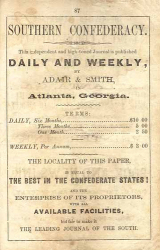
Southern Confederacy
[Atlanta, Ga], October 2, 1861
And brown at that. The paper maker has disappointed us. We have made every possible effort to get paper, and have failed. It is not at the mills, or elsewhere within our reach.
We have no assurance of paper–even for a half sheet–for tomorrow. We have it promised to us for Friday’s issue. We shall get it earlier, if possible; but if you get no paper tomorrow, you may know it is for the want of paper.
“I am fast coming to the conclusion that the great mortality of camp life is owing much more to neglect of the proper means within our reach of preserving health..,”–Journal of Surgeon Alfred L. Castleman.
October 2, 2021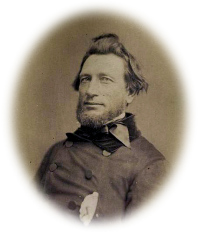
October, 1st and 2nd.–During these two days the regiment has been busily engaged in moving its camp about four miles. The new camp is to be called Camp Vanderwerken, from the name of a man owning a large property in the immediate neighborhood.
Very shortly after crossing Chain Bridge, our regiment was transferred from Gen. King’s to Gen. Smith’s brigade, to which we remained attached till about the 28th of September, when Gen. Smith was promoted to the command of a division, and we transferred to a new brigade under command of Brigadier General Winfield Scott Hancock, an officer of fine appearance, but with rather a narrow forehead, and from what little I have seen of him, I should presume him to be at least excitable, if not irritable. We have been between three and four months organized, and have not yet lost a man by either disease or accident. So after all, the life of a soldier, if his health is properly looked after, is not more exposed to sickness than that of a civilian. I am fast coming to the conclusion that the great mortality of camp life is owing much more to neglect of the proper means within our reach of preserving health, than to any exposures to which the soldier is peculiarly liable.
William Howard Russell’s Diary: Journey to the Western States.—Along the Susquehanna and Juniata.—Chicago.—Sport in the prairie.—Arrested for shooting on Sunday.—The town of Dwight.— Return to Washington.
October 2, 2021
On the 18th of September, I left Baltimore in company with Major-General Bell, C.B., and Mr. Lamy, who was well acquainted with the Western States: stopping one night at Altoona, in order that we might cross by daylight the fine passes of the Alleganies, which are traversed by bold gradients, and remarkable cuttings, second only in difficulty and extent to those of the railroad across the Sommering.
So far as my observation extends, no route in the United States can give a stranger a better notion of the variety of scenery and of resources, the vast extent of territory, the difference in races, the prosperity of the present, and the probable greatness of the future, than the line from Baltimore by Harrisburg and Pittsburg to Chicago, traversing the great States of Pennsylvania, Ohio, and Indiana. Plain and mountain, hill and valley, river and meadow, forest and rock, wild tracts through which the Indian roamed but a few years ago, lands covered with the richest crops; rugged passes, which Salvator would have peopled with shadowy groups of bandits; gentle sylvan glades, such as Gainsborough would have covered with waving corn; the hum of mills, the silence of the desert and waste, sea-like lakes whitened by innumerable sails, mighty rivers carving their way through continents, sparkling rivulets that lose their lives amongst giant wheels: seams and lodes of coal, iron, and mineral wealth, cropping out of desolate mountain sides; busy, restless manufacturers and traders alternating with stolid rustics, hedges clustering with grapes, mountains whitening with snow; and beyond, the great Prairie stretching away to the backbone of inhospitable rock, which, rising from the foundations of the world, bar the access of the white man and civilisation to the bleak inhospitable regions beyond, which both are fain as yet to leave to the savage and wild beast. [continue reading…]
A Diary of American Events.
October 2, 2021
October 2.–A long letter, which recounts in detail the retreats of Wise and Floyd in Western Virginia, subsequent to the battle of Carnifex Ferry, appeared in the Richmond Dispatch. The authorship of the letter is attributed to Colonel Henningsen, the filibuster. Richmond papers consider it too partial to General Wise, and too severe upon General Floyd.–(Doc. 65.)
–A Secessionist camp at Charleston, Mo., was broken up, and forty rebels captured.–By a copy of the Mesilla Times, a secession paper published at Mesilla, Arizona Territory, dated August 10, it appears that a complete secession government has been organized at that place, from governor down to justice of the peace– the governor being the notorious John K. Baylor, well known for his violent pro-slavery feelings. The Times calls for troops, in order to enable the traitors to hold the territory, and apprehends an attack by way of Southern California, and by the regular troops still quartered in the New Mexican department, now on the borders of Arizona. Three regiments of these troops are in New Mexico, and it is supposed they could be largely increased from the floating population of the neighboring territory of Colorado. The Times demands the extermination of the whole Indian race. It boasts that, by the abandonment of Fort Stanton by the United States troops, on the 8th of August, property equal to three hundred thousand dollars has fallen into the hands of the traitors, including the fort, and adds that not a single Federal soldier is now left on the soil of Arizona.
–In consequence of the secession of the Cherokee nation, and its alliance with the rebels, Colonel McNeil, Assistant Provost-Marshal at St. Louis, Mo., issued a proclamation notifying the St. Louis Building and Savings Association that the sum of thirty-three thousand dollars, being part of an annuity paid the Cherokees by the Government of the United States, now on deposit in that institution, is, under the act of Congress, forfeited to the United States, and confiscated to their use and benefit.
–Governor Moore, of Alabama, issued a proclamation, calling attention to the habit of tradesmen and others of charging exorbitant prices for the necessaries of life, and reprimanding the act as wicked and unpatriotic.–The Alta Californian notices the receipt of orders by General Sumner to despatch at once to the east the entire force of regulars on the Pacific coast. This force numbers three thousand two hundred men. It will take a month to collect it from its scattered posts. Volunteer forces are to garrison the forts from which they have been withdrawn.–(Doc. 66.)
Civil War Day-By-Day
October 2, 2021October 2, 1861
A Chronological History of the Civil War in America1
- Rebels defeated at Chapmansville, Va.
- A Chronological History of the Civil War in America by Richard Swainson Fisher, New York, Johnson and Ward, 1863
Ordered to return immediately to Seneca Mills.
October 1, 2021
Tuesday, October 1.—One o’clock A. M. Orders arrived to return immediately to Seneca Mills. The left section marched at once, arriving towards day-break. At sunrise, the fifth gun went on picket duty once more. Lieut. Newton, Sergeants Hammond and Read, were with the left section. Commenced to throw up intrenchments during the night.