Civil War Day-By-Day

Civil War Day-by-Day

October 7, 1861

  • Confederate government signs a treaty with the Cherokee Indians.

A Chronological History of the Civil War in America1

  • Gen. W. F. Sherman, relieved.
  • Gen. Robert Anderson relieved of his command in Kentucky, his health not permitting him to enter on active service.
  • Gen. Fremont and his army leave Jefferson City, Mo., in pursuit of the rebels under Gen. Price.

  1. A Chronological History of the Civil War in America by Richard Swainson Fisher, New York, Johnson and Ward, 1863
0 comments

Some days we fared well; on other days there would be no dinner, but a detestable bacon soup, hardly fit for hogs.

Diary of Battery A, First Regiment, Rhode Island Light Artillery, by Theodore Reichardt

Sunday, October 6. —Camp at Darnestown. The battery received three new guns in the afternoon. Lieut. J. G. Hassard, having joined our battery, at Darnestown, commanded the right section as First Lieutenant. Company cooking was introduced by him. Before that, every detachment done its own cooking. The enterprise itself, of cooking for the whole company, and the selling of a part of the rations, for raising a company fund would have been well enough, but the management was extremely poor. Some days we fared well; on other days there would be no dinner, but a detestable bacon soup, hardly fit for hogs. We were told that the government rations would not admit of a dinner every day. But what good did it do then to sell rations, under the pretext of raising a company fund? This is a question which never could nor never will be satisfactorily explained by those who started it.

0 comments

“Our Willie has been ill for some days, threatened with inflamation of the lungs.”—Horatio Nelson Taft

Diary of US patent clerk Horatio Nelson Taft.

SUNDAY 6

Still very hot with some wind and much dust. Been to Church all day. Young Mr Hopkins from Wmstown Mass preached this afternoon. He is a son of Doct Hopkins, President of Wms College. He is a very promising young man. I spoke to him after meeting, being introduced by Doct Smith. Our Willie has been ill for some days, threatened with inflamation of the lungs. Very hot and feverish nights, better during the day.

______

The three diary manuscript volumes, Washington during the Civil War: The Diary of Horatio Nelson Taft, 1861-1865, are available online at The Library of   Congress.

0 comments

Rebel War Clerk

Civil War Day-by-Day

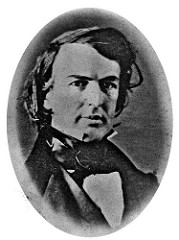
OCTOBER 6th.—Nothing of importance.A likeness of Jones when he was editor and majority owner of the Daily Madisonian during President John Tyler’s administration.

0 comments

“…out to the camp of the Rhode Island 2nd.”—Woolsey family letters; Eliza Woolsey Howland to husband Joseph Howland.

Woolsey family letters during the War for the Union

Oct. 6.

After dinner yesterday we drove out to the camp of the Rhode Island 2nd, to see the friend of our infancy and of hay-loft and cow-stall memory–Col. Frank Wheaton, son of Dr. Wheaton of Pomfret, Connecticut, to whose farm-house Mother took us all to board, the summer after Father’s death. It is about twenty years (!) since we all played together. You know it was for him that Mary got that ugly scar across her nose, in her anxiety to reach him through a glass window, and they two at the age of about seven were married in state and went to housekeeping in the cow-stall on apples and flagroot. He says he remembers it all most distinctly and still claims Mary as “his wife by right” though he has had one, and is engaged to a second.

He was very much pleased to find that he had met you too, for he was mustering-in officer at Albany when you were there, and swore in, part of the 16th. He and the others were “delighted with Adjutant Howland, who used to come to their office nearly every day and always had his muster rolls right.”

I was sorry to hear that the mare “Lady Jane” was so sick and I send George Carr out to camp to see if he can do anything for her. As he has known her from early youth he may understand her insides better than others do. You may be surprised at my being able to get a pass for George, but not more than I was! A mere statement of the case dissolved all the adamantine walls round the Provost Marshal, and is only another proof of our being “noble-hearted women of luck.”

A. H. W. writes:

How funny it is that you should have met the Wheatons again. It is one of the queer ways in which people turn up. I wonder if they remember the little school which Mother held for us every day in the porch of their father’s house in Pomfret, and the yellow hymn book, and the tunes of

Our Father in Heaven

We hallow Thy name,”


and

“God is in Heaven, would He hear

If I should tell a lie?”


–and then how at times we used to see who could eat the most ears of corn! And the skeleton in his father’s office, what a corner of horrors that was!

0 comments

Clerk for Uncle Oliver Eldridge who is to command the steamer Atlantic on General Sherman’s secret expedition to some southern port.—War diary and letters of Stephen Minot Weld.

War diary and letters of Stephen Minot Weld

Sunday, October 6, 1861.—While I was spending Sunday at home, I learned that Uncle Oliver Eldridge[1] was going to sail in command of the steamer Atlantic on General Sherman’s secret expedition to some southern port. I immediately asked Father to let me go with him as captain’s clerk, or in some other capacity. He was unwilling, but finally consented to ask Uncle Oliver if he could take me. Father said that there was no room for me, and I therefore gave up all idea of going, to my great disappointment.

In the afternoon Horace Howland[2] came out to our house and wanted me to go in town and dine with him. We dined at Parker’s and then went to the Lothrops’ to take tea. We left there in time to take the nine o’clock bus for Cambridge. When we reached Cambridge, I found a letter for me from Father, saying that I might go with Uncle Oliver, and that I must start at eight o’clock the next morning. I packed my trunk in a few minutes, and went into Boston and spent the night at Parker’s. I took the 8.30 train for New York in the morning, and reached New York at 5. I went directly to the Astor House, and found that Uncle O. had not started, much to my relief, as I was afraid he might have gone. I saw him in the evening, and he introduced me to Captain Hascall, U. S. Q. M., who said he would give me a place as one of his clerks. I went down to Collins’s wharf the next morning, and was there introduced to Saxton and Marsh, both Captain Hascall’s clerks.

(I spent a week here, at times quite busy, loading ship, etc. I called on the Rowlands and also went to Horace’s apartments, which he has with Ned Wetmore[3] and Fowler. I enjoyed myself very much, being reminded of old college times. While in New York I saw Wilson’s regiment[4] pass through, and felt proud of Massachusetts when I heard the cheers and praises so bountifully bestowed upon them. I saw Tom Sherwin[5] and Charley Griswold[6] with the regiment. )


[1] Married to my step-mother’s sister, Miss Almira Hallett; he was a sea-captain, and a fine man.
[2] My classmate.
[3] Edmund Wetmore, my classmate.
[4] The 22d Mass., Col. Henry Wilson, United States Senator.
[5] My classmate and college chum.
[6] Afterwards Colonel of the 56th Mass.

0 comments

Downing’s Civil War Diary.–Alexander G. Downing.

Diary of Alexander G. Downing; Company E, Eleventh Iowa Infantry

Sunday, 6th–I remained all day at Mr. Moore’s. Mr. Moore is a Mexican War veteran.[i]


[i] Mr. Moore was an uncle of my friend and schoolmate, John Moore. –A. G. D.

0 comments

I am advised not to leave Washington—William Howard Russell’s Diary

My Diary North and South – William Howard Russell

October 6th.—A day of wandering around, and visiting, and listening to rumours all unfounded. I have applied for permission to accompany the Burnside expedition, but I am advised not to leave Washington, as McClellan will certainly advance as soon as the diversion has been made down South.

0 comments

“Judging from the newspapers, one would think we were on the eve of a battle every day, but here there seems little apprehension of it.”–Letters from Elisha Franklin Paxton.

Elisha Franklin Paxton – Letters from camp and field while an officer in the Confederate Army

Camp near Fairfax C. H., October 6, 1861.

Your letter of October 1st was received on yesterday, and I am very much gratified at the cheerful feeling which it manifests. It shows, too, that you are giving a very commendable attention to the business under your charge, and give promise, if the war lasts, of your being a first rate business woman. You have your mind set in the right direction, for it seems as if the war would be interminable, and the sooner you learn how to take care of yourself the better it will be. Times are very dull with us here. Our troops are but a mile or so distant from the enemy,–so near that our pickets, it is said, occasionally meet and converse with theirs, swap newspapers, tobacco, whisky, etc. Judging from the newspapers, one would think we were on the eve of a battle every day, but here there seems little apprehension of it. We may have a battle, but then again we may not. On the whole, the soldiers would just as lief fight as not. We are going to have a sermon this evening, and I will bid you good-bye to listen to it. Kiss our dear little boys for me, and remind them of me. I should regard their forgetting me as the saddest loss sustained by my absence from home. Think of me often, Love. My fondest hope, the dearest wish of my heart, is to be with you again. Remember me to the servants, and to Fitz and his wife, to Annie, Rachel and my friends.

0 comments

A Diary of American Events.

The Rebellion Record – A Diary of American Events; by Frank Moore

October 6.–The schooner Alert was captured off Charleston, S.C., by the United States steamer Flag. When first discovered, the schooner had the Palmetto flag flying, but upon being chased, and satisfied of her fate, she hoisted the English flag, union down, as a signal of distress. Upon the vessel were found concealed a Confederate and a Palmetto flag, and the cook stated that just before the capture the captain burned up the ship’s papers. These found aboard, purporting to be English, were new, and evidently got up for the occasion.– N. Y. Tribune, October 18.

–The Tenth regiment of Maine Volunteers, under the command of Colonel George L. Beal, left Portland for the seat of war.

–Rochester, N. Y., has sent eighteen companies to the Union army. Another has been recruited in the country, making nineteen in all from Monroe Co.–Col. Rankin, M. P., who was engaged in recruiting a regiment of Lancers at Detroit for the Federal Government, was arrested at Toronto, Canada, for violation of the enlistment act.–N. Y. Commercial, October 9.

0 comments

Civil War Day-By-Day

Civil War Day-by-Day

October 6, 1861

  • Winfield Scott informs General Robert Anderson that he is relieved of duty by telegram. He relinquishes command of the Department of Kentucky the following day.

A Chronological History of the Civil War in America1

  • Skirmish at Flemington, Ky.; Home Guards defeated the rebels.

  1. A Chronological History of the Civil War in America by Richard Swainson Fisher, New York, Johnson and Ward, 1863
0 comments

Sworn in!–Alexander G. Downing.

Diary of Alexander G. Downing; Company E, Eleventh Iowa Infantry

Saturday, 5th–Our company was sworn into the United States service today, by Captain Alexander Chambers of the regular army. Four men were rejected, which left ninety in the company. Fisher was rejected because he was too short–less than five feet,[i] and Lowe was rejected because he was pigeon-toed.[ii] I got a pass and went to Allen’s Grove to see John Moore.


[i] He was taken later, however, when the need of men was greater and also because of his persistence.–A. G. D
[ii] Lowe feigned to be pigeon-toed, so that he would be rejected, having got chicken-hearted. The boys jeered him.–A. G. D.

0 comments

Civil War Day-By-Day

Civil War Day-by-Day

October 5, 1861

  • Major papers in London reflect the division over the American Civil War in Britain. In an editorial, the London Post backs an independent Southern Nation. Previously, the London Times had backed the Union.

A Chronological History of the Civil War in America1

  • Unsuccessful efforts of the rebels to retake the Hatteras Inlet forts.
  • Gen. Robert Anderson took command of the Union forces in Kentucky.

  1. A Chronological History of the Civil War in America by Richard Swainson Fisher, New York, Johnson and Ward, 1863
0 comments

“…,pd for Apples at the rate of $3.00 pr Bushel, Potatoes $1.50, Butter 25 cts, Eggs 22 cts, Beef Steak (Surloin) 15 cts, (round) 12 1/2, corn[e]d Beef 8 to 10…,”—Horatio Nelson Taft

Diary of US patent clerk Horatio Nelson Taft.

SATURDAY 5

Very hot again today. M. at 90 in the middle of the day. Went to the Treasury again but did not see the Sec’y. Was at the Pat office awhile and at Charleys rooms. He has rented the Basement room of the house he is in for a Labratory &c. Got down the Aquarium from Pecks tonight. Went to market as usual Sat night, pd for Apples at the rate of $3.00 pr Bushel, Potatoes $1.50, Butter 25 cts, Eggs 22 cts, Beef Steak (Surloin) 15 cts, (round) 12 1/2, corn[e]d Beef 8 to 10, Lima Beans 15 cts pr quart. Oak Wood is $7.50 pr cord, pine $6.50, hickory $9.00. No news.

______

The three diary manuscript volumes, Washington during the Civil War: The Diary of Horatio Nelson Taft, 1861-1865, are available online at The Library of   Congress.

0 comments

Rebel War Clerk

Civil War Day-by-Day

October 5th.—To-day several Southern-born gentlemen, who have lived long in the North, and have their fortunes and families there, applied for passports. They came hither to save the investments of their parents in Northern securities, by having them transferred to their children. This seems legitimate, and some of the parties are old and valued friends of mine. I know their sympathies are with their native land. Yet why are they so late in coming? I know not. It is for me to send them out of the country, for such is the order of the Secretary of War. The loyalty of the connections of these gentlemen is vouched for in a note (on file) written by Mr. Hunter, Secretary of State. Their names must be published as alien enemies. They will take no part in the war.

0 comments

Diary of a Southern Refugee, Judith White McGuire.

Diary of a Southern Refugee During the War by Judith White McGuire

October 5.—M. P. and myself drove to Millwood yesterday, and heard various rumours of victories in Western Virginia, and in Missouri; but we are afraid to believe them. At home we go on as usual.

0 comments

William Howard Russell’s Diary: Another Crimean acquaintance.—Summary dismissal of a newspaper correspondent.

My Diary North and South – William Howard Russell

October 5th.–A day of heat extreme. Tumbled in upon me an old familiar face and voice, once Forster of a hospitable Crimean hut behind Mother Seacole’s, commanding a battalion of Land Transport Corps, to which he had descended or sublimated from his position as ex-Austrian dragoon and beau sabreur under old Radetzsky in Italian wars; now a colonel of distant volunteers, and a member of the Parliament of British Columbia. He was on his way home to Europe, and had travelled thus far out of his way to see his friend.

After him came in a gentleman, heated, wild-eyed, and excited, who had been in the South, where he was acting as correspondent to a London newspaper, and on his return to Washington had obtained a pass from General Scott. According to his own story, he had been indulging in a habit which free-born Englishmen may occasionally find to be inconvenient in foreign countries in times of high excitement, and had been expressing his opinion pretty freely in favour of the Southern cause in the bar-rooms of Pennsylvania Avenue. Imagine a Frenchman going about the taverns of Dublin during an Irish rebellion, expressing his sympathy with the rebels, and you may suppose he would meet with treatment at least as peremptory as that which the Federal authorities gave Mr. D ____. In fine, that morning early, he had been waited upon by an officer, who requested his attendance at the Provost Marshal’s office; arrived there, a functionary, after a few queries, asked him to give up General Scott’s pass, and when Mr. D____ refused to do so, proceeded to execute a terrible sort of proces verbal on a large sheet of foolscap, the initiatory flourishes and prolegomena of which so intimidated Mr. D____, that he gave up his pass and was permitted to depart, in order that he might start for England by the next steamer.

A wonderful Frenchman, who lives up a back street, prepared a curious banquet, at which Mr. Irvine, Mr. Warre, Mr. Anderson, Mr. Lamy, and Colonel Foster assisted; and in the evening Mr. Lincoln’s private secretary, a witty, shrewd, and pleasant young fellow, who looks little more than eighteen years of age, came in with a friend, whose name I forget; and by degrees the circle expanded, till the walls seemed to have become elastic, so great was the concourse of guests.

0 comments

“Can you find out what ground Seward takes on the slave question?”–Adams Family Letters, Henry Adams, private secretary of the US Minister to the UK, to his brother, Charles.

Civil War Day-by-Day

London, October 5, 1861

Your letter and your articles in the Courier arrived last Monday. I sent one set of them down to Lucas, the editor of the London Star, and received a complimentary note in return which I will enclose to you. The other set I sent down to the editor of the Spectator, and from him I have not heard. There was one article to the Star which was partly drawn from your’s, without quoting it, but there has been no reprint. The Spectator never reprints, but if it notices you, I will send you the notice. Your Manchester paper I have made unavailing efforts to find, but London seems to despise anything provincial, and I can find the paper nowhere. London papers go to Manchester but Manchester ditto don’t seem to return the compliment.

This week I have no news for you. Everything seems to be getting along well and the Government here behaves itself very fairly. I don’t know whether my last letters will appear or not, but if they do you can form some judgment as to my inventive powers. The truth is that I ‘ve lately told so much in that way which was not generally known, that my position began to be too hot and I thought I ‘d try a little wrong scent. The facts are all invented therefore, but the idea is carried out as faithfully as I could, of quoting the state of English opinion.

We have been overrun by visitors this week. My friend Richardson goes in the Arabia to Boston, if he can, but I ‘m not sure that he won’t have to make Halifax his terminus. He was in a horrible position. His family and property are in New Orleans and he has a brother in the Virginian army. He is himself a good Union man, I believe; at all events he talks so; but he does not want to do anything which will separate him from his family or make them his enemies. So he could not make up his mind to take the oath, and determined rather to run his risk without a passport. I believe he means to pass the winter in Boston. He told me all about his troubles and I strongly advised him not to think of ever living in New Orleans again; at least as an architect.

Sohier and Charley Thorndike have been here this week. Both leave for Paris this morning. Sohier was quite amusing, and dined with us twice. But the trouble about London is that no one ever stays here and I can’t keep a companion. As for Englishmen I don’t expect to know any of my own age for at least six months more, as this club business has got to be settled and the season to come round again first. We see no English people now, or very few, and the fogs are thick almost every morning. Hooroar! Can you find out (not through Sumner, who seems to have distorted even your ideas of Washington affairs) what ground Seward takes on the slave question?

I need n’t say that the articles are devilish good and made me blue for a day, thinking of my own weak endeavors in the same way.

0 comments

A Diary of American Events.

The Rebellion Record – A Diary of American Events; by Frank Moore

October 5.–Twenty-three men in two boats were sent from the United States steamer Louisiana into Chincoteague Inlet, to burn a schooner which it was thought the rebels were thought to convert into a privateer. Near three hundred rebels on the shore endeavored to capture the beats, but were driven off by the guns of the steamer, and by the men in the beats, who fired the schooner and returned without loss.–(Doc. 69.)

–The London Post of this date contains an editorial article looking almost directly to the recognition of the Southern Confederacy. Appearing in a journal understood to represent the sentiments of Lord Palmerston, it must be accepted, if in no less favorable light, as an attempt to sound public opinion on the subject.

The London Times, same date, discusses the chances of the approaching campaign in the South, with the impression that they incline to the side of the National Government.

–The Fourth regiment of Rhode Island Volunteers, under the command of Colonel Justus I. McCarty, left Camp Greene, for Providence, from whence they departed for the seat of war. The sixth battery of Rhode Island Artillery, numbering one hundred and five men, accompanied the regiment.– Woonsocket Patriot, October 11.

–The gunboat Monticello, under the command of Lieutenant Braine, made an attack upon a body of rebels, that had driven the Twentieth Indiana regiment from their camp at Chicomacomico, North Carolina, and dispersed them with severe loss. A correspondent on board the Monticello gives the following account of the affair: “Last evening intelligence of the retreat of some of our troops reached us, and the Monticello was off at once. We ran up to Hatteras Light, and at early dawn this morning we found the Indiana regiment had retreated to the light-house before a force of nearly four thousand rebels. We ran around Hatteras Point close into the inner shoal, and stood up the beach to the north, looking for the rebels. At half-past one P. M. we found them retreating up the beach to where their steamers lay, they having discovered our approach. There was a regiment of Georgia troops and about eight hundred ununiformed fellows, armed with muskets. Running the steamer close to the beach, we opened on them with shell, and for four hours shelled them, during their attempt to embark. I tell you we fairly slaughtered them like sheep, sinking their boats as they attempted to get on board their vessels on the Sound side, blowing them to pieces as they waded out into the water. They threw away their arms, and ran wildly up and down the beach. We compelled them to strike all their flags ashore, and in their very faces landed a boat and rescued one of the Indiana regiment whom they had taken prisoner. We covered our boat with shells, and after firing upon them for four hours, and expending two hundred and eighteen shells, owing to night coming on we hauled off.–(Doc. 70.)

0 comments

Downing’s Civil War Diary.–Alexander G. Downing.

Diary of Alexander G. Downing; Company E, Eleventh Iowa Infantry

Friday, 4th–The third all-day rain. Our regiment, the Eleventh Iowa, commenced to build their new barracks, located on the east side of the camp ground. Lieutenant Durbin arrived today.

0 comments

Rebel War Clerk

Civil War Day-by-Day

OCTOBER 4th. — Sundry applications were made to-day to leave the country under flag of truce, provided I would not permit the names to be published. The reason for this request is that these persons have connections here who might be compromised. I refused compliance. In one or two instances they intimated that they would not have their names published for thousands of dollars. My response to this was such as to cause them to withdraw their applications.

0 comments

“Prof Lows Balloon was high up over ‘Dixey’ this evening. Heavy guns have been frequently heard over the River.”—Horatio Nelson Taft

Diary of US patent clerk Horatio Nelson Taft.

FRIDAY, OCTOBER 4, 1861.

Another hot day. Much as yesterday “danced attendance” at the Treasury most of the day without seeing the Sec’y. It has been Cabinet day and he much engaged. Think some of getting a room for compounding various medicines and articles for sale with the assistance of Chas — Must do something to make some money, if possible. Julia has been out to the Camp of the “Anderson Zouaves” with Capt Mew. Prof Low[e]s Balloon was high up over “Dixey” this evening. Heavy guns have been frequently heard over the River.

______

The three diary manuscript volumes, Washington during the Civil War: The Diary of Horatio Nelson Taft, 1861-1865, are available online at The Library of   Congress.

0 comments

Fremont’s Hundred Days in Missouri.

The Atlantic Monthly

October 4th. We have been in camp since Sunday, the 29th of September. Our tents are pitched upon a broad shelf half-way down a considerable hill. Behind us the hill rises a hundred feet or more, shutting us in from the south; in front, to the north, the hill inclines to a ravine which separates us from other less lofty hills. Our camp is upon open ground, but there is a fine forest to the east and west.

In a few days we have all become very learned in camp-life. We have found out what we want and what we do not want. Fortunately, St. Louis is near at hand, and we send there to provide for our necessities, and also to get rid of our superfluities. The troops have been gathering all the week. There are several regiments in front of us, and batteries of artillery behind us. Go where you will, spread out upon the plain or shining amidst the trees you will see the encampments. Headquarters are busy providing for the transportation and the maintenance of this great force; and as rapidly as the railway can carry them, regiment after regiment is sent west. There is plenty of work for the staff-officers; and yet our life is not without its pleasures. The horses and their riders need training. This getting used to the saddle is no light matter for the civilian spoiled by years of ease and comfort. But the General gives all his officers plenty of horseback discipline. Then there is the broadsword exercise to fill up the idle time. Evening is the festive hour in camp; though I judge, from what I have seen and heard, that our camp has little of the gayety which is commonly associated with the soldier’s life. We are too busy for merrymaking, but in the evening there are pleasant little circles around the fires or in the snug tents. There are old campaigners among us, men who have served in Mexico and Utah, and others whose lives have been passed upon the Plains; they tell us campaign stories, and teach the green hands the slang and the airs of the camp. But the unfailing amusement is the band. This is the special pride of the General, and soon after nightfall the musicians appear upon the little plaza around which the tents are grouped. At the first note the audience gather. The guardsmen come up from their camp on the edge of the ravine, the negro-quarter is deserted, the wagoners flock in from the surrounding forest, the officers stroll out of their tents,–a picturesque crowd stands around the huge camp-fire. The programme is simple and not often varied. It uniformly opens with “The Star-Spangled Banner,” and closes with “Home, Sweet Home.” By way of a grand finale, a procession is organized every night, led by some score of negro torch-bearers, which makes the circuit of the camp,–a performance which never fails to produce something of a stampede among the animals.

Last night we had an alarm. About eleven o’clock, when the camp was fairly asleep, some one tried to pass a picket half a mile west of us. The guard fired at the intruder, and in an instant the regimental drums sounded the long roll. We started from our beds, with frantic haste buckled on swords, spurs, and pistols, hurried servants after the horses, and hastened to report for duty to the General. The officer who was first to appear found him standing in front of his tent, himself the first man in camp who was ready for service. Presently a messenger came with information as to the cause of the alarm, and we were dismissed.

At two o’clock in the morning there was another alarm. Again the body-guard bugles sounded and the drums rolled. Again soldiers sprang to their arms, and officers rushed to report to the General, –the first man finding him, as before, leaning upon his sword in front of his tent. But, alas for the reputation of our mess, not one of its number appeared. In complete unconsciousness of danger or duty, we slept on. Colonel S. said he heard “the music, but thought it was a continuation of the evening’s serenade,” and went to sleep again. It was not long before we discovered that the General knew that four members of his staff did not report to him when the long roll was sounded.

There are several encampments on the hill-sides north of us which are in full view from our quarters, and it is not the least of our amusements to watch the regiments going through the after-noon drill. In the soft light of these golden days we see the long blue lines, silver-tipped, wheel and turn, scatter and form, upon the brown hill-sides. Now the slopes are dotted with skirmishers, and puffs of gray smoke rise over the kneeling figures; again a solid wall of bayonets gleams along the crest of the hill, and peals of musketry echo through the woods in the ravines.

Colonel Myscall Johnson, a Methodist exhorter and formidable Rebel marauder, is said to be forty miles south of us with a small force, and some of the Union farmers came into camp to-day asking for protection. Zagonyi, the commander of the body-guard, is anxious to descend upon Johnson and scatter his thieving crew; but it is not probable he will obtain permission. The Union men of Missouri are quite willing to have you fight for them, but their patriotism does not go farther than this. These people represent that three-fourths of the inhabitants of Miller County are loyal. The General probably thinks, if this be true, they ought to be able to take care of Johnson’s men. But a suggestion that they should defend their own homes and families astonishes our Missouri friends. General Lyon established Home-Guards throughout the State, and armed them with several thousand Springfield muskets taken from the arsenal at St. Louis. Most of these muskets are now in Price’s army, and are the most formidable weapons he has. In some instances the Rebels enlisted in the home-Guards and thus controlled the organization, carrying whole companies into Price’s ranks. In other cases bands of Rebels scoured the country, went to the house of every Home-Guard, and took away his musket. In the German settlements alone the Guards still preserve their organization and their arms.

A few days ago it fell to the lot of our mess to entertain a Rebel officer who had come in with a flag of truce. Strange to say, he was a New Yorker, and had a younger brother in one of the Indiana regiments. He was a pleasant and courteous gentleman, albeit his faded dress, with its red-flannel trimmings, did not indicate great prosperity in the enemy’s camp. We gave him the best meal we could command. I apologized because it was no better. He replied, –“Make no apology, Sir. It is the best dinner I have eaten these three months. I have campaigned it a good deal this summer upon three ears of roast corn a day.” He added, –“I never have received a cent of pay. None of us have. We never expect to receive any.” This captain has already seen considerable service. He was at Booneville, Carthage, Wilson’s Creek, and Lexington. His descriptions of these engagements were animated and interesting, his point of view presenting matters in a novel light. He spoke particularly of a gunner stationed at the first piece in Totten’s battery, saying that his energy and coolness made him one of the most conspicuous figures of the day. “Our sharp-shooters did their best, but they failed to bring him down. There he was all day long, doing his duty as if on parade.” He also told us there was no hard fighting at Lexington. “We knew,” said he, “the place was short of water, and so we spared our men, and waited for time to do the work.”


Fremont’s Hundred Days in Missouri was published in three installments in The Atlantic Monthly. The anonymous author appears to have been a member of Fremont’s staff with a disdainful bias towards Missourians, even those who were pro-Union.

0 comments

William Howard Russell’s Diary: Poor Trescot! (at Port Royal).—Mr. Seward and myself.

My Diary North and South – William Howard Russell

October 4th.–The new expedition, of which I have been hearing for some time past, is about to sail to Port Royal, under the command of General Burnside, in order to reduce the works erected at the entrance of the Sound, to secure a base of operations against Charleston, and to cut in upon the communication between that place and Savannah. Alas, for poor Trescot! his plantations, his secluded home! What will the good lady think of the Yankee invasion, which surely must succeed, as the naval force will be overwhelming? I visited the division of General Egbert Viele, encamped near the Navy-yard, which is bound to Annapolis, as a part of General Burnside’s expedition. When first I saw him, the general was an emeritus captain, attached to the 7th New York Militia; now he is a Brigadier-General, if not something more, commanding a corps of nearly 5000 men, with pay and allowances to match. His good lady wife, who accompanied him in the Mexican campaign, –whereof came a book, lively and light, as a lady’s should be,–was about to accompany her husband in his assault on the Carolinians, and prepared for action, by opening a small broadside on my unhappy self, whom she regarded as an enemy of our glorious Union; and therefore an ally of the Evil Powers on both sides of the grave. The women, North and South, are equally pitiless to their enemies; and it was but the other day, a man with whom I am on very good terms in Washington, made an apology for not asking me to his house, because his wife was a strong Union woman. A gentleman who had been dining with Mr. Seward to-night told me the Minister had complained that I had not been near him for nearly two months; the fact was, however, that I had called twice immediately after the appearance in America of my letter dated July 22nd, and had met Mr. Seward afterwards, when his manner was, or appeared to me to be, cold and distant, and I had therefore abstained from intruding myself upon his notice; nor did his answer to the Philadelphian petition–in which Mr. Seward appeared to admit the allegations made against me were true, and to consider I had violated the hospitality accorded me–induce me to think that he did not entertain the opinion which these journals which set themselves up to be his organs had so repeatedly expressed.

0 comments

“We are in Secessia and the meanest part of it, too, and anything the boys can forage they consider as theirs.”–Army letters of Oliver Willcox Norton.

Civil War Day-by-Day

Camp Leslie, near Falls Church,
Fairfax County, Va., Oct. 4th, 1861.

Dear Friends at Home:–

I last wrote from Camp Corcoran and once before from Camp Casey, and you see by date we have moved again. The Colonel here presented us to McClellan as a well drilled regiment and asked the privilege of taking a position in the advance, which, I suppose, is granted. You have read of the taking of Hall’s Hill, in the late papers. Our camp is right there on the scene of the skirmish. Falls Church lies at the foot of the hill, to the southwest. We came here Wednesday last from Fort Corcoran. Munson’s, of which we have all heard so much, is two miles to our left on the southeast. Mr. Reed is with his regiment on the same hill; the rebel pickets are about a mile from Falls Church, so you see we are not far from them.

My time is so limited that you must not wait for me to answer each letter individually, but I must write to all at once and hope each will write in return. I did not think you had forgotten me, but I have been five weeks from home and not a letter till to-day. I have been anxious to hear, full as much so as you, I presume. I hope you will write very often. The last letter I sent I did not pay the postage, because I could not. We can get no stamps here, and no one will take charge of postage not in stamps, so the letters have to be franked by the Major and sent on. I wish you could send a few stamps. My money is all gone, and although pay is due us now, I can’t tell when we will get it.

General McClellan and his staff, General McDowell, General Porter, Prince de Joinville, Due de Chartres and other notables visited us last night. They stayed only a short time. I heard McClellan remark as he rode up, “There, those boys haven’t got their pants yet. That’s a shame.”

[continue reading…]

0 comments