OCTOBER 8th.—Mr. Gustavus Myers, a lawyer of this city, seems to take an active interest in behalf of parties largely engaged in business at Baltimore. And he has influence with the Secretary, for he generally carries his points over my head. The parties he engineers beyond our lines may possibly do us no harm; but I learn they certainly do themselves much good by their successful speculations. And do they not take gold and other property to the North, and thereby defeat the object of the sequestration act? The means thus abstracted from the South will certainly be taxed by the North to make war on us.
American Civil War Chronicles
…they certainly do themselves much good by their successful speculations.—Rebel War Clerk
October 8, 2021
“Mrs Everitt and Servt called this evening, she had her ‘white Slave’ child with her. The Servt is the mother.”—Horatio Nelson Taft
October 8, 2021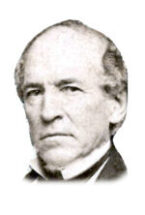
TUESDAY 8
The great review came off today, 108 pieces of Artillery and the 6400 Cavalry. Julia went with Capt Mew, H N Jr went on his ow[n] hook. I was at the “White House” this morning with Doct Dyer of Chicago. Mr Lincoln passed us on the steps. He stoped and shook hands with both of us. He was going to the Review. Have spent most of the day at Home, wrote to Brother C R and to Thos Bourne of Lyons. Mrs Everitt and Servt called this evening, she had her “white Slave” child with her. The Servt is the mother. Mrs E bought them both [for] $1000.
______
The three diary manuscript volumes, Washington during the Civil War: The Diary of Horatio Nelson Taft, 1861-1865, are available online at The Library of Congress.
California is a mean, thriftless village; there are no trees shading the cottages, no shrubbery in the yards…Fremont’s Hundred Days in Missouri.
October 8, 2021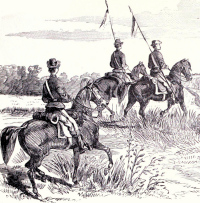
California, October 8th. This morning we broke camp at six o’clock and marched at eight. The road was bad, for which the beauty of the scenery did not entirely compensate. To-day’s experience has taught us how completely an army is tied to the wheels of the wagons. Tell a general how fast the train can travel and he will know how long the journey will be. We passed our wagons in a terrible plight: some upset, some with balky mules, some stuck in the mud, and some broken down. The loud-swearing drivers, and the stubborn, patient, hard-pulling mules did not fail to vary and enliven the scene.
A journey of eighteen miles brought us to this place, where we are encamped upon the county fair-ground. California is a mean, thriftless village; there are no trees shading the cottages, no shrubbery in the yards. The place is only two or three years old, but already wears a slovenly air of decay.
I set out with Colonel L. upon a foraging expedition. We passed a small house, in front of which a fat little negro-girl was drawing a bucket of water from the well, the girl puffing and the windlass creaking.
“Will Massa have a drink of water?”
It was the first token of hospitality since Hermann. We stopped and drank from the bucket, but had not been there a minute before the mistress ran out, with suspicion in her face, to protect her property. A single question sufficed to show the politics of that house.
“Where is your husband?”
“He went off a little while ago.”
This was the Missouri way of informing us that he was in the Rebel army.
A little farther on we came to what was evidently the chief house of the place. A bevy of maidens stood at the gate, supported by a pleasant matron, fair and fat.
“Can you sell us some bread?” was our rather practical inquiry.
“We have none baked, but will bake you some by sundown,” was the answer, given in a hearty, generous voice.
The bargain was soon made. Our portly dame proved to be a Virginian, who still cherished a true Virginian love for the Union.
Fremont’s Hundred Days in Missouri was published in three installments in The Atlantic Monthly. The anonymous author appears to have been a member of Fremont’s staff with a disdainful bias towards Missourians, even those who were pro-Union.
“I suppose we are now stuck for three years -unless sooner shot.”–Diary of David L. Day.
October 8, 2021
Oct. 8. Col. Upton assumed command of the regiment today, and will at once set about perfecting the organization and discipline. The officers are:
Field and Staff.
Colonel, …. Edwin Upton Fitchburg.
Lieutenant Colonel, . Augustus B. R. Sprague, Worcester.
Major, . . . Matthew J. McCafferty, Worcester.
Adjutant, . . . Elijah A. Harkness, Worcester.
Quartermaster, . . William O. Brown, Fitchburg.
Surgeon, … J. Marcus Rice, M. D., Worcester.
Company A. Captain, Josiah Picket. Worcester. 1st Lieutenant, Frank E. Goodwin, Worcester. 2d Lieutenant. Merritt B. Bessey, Worcester.
Company B. Captain, Willard Clark, Milford. 1st Lieutenant, William Emery, Milford. 2d Lieutenant, William F. Diaper, Milford.
Company C. Captain, Cornelius G. Atwood. Boston. 1st Lieutenant, James Tucker, Boston. 2d Lieutenant. Merrick F. Prouty, Spencer.
Company D. Captain, Albert F. Foster, Worcester. 1st Lieutenant, George S. Campbell, Worcester. 2d Lieutenant, George H. Spaulding, Worcester.
Company E. Captain. Thomas O’Neill, Worcester. 1st Lieutenant, William Daly, Worcester. 2d Lieutenant, Henry McConville, Worcester.
Company F. Captain, Charles II. Foss. Fitchburg. 1st Lieutenant, Levi Lawrence, Fitchburg. 2d Lieutenant, J. Henry Richardson, Fitchburg.
Company G. Captain, Louis Wagely, Worcester. 1st Lieutenant, Henry M. Rickster, Worcester. 2d Lieutenant, Frederic M. Weigand, Worcester.
Company H. Captain, Orson Moulton, Worcester. 1st Lieutenant, David M. Woodward, Worcester. 2d Lieutenant, Nathaniel H. Foster, North Brookfield.
Company I. Captain. Varanus P. Parkhnrst, Templeton. 1st Lieutenant, James B. Smith, Royalston. 2d Lieutenant, Amos Buffom, Templeton.
Company K. Captain, J. Waldo Denny, Worcester. 1st Lieutenant, Samuel Harrington, Paxton. 2d Lieutenant, James M. Drennan, Worcester.
Most of these officers and many of the enlisted men have done military duty either in the state militia, or as three-months men around Washington. So we are not an entirely green crowd. The officers are a fine looking body of young men, and I think, with a little flattery and catering to their vanity, we shall get along nicely with them.
This wet dirty letter and its writer… Letters of Rutherford B. Hayes.
October 8, 2021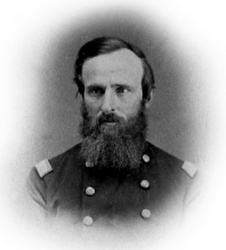
Tuesday morning, 6 A. M., October 8.
Your election day.
Dearest : – This wet dirty letter and its writer have had considerable experience in the last twenty-four hours, and since the above was written. In the first place we have had another bitter storm, and this cold raw morning we shiver unless near the fires. At one time yesterday I thought I should have to take back a good deal of what I said in the letter I had just started for Cincinnati. I was at the hospital three-quarters mile from camp, helping Dr. Joe and Captain Skiles put the sick into wagons to be transported to Gallipolis and Cincinnati, when firing was heard and word came that the enemy in force had attacked our camp. The doctor and I hurried back leaving Captain Skiles to look after the sick. All the army, seven regiments (five to six thousand men), were forming in line of battle. I joined my regiment, and after waiting a half hour or so we were ordered to quarters with word that it was only a scouting party driving in our pickets. This was all in a rain-storm. The poor fellows in hospital – many of them – panic-stricken, fled down the road and were found by Dr. Joe on his return three or four miles from the hospital. Three of our regiment got up from their straw piles, got their guns and trudged up the road and took their places in line of battle. The behavior of the men was for the most part perfectly good. The alarm was undoubtedly a false one. No enemy is near us.
We shall go, if the sun comes out, seven miles nearer home, to Mountain Cove, and begin to build quarters and fortifications for a permanent stronghold. This brings us within an easy day’s ride of the navigable waters of the Kanawha. Thence a steamboat can [continue reading…]
On the drill ground regularly every day.–Alexander G. Downing.
October 8, 2021
Tuesday, 8th–Regular drill morning and afternoon. All men are supposed to be on the drill ground regularly every day, unless they are marked not fit for duty by the surgeon of the regiment.
A “recognizance in force.”—Journal of Surgeon Alfred L. Castleman.
October 8, 2021
8th.–To-day our division made a “recognizance in force.” Marched to Prospect Hill, on the river turnpike, about four miles, and after settling into bivouac two or three times during the day, brought up about 11 o’clock at night at Lewinsville. Having crawled into my ambulance to rest, I note this before dropping asleep.
William Howard Russell’s Diary: Review of artillery.— “Habeas Corpus.”
October 8, 2021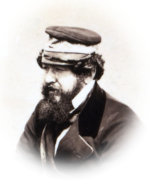
October 8th.–A review of the artillery at this side of the river took place to-day, which has been described in very inflated language by the American papers, the writers on which–never having seen a decently-equipped force of the kind–pronounce the sight to have been of unequalled splendour; whereas the appearance of horses and men was very far from respectable in all matters relating to grooming, cleanliness, and neatness. General Barry has done wonders in simplifying the force and reducing the number of calibres, which varied according to the fancy of each State, or men of each officer who raised a battery; but there are still field-guns of three inches and of three inches and a-half, Napoleon guns, rifled 10 lb. Parrots, ordinary 9-pounders, a variety of howitzers, 20-lb. Parrot rifled guns, and a variety of different projectiles in the caissons. As the men rode past, the eye was distressed by discrepancies in dress. Many wore red or white worsted comforters round their necks, few had straps to their trousers; some had new coats, others old; some wore boots, others shoes; not one had clean spurs, bits, curb-chains, or buttons. The officers cannot get the men to do what the latter regard as works of supererogation.
There were 72 guns in all; and if the horses were not so light, there would be quite enough to do for the Confederates to reduce their fire, as the pieces are easily handled, and the men like artillery and take to it naturally, being in that respect something like the natives of India.
Whilst I was standing in the crowd, I heard a woman say, “I doubt if that Russell is riding about here. I should just like to see him to give him a piece of my mind. They say he’s honest, but I call him a poor pre-jewdiced Britisher. This sight’ll give him fits.” I was quite delighted at my incognito. If the caricatures were at all like me, I should have what the Americans call a bad time of it. [continue reading…]
“Another rumour of a fight on Cheat Mountain…,”—Diary of a Southern Refugee, Judith White McGuire.
October 8, 2021
October 8.—At church yesterday; the services interesting; the Communion administered. Rev. Dr. A. delivered an address, perhaps a little too political for the occasion.
The news from Western Virginia not confirmed. Another rumour of a fight on Cheat Mountain, in which General Jackson, with some regiments of Georgians, repulsed the Federal General Reynolds.
A Diary of American Events.
October 8, 2021 October 8.–Brig.-Gen. Robert Anderson, in command of the department of the Cumberland, at Louisville. Kentucky, on account of ill health, relinquished his command to Brig.-Gen. Sherman.–Army Order.
–A party of rebels under the command of Captain Holliday, advancing upon Hillsboro, Kentucky, were attacked and defeated by fifty Home Guards, of Flemingsburg, under the command of Lieut. Sadler and Sergeant Dudley. The rebels were discovered encamped on the premises of Colonel Davis, two miles from Hillsboro, when the Home Guards opened fire upon them. The engagement lasted about twenty minutes, resulting in a loss of eleven killed, twenty-nine wounded, and twenty-two prisoners of the rebels, and three killed and two wounded of the Home Guards.–(Doc. 71.)
–About five o’clock this afternoon Capt. Barney of the New York Twenty-fourth regiment, advanced three miles beyond Falls Church, on the Leesburg (Va.) turnpike, with ten men, where he surprised a picket guard of Stewart’s rebel cavalry, killing three and taking one prisoner, five horses and equipments, thirteen navy pistols, four sabres, one carbine and telescope. A white horse was killed which has been often seen by our pickets, and believed to belong to Capt. Powell, of Stewart’s cavalry. The capture was made within half a mile of the rebel camp, and was so sudden that they had no time to draw their pistols.–Boston Traveller, October 10.
–A grand review of artillery and cavalry was held at Washington, in the presence of the various heads of the departments and others. An accident occurred to one of the artillery caissons by an explosion of its contents; happily without any serious damage.
–The Follett Battery of Flying Artillery, Massachusetts Volunteers, arrived in New York, and took up quarters at the Harlem railroad depot Dexter H. Follett is the captain of the battery.
–A singular artillery battalion is now being organized at Richmond, Indiana. It is to consist of six hundred men, with one hundred guns; the guns to have the capacity of carrying a two-pound ball two and a half miles. A portion of the guns required by this battalion will be made in Richmond. They will be of steel barrels, and of very superior workmanship.– Louisville Journal, October 8.
–The Twenty-second regiment of Massachusetts Volunteers, under the command of Colonel Henry Wilson, Senator from Massachusetts, left their camp at Lynnfield and passed through Boston, en route for the seat of war. In Boston they were hospitably entertained by the city, and at the close of the repast were presented with a flag, the lion. Robert C. Winthrop making the presentation speech.– (Doc. 72.)
–In the Admiralty Court at Portland, Me., Judge Ware delivered an able opinion, condemning the British schooner Wm. Arthur, seized on the ground that she intended to run the blockade.
Civil War Day-By-Day
October 8, 2021 October 8, 1861
- General William Tecumseh Sherman replaces General Robert Anderson as commander of the Department of the Cumberland. Anderson had allegedly suffered a severe mental breakdown.
“Dr. Bacon..,left in the night we suppose, with the regiment..,” — Woolsey family letters; Eliza to husband Joseph Howland.
October 7, 2021
Washington, Oct. 7.
After dinner to-day we said good-bye to Dr. Bacon, now Surgeon of the 7th Connecticut, and he left in the night we suppose, with the regiment, to join the second great land and naval expedition for the southern coast.
Capt. Tompkins very suddenly marched off to Harper’s Ferry—Rhode Island Light Artillery, by Theodore Reichardt
October 7, 2021
Monday, October 7. —Capt. Tompkins very suddenly marched off to Harper’s Ferry, with the right section. Thunder storm in the evening.
“Tomorrow there is to be a grand Review of 4000 Cavalry by Genl McClellan.”—Horatio Nelson Taft
October 7, 2021
MONDAY, OCTOBER 7, 1861.
Went for Doct Piper this morning for Willie. He has I think only a bad cold on his lungs and will soon be well. I was on the Ave this morning, saw it filled with Cavalry for one mile. I was at the Pat office in Col James room. He is anxious to have me in his room, as 1st Assistant. Fixed up my Aquarium this afternoon in our dining room. It began to rain about dark with constant thunder and lightening. Tomorrow there is to be a grand Review of 4000 Cavalry by Genl McClellan.
______
The three diary manuscript volumes, Washington during the Civil War: The Diary of Horatio Nelson Taft, 1861-1865, are available online at The Library of Congress.
Lincoln to Curtis: “I am greatly perplexed about Gen: Fremont…”
October 7, 2021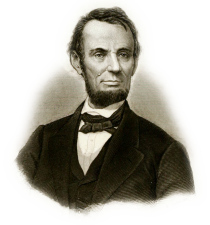
Washington, D.C.
Oct. 7. 1861
Brig: Genl. S. R. Curtis
My dear Sir.
Without prejudice, and looking to nothing but justice, and the public interest, I am greatly perplexed about Gen: Fremont: In your position, you can not but have a correct judgment in the case; and I beseech you to answer Gen. Cameron, when he hands you this, “Ought Gen: Fremont to be relieved from, or retained in his present command?” It shall be entirely confidential; but you can perceive how indispensable it is to justice & the public service, that I should have, an intelligent unprejudiced, and judicious opinion from some professional Military man on the spot, to assist me in the case. Yours very truly
A. LINCOLN
“I will do all I can to prevent a laudable zeal from doing injury to either kind of service…”—The Letters of Samuel Ryan Curtis
October 7, 2021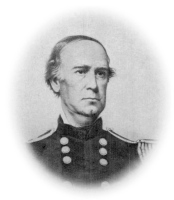
Head Quarters Camp of Instruction
Benton Barracks (near St. Louis) Oct 7. 1861
Governor H R Gamble1
Dear Sir
Yours of the 5th inst. on the subject of conflicting enrollment by States and United States Officers, is just received. When I have been informed of men brought in this camp who had been previously enrolled by your proper officers, I have sent them out with a reproach for leaving your enrollments.
But it is proper to say the men and officers have generally acted in good faith; supposing that by joining the United States service, they would relieve the State from the expense of their organization and euipment, and with equal certainty accomplish the object of their enrollment.
I see very many dangers of conflicting exertions and efforts among officers who desire to fill up their command, but I will do all I can to prevent a laudable zeal from doing injury to either kind of service.
Very respectfully yours
Saml R Curtis
Brig Gen’l Commandg
[copy]
1. Hamilton R. Gamble was selected provisional governor of Missouri, June 18, 1861, to succeed Claiborne F. Jackson, who had thrown his lot with the Confederacy. Gamble, who disagreed with Fremont and later with Curtis over the status of negroes, was a brother-in-law of Edward Bates, atty. gen. in Lincoln’s cabinet.
At noon we left Jefferson City, going due west.—Fremont’s Hundred Days in Missouri.
October 7, 2021
Camp Lovejoy, October 7th. For the last two days the troops have been leaving Jefferson City, and the densely peopled hills are bare. This morning, at seven o’clock, we began to break camp. There was no little trouble and confusion in lowering the tents and packing the wagons. It took us a long time to-day, but we shall soon get accustomed to it, and become able to move more quickly. At noon we left Jefferson City, going due west.
Our little column consists of three companies of the body-guard, numbering about two hundred and fifty men, a battalion of sharp-shooters (infantry) under Major Holman, one hundred and eighty strong, and the staff. The march is in the following order. The first company of the guard act as advance-guard; then comes the General, followed by his staff riding by twos, according to rank; the other two companies of the guard come next. The sharp-shooters accompany and protect the train. Our route lay through a broken and heavily wooded region. The roads were very bad, but the day was bright, and the march was a succession of beautiful pictures, of which the long and brilliant line of horsemen winding through the forest was the chief ornament.
We reached camp at three o’clock. It is a lovely spot, upon a hill-side, with a clear, swift-running brook washing the foot of the hill. Presently the horses are tied along the fences, riders are lounging under the trees, the kitchen-fires are lighted, guardsmen are scattered along the banks of the stream bathing, the wagons roll heavily over the prairie and are drawn up along the edge of the wood, tents are raised, tent-furniture is hastily arranged, and the camp looks as if it had been there a month. Before dark a regiment of infantry and two batteries of artillery come up. The men sleep in the open air without tents, and innumerable fires cover the hill-sides.
We are upon land which is owned by an influential and wealthy citizen, who is an open Secessionist in opinion, though he has had the prudence not to take up arms. By way of a slight punishment, the General has annoyed the old man by naming his farm “Camp Owen Lovejoy,” a name which the Union neighbors will not fail to make perpetual.
Fremont’s Hundred Days in Missouri was published in three installments in The Atlantic Monthly. The anonymous author appears to have been a member of Fremont’s staff with a disdainful bias towards Missourians, even those who were pro-Union.
Return of the Wounded
October 7, 2021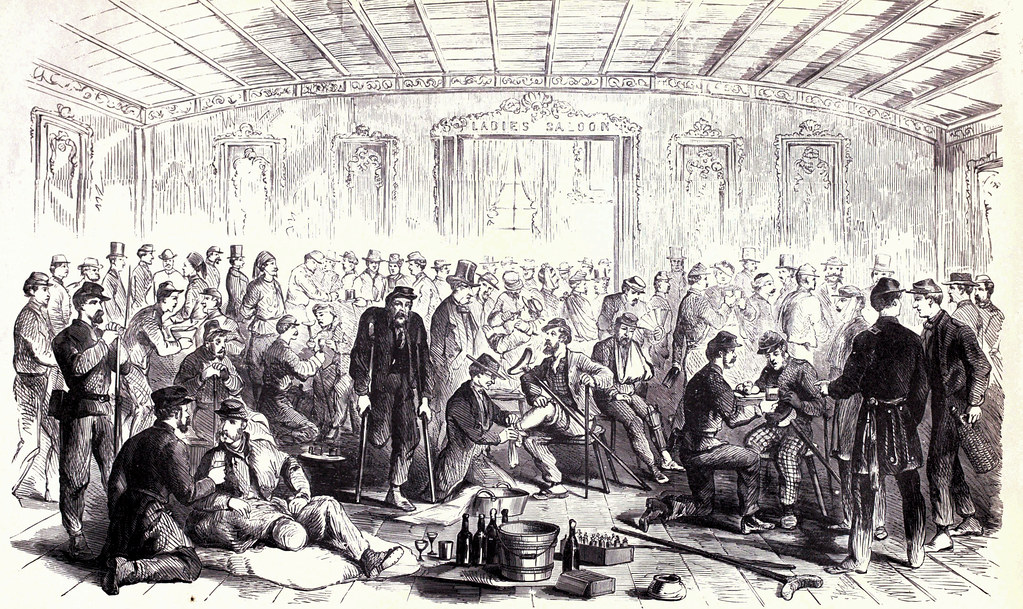
Return of Wounded Soldiers of the Federal Army Captured at Bull Run–Scene in Hampton Roads on Board the United States Steamer ‘Louisiana’ to which they were Transferred, under a Flag of Truce, October 7th, 1861
(from Frank Leslie’s Illustrated History of the Civil War…, edited by Louis Shepheard Moat, Published by Mrs. Frank Leslie, New York, 1895)
“The United States steamer Express met by agreement the Confederate steamer Northumberland with a flag of truce, about twelve miles above Newport News, and brought down fifty-seven wounded prisoners who had been captured at Bull Run and taken to Richmond. Their release was not due to the magnanimity of the Confederate authorities, but rather to their inability to supply their wants.”
Mustered into the service of the United States.—David L Day.
October 7, 2021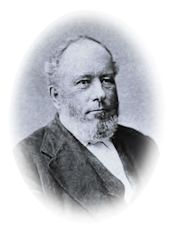 Oct. 7. We were today mustered into the service of the United States, by Captain John M. Goodhue, U. S. A. The company is designated as Company B, and the regiment as the 25th Massachusetts volunteers. I suppose we are now stuck for three years—unless sooner shot.
No more fighting in this region unless the enemy attack, which they will not do.—Letters of Rutherford B. Hayes.
October 7, 2021
Camp Lookout, Monday, October 7, 1861.
Dearest:—The mails are in order again. Letters will now come promptly. On the day after I wrote you last we got all the back letters – lots of papers and dates up to October 1. One queer thing, a letter from Platt of July 31 and one from Mother of October 1 got up the same day.
Our campaign is closed. No more fighting in this region unless the enemy attack, which they will not do. We are to entrench at Mountain Cove, eight miles from here, at Gauley Bridge, twenty miles off, and [at] Summersville, about the same. These points will secure our conquest of western Virginia from any common force, and will let half or two-thirds of our army go elsewhere. I hope we shall be the lucky ones to leave here.
The enemy and ourselves left the mountains about the same time; the enemy first, and for the same reason, viz., impossibility of getting supplies. We are now fourteen miles from Mount Sewell and perhaps thirty miles from the enemy. Our withdrawal was our first experience in backward movement. We all approved it. The march was a severe one. Our business today is sending off the sick, and Dr. Joe is up to his eyes in hard work. We have sixty to send to Ohio. This is the severest thing of the campaign. Poor fellows! We do as well as we can with them; but road-wagons in rain and mud are poor places.
Very glad – oh, so glad – you and Ruddy are well again. You did not tell me you were so unwell. I felt so badly to hear it. Do be very careful.
Don’t worry about the war. We are doing our part, and if all does not go well, it is not our fault. I still think we are sure to get through with it safely. The South may not be conquered, but we shall secure to the Nation the best part of it.
We hope to go to Kentucky. If so, we shall meet before a month. Our regiment is a capital one. But we ought to recruit. We shall be about one hundred to one hundred and fifty short when this campaign is ended.
Tomorrow is election day [in Ohio]. We all talked about it today. We are for Tod and victory.
Good-bye. Much love to all.
Affectionately, yours ever,
R.
Trip to Davenport and back.–Alexander G. Downing.
October 7, 2021
Monday, 7th–I left for Davenport early this morning, riding to town with a farmer, and got back to camp at 2 o’clock. Quite a number of the boys around Allen’s Grove are in camp here as members of the Second Iowa Cavalry.
Intolerable heat, thunderstorm, thunderclaps and blinding lightning.— William Howard Russell’s Diary.
October 7, 2021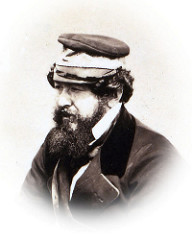
October 7th.—The heat to-day was literally intolerable, and wound up at last in a tremendous thunderstorm with violent gusts of rain. At the Legation, where Lord Lyons entertained the English visitors at dinner, the rooms were shaken by thunder claps, and the blinding lightning seemed at times to turn the well illuminated rooms into caves of darkness.
“Why do the Southern agents have it all their own way?”–Adams Family Letters, Charles Francis Adams, Jr., to his brother, Henry.
October 7, 2021
Quincy, Sunday, October 6, 1861
I received your letter of the 7th some ten days ago and not a word from London since; so that as I have seen no signs of trouble in the press, I presume the little flurry you there mention has passed away. In fact I cannot say I share your apprehensions, though I must confess I think the government’s cards, so far as the public sees them, are played badly enough both here and in England. While the agents of the Confederates are abroad working the whole time at public opinion and at the foreign mind, influencing papers and thinkers and undermining us the whole time, our press at home does but furnish them the materials they need and our agents abroad apparently confine their efforts to cabinets and officials and leave public opinion and the press to take care of themselves. This may not be so in fact, but if it is not, all that can be said is that the Southern emissaries are far more efficient than ours. We have money and the command of the sea, so that Europe can know nothing except through us, and yet, from the beginning, so much more active and efficient has the South been, that we have done nothing but lose ground. Why is this? I may be all wrong, but to me our policy in England seems as plain as noon-day, but I see no signs of its operation on the press, though I hope it is working secretly. England is made up of large interests. Some of those are in our favor and some opposed to us; but why are they not played off against each other? This war promises immense results to India, and has already carried up the Indian bonds. That interest is immensely powerful in England and can only reap benefit from the war; but I have not noticed that its organs were particularly friendly to us. The shipping interest derives great benefit from the war, but their organs are opposed to us. Why is this? What are our agents doing? Why is not India played off against Manchester and London against Liverpool? Why do the Southern agents have it all their own way? Why are not a few American papers sufficiently under the control of government to enable some expression of good sense to go abroad? Why is everything so utterly left to take care of itself? Remember I only ask these as questions, for I do not know but what a profound plan and ceaseless activity under-runs it all; but if it does, the State department certainly keeps its own councils much better than the war. So much for these things.
I wait curiously for the next development from abroad and chuckled amazingly over the tight place in which the Governor had got Lord John. Meanwhile, if there is to be trouble, for Heaven’s sake give me a few days’ notice. . . .
Tuesday, 7th
I send the corrected copy of Sumner’s speech herewith. Did you ever see anything like the classical exposure in the Advertiser? How can it be accounted for? What can Sumner mean by perpetrating historical frauds so sure of detection? The speech has been made the subject of most severe criticism and that too from men hitherto Sumner’s friends. Dana tore it to shreds for my edification in a most substantial manner, and Sumner has done himself no credit. For myself I’m glad the speech was made, though I think very differently from most in these matters. The education is going on and the fallacies lie hid. I agree with it, however, neither in theory or results, and if we had a Juvenal, would not the celebrated author of a certain 4th of July peace oration, now become the leading advocate for a savage Servile war, catch particular jess. Sumner is a humbug! There’s no doubt about it. He’s been a useful man in his day, but he’s as much out of place now as knights in armor would be at the head of our regiments.
The convention was managed and its results brought about by Dana, and it was to him a great personal triumph as he had all the old party associations to contend with. You never saw a man chuckle over anything as he did over his doings at Worcester. Sumner, I imagine, is offended with him and will evince it in the usual way. There is, of course, no political contest. The position of the country is now very curious and my strong conviction is that everything is ready and one good victory would start everything. Politics are so dead that a little success would lead to an era of good feeling in the North. Business is, in New England, all ready to rise under the tariff to a state of activity, unusual even in time of peace. Everything that is left is strong and the present feeling of depression is wholly unfounded. I am convinced that one victory would make an almost incredible change, but we shall not see it for a long time without a victory.
A Diary of American Events.
October 7, 2021October 7.–Colonel Matthews, encamped with four hundred Home Guards about Twenty miles from Hermann, Missouri, was compelled to abandon his camp; he having received intelligence that a large body of rebels were marching to attack him.–N. Y. Tribune, October 9.
–Capt. Michael Berry, late of the steamship Marion, was arrested in New York by detective Raynor, of Brooklyn, and sent to Fort Lafayette on charge of treason. The exact nature of the charge preferred against Capt. Berry has not transpired, but it is supposed that he was acting as a confidential agent for Jeff. Davis. His sympathy for the Southern Confederacy, and the Palmetto flag especially, is notorious, and the only wonder is, that he was not conducted to prison long ago. His sailing under the rebel flag, and his open avowal of. sympathy for the enemies of the Union at Charleston and elsewhere, rendered him a dangerous man; but he is now placed in a position where he cannot act against the Union cause, even if he felt ever so much disposed to do so. His movements of late have been characterized with much secresy, and there is no knowing how much aid and comfort he has extended to the enemy, but henceforward it is presumed Capt. Berry will occasion little trouble or uneasiness.–N. Y. Herald, October 8.
–Fifty-seven released prisoners, taken at the battle of Bull Run, were returned to Fortress Monroe, from Richmond. They were released because their wants could not be supplied by the rebel Government.
–General Fremont, accompanied by General McKinstry, left Jefferson City for Sedalia, Mo., with the determination of following Gen. Price.–At Saratoga, N. Y., a large Union meeting was held, at which eloquent and stirring speeches were made by Lyman Tremaine, Benjamin Nott, and the Rev. A. D. Mayo, the Unitarian preacher.
–The gunboats Tyler and Lexington had an active engagement to-day, with the rebel shore batteries at Iron Banks, three miles above Columbus, Ky. The boats left Cairo, Ill., at nine o’clock, for down-river reconnoissance, and arriving at Lucas Bend, got sight of the rebel gunboat Jeff. Davis, which, on chase being given, put about with all possible despatch for Columbus. The Lexington and Conestoga, while in chase, and throwing shot, were suddenly fired upon by masked batteries on each side of the river. The shots, however, generally fell short. A battery of rifled cannon on the Iron Bunks, threw balls over and around the gunboats, cutting close, but fortunately doing no damage. Parties on board represent the scene for a time as particularly exciting. Shot and shell were flying in uncomfortable proximity, making the air ring with music. The guns of the boats were admirably manned, every shot going home, and the shells bursting in the air over the rebel quarters, causing a great .commotion among them. The boats finally drew off and returned to Cairo.–Cincinnati Commercial.