22nd. In the morning Lt. Nettleton and I went over to the Cathedral. In the afternoon visited at Uncle’s. Returned to camp and found thousands of visitors. Such a Sunday. Prayer meeting in the evening.
American Civil War Chronicles
Downing’s Civil War Diary.–Alexander G. Downing.
September 22, 2021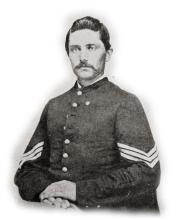
Sunday, 22d–I remained in Tipton all day, going to preaching this morning and to Sunday school in the afternoon.
“It is heart-rending to hear of the number of valuable lives which are lost in this cruel war.”—Diary of a Southern Refugee, Judith White McGuire.
September 22, 2021
“Mountain View,” September 22.—Came down here with Mr. _____, a few days ago. Spent this day not quite so profitably as I desired. The ride to the “old chapel,” where we had service, is so long, that we spent a great deal of time upon the road. Bishop Meade delivered a most interesting address. He mentioned with great feeling the death of Mr. John A. Washington, of Mount Vernon, who fell at “Cheat Mountain” a few days ago, while, with some other officers, he was observing the movements of Rosecranz. It is heart-rending to hear of the number of valuable lives which are lost in this cruel war.
“Yesterday I was down the road some ten miles, and, from a hill in the possession of our troops, had a good view of the dome of the Capitol, some five or six miles distant.”–Letters from Elisha Franklin Paxton.
September 22, 2021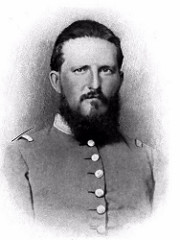
Camp near Fairfax C. H., September 22, 1861.
I am indebted to you for much pleasure afforded by your sweet letter of 16th inst. I know, Love, my presence is sadly missed at home, but not more than in my lonely tent I miss my dear wife and her fond caress. I am sure, too, you are not more eager in your wish for my return, than I am to be with you. But I feel sure you would not have me abandon my post and desert our flag when it needs every arm now in its service for its defence. To return home, all I have to do is to resign my office, a privilege which a man in the ranks does not enjoy. Then your wish and mine is easily fulfilled, but in thus accomplishing it I would go to you dishonored by an exhibition of the want of those qualities which alike grace the citizen and the soldier. An imputation of such deficiency of manly virtues I should in times past have resented as an insult. Would you have me merit it now? I think not. My love for you, if no other tie bound me to life, is such that I would not wantonly throw my life away. But my duty must be met, whatever the expense, and I must cling to our cause until the struggle ends in our success or ruin, if my life lasts so long. I trust I have that obstinacy of resolution which will make my future conform to such sentiments of my duty. Mrs. Jackson took leave of us some days since, as the General was not able to get quarters for her in a house near our present encampment. I rode, between sunset and breakfast next morning, some thirty miles to secure the services of a gentleman to meet her at Manassas and escort her home. In return for this hard night’s ride she sent me by the General her thanks in the message that she “hoped I might soon see my wife.” You hope so too, don’t you, Monkey? I was well paid for my trouble in the consciousness of having merited her gratitude.
I stopped at Mr. Newman’s camp the other day to see him, but learned from Deacon that he was at home, and that little Mary was dead. I sympathized deeply with them in the sad bereavement. I learned from the Rev. Dr. Brown, who reached here from Richmond this morning, that he saw Matthew at Gordonsville, on his way here. I suppose he will come to see me when he arrives.
Yesterday I was down the road some ten miles, and, from a hill in the possession of our troops, had a good view of the dome of the Capitol, some five or six miles distant. The city was not visible in consequence of the intervening woods. We were very near, but it will cost us many gallant lives to open the way that short distance. I have no means of knowing, but do not think it probable the effort will be made very soon, if at all. I saw the sentinel of the enemy in the field below me, and about half a mile off, and not far on this side our own sentinels. They occasionally fire at each other. Mrs. Stuart, wife of the Colonel who has charge of our outpost, stays here with him. Whilst there looking at the Capitol I saw two of his little children playing as carelessly as if they were at home. A dangerous place, you will think, for women and children. Remember me to Fitzgerald and his wife, and say that I am very grateful for what they have done for me. And now, Love, I will bid you good-bye again. Kiss little Matthew and Galla for me.
Civil War Day-By-Day
September 22, 2021
September 22, 1861
A Chronological History of the Civil War in America1
- Skirmish at Ellicott’s Mills, Ky.
- A Chronological History of the Civil War in America by Richard Swainson Fisher, New York, Johnson and Ward, 1863
John Beaucahmp Jones’ responsibilties
September 21, 2021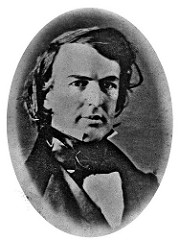
SEPTEMBER 21st.—The Secretary has authorized me to sign passports “for the Secretary of War.” My son attends to his letters. I have now an opportunity of seeing more. I have authority to order transportation for the parents of soldiers, and for goods and provisions taken to the camps.
“Heavy cannonading over the River almost every day is heard from the Forts, practicing and getting the range of their guns.”—Horatio Nelson Taft
September 21, 2021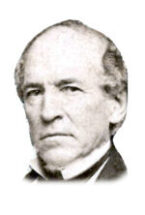
SATURDAY 21
Nothing new has occured recently although we are surrounded on all sides with elements which may be put in motion any how carrying destruction and death to thousands. Heavy cannonading over the River almost every day is heard from the Forts, practicing and getting the range of their guns. Have been at home most of the day fixing up things and preparing to sell out. Was on the Ave in the morning with Julia.
______
The three diary manuscript volumes, Washington during the Civil War: The Diary of Horatio Nelson Taft, 1861-1865, are available online at The Library of Congress.
“…soldiers must be soldiers…”
September 21, 2021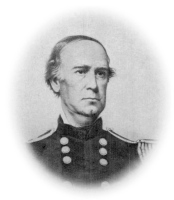
Camp of Instruction
Benton Barracks Sept 21. 1861
Dr Major
I find the skeleton Regiment in camp requires much time and attention. Men come and stay a few days without being mustered in, and slip away from camp cheating the Government out of subsistance and causing insubordination. I have therefore detailed an officer (Lieut Freeman of the Regular Army) to muster them in as fast as they come, so that in case they leave they may be regarded as deserters. They generally comply without much complaint. Col Burge has a small squad of men who he calls Rifles or Sharp Shooters. They are about 150 in number and claimed by about a Doz quasi Captains but none of them either officers or privates mustered into the service. I ordered the Colonel to have this floating population mustered into the service. He seems to dread it, and holds back unless it can be done on conditions &c &c I have insisted and told him I would not approve provision rations for his men unless they are mustered. In the mean time he has gone to Head Quarters and I report the facts to prevent misunderstandings. I have told him we will let him have riffles if they can be got; but soldiers must be soldiers and I could see no need of keeping these men and officers for weeks in an unorganized condition Good order of camp and economy of service requires this.
Very Respectfully yours
Saml. R. Curtis
Brigr Geni Com. Camp
Jayhawking
September 21, 2021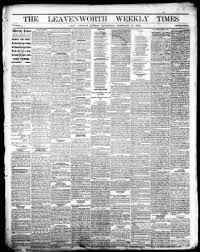
Daily Times [Leavenworth, Ks],
September 21, 1861
For months the Conservative has been the accredited organ of a system of pillage and plunder known and recognized among bandits as the highest state of civilization. Not content with occupying a superficially equivocal position between law and lawlessness it openly sets all laws and authorities at defiance in yesterday’s issue in the following language:
“Jayhawking was got up in Kansas. It’s one of our things. It works well; we believe in it, we are going to have it. It don’t make any difference whether the authorities, civil or military, believe in it or not. Kansas don’t care much for authorities; never did, never will.”
This is anarchy, riot, a reign of terror glazed over with the specious plea of loyalty to the Union; just as if a man could be loyal to the Union without being loyal to the laws and constituted authorities. Loyalty to the union implies loyalty to the government. There can be no loyalty to the government without respect and obedience to its laws and constituted authorities. Whoever sets at nought one or the other, or both, no matter on which side he proclaims himself to be, is an enemy of the Union and the government, equally with Jeff. Davis and his co-conspirators. There may be sedition among pretended Union men–this war is waged against all sedition, including Jayhawking–and there never can be peace, there never will be order, until rebellion and jayhawking are put down.
By what authority is Jayhawking carried on? Does the Government authorize it? No. Then they authorize themselves–they are a law unto themselves. If Cleveland may Jayhawk and be tolerated, Joe Tuttle or any other desperado or marauder may do the same. If one band may Jayhawk to-day, two bands may do likewise to-morrow, and so on ad infinitum. This is the naked logic of the principle. Jayhawking strikes at the very root of, and destroys American government, to wit: — the law-abiding spirit of our people. It professes to draw the sword for the Union, but acting without authority–without responsibility, it sets at defiance the laws of the Union. What use is there in drawing the sword for the Government, if by that self-same sword the laws of the Government are to be overturned? If this thing is to go on–if society is to be totally disorganized, let every man begin now, take for himself, Jayhawk in the name of the Union, the Constitution and the laws, and the utter destruction of every principle of good government, however wise and beneficent, and the security of all property or rights will be speedy and final.
The course of the Conservative is fanatical, reckless, lawless and whatever else tends to anarchy and confusion, to the overthrowing of well ordered society and wise and wholesome laws. It has not only the heart of mischief, but the audacity to flout its crimes boastingly and defiantly before our eyes. The Jayhawkers rob with an understanding that they have a journal to applaud their felonies. Its Jayhawking doctrines are infamous, uncivilized, unchristian and anti-American, and coming as they do from a public journal, are calculated to do great harm, and should be frowned down by every true patriot.
Interior Trade of Arkansas
September 21, 2021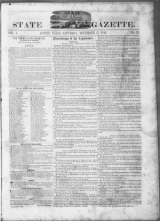
Austin State Gazette, September 21, 1861
Within the last week, we think not less than one hundred wagons have passed through our city, engaged in the Flour and Salt trade. The flour is hauled from the upper counties to points on the coast which produced such immense quantities of salt, and exchanged for the latter article, which is said to be of excellent quality. Heretofore, the coast people have eaten Illinois flour, and the wheat growers used Liverpool salt. Hurrah for the blockade! “Nobody hurt.”
Diary of Rutherford B. Hayes.
September 21, 2021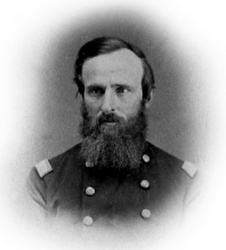
September 21, 1861. – Equinoctial storm today. Our regiment does not move. I am getting ready for my new quarters and duties. Just got ready for bed; a dark, dismal, rainy night. Visited the hospital tonight. Saw several of Colonel Tyler’s men who were wounded and taken prisoners in his surprise a month ago and were retaken by us after the fight at Carnifax Ferry. Intelligent men from Oberlin, one Orton; one from Cleveland. They have suffered much but are in good spirits. The enemy boasted that they would soon drive us out and would winter in Cincinnati.
War Diary of Luman Harris Tenney.
September 21, 2021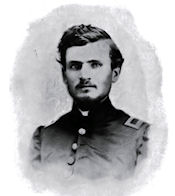
21st. Commenced to learn my duties. Drilled with the noncommissioned officers by the Adjutant.
Downing’s Civil War Diary.–Alexander G. Downing.
September 21, 2021
Saturday, 21st–We had company drill this morning. In the afternoon we had a big loyal mass-meeting in town, and we had speaking by Captain Stearns. He talked of our duty to sustain the Government. Quite a number enlisted as a result of the meeting, and it is hoped that the company may be completed so as to leave for Davenport in about eight days.
“ ‘Hark! Was that a gun?’ The comical aspect of terror which is thus elicited forms an inexhaustible source of amusement to us all.”—War Letters of William Thompson Lusk.
September 21, 2021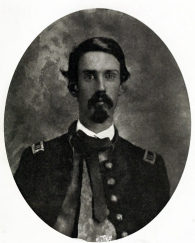
Headquarters 79th Regiment,
Camp Advance, Va. Co. K.
September 21st, 1861.
Dear Cousin Lou:
Let me see – it is a long time since I wrote you, but I am not forgetful. I must thank you many times for your kindness in writing me away off here. Perhaps you think it not very far, only four miles off from Washington; yet it is so, for we are quite shut off from all communication with the outer world. My goodness, how I did cheer Mrs. Gen. Smith the other day on passing her carriage as the Regiment was returning from the field where its colors had been restored!
I am not quite certain that Mrs. Brigadier-Gen. Smith was beautiful, yet I thought her so, for she had little hands, white teeth, and was not shouldering a musket. If you will visit camp, Cousin Lou, I’ll crown you Queen of Beauty and vote you lovelier than a thousand Mrs. Brigadier-Gen. Smiths. Tell Cousin Henry and Dr. Grant that their visit to me, while on Kalorama Heights, first taught me that there was still remaining communication with the world. The result of the lesson was, that I bought a looking-glass and combed the snarls out of my hair.
It is raining to-night, so I am shut in my tent. Field life agrees with me excellently, so that as yet I have hardly had an ill day. Our Regiment has been unusually healthy, there having been no deaths from sickness in it since it first left New-York. A captain of the 19th Indiana Regiment was telling me that they had lost 25 of their number from disease already, although they have not been out here so long as we by two months. This I suppose is partly owing to the fact that the city soldiers endure change of climate better than country ones; and something I believe is due to our surgeon Dr. McDonald. The Doctor says that you are one of the few women for whom he has an unbounded admiration. [continue reading…]
Civil War Day-By-Day
September 21, 2021
September 21, 1861
- All the evidence pointed to the situation in Missouri descending into chaos. Law and order had broken down with murder a common offence, as was the destruction of property.
A Chronological History of the Civil War in America1
- John C. Breckinridge ?ed from Frankfort, Ky., and openly joined the rebels.
- Severe ?ght at Papinsville, Mo., resulting in the defeat of the rebels and capture of arms, stores, etc., by the Union forces.
- A Chronological History of the Civil War in America by Richard Swainson Fisher, New York, Johnson and Ward, 1863
“Troops are pouring in rapidly now, from five to six Regiments pr day arrive by the Cars.”—Horatio Nelson Taft
September 20, 2021
FRIDAY 20
At the Indiana Hospital (Pt office) today, 100 Patients. Made Box for Piano. Got a Deed from the Land Office for Mr Pollok of Lyons. Attended the Parade with Julia of the Regulars on F[ranklin] Square. Called with her upon the Woodburys, 12th St, refined educated people and much devoted to the sick soldiers. Troops are pouring in rapidly now, from five to six Regiments pr day arrive by the Cars. Large numbers have gone over the river this week. An attack on the City expected.
______
The three diary manuscript volumes, Washington during the Civil War: The Diary of Horatio Nelson Taft, 1861-1865, are available online at The Library of Congress.
Visit wounded men.
September 20, 2021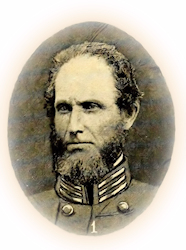
Sep. 20—Fierce cannonading from 10 to 11. Still as death from 1 to 2. While troops are in line of battle I visit five wounded men at house of William Goldenbanger. Col. W. J. McGill lost his left arm. He has a wife and three children. Trusts in God. John C. McMahon, of Mississippi, Caohoma county, was with Walker in Nicaragua, passed safely many perils in many places, and was wounded in the arm and side at Sharpsburg, and at last turned over in the ambulance in which the man was killed two days ago. He is well bred and polite and confesses his sinfulness. Did he ever get back to his native home and see his venerable father, Rev. Wm. McMahon?
Mount Vernon heir killed in a skirmish.—Diary of John Beauchamp Jones
September 20, 2021
SEPTEMBER 20th.—Col. J. A. Washington has been killed in a skirmish. He inherited Mount Vernon. This reminds me that Edward Everett is urging on the war against us. The universal education, so much boasted of in New England, like their religion, is merely a humbug, or worse than a humbug, the fruitful source of crime. I shall doubt hereafter whether superior intelligence is promotive of superior virtue. The serpent is wiser than the dove, but never so harmless. Ignorance is bliss in comparison with Yankee wisdom.
I dislike the service but must obey, of course. —Diary of Rutherford B. Hayes.
September 20, 2021
September 20.– I am ordered to the place of judge-advocate and to be attached to headquarters. I dislike the service but must obey, of course. I hope to be released after a few weeks’ service. In the meantime I will try to qualify myself for an efficient discharge of my new duties. I agree with General Rosecrans that courts-martial may be made very serviceable in promoting discipline in the army. I shall try to introduce method and system into the department. I will keep a record of cases, collect a list of sentences proper for different cases, etc., etc.
War Diary of Luman Harris Tenney.
September 20, 2021
Friday, 20th. Received appointment of Com.-Sergt.
Captain Stearns of Company A of the Eighth Iowa is here encourage enlistments.–Alexander G. Downing.
September 20, 2021
Friday, 20th–Captain Stearns of Company A of the Eighth Iowa arrived today from Davenport, coming to encourage enlistments. Several new men enrolled today. We have a fine drillmaster in John F. Compton of New Liberty, Scott county. He is an Englishman, and has served five years in the Queen’s Guards of England.
“People were beginning to believe that the slaveholding generals were demigods…,”–Adams Family Letters, Charles Francis Adams, U.S. Minister to the U.K., to his son, Charles.
September 20, 2021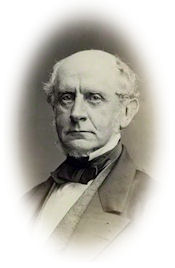
London, September 20, 1861
I deeply sympathise with you in your trials about the part you ought to play in the war. Much as I value your assistance during my absence on this side, I should be very reluctant to continue it at the cost of your own convictions of your duty. If you feel that the crisis demands it, I pray that you set aside every other consideration at once. .. . Whichever way you determine, you will know that I appreciate your motives, and that you will have under every circumstance my sympathy and my prayers.
The late modicum of good news has helped us here a good deal. People were beginning to believe that the slaveholding generals were demigods, on Aristotle’s or Longinus’s principle (I forget which), that mystery is a source of the sublime. The London Times at last frankly admits that if split up we shall no longer be a terror to Europe so that there is no need of going any farther for a reason to explain its crooked policy. Mr. Russell’s last letter went far to justify your inference. He has seen a little light and is willing to admit that we are not so badly off after all. . . .
Civil War Day-By-Day
September 20, 2021
September 20, 1861
- Lexington finally fell to Confederate forces. Along with 1,600 prisoners, the Confederates also found $1 million – the Union forces payroll. Frémont’s perceived failure to help the Union defenders at Lexington badly counted against him in Washington DC.
A Chronological History of the Civil War in America1
- Surrender of Col. Mulligan at Lexington, Mo., after four days’ struggle with 2,500 men against 26,000 rebels under Gen. Price.
- Skirmish near Tuscumbia, Mo.
- A Chronological History of the Civil War in America by Richard Swainson Fisher, New York, Johnson and Ward, 1863
Mary Chesnut’s Diary.—”The high and disinterested conduct our enemies seem to expect of us is involuntary and unconscious praise. “
September 19, 2021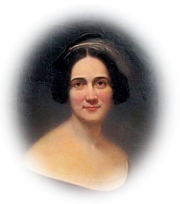
September 19th.–A painful piece of news came to us yesterday–our cousin, Mrs. Witherspoon, of Society Hill, was found dead in her bed. She was quite well the night before. Killed, people say, by family sorrows. She was a proud and high-strung woman. Nothing shabby in word, thought, or deed ever came nigh her. She was of a warm and tender heart, too; truth and uprightness itself. Few persons have ever been more loved and looked up to. She was a very handsome old lady, of fine presence, dignified and commanding.
“Killed by family sorrows,” so they said when Mrs. John N. Williams died. So Uncle John said yesterday of his brother, Burwell. “Death deserts the army,” said that quaint old soul, ”and takes fancy shots of the most eccentric kind nearer home.”
The high and disinterested conduct our enemies seem to expect of us is involuntary and unconscious praise. They pay us the compliment to look for from us (and execrate us for the want of it) a degree of virtue they were never able to practise themselves. It is a crowning misdemeanor for us to hold still in slavery those Africans whom they brought here from Africa, or sold to us when they found it did not pay to own them themselves. Gradually, they slid or sold them off down here; or freed them prospectively, giving themselves years in which to get rid of them in a remunerative way. We want to spread them over other lands, too–West and South, or Northwest, where the climate would free them or kill them, or improve them out of the world, as our friends up North do the Indians. If they had been forced to keep the negroes in New England, I dare say the negroes might have shared the Indians’ fate, for they are wise in their generation, these Yankee children of light. Those pernicious Africans! So have just spoken Mr. Chesnut and Uncle John, both ci-devant Union men, now utterly for State rights.
It is queer how different the same man may appear viewed from different standpoints. ”What a perfect gentleman,” said one person of another; “so fine-looking, high-bred, distinguished, easy, free, and above all graceful in his bearing; so high-toned! He is always indignant at any symptom of wrong-doing. He is charming–the man of all others I like to have strangers see–a noble representative of our country.” “Yes, every word of that is true,” was the reply. “He is all that. And then the other side of the picture is true, too. You can always find him. You know where to find him! Wherever there is a looking-glass, a bottle, or a woman, there will he be also.” “My God! and you call yourself his friend.” “Yes, I know him down to the ground.”
This conversation I overheard from an upper window when looking down on the piazza below–a complicated character truly beyond La Bruyere–with what Mrs. Preston calls refinement spread thin until it is skin-deep only.
An iron steamer has run the blockade at Savannah. We now raise our wilted heads like flowers after a shower. This drop of good news revives us. ¹
______
¹ By reason of illness, preoccupation in other affairs, and various deterrent causes besides, Mrs. Chesnut allowed a considerable period to elapse before making another entry in her diary.
Typhoid… is always lingering.
September 19, 2021
19 Sep
My dear Lotty has had an attack of fever now for 3 or 4 days Dr Geddings says Typhoid which is always lingering. She is the most patient child never says a word and takes her medicine and is still.—