First Sergeant

Library of Congress

Civil War Era Photographic Portraiture No. 24
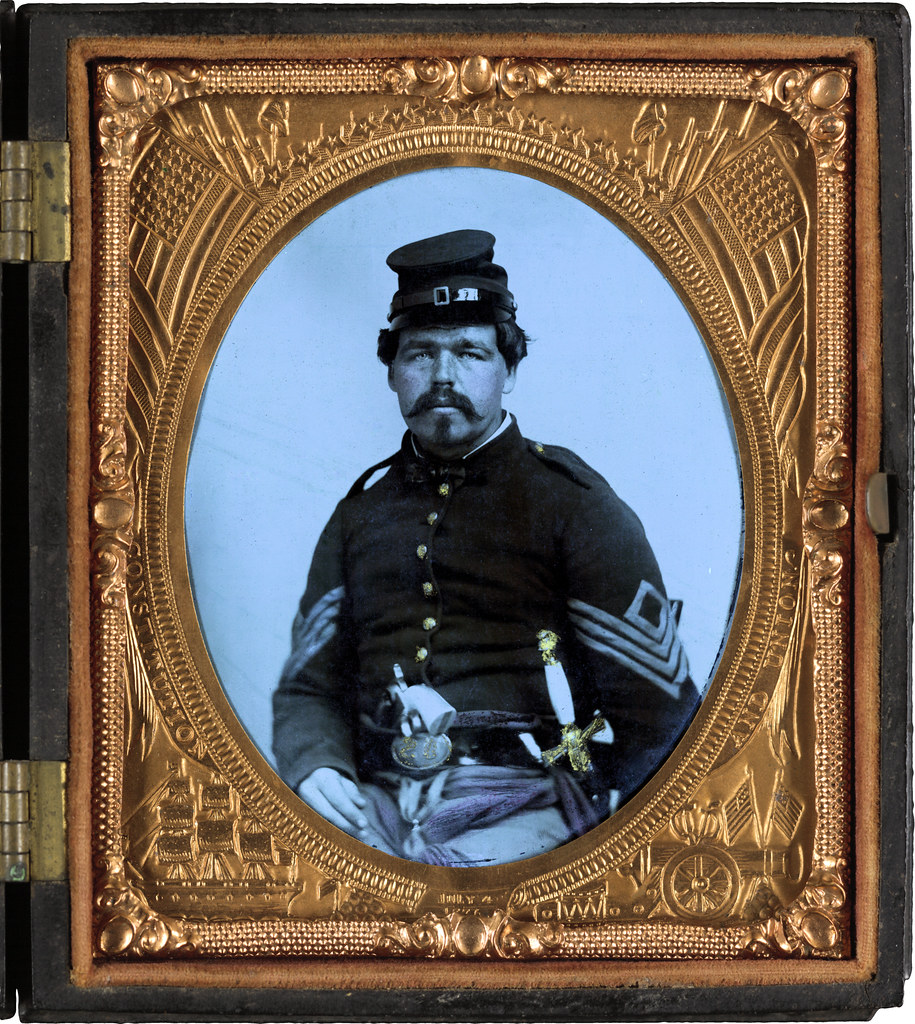
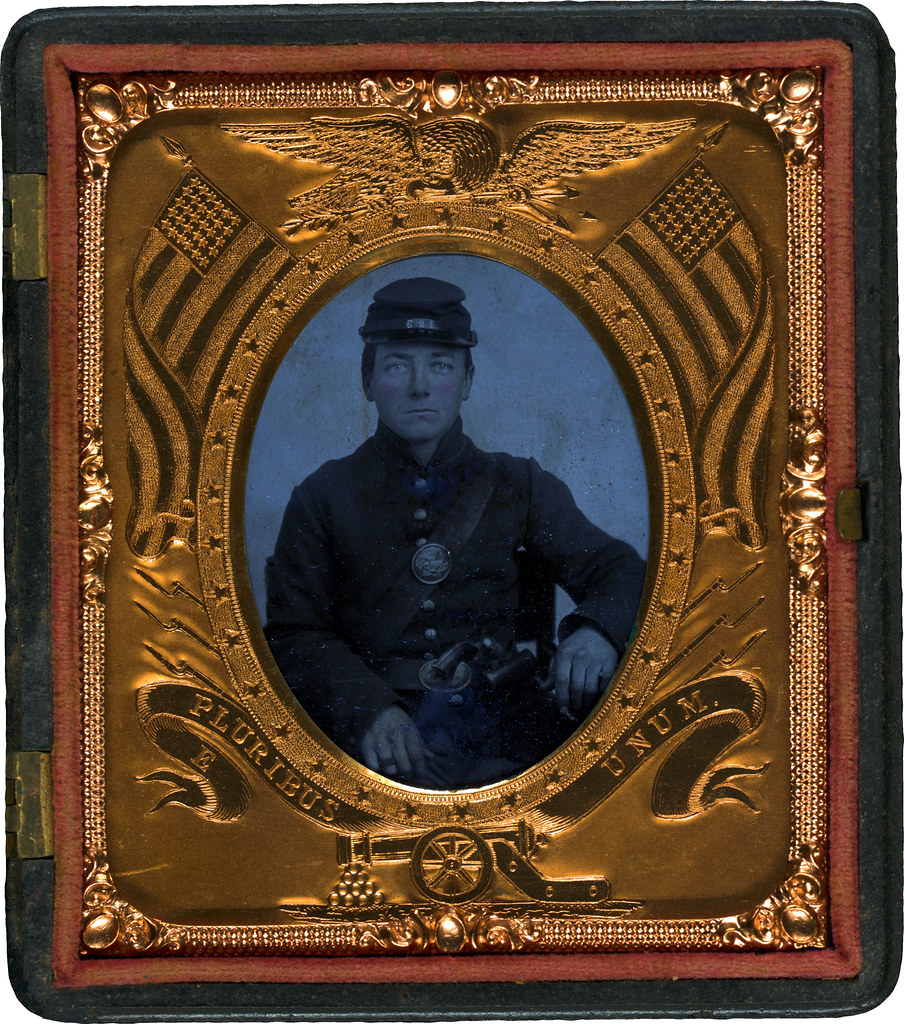
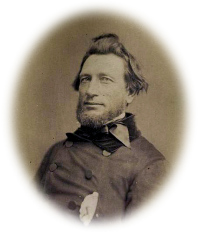
Unidentified soldier in Union first sergeant's uniform with militia sword and revolver
Title: [Unidentified soldier in Union first sergeant’s uniform with militia sword and revolver]
Date Created/Published: [between 1861 and 1865]
Medium: 1 photograph : sixth-plate tintype, hand-colored ; 9.5 x 8.2 cm (case)
Reproduction Number: LC-DIG-ppmsca-34964 (digital file from original item)
Rights Advisory: No known restrictions on publication.
Access Advisory: Use digital images. Original served only by appointment because material requires special handling.
Call Number: AMB/TIN no. 3061 [P&P]
Repository: Library of Congress Prints and Photographs Division Washington, D.C. 20540 USA
Notes:
…..Title devised by Library staff.
…..Case: Berg, no. 2-47S.
…..Gift; Tom Liljenquist; 2012; (DLC/PP-2012:127).
…..More information about this collection is available at http://hdl.loc.gov/loc.pnp/pp.lilj
…..Purchased from: The Horse Soldier, Gettysburg, Pa., 2012.
…..Forms part of: Liljenquist Family Collection of Civil War Photographs (Library of Congress).
…..Forms part of: Ambrotype/Tintype photograph filing series (Library of Congress).

Library of Congress item permalink

__________

Mike’s notes:

Image restoration note – This image has been digitally adjusted for one or more of the following:
– fade correction,
– color, contrast, and/or saturation enhancement
– selected spot and/or scratch removal
– cropped for composition and/or to accentuate subject matter
– straighten image

Image restoration is the process of using digital restoration tools to create new digital versions of the images while also improving their quality and repairing damage.
 

0 comments

“But of all the mean business in the world, the most humiliating to a proud and independant man is dancing attendance upon and asking favors from those in power.”—Horatio Nelson Taft

Diary of US patent clerk Horatio Nelson Taft.

SATURDAY 14

Weather fine & bright but a little too hot. M. 82. Have been at the Pat office part of the day. Had an interview with the Comr and a long talk with him, and a pretty plain talk. But of all the mean business in the world, the most humiliating to a proud and independant man is dancing attendance upon and asking favors from those in power. Dr David got in this evening from the other side of the River. I was at the National an hour or so, also called at Willards. City quiet.

______

The three diary manuscript volumes, Washington during the Civil War: The Diary of Horatio Nelson Taft, 1861-1865, are available online at The Library of   Congress.

0 comments

Secretary of War’s intent on giving up the office.—Rebel War Clerk

Civil War Day-by-Day

SEPTEMBER 14th.—Some of Mr. Walker’s clerks must know that he intends giving up the seals of office soon, for they are engaged day and night, and all night, copying the entire letter-book, which is itself but a copy of the letters I and others have written, with Mr. Walker’s name appended to them. Long may they be a monument of his epistolary administrative ability, and profound statesmanship!

0 comments

To Arms

Miscellaneous document sources, News of the Day

Daily Times [Leavenworth, Ks],
September 14, 1861

All good citizens having arms of any description needing repairs, are earnestly requested to bring such arms to the State Armory in the Times building, to be repaired under the supervision and at the expense of the Committee of Safety. The armory will be open for this purpose from 10 o’clock A.M. to 4 o’clock P.M. every day, (Sundays excepted,) until further notice.

By order of the Committee.

S. F. Atwood, Sec’y.

0 comments

Must be blue

Miscellaneous document sources, News of the Day

Daily Times [Leavenworth, Ks], September 14, 1861

The whole army of the U. S. is to be uniformed in blue. There is to be no more fantastic toggery. Some of the men in the army on the Potomac who were uniformed in grey, are getting ragged, but the Government will not permit any more grey clothes to be used. The boys must wait until they get blue clothes. Gen. McClellan is very energetic in his hostility to all uniforms except the regulation blue.

0 comments

Company drill.–Alexander G. Downing.

Diary of Alexander G. Downing; Company E, Eleventh Iowa Infantry

Saturday, 14th–We had company drill this morning, and some five or six new men enrolled. I went home in the afternoon.

0 comments

“By a pure accident it was discovered that the British Government were secretly entering into connections with the insurgents…”–Adams Family Letters, Henry Adams, private secretary of the US Minister to the UK, to his brother, Charles.

Civil War Day-by-Day

London, September 14, 1861

Your last letter containing principally suggestions on the cotton matter, reached me this week. Also a bundle of newspapers. At present I am busy in another direction, so that I can’t yet take up the subject you recommend, but when my immediate bubbles have burst, or have expanded brilliantly, I mean to see what I can do here. Yet I confess I do not promise myself much from the effort. The main principles which you aim at demonstrating, that the American monopoly of cotton is in fact a curse both to America and to Great Britain, and its destruction might be made the cause of infinite blessings to the whole range of countries under the torrid zone, this principle is and has always been an axiom here. It needs no proof, for the cotton-merchants themselves are the most earnest in asserting it. The real difficulty with regard to cotton does not lie there. It is never the hope of a future good, however great, that actuates people, when they have immediate evils such as this want of cotton will produce right before their eyes. Nor should I answer any real question by proving that in two years the world will be infinitely benefitted by our war, when what they alone ask is whether meanwhile England will not be ruined. My own belief is that she will be ruined. This next winter will, I fear, be a dreadful one in this country in any case, nor will it be bettered if they make war on us. It is not as if the cotton manufacture alone suffered, but the tariff and the war have between them cut off the whole American trade, export and import, and the consequence has been a very bad season, with a prospect of frightful pressure in the winter. Whole counties will have to be supported by subscription. [continue reading…]

0 comments

“The enemy are no match for us in fair fighting. They feel it and so do our men.”—Rutherford B. Hayes.

Diary and Letters of Rutherford Birchard Hayes

Birch River, Between Summersville and
Sutton, Virginia, September 14, 1861.

Dear Uncle : – I have no time to write letters. We are getting on finely. Our battle on the 10th at Gauley River, you have no doubt heard all about. Nothing but night prevented our getting Floyd and his whole army. As it was, we entirely demoralized them; got all their camp equipage even to their swords, flag, and trunks (one of the best of which the general gave me). I had an important and laborious part assigned me. An independent command of four companies to be the extreme left of our attacking column. We worked down and up a steep rocky mountain covered with a laurel thicket. I got close enough just at dark to get two men wounded and four others struck in their garments.

This is not a dangerous business; after tremendous firing of cannon and musketry, we lost only thirteen killed, about fifteen badly wounded and fifty or sixty slightly wounded. The enemy are no match for us in fair fighting. They feel it and so do our men. We marched rapidly seventeen miles, reaching their vicinity at 2:30 or 3 P. M. We immediately were formed and went at them. They were evidently appalled. I think not many were killed. Governor Floyd was wounded slightly.

On yesterday morning I was sent on a circuitous march to head off parties hastening to join Wise or Floyd. Four companies of my regiment, two [continue reading…]

0 comments

A Diary of American Events.

The Rebellion Record – A Diary of American Events; by Frank Moore

September 14.–Last night an expedition from the United States steam frigate Colorado, under the command of Lieutenant John H. Russell, cut out the rebel privateer Judah, from under the guns of the forts at Pensacola Navy Yard, and totally destroyed her by fire. The National loss was three killed and fifteen wounded.– (Doc. 49.)

–The Philadelphia Inquirer, of this morning says: “It is understood that the property of Robert Tyler, a traitor, was seized yesterday at Bristol, Pa., by order of the Government of the United States. This property includes real estate and household goods. Robert Tyler first appeared before the public of Pennsylvania about twenty years ago, in the character of a lawyer without clients, and with no very good references as to his past career, he married the daughter of Thomas Cooper, the celebrated actor, having become acquainted with her at Bristol, the residence of her father. He took up his abode at that place during the summer months, and became an active orator in behalf of the Irish cause, in the excitement which preceded the riots of 1844. He won many friends by his oratorical powers. He was afterward appointed Clerk of the Supreme Court of Pennsylvania, a position worth ten or twelve thousand dollars per annum. While thus in the service of the Government, he lost no opportunity, during the early stages of this rebellion, to uphold the South and denounce the North. His denunciations became so violent, that immediately after the fall of Sumter he was obliged to leave the city, and now holds a subordinate position in the Treasury Department of the so-called Confederate Government at Richmond. His treason has availed him but little.”

–Considerable excitement was created at Kansas City, Mo., to-day, by the appearance of rebel scouts. A company of twenty mounted men was sent over from Kansas City in the morning, who discovered a rebel camp of from two hundred to three hundred men, some six miles distant from the Missouri River. An additional force was detailed in the afternoon, who killed seven of the rebels and took six prisoners, with the same number of horses, and destroyed their barracks. Only one of the Union men was wounded.–N. Y. Herald, September 21.

–A Detachment of Col. Young’s Cavalry, under Captain White, arrested three spies, today, near Port Tobacco, Maryland, and brought them to Washington, D. C. On their persons was found topographic and other information designed for transmission to the enemy.–N. Y. Times, September 18.

0 comments

Civil War Day-By-Day

Civil War Day-by-Day

September 14, 1861

A Chronological History of the Civil War in America1

  • Skirmish near Shepherdstown, Va.

  1. A Chronological History of the Civil War in America by Richard Swainson Fisher, New York, Johnson and Ward, 1863
0 comments

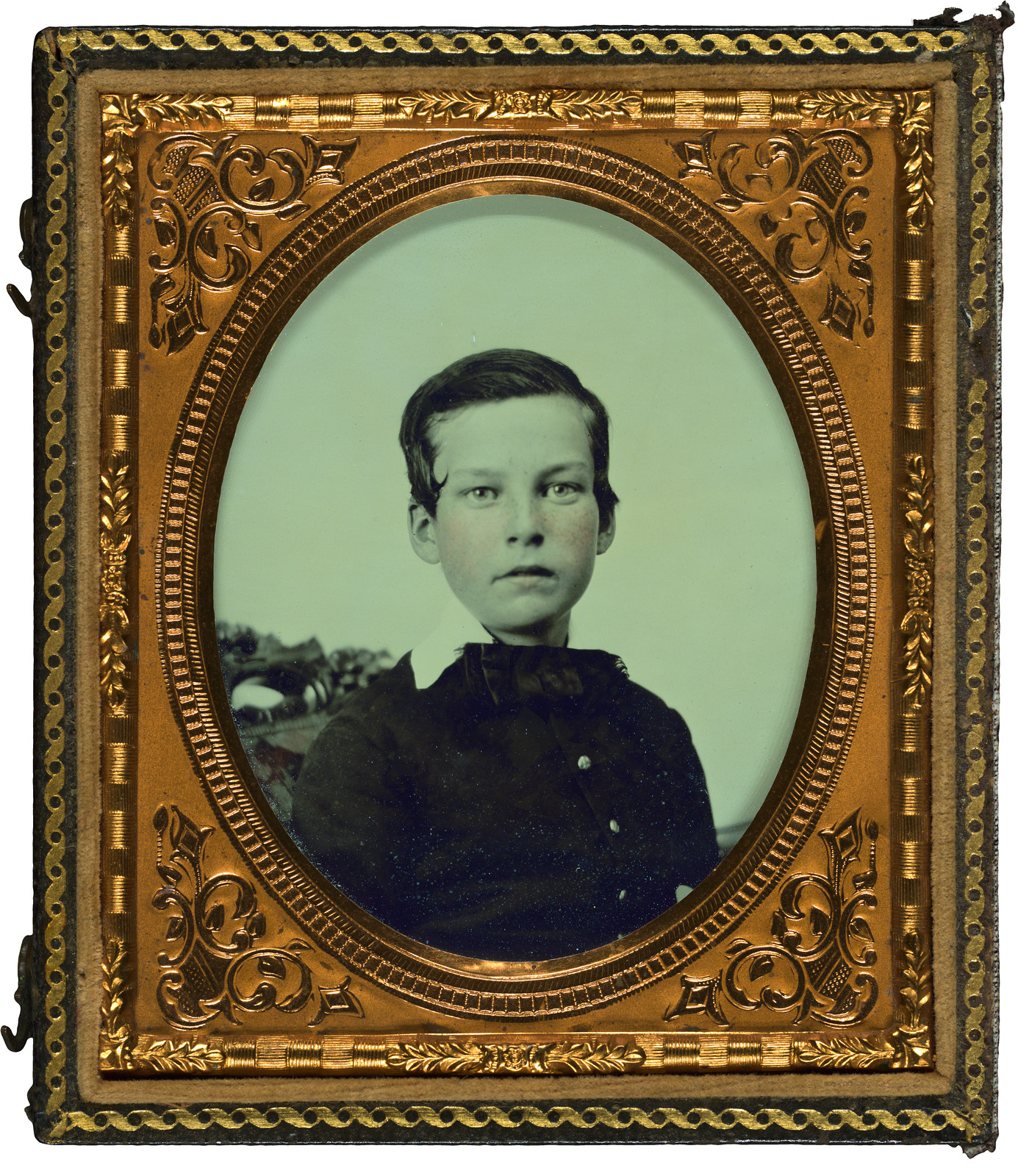
Private Charles H. Bickford of B Company, 2nd Massachusetts Infantry Regiment as a young boy

Library of Congress

Civil War Era Photographic Portraiture No. 23

Title: [Private Charles H. Bickford of B Company, 2nd Massachusetts Infantry Regiment as a young boy]
Date Created/Published: [between 1850 and 1855]
Medium: 1 photograph : sixth-plate ambrotype, hand-colored ; 9.3 x 8.1 cm (case) + 1 manuscript.
Summary: Photograph shows identified soldier, as a child.
Reproduction Number: LC-DIG-ppmsca-27242 (digital file from original item, photo) LC-DIG-ppmsca-27243 (digital file from original item, note)
Rights Advisory: No known restrictions on publication.
Access Advisory: Use digital images. Original served only by appointment because material requires special handling.
Call Number: AMB/TIN no. 2380 [P&P]
Repository: Library of Congress Prints and Photographs Division Washington, D.C. 20540 USA
Notes:
….Title devised by Library staff.
….Case: Leather geometric scroll and flowers.
….Name from inscription on handwritten note in case; additional information on note includes date of birth, March 1844, date and place of death, May 3, 1863, at Chancellorsville, Virginia, and name of sister, Georgeanna Hunt.
….Digital photo with mat removed by Mike O’Donnell.
….Gift; Tom Liljenquist; 2010; (DLC/PP-2010:105).
….More information about this collection is available at http://hdl.loc.gov/loc.pnp/pp.lilj
….Forms part of: Liljenquist Family Collection of Civil War Photographs (Library of Congress).
….Forms part of: Ambrotype/Tintype photograph filing series (Library of Congress).

Library of Congress item permalink.

_______________

Mike’s notes:

Image restoration note – This image has been digitally adjusted for one or more of the following:
– fade correction,
– color, contrast, and/or saturation enhancement
– selected spot and/or scratch removal
– cropped for composition and/or to accentuate subject matter
– straighten image

Image restoration is the process of using digital restoration tools to create new digital versions of the images while also improving their quality and repairing damage.
0 comments

“There seemed to be signal lights there on the hills this evening, one very large fire.”—Horatio Nelson Taft

Diary of US patent clerk Horatio Nelson Taft.

FRIDAY, SEPTEMBER 13, 1861.

I have been much of the day at the Treasury Dept waiting to see the Sec’y on business. While there saw Prof (now) Genl Michel, the Astronomer, who is now in the Army. Also saw and conversed with Genl Burnside of R.I. Genl Pomeroy of Kansas notoriety I saw also. It is reported that our pickets on the other side of the River have been driven in. There seemed to be signal lights there on the hills this evening, one very large fire. Called with wife on Chas & Sallie. Mr Kendig of Phila was there. Walked up to Franklin Square.

______

The three diary manuscript volumes, Washington during the Civil War: The Diary of Horatio Nelson Taft, 1861-1865, are available online at The Library of   Congress.

0 comments

Rebel War Clerk

Civil War Day-by-Day

SEPTEMBER 13th.—The Secretary, after writing and tendering his resignation, appointed my young friend Jaques a special clerk with $2000 salary. This was allowed by a recent act.

0 comments

The Secessionists in our Midst

Miscellaneous document sources, News of the Day

Daily Times [Leavenworth, Ks],
September 13, 1861

That we have in our midst, Secessionists, and those who sympathize with the Southern rebels, in their war upon the Government, is a well-known fact. How to deal with these men, has long been a perplexing, and is fast becoming a practical question. Among them, we have neighbors and personal friends; but the relations they bear towards us, cannot make us forget what is due to our own safety and welfare.

There are residents of Leavenworth, who undoubtedly hold sentiments in relation to the present struggle, that are obnoxious to our people; yet who would not give aid or information to the enemy, nor do aught to injure the city. If such men can keep their objectionable opinions to themselves, there is no reason why they should be harassed or molested. It is time, however, to have one thing distinctly understood: that treasonable doctrines cannot be openly proclaimed with impunity, in Leavenworth.

There are others of the class to which we refer, whose presence, under any circumstances, is dangerous. We are satisfied that there are Secessionists here who hold communication with the Missouri rebels, and who would rejoice to see Kansas overrun by those fiends in human shape. These men should be properly dealt with, either by the civil or military authorities. We want no night forays upon suspected persons, by unauthorized and lawless bands. Such matters are of too much moment, to be left to the arbitration of a few reckless individuals.

Neither would we have the property of those who are charged with Secession proclivities, appropriated to private uses. The Government has wisely and justly determined to confiscate the effects of those who are in arms against it, or who have committed overt acts of treason; but this affords no excuse for seizures of personal property, by men who hold themselves accountable to no law and no authority. Under the influence of a temporary excitement, this community has regarded such acts with leniency and forbearance; but the sober judgment of our citizens will neither approve nor countenance a course fraught with so much danger, and so destructive of every principle of good government. The tendency of these unlawful raids is to provoke a spirit of insubordination to the regularly constituted authorities, which must be checked, or it will soon involve our whole people, Union men as well as others, in anarchy and ruin.

Let us not introduce here the system which prevails throughout Cottondom. Let us not imitate the riotous and arbitrary acts, which have so disgraced the South, and which have marked the progress of this unholy insurrection against the Government. We are fighting for the supremacy of Law. That is our shield and our safeguard, and we must ourselves regard it with reverence, or we cannot hope to enforce its obligations upon others.

0 comments

Downing’s Civil War Diary.–Alexander G. Downing.

Diary of Alexander G. Downing; Company E, Eleventh Iowa Infantry

Friday, 13th–We made the entire trip of thirty miles from Davenport last night and reached home by daylight. I went up to Tipton this afternoon and was sworn into the State service, my service dating back to August 10th. Our former captain, Mr. McLoney, and some of the other Inland boys are here, besides four of the Le Claire boys. We are trying to form a new company and everything looks good for a new company in a short time, quite a number of the boys having already enrolled. We are boarding at the hotel.

0 comments

William Howard Russell’s Diary: War cries.

My Diary North and South – William Howard Russell

September 12th.–The day passed quietly, in spite of rumours of another battle; the band played in the President’s garden, and citizens and citizenesses strolled about the grounds as if Secession had been annihilated. The President made a fitful appearance, in a grey shooting suit, with a number of despatches in his hand, and walked off towards the State Department quite unnoticed by the crowd. I am sure not half a dozen persons saluted him–not one of the men I saw even touched his hat. General Bell went round the works with McClellan, and expressed his opinion that it would be impossible to fight a great battle in the country which lay between the two armies–in fact, as he said, “a general could no more handle his troops among the woods, than he could regulate the movements of rabbits in a cover. You ought just to make a proposition to Beauregard to come out on some plain and fight the battle fairly out where you can see each other.”

_______

posted on the 13th as there were two entries dated the 11th, with the second one posted on the 12th.

0 comments

A Diary of American Events.

The Rebellion Record – A Diary of American Events; by Frank Moore

September 13.–In Western Virginia the rebels commenced to advance yesterday morning on both pikes toward Elkwater and Cheat Mountain summit. They succeeded in surrounding the fort on the summit and cut the telegraph wire. They continued to advance on Elkwater until within two miles of the National troops, when a few shells from Loomis’s battery dispersed them. Skirmishing was kept up all night, and this morning two regiments were sent to cut their way through to the summit. They succeeded in this expedition, the rebels retreating in all directions.

Two rebel officers who were spying around the camp at Elkwater this morning were surprised by our pickets and shot. The body of one of them was brought into camp, and proved to be that of Col. John A. Washington, of Mount Vernon, Virginia.–(Doc. 48.)

–General Sturgis of the National army with a regiment of infantry, two companies of cavalry, and one of artillery, took possession of St. Joseph’s, Missouri.

–The Second regiment of Delaware Militia, left Wilmington for Cambridge, Maryland.– Baltimore American, September 16.

–A Fight took place at Booneville, Mo., this morning between a party of rebels under Colonel Brown and the Home Guards under Captain Eppstein, which terminated in the victory of the latter. The Home Guards held their intrenchments against the rebels, one thousand strong, who were driven back with a loss of twelve killed and thirty wounded. The Home Guards lost only one killed and four wounded. Among the killed of the rebels were Col. Brown and Capt. Brown.–National Intelligencer, September 17. [continue reading…]

0 comments

Civil War Day-By-Day

Civil War Day-by-Day

September 13, 1861

  • The siege of Lexington, also known as the Battle of First Lexington, was a minor conflict of the American Civil War. The siege took place from September 13 to 20, 1861 between the Union Army and the pro-Confederate Missouri State Guard in Lexington, county seat of Lafayette County, Missouri. The victory won by the Missouri Guard bolstered the considerable Southern sentiment in the area, and briefly consolidated Missouri State Guard control of the Missouri River Valley in the western part of the state. Confederate Sterling Price, with 18,000 men, faced a federal force of 3.600 under Colonel James Mulligan. After fighting intensified on September 19, Mulligan surrendered on the 20th.
  • Entering Confederate-controlled Pensacola harbor, Lt. John Henry Russell destroys the privateer Judah, marking the first naval action of the Civil War.

A Chronological History of the Civil War in America1

  • Booneville, Mo., attacked by rebels, who were repulsed by the Home Guard stationed there.
  • Thirteen members of the Maryland Legislature, two editors of secession newspapers, one member of Congress, and the gubernatorial candidate of the secession party arrested in Baltimore.
  • C. S. privateer “Judith.” destroyed at Pensacola, Fla., by a boat expedition from the U. S. ship “Colorado.”

  1. A Chronological History of the Civil War in America by Richard Swainson Fisher, New York, Johnson and Ward, 1863
0 comments

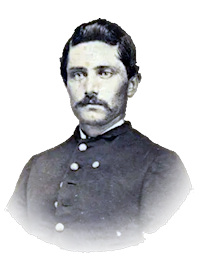
Roswell K. Bishop of Company I, 123rd New York Infantry Regiment in uniform with holstered revolver

Library of Congress

Civil War Era Photographic Portraiture No. 22

Roswell K. Bishop of Company I, 123rd New York Infantry Regiment in uniform with holstered revolver
Title: [Roswell K. Bishop of Company I, 123rd New York Infantry Regiment in uniform with holstered revolver]
Date Created/Published: [between 1861 and 1863]
Medium: 1 photograph : sixth-plate tintype, hand-colored ; 9.5 x 8.5 cm (case)
Summary: Photograph shows identified soldier in Union uniform.
Reproduction Number: LC-DIG-ppmsca-27241 (digital file from original item)
Rights Advisory: No known restrictions on publication.
Access Advisory: Use digital images. Original served only by appointment because material requires special handling.
Call Number: AMB/TIN no. 2379 [P&P]
Repository: Library of Congress Prints and Photographs Division Washington, D.C. 20540 USA
Notes:
….Title devised by Library staff.
….Case: Berg, no. 3-181.
….Additional information in collections file; killed at Chancellorsville, Virginia May 3, 1863.
….Albumen print of Bishop processed as LOT 14043-2, no. 9.
….Gift; Tom Liljenquist; 2010; (DLC/PP-2010:105).
….More information about this collection is available at http://hdl.loc.gov/loc.pnp/pp.lilj
….Forms part of: Liljenquist Family Collection of Civil War Photographs (Library of Congress).

Library of Congress item permalink.

_______________

Mike’s notes:

Image restoration note – This image has been digitally adjusted for one or more of the following:
– fade correction,
– color, contrast, and/or saturation enhancement
– selected spot and/or scratch removal
– cropped for composition and/or to accentuate subject matter
– straighten image

Image restoration is the process of using digital restoration tools to create new digital versions of the images while also improving their quality and repairing damage.
0 comments

Gen. Pillow has occupied Columbus, Ky.—Rebel War Clerk

Civil War Day-by-Day

SEPTEMBER 12th.—Gen. Pillow has advanced, and occupied Columbus, Ky. He was ordered, by telegraph, to abandon the town and return to his former position. Then the order was countermanded, and he remains. The authorities have learned that the enemy occupies Paducah.

0 comments

“Long trains of army wagons pass all day, 4 horse teams.”—Horatio Nelson Taft

Diary of US patent clerk Horatio Nelson Taft.

THURSDAY 12

This has been a delightful day. I was at the Pat office and at the Treasury Dept, did not see Mr Chase. The fight near the Chain Bridge yesterday proved to be only a rather severe skirmish, two of our soldiers killed. Went with Julia after dinner up to Camp Cameron to see the “Anderson Zouaves,” visited the Head Qrs, the old (“Madison House”), with Capt Meeks. Capt Lafarta of the French Zouave Company was very polite. He is an Italian. 1500 Cavalry passed our door last evn’g. Long trains of army wagons pass all day, 4 horse teams.

______

The three diary manuscript volumes, Washington during the Civil War: The Diary of Horatio Nelson Taft, 1861-1865, are available online at The Library of   Congress.

0 comments

Beautiful day.—Enlisted for the war.—Fort Lafayette.—An inattentive genius and not a born fool!—Woolsey family letters; Abby Howland Woolsey to Harriet Gilman; and Sarah C. Woolsey, writing from Lenox.

Woolsey family letters during the War for the Union

Lenox, Sept. 12, 1861.

To-day has been very beautiful. Such floating clouds and corresponding shadows, such liquid blue on the distant hills and such gold green on the nearer meadows! We saw it to advantage at sunset, from Mrs. Sedgwick’s house. Only Miss Catherine was at home, and we saw her in her own little parlor, hung with photographs and engravings and one or two old choice portraits. But the picture from the window was best of all. . . . We had a charming drive one day with the Warners (of the “Wide, Wide World”) to Tyringham, the Shaker settlement below Lee, which name reminds me of the story we heard of the loyalty of that little village. It had already sent its full proportion to the army. But that dreadful night when the news of disaster at Bull Run came, the baker told the Warners “Nobody couldn’t eat nothin’ and nobody couldn’t sleep none.” That very midnight sixty men of Lee started in the cars for New York and enlisted for the war. … I had a chance of seeing Mrs. Kemble to-day as she drove by, silks and lace and birds of paradise, several I should think by the size. She is the great woman of the place here. Her daughter, Mrs. Wistar, was with her–strikingly like her, and yet young, fair, simple and beautiful. She came back yesterday from New York with Julia Butler the sister. They had been down to see their father in Fort Lafayette.

.   .   .   .   .   .

In consequence of complaints made of the treatment of the political prisoners, Dr. Bellows, the President of the Sanitary Commission, inspected Fort Lafayette and reported to the Secretary of State Oct. 31, 1861 –” Every man has his own cot, plenty of blankets and abundance of food. They were in better condition in all respects than our own men in the field. They have many acres for play-ground. They complained of nothing though I gave them abundant opportunity.”

.   .   .   .   .   .

Sarah C. Woolsey, writing from Lenox, says;

Sarah Chauncey Woolsey. . . I was highly diverted by a story Mrs. Kane told Jenny Yardley of Mrs. Kemble. She was playing whist the other night with Mrs. Ellery Sedgwick as a partner, and became really furious because Mrs. Sedgwick played so badly. Finally, just as her rage had reached its height, Mrs. Sedgwick remarked, “I do not know what is the matter with me! somehow I can’t play well, or talk straight, or do anything right this evening, and it is strange, for I certainly do know how to play whist.” Whereupon the majestic Fanny exploded: “Well, I am glad to hear that. It is a comfort to know that one has for a partner an inattentive genius and not a born fool!”
Mrs. Kemble was most friendly with the various members of the family, though unexpected at times, as for instance when she remarked to Harry Yardley, while Lilly Woolsey was his guest, “Mr. Yardley, you have a very handsome young woman at your house; I do not refer to Mrs. Yardley.” However, the people in Lenox seemed used to these little bursts. They never resented them and only made a good story of it all, which they enjoyed.

0 comments

Camp Crawford Artillery

Miscellaneous document sources, News of the Day

Arkansas True Democrat [Little Rock],
September 12, 1861

From the Van Buren Press.

Camp Frank Rector, Aug. 28, 1861.

Friend Dunham: We arrived at this place, about seven miles below Bentonville, on Sunday, and are here awaiting the arrival of Paymaster Duval and our discharges to be off for “Home, Sweet Home.” . . .

Many of the soldiers and officers are entirely destitute of clothing, hundreds being barefoot and clothes so torn and tattered as to scarcely cover their nakedness. These brave and patriotic men are perfectly content, if necessary, to go home without a cent of pay, but they will not be trifled with by the officers placed over them by that universally obnoxious Military Board. Brigadier General Napoleon Bonaparte Burrow made a narrow escape at our camp near Springfield, and a few days longer only will be necessary to place Paymaster General Ben. T. Duval in a delicate and precarious situation.

Col. Thos. C. Hindman will address us in a day or two upon the importance of remaining in the service, and allowing ourselves to be transferred, like so much live stock, to the service of the Confederate States. He will be very eloquent, no doubt, and appeal to every sentiment and feeling of our natures, but we all understand the nature of the case very well, and instead of getting a regiment, as he expects, to go away from our western frontier, and join Hardee’s force at Pittman’s Ford, he will do well if he gets a full company out of the four regiments. We intend going home, just now, and in the course of a month or two the most of us, no doubt, will be ready and anxious to go out again. . . .

Yours, in a hurry, Private.

0 comments

“For three days now I have been trying to find some new company in which to enlist..,”–Alexander G. Downing.

Diary of Alexander G. Downing; Company E, Eleventh Iowa Infantry

Thursday, 12th–I attended the Scott County Fair again today. The attendance was about the same as yesterday. A part of the Second Iowa Cavalry is in camp here, Camp Holt.

For three days now I have been trying to find some new company in which to enlist, but not caring to go into a company of entire strangers, I made up my mind to go home for a few days. About sundown, with two other boys, Sylvester Daniels and David Huff, I started for home, going with a Mr. Chesbro in a farm wagon.

0 comments

“What a ‘glorious victory!’ So glorious that we must rush back to camp to announce it, leaving the enemy to look after our killed and wounded! A few such victories would ruin us.”–Journal of Surgeon Alfred L. Castleman.

Journal of Surgeon Alfred L Castleman.

12th.–Part of the truth relating to the story of yesterday’s fight has come to light. The fact is, these “great fights,” “great victories,” “great number of prisoners,” “great numbers killed,” are the greatest humbugs of the times, and as a specimen I put on record here the stories with the facts of yesterday. At 8 o’clock A. M. a body of soldiers passed up the turnpike. They were followed by batteries of artillery, and a few companies of cavalry. What does all this mean? was asked. And everyone wishing to be wise, an answer was soon manufactured satisfactory “to all concerned.” “Four thousand infantry and artillery had passed (Lie No. 1, there were only 2,000), to take a fort about seven miles off.” (Lie No. 2, there was no fort near.) About 12 o’clock we began to hear frequent reports of artillery, and by 2 P. M. the firing was brisk, and we could see the smoke of the shells exploding in the air from four to five miles away. About 3 o’clock we got orders to march on double-quick to the support of our troops, who were said to be retreating. (Truth No. 1.) Off we went on a full run, all vieing to see who could get there first. We had gone about a mile, when we were told to push forward, that one of our regiments was surrounded and being cut to pieces. (Lie No. 3.) On we went for another half mile, when “Halt, the rebels are retreating,” (lie No. 4,) and in a few minutes, “We must change our position, for the rebels were flanking us.” (Lie No. 5.) A few minutes later, our officers ordered us back to camp; we had gained a great victory. (Lie No. 6.)

Now these are the generalities of statements of the “great victory” of yesterday, which are being proclaimed to-day loud-mouthed. Let me put here the particulars, that in future when I hear of our great victories, I may refer to these, and draw some conclusion as to the probability of their truth.

In the morning, about two thousand men from Gen. Smith’s division, with a few pieces of artillery, passed up the pike to reconnoitre, in other words to examine the country and to ascertain what they could of the whereabouts of the enemy. They made their reconnoissance and started for camp. When they had marched about a quarter of a mile on their return, the rebels opened fire on them from a masked battery. Our artillery replied quickly and with spirit, our shot and shell mowing down hazels, oak grubs and saplings. These’ were all the enemy they saw. But above the heavy brush, in which the enemy’s batteries were masked, the smoke from their guns could be distinctly seen, and into this brush we fired without knowing the effects of our shot, though it is said that we silenced their battery. After about an hour thus spent our force retired, with the loss of some twenty or thirty men in killed and wounded, without capturing the battery which they had silenced, or without taking time to bring away even our own killed and wounded! What a “glorious victory!” So glorious that we must rush back to camp to announce it, leaving the enemy to look after our killed and wounded! A few such victories would ruin us. Gen. McClellan visited us to-day; made a speech, and promised us the luxury of a fight soon unless the rebels run. The appreciation of his kind promise was manifested by most unmistakable signs of joy.

0 comments