9th.–This morning, as I passed through the camp giving directions about cleaning and ventilating tents, whilst the regiment was on parade, my Colonel, seeing me so engaged, gave orders that no directions of mine need be obeyed till he sanctioned them. A very strange order; but as it releases me from responsibility for the health of the regiment, I shall henceforward leave the police regulations of the camp to him, and stay at the hospital. I think it will take but a short time to convince him of his mistake, and that he knows nothing of the sanitary wants of a camp.
American Civil War Chronicles
“My Colonel…, gave orders that no directions of mine need be obeyed till he sanctioned them.”–Journal of Surgeon Alfred L. Castleman.
November 9, 2021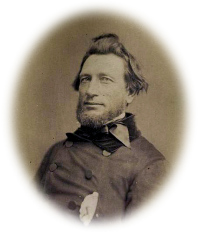
William Howard Russell’s Diary.
November 9, 2021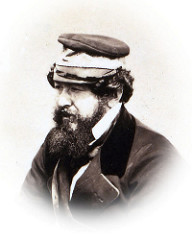
November 9th.–Colonel Wilmot, R. A., who has come down from Canada to see the army, spent the day with Captain Dahlgren at the Navy Yard, and returned with impressions favourable to the system. He agrees with Dahlgren, who is dead against breach-loading, but admits Armstrong has done the most that can be effected with the system. Colonel Wilmot avers the English press are responsible for the Armstrong guns. He has been much struck by the excellence of the great iron-works he has visited in the States, particularly that of Mr. Sellers, in Philadelphia.
Downing’s Civil War Diary.–Alexander G. Downing.
November 9, 2021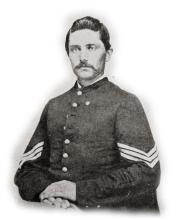
Saturday, 9th–We received our State pay today. I got $20.60 in paper money, thus losing only about twenty-five cents on the dollar. I served forty-five days under the State.
War Diary of Luman Harris Tenney.
November 8, 2021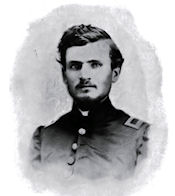
8th. At Charlie Abbey’s candy-pull in the evening.
Diary of Horatio Nelson Taft
November 8, 2021
FRIDAY 8
A warm pleasant morning. Went down to Genl McClellans Head qrs. Saw him and his Brilliant Staff with the two French Princes mount their horses and gallop off to a Review. Stoped into Mr Sewards office & got a letter to the Provost Marshall which secured me a “Pass” to Virginia. Went on board of the Alexandria Boat about one o’clock on a visit to the 27th NY Regt about three miles (on the Leesburgh road) from Alexandria. Arrived there about dark.
______
The three diary manuscript volumes, Washington during the Civil War: The Diary of Horatio Nelson Taft, 1861-1865, are available online at The Library of Congress.
Rebel War Clerk
November 8, 2021
NOVEMBER 8th.—There are many applications for passports to leave the country. I have declared my purpose to sign no more for the Secretary without his official order. But he is signing them himself, as I find out by the parties desiring the usual passports from me to leave the city. They, like guilty men, dislike to exhibit their permits to leave the country at the depots. And the Northern press bears testimony of the fact that the spies in our midst are still at work, and from this I apprehend the worst consequences. Why did Mr. Benjamin send the order for every man to be arrested who applied for permission to leave the country? Was it merely to deceive me, knowing that I had some influence with certain leading journals? I am told he says, “no one leaves the country now.”
“It is with deep regret that I notice the rapid increase of drunkenness in the army.”–Journal of Surgeon Alfred L. Castleman.
November 8, 2021
8th.–Night before last was made hideous by the yells and drunken orgies of officers, who, in obedience to the order that no work should be done on the Sabbath, omitted all duty, but to make amends, employed the day in getting beastly drunk, and the night in howling themselves sober. It is with deep regret that I notice the rapid increase of drunkenness in the army.
One day last week Colonel _____, of the ____ Regiment ______ Volunteers, appeared on drill, took Hardee’s tactics from his pocket, and read aloud, in commanding voice, his drill orders. I took a little stroll the day after, and came upon a squad of the 43d New York Regiment, armed with sticks and corn stalks, with a quasi Colonel, reading orders from an old almanac. To my question what they were at, they replied “only playing _____ _____.”
William Howard Russell’s Diary.
November 8, 2021
November 8th.– Colonel Emory made us laugh tins morning by an account of our Amphytrion of the night before, who came to him with a very red eye and curious expression of face to congratulate the regiment on the success of the ball. “The most beautiful thing of all was,'” said he, “Colonel, I did not see one gentleman or lady who had taken too much liquor; there was not a drunken man in the whole company.” I consulted my friends at the Legation with respect to our inebriated officer, on whose behalf Colonel Emory tendered his own apologies; but they were of opinion I had done all that was right and becoming in the matter, and that I must take no more notice of it.
Downing’s Civil War Diary.–Alexander G. Downing.
November 8, 2021
Friday, 8th–The Thirteenth Iowa received their uniforms and equipments today. Some of our boys are absent on sick leave, having caught severe colds on account of the changeable weather.
War Diary of Luman Harris Tenney.
November 7, 2021
7th. Went home with Nettie Chidgey and Lizzie Cobb. Went to hear the Minstrels–disgusted.
“I am… rather impatient as near four months inactivity has naturaly reduced my finances to a low ebb.”—Horatio Nelson Taft
November 7, 2021
THURSDAY 7
A fine pleasant day. I have not done much. Went to the office of the Sec’y of the Interior. Was told that I was certainly to be restored to office but must have patience. Well, patience is well enough, but it will not pay for provisions and fuel, and I am consequently rather impatient as near four months inactivity has naturaly reduced my finances to a low ebb. Oak wood from $10. to $11. pr cord, pine $9.00, coal $12.00 &c &c. No news of importance. A large Regt with a fine Band passed tonight. Just arrived P.A.104th.
______
The three diary manuscript volumes, Washington during the Civil War: The Diary of Horatio Nelson Taft, 1861-1865, are available online at The Library of Congress.
Rebel War Clerk
November 7, 2021
NOVEMBER 7th.—We hear of the resignation of Gen. Scott, as Commander-in-Chief of the U. S. forces.
Map of the battlefield near Belmont, Missouri
November 7, 2021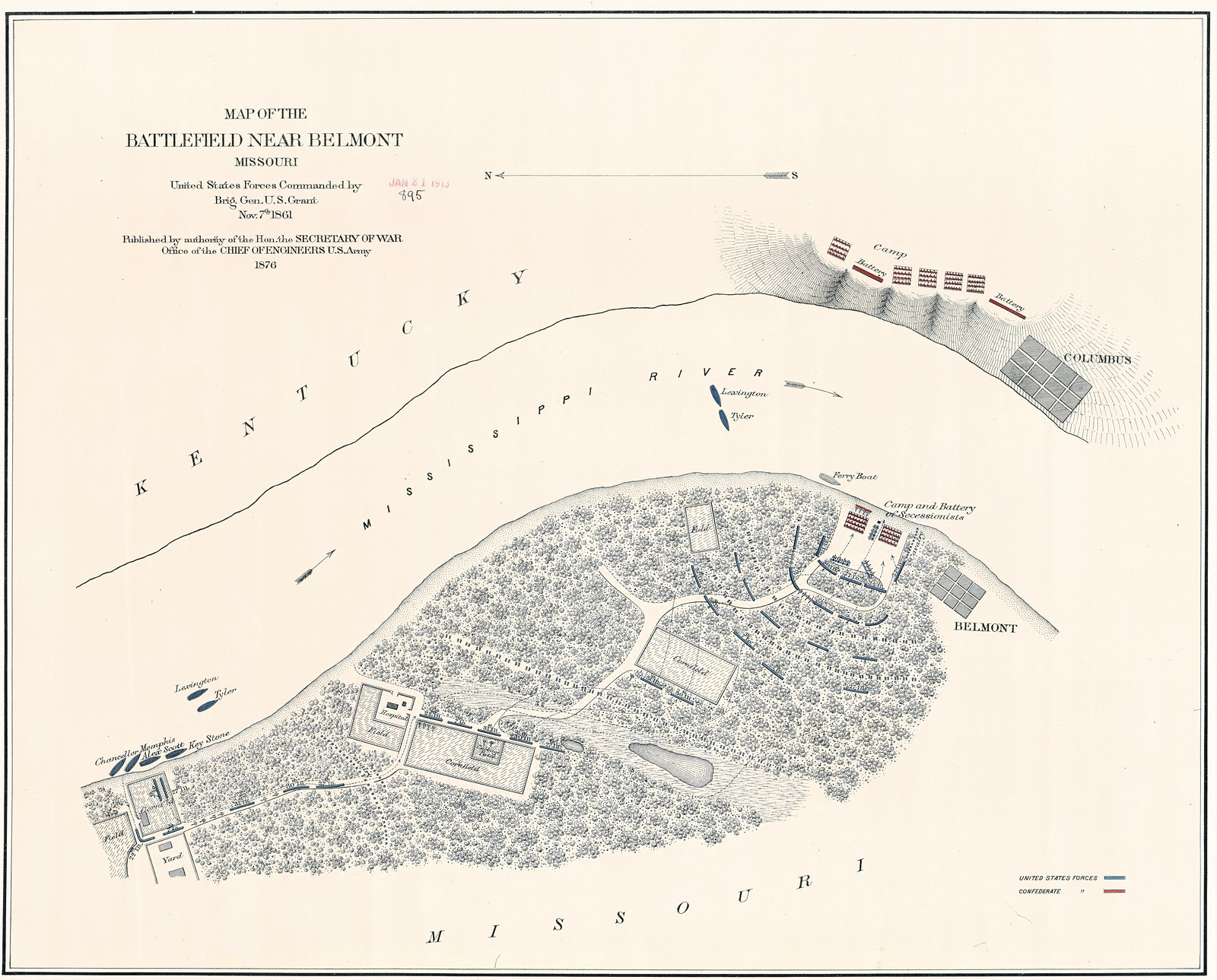 The Battle of Belmont was fought on November 7, 1861 in Mississippi County, Missouri. It was the first combat test in the American Civil War for Brig. Gen. Ulysses S. Grant, the future Union Army general in chief and eventual U.S. president, who was fighting Major General Leonidas Polk. Grant’s troops in this battle were the “nucleus” of what would become the Union Army of the Tennessee. (Read more at Wikipedia.)
Title: Map of the battlefield near Belmont, Missouri
Contributor Names: United States. Army. Corps of Engineers.
Created / Published [Washington]: Office of the Chief of Engineers U.S. Army, 1876.
Subject Headings
…..Belmont, Battle of, Belmont, Mo., 1861.–Maps
…..Columbus (Ky.)–History–Civil War, 1861-1865–Maps
…..United States–Kentucky–Columbus
…..United States–Missouri–Belmont
…..Belmont, Battle of, Belmont, Mo
Notes
…..Description derived from published bibliography.
…..Oriented with north to left.
…..Shows Confederate camp and batteries near Columbus, Kentucky, “Camp and battery of secessionists” near Belmont, Missouri, Union troop positions and movements during battle, location and names of Union gunboats, roads, vegetation, fences and relief shown by hachures.
…..This item is in the Map Collection of the Library of Virginia; please contact the Library’s Archives Research Services department for more information.
…..LC Civil war maps (2nd ed.) 297
…..Available also through the Library of Congress web site as raster image.
…..Jan, 1913, Libbie, b; June 2004, Map Cataloging Team.
…..Civil War project no.: lva00212.
…..Conservation: Etherington Conservation Center, May 2004.
….. Digital image available: 20 x 23 in.
…..Map accession no. 895 (Jan. 1913).
Medium: 1 map : col., mounted on paper ; 41 x 51 cm. on sheet 50 x 58 cm.
Repository: Library of Virginia Richmond, VA 23219-8000 USA vau For copies contact: Archives Research Services.
Digital Id: http://hdl.loc.gov/loc.ndlpcoop/glva01.lva00212
Fremont’s Hundred Days in Missouri.
November 7, 2021
Sedalia, November 7th. We are waiting for the train which is to take us to St. Louis. Our journey here has been made very quickly. Monday we marched twenty-five miles. Tuesday we started at dawn, and made thirty miles, encamping twenty-five miles south of the Osage. Wednesday we were in the saddle at six o’clock, crossed the Osage in the afternoon, and halted ten miles north of that river, the day’s journey being thirty-five miles. We pitched our tents upon a high, flat prairie, covered with long dry grass.
In the evening the Delawares signified, that, if the General would consent to it, they would perform a war-dance. Permission was easily obtained, and, after the Indian braves had finished their toilet, they approached in formal procession, arrayed in all the glory and terror of war-paint. A huge fire had been built. The inhabitants of our little camp quickly gathered, officers, soldiers of the Guard, and Sharp-shooters, negroes and teamsters. The Indians ranged themselves on one side of the fire, and the rest of us completed the circle. The dancing was done by some half-dozen young Indians, to the monotonous beating of two small drums and a guttural accompaniment which the dancers sang, the other Indians joining in the chorus. The performance was divided into parts, and the whole was intended to express the passions which war excites in the Indian nature, –the joy which they feel at the prospect of a fight, –their contempt for their enemies, –their frenzy at sight of the foe, –the conflict, –the operations of tomahawking and scalping their opponents, –and, finally, the triumph of victory. The performances occupied over two hours. Fall-Leaf presided with an air of becoming gravity, smoking an enormous stone pipe with a long reed stem.
After rendering thanks in proper form, Fall-Leaf was told, that, by way of return for their civility, and in special honor of the Delawares, the negroes would dance one of their national dances. Two agile darkies came forward, and went through with a regular break-down, to the evident entertainment of the red men. Afterwards an Irishman leaped into the ring, and began an Irish hornpipe. He was the best dancer of all, and his complicated steps and astonishing tours-de-force completely upset the gravity of the Indians, and they burst into loud laughter. It was midnight before the camp was composed to its last night’s sleep.
This morning we started an hour before day, and marched to this place, twenty miles, by noon.
Thus ended the expedition of General Fremont to Springfield.
In bringing these papers to a close, the writer cannot refrain from expressing his regret that circumstances have prevented him from making that exposition of affairs in the Western Department which the country has long expected. While he was in the field, General Fremont permitted the attacks of his enemies to pass unheeded, because he held them unworthy to be intruded upon more important occupations, and he would not be diverted from the great objects he was pursuing; since his recall, considerations [continue reading…]
Nearly ten weeks to progress four miles.–Journal of Surgeon Alfred L. Castleman.
November 7, 2021
7th.–On the third of September we stopped at Camp Advance, near Chain Bridge, on our way to Richmond. That was nearly ten weeks ago. We are now about four miles nearer to Richmond than we were then. Three weeks to a mile! When shall we close this war? Could we only move once a week, even though it were but a mile at a time, it would keep up an excitement, and contribute largely to the preservation of both health and subordination. There is much talk amongst the soldiers of going into winter quarters here, but I do not believe it. McClellan will hardly dare risk his popularity on such a stake. He must go forward.
Indian Summer.—Ball given by the 6th United States cavalry.—William Howard Russell’s Diary.
November 7, 2021
November 7th.–After such bad weather, the Indian summer, I’été de St. Martin, is coming gradually, lighting up the ruins of the autumn’s foliage still clinging to the trees, giving us pure, bright, warm days, and sunsets of extraordinary loveliness. Drove out to Bladensburgh with Captain Haworth, and discovered that my waggon was intended to go on to Richmond and never to turn back or round, for no roads in this part of the country are wide enough for the purpose. Dined at the Legation, and in the evening went to a grand ball, given by the 6th United States Cavalry in the Poor House near their camp, about two miles outside the city. The ball took place in a series of small white-washed rooms off long passages and corridors; many supper tables were spread; whisky, champagne, hot terrapin soup, and many luxuries graced the board; and although but two or three couple could dance in each room at a time, by judicious arrangement of the music several rooms were served at once. The Duke of Chartres, in the uniform of a United States Captain of Staff, was among the guests, and had to share the ordeal to which strangers were exposed by the hospitable entertainers, of drinking with them all. Some called him “Chatters “–others, “Captain Chatters;” but these were of the outside polloi, who cannot be kept out on such occasions, and who shake hands and are familiar with everybody.
The Duke took it all exceedingly well, and laughed with the loudest in the company. Altogether the ball was a great success–somewhat marred indeed in my own case by the bad taste of one of the officers of the regiment which had invited me, in adopting an offensive manner when about to be introduced to me by one of his brother officers. Colonel Emory, the officer in command .of the regiment, interfered, and, finding that Captain A was not sober, ordered him to retire. Another small contretemps was caused by the master of the Work House, who had been indulging at least as freely as the captain, and at last began to fancy that the paupers had broken loose and were dancing about after hours below stairs. In vain he was led away and incarcerated in one room after another; his intimate knowledge of the architectural difficulties of the building enabled him to set all precautions at defiance, and he might be seen at intervals flying along the passages towards the music, pursued by the officers, until he was finally secured in a dungeon without a window, and with a bolted and locked door between him and the ball-rooms.
“Our regiment with the new uniforms was quite a drawing card..,”–Alexander G. Downing.
November 7, 2021
Thursday, 7th–Received orders to fix up for review. We packed our knapsacks, filled our haversacks and canteens, and with our arms formed in line, all as if we were going on a long march. At 10 o’clock we marched down through the streets of Davenport and were reviewed by Adjutant General Baker. Then we marched back to camp. Our regiment with the new uniforms was quite a drawing card, for it seemed as if all of the townspeople were out to see us pass by.
War Diary of Luman Harris Tenney.
November 6, 2021
6th. Attended concert at Academy of Music by invitation from Nell. She sang well. Nettleton there.
Great Fleet; Fremont’s removal—Horatio Nelson Taft
November 6, 2021
WEDNESDAY, NOVEMBER 6, 1861.
A cool, cloudy, misty day. It is now pretty well known that the great fleet landed near Charleston S.C. Much anxiety is felt to hear direct from it. No new[s] today. J.C. Fremont is removed from the command of the Army in M.O. Genl Hunter takes his place. The 60th NY Regt arrived and passed up Mass Ave just before dark. It appeared in first rate condition. No news from Rosecrantz today. Capt Meeks of the Anderson Zouaves called last evening. He was well mounted and has command at the Chain Bridge. I was at the Pat office awhile. Julia has caught a severe cold.
______
The three diary manuscript volumes, Washington during the Civil War: The Diary of Horatio Nelson Taft, 1861-1865, are available online at The Library of Congress.
Rebel War Clerk
November 6, 2021
NOVEMBER 6th.—All accounts from the North indicate that great preparations are being made to crush us on the coast this winter. I see no corresponding preparations on our side.
“He will go, as there is no hope of his getting back to Alexandria during the war.”—Diary of a Southern Refugee, Judith White McGuire.
November 6, 2021
6th.—Mr. _____ gone to the prayer-meeting at Millwood, accompanied by Mr. _____; both will cast their votes for Mr. Davis to be President of these Confederate States for the next six years. We yesterday dined at “Mountain View,” with the Rev. Mr. Walker and family. He has been called to South Carolina to be professor in the Episcopal Theological Seminary of that State. He will go, as there is no hope of his getting back to Alexandria during the war. Nothing from the “Fleet.”
Unofficial mission to Europe.—Uneasy feeling with regard to France.—William Howard Russell’s Diary.
November 6, 2021
November 6th.–Instead of Mr. Everett and Mr. Johnson, Mr. Thurlow Weed and Bishop Hughes will pay a visit to Europe in the Federal interests. Notwithstanding the adulation of everything French, from the Emperor down to a Zouave’s gaiter, in the New York press there is an uneasy feeling respecting the intentions of France, founded on the notion that the Emperor is not very friendly to the Federalists, and would be little disposed to expose his subjects to privation and suffering from the scarcity of cotton and tobacco if, by intervention, he could avert such misfortunes. The inactivity of McClellan, which is not understood by the people, has created an under-current of unpopularity, to which his enemies are giving every possible strength, and some people are beginning to think the youthful Napoleon is only a Brummagem Bonaparte.
Downing’s Civil War Diary.–Alexander G. Downing.
November 6, 2021
Wednesday, 6th–Drill twice a day: company drill in the forenoon and regimental drill in the afternoon. Colonel Hare for the first time commanded the regiment on the drill ground.
War Diary of Luman Harris Tenney.
November 5, 2021
Nov. 5th. Rode to Uncle Jones’ with Roxena and Watson.
Diary of David L. Day.
November 5, 2021
Camp Hicks.
Nov. 5. Went into camp on Taylor’s farm, about a mile west of the city, and Col. Upton has christened it Camp Hicks, in honor of Gov. Hicks, the present loyal governor of Maryland. The 51st New York is encamped near by us, and that regiment, with the 21st Massachusetts, were the only troops here before us.