TUESDAY, NOVEMBER 12, 1861.
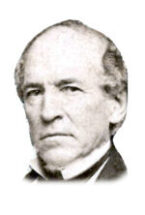
A delightful day. Went this morning with Lieut Gaul to the Pay Masters Office, and from there to the U.S. Treasury. From thence I went to the Pat office where I had an interview with the Comr. He requested me to call again on Thursday. The question is a place. He talked favorable. No more new[s] from the fleet. We do not know that Charleston has been attacked. The fire works last night were part of a Serenade to Genl McClellan by Genl Blenckers Brigade which was a splendid affair. Julias cough is very bad.
______
The three diary manuscript volumes, Washington during the Civil War: The Diary of Horatio Nelson Taft, 1861-1865, are available online at The Library of Congress.
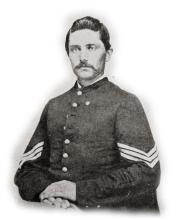
Tuesday, 12th–There is some talk of our having to stay here in camp all winter. Most of the men are getting rather restless and anxious to get to the seat of war. New companies for the Fourteenth Iowa are still arriving.
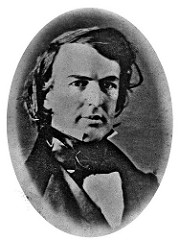
November 12th.—We have news of the enemy’s gun-boats penetrating the rivers of South Carolina. It is said they got some cotton. Why was it not burnt?
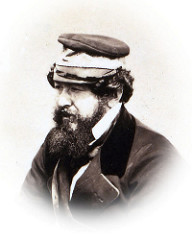
November 12th.–An irruption of dirty little boys in the streets shouting out, “Glorious Union victory! Charleston taken!” The story is that Burnside has landed and reduced the forts defending Port Royal. I met Mr. Fox, Assistant-Secretary to the Navy, and Mr. Hay, Secretary to Mr. Lincoln, in the Avenue. The former showed me Burnside’s despatches from Beaufort, announcing reduction of the Confederate batteries by the ships and the establishment of the Federals on the skirts of Port Royal. Dined at Lord Lyons’, where were Mr. Chase, Major Palmer, U.S.E., and his wife, Colonel and Mrs. Emory, Professor Henry and his daughter, Mr. Kennedy and his daughter, Colonel Wilmot and the Englishry of Washington. I had a long conversation with Mr. Chase, who is still sanguine that the war must speedily terminate. The success at Beaufort has made him radiant, and he told me that the Federal General Nelson (Since shot dead by the Federal General Jeff. C. Davis in a quarrel at Nashville.)–who is no other than the enormous blustering, boasting lieutenant in the navy whom I met at Washington on my first arrival–has gained an immense victory in Kentucky, killing and capturing a whole army and its generals.
A strong Government will be the end of the struggle, but before they come to it there must be a complete change of administration and internal economy. Indeed, the Secretary of the Treasury candidly admitted that the expenses of the war were enormous, and could not go on at the present rate very long. The men are paid too highly; every one is paid too much. The scale is adapted to a small army not very popular, in a country where labour is very well paid, and competition is necessary to obtain recruits at all. He has never disguised his belief the South might have been left to go at first, with a certainty of their return to the Union.
Nov. 11. We are now fairly settled in camp life. Several other regiments from Massachusetts and other states are now with us, and drills, inspections and reviews are the order of the day. One can scarcely get time to wash his face, and take, as Gen. Scott said, a hasty plate of soup, before the drum calls to some kind of duty.
MONDAY 11
A windy morning with a storm threatened. Tent rather airy but slept pretty well. Went round and bade my friends good bye and started for home with Lieut Gaul about one o’clock in a hack which took us to Alexandria where we took the Boat for Washington. Got home about 3 o’clock. The Lieut stops with us a short time. News rcd tonight of the taking of Charleston S.C. by our “Expedition” and fire works blazed for two hours. Julia has been quite sick and still coughs badly.
______
The three diary manuscript volumes, Washington during the Civil War: The Diary of Horatio Nelson Taft, 1861-1865, are available online at The Library of Congress.
Monday Night.—To-day M. P. and myself went to Winchester, and thence to the camp. We took Mr. P. N’s children to see their father. There we saw W. B., J. M. G., and many other young friends, and were much pleased at their cheerfulness. They look sunburnt and soldierly. I returned to Winchester to see my dear S. S. R. C. was sitting with her, looking well and happy. Camp-life agrees with him. These poor boys expect to be ordered to Romney; but wherever they go, they hope, by God’s help, to repel the invaders.
NOVEMBER 11th.—Bad news. The Unionists in East Tennessee have burnt several of the railroad bridges between this and Chattanooga. This is one of the effects of the discharge of spies captured in Western Virginia and East Tennessee. A military police, if properly directed, composed of honest men, true Southern men, might do much good, or prevent much evil; but I must not criticise Gen. Winder’s inefficiency, for he acts under the instructions of Mr. Benjamin.
The burning of these bridges not only prevents the arrival of an immense amount of clothing and provisions for the army, contributed by the patriotic people, but it will embarrass the government in the transmission of men and muniments of war, which an emergency may demand at any moment. Until the avenues by which the enemy derives information from our country are closed, I shall look for a series of disasters.
Cape Girardeau, November 11, 1861.
We have just arrived here after a week’s absence from any sign of civilized life. Saturday the 2d we (our company) went out six or seven miles from the Point to guard a bridge on the Cairo and Fulton Railroad. Sunday we came back to the Point, and found the tents of our regiment all struck and everything prepared for a march. By dark we were all safely stowed on the “Aleck Scott,” and also five companies of the11th Illinois. At 10 p.m. the boat shoved out, but had to tie to all night about 10 miles up the river on account of the fog. Monday at 10 a.m. we landed at Commerce between Cape Girardeau and Cairo and stayed there all night. Up to this time we had not the most distant idea of where we were going, but here we began to guess that we were after Jeff Thompson and company. Tuesday morning we started back into the country and camped for the night on Colonel Hunter’s farm, a distance of 18 miles. (I forgot to mention that the 18th and 22d Illinois with three companies, cavalry and two pieces artillery joined us before we started from Commerce, making a total of some 2,200 men.) This Colonel Hunter is in the Rebel Army When we stopped at his farm there was a large flock of sheep, at least 40 goats and pigs, turkey, geese, chickens and ducks without number. After we had been there a half hour I don’t believe there was a living thing on the farm that did not come with our train. I never saw a slaughterhouse on as large a scale before. The next day the boys made an awful uproar on the road, playing that the sheep, hogs, geese, etc., inside of them were calling for their comrades. Wednesday night we stopped at Little Water River and the slaughtering commenced immediately. All along the road up to this place every horse or mule that showed himself was gobbled instanter, a bridle cramped, and some footman made happy. It was hard to tell whether our force was infantry or cavalry that night. This was too much for the colonel, so next morning he drew the brigade up in column of company and gave us fits. He made the men turn every horse loose; told us that the next man that cramped anything without permission would be dealt with as severely as the regulations would allow. That suited me. I never have been disgusted with soldiering save in those two days, and I tell you that I did then feel like deserting. When we are marching through a country as thoroughly secesh as this is, I think that the men should be allowed fresh meat at the expense of the natives; but there is a proper and soldier-like way to get it. We can send our foraging party ahead and have all we want at camp when we halt, but to allow men to butcher everything they see is moblike. Wednesday night Jeff’s men tried [continue reading…]
Ebbitt House, Washington, Nov. 11
It is very late, but I scribble a line before going to bed to say we got over safely from camp, stopping on the way for Mr. Hopkins, who is going to Poolesville with us to-morrow. We got in at six o’clock and since then we have been in a blaze of glory, for there has been a splendid torchlight procession in honor of McClellan, with rockets and blue lights and all sorts of fine things. Of course we followed it with Chaplain Hopkins, bringing up at Mrs. Hodge’s in H street, next door to McClellan’s own house, where the procession halted and called out Seward and Lincoln and Cameron and McClellan himself, and there were several little speeches, the best of which was General Blenker’s, who said: “Citizens and soldiers, when I shtand on de battle field with your thousands volunteers I will fight de enemy better as I shpeak your noble language.” Then on tiptoe he patted McClellan on the back and I think kissed him! Seward’s speech was highly vague and promiscuous.
We came home at midnight, just now, with our patriotic noses smutty from the torches.
At 9 this morning we start for Poolesville and have the prospect of a fine day.
November 11th.–The United States have now, according to the returns, 600,000 infantry, 600 pieces of artillery, 61,000 cavalry in the field, and yet they are not only unable to crush the Confederates, but they cannot conquer the Secession ladies in their capital. The Southern people here trust in a break-down in the North before the screw can be turned to the utmost; and assert that the South does not want corn, wheat, leather, or food. Georgia makes cloth enough for all–the only deficiency will be in metal and materiel of war. When the North comes to discuss the question whether the war is to be against slavery or for the Union leaving slavery to take care of itself, they think a split will be inevitable. Then the pressure of taxes will force on a solution, for the State taxes already amount to 2 to 3 per cent., and the people will not bear the addition. The North has set out with the principle of paying for everything, the South with the principle of paying for nothing; but this will be reversed in time. All the diplomatists, with one exception, are of opinion the Union is broken for ever, and the independence of the South virtually established.
Monday, 11th–No news of importance. Our regiment is gradually adapting itself to the military harness; the hardest thing to get used to is wearing the leather collars about our necks.
10th. Sunday. Remained in camp. Chaplain preached a good sermon on morals. Read the Atlantic Monthly and Harper’s.
SUNDAY 10
A bright fine morning. Went out to the Sunday Inspection of the Regt. Saw all the officers afterwards. Visited the qrs of the men of the Lyons Co. The men were all extremely glad to see me at the Camp again. Chaplin Buck held services near his tent about 3 o’clock and a real Methodist meeting in the evening before his tent with a Bonfire in front made of brush. Walked over to the Fairfax Seminary with Lieut Swan. Went up on to the tower, had a most splendid view of the surrounding country, Potomac, Wn &c.
______
The three diary manuscript volumes, Washington during the Civil War: The Diary of Horatio Nelson Taft, 1861-1865, are available online at The Library of Congress.
Sunday, 10th–We had company inspection this morning at 9 o’clock and preaching at 10. At 5 o’clock in the afternoon we had dress parade and then in the evening we had preaching again.
10th.—Returning from church to-day, we were overtaken by W. B. C., on horseback. We were surprised and delighted. He soon explained his “position.” Jackson’s Brigade has been ordered to take charge of the Valley, and is coming to-day to Strasburg, and thence to Winchester. He rode across on R’s horse. He dined with us, and told us a great deal about the army, particularly about our own boys. We are greatly relieved to have that noble brigade in our midst; we have felt, for a long time, the want of protection.
NOVEMBER 10th.—A gentleman from Urbana, on the Rappahannock, informs me that he witnessed the shelling of that village a few days ago. There are so few houses that the enemy did not strike any of them. The only blood shed was that of an old hare, that had taken refuge in a hollow stump.
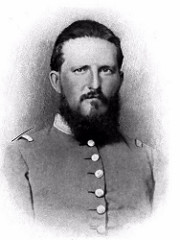
Winchester, November 10, 1861.
I owe you a letter to-night, and will pay the debt with a very short one. We got here about sunset from Strasburg, after a tiresome day’s march, and have been occupied up to this time, nine o ‘clock, in pitching our tents and getting some supper. The latter we were so fortunate as to get from a box which some kind friends sent to Col. Echols. What shall be our next destination I have no idea, but think it probable we shall winter somewhere in this quarter. I am tired and sleepy, Love, and I will bid you good-night. Kiss the children for me, and for yourself accept the best love a fond husband can offer.
November 10th.–Visiting Mr. Mure the other day, who was still an invalid at Washington, I met a gentleman named Maury, who had come to Washington to see after a portmanteau which had been taken from him on the Canadian frontier by the police. He was told to go to the State Department and claim his property, and on arriving there was arrested and confined with a number of prisoners, my horse-dealing friend, Sammy Wroe, among them. We walked down to inquire how he was; the soldier who was on duty gave a flourishing account of him–he had plenty of whisky and food, and, said the man, “I quite feel for Maury, because he does business in my State.” These State influences must be overcome, or no Union will ever hold together.
Sir James Ferguson and Mr. Bourke were rather shocked when Mr. Seward opened the letters from persons in the South to friends in Europe, of which they had taken charge, and cut some passages out with a scissors; but a Minister who combines the functions of Chief-of-Police with those of Secretary of State must do such things now and then.
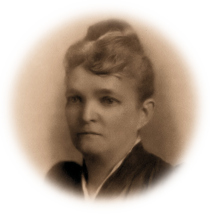
Nov. 10.—Surely this year will ever be memorable to me for its perfection of natural beauty. Never was sunshine such pure gold, or moonlight such transparent silver. The beautiful custom prevalent here of decking the graves with flowers on All Saint’s day was well fulfilled, so profuse and rich were the blossoms. On All-hallow Eve Mrs. S. and myself visited a large cemetery. The chrysanthemums lay like great masses of snow and flame and gold in every garden we passed, and were piled on every costly tomb and lowly grave. The battle of Manassas robed many of our women in mourning, and some of these, who had no graves to deck, were weeping silently as they walked through the scented avenues.
A few days ago Mrs. E. arrived here. She is a widow, of Natchez, a friend of Mrs. F.’s, and is traveling home with the dead body of her eldest son, killed at Manassas. She stopped two days waiting for a boat, and begged me to share her room and read her to sleep, saying she couldn’t be alone since he was killed; she feared her mind would give way. So I read all the comforting chapters to be found till she dropped into forgetfulness, but the recollection of those weeping mothers in the cemetery banished sleep for me.
Note: To protect Mrs. Miller’s job as a teacher in post-civil war New Orleans, her diary was published anonymously, edited by G. W. Cable, names were changed and initials were generally used instead of full names—and even the initials differed from the real person’s initials. (Read Dora Richards Miller’s biographical sketch.)
SATURDAY, NOVEMBER 9, 1861.
I was heartily welcomed by my officer friends of the Regt and took up my quarters with my old friend Lieut W. H. Swan. Found the “Boys” all in good condition and in fine spirits. Attended the Dress Parade this morning. Regts are quartered round in all directions. [Alek?] Scotts brass Band arrived for the “27th” last night and discoursed some fine music in the evening. It has rained all this afternoon but the tent is dry and the fare good.
______
The three diary manuscript volumes, Washington during the Civil War: The Diary of Horatio Nelson Taft, 1861-1865, are available online at The Library of Congress.
November 9.—Our hearts cheered by news from the fleet. A part of it stranded—one vessel on the coast of North Carolina, from which seventy prisoners have been taken; others on the coast of South Carolina. Unfortunately, a part is safe, and is attacking Tybee Island. The fortifications there are said to be strong and well manned.
NOVEMBER 9th.—Gen. Winder and all his police and Plug Ugly gang have their friends or agents, whom they continually desire to send to Maryland. And often there comes a request from Gen. Huger, at Norfolk, for passports to be granted certain parties to go out under flag of truce. I suppose he can send whom he pleases.
We have news of a bloody battle in the West, at Belmont. Gen. Pillow and Bishop Polk defeated the enemy, it is said, killing and wounding 1000. Our loss, some 500.
Port Royal, on the coast of South Carolina, has been taken by the enemy’s fleet. We had no casemated batteries. Here the Yankees will intrench themselves, and cannot be dislodged. They will take negroes and cotton, and menace both Savannah and Charleston.
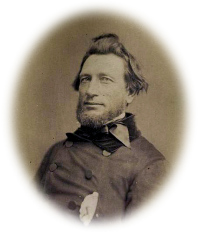
9th.–This morning, as I passed through the camp giving directions about cleaning and ventilating tents, whilst the regiment was on parade, my Colonel, seeing me so engaged, gave orders that no directions of mine need be obeyed till he sanctioned them. A very strange order; but as it releases me from responsibility for the health of the regiment, I shall henceforward leave the police regulations of the camp to him, and stay at the hospital. I think it will take but a short time to convince him of his mistake, and that he knows nothing of the sanitary wants of a camp.
November 9th.–Colonel Wilmot, R. A., who has come down from Canada to see the army, spent the day with Captain Dahlgren at the Navy Yard, and returned with impressions favourable to the system. He agrees with Dahlgren, who is dead against breach-loading, but admits Armstrong has done the most that can be effected with the system. Colonel Wilmot avers the English press are responsible for the Armstrong guns. He has been much struck by the excellence of the great iron-works he has visited in the States, particularly that of Mr. Sellers, in Philadelphia.