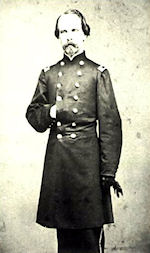
John Beauchamp Jones writes about corrupt “commercial men” profiting on the conflict.

Civil War Day-by-Day

NOVEMBER 16th.—It is sickening to behold the corruption of the commercial men, which so much wounds our afflicted country. There are large merchants here who come over from Baltimore breathing vengeance against the Northern “despots,” and to make a show of patriotism they subscribed liberally to equip some volunteer companies in the city; but now they are sending their agents North and importing large amounts of merchandise, which they sell to the government and the people at most fabulous prices. I am informed that some of them realize $50,000 per month profit! And this after paying officials on both sides bonuses to wink at their operations.

After the order of Mr. Benjamin for applicants for passports to leave the country to be arrested, some of these men applied to me, and I reported the facts to Gen. Winder; but they were not molested. Indeed, they came to me subsequently and exhibited passports they had obtained from the Secretary himself.

0 comments

News of Captain Wilkes and the Trent.—Messrs. Mason and Slidell.—William Howard Russell’s Diary.

My Diary North and South – William Howard Russell

November 16th.–A cold, raw day. As I was writing, a small friend of mine, who appears like a stormy petrel in moments of great storm, fluttered into my room, and having chirped out something about a “Jolly row”–”Seizure of Mason and Slidell”–”British flag insulted,” and the like, vanished. Somewhat later, going down 17th Street, I met the French Minister, M. Mercier, wrapped in his cloak, coming from the British Legation. “Vous avez entendu quelque chose de nouveau?” “Mais non, excellence.” And then, indeed, I learned there was no doubt about the fact that Captain Wilkes, of the U. S. steamer San Jacinto, had forcibly boarded the Trent, British mail steamer, off the Bahamas, and had taken Messrs. Mason, Slidell, Eustis, and McClernand from on board by armed force, in defiance of the protests of the captain and naval officer in charge of the mails. This was indeed grave intelligence, and the French Minister considered the act a flagrant outrage, which could not for a moment be justified.

I went to the Legation, and found the young diplomatists in the “Chancellerie” as demure and innocent as if nothing had happened, though perhaps they were a trifle more lively than usual. An hour later, and the whole affair was published in full in the evening papers. Extraordinary exultation prevailed in the hotels and bar-rooms. The State Department has made of course no communication respecting the matter.

All the English are satisfied that Mason and his friends must be put on board an English mail packet from the San Jacinto under a salute.

An officer of the United States navy–whose name I shall not mention here–came in to see the buccaneers, as the knot of English bachelors of Washington are termed, and talk over the matter. “Of course,” he said, “we shall apologise and give up poor Wilkes to vengeance by dismissing him, but under no circumstances shall we ever give up Mason and Slidell. No, sir; not a man dare propose such a humiliation to our flag.” He says that Wilkes acted on his own responsibilty, and that the San Jacinto was coming home from the African station when she encountered the Trent. Wilkes knew the rebel emissaries were on board, and thought he would cut a dash and get up a little sensation, being a bold and daring sort of a fellow with a quarrelsome disposition and a great love of notoriety, but an excellent officer.

0 comments

War Diary of Luman Harris Tenney.

War Diary of Luman Harris Tenney.

15th. A cold rainy day. Some snow towards night. Spent the evening at the tent. Played checkers and read. Boys played euchre.

0 comments

Diary of Horatio Nelson Taft

Diary of US patent clerk Horatio Nelson Taft.

FRIDAY, NOVEMBER 15, 1861.

A wet misty day and very chilly. Went down to Genl McClellans Head Qrs for Lieut Gaul in reference to his furlough. Went from there to the Post office and then home. Holms & [Vanamburgh?], privates of the 27th, called with letters from Lieut Swan. Elder Buck called with the furlough of Lieut Gaul, who started for Home on the 5 o’clock train. Aleck [Tower?] and Ed Dickerson called in the evening and spent an hour or two. They are Sutlers for the 35th Regt stationed in V.A.

______

The three diary manuscript volumes, Washington during the Civil War: The Diary of Horatio Nelson Taft, 1861-1865, are available online at The Library of   Congress.

0 comments

Orders to the South.–Alexander G. Downing.

Diary of Alexander G. Downing; Company E, Eleventh Iowa Infantry

Friday, 15th–We received orders to leave for the South and everybody is happy in the thought that we are going to leave. A great many got passes to go down town to purchase supplies, such as letter paper, stamps and the like. We had our last drill on the old camp ground yesterday and got ready today to move.

0 comments

Rebel War Clerk

Civil War Day-by-Day

NOVEMBER 15th.—We have intelligence that Missouri has joined the Confederacy. She will be scourged by the vengeful enemy; but will rise some day and put her foot on the neck of the oppressor. Missouri is a giant.

0 comments

“We have been anxiously awaiting the result of an anticipated fight between Price and Fremont…”—Diary of a Southern Refugee, Judith White McGuire.

Diary of a Southern Refugee During the War by Judith White McGuire

15th.—This was fast-day—a national fast proclaimed by our President. I trust that every church in the Confederacy was well filled with heart-worshippers. The Rev. Mr. Jones preached for us at Millwood. This whole household was there—indeed, the whole neighbourhood turned out.

We have been anxiously awaiting the result of an anticipated fight between Price and Fremont; but Fremont was superseded while almost in the act of making the attack. We await further developments.

0 comments

“Pause and reflect upon the tenor and consequences of their acts…”—Woolsey family; From the journal of Eliza Woolsey Howland.

Woolsey family letters during the War for the Union
The battle of Ball’s Bluff near Poolesville had taken place while we were on “leave of absence” at home, and on our return to Washington, Major Potter, U. S. paymaster, and his wife, starting on an expedition to pay the troops up the Potomac, invited Chaplain Hopkins and ourselves to join the party, which we did with great delight, though it involved a three days’ journey in our own carriage–a formidable thing at that time. It gave us an opportunity of visiting the scene of the desperate fight at the Bluff and the encampments at Poolesville and Darnestown and of taking supplies to these distant hospitals.
 
From Eliza’s journal.

. . . “The officers told us the whole story of the battle and described terrible scenes to us of cold, suffering and death by drowning which we hope to forget…

While standing on the dreadful bank where our poor wounded were dragged up (and from which we plainly saw the rebel pickets across the river gathering in a little group), we understood fully and bitterly the wicked incompetency of whoever is responsible for this blunder…

Bright and early next morning we left for Darnestown on the return drive. There Captain Best, of Battery F, 4th Regular Artillery, was our host, and a most kind and attentive one, he and the other officers turning out of their tents for us and treating us like queens. Frank Crosby turned up there as Senior 1st Lieutenant, a position, Captain Best told us quietly, he worked fourteen years for in the regular service. Our tent was the salon and round our little fire that evening gathered Captain Best, General Hamilton of Wisconsin, Major Crane, Lieutenant Hazzard of Battery A, R. I. Artillery, Colonel Stiles of the 9th N. Y., Captain Perkins, Lieutenants Muhlenberg and Crosby, Dr. Wier of the Battery and others. They all came laden with refreshments from the sutler’s, and all seemed to enjoy the fun. . . Next day we called at Fort Muggins, lunched with the General, dined with Lieutenant Hazzard of Battery A, and left for Washington. We were stopped on the way for lack of countersign and marched to Tenallytown between files of soldiers! but managed to establish our innocence, and finally reached the Ebbitt house at 8 P. M.

At Darnestown we received the first official confirmation of the success of the great expedition and the capture of Port Royal. Captain Rodgers of the navy was selected by the Commodore as the first man to go on shore and run up the Stars and Stripes; and Dr. Bacon, who was one of the party, was sent inland with General T. W. Sherman’s proclamation, issued on his own responsibility, to the citizens of South Carolina, exhorting them to “pause and reflect upon the tenor and consequences of their acts,” etc. So deserted was the whole neighborhood of all but slaves that they had to go twelve miles to find a white man to hand the proclamation to, and he took it with oaths and under protest.”

0 comments

William Howard Russell’s Diary.

My Diary North and South – William Howard Russell

November 15th.–Horse-dealers are the same all the world over. To-day comes one with a beast for which he asked £50. “There was a Government agent looking after this horse for one of them French princes, I believe, just as I was talking to the Kentuck chap that had him. ‘John,’ says he, ‘that’s the best-looking horse I’ve seen in Washington this many a day.’ ‘Yes,’ says I,and you need not look at him any more.’ ‘Why?’ says he. ‘Because,’ says I, ‘it’s one that I want for Lord John Russell, of the London Times,’ says I, ‘and if ever there was a man suited for a horse, or a horse that was suited for a man, they’re the pair, and I’ll give every cent I can raise to buy my friend, Lord Russell, that horse.’” I could not do less than purchase, at a small reduction, a very good animal thus recommended.

0 comments

War Diary of Luman Harris Tenney.

War Diary of Luman Harris Tenney.

14th. Returned from Uncle’s. Letter from Fannie. Mrs. Helen Cobb, her mother-in-law and sister, Cousin Byron Harris and Miss Chidgey were in camp. Good visit.

0 comments

“News is generaly favorable to our Army.”—Horatio Nelson Taft

Diary of US patent clerk Horatio Nelson Taft.

THURSDAY 14

A cloudy day with rain tonight. Lieut Gaul is still with us waiting for his furlough. I was at the Pat office and saw the Comr, got not much satisfaction from him. Shall now look to the Sec’y for fulfilment of his promise. Have been at home most of the day. Julia is getting better slowly. All the rest of us are well. Letter from Mrs Brownson and the News is generaly favorable to our Army. Capt White called this evening on his way to Lyons recruiting.

______

The three diary manuscript volumes, Washington during the Civil War: The Diary of Horatio Nelson Taft, 1861-1865, are available online at The Library of   Congress.

0 comments

Downing’s Civil War Diary.–Alexander G. Downing.

Diary of Alexander G. Downing; Company E, Eleventh Iowa Infantry

Thursday, 14th–Our regular drills twice a day, company and regimental. No news.

0 comments

Rebel War Clerk

Civil War Day-by-Day

NOVEMBER 14th.—The enemy, knowing our destitution of gun-boats, and well apprised of the paucity of our garrisons, are sending expeditions southward to devastate the coast. They say New Orleans will be taken before spring, and communication be opened with Cairo, at the mouth of the Ohio. They will not succeed so soon; but success is certain ultimately, if Mr. Benjamin, Gen. Winder, and Gen. Huger do not cease to pass Federal spies out of the country.

0 comments

The results are good, as far as they go.—Woolsey family letters; Abby Howland Woolsey to G. & E.

Woolsey family letters during the War for the Union

8 Brevoort Pl., Thursday.

The details of the landing of the fleet at Port Royal fill all minds and mouths. I hope Georgy will have, from “our own correspondent” with the expedition, a full account of the landing of the 7th Connecticut, which seems to have been the first on shore. The sight of those vessels rounding to and sailing past, with sails spread, and the bands playing, and the men crying, instead of cheering, for joy! must all have been wonderful. The poor blacks coming down to the shore, with their little bundles in their hands, is the most touching of all. Every one asks me what I think now of the state of the country, and I say–the results of the expedition are good, as far as they go. We must have something more than a Hatteras fizzle this time.

Flags are shown from all the private houses today. Our’s is out again, and I dare say Broadway will be quite a sight.

0 comments

Dinner at Mr. Seward’s.—Lincoln’s West-country stories.—William Howard Russell’s Diary.

My Diary North and South – William Howard Russell

November 14th.–Rode to cavalry camp, and sat in front of Colonel Emory’s tent with General Stoneman, who is chief of the cavalry, and Captain Pleasanton; heard interesting anecdotes of the wild life on the frontiers, and of bushranging in California, of lassoing bulls and wild horses and buffaloes, and encounters with grizly bears–interrupted by a one-armed man, who came to the Colonel for “leave to take away George.” He spoke of his brother who had died in camp, and for whose body he had come, metallic coffin and all, to carry it back to his parents in Pennsylvania. I dined with Mr. Seward–Mr. Raymond, of New York, and two or three gentlemen, being the only guests. Mr. Lincoln came in whilst we were playing a rubber, and told some excellent West-country stories. “Here, Mr. President, we have got the two Times–of New York and of London–if they would only do what is right and what we want, all will go well.” “Yes,” said Mr. Lincoln, “if the bad Times would go where we want them, good Times would be sure to follow.” Talking over Bull’s Run, Mr. Seward remarked “that civilians sometimes displayed more courage than soldiers, but perhaps the courage was unprofessional. When we were cut off from Baltimore, and the United States troops at Annapolis were separated by a country swarming with malcontents, not a soldier could be found to undertake the journey and communicate with them. At last a civilian”–(I think he mentioned the name of Mr. Cassius Clay)–”volunteered, and executed the business. So, after Bull’s Run, there was only one officer, General Sherman, who was doing anything to get the troops into order when the President and myself drove over to see what we could do on that terrible Tuesday evening.” Mr. Teakle Wallis and others, after the Baltimore business, told him the people would carry his head on their pikes; and so he went to Auburn to see how matters stood, and a few words from his old friends there made him feel his head was quite right on his shoulders.

0 comments

A few days leave ordered “on account of my fatigue and prostration.–Journal of Surgeon Alfred L. Castleman.

Journal of Surgeon Alfred L Castleman.

14th.–This morning our Brigade Surgeon ordered me to leave the hospital for a few days, on account of my fatigue and prostration. He said that a regard for my health demanded it, and I must go where I pleased. I rode to Arlington, the headquarters of General King. The Arlington house, I believe, is (unless confiscated) the property of Gen. Lee. It is a magnificent mansion, overlooking Georgetown, Washington, Alexandria, and miles of the beautiful Potomac. In a room of this house, said to have been a favorite room of General Washington, I found my old friend Surgeon _____, badly broken by the fatigue and excitement of the campaign. I called on him, in company with Doctor A_____, and after talking of his illness for half an hour, Doctor A. proposed to him to have my advice, to which he replied “Yes! if he will not medicate me too much.” I said, “Doctor, I will prescribe for you, and with a single dose will medicate every fibre of your body, and by a healthy shock, restore you to health at once.” With a look as if he thought me a hyena, he asked: “What do you mean to do with me?” “To take you out of this place and put you for thirty days under the care of your wife and family.” The poor suffering man grasped my hand, burst into tears and sobbed aloud, “My Colonel won’t consent to it.” For a moment, forgetting his religion, and not having the fear of military commanders before my eyes, “Your Colonel may go to the d-vil, and you shall have a furlough.” I rode immediately to medical headquarters in Washington, procured him the promise of a furlough as soon as his papers could be sent in, returned, informed him of it, and had the pleasure on my long night ride back to camp, of feeling that I had contributed something to the happines, and, perhaps, had saved the life of a good and worthy man. How easy for any man, however humble his position, to find opportunities of doing good, if he will only wear the “spectacles, of benevolence.”

After the vandalism I have witnessed in the destruction of property, in and about the houses of rebels and elsewhere, it was a pleasurable relief to find here, that General King, in the goodness of his always good heart, had enforced respect for the property and furniture. The garden, with its fences, is preserved, and the walls of almost every room in this immense old building, are covered with the rich paintings and old family pictures, left hanging when this favorite of rebeldom left his home. The garden is fine, but I think does not compare with that of Kalorama. The antique bureaus and side-boards calling up impressions of generations long passed away, are still tenants of the building; and the halls recall Scott’s fine description of the Halls of the Douglass, where the arms of the hunters, and the trophies of the hunt, mingled with the trappings of the warrior, constituted the attractive features of the chieftain’s forest home. Over the halls, and at every angle in the stairs, were the antlers of the elk and the red-deer fastened to the walls and nearly interlocking their branches over my head as I walked through. They were hung, too, with the arms of the hunter and the warrior. So perfectly does this position command Washington, that had the rebels there secretly collected a dozen mortars, they might have fired the city before a gun could have been brought to bear on them. Everybody is talking of a prospect of a move within three days, but the origin of the reports I know not; perhaps in the impatience of the army to be led forward.

0 comments

War Diary of Luman Harris Tenney.

War Diary of Luman Harris Tenney.

13th. By permission of the Colonel went to Uncle Jones’, took my fatigue coat. Supper at Uncle Albert’s–a pleasant visit.

0 comments

“An immense Union force now on the other side of the Potomac.”—Horatio Nelson Taft

Diary of US patent clerk Horatio Nelson Taft.

WEDNESDAY 13

Another warm pleasant day. Went down to the War Dept with Lieut Gaul to see the Ajutant Genl, came back by the Post office. Have been at home the rest of the day, have exacted lessons from the boys in their school books. Positive news from the Fleet obtained at last, everywhere successful. An immense Union force now on the other side of the Potomac. The Camps extend back 8 or 10 miles from the River. Julia is rather better.

______

The three diary manuscript volumes, Washington during the Civil War: The Diary of Horatio Nelson Taft, 1861-1865, are available online at The Library of   Congress.

0 comments

Downing’s Civil War Diary.–Alexander G. Downing.

Diary of Alexander G. Downing; Company E, Eleventh Iowa Infantry

Wednesday, 13th–The weather is getting cold, which makes it rather disagreeable eating our meals at the long tables outside the barracks; besides, the coffee and victuals cool off so quickly.

0 comments

“The retreat was a route, for our men were scattered everywhere.”–Army Life of an Illinois Soldier, Charles Wright Wills.

Civil War Day-by-Day

Bird’s Point, November 13, 1861.

Home once more. We all call this home now. Just as we landed last night the Iowa 7th was forming for dress parade. One company had but 11 and another but 15 men; all that came out of the Belmont fight safely. Other companies had half and some three-fourths of their men they started with. General Grant tries to make out that there were about 150 or 175 men lost on our side, but I’ll stake my life that we lost not less than 500. I am sure that the 22d Illinois lost not less than 175, the 7th Iowa at least 200, and the other three regiments 150 more. Grant says that he achieved a victory and accomplished the object of his expedition. It may be so (the latter part of it) but almost every one here doubts the story. He says his object was to threaten Columbus, to keep them from sending reinforcements to Price. Well he has threatened them, had a fight, and why they can’t send reinforcements now as well as before, is more than I know. I never will believe that it was necessary to sacrifice two as good regiments as there were in the West, to accomplish all that I can see has been done this time. Altogether there were some 6,000 men from here, Cape Girardeau and Ironton, on the expedition that our regiment was on marching by different roads. Grant says now that we were all after Jeff Thompson. I don’t believe it. I think the Paducah forces were [continue reading…]

0 comments

Rebel War Clerk

Civil War Day-by-Day

NOVEMBER 13th.—Dry goods have risen more than a hundred per cent since spring, and rents and boarding are advancing in the same ratio.

0 comments

The first regiment ashore in South Carolina.–Woolsey family letters; Francis Bacon to Georgeanna Woolsey.

Woolsey family letters during the War for the Union

Tybee Island.

The 7th was the first regiment ashore in South Carolina. It made the first reconnoissance in force; a detachment of five companies occupied Braddock’s Point and its batteries, and was the first to reconnoitre Daufuskie and neighboring islands. The greater part of the regiment now holds this position, with a fragmentary German one. If you have ever wondered how I could be accessory to Sherman’s proclamation in any way, let me suggest in the faintest possible whisper that I improved the occasion to issue on my own account a considerable number of small proclamations “to the loyal people of South Carolina of various shades of black and yellow scattered over the country from Beaufort to Port Royal Ferry.”

0 comments

“”It was, indeed, a magnificent sight, to see six hundred horses harnessed to a hundred wagons, in full run, in line..,”–Journal of Surgeon Alfred L. Castleman.

Journal of Surgeon Alfred L Castleman.

13th.–The Regiment received two months’ pay to-day, and to-night are all busy as bees making up express packages, to be sent to fathers, mothers, sisters, sweethearts and wives. To-morrow, all who can get passes to go, will be in Washington buying presents and sitting before a camera to “stain the glass” with reflections from their faces, all to be sent to friends at home. As man, in the mass, can be, in no condition, however bright, which will exempt him from cares, fears and apprehensions, so there is none so dark as to exclude hopes and anticipations of better things. Even here we have our joys and our aspirations, and these are of them. We preach that man should study to be contented. What! man in his imperfect condition, contented, that he, as an individual, or as a part of a great whole, should remain forever, as he is! It is opposed to all God’s plans. Discontent is the only stairway to progress. Through the discontent of Israel, Egyptian bondage was broken. The discontent of Russia brought war, which more than compensated for its ravages and its horrors, by the introduction of her people to a knowledge of liberal ideas. Czarism was shaken, and already the Goddess of Liberty waves her cap over the downfall of serfdom. The seceder’s discontent in England was the Genesis of a mighty nation. Elijah cast off the cloak, too small for his growing aspirations, whilst his followers eagerly grasped its folds to aid their progression. The discontent of an Almighty God substituted Noah for Adam– Christ for Diana–Eternity for Time. And is the discontent which occasioned this great war, with all its horrors, its butcheries, its temporary demoralization, to have no great result? Is it a bare interlude of the parties engaged, taking advantage of the time when “God sleepeth;” or is it a spark emitted from the great restless spirit of Jehovah, destined to ignite into a “pillar of fire,” and to light us on in the journey of universal progress?

Hope springs eternal–”

I have to-day seen a “speck of war,” with another touch of Vandalism. I have, for the first time, seen an army in drill. Fifteen to twenty thousand men, a thousand horses, and one hundred artillery wagons, on parade. To me, who had never seen anything of the kind, it was grand, and looked like war. I note here an extract of a letter written to a friend to-day, attempting a description of part of it: “It was, indeed, a magnificent sight, to see six hundred horses harnessed to a hundred wagons, in full run, in line, like a regiment of infantry, and at a word of command, to become so instantly and inconcievably mixed that you would think a universal smash inevitable, appear in another instant dashing across the vast plain without a wagon attached. Turn your eyes to see the wrecks, and you will be surprised to see the carriages in four straight lines, forming a hollow square, with the mouth of every gun pointing outwardly, and a laughing expression of “Surround me if you dare!” Another look will show you that the carriages are so close together that the horses can not pass between them, yet the wagon poles to which the horses had been hitched are all inside of the square. How did the six hundred horses get out? The cannon at once open their hundred mouths and are enveloped in smoke. The horses return, disappear for a moment in the dense smoke, and seemingly without their stopping long enough to be hitched to, the four lines straighten out into column, and the cavalcade is again dashing across the plain. In less than forty rods, the jumble is repeated, the square formed, the horses gone, and the hundred cannons again open. When did they reload?” The vandalism: The finest orchard I have seen in Virginia, was cut down today, and in one hour converted into a brush-heap; and for no other purpose than to give the infantry a chance to “show off” in an hour’s parade. The fruit trees were in the way, and were cut down! It will take forty years to replace that orchard.
0 comments

Arrests.—William Howard Russell’s Diary.

My Diary North and South – William Howard Russell

November 13th.–Mr. Charles Green, who was my host at Savannah, and Mr. Low, of the same city, have been arrested and sent to Fort Warren. Dining with Mr. Seward, I heard accidentally that Mrs. Low had also been arrested, but was now liberated. The sentiment of dislike towards England is increasing, because English subjects have assisted the South by smuggling and running the blockade. “It is strange,” said Mr. Seward the other day, “that this great free and civilized Union should be supported by Germans, coming here semi-civilized or half-savage, who plunder and destroy as if they were living in the days of Agricola, whilst the English are the great smugglers who support our enemies in their rebellion.” I reminded him that the United States flag had covered the smugglers who carried guns and matériel of war to Russia, although they were at peace with France and England. “Yes, but then,” said he, “that was a legitimate contest between great established powers, and I admit, though I lament the fact, that the public sympathy in this country ran with Russia during that war.” The British public have a right to their sympathies too, and the Government can scarcely help it if private individuals aid the South on their own responsibility. In future, British subjects will be indicted instead of being sent to Fort La Fayette. Mr. Seward feels keenly the attacks in the New York Tribune on him for arbitrary arrests, and representations have been made to Mr. Greeley privately on the subject; nor is he indifferent to similar English criticisms.

General McDowell asserts there is no nation in the world whose censure or praise the people of the United States care about except England, and with respect to her there is a morbid sensitiveness which can neither be explained nor justified.

It is admitted, indeed, by Americans whose opinions are valuable, that the popular feeling was in favour of Russia during the Crimean war. Mr. Raymond attributes the circumstance to the influence of the large Irish element; but I am inclined to believe it is partly due at least to the feeling of rivalry and dislike to Great Britain, in which the mass of the American people are trained by their early education, and also in some measure to the notion that Russia was unequally matched in the contest.

0 comments

“We do not know that Charleston has been attacked. The fire works last night were part of a Serenade to Genl McClellan…”—Horatio Nelson Taft

Diary of US patent clerk Horatio Nelson Taft.

TUESDAY, NOVEMBER 12, 1861.

A delightful day. Went this morning with Lieut Gaul to the Pay Masters Office, and from there to the U.S. Treasury. From thence I went to the Pat office where I had an interview with the Comr. He requested me to call again on Thursday. The question is a place. He talked favorable. No more new[s] from the fleet. We do not know that Charleston has been attacked. The fire works last night were part of a Serenade to Genl McClellan by Genl Blenckers Brigade which was a splendid affair. Julias cough is very bad.

______

The three diary manuscript volumes, Washington during the Civil War: The Diary of Horatio Nelson Taft, 1861-1865, are available online at The Library of   Congress.

0 comments