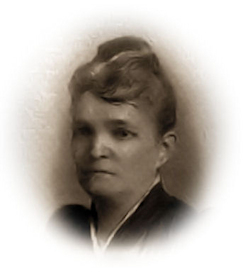
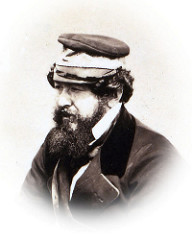
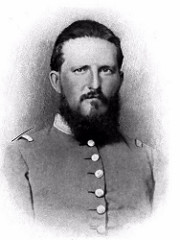
Down to Alexandria…, saw transports departing.

Woolsey family letters during the War for the Union
Eliza’s Journal.

March 21.

A damp, drizzly day, but I wanted to see Joe in camp once more, and we went down to Alexandria, where Mother and Hatty distributed a lot of sweet flowers to the poor fingerless, one-armed and broken-legged fellows in the hospital, while I went on.

Joe has only had command of the regiment these few days and I found him extremely busy reorganizing and getting it into condition for the advance. Each man has been thoroughly inspected and all deficiencies in clothing, etc., are being filled. He keeps the officers busy, has an informal class of instruction for some of them, and has been issuing orders for arrangements on the transports, precautions against fire, etc. I only stayed a very little while. On our return boat from Alexandria we had a chance to see eleven of the transports start down the river crowded with troops, the men cheering and tossing their hats. It was a fine and striking sight as the boats, densely packed with volunteers, moved out from the docks, the sun lighting up the sails and colors of the schooners and steamboats, the signal flags nodding and bobbing, and the bands playing lively tunes, while the crowds on shore cheered in response.

We met the Berdan sharpshooters marching down to embark, and shook hands with Will Winthrop and Capt. Hastings. As we drove into town, McClellan (looking old and careworn) and Franklin passed us, going out to the army.

0 comments

“The Rebel battery across the river has been trying to shell us this morning.”–Army Life of an Illinois Soldier, Charles Wright Wills.

Civil War Day-by-Day

Twentieth.—To-day ’tis cloudy and we have fire in the tent and I wear my cloak besides. There are no news of any kind to-day. We are on a little piece of dry land here (some of the earthquake’s “get up” I suppose) entirely surrounded by swamps of the vilest kind, cane and cypress. We have dug wells all through camp. Find plenty of water at five feet. The Rebel battery across the river has been trying to shell us this morning. They sent some shell plenty far enough but they lit off to the right of our camp. General Plummer rides down along the river bank with his staff every day and the Rebels do their best to send him up. The colonel has just started out with him to give the Rebels another chance. There is considerable cane here and it looks as though the country might grow alligators to almost any extent. ‘Tis a grand country for a sporting man. The very paradise of geese and their kindred.

0 comments

Diary of Horatio Nelson Taft.

Diary of US patent clerk Horatio Nelson Taft.

Thursday March 20th 1862

Wet drizzling day, as uncomfortable as need be. No news yet from Comodore Foot. I fear he has met with a repulse. Doct David & his Brother James were down and dined with us today. James is not attached to the Regt but is going down with it. It is expected to go tomorrow, but uncertain. Prof Sparks was here this evening hearing Julia recite her Spanish. He brought he[r] up a Spanish Dictionary & other books in the Spanish language. She seems to be making some progress. I have not been out of the house tonight, looked at the boys writing Books &c, & read the papers.

______

The three diary manuscript volumes, Washington during the Civil War: The Diary of Horatio Nelson Taft, 1861-1865, are available online at The Library of Congress.

0 comments

Rebel War Clerk

Civil War Day-by-Day
A likeness of Jones when he was editor and majority owner of the Daily Madisonian during President John Tyler’s administration.

MARCH 20th.—There is skirmishing every day on the Peninsula. We have not exceeding 60,000 men there, while the enemy have 158,000. It is fearful odds. And they have a fleet of gun-boats.

0 comments

Downing’s Civil War Diary.–Alexander G. Downing.

Diary of Alexander G. Downing; Company E, Eleventh Iowa Infantry

Thursday, 20th–It is cloudy, chilly and very disagreeable weather. A great many of the boys are getting sick with the chills and fever, and the doctors are no account. We have no drill nor dress parade; we seem to be just stopping here in the mud. Troops are passing here every day going up the river. The boys are getting anxious for a fight.

0 comments

War Diary of Luman Harris Tenney.

War Diary of Luman Harris Tenney.

20th. Found the books in use, so busied myself in writing to Fannie Henderson.

0 comments

Newbern.–Diary of David L. Day.

David L Day – My diary of rambles with the 25th Mass

Newbern.

March 20. Newbern, situated at the north confluence of the Trent and Neuse rivers, was, I think, first settled by colonists from Berne, in Switzerland, and in honor of the old town was named New Berne, but for short, is now pronounced as written. The chivalry, in their hasty flight, thought to make a Moscow of it, and fired it in several places, destroying the long and expensive railroad bridge across the Trent river, all the turpentine distilleries (save one) of which there was quite a number, and three squares of the town, in one of which was the large Planter’s hotel. The city has a fine water front on the south and east sides, furnishing ample wharfage for shipping and warehouses. It contains a population of about 8000. The streets cross at right angles, thus forming squares which are compactly built over. The area of the city is much less than many northern towns of 2000 inhabitants, but land is scarce here and it doesn’t do to waste it for building purposes. There are, however, several fine residences with ample surroundings. There are four churches, several halls, one academy, one hotel, court house, jail, post office, printing office, and many large wholesale stores and warehouses. There is a small cotton mill, manufacturing cotton yarn, a lumber mill, one turpentine distillery, tannery, gas works, and a large machine shop and foundry connected with the railroad depot, at the north side of the city. There are two banks here, but at present they do not seem to be doing a regular banking business. Capt. Dan, the provost marshal, occupies the Merchant’s, while the master of transportation occupies the bank of North Carolina. Whether the latter bank discounts or not, I am unable to say, but I know that Capt. Dan does, when there is anything in the bottle. The streets are wide and level, set on either side with handsome shade trees. Altogether it is rather a pretty city. This has been a town of some commercial importance, having had a large inland and coastwise trade, exporting shingles, staves and other lumber to the West Indies, cotton and naval stores to northern ports, and bringing return cargoes of such goods as the market here demanded.

0 comments

A Diary From Dixie

Civil War Day-by-Day

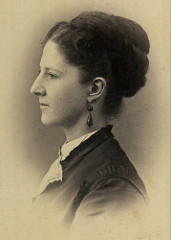
March 20th.–The Merrimac is now called the Virginia. I think these changes of names so confusing and so senseless. Like the French “Royal Bengal Tiger,” “National Tiger,” etc. Rue this, and next day Rue that, the very days and months a symbol, and nothing signified.

I was lying on the sofa in my room, and two men slowly walking up and down the corridor talked aloud as if necessarily all rooms were unoccupied   at this midday hour. I asked Maum Mary who they were. “Yeadon and Barnwell Rhett, Jr.” They abused the Council roundly, and my husband’s name arrested my attention. Afterward, when Yeadon attacked Mr. Chesnut, Mr. Chesnut surprised him by knowing beforehand all he had to say. Naturally I had repeated the loud interchange of views I had overheard in the corridor.

First, Nathan Davis called. Then Gonzales, who presented a fine, soldierly appearance in his soldier clothes, and the likeness to Beauregard was greater than ever. Nathan, all the world knows, is by profession a handsome man.

General Gonzales told us what in the bitterness of his soul he had written to Jeff Davis. He regretted that he had not been his classmate; then he might have been as well treated as Northrop. In any case he would not have been refused a brigadiership, citing General Trapier and Tom Drayton. He had worked for it, had earned it; they had not. To his surprise, Mr. Davis answered him, and in a sharp note of four pages. Mr. Davis demanded from whom he quoted, “not his classmate.” General Gonzales responded, “from the public voice only.” Now he will fight for us all the same, but go on demanding justice from Jeff Davis until he get his dues–at least, until one of them gets his dues, for he means to go on hitting Jeff Davis over the head whenever he has a chance.

“I am afraid,” said I, “you will find it a hard head to crack.” He replied in his flowery Spanish way: “Jeff Davis will be the sun, radiating all light, heat, and patronage; he will not be a moon reflecting public opinion, for he has the soul of a despot; he delights to spite public opinion. See, people abused him for making Crittenden brigadier. Straightway he made him major-general, and just after a blundering, besotted defeat, too.” Also, he told the President in that letter: “Napoleon made his generals after great deeds on their part, and not for having been educated at St. Cyr, or Brie, or the Polytechnique,” etc., etc. Nathan Davis sat as still as a Sioux warrior, not an eyelash moved. And yet he said afterward that he was amused while the Spaniard railed at his great namesake.

Gonzales said: “Mrs. Slidell would proudly say that she was a Creole. They were such fools, they thought Creole meant––” Here Nathan interrupted pleasantly: “At the St. Charles, in New Orleans, on the bill of fare were ‘Creole eggs.’ When they were brought to a man who had ordered them, with perfect simplicity, he held them up, ‘ Why, they are only hens’ eggs, after all.’ What in Heaven’s name he expected them to be, who can say?” smiled Nathan the elegant.

One lady says (as I sit reading in the drawing-room window while Maum Mary puts my room to rights): “I clothe my negroes well. I could not bear to see them in dirt and rags; it would be unpleasant to me.” Another lady: “Yes. Well, so do I. But not fine clothes, you know. I feel–now–it was one of our sins as a nation, the way we indulged them in sinful finery. We will be punished for it.”

Last night, Mrs. Pickens met General Cooper. Madam knew General Cooper only as our adjutant-general, and Mr. Mason’s brother-in-law. In her slow, graceful, impressive way, her beautiful eyes eloquent with feeling, she inveighed against Mr. Davis’s wickedness in always sending men born at the North to command at Charleston. General Cooper is on his way to make a tour of inspection there now. The dear general settled his head on his cravat with the aid of his forefinger; he tugged rather more nervously with the something that is always wrong inside of his collar, and looked straight up through his spectacles. Some one crossed the room, stood back of Mrs. Pickens, and murmured in her ear, “General Cooper was born in New York.” Sudden silence.

Dined with General Cooper at the Prestons. General Hampton and Blanton Duncan were there also; the latter a thoroughly free-and-easy Western man, handsome and clever; more audacious than either, perhaps. He pointed to Buck–Sally Buchanan Campbell Preston. “What’s that girl laughing at?” Poor child, how amazed she looked. He bade them “not despair; all the nice young men would not be killed in the war; there would be a few left. For himself, he could give them no hope; Mrs. Duncan was uncommonly healthy.” Mrs. Duncan is also lovely. We have seen her.
0 comments

20 to 30,000 already gone.

Woolsey family letters during the War for the Union
Georgeanna’s Journal.

March 20.

We have been getting some stores to-day for Will Winthrop. They are at last delighted by the order to join Heintzelman. Twenty to thirty thousand men have gone in the transports already. Will’s black mess-boy came in to us and took out a basket with enough for the voyage. Have been up to see Charles Bradford, son of Captain Woolsey Hopkins’ sister, at Columbian Hospital, and have sent him jelly, oysters, etc. Nice young fellow and pleased to see us.

0 comments

Journal of Surgeon Alfred L. Castleman.

Journal of Surgeon Alfred L Castleman.

March 20th.–All quiet. No move.

0 comments

How it was in Arkansas.

War Diary of a Union Woman in the South

March 20, 1862.—A man professing to act by General Hindman’s orders is going through the country impressing horses and mules. The overseer of a certain estate came to inquire of H. if he had not a legal right to protect the property from seizure. Mr. L. said yes, unless the agent could show some better credentials than his bare word. This answer soon spread about, and the overseer returned to report that it excited great indignation, especially among the company of new volunteers. H. was pronounced a traitor, and they declared that no one so untrue to the Confederacy should live there. When H. related the circumstance at dinner, his partner, Mr. R., became very angry, being ignorant of H.’s real opinions. He jumped up in a rage and marched away to the village thoroughfare. There he met a batch of the volunteers, and said, “We know what you have said of us, and I have come to tell you that you are liars, and you know where to find us.”

Of course I expected a difficulty; but the evening passed, and we retired undisturbed. Not long afterward a series of indescribable sounds broke the stillness of the night, and the tramp of feet was heard outside the house. Mr. R. called out, “It’s a serenade, H. Get up and bring out all the wine you have.” Annie and I peeped through the parlor window, and lo! it was the company of volunteers and a diabolical band composed of bones and broken-winded brass instruments. They piped and clattered and whined for some time, and then swarmed in, while we ladies retreated and listened to the clink of glasses.


Note: To protect Mrs. Miller’s job as a teacher in post-civil war New Orleans, her diary was published anonymously, edited by G. W. Cable, names were changed and initials were generally used instead of full namesand even the initials differed from the real person’s initials. (Read Dora Richards Miller’s biographical sketch.)

0 comments

Diary of Horatio Nelson Taft.

Diary of US patent clerk Horatio Nelson Taft.

Wednesday March 19th 1862

No news today. Nothing from Foot yet. Troops are embarking down at the Arsenal to go down the River. It is supposed that an attack is to be made upon Norfolk. An overwhelming force is going down. This afternoon we rode up to the Camp of the 98th NY, Col Duttons Regt — Saw the Lyons officers. Saw two Batteries of Artillery and five Regiments on parade near by — Got home before sun down. The Regiments up on “Meridian hill” all have orders to be ready to leave in twenty minutes after orders are rcd. They all embark. A great many Regts from the other side of the River are embarking at Alexandria. The 27th is there & going.

______

The three diary manuscript volumes, Washington during the Civil War: The Diary of Horatio Nelson Taft, 1861-1865, are available online at The Library of Congress.

0 comments

Rebel War Clerk

Civil War Day-by-Day
A likeness of Jones when he was editor and majority owner of the Daily Madisonian during President John Tyler’s administration.

MARCH 19th.—Mr. MacCubbin, whom I take to be a sort of Scotch-Irishman, though reared in the mobs of Baltimore, I am informed has given some passports, already signed, to some of his friends. This interference will produce a rupture between Capt. Godwin and Capt. MacCubbin; but as the former is a Virginian, he may have the worst of it in the bear fight.

0 comments

Downing’s Civil War Diary.–Alexander G. Downing.

Diary of Alexander G. Downing; Company E, Eleventh Iowa Infantry

Wednesday, 19th–There are about ten thousand men of all arms in camp at this place. We are expecting marching orders every day. Our camp is on high ground, but there has been so much rain that the water stands on the surface. We cut brush and place it on the ground in our tents to lie on at night.

0 comments

0

Civil War Day-by-Day

March 19th. Thirteen sail of Capt. Porter’s fleet arrived today, being towed up the river by tugboats, and immediately taken to Pilot Town to dismantle. As business is monotonous at this season, our journal occasionally skips a few days.

0 comments

War Diary of Luman Harris Tenney.

War Diary of Luman Harris Tenney.

19th. Detailed to take charge of twenty men to chop and draw wood for Second Battalion. Went out about two miles west by the creek. Sawed, chopped and helped load eleven or twelve loads. Had a good detail and first-rate time.

0 comments

A Diary From Dixie

Civil War Day-by-Day

March 19th.–He who runs may read. Conscription means that we are in a tight place. This war was a volunteer business. To-morrow conscription begins–the dernier ressort. The President has remodeled his Cabinet, leaving Bragg for North Carolina. His War Minister is Randolph, of Virginia. A Union man par excellence, Watts, of Alabama, is Attorney-General. And now, too late by one year, when all the mechanics are in the army, Mallory begins to telegraph Captain Ingraham to build ships at any expense. We are locked in and can not get “the requisites for naval architecture,” says a magniloquent person.

Henry Frost says all hands wink at cotton going out. Why not send it out and buy ships ? “Every now and then there is a holocaust of cotton burning,” says the magniloquent. Conscription has waked the Rip Van Winkles. The streets of Columbia were never so crowded with men. To fight and to be made to fight are different things.

To my small wits, whenever people were persistent, united, and rose in their might, no general, however great, succeeded in subjugating them. Have we not swamps, forests, rivers, mountains–every natural barrier? The Carthaginians begged for peace because they were a luxurious people and could not endure the hardship of war, though the enemy suffered as sharply as they did! “Factions among themselves” is the rock on which we split. Now for the great soul who is to rise up and lead us. Why tarry his footsteps ?

0 comments

Journal of Surgeon Alfred L. Castleman.

Journal of Surgeon Alfred L Castleman.

March 19th.–The wolf has not yet come, and two of the five days’ rations are consumed.

0 comments

“For,” says he, “the days of gunpowder are over.”—William Howard Russell’s Diary.

My Diary North and South – William Howard Russell

March 19th.–I applied at the Navy Department for a passage down to Fortress Monroe, as it was expected the Merrimac was coming out again, but I could not obtain leave to go in any of the vessels. Captain Hardman showed me a curious sketch of what he called the Turtle Thor, an iron-cased machine with a huge claw or grapnel, with which to secure the enemy whilst a steam hammer or a high iron fist, worked by the engine, cracks and smashes her iron armour. “For,” says he, “the days of gunpowder are over.”

0 comments

Letters from Elisha Franklin Paxton.

Elisha Franklin Paxton – Letters from camp and field while an officer in the Confederate Army

Mount Jackson, March 19, 1862.

We left our encampment near Strasburg last Saturday, and reached this place on Monday, where appearances indicate that we are settled in peace and quiet for a while. There is some skirmishing between our pickets and those of the enemy about twenty miles from here, but I believe the enemy have not left Winchester in any force, and, I imagine, will not until the roads and weather will admit of an advance on the other side of the mountain on Johnston.

The time passes very dull with me, as I have nothing to do, the Colonel and Lieut.-Col. of the regiment both being here and doing what little there is to be done. Some days ago I met with your sister Martha, who had come down to the camp to see Mr. Williamson. She was much alarmed at the expected approach of the enemy, and in doubt what to do. My advice to her was to remain at home if they came, letting everything go on as usual. They would take such of her property as they needed, but, I believed, would do no further injury. Their policy, so far as I can learn, has been, in Winchester and the counties which they occupy, to conciliate the people. I doubt not it will be their principle everywhere. I am glad they indicate their purpose to carry on the war on the principles of civilized warfare, as it exempts the women and children left at home by our soldiers from the savage barbarities of their vengeance. If the fate of war brings my own home within their lines, it will be some consolation to know that you, my darling wife, and our dear little children are not subjected to insult and injury at the hands of the invaders. Whilst their occupancy may deprive me of the fond letters of a loving wife, giving the glad news that all are well at home, which is now my greatest source of happiness, I shall be comforted by the hope and belief that they are left to enjoy uninterrupted the necessary comforts of life. Whilst it is a sad thought to give up one’s home to the enemy, with many of us it is destined to be a necessity which will contribute more than all other causes to the ultimate achievement of our independence. It is utterly impossible to defend every section. [continue reading…]

0 comments

Diary of Horatio Nelson Taft.

Diary of US patent clerk Horatio Nelson Taft.

Tuesday March 18th

News from Genl Burnside today. He has taken Newbern N.C. after a severe battle, 100 killed & 400 wounded, rebel loss not known, the Victory decisive. No news today from Comd Foot, only that he was bombarding Island No 10. Julia is selling tickets for the Church Festival, Pres[byteria]n 4th (Doct Smiths). I gave the Ladies committee $2.00 to assist in getting it up, the church is in debt.

______

The three diary manuscript volumes, Washington during the Civil War: The Diary of Horatio Nelson Taft, 1861-1865, are available online at The Library of Congress.

0 comments

Rebel War Clerk

Civil War Day-by-Day
A likeness of Jones when he was editor and majority owner of the Daily Madisonian during President John Tyler’s administration.

MARCH 18th.—A Mr. MacCubbin, of Maryland, has been appointed by Gen. Winder the Chief of Police. He is wholly illiterate, like the rest of the policemen under his command.

0 comments

Downing’s Civil War Diary.–Alexander G. Downing.

Diary of Alexander G. Downing; Company E, Eleventh Iowa Infantry

Tuesday, 18th–We left the boats and marched out about two miles from Savannah. We pitched our tents near a big orchard. Details of men went to the timber with teams to get firewood for our camp.

0 comments

War Diary of Luman Harris Tenney.

War Diary of Luman Harris Tenney.

18th. Ruled the blank abstract provision return book–nineteen pages. Wrote to Ella Clark.

0 comments

“The roar of the 13 and 16-inch mortars is truly terrific.”–Army Life of an Illinois Soldier, Charles Wright Wills.

Civil War Day-by-Day

Near Point Pleasant, Mo., March 18, ’62.

You see we are creeping along down the river surely if the motions are a little slow. This is about 12 miles below Madrid and said to be 75 or 80 below Cairo. It is said that the Rebels have between a dozen and 20 steamboats above here, and I think the object in occupying this point and planting artillery here is to make the assurances we have of catching them, doubly sure, for the river is considerably less in width here than where our guns are at and near Madrid. We received orders to march about sunset last night and started at tattoo. ‘Twas a beautiful ride. The road lay for nearly the whole distance right along the river bank. ‘Twas warm enough without overcoat or gloves and Commander Foote added to the interest of the ride by his sleep-disturbing music up at Island 10. The river makes a horseshoe bend here and Island 10 lays almost directly east of here across the peninsula. The neck is very flat, and we could plainly see the flash of every gun and see the bombs burst in the air when more than 20 or 30 yards from the ground. The roar of the 13 and 16-inch mortars is truly terrific. There was no difficulty in distinguishing their reports from the cannons. The evidences of an earthquake having performed in this country are visible when pointed out. The natives will show you a swamp and say that was once inhabitable, and then they’ll point out a sand ridge about four feet nearer heaven (the surface of course)! and say that was a swamp. Well, we arrived here: at 2 o’clock last night and moved nearly two miles back from the river to be out of range of a battery the enemy have planted on the opposite shore. This two miles, after deducting about 300 yards where the road runs through the little town, was a swamp of mud and water to the horses’ bellies. I noticed our flag flying on the river bank over an inverted Rebel rag. The flag staff was in front of a store that had received three cannon shots from the Rebels in their efforts to cut down our flag. Nearly every house in town has had one or more doses of heavy iron and several have been burned by shells: General Palmer is five miles below here with his brigade. He was lucky enough yesterday to disable two Rebel gunboats out of three that attacked him. I am very anxious to get out of this country and into Tennessee if possible, or if we have to stay on this side, enough below the swamps to make it a little more pleasant. That ride of last night was delicious. The order was to march without any unnecessary noise, and after 10:30 (it was 2 when we got here), the boys were all perfectly quiet, many of them asleep, and I believe I enjoyed myself better than I ever did before m my life. Can’t begin to tell you precisely why, except there might have been some air-castle building, but ’twas very pleasant. I hear to-night that Island 10 was evacuated last night. Think maybe Foote has his hands full up there, and doubt the evacuation idea some. Gracious how it rained last night, commenced just after we got here, with some awful heavy thunder and don’t know how long it lasted. ‘Twas raining to kill when I went to sleep. We had no tents with us and every fellow provided for himself. I went to bed with a lot of bacon and a barrel under a tent fly and slept a la log. To-day it has been real warm. Shirt sleeves and shade were in requisition. Well, I’ll write you a little every day until I can send kittens.

0 comments