March 18th.–All quiet yet; no embarkation; no move
American Civil War Chronicles
William Howard Russell’s Diary—Recap—Typhoid—The Merrimac and Monitor encounter produced the profoundest impression in Washington
March 18, 2022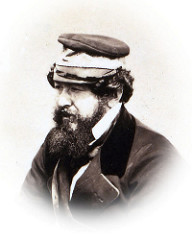
The illness which had prostrated some of the strongest men in Washington, including General McClellan himself, developed itself as soon as I ceased to be sustained by the excitement, such as it was, of daily events at the capital, and by expectations of a move; and for some time an attack of typhoid fever confined me to my room, and left me so weak that I was advised not to return to Washington till I had tried change of air. I remained in New York till the end of January, when I proceeded to make a tour in Canada, as it was quite impossible for any operation to take place on the Potomac, where deep mud, alternating with snow and frost, bound the contending armies in winter quarters. On my return to New York, at the end of February, the North was cheered by some signal successes achieved in the West principally by gunboats, operating on the lines of the great rivers. The greatest results have been obtained in the capture of Fort Donaldson and Fort Henry, by Commodore Foote’s flotilla co-operating with the land forces. The possession of an absolute naval supremacy, of course, gives the North United States powerful means of annoyance and inflicting injury and destruction on the enemy; it also secures for them the means of seizing upon bases of operations wherever they please, of breaking up the enemy’s lines, and maintaining communications; but the example of Great Britain in the revolutionary war should prove to the United States that such advantages do not, by any means, enable a belligerent to subjugate a determined people resolved on resistance to the last. The long-threatened encounter between Bragg and Browne has taken place at Pensacola, without effect, and the attempts of the Federals to advance from Port Royal have been successfully resisted. Sporadic skirmishes have sprung up over every border State; but, on the whole, success has inclined to the Federals in Kentucky and Tennessee.
On the 1st March, I arrived in Washington once more, and found things very much as I had left them: the army recovering the effect of the winter’s sickness and losses, animated by the victories of their comrades in Western fields, and by the hope that the ever-coming to-morrow would see them in the field at last. In place of Mr. Cameron, an Ohio lawyer named Stanton has been appointed Secretary of War. He came to Washington, a few years ago, to conduct some legal proceedings for Mr. Daniel Sickles, and by his energy, activity, and a rapid conversion from democratic to republican principles, as well as by his Union sentiments, recommended himself to the President and his Cabinet. [continue reading…]
How it was in Arkansas.
March 18, 2022
March 18, 1862.—There has been unusual gayety in this little village the past few days. The ladies from the surrounding plantations went to work to get up a festival to equip the new company. As Annie and myself are both brides recently from the city, requisition was made upon us for engravings, costumes, music, garlands, and so forth. Annie’s heart was in the work; not so with me. Nevertheless, my pretty things were captured, and shone with just as good a grace last evening as if willingly lent. The ball was a merry one. One of the songs sung was “Nellie Gray,” in which the most distressing feature of slavery is bewailed so pitifully. To sing this at a festival for raising money to clothe soldiers fighting to perpetuate that very thing was strange.
Note: To protect Mrs. Miller’s job as a teacher in post-civil war New Orleans, her diary was published anonymously, edited by G. W. Cable, names were changed and initials were generally used instead of full names—and even the initials differed from the real person’s initials. (Read Dora Richards Miller’s biographical sketch.)
Diary of a Southern Refugee, Judith White McGuire.
March 17, 2022
Monday Night.—This morning I was at the funeral, at St. Paul’s Church; the service was read by the Rev. J. P. McGuire and Rev. C. J. Gibson. Bishop Johns made a most solemn address. The procession, long and sad, then wended its way to Hollywood Cemetery.
Diary of Horatio Nelson Taft.
March 17, 2022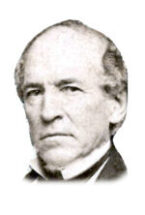
Monday March 17th 1862
Nothing new has transpired today that we know of. The Telegraph announces that a Battle is in progress on the Miss. Com Foote is Bombarding the Rebels at Island No 10 with his gun boats. Troops are embarking on the Steam Boats to go down the River. The long trains of Govt Wagons which used to obstruct our Streets have nearly all left, and are over the River having followed the Army. I called down to Mr Morrisons on D st this evening for Julia. It is now 10 1/2 o’clock, the children are all in bed since 1/2 past 8. A fine Band of music is playing in the street, some Seranade I presume.
______
The three diary manuscript volumes, Washington during the Civil War: The Diary of Horatio Nelson Taft, 1861-1865, are available online at The Library of Congress.
Rebel War Clerk
March 17, 2022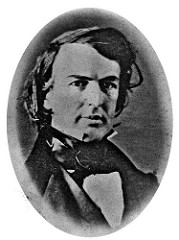
MARCH 17th.—Col. Porter has resigned his provost marshal-ship, and is again succeeded by Capt. Godwin, a Virginian, and I like him very well, for he is truly Southern in his instincts.
Downing’s Civil War Diary.–Alexander G. Downing.
March 17, 2022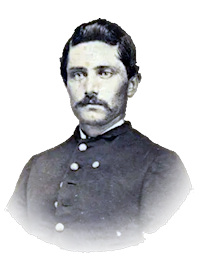
Monday, 17th–We received orders to disembark in the morning and everybody is rejoicing, for it is getting very tiresome on the boats—we have been on the boats seven days now. Details of men worked nearly all day at unloading our commissariat. The landing place is nothing but a jelly of mud—there are so many mules, horses and men passing back and forth.
War Diary of Luman Harris Tenney.
March 17, 2022
17th. Wrote home. Helped weigh out beef.
New Quarters.–Diary of David L. Day.
March 17, 2022
New Quarters.
March 17. It would seem that the people had no thought of evacuating the city until the very last moment. When they saw that the Philistines were upon them they hastily gathered up their valuables and what light articles they could carry on their persons, and fled, leaving their houses, stores and property, just as they stood.
Today the several companies of our regiment moved into the deserted mansions of the Confederate martyrs, which will be our quarters during our stay. Company B went into a two-story brick house on East Front street. It has a pretty flower garden in front, with an orchard, vegetable garden and servants’ quarters in the rear. The house is nicely furnished throughout; the floors, halls and stairs are carpeted, as are the chambers. The front parlor has upholstered furniture, center table, piano, lace curtains, ornaments, gas fixtures, etc. The back parlor is furnished similar to the front, excepting the piano. The basement contains all necessary culinary utensils. I don’t see but we are pretty well fixed, but this is only one of the occasional sunny spots in a soldier’s life. Some of the other companies are quartered in more pretentious and better furnished houses, on Pollock, Craven and Broad streets. We are nicely settled in the fine mansions of the lordly fugitives, who but yesterday ruled these spacious homes and paced the pictured halls. What strange infatuation, bordering on insanity, must have possessed these people, to bring this terrible calamity of war upon themselves, thus becoming voluntary exiles and strangers from their homes and property.
Loss and Gain.
An account of stock has been taken, and we are now able to figure up the losses and gains in the great battle. The 25th lost four killed and sixteen wounded. The whole Federal loss was 100 killed and 498 wounded. The enemy’s loss in killed and wounded is not known, but probably was not large, as they were behind their works, and all their killed and wounded were put aboard the cars which were waiting on the track. They lost about 500 men, taken prisoners, all the guns in their works, all their field batteries, upwards of 100 guns; besides all their horses, camp equipage, a large amount of ammunition, 4000 muskets and a large quantity of commissary and quartermaster’s stores. They also lost three steamboats, one of which they ran ashore and burned, besides quite a quantity of cotton on the wharves which they had used in the erection of batteries.
A Diary From Dixie
March 17, 2022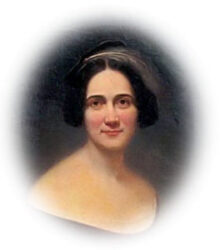
March 17th.–Back to the Congaree House to await my husband, who has made a rapid visit to the Wateree region. As we drove up Mr. Chesnut said: “Did you see the stare of respectful admiration E. R. bestowed upon you, so curiously prolonged? I could hardly keep my countenance.” “Yes, my dear child, I feel the honor of it, though my individual self goes for nothing in it. I am the wife of the man who has the appointing power just now, with so many commissions to be filled. I am nearly forty, and they do my understanding the credit to suppose I can be made to believe they admire my mature charms. They think they fool me into thinking that they believe me charming. There is hardly any farce in the world more laughable.”
Last night a house was set on fire; last week two houses. “The red cock crows in the barn!” Our troubles thicken, indeed, when treachery comes from that dark quarter.
When the President first offered Johnston Pettigrew a brigadier-generalship, his answer was: “Not yet. Too many men are ahead of me who have earned their promotion in the field. I will come after them, not before. So far I have done nothing to merit reward,” etc. He would not take rank when he could get it. I fancy he may cool his heels now waiting for it. He was too high and mighty. There was another conscientious man–Burnet, of Kentucky. He gave up his regiment to his lieutenant-colonel when he found the lieutenant-colonel could command the regiment and Burnet could not maneuver it in the field. He went into the fight simply as an aide to Floyd. Modest merit just now is at a premium.
William Gilmore Simms is here; read us his last poetry; have forgotten already what it was about. It was not tiresome, however, and that is a great thing when people will persist in reading their own rhymes.
I did not hear what Mr. Preston was saying. “The last piece of Richmond news,” Mr. Chesnut said as he went away, and he looked so fagged out I asked no questions. I knew it was bad.
At daylight there was a loud knocking at my door. I hurried on a dressing-gown and flew to open the door. “Mrs. Chesnut, Mrs. M. says please don’t forget her son. Mr. Chesnut, she hears, has come back. Please get her son a commission. He must have an office.” I shut the door in the servant’s face. If I had the influence these foolish people attribute to me why should I not help my own? I have a brother, two brothers-in-law, and no end of kin, all gentlemen privates, and privates they would stay to the end of time before they said a word to me about commissions. After a long talk we were finally disgusted and the men went off to the bulletin-board. Whatever else it shows, good or bad, there is always woe for some house in the killed and wounded. We have need of stout hearts. I feel a sinking of mine as we drive near the board.
Journal of Surgeon Alfred L. Castleman.
March 17, 2022
March 17th.–To-day our sick, instead of being put into General Hospital, are marched from depot to the camp. McDowell’s Division is ordered back to Arlington Heights. We are sending to Washington for our tents. Our General Smith is building stables, and it looks as if we were again settling down. What does it mean? Is there another change of programme? and are we not to embark after all? Have we discovered the muzzle of another wooden gun, which we must besiege for nine months? Many of the troops begin to question McClellan’s claim to infallibility. I have to regret that I have again failed to prevail on the Governor to interest himself in getting me transferred to another Regiment, where I could be much more useful. The opposition which I meet here from some of my superior officers, is rapidly destroying the interest which I have felt in the Regiment. (At night) a great hurrah and rejoicing in camp, in consequence of an order to prepare, immediately, five days’ rations, and to be ready. This may mean, embark, but our Gen. McC. has so often cried “wolf” of late, that when the wolf does come, we may not be ready. Shall we embark tomorrow?
Diary of Horatio Nelson Taft.
March 16, 2022
Sunday March 16th 1862
Has not rained today. A Regt passed this morning with Band playing &c just as people were going to church. Col Dutton had his horse sent down and he left for the Camp (as he said) cured. Col Durkee left early this morning. Col Dutton had an ambrotype of his family, self, wife & five children. I noticed that he was very attentive to it this morning. We think him a very fine warm hearted man. It is probable that he will be called into active service very soon. Maj McCamby of Oswego and Q Master Francis of Bridghampton LI called today, they belong to the 81 NY Regt.
______
The three diary manuscript volumes, Washington during the Civil War: The Diary of Horatio Nelson Taft, 1861-1865, are available online at The Library of Congress.
Rebel War Clerk
March 16, 2022
MARCH 16th.—I omitted to note in its place the gallant feat of Commodore Buchanan with the iron monster Merrimac in Hampton Roads. He destroyed two of the enemy’s best ships of war. My friends, Lieutenants Parker and Minor, partook of the glory, and were severely wounded.
Downing’s Civil War Diary.–Alexander G. Downing.
March 16, 2022
Sunday, 16th–We are still lying on the boats waiting for orders. Two gunboats came down from Pittsburg Landing. The weather is very disagreeable, with rain every day and rather cold besides.
War Diary of Luman Harris Tenney.
March 16, 2022
16th. Sunday. Helped clean up in and about the quarters of Co. “H.” Heard the Chaplain preach from “Whatsoever a man soweth that shall he reap.” Used strong language against the drunkenness and profanity of officers especially, and of the men. Spoke of the increase of immorality–sad, but true.
Diary of David L. Day.
March 16, 2022
We Attend Church.
March 16. Today, for the first time since we left home, Chaplain James held services in a meeting-house. We occupied the large house of the Presbyterian society, which was well filled with a miscellaneous congregation of soldiers, sailors, citizens and negroes, both men and women. Col. Upton had improvised a choir, and, with the aid of the organ, led the singing. The chaplain preached a very good discourse, and I hardly knew which felt the best, he or the colonel. There are several other meetinghouses here, which are or have been occupied by the Methodist, Baptist, Episcopalian, Catholic and negro societies. It would seem that this people have sometime been a God-fearing people, but since Jeff. Davis inaugurated a new regime, every man has done that which seemed good in his own sight. Hence we are here on this little excursion.
Through Some Eventful Years
March 16, 2022
March 16th, 1862.—The entire family wrote to Brother Amos this morning, he will surely find out he has a young daughter. As scarce as paper is Eddie had to have a whole sheet to write his letter on. He looked so in earnest that I asked what he was writing? He said, “I is sayin’, Father come home and wear de beautiful cloes.” He admires the gray and gold as much as the rest of us do.
Susan Bradford is 16 years old when this entry was made.
Journal of Surgeon Alfred L. Castleman.
March 16, 2022
An observation from 2012: The march back to Alexandria was likely on the 15th. Please see discussion in Ron Baumgarten’s comment below. – Mike Goad, 3-18-20121
Alexandria, 16th.–Received orders last night to march at 4 this A. M. Simultaneously with the receipt of the order came a northeast wind and heavy clouds. The clouding up kept pace with our preparations to march, and such a day of rain I have not witnessed in Virginia. To-night, after a march of twelve miles through mud and rain, the men lie out without shelter, except the little tents debris, which in time of rain are good for nothing. I shudder when I think of them, exposed, after a hard day’s march, to the driving storm. And whilst they are thus exposed, I feel almost guilty that I am in a fine hotel, by a fine coal fire, “comfortable and cozy.” But sickness brought me here. For three nights I have not slept, and last night I had an attack of cholera morbus. This morning, being sick and worn out, I asked permission to return to Vienna, (two and a half miles), and come in by rail. Permission was denied me. Sick or well, I must march, and look after the management of ambulances, and transportation of hospital stores. Arose at three o’clock, working part of time, and the rest cholera-morbus-ing till four. Started with the Brigade, but at Fairfax, for the first time since I entered the army, had to fall out. Went to bed, slept two hours, arose, took a cup of coffee, mounted my horse, and pressing my way through dense masses of the army for five or six miles, overtook the Brigade. When within a few miles of this city I was so sick that I insisted on being permitted to seek lodgings out of the weather, and having received permission, came on here. Have got dry and warm, and am now feeling better. I am gratified to learn to-night that my two poisoned boys are doing well, though it will be a long time before they entirely recover.
When I left Fairfax this morning the scene was grand beyond description. The soldiery, densely filling the road, leading from the town, had been pouring steadily forward for more than two hours. I looked back, and as far as the eye could reach down the two roads coming in, the dense body blocked them in both directions. The three roads presenting a long blue line rendered more striking by the glare of the bayonets, which at a short distance looked like a solid body of glittering steel over the blue bulk below. How far back the lines extended, I could not see, but I pressed forward for six miles, through the dense crowd. Verily, the army is now in motion.
16th.–’Tis Sunday morning. Returned to my regiment this morning; found all quiet. No one yet knows our destination. But from the fact that some forty river steamers await us, we infer that we are not going to sea. A singular fact, worthy of note: On our arrival here to embark, not a steamer had coaled, and there was no coal to take on!!– Why is this? ‘Tis terrible to even suspect that treason may be at work in the very heads of our departments.
- Comment by Ron Baumgarten, March 16, 2012:
First off, I wanted to thank you for bringing this diary to my attention. I have been blogging about Camp Griffin for quite some time now, and, thanks for your blog, I was amazed to discover this source, which contains entries related to Castleman’s time in the camp. In fact, I live right near the home that was used as W.S. Hancock’s brigade hospital. Castleman mentions this house at least a few times. This diary is the first mention I have seen of this hospital in primary sources. In any event, recent research I have done on the movement of Baldy Smith’s division to Alexandria from the camp at Flint Hill raises questions about Castleman’s entry for March 16. In fact, Smith’s division appears to have marched from Flint Hill, through Fairfax Court House, to Alexandria starting at around 6 a.m. on March 15, 1862. This March 15 date is confirmed in a variety of sources. (See, for example, Vermont in the Civil War (1886) by Benedict; the Adjutant General’s Report for the State of Wisconsin (1863); OR, 1:5, 55, 755.) The weather and other descriptions in Castleman’s entry for March 16 sound very much like the March 15 movement to Alexandria I recently wrote about. (See http://dclawyeronthecivilwar.blogspot.com/2012/03/mud-march-to-alexandria-mccall-and.html ) The weather actually was pretty clear on March 16, and was stormy on the 15th, as depicted in Castleman’s entry for the 16th. Moreover, Smith’s division moved en masse on the 15th through Fairfax Court House. I think that the “last night . . . at 4 A.M.” that Castleman is referring to may be 4 a.m. on March 15, and that he wrote this entry in the early morning hours of March 16, when he described how “[t]on-night…the men lie without shelter.” In fact, that night of March 15/16 was miserable by all accounts. In any event, this date issue does remind us all of how primary sources, although reliable, sometime raise as many questions as they answer! Thanks again for bringing this source to modern readers’ attention.
“Winchester was occupied last Wednesday! Lord, how long shall our enemies prosper?”—Diary of a Southern Refugee, Judith White McGuire.
March 15, 2022
15th.—Our army has fallen back to the Rappahannock, thus giving up the splendid Valley and Piedmont country to the enemy. This, I suppose, is right, but it almost breaks our hearts to think of it. Winchester was occupied last Wednesday! Lord, how long shall our enemies prosper? Give us grace to bear our trials.
“Heard of the shelling of Newbern, N. C., and of its fall.”—Diary of a Southern Refugee, Judith White McGuire.
March 15, 2022
Saturday Night.—Spent to-day at the hospital. Heard of the shelling of Newbern, N. C., and of its fall. My heart sickens at every acquisition of the Federals. No further news from Arkansas. Yesterday evening I went to see the body of our dear Bishop; cut a piece of his hair; kissed his forehead, and took my last look at that revered face.
Diary of Horatio Nelson Taft.
March 15, 2022
Saturday March 15th
The River is full of Steam Boats for transporting troops down the River, probably to “Old Point”. It has rained incessantly and this evening it pours. Col D. is well (he says). We went down to “Browns,” saw Maj Williams, Maj Fletcher & other officers. Col Durkee came in about 8 o’clock and is to stay all night. Our House for the time being seems to be the Head Quarters. Col Dutton is acting Brigadier Genl.
______
The three diary manuscript volumes, Washington during the Civil War: The Diary of Horatio Nelson Taft, 1861-1865, are available online at The Library of Congress.
Rebel War Clerk
March 15, 2022
MARCH 15th.—For several days troops have been pouring through the city, marching down the Peninsula. The enemy are making demonstrations against Yorktown.
Downing’s Civil War Diary.–Alexander G. Downing.
March 15, 2022
Saturday, 15th–It rained all day. It seems so dark and gloomy. We lay on the boats all day, but we are expecting to receive orders to go on up the river. Boats loaded with troops are passing us and going on up to Pittsburg Landing, Tennessee.
0
March 15, 2022
March 15th. Went up to the head of the Passes, which is eighteen miles from the mouth. The rumor prevails that we here wait for Capt. Porter’s mortar fleet. This is a dreary place, but somewhat pleasanter than below; where nothing was to be seen but mud, muddy water, and huge fog banks.
War Diary of Luman Harris Tenney.
March 15, 2022
March 15th. Wrote to Sarah Felton and was on duty at the commissary.