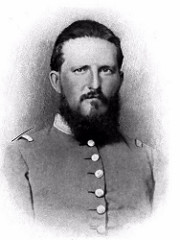
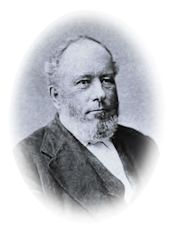
Diary of Horatio Nelson Taft.

Diary of US patent clerk Horatio Nelson Taft.

Monday March 24th

A Review today at Meridian Hill, Genl Caseys Division about 20,000 men (none of his Division have yet left). Troops are leaving on board Steamers every day at the rate of ten or fifteen thousand pr day. News today of a Victory near Winchester V.A. by our troops under Genl Shields. The bombardment at Island No 10 still continued at last news, the Gun Boats throwing Shells some 11/2 & 2 miles and out of range of the Rebel guns. Our fine old neighbor Com Smith now goes again to his office at the Navy Yard. When he heard by Telegraph that the “Congress” had raised a white flag, “Joe is dead,” says he. He knew that “Joe” would not surrender, and he was in command. “Joes” watch was taken from the dead body (running) after the battle, and a part of the plunder obtained by the Rober the other morning. The Comd offers $150 Reward for the watch which will be paid if it is returned and no questions asked. I was at Mr Reynolds with Julia this evening. They are from Iowa City. Got home about 10.

______

The three diary manuscript volumes, Washington during the Civil War: The Diary of Horatio Nelson Taft, 1861-1865, are available online at The Library of Congress.

0 comments

Rebel War Clerk

Civil War Day-by-Day
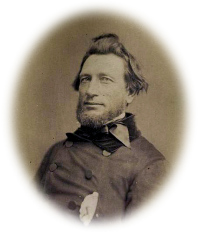
A likeness of Jones when he was editor and majority owner of the Daily Madisonian during President John Tyler’s administration.

MARCH 24th.—Gen. Walker, of Georgia—the same who had the scene with Col. Bledsoe—has resigned. I am sorry that the Confederate States must lose his services, for he is a brave man, covered with honorable scars. He has displeased the Secretary of War.

0 comments

Downing’s Civil War Diary.–Alexander G. Downing.

Diary of Alexander G. Downing; Company E, Eleventh Iowa Infantry

Monday, 24th–We disembarked and marched out about a mile and a half from the landing, where we pitched our tents. Our camp is located in what is called Jones’ Field.

0 comments

Army Life of an Illinois Soldier, Charles Wright Wills.

Civil War Day-by-Day

Point Pleasant, Mo., March 24, 1862.

It’s only 9 a. m, and didn’t get to bed until 2 this morning, so if I do not talk rational you will excuse me. That isn’t the excuse either. I rode 50 miles between 9 a. m. yesterday and midnight over roughest road. Two hundred of us were sent out after that d – d Jeff Thompson. We exchanged shots with his pickets 20 miles from here, and chased them four miles farther. The last eight miles was a pike only eight feet wide, thrown up through an immense swamp, and planked. The water came so close to the planks that there was not a place in the whole eight miles where a horse dare step off the plank. The total of all the unusual sights I ever saw wouldn’t begin to count one in effect where that road and swamp will ten. There are two good sized rivers running through the swamp but they have to be pointed out to you before you can see them, or rather distinguish them from the rest of the swamp. When we first saw these pickets they were tearing up a culvert. We hurried up and after each side fired four or five rounds they ran. No one hurt here, although the distance was not more than 60 yards. Andy Hulit, my sergeant major and myself were the advance guard, but I have no carbine, and did not get to shoot, but this didn’t seem to make any difference to them for they threw buckshot round me quite promiscuously. Well, we fixed up that bridge and pressed on, but they tore down so many bridges that we could go but slowly. Just before the fight I had dropped back a dozen files to get out of building any more bridges, and when our boys saw the secesh, they had just finished destroying another. The horses couldn’t cross it, but the boys dismounted and hurrying across on foot, made them take to the swamp in water waist deep, where they hid themselves behind logs, vines and a kind of high grass that grows in bunches as large as a currant bush. When they had concealed themselves to their notion, they commenced firing at us, and of the first four of our boys over the bridge (Andy Hulit led them), three were down, wounded in a minute. We then charged (on foot) right into the brush and water, some of the boys up to their armpits, and made them scoot. They did not number over 20 but their advantage was enormous. We dropped two of them certain, and— I don’t think any more. Of four of our men [continue reading…]

0 comments

War Diary of Luman Harris Tenney.

War Diary of Luman Harris Tenney.

24th. New recruits came, so I moved over to the Major’s quarters. Played chess with Nettleton.

0 comments

Journal of Surgeon Alfred L. Castleman.

Journal of Surgeon Alfred L Castleman.

March 24th.–We have had a very fine run for about thirty hours, having left Alexandria at 6 P.M., on the 23d, laid too over night near Fort Washington, and at 10 P. M., after having passed Mount Vernon, Ocoquan, Aquia, and many other points noted in this war, have come to anchor off this point.

0 comments

Diary of Horatio Nelson Taft.

Diary of US patent clerk Horatio Nelson Taft.

Sunday March 23rd 1862

No War news public today. It has been rather pleasant and no rain. Our next door neighbor Comodore Smith had his house robed last night. The Thief went all over the house gathering up watches, money, spoons, &c, without alarming the inmates. He unlocked the back door with Burglers nippers. The Comodore seems to be in bad luck. He recently lost his son, Lieut Jos. B Smith, on the Congress in her fight with the rebel Iron Clad Steamer “Merrimac.” I have not been to church today, wife & the rest of the family went. Took a walk with the boys before dark, saw the Battalion of Cavalry which brot the Body of Col Slocum of the RI 2nd who was killed at Bull Run in July. The Regt is now near the City and the body was just recovered and brought over to the Reg’t. The Cavalry came over as an Escort and were on their return when we saw them.

______

The three diary manuscript volumes, Washington during the Civil War: The Diary of Horatio Nelson Taft, 1861-1865, are available online at The Library of Congress.

0 comments

Rebel War Clerk

Civil War Day-by-Day
A likeness of Jones when he was editor and majority owner of the Daily Madisonian during President John Tyler’s administration.

MARCH 23d.—Gen. Winder was in this morning listening to something MacCubbin was telling him about the Richmond Whig. It appears that, in the course of a leading article, enthusiastic for the cause, the editor remarked, “we have arms and ammunition now.” The policemen, one and all, interpreted this as a violation of the order to the press to abstain from speaking of the arrivals of arms, etc. from abroad. Gen. Winder, without looking at the paper, said in a loud voice, “Go and arrest the editor–and close his office !” Two or three of the policemen started off on this errand. But I interposed, and asked them to wait a moment, until I could examine the paper. I found no infraction of the order in the truly patriotic article, and said so to Gen. Winder. “Well,” said he, “if he has not violated the order, he must not be arrested.” He took the paper, and read for himself; and then, without saying anything more, departed.

When he was gone, I asked MacCubbin what was the phraseology of the order that “had been served on the editors.” He drew it from his pocket, saying it had been shown to them, and not left with them. It was in the handwriting of Mr. Benjamin, and signed by Gen. Winder. And I learned that all the orders, sumptuary and others, had been similarly written and signed. Mr. Benjamin used the pencil and not the pen in writing these orders, supposing, of course, they would be copied by Gen. W.’s clerks. But they were not copied. The policemen threaten to stop the Examiner soon, for that paper has been somewhat offensive to the aliens who now have rule here.

0 comments

War Diary of Luman Harris Tenney.

War Diary of Luman Harris Tenney.

23rd. Read the papers received in the morning and wrote home. No preaching.

0 comments

Downing’s Civil War Diary.–Alexander G. Downing.

Diary of Alexander G. Downing; Company E, Eleventh Iowa Infantry

Sunday, 23d–The Eleventh Iowa received marching orders, and we struck our tents and got on board the “Westmoreland.” The quartermaster had all of the commissariat on the boat by noon and we left for Pittsburg Landing. We reached the landing at dark and remained on the boat for the night.

0 comments

Pretty hard soldiering

Civil War Day-by-Day

HDQTS. SPECIAL BRIGADE, NEAR RAPIDAN
STATION, VA., March 23rd, 1862.

My Dear Mother:
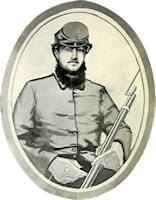
We received your letter last night dated the 6th of March. ‘Tis the first time any of us have heard from home within the last two weeks. We have had considerable excitement since you last heard from us. To-day, two weeks ago, we evacuated Manassas and have been moving to the rear ever since. We are now on the South side of the Rapidan River, where I think we will make a stand. But nothing is known for certain, I don’t believe the Generals themselves know. The night we left Manassas (about sunset) we marched ten miles that night, stopped about two o’clock and slept on the ground with the sky for a covering. We haven’t had a tent in two weeks. We are playing the soldier now in good earnest. The last three days we marched it rained every night just as soon as we would stop for the night. After walking all day, carrying your ALL on your back, then having to start a fire out doors without wood (we have no light wood) and cook your next day’s ration, is pretty hard soldiering, I can assure you. Though the boys all seem to be cheerful. We have very little sickness and for the last ten days (a circumstance not known before since we have been in Virginia) we haven’t had a man to die in the Regiment. Pat Simms and his recruits have not yet arrived, they were stopped at Gordonsville some time ago, while we were making our retreat from Manassas. We expect them daily.

The Yankees have been some distance this side of Manassas. Our troupes had a little skirmish with them a day or two after we left, some of the Cavalry came in sight of our pickets. They fired on them and they disappeared, ’tis reported that they have gone back to Centerville, perfectly non-plussed at our movement. The country we are now occupying is the prettiest and the most beautiful scenery you ever saw. We can see the mountains in the distance covered with snow, and when the sun shines it is sublime. We are on what is called the “Clark Mountain.” There is a mountain or rather hill, on a mountain, about a quarter of a mile off that commands a view of the country for miles around, some of the men are up there all the time. I intend to send this letter to Richmond to be mailed. I do not know that there is any communication between here and Richmond. We only got the old mail that was stopped at Gordonville. MacWilliams, one of our company, is going to Richmond tomorrow on business. I will get him to mail it for me.

I do not see a word about this move in the papers, so I must think the Government is withholding it from them, to prevent the Yankees from obtaining information. Johnnie Dunham is still A. A. Genl. of the Brigade and I am writing for him, though I do not have one third to do that I did at Manassas, as that was a regular military post. We had inspection to-day, to see how the guns, etc., were getting on after the hard usage and bad weather they have gone through lately.

Write soon. We may get all of your letters, though you might not get all of ours, unless mailed beyond Gordonsville. Give my love to all the family, Aunt and Claudia, etc. etc. I remain,

Your sincere and devoted son,
WALTER.

March 23rd, 1862.

Dear Mother:
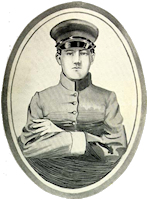
        As Walter did not mention me in his letter, I thought I would let you know that I am well. Walter has told you nearly everything that transpired on our tramp, so I have not anything to tell except the burning of the property at Manassas the same day that we left. We had been told to go to the Junction and get what things out of our boxes as we could carry on our backs, for the boxes would not be carried on the train. After we left, the town was set on fire, and I expect that a million dollars’ worth of property was consumed. We had to leave our little Bantam chickens, as we had no way to carry them. The first night of our march, I never suffered so much from fatigue in my life. When we did halt we fell on the ground and slept soundly until next morning. I do not expect you can hardly read this, as it is done by a log fire on my cartridge box. Must close. Good bye.

Your loving son,
GEORGE


Letters from two brothers who served in the 4th North Carolina Infantry during the Civil War are available in a number of sources online.  Unfortunately, the brothers are misidentified in some places as Walter Lee and George Lee when their names were actually Walter Battle and George Battle. See The Battle Brothers for more information on the misidentification.
0 comments

Through Some Eventful Years

Through Some Eventful Years by Susan Bradford Eppes
Susa Bradford Eppes

March 23rd, 1862.—This is Eddie’s birthday, Adeline made him a cake, (no white sugar to ice it) and by great good luck I found in my doll things, which have been packed away, two toy candles which delighted his heart.

Though the weather is still cold in Virginia the army seems to be on the move and I am afraid we will hear of more battles soon. If I, who have only brothers and cousins in the army, dread this so, what must it be to the poor wives and mothers and fathers? Uncle Richard has never been the same since Cousin Rich was killed.


Susan Bradford is 16 years old when this entry was made.

0 comments

Journal of Surgeon Alfred L. Castleman.

Journal of Surgeon Alfred L Castleman.

March 23rd.–At one o’clock this morning, met Major M. in Washington, who informed me that the absent officers of our Brigade had been telegraphed to rejoin their regiments immediately, to embark at 8 this A. M. Left on first boat for Alexandria, and found the most of my Brigade embarked. I had just time, before going on board, to write and copy the following note:

Alexandria, March 23, 1863.

My Dear: ‘Tis Sunday, and here I am surrounded by all “the pomp and circumstance of war;” troops embarking, flags flying, martial music from a dozen bands all around me. My own Regiment is this moment marching on board the steamer Canonicus; and amidst the confusion and turmoil of troops marching, almost over me, transportation wagons wheeling within a few inches of my feet, and amidst every conceivable noise, I sit down in the street, with an old box in front of me, to write these few words, thinking that they may interest even you. * * * In a few hours the distance between us will begin rapidly to increase. How long will the increase continue? God only knows. I hope soon to be turned homeward.

This is such a time as Alexandria never saw–it is to be hoped may never see again. There seems to be but little interest or excitement in the city. Scarcely anybody out to witness this solemn–this imposing pageant. I know not .what else to call it. Are the people here rebels at heart? I fear as much so as South Carolinians. We are not informed of our destination, but I still believe it to be Norfolk, and if successful there, then to Richmond. We are now Called on board. Farewell.

0 comments

Severe fight–Letters from Elisha Franklin Paxton.

Elisha Franklin Paxton – Letters from camp and field while an officer in the Confederate Army

Near Winchester (Kernstown), March 23, 1862.

We have had a severe fight to-day and are pretty badly whipped. I am uninjured.

0 comments

0

Civil War Day-by-Day

by Horatio Nelson Taft

Saturday March 22nd 1862

We have been listening all day to the booming of Cannon and beating of Drums. Troops are constantly embarking at the Arsenal and marching through and about the City. But the tents on the hills back of the City do not seem to diminish in number, but most of the Regts are under marching orders to be ready in a few minutes when called upon to go. It rained nearly all last night and rains tonight and the mud is almost as bad as ever in the streets, and the boys are again levying toll upon passengers at the crossings. – Doct David called this morning with another Surgeon. I think the Dr is a little homesick (very little). Comodore Foot is still throwing shells among the rebels at Island No 10. Yesterday the land forces were to arrive and act in concert with him. Went down to the Ave after dinner. Visited the “Ariated Bread” Bakery foot of 10th st. Went into some Machine Shops. Penn Ave was crowded to excess, Carriages, Hacks, Govt Wagons, stubborn mules refusing to go, drivers swearing, Soldiers marching, Drums beating, Bands playing, Dragoons and “orderlies” rushing through at great speed. Officers and Privates, Citizens & Congressmen, Negros & Newsboys, all hurrying to and fro on the broad Side walk without any order or regularity as regards turning “to the right.” All put together made a lively time of it, and I was not sorry to get away from the uproar and confusion of the Ave to a more quiet part of the City. The two elder boys have been up to the camp of the 98th today. They have gone to bed tired. Julia is reading her Spanish lesson. Wife has prepared a cup of tea & some ariated Bread & buter, and placed it invitingly near me on the table. We rarely get a regular “Tea” at night, dining past 4 renders it hardly necessary. It is usualy done in a sort of fugitive way about 8 or 9 o’clock, sometimes later. We cannot contrive to get to bed before about 11 o’clock, that is, myself and wife. Julia goes before 10 usualy, and the boys about 8.

0 comments

Rebel War Clerk

Civil War Day-by-Day
A likeness of Jones when he was editor and majority owner of the Daily Madisonian during President John Tyler’s administration.

MARCH 22d.—Capt. Godwin, the Provost Marshal, was swearing furiously this morning at the policemen about their iniquitous forgeries.

0 comments

Downing’s Civil War Diary.–Alexander G. Downing.

Diary of Alexander G. Downing; Company E, Eleventh Iowa Infantry

Saturday, 22d–It is disagreeable weather—a cold rain from the north. The Thirteenth Iowa started to Pittsburg Landing, about ten miles up the river. The Eleventh Iowa is expecting marching orders any time.

0 comments

War Diary of Luman Harris Tenney.

War Diary of Luman Harris Tenney.

22nd. A report circulated that we are to be among the regiments disbanded. Hope not true–prefer to see the thing through without re-enlisting. After all would like a short furlough. Dealt out the bacon. Got a good piece of beef for myself. Heard the wolves howl during the night.

0 comments

Diary of Horatio Nelson Taft.

Diary of US patent clerk Horatio Nelson Taft.

Saturday March 22nd 1862

We have been listening all day to the booming of Cannon and beating of Drums. Troops are constantly embarking at the Arsenal and marching through and about the City. But the tents on the hills back of the City do not seem to diminish in number, but most of the Regts are under marching orders to be ready in a few minutes when called upon to go. I[t] rained nearly all last night and rains tonight and the mud is almost as bad as ever in the streets, and the boys are again levying toll upon passengers at the crossings. — Doct David called this morning with another Surgeon. I think the Dr is a little homesick (very little). Comodore Foot is still throwing shells among the rebels at Island No 10. Yesterday the land forces were to arrive and act in concert with him. Went down to the Ave after dinner. Visited the “Ariated Bread” Bakery foot of 10th st. Went into some Machine Shops. Penn Ave was crowded to excess, Carriages, Hacks, Govt Wagons, stubborn mules refusing to go, drivers swearing, Soldiers marching, Drums beating, Bands playing, Dragoons and “orderlies” rushing through at great speed. Officers and Privates, Citizens & Congressmen, Negros & Newsboys, all hurrying to and fro on the broad Side walk without any order or regularity as regards turning “to the right.” All put together made a lively time of it, and I was not sorry to get away from the uproar and confusion of the Ave to a more quiet part of the City. The two elder boys have been up to the camp of the 98th today. They have gone to bed tired. Julia is reading her Spanish lesson. Wife has prepared a cup of tea & some ariated Bread & buter, and placed it invitingly near me on the table. We rarely get a regular “Tea” at night, dining past 4 renders it hardly necessary. It is usualy done in a sort of fugitive way about 8 or 9 o’clock, sometimes later. We cannot contrive to get to bed before about 11 o’clock, that is, myself and wife. Julia goes before 10 usualy, and the boys about 8.

______

The three diary manuscript volumes, Washington during the Civil War: The Diary of Horatio Nelson Taft, 1861-1865, are available online at The Library of Congress.

0 comments

Journal of Surgeon Alfred L. Castleman.

Journal of Surgeon Alfred L Castleman.

March 22nd.–Ordered this morning to Washington to look up hospital stores and boxes, which are scattered “to the four winds.” This is the first time since the organization of the Regiment that it has moved without my personally superintending the packing and forwarding of the hospital stores, and the first time they have got scattered. “What you would have well done, do yourself.” I fear many of them will be lost.

In passing, I here note two circumstances, that I may not forget them. In addition to the poisoning of three men at Flint Hill by a mistake in medicine, yesterday I discovered that the dispenser, imposed on me by Gen. H_____, was himself taking pills of Unguentum–blue mercurial ointment– instead of blue pill, which had been prescribed for him, and was giving another man saltpetre instead of the sulphate of cinchona–innocent mistakes, to be sure, but indicative of the fatherly care which our General is manifesting towards the soldiers under his command. He refuses to restore my druggist, though he is made aware of these repeated and dangerous mistakes. The other circumstance: During all winter, when no fighting was to be done, our Brigade held the advance of the whole army. All the hard and dirty work fell on us–picketing, chopping, ditching; but we held the advance, the post of honor, were to have the first chance in the fight, and we grumbled not at the hardship and exposure. The time came for attacking Centreville and Manassas. We were ordered forward, when, to our exceeding mortification, we found that 40,000 troops had been thrown in advance of us. Our Brigade has not been permitted even to see Centreville and Manassas. They were occupied by our army before we were started. What means this? Has our Brigade commander lost the confidence of his superior officers, and as a consequence been thus disgraced? We are now near Alexandria, but not in advance. There are from 40,000 to 60,000 troops in advance of us.

0 comments

How it was in Arkansas.

War Diary of a Union Woman in the South

March 22, 1862.—H., Mr. R., and Mike have been very busy the last few days getting the acre of kitchen-garden plowed and planted. The stay-law has stopped all legal business, and they have welcomed this work. But to-day a thunderbolt fell in our household. Mr. R. came in and announced that he has agreed to join the company of volunteers. Annie’s Confederate principles would not permit her to make much resistance, and she has been sewing and mending as fast as possible to get his clothes ready, stopping now and then to wipe her eyes. Poor Annie! She and Max have been married only a few months longer than we have; but a noble sense of duty animates and sustains her.


Note: To protect Mrs. Miller’s job as a teacher in post-civil war New Orleans, her diary was published anonymously, edited by G. W. Cable, names were changed and initials were generally used instead of full namesand even the initials differed from the real person’s initials. (Read Dora Richards Miller’s biographical sketch.)

0 comments

Rebel War Clerk

Civil War Day-by-Day
A likeness of Jones when he was editor and majority owner of the Daily Madisonian during President John Tyler’s administration.

MARCH 21st.—Gen. Winder’s detectives are very busy. They have been forging prescriptions to catch the poor Richmond apothecaries. When the brandy is thus obtained it is confiscated, and the money withheld. They drink the brandy, and imprison the apothecaries.

0 comments

Downing’s Civil War Diary.–Alexander G. Downing.

Diary of Alexander G. Downing; Company E, Eleventh Iowa Infantry

Friday, 21st–It is cloudy and cold. Captain Chambers’ battery of six guns arrived today. Orders came for us to embark at once, and we struck our tents and got ready to start. After waiting six hours for the order to fall in, the order was countermanded and we had to pitch our tents again.

0 comments

War Diary of Luman Harris Tenney.

War Diary of Luman Harris Tenney.

21st. Went out with a detail of twenty privates and two sergeants to cut wood for the regiment. Had twelve mule teams. Drew twenty-two loads. Saw a long overland train bound for Humboldt with crackers. Another train coming loaded with nine yoke of oxen. One wagon had 17 yokes stuck fast in the mire of the creek. California Overland Route.

0 comments

I Am Interviewed.–Diary of David L. Day.

David L Day – My diary of rambles with the 25th Mass

I Am Interviewed.

March 21. Passing along Pollock, above Middle street, today, I was accosted by a man who was sitting on the veranda of his house and invited to come in, as he wished a talk with me. Noticing that he was a smart-looking, well-dressed, gentlemanly appearing man, and withal an M. D., according to his sign, I was nothing loth to gratify his whim. As I stepped up on the veranda, he invited me to be seated. After a little commonplace talk, he began to inquire about our troops, their number and where they were from. I told him only a few of our troops had landed, that the river and sound were black with them in case they should be needed, and nearly all of them were from New England. He said our capture of the city was wholly unexpected, and at the last moment nearly all the better class of citizens left, leaving their houses and property as we found them. He said in that he thought they had made a great mistake, as he regarded Gen. Burnside as an honorable, high-toned gentleman, who would have dealt fairly with them, if they had remained and taken their chances, and would have allowed them to go whenever they wished. I replied I didn’t know how that would have been, but I thought they had made another mistake in burning the railroad bridge and trying to burn the town. In doing as they have, they have shown that they had no regard for their property and they certainly cannot expect us to have much for it, although we have shown some in putting out the fires and saving it.

“Yes, I know,” he said, “but perhaps they thought they would show your people that they were willing to sacrifice their property and make a Moscow of it rather than let it fall into your hands.”

“Well, sir,” said I, “in that they made another mistake, for if [continue reading…]

0 comments