0

Civil War Day-by-Day

February 9, 1863, The New York Herald

It is evident from the recent reports that the canal which is designed to cut off Vicksburg from the river bank can only be hastened to completion by the employment of a large force. Nature, it seems, will accomplish nothing towards changing the channel of the Mississippi. The water is not washing away the banks of the canal, as was anticipated. Consequently it will have to be cut to its entire width. To do this in time for any practical end will require a much larger force than is now occupied upon the work. The best thing that can be done under the circumstances is to employ as large a number of the contrabands as possible who are now living idle at the expense of the government. There are about a hundred thousand contraband negroes now under the care of the government, supported at an immense cost. It takes a hundred millions a year to maintain an army of a hundred thousand soldiers. Say that it costs half that sum to support a hundred thousand contrabands; why not get fifty millions, or as much as can be obtained in labor, from those contrabands who are able to work? The old and infirm, the women and children, of course must remain a burthen on the government: but no better disposition could be made of the able bodied than to set as many of them to work on the Vicksburg cut-off as could be employed there with effect, so as to hurry it up before the rebels fortify themselves too strongly on the opposite bank, as they are trying to do. The new canal would be cheap at fifty millions.

The balance of the contrabands should be drafted into the army of Generals Horace Greeley and Thaddeus Stevens. They would make every respectable show when drilled by those eminent officers. Any deficiency in military knowledge could be supplied to Generals Greeley and Stevens by the generous publishers of military books. With a little reading up in “The School of the Soldier” and a fair amount of cramming in “HardeeTactics” they might soon be able to put the contraband army through its facings, teach the men the goose step, and make them hold up their heads in good military style, like men and brothers.

This would be an excellent disposition to make of say fifty thousand contrabands, and no doubt would exactly suit General Greeley’s idea; while those employed on the Vicksburg canal would become experts in digging ditches, and would thus be ready at a moment’s notice to dig that last ditch in which Greeley and his party are to be buried.

0 comments

0

Civil War Day-by-Day, Cruise of the U.S. Flag-Ship Hartford -Wm. C. Holton

Pilot Town, Feb. 9th. We have been lying to anchor here for over two days, for the reason that there has not been sufficient depth of water on the bar to admit of our crossing. At eleven thirty A. M., pilot came on board and reported water enough. At noon, got under way and steamed down. Unfortunately for us, in attempting to cross the bar at South-West Pass we ran the ship hard aground.

0 comments

0

Civil War Day-by-Day

February 9, 1863, The New York Herald

The American press and public have been exceedingly lenient with Barnum. They have allowed him to make money by humbugging innocent people, and more money by selling a book telling how well his humbugs have succeeded. Recently, however, he has taken altogether too bold an advantage of this leniency. Having secured a dwarf woman, he has been exhibiting her at his Museum for some time past as the betrothed of another dwarf called General Tom Thumb. How this match was arranged we do not care to know; but we are informed that it is to be consummated at Grace church tomorrow with all the display of a fashionable wedding. Of course we have no objections to the marriage, and no desire to forbid the banns. Miss Warren is a woman and Tom Thumb is a man, no matter how small they may be, and they have as good a right to be wedded as any other man and woman. This will be by no means the first time that dwarfs have been married and lived happily ever after. We do object, however, to Barnum’s share in the transaction, and particularly to his attempt to make money by the public exhibition of the intended bride and all the paraphernalia of the affair.

We are aware that Barnum has no very great respect for the public. He considers it a goose which lays golden eggs, and is not very particular where he tickles it, so that the eggs drop into his treasury. A long while ago he produced an old colored woman whom he called Joyce Heth, and advertised her as the nurse of General Washington. Crowds came to see this imposture, and after the poor woman’s death Barnum had her dissected, and would undoubtedly have hung up her skeleton in his Museum had not the surgeons exposed the humbug by pronouncing her only about sixty or seventy years old. Then some ingenious fellow tinkered together the head and body of a monkey and the tail of a fish, and this abortion Barnum heralded as the great Fejee mermaid, and displayed beautiful pictures of handsome women with fishy extremities in order to allure silly folk to pay a quarter and see the curiosity. And then came the woolly horse which had been captured on the Rocky Mountains, and which had two of its legs miraculously shortened, so that it might run around its native hills safely and expeditiously, but which, upon inspection, turned out to be a combination of a little wool and as poor a specimen of horseflesh as had ever been rejected by the knackers as unfit even for the glue factory. These [continue reading…]

0 comments

0

Civil War Day-by-Day

February 9, 1863, The Charleston Mercury

The blockading vessel off the port of St. Marks disappeared on Thursday, the 29th ult., and her place was taken by a gunboat, which remained in the blockader’s position until last Sunday, the 1st inst., when she came into the Spanish Hole and anchored off the Light House, opposite old Fort Williams. From this position she commenced, about 12 m., to shell the Salt Works near the Light House. The shells, of a large size, fell very near some of the works, but no damage was done. The salt workers immediately left, taking with them all they could carry. The gunboat Spray steamed down below Old Port Leon, when the Federal gunboat turned her attention to that boat, firing some five or six shots at her, all of which fell short. Captain Scott cavalry, the ‘Tallahassee Guards,’ under command of Lieut. Gwynn, were soon near the scent of action, ready to receive them, should they attempt to land to carry out their design of destroying the Salt Works. The Federal gunboat withdrew from her position about two miles, late in the afternoon, but still remained in the Spanish Hole when last seen on that day.

0 comments

0

Civil War Day-by-Day

February 9, 1863, The Charleston Mercury

PORT HUDSON, February 6, – Deserters are constantly coming in from the enemy’s fleet at Baton Rouge. For the past two weeks two per day have arrived. All concur in confirming the reported disaffection in BANKS’ army. They state that numerous officers have resigned in consequence of the arrival of negro regiments; that the army is completely demoralized. In some cases it has reached to open revolt. One regiment is confined in the penitentiary for laying down their arms. Reliable information states the force of the enemy at Baton Rouge at 15,000. There are at present no indications of an advance. The reported movement several days since arose from a change of camp. BANKS is reported to have said, ‘My army has gone to hell, and it is useless to deny it.’

A report, coming from Baton Rouge, represents the sinking of the sloop- of-war Brooklyn by the Confederate steamers Alabama, Florida and Harriet Lane, the Brooklyn having been sent in pursuit of the latter.

The Essex made her weekly visit on Sunday last, and was fired upon by our pickets. One Yankee reported killed. She shelled our pickets for one hour. Nobody hurt. Deserters state that BANKS cannot depend upon his army; hence the delay in advancing.

One regiment of Yankees had deserted from the Yankee army at Baton Rouge, and were making their way to our lines, when they were overtaken by two regiments that had been sent after them. A fight ensued, and the estimated number killed on both sides is 100. The deserters were finally captured and taken back.

0 comments

0

Civil War Day-by-Day

February 9, 1863, The Charleston Mercury

Parties who accompanied Mr. BUNCH to the British steamer Cadmus, on Saturday afternoon, bring us some additional information, though not of the most agreeable character, in regard to the late naval action. If the statements given by the officers of the Cadmus be true, the substantial fruits of our victory are far less important than previous accounts had led us to believe.

The steam gunboat Mercedita, which was thought to have been sunk, is said to be at Port Royal, having been towed there from this Bar in quite a disabled condition. She was struck by the Palmetto State, and a shot from the latter passed through the boiler of the Mercedita, causing the water in it to rush into the hold of the vessel, and inducing a temporary impression in the minds of those below, which was communicated to the officers on deck, that the vessel was sinking. She lost several in killed and wounded.

The Yankee gunboats Quaker City and Augusta were also struck, and had parts of their crews killed and wounded, but the latter was not much damaged, and is now off here blockading.

The iron-clad New Ironsides is still off the Bar, and is said to go off shore early in the morning and to return after dark, hoping to catch our iron-clads should they make another night attack on the Yankees. The Ironsides is reported to go about nine knots when doing her best, and is armed principally with eleven inch guns and one two hundred pounder PARROT gun, on a pivot, forward.

The impression prevails in the Yankee fleet that Savannah will be assailed before Charleston, and their language in reference to their expected attack on the latter city is less boastful than heretofore.

The Monitor iron-clad Montauk, which bombarded the battery near Savannah a few days since, it is said, was considerably injured in that action, and her turret refused to work during part of the fight.

0 comments

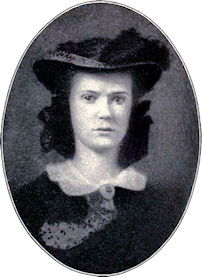
A Confederate Girl’s Diary

Civil War Day-by-Day

Monday, February 9th, 1863. Night.

A letter from my dear little Jimmy! How glad I am, words could not express. This is the first since he arrived in England, and now we know what has become of him at last. While awaiting the completion of the ironclad gunboat to which he has been appointed, like a trump he has put himself to school, and studies hard, which is evident from the great improvement he already exhibits in his letter. . . .

My delight at hearing from Jimmy is overcast by the bad news Lilly sends of mother’s health. I have been unhappy about her for a long while; her health has been wretched for three months; so bad, that during all my long illness she has never been with me after the third day. I was never separated from mother for so long before; and I am homesick, and heartsick about her. Only twenty miles apart, and she with a shocking bone felon in her hand and that dreadful cough, unable to come to me, whilst I am lying helpless here, as unable to get to her. I feel right desperate about it. This evening Lilly writes of her having chills and fevers, and looking very, very badly. So Miriam started off instantly to see her. My poor mother! She will die if she stays in Clinton, I know she will!

0 comments

War Diary of Luman Harris Tenney.

War Diary of Luman Harris Tenney.

9th. In the morning moved up to the commissary to make room for Lt. and Mrs. Abbey and child. Brougham came and I went to town with him in the evening. A lunch in town and then to Melissa’s. Major P. and Reeve left for Kentucky. Met Brougham at 10 at Winard’s and went to Mr. Crarey’s for the night.

0 comments

Downing’s Civil War Diary.–Alexander G. Downing.

Diary of Alexander G. Downing; Company E, Eleventh Iowa Infantry

Monday, 9th–We left for Lake Providence, seventy-five miles above Vicksburg, at 10 o’clock this morning, and reached our destination at dark. There were six transports and one gunboat in our fleet. We found the First Brigade of our division already here and at work cutting the levee.

0 comments

Diary of Horatio Nelson Taft.

Diary of US patent clerk Horatio Nelson Taft.

Washington Monday Feb’y 9th 1863

Another delightful bright warm day and there does not seem to be any particular excitement about anything just now. It is a fact (altho the “papers” say nothing about it) that the “Army of the Potomac” is on the move. One whole grand Division has gone on board Transports and down the River from Aquia Creek. Their destination is presumed to be North Carolina. In Tennessee and the S. West matters remain pretty quiet. Some skirmishing in which the Rebels usualy get the worst of it. At Vicksburgh an immense number of men are now at work on the Canal or “Cutoff” opposite the City which is designed to leave the City inland four or five miles. This may be a cheaper way of opening the Miss River than taking the City as it is said to be very strongly fortified and defended by 60,000 men. There was a great crowd on “the Ave” this afternoon. I was in Taylors Book Store an hour reading “Ruttan.” Was also in “Ascension Hospital” to see the soldiers. Met Mr Green from Lyons in the Pat office today. Sent Hon Jas C Smith Catalogue & Circular from the Agricultural Dept. Got a pat office Report for myself. I am told that my name was proposed and I was unanimously voted in as a member of the “Union League,” a secret society in this City. I think I will go and be initiated. The “Lodge” meets on Thursday nights. It is composed of the first Gentlemen in Washington.

0 comments

A Rebel War Clerk’s Diary

Civil War Day-by-Day
A likeness of Jones when he was editor and majority owner of the Daily Madisonian during President John Tyler’s administration.

FEBRUARY 9th.—Gen. Lee requests that all dispatches passing between his headquarters and the War Department be in cipher. He says everything of importance communicated, he has observed, soon becomes the topic of public conversation; and thence is soon made known to the enemy.

The iron-clad gun-boat, which got past Vicksburg, has been up the Red River spreading devastation. It has taken three of our steamers, forty officers on one, and captured large amounts of stores and cotton.

Gen. Wise made a dash into Williamsburg last night, and captured the place, taking some prisoners.

Custis (my son) received a letter to-day from Miss G., Newbern, via underground railroad, inclosing another for her sweet-heart in the army. She says they are getting on tolerably well in the hands of the enemy, though the slaves have been emancipated. She says a Yankee preacher (whom she calls a white-washed negro) made a speculation. He read the Lincoln Proclamation to the negroes: and then announced that none of them had been legally married, and might be liable to prosecution. To obviate this, he proposed to marry them over, charging only a dollar for each couple. He realized several thousand dollars, and then returned to the North. This was a legitimate Yankee speculation; and no doubt the preacher will continue to be an enthusiastic advocate of a war of subjugation. As long as the Yankees can make money by it, and escape killing, the war will continue.

0 comments

Woolsey Family during the War.

Woolsey family letters during the War for the Union

Abby Howland Woolsey to her sister, Georgeanna.

NEW YORK, Feb. 9th, 1863.

Charley sends his ” regrets ” from Headquarters for the Bond wedding. We get his letters with wonderful despatch. A letter written Saturday night delivered here by twelve on Monday! General Williams had reached Falmouth again and will be very busy. The four grand divisions being abolished, the eight corps commanders report directly to Hooker, which doubles the work of his A. A. G. Charley is to have an office tent and one branch of the business to be assigned specially to him. General Williams will employ several such aides or clerks. . . .

I have ordered for you ten copies of the Independent for three months, ten of the Methodist and ten of the Advocate. . . .

0 comments

War Diary of Luman Harris Tenney.

War Diary of Luman Harris Tenney.

Sunday, 8th. Spent the day very quietly in camp. Finished “Tom Brown” and read some in “Sermons on the New Life,” and in my Bible. Archie called for me to go to town with him, but I had some invoices, etc., to make out, so stayed in camp.

0 comments

Downing’s Civil War Diary.–Alexander G. Downing.

Diary of Alexander G. Downing; Company E, Eleventh Iowa Infantry

Sunday, 8th–Orders came for the detail of men to quit the work of repairing the levee and for our entire division immediately to embark on the transports. The Eleventh and Thirteenth Regiments went on board the “Empress” and loaded all their supplies after night; at the last moment the Tenth Ohio was ordered to take passage with us.

0 comments

Diary of Horatio Nelson Taft.

Diary of US patent clerk Horatio Nelson Taft.

Washington Sunday Feb’y 8th 1863.

A most delightful bright and warm day but wet and muddy crossings. I attended divine service at the Capitol again this morning, heard Dr Stockton. He was not as tedious as usual. There was a very good congregation present, a large portion Strangers. They go to the Capitol for the novelty of the thing. An elegant piece of Sculpture, a full length life size Washington in beautiful marble, stands fronting Leutzes picture of the Emigrants. It is by Powers and as a work of art it seems could hardly be excelled. The chiseling is most exquisite. Went up to the “Stone Hospital” again today after dinner. Robert White who I saw last Sunday has had his foot taken off just above the ancle. He appears to be doing well. Another NY Soldier, Rufus Chandler from Livingston Co. NY, with whom I talked that day some time died the next day. Rogers from Conn. 27th Regt, a Student at Yale, was in the fight at Fredericksburgh, got hit four times by bullets, twice wounded severely and twice slightly. I was there about two hours talking with the “boys.” I walked up there and back making a walk of near six miles altogether today. Met Edd Dickerson this morning. Alex Tower is still a prisoner in Richmond but will be back soon as arrangements have been made for the Exchange of the Sutlers. I have been over to Charleys an hour or two this evening. They all seem very well and very fond of each other and of the baby which is very pretty. The weather is warm enough to sit without a fire. It is past eleven and I must to bed.

0 comments

A Rebel War Clerk’s Diary

Civil War Day-by-Day
A likeness of Jones when he was editor and majority owner of the Daily Madisonian during President John Tyler’s administration.

FEBRUARY 8th.—From intelligence received yesterday evening, it is probable the Alabama, Harriet Lane, and Florida have met off the West Indies, and turned upon the U.S. steamer Brooklyn. The account says a large steamer was seen on fire, and three others were delivering broadsides into her. The United States press thought the burning steamer was the Florida.

From Charleston or Savannah we shall soon have stirring news. They may overpower our forces, but our power there will be completely exhausted before resistance ceases. There will be no more “giving up,” as with New Orleans, Norfolk, etc. Yet there is a feverish anxiety regarding Vicksburg. Pemberton permitted one iron-clad gun-boat to pass, and all our boats below are now at its mercy.

The House of Representatives, at Washington, has passed the “negro soldier bill.” This will prove a “Pandora’s Box,” and the Federals may rue the day that such a measure was adopted.

0 comments

0

Civil War Day-by-Day

February 8, 1863, The New York Herald

The Union Ram Queen of the West Successfully Rams the Blockade.
Sketch of the Queen of the West and Her Commander.

The Queen of the West is one of the celebrated ram fleet organized by the late Colonel Charles Ellet, Jr., and now commanded by his son, Brigadier General (formerly Lieutenant Colonel) A. W. Ellet. The fleet was established under the cognizance of the Secretary of War, and was under the orders of that department until very recently, when it was transferred to the Navy Department and placed under the control of Admiral D. D. Porter. The fleet has played an important part in the operations of the United States forces on the Mississippi river from and after the time of the fall of Island No. 10.

WHEN SHE FIRST CAME INTO NOTICE.

The Queen of the West was first brought prominently before the public in the naval engagement above Memphis on the 6th of June, 1862, in which engagement the organizer of the fleet was seriously wounded, of which wounds he afterwards died. Colonel Ellet, in his report, said: “I ordered the Queen, my flagship, to pass between the gunboats and run down upon the two rams of the enemy. The Queen struck one of them fairly, and for a few minutes was fast to the wreck, but after separating the rebel steamer sunk. The Queen was then herself struck by another rebel steamer and disabled, but, though damaged, can be saved.” In another paragraph he praised conduct of the pilots, engineers and military guard of the Queen and the brave conduct of her captain. In a subsequent report, in speaking of the conduct of the men of the Queen of the West, he stated that two rebel steamers had been sunk out right and immediately by the shocks of the ram.

Another account states that the rebel ram Little Rebel was gallantly run down by the Queen of the West during this [continue reading…]

0 comments

0

Civil War Day-by-Day

February 8, 1863, The New York Herald

A court martial lately convened at Washington, to consider certain charges brought against General Fitz John Porter, found him guilty, and, upon the verdict of the court, he was dismissed by the President in disgrace from the army, and forever excluded from office under the federal government. It is probable, however, that upon the naked evidence and judgment of the court the punishment of this officer would have been lighter; but the written opinion of Judge Advocate General Holt, with his adroitly drawn presumptions and inferences, did the business. General Porter stands officially condemned and disgraced as having shamefully and repeatedly, disregarded in August last the orders of his superior officer, General Pope, and as having thereby brought defeat and disaster to our arms, when, by proper exertions, he might, with his corps d, have given to General Pope all the advantages of a completely victorious campaign.

Thus officially stands the case of General Porter. But not long ago there was another military court convened at Washington to inquire into the cause of the disgraceful Harper’s Ferry capitulation, and to fix the responsibility upon the guilty parties. This court, after a careful examination of the evidence of numerous witnesses, fixed the responsibility to a great extent upon Colonel Tom Ford, of Ohio, a political mountebank and a military impostor, who had been entrusted with the commanding position of Maryland Heights, and who, without a decent show of resistance, had basely abandoned that position in the face of the enemy. The court accordingly decreed the dismissal of Tom Ford from the army, as guilty of gross incompetency or cowardice; and this verdict was approved by the President, as we understand it. But it now turns out that this military charlatan, Tom Ford, has been working, through a powerful friend at court – Mr. Secretary Chase – for a reversal of this righteous sentence; and, what is more, it appears that Mr. Chase has succeeded in persuading the President to reverse the judgment of the court, in order to cover up the guilt of Ford in an apparently voluntary resignation.

Now let us look for a moment at the respective merits of Fitz John Porter and Tom Ford. The former, it can never be [continue reading…]

0 comments

0

Civil War Day-by-Day

February 8, 1863, The New York Herald

There is no news from the Rappahannock today. The condition of the roads is such as to prohibit all possibility of any advance movements.

Rumors are afloat – although not substantiated – that the President was disposed to recall General McClellan to the command of the Army of the Potomac within the past few days, and that certain members of the Cabinet, including Mr. Chase, had threatened to resign if such measure was carried out. It was further stated that, while the President succumbed to the expressed wishes of the Cabinet for the present, the reappointment of General McClellan was by no means unlikely. We give the report for what it is worth.

It is said that the rebel forces at Fredericksburg have been reduced to 15,000, that number being regarded as sufficient to hold the position. The remainder of the army has been despatched to the Blackwater and to Vicksburg.

The progress of cutting the canal near Vicksburg goes on rapidly. The largest force which can be employed on it are at work night and day, and will continue so until its completion to that point opposite which a formidable rebel battery is said to be now constructed. It has been decided by the engineers that the canal must be cut by artificial means to its full width, as no reliance can be placed upon the action of the water in washing out the banks. It is ascertained that some weeks, at least, must elapse before the work can be advanced so far as to enable our gunboats to effect anything of importance against the rebel stronghold at Vicksburg.

A special despatch from Cairo states that the Union ram Queen of the West ran the blockade gallantly at Vicksburg on Monday morning last about daylight. A hundred heavy siege guns from the shore, and a rebel steamer in the river, opened fire on the Queen of the West, and kept up the storm of shot and shell for three-quarters of an hour. The rebel [continue reading…]

0 comments

“Just as true as there is a God, if I was provost marshal in Fulton County, with my company for a guard, I’d hang at least ten men whose names I have.”–Army Life of an Illinois Soldier, Charles Wright Wills.

Civil War Day-by-Day

Camp 103d Illinois Infantry, Jackson, Tenn.,
February 7, ’63.

There was a dose of medicine administered to the command in this district yesterday that will certainly be productive of good. I already feel that it has indued me with fresh vigor and really made me quite young again. “The sale or introduction of the Chicago Times in this district is hereby forbidden until further orders.” By order of Brig. Gen’l. J. C. Sullivan. That same d—d old skeesicks has been protecting secesh property here in the strictest manner, and I’d never thought it possible for him to do as good a thing. It will do an immensity of good to the army, and if the President will only suppress the paper and several others of the same stripe, and hang about 200 prominent copperhead scoundrels in the North, we may then hope that the army will once more be something like its former self. Just as true as there is a God, if I was provost marshal in Fulton County, with my company for a guard, I’d hang at least ten men whose names I have. I know I’d be wrong, and would have no right to do so, but the good I’d do the Union troops would amply repay me for getting my own neck stretched. You can’t imagine how much harm those traitors are doing, not only with their papers, but they are writing letters to the boys which would discourage the most loyal of men, if they failed to demoralize them. I believe that about every enlisted man in our regiment has received one or more of these letters. My boys have shown me a number from their friends, all of which would help to make a man who relied on his friends for his ideas, discontented. I assure you that it is by no means the lightest portion of an officer’s duties now, to counteract the effect of these letters. I know that I put in a great deal more of my time than I wish to, in talking patriotism at the boys and doing good, round, solid cursing at the home cowardly vipers, who are disgracing the genus, man, by their conduct. I have the satisfaction of knowing that expressing myself on the subject as I have, and Lieutenant Dorrance’s talking the same way, have had a good effect on our men, for not only have we had no deserters, but the copperhead letters received in our company have been answered as patriots and soldiers should answer them.

0 comments

War Diary of Luman Harris Tenney.

War Diary of Luman Harris Tenney.

7th. After my morning work, issuing bread and beef and tending to my horse, Thede went to town for the girls. Called at Capt. N.’s quarters in the P. M. to see them. Good time. No lesson in the evening, so many of the boys away at theatre. I went over to Chester’s. Played checkers and dominoes.

0 comments

Downing’s Civil War Diary.–Alexander G. Downing.

Diary of Alexander G. Downing; Company E, Eleventh Iowa Infantry

Saturday, 7th–While waiting for orders, I went down to a daguerreotype gallery[1] and had my likeness taken. The water is still rising and the report in camp is that our division is to proceed up the river to Lake Providence, Louisiana, and cut the levee to let the water of the Mississippi through to the lake from which it would be carried into the Red river.


[1] Among the numerous “camp-followers” was also to be found the picture man.–Ed.

0 comments

Diary of Horatio Nelson Taft.

Diary of US patent clerk Horatio Nelson Taft.

Washington Saturday Feb’y 7th 1863.

This has been a bright and beautiful day overhead, some mud under foot. I was quite surprised to receive a visit at the office today from Genl Havelock dressed in full uniform. He came into the Hall and enquired for me and his presence created quite a stir as he was not known. I escorted him about the building and showed him the Libraries, and in the upper Hall or “Museum” explained to him the operation of the Revolving Fort (Timbys) with which he was much pleased. His brilliant English Uniform (of a Cavalry officer) attracted much attention in the office and many were the questions of “who was he?” after he had left. After office hours I went on to the Ave and visited the Book Stores, Taylors & Philps, where they know me. I frequently sit there and read for hours in any book I please to take up. It is not a bad place to pick up information at a cheap rate. Books are so awful dear that I cannot afford to purchase. I was at Willards awhile, talked an hour with Mr Sweatland, the N.Y. State Agent for the Soldiers. Saw Bouge, he wanted to borrow a dollar, did not get it. He appeared to be nearly sober, feared he wanted to get drunk. Called at A B Williams. Mrs W is very sick, do not think she can recover. Saw Mrs Tice there from Palmyra, had seen her in Lyons before. She was Miss Armington. Got back to my room before 9 o’clock.

0 comments

A Rebel War Clerk’s Diary

Civil War Day-by-Day
A likeness of Jones when he was editor and majority owner of the Daily Madisonian during President John Tyler’s administration.

FEBRUARY 7th.—We have a dispatch from Texas, of another success of Gen. Magruder at Sabine Pass, wherein he destroyed a large amount of the enemy’s stores.

But we are calmly awaiting the blow at Charleston, or at Savannah, or wherever it may fall. We have confidence in Beauregard.

We are more anxious regarding the fate of Vicksburg. Northern man as he is, if Pemberton suffers disaster by any default, he will certainly incur the President’s eternal displeasure. Mississippi must be defended, else the President himself may feel the pangs of a refugee.

“That mercy I to others show, “
That mercy show to me!”

0 comments

0

Civil War Day-by-Day

February 7, 1863, The New York Herald

WASHINGTON, Feb. 6, 1863.

Much feeling is exhibited here in regard to the publication of a pamphlet purporting to be the evidence in full in the Fitz John Porter trial. This is a base and most contemptible swindle, the evidence for the defence, which is threefold more lengthy than that of the prosecution, being entirely mitted. The intention of this is transparent. General Porter, having been deprived of his command, and also of his civil rights, looks now only to public sentiment to vindicate him, after it shall have been enlightened by a thorough perusal of the evidence. The object of this mean and degrading pamphlet is to forestall public opinion in advance of the full publication of the evidence. The evidence in the case will cover twelve hundred closely written pages of foolscap, and the arguments of the counsel for defence, Messrs. Reverdy Johnson and Charles E. Eames, two hundred and twenty-five pages more. The Judge Advocate, Colonel Holt, it will be remembered, declined to detain the members of the court from their duties in the field by replying to the arguments of counsel for the accused. The court thereupon went into secret deliberation upon the evidence, making a verdict at eight o’clock P.M., and transmitting it to the President for approval. In circles here it was almost unanimously agreed that the verdict was favorable to General Porter. His friends and enemies alike agreed that the government had failed to make a case against him. With surprise and much indignation, his friends at last heard of the decision of the court and its approval by the President. The review of the evidence by Judge Holt, which has been paraded so extensively, had nothing to do with the court’s decision, and was made at the instance of the President, to save his Excellency the excessive labor of wading through this immense mass of evidence. Judge Holt’s review appears to have settled the President in his conviction of General Porter’s guilt for the decision was announced shortly afterwards. Surprise is manifested that a review of evidence should be allowed after the court had adjourned, by a government officer, to affect the President’s decision on the verdict of the court. The public demand to know more of the Fitz John Porter trial by a perusal of the evidence on both sides is universal. They cannot readily see why an officer, who has the endorsement of McClellan, Burnside, Morell, Butterfield, Reynolds and Sykes, and others, should be deprived of his commission and civil rights, on the testimony of Generals Pope, Roberts and Colonel Smith, each of whom in their evidence exhibits his personal rancor and animosity to the accused. Let the evidence be forthcoming by a resolution of both houses of Congress.

0 comments