A Rebel War Clerk’s Diary

Civil War Day-by-Day
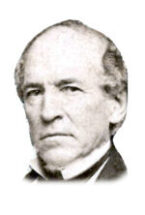
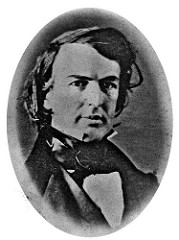
A likeness of Jones when he was editor and majority owner of the Daily Madisonian during President John Tyler’s administration.

MARCH 11th.—Gen. Fitzhugh Lee has made a dash into Fairfax (near Washington) a day or two ago, and captured the Federal Gen. Slaughter and other officers, in their beds.

Last night one of the government warehouses in this city was burnt. It is supposed to have been the work of an incendiary traitor; perhaps in retaliation for the recent impressment of flour. Yesterday the lower house of Congress passed a resolution restricting impressments. This has a bad aspect.

The Bureau of Conscription, to-day, under the direction of Col. Lay, decided that all clerks in the departments, appointed subsequent to the eleventh of October last, are liable to be en-rolled for service. Yet the colonel himself has a clerk appointed in January last.

Gold sells at $5 in Confederate States notes for one; U. S. Treasury notes are at a premium here of $2.50. Even the notes of our State banks are at 60 per cent. premium over Confederate notes. This is bad for Mr. Memminger. An abler financier would have worked out a different result.

All the patriotism is in the army; out of it the demon avarice rages supreme. Every one seems mad with speculation; and the extortioners prey upon every victim that falls within their power. Nearly all who sell are extortioners. We have at the same time, and in the same community, spectacles of the most exalted virtue and of the most degrading vice.

Col. Mattel, the former commandant of conscripts for North Carolina, who was wounded at Kinston, and yet was superseded by Col. Lay’s friend, Col. August, is now to be restored, and Col. A. relieved. Upon this Col. L. has fallen sick.

Mr. Duffield, whom Col. Lay and Mr. Jacques had appointed A. A. G. over me, has not yet, for some cause, got his commission. The Secretary or some one else may have “intervened.”
0 comments

0

News of the Day

March 11, 1863, The Charleston Mercury

HEADQUARTERS DISTRICT GEORGIA,

Savannah, March 9th, 1863. (General Orders No. 21.)

In calling the attention of the troops in this District to the successful repulse, on the 3d inst., of three turreted iron-clad gunboats and three mortar boats by Fort McAllister, the Brigadier General commanding again returns his hearty thanks to the brave garrison, and expresses the confident hope that their heroic example will be followed by all under his command. For eight hours these formidable vessels, throwing fifteen inch hollow shot and shell, thirteen inch shell, eleven inch solid shot, and eight inch rifle projectiles – a combination of formidable missiles never before concentrated upon a single battery – hurled an iron hail upon the Fort. But the brave gunners, with the cool, efficient spirit of disciplined soldiers, and with the intrepid hearts of freemen battling in a just cause, stood undaunted at their posts, and proved to the world that the most formidable vessels and guns that modern ingenuity has been able to produce are powerless against an earth work manned by patriots to whom honor and liberty are dearer than life. Believing that the repulse of these vessels, with but slight injury to the battery or garrison, marks a new era in the history of the war, the fact is published with proud satisfaction for the information and encouragement of all.

Capt. Robert Martin, of MartinLight Battery, who commanded the mortar during the engagement, and dropped one of his shell directly upon the deck of the Montauk, deserves with his detachment, to share all the praise awarded to the immediate garrison.

The vigilance and activity of Capt. J. L. McAllister, and his free exposure to all danger, merit particular mention. His brave marksmen, who lay in the open marsh, within rifle range of the gunboats, are commended to the notice of the [continue reading…]

0 comments

0

News of the Day

March 11, 1863, The New York Herald

Away up in the Rocky Mountain region, north of Utah and Colorado, and West of Nebraska, lies the country named Shosone on some of our maps, to be hereafter known as Idaho, pronounced with the accent on the first and last syllables. It embraces four degrees of latitude – from forty-one to forty-six in the eastern half – and thirteen degrees of longitude – from one hundred and four to one hundred and seventeen. The pony express route from Missouri to California traverses the eastern half of it. The Rocky Mountains form a gigantic back bone, stretching up northwesterly from the South Pass, and innumerable rivers act as the veins and arteries, carrying off the melted snow from those high latitudes and send their tribute to the Father of Waters. A few years ago no white man resided within its wide limits. Today it contains an adventurous mining population. Ten years more, and towns and cities, and churches and schoolhouses, the arts and comforts of civilized life, will be diffused over it. It is thus that the American people subdue the desert, and carry out their great destiny.

Congress, at its last session, passed an act organizing a Territorial government for Idaho, carving it out from Oregon, Dacotah and Washington Territories, just as the Territory of Colorado has been carved out from Kansas, Nebraska and Utah. Its officers consist of a Governor, Secretary, three Judges, a District Attorney and a Marshal. A Territorial Legislature or council is to be convened to adopt a code of laws for the new Territory, and thus, the usual machinery being put in motion, Idaho takes her place as one of the nascent States of the Union.

Very little is known of the resources of the new Territory, but its principal attraction at this time is its supposed mineral wealth. In the autumn of 1861 discoveries were made showing that gold actually existed in that region, and was to be found in paying quantities. These mines were said to be located on the head of Salmon river – a tributary of the Columbia. In the spring of 1862 there was a rush from California, Salt Lake and Pike’s Peak, and the country was pretty well prospected. As soon as navigation opened three or four hundred persons from St. Louis passed up the Missouri as far as Fort Benton, on the boats of the American Fur company. The most of these St. Louis emigrants were sent under [continue reading…]

0 comments

0

News of the Day

March 11, 1863, The Charleston Mercury

The Charleston correspondent of the Mobile Advertiser and Register, in alluding to the constant threats of the Yankees in regard to the attacked upon this place, says:

The struggle, when it comes, will certainly be of a fearful character. It will be the shock of tremendous forces, the relative powers of which are yet untried. The long mooted question of the fighting value of ships against batteries will be brought to a test more conclusive than any to which human warfare has yet subjected it. In other words, the Monitor iron-clads, which the Yankees claim to be the most impenetrable vessels ever constructed, will necessarily come within point blank range of the most numerous and powerful batteries that have ever yet been used in a single engagement. We have good reason, too, to believe that our guns will be managed with admirable tact and precision. The more important batteries are manned by the South Carolina regulars, for whom the credit is claimed, and I think justly, of being the most expert and practiced heavy artillerists in the Confederate army. The forts are well officered, and General Ripley, who has made the study of heavy ordnance a specialty for years, and whose excellence in that particular branch of military knowledge is an admitted fact, will, I hear, make his headquarters at Fort Sumter as soon as the enemy makes his appearance.

It is scarcely possible that any floating thing can breast unharmed the concentrated storm of heavy metal from the guns of Sumter, Moultrie and Battery Bee, the three principal works commanding the throat of the harbor. Nor can the peril of running this terrible gauntlet be diminished by an attempt to pass under cover of the darkness, as has been the case at Vicksburg and New Orleans. So tortuous and intricate is the channel leading to the forts that the most experienced pilots of the harbor would not venture to bring in a vessel by night, under the conditions which the enemy cannot escape, viz: without a light or landmark to guide the way. Even when the blockade-running vessels leave the harbor, it is always necessary to aid their exit by previously arranged lights (shaded) and signals; so that it is reasonably certain that the attacking iron-clads must either enter in open day, or incur the imminent hazard of getting aground upon one of the most treacherous bars on the Southern coast, which seldom yields a vessel once it has grasped the keel. But if, perchance, despite of mazy channel, multiplied torpedoes, and the combined batteries of the forts, some of the nine Monitors should chance to get into port, they would still have to encounter a concentrated fire from other batteries, which, as the Yankee papers have learned from contrabands, […..] the shores of the interior of the harbor.’

And then will come the […..] of war’ which will determine the possession of the honored old city.

0 comments

0

News of the Day

March 11, 1863, The New York Herald

The President has issued an important proclamation today on the matter of soldiers absent from their regiments without leave. He gives a few days’ grace to all such, up to the 1st of April, at which time all those who report themselves to the nearest headquarters, as designated by a previous order of the Secretary of War, will be restored to their respective regiments without punishment; but those who do not will be arrested as deserters and dealt with as the law directs. He warns evil disposed persons not to give aid to the rebellion by encouraging desertion, thus weakening the strength of the armies and exposing those troops in the field to additional danger. He calls upon all good citizens to assist in preventing disaffected parties from urging the desertion of soldiers and discouraging enlistments.

The recent reconnoissance of Colonel Dodge from Norfolk has proved an eminent success. He marched one hundred and ten miles, visiting Southfield, Chuckatuck and Blackwater bridge. He met the enemy at Windsor, near the latter point, drove in their advance upon the main body, then attacked them on the flanks and forced them to retire to the Blackwater. The fight lasted only forty minutes.

The news from Tennessee is important. A despatch from Nashville, dated Monday, says that the rebel Van Dorn’s forces have retreated south, and are reported to be across Duck river; that there are no rebels between Franklin and Columbia, and that all is quiet in Murfreesboro. A heavy rain had been falling all day and part of the previous night, causing a rise in the river. On the other hand a despatch yesterday from Cincinnati states that information has been specially received from Franklin, Tenn., to the effect that a large force of artillery, infantry and cavalry moved against the enemy posted at Spring Hill on Monday, and that if the rebels make a stand there will be a heavy engagement, as it is the determination that Coburn’s disaster at Thompson’s Station should be retrieved. Another telegram from Murfreesboro says a report reached there on Monday that Van Dorn’s rebel forces had been defeated, and the greater portion of them captured.

It is evident from all these reports that active operations are in progress in the west. General Rosecrans has given notice to all those persons whose natural supporters are in the rebel service, and whole sympathies and connections are such [continue reading…]

0 comments

0

News of the Day

March 11, 1863, The New York Herald

EXECUTIVE MANSION, March 10, 1863.

In pursuance of the twenty-sixth section of the act of Congress entitled an act for enrolling and filling out of the national forces and for other purposes, approved on the 3d of March, in the year one thousand eight hundred and sixty three, I Abraham Lincoln, President and Commander-in-Chief of the Army and Navy of the United States, do hereby order and command that all soldiers enlisted or drafted into the service of the United States, now absent from their regiments without leave, shall forthwith return to their respective regiments.

And I do hereby declare and proclaim that all soldiers now absent from their respective regiments without leave, who shall, on or before the 1st day of April, 1868, report themselves at any rendezvous designated by the General Orders of the War Department, No. 58, hereto annexed, may be restored to their respective regiments without punishment, except the forfeiture of pay and allowances during their absence; and all who do not return within the time above specified shall be arrested as deserters and punished as the law provides.

And whereas, evil disposed and disloyal persons, at sundry places, have enticed and procured soldiers to desert and absent themselves from their regiments, thereby weakening the strength of the armies, and prolonging the war, giving aid and comfort to the enemy, and cruelly exposing the gallant and faithful soldiers remaining in the ranks to increased hardships and danger –

I do, therefore, call upon all patriotic and faithful citizens to oppose and resist the aforementioned dangerous and [continue reading…]

0 comments

0

Cruise of the U.S. Flag-Ship Hartford -Wm. C. Holton

March 10th. At five thirty A. M. got under way; started ahead, steaming up the river. At nine A. M. beat to quarters, passed Donaldsonville; at this place a few companies of General Banks’s army were encamped. As our ship passed on, we were saluted by the soldiers on shore. At six P. M. brought ship to anchor off Manchac.

0 comments

Downing’s Civil War Diary.–Alexander G. Downing.

Diary of Alexander G. Downing; Company E, Eleventh Iowa Infantry

Tuesday, 10th–We heard again that Port Hudson was taken, and also that Rosecrans had a battle, but can learn nothing definite. A squad from our regiment mounted on mules and horses had an exciting experience while out scouting, about twelve miles from camp. Seeing some chickens in the yard of a farm house, they thought they might as well get a few to take along with them. When some of the boys, dismounting, entered the yard to catch the chickens, they were met by the woman of the house with a bucket of scalding hot water and they had a hard time trying to keep out of her way. Some of the boys got a touch of the hot water, but they caught their chickens.

0 comments

A Confederate Girl’s Diary

Civil War Day-by-Day


March 10th, Tuesday.

I had so many nice things to say – which now, alas, are knocked forever from my head – when news came that the Yankees were advancing on us, and were already within fifteen miles. The panic which followed reminded me forcibly of our running days in Baton Rouge. Each one rapidly threw into trunks all clothing worth saving, with silver and valuables, to send to the upper plantation. I sprang up, determined to leave instantly for Clinton so mother would not be alarmed for our safety; but before I got halfway dressed, Helen Carter came in, and insisted on my remaining, declaring that my sickness and inability to move would prove a protection to the house, and save it from being burned over their heads. Put on that plea, though I have no faith in melting the bowels of compassion of a Yankee, myself, I consented to remain, as Miriam urgently represented the dangers awaiting Clinton. So she tossed all we owned into our trunk to send to mother as hostage of our return, and it is now awaiting the cars. My earthly possessions are all reposing by me on the bed at this instant, consisting of my guitar, a change of clothes, running-bag, cabas, and this book. For in spite of their entreaties, I would not send it to Clinton, expecting those already there to meet with a fiery death – though I would like to preserve those of the most exciting year of my life. They tell me that this will be read aloud to me to torment me, but I am determined to burn it if there is any danger of that. Why, I would die without some means of expressing my feelings in the stirring hours so rapidly approaching. I shall keep it by me.

Such bustle and confusion! Every one hurried, anxious, excited, whispering, packing trunks, sending them off; wondering negroes looking on in amazement until ordered to mount the carts waiting at the door, which are to carry them too away. How disappointed the Yankees will be at finding only white girls instead of their dear sisters and brothers whom they love so tenderly! Sorry for their disappointment! [continue reading…]

0 comments

War Diary of Luman Harris Tenney.

War Diary of Luman Harris Tenney.

10th. After breakfast got up the rations and got shaved. Read some in the Ledger. Bought some maple sugar. Took a little down to Thede. In the evening wrote to Sarah Felton and a little to Fannie. Got a good letter from Minnie and Mother. Checkers with Mason and Mac.

0 comments

Diary of Horatio Nelson Taft.

Diary of US patent clerk Horatio Nelson Taft.

Tuesday March 10th 1863

It has snowed and rained the most of the day and been as unpleasant as ever. Maj E P T[aft] came down from the Fort today and called upon me at the office. Staid till near three o’clock and I went down to the Hotel with him where I met “Carrie” Knowles who has been down to visit her husband. Lieut Col Seward was also there. The news boys were crying the evening papers vociferously, “Latest News Capture of Vandorns Rebel Army.” Well there is such a report in the papers tonight, but only a report. We shall know more in a day or two about it. At Vicksburgh Genl Grant is fighting the Rebels with Water and threatening to deluge the whole Country by turning the Waters of the Miss River. The papers say that the inhabitants are much alarmed. Outrages in this City are becoming quite frequent. Last night there was one man murdered on P.A. Ave and two roberies in frequented parts of the City in the evening. Men were knocked down in the street & robed. I think I will stay in as I have this evening, but the mud kept me in tonight. I sent off the soldiers money this afternoon and enclosed a good deal more and directed for soldiers while at the Express office. Wrote home & may go home the last of the week.

0 comments

The Northern Congress has now made Lincoln Dictator, with full powers to call out the Militia, and make money.

Journal of Meta Morris Grimball
Meta Morris Grimball

10th March

       This is my wedding day and the first time we have not passed it together. Mr Grimball is now in Charleston to try and arrange his business he thinks he will be obliged to sell his negroes. The interest of his debt for the Plantations goes on & we are living on what little ready money we have & no income to be expected. Mr G. feels this proposed sale very much & I should not be surprised if he gave it up as he writes me word the price will only be 6 hundred round and there is no longer a hope of investing in 8 per cent Confederate bonds but the 7 per cent. I hope he may be directed in the right way I pray that he may, and however things turn out he has always acted as a high toned, honorable man, and that must be a great comfort. He troubles himself at having given notice with regard to his bonds, to the Morris’s, so sensitive is his feeling of right. Yet he had the opinion of Mr Lesegne, one of our best Lawyers to guide him, & went by the laws of the Confederacy.—

       Charles’s wife has a little daughter, called after my Mother, which will make us all like her, she writes very pleasantly to Elizabeth.

       Lewis has been quite sick with a bilious fever at the house in Town, Dr Giddings attending. Last Spring he had Typhoid fever, he passed the Summer at Church Flats, & the Fall among the Myrtles at Sulivans Island, both unhealthy places.

       The Northern Congress has now made Lincoln Dictator, with full powers to call out the Militia, and make money. We have no hope but on our own exertions under Providence to look to.—

0 comments

A Rebel War Clerk’s Diary

Civil War Day-by-Day
A likeness of Jones when he was editor and majority owner of the Daily Madisonian during President John Tyler’s administration.

MARCH 10th.—No war news of importance.

Just at this time there is a large number of persons passing to and from the North. They are ostensibly blockade-runners, and they do succeed in bringing from the enemy’s country a large amount of goods, on which an enormous profit is realized. The Assistant Secretary of War, his son-in-law, Lt.-Col. Lay, the controlling man in the Bureau of Conscription, and, indeed, many heads of bureaus, have received commodities from Maryland, from friends running the blockade. Gen. Winder himself, and his Provost Marshal Griswold (how much that looks like a Yankee name!), and their police detectives, have reaped benefit from the same source. But this intercourse with the enemy is fraught with other matters. Communications are made by the disloyal to the enemy, and our condition—bad enough, heaven knows!—is made known, and hence the renewed efforts to subjugate us. This illicit intercourse, inaugurated under the auspices of Mr. Benjamin, and continued by subsequent Ministers of War, may be our ruin, if we are destined to destruction. Already it has unquestionably cost us thousands of lives and millions of dollars. I feel it a duty to make this record.

To-day we have a violent snow-storm—a providential armistice.

It has been ascertained that Hooker’s army is still near the Rappahannock, only some 20,000 or 30,000 having been sent to the Peninsula and to Suffolk. No doubt he will advance as soon as the roads become practicable. If Hooker has 150,000 men, and advances soon, Gen. Lee cannot oppose his march; and in all probability we shall again hear the din of war, from this city, in April and May. The fortifications are strong, however, and 25,000 men may defend the city against 100,000–provided we have subsistence. The great fear is famine. But hungry men will fight desperately. Let the besiegers beware of them!

We hope to have nearly 400,000 men in the field in May, and I doubt whether the enemy will have over 500,000 veterans at the end of that month. Their new men will not be in fighting condition before July. We may cross the Potomac again.

0 comments

0

News of the Day

March 10, 1863, The New York Herald

The rebels, under Captain Mosely, made an attack on Fairfax Court House yesterday morning, about two o’clock, capturing General H. Stoughton, who was in command there, together with all the men detached from his brigade, 110 horses, and the patrols of the Provost Marshal. He entered the place during a violent rainstorm, and took the headquarters of the General completely by surprise. An orderly who escaped and returned to Fairfax states that the enemy were retreating, with our cavalry in close pursuit, and that they were running so hastily for their lives that they abandoned thirty of the prisoners they had previously captured.

Our news today from Tennessee is important. An attack was made by a division of our cavalry, under General Minty, upon the rebel cavalry of General Russell, at Unionville, ten miles from Murfreesboro, on the 7th inst., in which the enemy lost fifty killed, 180 wounded, and all their camp equipage and a number of horses and mules captured.

In the late fight at Thompson’s Station, near Franklin, in which the infantry under Col. Coburn were captured, it is said that our troops fought splendidly while their ammunition lasted; but they only numbered 3,000, while Van Dorn had from 10,000 to 12,000 men in the action. The rebels admit a loss of 180 killed and 400 wounded. Our loss was over 1,000 killed, wounded and captured. Col. Coburn is now in the hands of the enemy.

Our news from Vicksburg, via Cincinnati, represents affairs at the former place in a hopeful aspect. One gunboat had nearly reached Yazoo City through the Pass. The canal at Lake Providence was nearly ready. It was thought that the rebel transports would come out of White river and offer battle.

With respect to the attack by our troops on those of the rebel General Van Dorn a Tuscumbia, Ala., on the 22d ult., a despatch from Jackson, Tenn., states that the expedition was entirely successful, capturing two hundred prisoners, two hundred horses, one piece of artillery and a large train. Our forces also took possession of the town of Tuscumbia, with [continue reading…]

0 comments

0

News of the Day

March 10, 1863, The New York Herald

The bill passed by Congress to tax speculators in gold and silver coin upon purchase to deliver on time, and to prevent banks loaning them money upon the security of specie beyond its par value, has only partially checked the operations of the tribe. The first consequence of the measure was a panic and a general desire to get rid of gold and invest capital in something else. Such was the rush that it caused the price of specie rapidly to fall, the supply being so much greater than the demand. But now that this rush is over, gold does not continue to fall; but, on the contrary, after remaining for several days in the vicinity of 150 has gone up again to the neighborhood of 157, and yesterday fluctuated above and below 156. The bill meditated in our Legislature to prevent the banks loaning any money upon the security of gold and silver coin goes beyond the act of Congress, and would have a similar effect in repressing the rage for speculation in the precious metals till the panic passed off or the sharpers discovered some method by which they might evade the law.

But no enactments can permanently prevent the rise of gold or the depreciation of inconvertible paper currency, unless an act compelling payment in specie; and, after all, probably it was a presentiment of something of this kind being done by Mr. Chase, in pursuance of the discretionary powers invested in him by Congress, that had most influence in giving a temporary check to the speculators. The idea had been set afloat in this journal the day before the sudden descent. The speculators began to doubt about the course they ought to pursue. The very thought of specie payments had scared them; but when they found Mr. Chase was not acting on the suggestion, they rallied and somewhat resumed their composure. Only let him, however, now make the announcement that he intends to restore the currency to its normal condition, and gold will soon go down to a much lower figure than it has recently fallen to, or rather the currency will immediately go up, and when specie payment is actually begun, greenbacks will rise to par; and, though the gold on hand to redeem the notes might not be equal to one-eighth of the circulation, it would be sufficient, because everybody would be satisfied he could get specie for the bills he held when he wanted it, and therefore would be careless about it. At the same time the necessity of making specie payments when demanded would check over- issues of paper either on the [continue reading…]

0 comments

0

News of the Day

March 10, 1863, The Charleston Mercury

That the term of service of three hundred thousand men in the Yankee army will expire in May, seems to be a fact admitting of no doubt. The Chairman of the Military Committee in the Yankee House of Representatives, THADDEUS STEVENS, in supporting the bill which passed the House but failed in the Senate, providing for arming the slaves of the South, distinctly stated, as the grand reason for that measure, that three hundred thousand men in the army must be discharged from service in May, and it being impossible to raise more white troops in the North, the raising of these black troops was an absolute necessity, if the war was to be continued. Some of our contemporaries have affirmed (or rather suggested) that the late Conscription Act which has passed the Yankee Congress, providing for calling out all the forces between the ages of twenty and forty-five into the military service of the United States to carry on the war against us, is designed to keep in the service these three hundred thousand men. We have carefully looked over the provisions of this Act, and we can see nothing in it to justify this opinion. The Act divides the United States into Enrollment Districts, and establishes Enrollment Boards, shall immediately proceed to enroll, all persons subject to military duty, noting their ages, &c.’ and then in the 12th section provides as follows:

That, when necessary to call out the national forces, the President shall assign to each district the number of men to be furnished by said district and then the enrolling board shall draft the required number, and fifty per centum in addition. A list of persons drawn is to be made out, and printed notices served on the drafted men requiring them to appear at a designated rendezvous and report for duty. The President is required to take into consideration the number of men furnished the service of the United States by volunteers from each district, and give credit for that number in calling out the forces.

The only clause that bears on the volunteers now in the service whose term of service may expire, is in the 18th section, which provides –

A bounty of fifty dollars for such volunteers now in the service who may re-inlist for one year from the termination of their present enlistment. Those who may re-enlist for two years after the expiration of their present term shall receive twenty-five dollars of the one hundred dollar bounty of the act of 22d July, 1862.We are able, therefore, to see nothing in [continue reading…]

0 comments

0

Cruise of the U.S. Flag-Ship Hartford -Wm. C. Holton

March 9th. At ten A. M. called all hands to up anchor. At ten forty-five A. M., got under way, steaming up the river, followed by the U. S. steam sloop-of-war Richmond and Monongahela; while steaming up the river, the men were employed in snaking down the rigging. At seven P. M. brought the ship to anchor for the night.

0 comments

Downing’s Civil War Diary.–Alexander G. Downing.

Diary of Alexander G. Downing; Company E, Eleventh Iowa Infantry

Monday, 9th–We were relieved from picket at 9 o’clock this morning. The Thirteenth Iowa had battalion drill this afternoon. Hear some heavy cannonading in the direction of Vicksburg.

0 comments

Diary of Horatio Nelson Taft.

Diary of US patent clerk Horatio Nelson Taft.

Washington Monday March 9th 1863

This has been a fine bright day altho it rained nearly all last night. But the bright Sunshine has brought no very comforting news, rather the Contrary, for last night the Rebels made one of their customary “raids” at Fairfax Court House and gobbled up a Brigadier Genl (Stoughton), a number of other officers and soldiers, and over a hundred horses. Bright soldiers those, officers and all, what vigilent Sentinels they must have had out. About one hundred rebel Cavalry did this thing while a whole Vermont Brigade guarded the place. Considerable strife in the Land office to see who will be appointed at the head of the Examining Board, Mr Eastman of Wisconsin or myself. The subordinates are all for me. We shall know in a day or two who the Commr is for. I have been filling the place for some time. Went to the Hospital after dinner, staid there an hour and then to Charleys an hour. Mr Alcott from NY was there. I wonder if he does not wish she was unmarried. Went from there to Willards. Saw and talked awhile with Col O H Palmer of the 108th. He has resigned and is going home. Called upon Vanma[s]ter and did not get away till half past ten o’clock. Do not wish to be out much later than this, “garroters” are about lately. Have $115.00 soldiers money to send to their friends.

0 comments

War Diary of Luman Harris Tenney.

War Diary of Luman Harris Tenney.

9th. Melissa sent word that she was going on the P. M. train. So I rode up and bade her goodbye on the cars. Seemed sad to have her go. Have enjoyed having her here so much. Thede got a letter from home. Sent a letter to Ma. Roast beef for supper. Went down and saw the boys in the evening.

0 comments

A Rebel War Clerk’s Diary

Civil War Day-by-Day
A likeness of Jones when he was editor and majority owner of the Daily Madisonian during President John Tyler’s administration.

MARCH 9th.—We have no news to-day. But the next act of this terrible drama is near at hand. The Northern papers have reports of the fall of Vicksburg and Charleston. Unfounded. They also say 22,000 men have deserted from the Army of the Potomac. This is probably true.

There is much denunciation of the recent seizure of flour; but this is counteracted by an appalling intimation in one of the papers that unless the army be subsisted, it will be withdrawn from the State, and Virginia must fall into the hands of the enemy. The loss of Virginia might be the loss of the Confederacy.

0 comments

General Price departs for Arkansas

Diaries and Letters of Belle Edmondson

March 9 MONDAY, 1863

Gen Price and Staff left for Arkansas to day. Lucy Gwin, Miss Freeman, Mrs and Miss Martin, Mrs Taylor and myself went as far as Hazelhurst1 with them. There we bid them a long farewell.


  1. General Price crossed the Mississippi with a small bodyguard and his staff.
0 comments

“Have so much to do that I see I will have to stop this letter writing business.”–Army Life of an Illinois Soldier, Charles Wright Wills.

Civil War Day-by-Day

Camp 103d Illinois Infantry, Jackson, Tenn.,
March 9, 1863.

We leave here again in the morning for the Grange. Ordered to report there immediately to relieve a regiment, the 6th Iowa, which is going down the river. Am right glad to be again on the way. Can’t think that we will stay there long, though I ought by this time to know that I have no business thinking anything about the matter. The Fulton Democrat came into our camp to-day, and that correspondence you mentioned in your last has raised quite a stir. The writer is of course denounced as a contemptible liar. My boys this evening got up a little paper which will appear in the Register shortly (it goes in the morning by the same person who carries this) and some fifty of them signed it, all there were in camp. My company would riddle that office in a minute if they could get at it. Worked all day yesterday, Sunday, covering and chinking a picket post, and will not get another day’s use of it. Have so much to do that I see I will have to stop this letter writing business.

0 comments

0

News of the Day

March 9, 1863, The New York Herald

A year ago a great outcry was raised against the general then in command of the Army of the Potomac because he did not advance against the enemy over impracticable roads during the rainy season. The experience of two other generals since at the head of the same army demonstrates that to be “stuck in the mud” in Virginia is not peculiar to any one general. It is an inevitable result of the […..] sacred soil,” and the rebel chiefs, who are supposed to know the country better than our generals, have to share the common lot. Their movements are equally crippled, unless so far as they have railroads at command. We are glad to learn, however, that three days ago the roads were in such fine condition in the vicinity of the Rappahannock that military movements were quite practicable, which fact, coupled with the reconnoissances recently made, would indicate that we may soon have stirring news from the Army of the Potomac. The snow and rain storm that has since intervened at the North may, perhaps, have extended to Virginia and arrested any contemplated operations; but the storm is light, and two or three dry days will be sufficient to put the roads in good order again. The Army of the Potomac is described as in excellent condition and fine spirits, ready for any enterprise to which it may be led by General Hooker.

0 comments

0

News of the Day

March 9, 1863, The New York Herald

The much despised spade turns out to be a trump in the Southwest, as appears from the map we published yesterday illustrating the three great Union expeditions on the Mississippi. In the peninsular campaign of last year General McClellan was violently abused for resorting to the spade, though it turned out he saved by it thousands of lives. What the spade could accomplish in war was then matter of history, and illustrated in the case of the famous earthworks of Washington in the Revolution and of Tottleben at Sebastopol, and the counterworks of the English and French. It has since done something for the rebels at James Island, in the vicinity of Charleston, and also at Fredericksburg and Vicksburg. This year, however, the spade is the chief weapon of our armies in the Southwest – more potent than cannon to open the highway of the Father of Waters from the mouth of the Ohio to the Gulf. If the simple spade, with the aid of American ingenuity, can neutralize the frowning guns and formidable works of   “The Gibraltar of the Mississippi,” that will be a great triumph of a peaceful implement of agricultural industry over the terrible enginery of war.

The cut-off from the river, commencing four or five miles above Vicksburg, and entering the river again below the city, near Warrenton, is only a work of time, when the blue clay is cut away with the spade and the sand is reached. Then a new channel shall have been opened for our gunboats, leaving Vicksburg far to the east, and, it may be, cutting it off from navigation. But, if the latter result do not follow, Big Black river – near Grand Gulf, on the Mississippi side – can be ascended, and the rear of Vicksburg gained in that way, and the strong-hold reduced by siege and starvation. This, the rebel newspapers say, is the object of the cut-off at Vicksburg.

But the importance of gaining time has suggested two other water routes by which Vicksburg may be circumvented more rapidly, and already each is pronounced not only practicable, but a fait accompli. Our telegraphic intelligence published in yesterday’s HERALD declares that the cut-off to Lake Providence as […..] success,” and that Yazoo Pass is also to be […..] a success.” By the latter boats would be enabled to reach the rear of Vicksburg and the Tallahatchie, and perform a [continue reading…]

0 comments