0

News of the Day
1860s newsprint

March 24, 1863, Daily Southern Crisis (Jackson, Mississippi)

 We learn from the Atlanta Intelligencer that, one day last week, a party of ladies some dozen in number, the wives and daughters of soldiers in the field, were seen parading the streets of that city who represented themselves and their families to have been deprived of anything to eat in the few days previous, save a small portion of corn bread.   They proceeded to a store of a Provision Merchant and entered, led by a tall lady whose countenance betrayed care, and who was the spokeswoman of the crowd.   She asked the price of bacon.   The merchant told her one dollar and ten cents per pound.   She remonstrated with him on the exhorbitance of the price and told him how impossible it was for ladies situated as they were to purchase food at such rates.   Finding him inexorable, she drew from her bosom a navy revolver and ordered the other women to proceed to help themselves, which they did, carrying off about two hundred dollars’ worth of provisions.

Subsequently a fund was subscribed by the liberal citizens of Atlanta and placed at the disposal of these ladies, but they could not be found.

The Confederacy gives a different version to the story, and says that there were about fifteen or twenty of these hungry females, all decently and some even well-dressed–wearing golden ear-bobs and breast-pins–who went round to various houses in the city and pressed provisions–taking bacon at one place, meal at another, vegetables at another, &c., &c.  They did not plead poverty, or pressing want, or solicit donations, or anything of the kind. They had money and were doing government service whereby they could make money.   They were only determined not to pay the common prices for provisions.

 The Confederacy says they were only following the example previously set them by Governor Brown, but the results were not the same.  When the Governor seized provisions, the people submitted to it; but when the ladies aforesaid attempted it, the police was put upon their track and soon dispersed them.
0 comments

0

News of the Day

March 23, 1863, Tri-Weekly Telegraph (Houston, Texas)

Editor Telegraph:-As I believe that there are many in the “Lone Star State” who like to hear from the brigade, I will occupy a short space in your columns with the account of what I saw in Richmond.

Among the first attractions in which Texas has an interest, stands most prominently the Texas Hospital, a very large building capable of accommodating 300 patients very comfortably, and 350 if put to the push. Dr. Lindly has the entire supervision, assisted by Dr. Dandridge, both from Texas. Dr. Hughes is likewise a sharer in the duties, though not as yet commissioned. Dr. Allen of Washington county, has been with the institution since its establishment, but leaves for Texas in a few days. All the offices of clerk, steward, matron, nurses, &c., are filled by Texians; Mr. and Mrs. Fenell, of Houston, holding the positions of steward and matron respectively, with great satisfaction to all concerned. The sick are delighted with this successful hospital, and I am rejoiced to see how completely all works for the general good–fulfilling to the letter the description that I gave your readers, when to Richmond last, of what we ought to have.

In this age of hero-glorifying, much encomium may be expected from the author of this letter in relation to the surgeon in charge; but I know that such would be distasteful to him, and I will say simply that he is as accomplished in his [continue reading…]

0 comments

Robert M. McGill

Robert M. Magill – Personal Reminiscences of a Confederate Soldier Boy, 39th Georgia Regiment of Infantry

March.—Nothing special occurred up to the 23d of March. On the 16th, paid $15.00 for hat; on 23d, regiment went down to Warrenton on picket, but Brother I. L. being sick, I was left to wait on him.


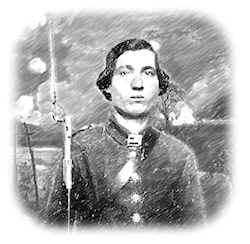
(Note: picture is of an unidentified Confederate soldier.)

0 comments

0

News of the Day

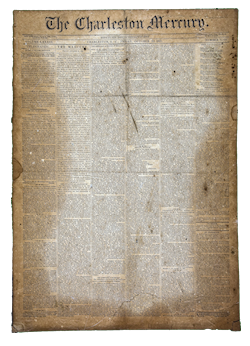
March 23, 1863, Charleston Mercury

Fifteen or twenty women, the leader of whom carried a revolver, in Atlanta, on Wednesday, went around to a number of grocery stores, seizing bacon, meal, and vegetables, paying such prices as they thought proper.   They were dispersed by the police.   The Confederacy says the women were only imitating the example set them by Government officials.

0 comments

Downing’s Civil War Diary.–Alexander G. Downing.

Diary of Alexander G. Downing; Company E, Eleventh Iowa Infantry

Monday, 23d–It rained nearly all day and our new camp has become very muddy. Today I read the two books of Chronicles in the Bible, sixty-five chapters in all. Our picket duty here is very light at present.

0 comments

War Diary of Luman Harris Tenney.

War Diary of Luman Harris Tenney.

23rd. Awakened at 3:30 A. M. Off at 4 A. M. Reached Oberlin at 9:15. So good to see the dear friends. Minnie and Ellie came down. At 11 started for Elyria with Delos. Very muddy. Took dinner with Floy. Aunt Mary looking well, pretty little baby. At 8:15 saw Fannie, the dear girl, good child! Home a little after ten. How hard to return to camp again.

0 comments

A Rebel War Clerk’s Diary

Civil War Day-by-Day
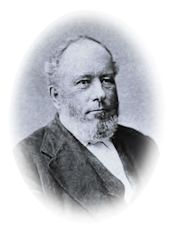
A likeness of Jones when he was editor and majority owner of the Daily Madisonian during President John Tyler’s administration.

MARCH 23d.—The snow has nearly disappeared, and the roads are very bad. No food is brought to the market, and such as may be found in the city is held at famine prices.

I saw a letter to-day from Bishop Lay, in Arkansas. He says affairs in that State wear a dark and gloomy aspect. He thinks the State is lost.

Gen. Beauregard writes the Hon. Mr. Miles that he has not men enough, nor heavy guns enough, for the defense of Charleston. If this were generally known, thousands would despair, being convinced that those charged with the reins of power are incompetent, unequal to the crisis, and destined to conduct them to destruction rather than independence.

0 comments

0

News of the Day

March 23, 1863, The New York Herald

Although no positive information regarding the movements of the army and naval forces, either on the Atlantic coast or the Mississippi, has been received by the government for some days past – at which points some great enterprises were looked for – still, the military authorities at Washington are said to be quite confident that success is certain in both directions.

General Wool has issued a general order from his headquarters in this city, calling attention to the recent proclamation of the President relative to soldiers and officers absent without leave. He conjures all such to avail themselves of the […..] President’s clemency” by returning before the 1st of April.

It is stated that the first call of the President under the new conscription law will be for the deficiency of men under the last two calls. The State of New York is represented as requiring 29,139 men to complete its quota. Of this number this city has yet to furnish 18,523, and the county of Kings is short 1,799.

We have still further particulars today of Colonel Hall’s brilliant action at Milton, Tennessee, the official account of which, from General Rosecrans, we gave yesterday. The rebels made a fearful assault with their dismounted cavalry and three regiments of infantry upon a section of our batteries which was throwing a most destructive fire amongst them; but the First Missouri regiment, who were lying concealed behind the battery, waited until the enemy were within thirty yards, when they opened a terrible fire, causing them to recoil, and finally to retreat in confusion from the field, leaving their dead and wounded behind them.

A despatch from Louisville states that the rebel commander, Col. Cluke, surrounded Mount Sterling, Ky., at two o’clock yesterday morning. Our forces, amounting to two hundred, fought from the houses for four hours, but were finally [continue reading…]

0 comments

0

News of the Day

March 23, 1863, The Charleston Mercury

GOOD NEWS FROM THE YAZOO PASS EXPEDITION – THE YANKEE FLEET RETREATING.

MOBILE, March 21. – The Advertiser has the following despatch, which it gives as official:

FORT PEMBERTON,

YAZOO RIVER, March 20.

LORING has whipped the enemy back from this point, and they are now in full retreat for Yazoo Pass.

Fort Pemberton is situated at the confluence of the Tallahatchie and Yallabusha Rivers – streams which form the Yazoo. Yazoo Pass, of which so much has been heard, is a sort of bayou, formed by the overflow of the Mississippi during the rainy season, and makes a connecting link between that stream and the headwaters of the Tallahatchie. In ordinary times, this pass is navigable only for dugouts, and even in times of high water was thought impassable to anything but flat-boats. The Yankees have ditched it out, cut down the trees, rooted up the cypress trees, and converted this shallow pass into a ship canal, through which their gunboats have steamed, and, after a voyage of a hundred or more miles, reached Fort Pemberton and attacked it – only to be defeated and compelled to fall back.

LATEST FROM PORT HUDSON.

PORT HUDSON, March 21. – Reports prevail here that the U.S. sloop-of-war Richmond has sunk from the injuries she received here in the fight on the 15th inst. Nothing definite, however, has been ascertained. The mortar fleet still occupies its former position, below and out of range of our batteries. Yesterday the enemy fired slowly at our transports [continue reading…]

0 comments

0

News of the Day

March 23, 1863, The Charleston Mercury

VICKSBURG, March 16.

It must be a very provoking dilemma for the Yankee General Grant to be placed in a position where he cannot advance, and dare not turn back. In order to accomplish the former, he has been engaged for two months in digging and cleaning up the stumps and logs from the canal, but still he is unable to move his transports below by means of this ditch. His iron-clads may run by batteries, but that will only insure their capture, and the transports and troops have to remain above or make an attempt against the formidable batteries.

The following conundrum, got up by an improvised minstrel band, is a good one: ‘Why is Vicksburg like a hundred dollar Confederate bill? Because the Yankees can pass it, but can’t take it.’ Their gunboats can pass by, but they can’t take the place. It matters but little whether they are above or below, as far as operations against this point are concerned. One thing is self-evident, they can never reduce this place unless they make an attempt at it, and thus far they have not ventured to expose themselves within range of our batteries.

I have learned some further particulars of the capture of the Indianola. She was a formidable iron-clad, with powerful guns – those mounted on the bow being eleven inch columbiads, and the stern guns were nine inch. On her passage by the batteries on the way down, the Yankees had taken the precaution to grease her sides with tallow to make the balls glide off easily, and the whole craft was daubed over to the thickness of a quarter of an inch. She fought well in the engagement, but none of our men were lost.

She had a coal barge on each side of her, and on her cruise she captured a pig from the plantation of Mr. Sims, and had the porker quartered on one of the coal barges, together with a lot of chickens, which had also been captured. When the [continue reading…]

0 comments

0

News of the Day

March 23, 1863, The New York Herald

The late Congress, in the estimation of the great body of the people of the loyal States, atoned for numerous blunders and covered a multitude of sins in its broad, comprehensive measures for a vigorous and overwhelming prosecution of the war. The men, money, means and resources of the country at the service of the government, and the powers of the President to draw upon them, are ample for the suppression of the rebellion before the expiration of the approaching summer. The issue is now in the hands of the administration, and a responsibility from which, in the event of another indecisive campaign, President Lincoln need not hope to escape.

Experience should be to him as she is to other thoughtful men – the teacher of wisdom. The terrible instructions of the disastrous three months of June, July and August, 1862, should not be forgotten. Granted that the misfortunes which in those months befel the army of General McClellan and the army of General Pope resulted from the disarrangement of McClellan plans and combinations by intermeddling and ignorant politicians, we still contend that even after the sanguinary seven days’ battles in front of Richmond McClellan would have been able from Malvern Hill to follow up that wholesale slaughter of the rebel army into the rebel capital had reinforcements to his army to the extent of even twenty thousand men been promptly forwarded from Washington. The radical abolition military leaders of Congress had stopped enlistments; all the troops that had been raised were in active service, and the Virginia army of General Pope had absorbed all the reserves that could be spared, and was still so weak that against a forward movement of the enemy it was considered imperatively necessary to bring up the army of General McClellan to his support to save the national capital. Thus failed the peninsular campaign of last summer, when a reserved force at Washington of even twenty thousand men, in addition to the army of General Pope, and the forces in the fortifications of Arlington Heights, &c., would have enabled the government to carry General McClellan triumphantly into Richmond. As it was, the disasters to General Pope’s army at Manassas, which enabled the rebel General Lee to push forward into Maryland, and to capture our twelve thousand men and their valuable supplies of artillery and military stores at Harper’s Ferry, would have been [continue reading…]

0 comments

0

News of the Day

March 23, 1863, The Charleston Mercury

On Tuesday last the Yankees, with from 1000 to 1200 men, advanced some two or three miles from Jacksonville. The object was to burn down some buildings behind which the Confederates were stationed. Major BREVARD’S battalion attacked them, and the fight lasted about an hour, during which we had five men wounded, but none killed. During the skirmish the enemy’s wagons could be seen carrying off their dead and wounded. The enemy being in superior force, came near surrounding the Confederates, who were compelled to retire to a more favorable position. The centre of the Yankee forces was composed of white troops, and their right and left wings of negros, officered by whites. In a few days we look for more important information from that quarter. The Confederate troops have been reinforced, and are anxious to meet the enemy.

0 comments

0

News of the Day

March 23, 1863, The Charleston Mercury

The long silence at Fredericksburg has at last been broken by the clash of arms. The enemy has begun his […..] movement,’ and made his first step by attempting to cross the river at Kelly’s Ford, above Fredericksburg. On last Tuesday morning, about 9 o’clock, a.m., the advance of the enemy, some 3000 strong, as estimated in the official despatch to General Lee, and supposed to be Averill’s division, appeared on the north bank of the Rappahannock, and succeeded in effecting a crossing. Accounts brought down by passengers put the enemy force a little higher – say some four or five thousand. They were here met by a portion of General Fitzhugh Lee’s command, about 1200 strong, according to the reports we get. A severe engagement ensued. The fighting is said to have been terrific, and the enemy are reported to have fought with great stubbornness. The battle wavered a long time, and the great bravery of our men alone won the victory. Our men dashed on the enemy with all the force of an avalanche, and for a long time the fight raged – hand to hand. The Yankees contested every inch of the ground, but finding the fire of our men too much they fell back in great disorder, and retired to the other side of the river. As soon as the retreat was ordered the Yankees fled in great dismay and confusion, leaving behind them their dead and wounded on the field, and a number of supplies. So rapid was the enemy’s flight across the river that his hospital, established in the rear for his wounded was abandoned, and his dead lay strewn over the ground – everything left behind in his panic.

Of the loss in the action we can get very little information. It is quite certain, however, that the enemy suffered severely. We can get no actual estimate of his loss, but from the accounts brought down by passengers last night, as well as from the official despatches, it is very plain that the fight was a hard and desperate one, and the loss severe. The Yankees would scarcely have been thrown into such confusion and disorder had not they have been terribly cut up.

So far as regards our own loss, we are without any definite information. It is to be hoped from the accounts we get that our men suffered not seriously. The despatches we have convey no idea as to the extent of our loss, beyond the mere fact [continue reading…]

0 comments

0

Cruise of the U.S. Flag-Ship Hartford -Wm. C. Holton

March 22d. At ten A. M., the Albatross got under way and dropped down the river a short distance, and shelled the batteries at Warrenton, receiving in return a brisk fire from musketry and field pieces; after engaging the batteries a short time, came up and anchored ahead of us. Last night a very large coal lighter was floated down to us from the fleet above Vicksburg, the enemy not discovering it until it had got some distance below their batteries, at which time they fired a few shots at it, but doing it no damage. We are not altogether out of coal, but as it is believed that we are in rather a tight fix, it has been deemed necessary to take in a good supply of this precious article. To-day the ship’s company have been engaged coaling ship from lighter. The Albatross is also taking in coal from the same lighter.

0 comments

Downing’s Civil War Diary.–Alexander G. Downing.

Diary of Alexander G. Downing; Company E, Eleventh Iowa Infantry

Sunday, 22d–I worked all day setting up our tent, my two tent mates being on duty. General Logan’s Division started for Vicksburg today. It commenced to rain this evening.

0 comments

War Diary of Luman Harris Tenney.

War Diary of Luman Harris Tenney.

22nd. After morning work, Sergts. Drake and Arnold and Capt. Tod and I rode down to Alton. Very pleasant. Drake is a good boy. Seems to have a heart. After dinner saw Col. Ratliff and got permission to go home three days. Oh what a happy boy. How good it will seem to see Ma and girls and F. Thede has a pass, too. C. G. and Tully (Norton) rode to town with us. Stayed at the National.

0 comments

Diary of David L. Day.

David L Day – My diary of rambles with the 25th Mass

March 22. The garrison here consists of companies G, Capt. Swift, and II, Capt. Sanford, of the 27th Massachusetts; company D, Capt. Howard, of the 5th Massachusetts; company C, Capt. Cliffton, of the 1st North Carolina Union volunteers, and part of a company of North Carolina cavalry. Several gunboats lying in the river. The fellows here are telling us bear stories about one rebel General Garnett (whoever he is) and his brigade which is hovering around here. I think he must be quite a harmless character to let so small a garrison as this go undisturbed, but it is possible he has a wholesome fear of Capt. Flusser and his gunboats. This town has undergone quite a change since we were here last fall. During the winter the enemy made a dash in here, setting the town on fire, burning up the central and business portion of it. These people have singular ideas; they seem to think that by destroying their property, they are in some way damaging us, but if we destroy any property it is a great piece of vandalism. I reckon they will sometime see their mistake and repent of it in dust and ashes.

0 comments

A Rebel War Clerk’s Diary

Civil War Day-by-Day
A likeness of Jones when he was editor and majority owner of the Daily Madisonian during President John Tyler’s administration.

MARCH 22d.—It was thawing all night, and there is a heavy fog this morning. The snow will disappear in a few days.

A very large number of slaves, said to be nearly 40,000, have been collected by the enemy on the Peninsula and at adjacent points, for the purpose, it is supposed, of cooperating with Hooker’s army in the next attempt to capture Richmond.

The snow has laid an embargo on the usual slight supplies brought to market, and all who had made no provision for such a contingency are subsisting on very short-commons. Corn-meal is selling at from $6 to $8 per bushel. Chickens $5 each. Turkeys $20. Turnip greens $8 per bushel. Bad bacon $1.50 per pound. Bread 20 cts. per loaf. Flour $38 per barrel,—and other things in proportion. There are some pale faces seen in the streets from deficiency of food; but no beggars, no complaints. We are all in rags, especially our underclothes. This for liberty!

The Northern journals say we have negro regiments on the Rappahannock and in the West. This is utterly untrue. We have no armed slaves to fight for us, nor do we fear a servile insurrection. We are at no loss, however, to interpret the meaning of such demoniac misrepresentations. It is to be seen of what value the negro regiments employed against us will be to the invader.

0 comments

0

News of the Day

March 22, 1863, The New York Herald

In a Richmond paper of the 17th instant we find sixteen advertisements for substitutes, with the condition generally attached that he must be over forty-five years of age, which shows that the population of the regular military age, between eighteen and forty-five, must be exhausted, and that the rebellion is on its last legs, when it must resort to old men to fight its battles. To show the pressure that exists, we may state that in nearly all the advertisements “a liberal price” is offered, while in one the specific sum of $1,000 is held out, with the remark that “a bugler is preferred,” and the man must be of […..] and industrious habits.” In another advertisement the sum of $400 is offered as a reward for the arrest of a substitute who deserted after getting his pay. We are told he is “Canadian by birth.” All these are indications of the terrible straits to which the chiefs of the Southern insurrection are now reduced. Their men are exhausted. Their money has become almost worthless, being four or five hundred per cent below the par standard of gold. One vigorous effort now, and the rebellion is forever laid low.

0 comments

0

News of the Day

March 22, 1863, The New York Herald

CONDITION OF THE SOUTH – HOW UNION PRISONERS ARE TREATED BY THE REBELS.

WASHINGTON, March 21, 1863.

The Union prisoners who have been released, and arrived here last night from Richmond, on the steamer State of Maine, make some interesting statements in regard to the condition of affairs in the rebel confederacy. They represent that they were most cruelly treated, and suffered everything but death. The rebels treat citizen prisoners much worse than they do the prisoners of war. They were supplied with barely sufficient food to sustain life, and that of the worst possible quality. Latterly, those in Richmond have not been allowed to purchase anything – not even a loaf of bread. Provisions are very scarce and held at fabulous prices. Prices are systematically understated by the rebel papers. Flour is now selling in Richmond at forty to fifty dollars per barrel, although quoted in the Richmond papers at twenty- \eight dollars and a half; sweet potatoes, eight dollars per peck; eggs, two dollars per dozen, and other articles in proportion. In Mobile flour is selling at seventy-five to eighty dollars per barrel.

The poorer classes in Richmond are in a starving condition, and there have been a number of cases of actual starvation among them from inability to obtain the necessaries of life. Society throughout the confederacy is fearfully demoralized, women hitherto respectable being actually compelled to resort to prostitution to obtain the means of existence.

The utmost rigor and cruelty is exercised to keep the soldiers in the army. Soldiers absenting themselves from camps without leave are tried by court martial and punished by from twenty to one hundred lashes, according to the number of days they are gone. Deserters are frequently shot as examples to deter the soldiers from desertion. Many Union soldiers who have deserted to the enemy refuse to take the oath of allegiance and enter the rebel service after ascertaining the actual condition of things and learning what they must undergo, preferring to be returned as deserters and take their [continue reading…]

0 comments

0

News of the Day

March 22, 1863, The New York Herald

The official report of the late conflict near Milton, Tenn., between General Hall’s brigade and the rebels, on the Liberty road, reached the War Department yesterday from General Rosecrans. We have before published the leading facts. Gen. Rosecrans says that the rebels numbered about eight or ten regiments of Morgan’s and Breckinridge’s cavalry, and that Gen. Hall, after four hours’ fighting, whipped and drove them with a loss on our side of seven killed and thirty-one wounded, including one captain. The rebel loss, he says, was thirty or forty killed, including three commissioned officers, one hundred and forty wounded and twelve prisoners, among which were three commissioned officers.

The snow storm at Fortress Monroe ended yesterday in a heavy gale and severe fall of rain. The snow was over a foot deep, and there is but little chance of the roads in that vicinity being available for some days to come.

The intelligence from Gen. Hooker’s army also represents the roads in an impassable condition from the recent snow fall. The mud is rapidly increasing. There are no movements to report from that quarter. General Hooker is about to have a grand review of the First Army Corps.

The army of the United States and the cause of loyalty against rebellion have sustained a serious loss in the death of Major General Edwin V. Sumner, who died at Syracuse yesterday morning, rather suddenly, of congestion of the lungs.

We have later news of the rebel privateer Florida by the arrival at this port yesterday of the bark N.H. Gaston, from Trinidad, which reports that the privateer was at Barbadoes taking in coal on the 23d ult., and left there on the 25th. Since her capture of the Jacob Bell she is not reported to have taken any more prizes.

By the arrival of the steamship British Queen at this port yesterday we have news from the Bahamas dated at Nassau, N.P., on the 16th of March. The blockade runners were doing an active and most profitable trade between the rebel ports and the port of Nassau. The arrivals at and departures from Charleston, Wilmington and Nassau are reported as of daily occurrence. The vessels were mostly owned in England; but many hailed from other European countries. The Legislature of the Bahamas was opened in session on the 5th instant. Governor Bayley delivered an important speech on the occasion, in which he reviewed the position of neutrals trading from the islands to the rebel ports, as well as the question of the right of search as asserted by the federal Congress….

0 comments

“Those upon whom we all looked as distinguished for purity of character as men, and for gallantry as soldiers, seem to have been the first victims.”–Letters from Elisha Franklin Paxton.

Elisha Franklin Paxton – Letters from camp and field while an officer in the Confederate Army

Camp Winder, March 22, 1863.

I am grateful to you for the tender interest in my health manifested in your last letter, received some days since. For the last week I have felt better than I have before this winter. I have gotten a half-bushel of dried peaches from Richmond, and, living upon these for the most part, I have improved very much. I am so much pleased with the medicine that I think I shall send to Richmond and get another bushel. So, I think, you may give up your idea of a furlough.

It commenced snowing again on Thursday evening, and snowed or rained all day Friday and Saturday. To-day the sun is shining brightly, the birds chirping, and some signs of spring again. I hope now we may have good weather, and that you may be able to make some speed with your farm work.

I had an unexpected visitor at my tent yesterday evening–Mr. Junkin of Falling Spring Church. I divided my bed with him, and did what I could to make him comfortable. He has special claims upon my hospitality as the pastor of my old church. It is associated in my mind with many loved friends who have now gone to their long homes, and from it I derived my earliest impressions of the church and the pastor. Twenty long years have passed since I used to go there to church. I have grown that much older, but I fear not much wiser or better. I remember and reverence the teachings of my venerable pastor, but have not made them the guide of my life as I ought to have done.

I laid aside my pencil and paper just here to go over and hear a sermon from Mr. Junkin. It was impressive and eloquent. When he alluded to our missing comrades of the past campaign, there was a solemn stillness, and many eyes moistened with tears. It is sad, indeed, to think now how many good men we have lost. Those upon whom we all looked as distinguished for purity of character as men, and for gallantry as soldiers, seem to have been the first victims. I never saw an audience more attentive than our soldiers are at church. The great mass of them are good men, who have not lost in the army the habits which they learned in their churches at home. I like to see those whose lives may be spared to return home without being contaminated with the vices of the army.

0 comments

0

Cruise of the U.S. Flag-Ship Hartford -Wm. C. Holton

March 21st. At nine A. M., got under way, went to quarters, and steamed up the river a short distance, but owing to the dense fog returned back to our anchorage. To-day we buried one of our men, Robert King, Quartermaster, who had been lying ill for some days. From our anchorage we could see a range of high cliffs, and a small village known as Warrenton. Thinking that there might be batteries erected there, it was decided upon to go up and introduce ourselves by way of informing Mr. Secesh that we are still on the lookout for them. At five P. M., got under way again in company of the Albatross. Steamed up, and when in good range opened fire; continued on up until we had passed by the cliffs, where we expected to find guns mounted, but there were none to be found or at least no response was made to our firing. At six thirty, P. M., came to anchor about three miles above Warrenton. We are now lying about six or seven miles below Vicksburg, and can see the city quite distinctly. This has been quite an adventurous week to us.

0 comments

Downing’s Civil War Diary.–Alexander G. Downing.

Diary of Alexander G. Downing; Company E, Eleventh Iowa Infantry

Saturday, 21st–The Eleventh Iowa received new guns, the Enfield rifle, and everyone is pleased with the exchange. Receiving orders to move camp, we struck our tents at 3 o’clock p. m. and moved two miles and went into camp in a cotton field close by the levee just above the town of Lake Providence. On account of the flooding waters we had to travel a distance of four miles to reach the point. General Logan’s Division moved up the river about four miles.

0 comments

War Diary of Luman Harris Tenney.

War Diary of Luman Harris Tenney.

21st. John Devlin went down to Oberlin without a pass. Will probably be punished. Took a letter for C. G. and brought another from Fred which C. G. showed to me. Both good. Issued rations for 11 days. After going round with potatoes, felt rather tired. A sore toe, miserable corn.

0 comments