0

Civil War Day-by-Day

March 25, 1863, Dallas Herald

Our informant who gave us the facts in regard to the capture of the Queen of the West, on Red River, and who was forced to go with the Queen down the Atchafalaya, relates the following incident:

At one of the places burnt by the Queen, and owned by a lady who had been thus villainously left houseless, the valiant Commander attempted to converse with her on the bank from the deck of his boat.  She proved true pluck for him.  He asked her:

“Madam, have you a father, brothers or any other relative in this war?”

The lady was quite young, a widow, with two young boys of five and seven years of age by her side. Her reply was a stinger to this three, six and nine month invader and subjugator of old Abe.  She answered, in sight of the smoldering ruins of her home:

“I have two brothers in the army; and if you keep on this war twelve years longer, (pressing the heads of her boys,) I shall have two sons to fight you till their deaths.  I expect nothing better than arson and murder from any of your tribe.

The commander slope to his gun-room, while the lady and boys cheered the departure of the Queen of the West with the Bonnie Blue Flag.–Natchez Courier.

0 comments

0

Civil War Day-by-Day

March 25, 1863, Dallas Herald

For several weeks past we have been compelled to print our paper on brown paper, and we shall probably be compelled to do so for several weeks to come. We have purchased a supply of white paper, which will cost us over $50 per ream by the time it reaches us, and this we expect in the course of three or four weeks. We shall, as a consequence, be compelled to raise the price of subscription, from $2,50 to $5 per annum. We do this reluctantly, but we cannot pay the above price for paper, and make a living for ourselves without an increase in price. All subscribers who are paid to a future period will be continued until the time is out, but new subscribers hereafter will have to pay the advanced rates.

Advertisements will be charged at the rate of $2, per square for first insertion, and $1 for each continuance.

0 comments

0

Civil War Day-by-Day

March 25, 1863, The Charleston Mercury

COLUMBIA, TENN., March 18.

In my last letter I gave you very fully the disposition of Van Dorn’s force upon Rutherford’s Creek, where he had taken position to meet the enemy. On the 10th we had retired from Spring Hill before a large force of the enemy, and taken an advantageous position, and expected on the 11th to have an engagement of short duration and retire across Duck River to this point on a pontoon bridge, which was then constructed and about to be launched. Upon attempting to launch it, it was discovered to be impossible, as the river had overflowed its banks, and was sweeping on with the greatest rapidity, bearing on its bosom huge logs and drift wood, hurled down with such velocity as to render the laying down of the pontoon an utter impossibility. To render matters still worse, the rope, by means of which the ferry boat was crossed, became submerged, and another one was with difficulty stretched across, by means of which we were enabled to cross a boat capable of carrying at each trip, occupying forty minutes, one wagon or eight or ten horses. Placed in this unfortunate position, we were completely covered by Federals in heavy force in the front and upon both flanks, without having any means of retreat in case of a superior force, which was certain, and which it was only our intention to engage and retire. Several plans of escape were suggested, among which the most plausible was to swim the horses across the stream and cross the troops by the ferry, but it was found that even this was impracticable. Our position was at the head of the peninsula formed by the junction of Carter’s creek and Duck river, while the enemy’s position was upon another peninsula directly opposite, formed by the junction of Rutherford and Carter’s creeks, all of which streams were unusually high and well nigh impassable. Our forces were disposed on the south side of Rutherford’s creek, our centre resting upon the Nashville pike, our left extending to Carter’s creek, and our right, under Forrest, extending a mile or two to the right of the pike and upon the border of Rutherford’s creek. The position was a very strong and commanding one, and King’s Battery was put upon the highest hill commanding the approaches from the pike. In front of our position, upon the centre, open fields stretched from Rutherford’s creek back a thousand yards to a wooded hill upon the left of [continue reading…]

0 comments

0

Civil War Day-by-Day
1860s newsprint

March 25, 1863, Galveston Weekly News

An army correspondent of the Chattanooga Rebel writes as follows:

Our army is again in a good fighting trim, and the ranks rapidly filling up by the influx of absentees. I suppose it is better clothed, equipped and fed than ever before. The country is bountifully supplied with game, but the boys are forbidden to shoot, for fear of hitting some general’s aid.

I have conversed with several intelligent and creditable gentlemen from Williamson county in the last few days, and they bring melancholy tidings of the fate of their gallant people. The country is being desolated. The Abolitionists are burning and destroying houses, razing fences, stealing horses, shooting cattle and hauling off all the provisions in the county not even leaving many families meat or bread enough for a single meal. They have broken up the wagons, hoes, and plows, destroyed the harness, and everything that can be employed in cultivating the earth. The officers boldly proclaim that the people shall not raise another crop. Citizens are robbed of their money, and their houses pillaged of every article of wearing apparel, and bed clothing, and their furniture and table ware broken and ruined by heartless scoundrels. I was informed of three instances of my acquaintance in which fair, modest, virtuous young women were ruthlessly violated by the hellish ruffians. These are not pictures woven by fancy, nor the creation of vague rumors, but facts attested by authorities that cannot be questioned. If retributive justice is no myth of fancy, it surely is time now for an exhibition of its power. When the men of the country are torn from their homes to fight for the government, that government should take some retaliatory steps to protect their helpless families from the hands of the incendiary and the ravisher.

0 comments

0

Civil War Day-by-Day
1860s newsprint

March 25, 1863, Galveston Weekly News

 Like most of our contemporaries, we are compelled to advance our terms of subscription, not for the purpose of increasing profits, but to save ourselves from loss. Having now to pay for white paper just about fifteen times the price when our terms of subscription were established, our readers will readily see the utter impossibility of continuing the same rates. We had hoped, ere this, to have received paper long since sent for by a special agent, and that the cost would not have been so high as to make this advance necessary.  But we now see no immediate prospect of getting the paper we have been looking for, and the increasing scarcity and cost of paper even east of the Mississippi, and the enormous charges for transportation, with all the attendant difficulties and delays, will probably bring that paper, when it arrives, (even if it ever does,) nearly to the price we are now paying.  Subscriptions from this date to the Tri-Weekly News will be charged $12 per year, or at the same rate quarterly, and for the Weekly News $5, always in advance, and present subscribers will be charged the same when the time for which they have paid has expired.  We should state for the information of subscribers in arrear that they will be charged at the above rates from this date, and if they wish the paper discontinued, they have only to notify us and pay up all arrears.

 We have now made arrangements by which we believe the News will always give its patrons all the important and reliable intelligence from the seat of war and elsewhere, at the earliest possible moment.  We have been subject to many embarrassments, as our readers are generally aware, from heavy losses by the war, by fire and otherwise, but by the continual support of our patrons and our own unceasing labors, we hope not only to be able to continue our paper through the war, but to improve it from time to time.

0 comments

0

News of the Day
1860s newsprint

March 25, 1863, The New York Herald

Our Expeditionary Correspondence.

ON THE WAY, SEVENTY-FIVE MILES DOWN THE TALLAHATCHIE, March 10, 1863.

The date I prefix to this communication gives the present locality of the Yazoo Pass expedition with as much exactness as I can command. We have reached a very fair stream for navigation by small steamers, but are yet sadly cramped for room in which to work boats of any considerable size. Our progress is, therefore, very slow and far from satisfactory. The extreme upper end of this river and the lower part of the Coldwater were moderately good rivers, and we got along at a rate of twenty or thirty miles per day. But suddenly the Tallahatchie narrowed its borders and became exceedingly crooked, so as nearly to rival the ever to be remembered pass, and boats experienced the greatest difficulty in getting along at all, and therefore we were two or three days in advancing about twenty miles.

COTTON FARMS ALONG THE COLDWATER.

In the parts of the Coldwater and Tallahatchie mentioned as good, we found high banks and well cultivated plantations in abundance. The owners of these plantations, with their colonies of negroes, were, as a general thing, at home, attending to their ordinary avocations as though there existed no war in the land. At these places we were repeatedly told that the rebels had recently visited them in boats, picking up cotton to be used in building fortifications lower down the river to oppose our progress. But we met with no manner of resistance or trouble from any of these people. Their disposition seemed perfectly friendly, and we passed them without further molestation than levying a few hundred bales of cotton from them to strengthen the defences of our gunboats and transports. Of this staple there was no lack in that region, nor had there apparently been any efforts made to conceal or destroy it. This was the more remarkable since the planters admitted that they had been expecting this expedition for a month past. They evidently knew but little of war, and [continue reading…]

0 comments

0

News of the Day
1860s newsprint

March 25, 1863, Memphis Daily Appeal (Jackson, Mississippi)

Mrs. L. C. W. Brown:

 Dear Madam:  Your letter, with one thousand dollars, contributed by the ladies of Natchez for the support of the Soldiers’ lunch house, was handed me this morning by Mr. Howe.  Allow me, in behalf of the brave soldiers whose sufferings they nobly wish to alleviate, to thank the patriotic ladies of Natchez for their very liberal donation. The Soldiers’ lunch house in this place was opened on the 8th of February last, and fed during that month 595 soldiers, and lodged 669.  We have succeeded far beyond our expectations, and have the gratification of knowing that our streets are no longer crowded with hungry soldiers.  The grateful soldiers bless the ladies of Mississippi, and go forth with fresh courage and renewed strength to meet our foes.  Let me, in conclusion, assure them that the money shall be used as directed.

Yours very respectfully,
Mrs. C. S. Knapp,
President M.A.S.

 Jackson, Miss., March 24, 1863.

0 comments

0

News of the Day

March 25, 1863, The New York Herald

We have some important intelligence from the Yazoo expedition today. It comes by way of St. Louis, and is to the effect that the steamer Dilligent, with the Eighth Missouri, had succeeded in entering Yazoo rover above Haines’ Bluff. Her course was through Cypress Bayou, which debouches into the Yazoo opposite Johnson’s plantation, and thence through Steele’s Bayou into the Sunflower, which empties into the Yazoo twenty miles above Haines’ Bluff. The Diligent was accompanied by a light gunboat. As soon as it was found possible to get through four iron-clads followed.

If this be so our forces are now in the rear of Yazoo City, and by reducing that post and Fort Pemberton, may place Vicksburg in our hands. It was rumored that Haines’ Bluff was evacuated, and that the Eighth Missouri had gone up to garrison the place. Our expeditionary correspondence from that quarter is full of interesting details relative to the movements of the fleet in its progress. An excellent map illustrates the locality in which the expedition operated.

Despatches from Cincinnati, dated yesterday, state that within the last four days the rebels have made several reconnoissances, causing considerable picket skirmishing along the whole front of the Union army. They do not appear anxious, however, to bring on a general engagement. Reliable information from the South represents that the evacuation of Vicksburg is being advocated for strategic purposes, prominent rebels declaring that by withdrawing their troops from Vicksburg and massing them in Middle Tennessee they can oblige General Rosecrans to repeat the movements of General Buell last year.

The capture of Mount Sterling, Ky., by the rebels is confirmed, but on the other hand we learn that Colonel Garrard attacked the rebel forces under Colonel Clarke on Monday, near Mount Sterling, driving them towards Owensville.

Nothing new has occurred in front of Charleston, nor is any attack expected there until the period of high tides arrives, with the equinoctial season, which is evidently just setting in.

The Paris correspondent of the London News, writing on the 6th of March, says:– “The news of the issue of letters of marque by Mr. Lincoln has caused a great impression here. It is also noticed as significant that the Moniteur has copied an article from an English paper advocating the prompt recognition of the South.”
0 comments

0

Cruise of the U.S. Flag-Ship Hartford -Wm. C. Holton

March 24th. Everything continues quiet. This afternoon it cleared up, and the sun made its appearance once more, which made things in general assume a more lively appearance. Tonight we are expecting one or two boats down from the upper fleet. I think that if they succeed in passing by the batteries at Vicksburg they will be very fortunate, as it is almost a matter of impossibility for a vessel to pass their casemates without being sunk, or at least very materially damaged; however, it is very probable that an attempt will be made, as it is highly necessary that we should have some assistance with us, in order to succeed in our object here. Our men have been engaged to-day erecting a barricade of sails on port side of poop deck; also building a breastwork of hammocks around the wheel.

0 comments

Downing’s Civil War Diary.–Alexander G. Downing.

Diary of Alexander G. Downing; Company E, Eleventh Iowa Infantry

Tuesday, 24th–It rained all night and day, and our camp is almost covered with water. The report in camp is that we will go down the river in a day or two.

0 comments

War Diary of Luman Harris Tenney.

War Diary of Luman Harris Tenney.

24th. In the morning did some errands. Played chess with Thede and Melissa. Oysters for supper. Thede goes back tonight. I could see he dreads it–so do we. In the evening went to N. P. (North Professor street–Fannie Andrews’ home). Had such a good visit. Called at N. P. 2 a few minutes. (Fannie Henderson’s home.) Had a pleasant tete-a-tete with F. The more I see her, the greater is my love and admiration. Called on Fred and Fairchild. Thede returned to camp. Pictures. Sweet Home!

0 comments

Diary of David L. Day.

David L Day – My diary of rambles with the 25th Mass

Gen. Foster Arrives.

March 24. Gen. Foster arrived this morning and went to work laying out a fort and other defences which we are to build. That job done, he took companies F, I and K of the 25th and H of the 27th Massachusetts with a party of marines, and a boat howitzer (on board his boat, the John Ferrin,) and left on some sort of an excursion up the Chowan river. The general is no idler, he is always on the move and seeing that everybody else is. He is ubiquitous, turning up at any time in all parts of his domain, and keeping everybody within fifty miles on the qui vive.

0 comments

A Rebel War Clerk’s Diary

Civil War Day-by-Day
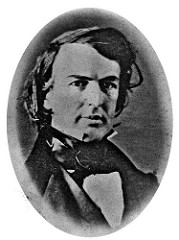
A likeness of Jones when he was editor and majority owner of the Daily Madisonian during President John Tyler’s administration.

MARCH 24th.—Judge Lyons has granted an injunction, arresting the impressment of flour by the Secretary of War, and Congress is debating a bill which, if passed, will be a marked rebuke to the government.

Notwithstanding the wishes of the Secretary of War, the President, and Gen. Rains, Lt.-Col. Lay is still exempting Marylanders, and even foreigners who have bought real estate, and resided for years in this country, if they have not taken the oath of domicile.

In Eastern Tennessee, 25,500 conscripts were enrolled, and yet only 6000 were added to the army. The rest were exempted, detailed, or deserted. Such is the working of the Conscription Act, fettered as it is by the Exemption Law, and still executed under Judge Campbell’s decision. Gen. Rains has the title, but does not execute the functions of Superintendent of the Bureau of Conscription. The President has been informed of everything.

0 comments

0

News of the Day
1860s newsprint

March 24, 1863, Peoria Morning Mail (Illinois)

We saw a lady–a lady in every sense of the term–at the market yesterday morning, with a “Copperhead” pin for a shawl fastening. We understand it was not worn merely as a matter of convenience, but as a badge to show she was for the Union and the Constitution.

0 comments

0

News of the Day

March 24, 1863, The Charleston Mercury

The object of this war, on the part of the Confederate States, is the preservation of independence against unjust and vindictive assailants. It is the business of our Government and Generals to wage the war in that manner which will be most effective to the end desired. Throughout the past history of the struggle a practical arrogance and brutality has been exercised by the United States which required prompt and thorough curbing; and, under the garb of chivalry and humanity, on the part of the Confederate States, a short-sighted and unwholesome tenderness, meant for the benefit of mankind and the world at large, which has only encouraged the truculency of the enemy, entailed numberless woes upon our people, and given the appearance of timidity abroad. From all the signs around us, it is time to stop this mistrustful anxiety to toady foreign nations. Experience is teaching us that the exercise of a gingerly gentleness in war has only brought about the systematic and wholesale practice of the inhumanities first perpetrated. Vigor, promptitude and firmness might easily have checked them then. Now it will require more numerous and more signal examples to satisfy the United States of the virtue and power of retribution. We have been drifting steadily into a war without quarter, chiefly from our failure to impose, by examples, a definite, unmistakeable understanding as to the extent of barbarity to which the South would submit.

The recent bloody orders of ROSECRANS, and the diabolical plans set afoot by HUNTER, imperatively call for the infliction of summary, unsparing punishment upon all belonging to those commands. It is a matter of self- preservation, and the cause of humanity is involved. As men whose words proclaim them hostes humani generis, and whose deeds put them beyond the pale of law, it becomes the duty of all charged with the defence of the country to use every effort for checking their brutal career. Practical proofs of the position they occupy as criminals, can alone bring conviction, and restrain, by the penalties affixed to crime. Mercy to murderers and incendiaries is cruelty to those who may become their victims. Are we not satisfied of the folly of longer trifling with this question, and of the unavoidable necessity of meeting this issue boldly and manfully – soldiers, officers and government?

0 comments

0

News of the Day

March 24, 1863, The New York Herald

The news from the Southwest today is important. It is stated that on the 14th instant Admiral Farragut came into action with his fleet at Port Hudson, and after a brisk engagement with the batteries, succeeded in passing the fort with all his fleet, consisting of eight vessels, leaving the Mississippi behind, which ran aground, and was set on fire by order of the Admiral. The army is reported to be within five miles of the enemy’s works. Despatches from Southwest Pass, La., appear to confirm this statement. They are dated on the 15th, and add that heavy skirmishing was going on in the advance; that Colonel Clark, aid to General Banks, was slightly wounded, and that the army was in good spirits and would move in a few hours.

No news from any of our naval officers to this effect has been received, and this fact excites much suspicion concerning its truth.

Our Baton Rouge correspondence relative to the movements of General Banks’ army, today, will be found full of interest upon this subject.

Admiral Porter, in a despatch to Washington yesterday, says he has received information from Lieutenant Commander Watson Smith that on the 7th instant the whole expedition arrived in the Tallahatchie, which gives us control of the heart of the State of Mississippi. The vessels all got through in fighting condition, excepting the Petrel, which lost her wheel. This movement alarmed the rebels. They are energetically at work preparing themselves for defence. There is much distress in Vicksburg. The occupants have no meat, but are living almost exclusively on corn meal.

Advices from the Yazoo pass expedition represent that the movements are slow, but that there is every prospect of getting through successfully. Our forces had debarked near Greenwood, and were besieging Fort Pemberton. A number of our transports were badly damaged in getting through the Pass. The ram Lioness overhauled the steamer Parallel [continue reading…]

0 comments

0

News of the Day
1860s newsprint

March 26, 1863, Savannah Republican (Georgia)

The Southern Recorder says:   “Our last bill for printing paper, such as we now use for the Recorder, was at the rate of $14 per ream.   Of the propriety of raising the price of subscription our readers can judge, when we state that paper of the same size formerly cost $3, which, compared to present rates, shows an advance of nearly five hundred per cent.

0 comments

0

News of the Day
1860s newsprint

March 24, 1863, Daily Southern Crisis (Jackson, Mississippi)

 We learn from the Atlanta Intelligencer that, one day last week, a party of ladies some dozen in number, the wives and daughters of soldiers in the field, were seen parading the streets of that city who represented themselves and their families to have been deprived of anything to eat in the few days previous, save a small portion of corn bread.   They proceeded to a store of a Provision Merchant and entered, led by a tall lady whose countenance betrayed care, and who was the spokeswoman of the crowd.   She asked the price of bacon.   The merchant told her one dollar and ten cents per pound.   She remonstrated with him on the exhorbitance of the price and told him how impossible it was for ladies situated as they were to purchase food at such rates.   Finding him inexorable, she drew from her bosom a navy revolver and ordered the other women to proceed to help themselves, which they did, carrying off about two hundred dollars’ worth of provisions.

Subsequently a fund was subscribed by the liberal citizens of Atlanta and placed at the disposal of these ladies, but they could not be found.

The Confederacy gives a different version to the story, and says that there were about fifteen or twenty of these hungry females, all decently and some even well-dressed–wearing golden ear-bobs and breast-pins–who went round to various houses in the city and pressed provisions–taking bacon at one place, meal at another, vegetables at another, &c., &c.  They did not plead poverty, or pressing want, or solicit donations, or anything of the kind. They had money and were doing government service whereby they could make money.   They were only determined not to pay the common prices for provisions.

 The Confederacy says they were only following the example previously set them by Governor Brown, but the results were not the same.  When the Governor seized provisions, the people submitted to it; but when the ladies aforesaid attempted it, the police was put upon their track and soon dispersed them.

0 comments

0

News of the Day

March 23, 1863, Tri-Weekly Telegraph (Houston, Texas)

Editor Telegraph:-As I believe that there are many in the “Lone Star State” who like to hear from the brigade, I will occupy a short space in your columns with the account of what I saw in Richmond.

Among the first attractions in which Texas has an interest, stands most prominently the Texas Hospital, a very large building capable of accommodating 300 patients very comfortably, and 350 if put to the push. Dr. Lindly has the entire supervision, assisted by Dr. Dandridge, both from Texas. Dr. Hughes is likewise a sharer in the duties, though not as yet commissioned. Dr. Allen of Washington county, has been with the institution since its establishment, but leaves for Texas in a few days. All the offices of clerk, steward, matron, nurses, &c., are filled by Texians; Mr. and Mrs. Fenell, of Houston, holding the positions of steward and matron respectively, with great satisfaction to all concerned. The sick are delighted with this successful hospital, and I am rejoiced to see how completely all works for the general good–fulfilling to the letter the description that I gave your readers, when to Richmond last, of what we ought to have.

In this age of hero-glorifying, much encomium may be expected from the author of this letter in relation to the surgeon in charge; but I know that such would be distasteful to him, and I will say simply that he is as accomplished in his [continue reading…]

0 comments

Robert M. McGill

Robert M. Magill – Personal Reminiscences of a Confederate Soldier Boy, 39th Georgia Regiment of Infantry

March.—Nothing special occurred up to the 23d of March. On the 16th, paid $15.00 for hat; on 23d, regiment went down to Warrenton on picket, but Brother I. L. being sick, I was left to wait on him.


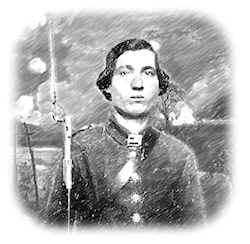
(Note: picture is of an unidentified Confederate soldier.)

0 comments

0

News of the Day

March 23, 1863, Charleston Mercury

Fifteen or twenty women, the leader of whom carried a revolver, in Atlanta, on Wednesday, went around to a number of grocery stores, seizing bacon, meal, and vegetables, paying such prices as they thought proper.   They were dispersed by the police.   The Confederacy says the women were only imitating the example set them by Government officials.

0 comments

Downing’s Civil War Diary.–Alexander G. Downing.

Diary of Alexander G. Downing; Company E, Eleventh Iowa Infantry

Monday, 23d–It rained nearly all day and our new camp has become very muddy. Today I read the two books of Chronicles in the Bible, sixty-five chapters in all. Our picket duty here is very light at present.

0 comments

War Diary of Luman Harris Tenney.

War Diary of Luman Harris Tenney.

23rd. Awakened at 3:30 A. M. Off at 4 A. M. Reached Oberlin at 9:15. So good to see the dear friends. Minnie and Ellie came down. At 11 started for Elyria with Delos. Very muddy. Took dinner with Floy. Aunt Mary looking well, pretty little baby. At 8:15 saw Fannie, the dear girl, good child! Home a little after ten. How hard to return to camp again.

0 comments

A Rebel War Clerk’s Diary

Civil War Day-by-Day
A likeness of Jones when he was editor and majority owner of the Daily Madisonian during President John Tyler’s administration.

MARCH 23d.—The snow has nearly disappeared, and the roads are very bad. No food is brought to the market, and such as may be found in the city is held at famine prices.

I saw a letter to-day from Bishop Lay, in Arkansas. He says affairs in that State wear a dark and gloomy aspect. He thinks the State is lost.

Gen. Beauregard writes the Hon. Mr. Miles that he has not men enough, nor heavy guns enough, for the defense of Charleston. If this were generally known, thousands would despair, being convinced that those charged with the reins of power are incompetent, unequal to the crisis, and destined to conduct them to destruction rather than independence.

0 comments

0

News of the Day

March 23, 1863, The New York Herald

Although no positive information regarding the movements of the army and naval forces, either on the Atlantic coast or the Mississippi, has been received by the government for some days past – at which points some great enterprises were looked for – still, the military authorities at Washington are said to be quite confident that success is certain in both directions.

General Wool has issued a general order from his headquarters in this city, calling attention to the recent proclamation of the President relative to soldiers and officers absent without leave. He conjures all such to avail themselves of the […..] President’s clemency” by returning before the 1st of April.

It is stated that the first call of the President under the new conscription law will be for the deficiency of men under the last two calls. The State of New York is represented as requiring 29,139 men to complete its quota. Of this number this city has yet to furnish 18,523, and the county of Kings is short 1,799.

We have still further particulars today of Colonel Hall’s brilliant action at Milton, Tennessee, the official account of which, from General Rosecrans, we gave yesterday. The rebels made a fearful assault with their dismounted cavalry and three regiments of infantry upon a section of our batteries which was throwing a most destructive fire amongst them; but the First Missouri regiment, who were lying concealed behind the battery, waited until the enemy were within thirty yards, when they opened a terrible fire, causing them to recoil, and finally to retreat in confusion from the field, leaving their dead and wounded behind them.

A despatch from Louisville states that the rebel commander, Col. Cluke, surrounded Mount Sterling, Ky., at two o’clock yesterday morning. Our forces, amounting to two hundred, fought from the houses for four hours, but were finally [continue reading…]

0 comments