Sunday, July 28.—Clear and pleasant, with a moderate trade wind. At 9:30 a.m. gave chase to a sail ahead, which proved to be a Venezuelan schooner. At 11 mustered the crew. In the afternoon passed the island of Tortuga, and at 11 p.m., having come up with the west end of Margarita, hove the ship to with her head to the northward to await daylight. Depth of water, 32 fathoms.
American Civil War Chronicles
Extracts from the journal of Commander Semmes, C.S. Navy, commanding C.S.S. Sumter
July 28, 2026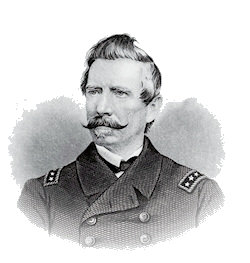
… the Southerners seem to have behaved with the greatest courage
July 28, 2026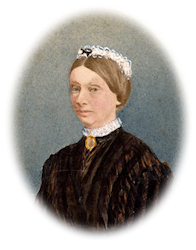
28 [July]
The accounts from the battle continue to come in, and the Southerners seem to have behaved with the greatest courage and their Officers most successfully.—
There were services in the Church to day to return thanks for the Victory. — We understand The Palmetoe Guard, Lewis’s Company, repulsed a regiment and acted in the most approved style of valor.—
Charles gave me an unhappy account of Richard, he seems to lead a dreary lonely life, and manage very badly.—
Through Some Eventful Years.—Susan Bradford Eppes
July 28, 2026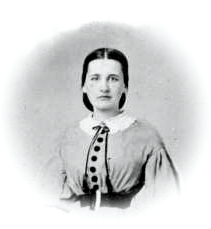
July 28th, 1861.–Colonel Robert Howard Gamble is organizing “Gamble’s Artillery,” and Charley Hopkins has enlisted in that company and so have many others from Tallahassee. Aunt Sue brought a beautiful piece of French opera flannel and asked me to make Charley two shirts. I am a little doubtful as to my ability but if I find it too difficult I can get my Lulu to finish them for me; she sews so neatly and she makes all my clothes, under Mother’s direction. These shirts are blue and they are to have real silver buttons, which Aunt Sue has had made at the jewelers. She says silver will not tarnish as common metal buttons might do. Mr. Pratorius is making Charley’s uniform. I suppose I will learn all the different uniforms after awhile. The Infantry is gray, trimmed with blue, the buttons are of brass and the officers have gold lace on their sleeves, a chevron they call the design on the sleeves; a captain has three gold bars on his collar; the privates do not have any gold lace. Charley is in an artillery company and they wear a little red, but the uniform is gray, too. Cousin Willim Bradford is in a cavalry regiment and his gray uniform is trimmed with corn-color. They all look fine to me and I grow more patriotic all the time but Sister Mag says that is because I am not married. Ridiculous; I am just a child.
The Governor’s Guards volunteered some time ago and now they are re-organizing and will serve as an infantry company, with Captain G. W. Parkhill as their captain. The name has been changed to “The Howell Guards,” in honor of Mrs. Jefferson Davis, who was a Miss Howell. Soon they, too, will be going to Virginia; poor Sister Mag; she will be heartbroken I fear. The Captain is a fine looking man in his uniform but not so handsome as Brother Amos, who is 2nd Lieutenant in the Howell Guards. They are in camp now and are drilling every day.
Susan Bradford is 15 years old when this entry was made.
Right to stay in Washington.—Woolsey family letters.
July 28, 2026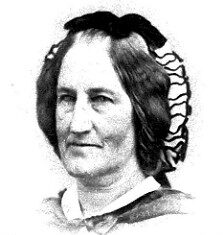
Mother to Eliza.
0 comments
Brevoort Place, Late in July.
My dear Eliza: If the regiments are all to be stationary for some time you and G. might run on for a visit. I have given up my plan of going to you for the present unless you should need me. We are now talking again of Lenox for the summer.– Abby and Jane are both wilting daily in the hot city, and I feel troubled at their being here, though we are unwilling to move off further away from you girls. We don’t know at what time the Southern army may make an attack. I have no idea that they will wait patiently till fall, though our side might, and the daily expectation of another battle keeps us here. It is intensely hot, noisy, dusty and distracting. The streets seem filled with a perfect rabble all the while. . . . Mary and the children are looking perfectly well. Baby Una grows fat and lovely by the hour–she is a splendid child. Bertha is a witch, but fascinating in her badness. Little May is very much interested in hemming a handkerchief for some poor soldier, which I basted for her, and am to send on to you when finished! She feels as if she had the whole army on her hands! in this important piece of work. . . . It is pleasant to know of your seeing so many friends. I think you are right to stay in Washington instead of Alexandria–the latter place must be intolerable,–but don’t wear yourselves out.
“…courage and resolution never failing though surrounded by his dead and dying comrades.”—Elizabeth Freeman Lusk to Mrs. Henry G. Thompson.
July 28, 2026
Norwich, July 28th, 1861.
Dear Cousin Louisa:
I will not commence with prefatory remarks but hasten to reply to your questions about my boy. Mr. Abbott returned from Washington to-day. He found Will well, and well cared for at the house of Lt.-Col. Elliott, whose family are bestowing upon him every imaginable kindness. Oh! dear Louisa, God’s promise has not failed, and the widow’s son is not only safe, but he has added joy to his mother’s heart by his noble conduct. Col. Elliott told Mr. Abbott he should be promoted, that his courage and prudence were rare, and eminently qualified him to be an officer. Mr. A. wept as he spoke of his appearance on the battlefield, his courage and resolution never failing though surrounded by his dead and dying comrades. The Colonel said, “that boy is not known, but he must be now.” I do not hesitate to write you this, dear friend. God knows I rejoice tremblingly, but I share him now with the country to whom he is devoting all the energies of his earnest spirit. If you or any friend feel like writing him, direct to Washington, Lieut. William T. Lusk, 10th Co. 79th Highland Regiment; he has not written even me, for he has no time, but as soon as he can be spared he hopes to come to me for a day or two. I notice by the papers he was in the hottest of the fight and that the regiment was covered “with immortal honor.” Tell Laura, as he is connected with the Highlanders, I would like to know something of his Scotch ancestry we have so often laughed about. Pray for him, my friend. God never seemed so near as in this dark hour. I know that He pities his sorrowing children, remembering “we are but dust.” With much love to all our dear Enfield friends,
I remain
Affectionately yours,
E. F. Lusk.
Bull’s Run. “…our roll call shows that 199 are numbered among the dead, the wounded, and the missing.”—War Letters of William Thompson Lusk.
July 28, 2026
July 28th, 1861.
Dear Mother:
A week has passed since our misfortunes at Bull’s Run, and in all the intervening time I’ve had only opportunity to let you know that I was safe. But I must tell you something of that unlucky day, for I know you had rather have the story from my own lips. As I promised Henry Goddard to write once in a while for the Bulletin, I will put my story in a form to suit that sheet, if you think proper to communicate it: –
We too have breathed into our nostrils the smoke of battle, we too have listened to the voice of the cannon, we too have seen the finest of pagents, the most splendid of dramatic spectacles – the death struggle between armed arrays of men. We, who only yesterday were numbered among the “Sons of the Muses,” find ourselves today counted among the full-fledged “Sons of Mars.” We have fought, suffered, and survived to tell our tale. “To-morrow morning at 2 o’clock be ready for an advance, provided with a couple of day’s provisions,” is the command we receive on Saturday evening, and at the chilly hour appointed, without the sounding of the Reveillé, we are noiselessly summoned to our Arms. We stand in silence at our posts until the red glare of the rising sun had followed the dark hour before dawn. Then we marched on, gay of heart, and full of confidence. We cross Bull’s Run, and see men cutting trees by the bridge. We ask their reason. “It is to cover a retreat,” they tell us. “Ho! Ho!” How we laughed at the thought of our retreating! What innocent woodmen those were that could talk of us defeated! It was a bonnie sight to see us then, eager for battle, dreaming of victory. Some three miles we marched on, and then were drawn in the woods in line of battle. In line we advanced till we came to the edge of the forest, where we were told to lie down to avoid the range of the enemy’s cannon. About 6 o’clock a couple of pieces of our artillery to the left of us opened a fire upon such of an unseen foe as our skirmishers were able to discover. Long our pieces were unanswered. How glorious, we thought, this firing on the foe, and ourselves in seeming safety! How we laughed when afar we could see an exploding shell scattering the enemy in confusion, who for a short moment were thus forced to show themselves on open ground. The fields before us were occupied by our officers reconnoitring. Away off on the line of wood-covered hills two or three miles away, we could see the glitter of bayonets. Seen from a tree, they were found to belong to fine troops, well equipped, and marching in order – troops not to be scattered by threats, but worthy of being combatted. Upon an elevated open space of ground before us to the right, we could see more troops moving – horsemen riding – above all one on a white horse who seemed to be everywhere. The sun grew warm and we became listless. The artillery continued to discharge its Death messengers, the sharp rattle of musketry was heard to our right, volley after volley following in quick succession, yet many of us slept, quietly awaiting our turn to be summoned to action. About 11 o’clock two horses came galloping riderless toward us. While surmising whence they came, we were called to rise and march to battle. We sprung from the earth like the armed men of Cadmus. On we rushed by the flank, over fields, through woods, down into ravines, plunging into streams, up again onto rising meadows, eager, excited, thrilled with hot desire to bear our share in routing the enemy. We cheered, and yelled, pressing onward, regardless of shells now and then falling among us, thinking only of a sharp fight and a certain victory. At last we reached the lines of the brave boys of the 69th. Here the American banner was planted, so we shouted lustily, for the spot had not long since been wrung from the foe.
From many a point not long since covered by secession forces, the American banner now floated. What wonder we felt our hearts swelling with pride, and saw, hardly noticing, horse and rider lying stiff, cold and bloody together! What, though we stepped unthinking over the pale body of many a brave fellow still grasping convulsively his gun, with the shadows of Death closing around him! We were following the foe, I have said, and were dreaming only of victory. So we were marched to the edge of a slope which sheltered us partially from the aim of the enemy’s artillery. Here lying prostrate, shell after shell flew over our heads, or tore up the ground around. Now we could feel the hot breath of a cannon ball fan our cheeks; now we could see one fairly aimed, falling among our horses, and rolling them prostrate; and now again one of these messengers would come swift into the ranks of one of our columns, and without a thought or a groan, a soul was hurried into eternity.
After about an hour in this trying position, we were called up and turned into the road, where Death began to make sad havoc in our ranks. Surely aimed, the shot of the enemy fell among us. We could not see the foe, and then it was terrible to see our own boys, whose faces we knew, and whose hands we had pressed, falling in Death agony. We heard, while marching stealthily, a great shout, and looking we saw a hill before us, covered with the Ellsworth Zouaves. A moment more, and from the top of the hill, from unseen hands blazed a terrible discharge of arms. It was one of those masked batteries, which have so often brought us misfortune. Bravely fought the Zouaves, but they had to fall back from that hellish fire. Other Regiments made the charge, but only to be repulsed with ranks thinned and broken. At length our turn came. Up we rushed – our brave Colonel with us.
The first fire swept our ranks like a quick darting pestilence. “Rally, boys–Rally!” shouted the officers, and a brave rally was made. Our men stood firmly firing, answering volley by volley. Here we felt the worthlessness of our old Harper’s Ferry muskets, when matched against the rifles of the enemy. Tall men were mowed down about me. Wounded men begged their comrades to press on, and not to risk anything by lingering near them. We were only some twenty yards from a battery, belching forth a thick heavy hail of grape and canister, shell and fire of musketry. With unerring accuracy the enemy’s riflemen singled out our officers and mighty men. Suddenly we saw the American flag waving over the battery. “Cease firing” was the order given, and for a short moment we believed the battery was ours. It was the enemy though that had raised the flag to deceive us. As we lowered our arms, and were about to rally where the banner floated, we were met by a terrible raking fire, against which we could only stagger.
“By the Lord, but I believe them coons’s too cunning for us!” cried an old soldier near me. We halted, fell back, and the hillside was left to such only as lingered to bear away their wounded comrades.
As we passed down we saw our Colonel lying still, in the hands of Death. He had fallen bravely, breast to the foe, not wishing to cherish his own life, while the lives of his men were imperilled. Over the sad disheartening retreat let us not linger – let it be covered by the darkness of the night which followed. We took with us 750 brave men into the battle, but our roll call shows that 199 are numbered among the dead, the wounded, and the missing. Six captains of ours are silent now when their names are called. They died with many of their men, careless of Death, willing to give up all things, even life in its sweetness, for the good of the Republic. “Dulce et decorum est pro patria mori.”
L. of the 79th.
I have received only three letters from you, the rest probably having been intercepted by the enemy while I was in Virginia.
Very affec’y.,
Will Lusk.
A Diary of American Events – July 28, 1861
July 28, 2026
–At Savannah, Ga., the funeral obsequies of Gen. Francis S. Bartow, who was killed at the battle of Bull Run, were celebrated to-day in most imposing style. There was an immense military and civic procession, comprising all the companies in the city, with detachments from the several garrisons of the neighboring forts and batteries. The cortége started from Christ Church, where an eloquent funeral sermon was preached by Bishop Elliott. The entire population of the city was present, and manifested the deepest sorrow. The bells were tolled and minute guns were fired during the march of the column. A salute of three rounds was fired by the infantry and artillery over the grave.–Charleston Mercury, July 29.
–Last night the steamer W. I. Maclay, Capt. Conway, bound from Cincinnati for St. Louis, M . was fired into at Cape Girardeau. The Maclay had landed at Cape Girardeau to discharge freight and passengers, and had no trouble whatever with any person or persons at that place. It was late at night, and very few people were seen. The officers discovered a number of tents, presenting the appearance of a camp, above the town. Soon after the boat had left the wharf to continue her trip to St. Louis, between two and three hundred shots were fired at her from shore. The shots took effect in the texas, pilot-house, and hurricane roof, some of them entering a lot of empty barrels on the roof. Two or three shots passed through the bulkheading of the texas, and one of them took effect in the head of the cook, who was asleep in his berth. It struck him on the left temple and passed around the skull, making a severe flesh wound. Another passed through the leg of a cabin boy, in the same apartment. No other damage was done to either the crew or passengers. Among the latter were about fifty soldiers, belonging to one of the Illinois regiments at Cairo, on their way home.–St. Louis Republican, July 30.
–The privateer Gordon, of Charleston, S. C., captured and carried into Hatteras Inlet the brig McGillery, of Bangor, Me., and the schooner Protector, from Cuba for Philadelphia. The privateer Mariner also captured a schooner, and the York captured the brig D. S. Martin, of Boston, Mass., with a cargo of machinery.–N. O. Delta, Aug. 1.
–A Detachment of two companies of Col. Mulligan’s regiment and three companies of the Home Guards sent to Hickory Hill, near Mount Pleasant, in Cole County, Mo., were fired on from an ambush near that place, but no one was hit. Col. Mulligan’s men captured twenty-eight rebels, among them two captains of Jackson’s forces; also, forty horses and two teams. –National Intelligencer, July 31.
–A Flag of truce came into Newport News, Va., this morning, with a proposition giving the national troops twenty-four hours to leave, and announcing that in case the place was not vacated they would force them out. The gunboat Dale, of twenty guns, at once went up from Old Point. The Albatross and Penguin were also stationed there, while the Minnesota and seven gunboats at Old Point are ready to assist should Newport News really be attacked. –Baltimore American, July 29.
–Thanksgiving Day was celebrated in the “Confederate” States, “for the success of our arms and the deliverance of our homes from the menacing hordes that have hung upon our borders like wolves upon the outskirts of the forest. We are pleased to be able to state that the day was generally observed in Memphis in accordance with the spirit of the resolution, and we believe that every pulpit echoed the thankfulness that fills the public heart”–Memphis (Tenn.) Appeal, July 30.
Civil War Day-By-Day
July 28, 2026
July 28, 1861
A Chronological History of the Civil War in America1
- Gen. Banks at Harper’s Ferry withdrew his troops to the Maryland side of the Potomac.
- A Chronological History of the Civil War in America by Richard Swainson Fisher, New York, Johnson and Ward, 1863
“I was at Willards this evening. Genl McDowell (the great defeated) was there. Genl McClellan is also there, having arrived this morning.”—Horatio Nelson Taft
July 27, 2026
SATURDAY, JULY 27, 1861.
The day has passed off without any thing very remarkable taking place. I was at the office part of the day but at home most of the time. Lieuts Swan and White, Lieut Gould of Rochester, and Sergeant Major Chas Gaul dined with us today. I was at Willards this evening. Genl McDowell (the great defeated) was there. Genl McClellan is also there, having arrived this morning. He is supposed to be a man for the place.
______
The three diary manuscript volumes, Washington during the Civil War: The Diary of Horatio Nelson Taft, 1861-1865, are available online at The Library of Congress.
A Diary From Dixie
July 27, 2026
July 27th.–Mrs. Davis’s drawing-room last night was brilliant, and she was in great force. Outside a mob called for the President. He did speak–an old war-horse, who scents the battle-fields from afar. His enthusiasm was contagious. They called for Colonel Chesnut, and he gave them a capital speech, too. As public speakers say sometimes, “It was the proudest moment of my life.” I did not hear a great deal of it, for always, when anything happens of any moment, my heart beats up in my ears, but the distinguished Carolinians who crowded round told me how good a speech he made. I was dazed. There goes the Dead March for some poor soul.
To-day, the President told us at dinner that Mr. Chesnut’s eulogy of Bartow in the Congress was highly praised. Men liked it. Two eminently satisfactory speeches in twenty-four hours is doing pretty well. And now I could be happy, but this Cabinet of ours are in such bitter quarrels among themselves–everybody abusing everybody.
Last night, while those splendid descriptions of the battle were being given to the crowd below from our windows, I said: “Then, why do we not go on to Washington?” “You mean why did they not; the opportunity is lost.” Mr. Barnwell said to me: “Silence, we want to listen to the speaker,” and Mr. Hunter smiled compassionately, “Don’t ask awkward questions.”
Kirby Smith came down on the turnpike in the very nick of time. Still, the heroes who fought all day and held the Yankees in check deserve credit heyond words, or it would all have been over before the Joe Johnston contingent came. It is another case of the eleventh-hour scrape; the eleventh-hour men claim all the credit, and they who bore the heat and brunt and burden of the day do not like that.
Everybody said at first, “Pshaw! There will be no war.” Those who foresaw evil were called ravens, ill-foreboders. Now the same sanguine people all cry, “The war is over” –the very same who were packing to leave Richmond a few days ago. Many were ready to move on at a moment’s warning, when the good news came. There are such owls everywhere.
But, to revert to the other kind, the sage and circumspect, those who say very little, but that little shows they think the war barely begun. Mr. Rives and Mr. Seddon have just called. Arnoldus Van der Horst came to see me at the same time. He said there was no great show of victory on our side until two o’clock, but when we began to win, we did it in double-quick time. I mean, of course, the battle last Sunday.
Arnold Harris told Mr. Wigfall the news from Washington last Sunday. For hours the telegrams reported at rapid intervals, “Great victory,” “Defeating them at all points.” The couriers began to come in on horseback, and at last, after two or three o ‘clock, there was a sudden cessation of all news. About nine messengers with bulletins came on foot or on horseback–wounded, weary, draggled, footsore, panic-stricken–spreading in their path on every hand terror and dismay. That was our opportunity. Wigfall can see nothing that could have stopped us, and when they explain why we did not go to Washington I understand it all less than ever. Yet here we will dilly-dally, and Congress orate, and generals parade, until they in the North get up an army three times as large as McDowell’s, which we have just defeated.
Trescott says this victory will be our ruin. It lulls us into a fool’s paradise of conceit at our superior valor, and the shameful farce of their flight will wake every inch of their manhood. It was the very fillip they needed. There are a quieter sort here who know their Yankees well. They say if the thing begins to pay–government contracts, and all that–we will never hear the end of it, at least, until they get their pay in some way out of us. They will not lose money by us. Of that we may be sure. Trust Yankee shrewdness and vim for that.
There seems to be a battle raging at Bethel, but no mortal here can be got to think of anything but Manassas. Mrs. McLean says she does not see that it was such a great victory, and if it be so great, how can one defeat hurt a nation like the North.
John Waties fought the whole battle over for me. Now I understand it. Before this nobody would take the time to tell the thing consecutively, rationally, and in order. Mr. Venable said he did not see a braver thing done than the cool performance of a Columbia negro. He carried his master a bucket of ham and rice, which he had cooked for him, and he cried: “You must be so tired and hungry, marster; make haste and eat.” This was in the thickest of the fight, under the heaviest of the enemy’s guns.
The Federal Congressmen had been making a picnic of it: their luggage was all ticketed to Richmond. Cameron has issued a proclamation. They are making ready to come after us on a magnificent scale. They acknowledge us at last foemen worthy of their steel. The Lord help us, since England and France won’t, or don’t. If we could only get a friend outside and open a port.
One of these men told me he had seen a Yankee prisoner, who asked him “what sort of a diggins Richmond was for trade.” He was tired of the old concern, and would like to take the oath and settle here. They brought us handcuffs found in the débacle of the Yankee army. For whom were they? Jeff Davis, no doubt, and the ringleaders. “Tell that to the marines.” We have outgrown the handcuff business on this side of the water.
Dr. Gibbes says he was at a country house near Manassas, when a Federal soldier, who had lost his way, came in exhausted. He asked for brandy, which the lady of the house gave him. Upon second thought, he declined it. She brought it to him so promptly he said he thought it might be poisoned; his mind was; she was enraged, and said: “Sir, I am a Virginia woman. Do you think I could be as base as that ? Here, Bill, Tom, disarm this man. He is our prisoner.” The negroes came running, and the man surrendered without more ado.
Another Federal was drinking at the well. A negro girl said: “You go in and see Missis.” The man went in and she followed, crying triumphantly: “Look here, Missis, I got a prisoner, too!” This lady sent in her two prisoners, and Beauregard complimented her on her pluck and patriotism, and her presence of mind. These negroes were rewarded by their owners.
Now if slavery is as disagreeable to negroes as we think it, why don’t they all march over the border where they would be received with open arms? It all amazes me. I am always studying these creatures. They are to me inscrutable in their way and past finding out. Our negroes were not ripe for John Brown.
This is how I saw Robert E. Lee for the first time: though his family, then living at Arlington, called to see me while I was in Washington (I thought because of old Colonel Chesnut’s intimacy with Nellie Custis in the old Philadelphia days, Mrs. Lee being Nelly Custis’s niece), I had not known the head of the Lee family. He was somewhere with the army then.
Last summer at the White Sulphur were Roony Lee and his wife, that sweet little Chailotte Wickam, and I spoke of Roony with great praise. Mrs. Izard said: “Don’t waste your admiration on him; wait till you see his father. He is the nearest to a perfect man I ever saw.” “How?” “In every way–handsome, clever, agreeable, high-bred.”
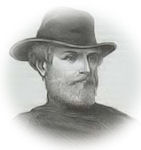 Now, Mrs. Stanard came for Mrs. Preston and me to drive to the camp in an open carriage. A man riding a beautiful horse joined us. He wore a hat with something of a military look to it, sat his horse gracefully, and was so distinguished at all points that I very much regretted not catching his name as Mrs. Stanard gave it to us. He, however, heard ours, and bowed as gracefully as he rode, and the few remarks he made to each of us showed he knew all about us.
But Mrs. Stanard was in ecstasies of pleasurable excitement. I felt that she had bagged a big fish, for just then they abounded in Richmond. Mrs. Stanard accused him of being ambitious, etc. He remonstrated and said his tastes were “of the simplest.” He only wanted “a Virginia farm, no end of cream and fresh butter and fried chicken–not one fried chicken, or two, but unlimited fried chicken.”
To all this light chat did we seriously incline, because the man and horse and everything about him were so fine-looking; perfection, in fact; no fault to be found if you hunted for it. As he left us, I said eagerly, “Who is he?” “You did not know! Why, it was Robert E. Lee, son of Light Horse Harry Lee, the first man in Virginia,” raising her voice as she enumerated his glories. All the same, I like Smith Lee better, and I like his looks, too. I know Smith Lee well. Can anybody say they know his brother? I doubt it. He looks so cold, quiet, and grand.
Kirby Smith is our Blücher; he came on the field in the nick of time, as Blücher at Waterloo, and now we are as the British, who do not remember Blücher. It is all Wellington. So every individual man I see fought and won the battle. From Kershaw up and down, all the eleventh-hour men won the battle; turned the tide. The Marylanders–Elzey & Co.–one never hears of–as little as one hears of Blücher in the English stories of Waterloo.
Mr. Venable was praising Hugh Garden and Kershaw’s regiment generally. This was delightful. They are my friends and neighbors at home. I showed him Mary Stark’s letter, and we agreed with her. At the bottom of our hearts we believe every Confederate soldier to be a hero, sans peur et sans reproche.
Hope for the best to-day. Things must be on a pleasanter footing all over the world. Met the President in the corridor. He took me by both hands. “Have you breakfasted?” said he. “Come in and breakfast with me?” Alas! I had had my breakfast.
At the public dining-room, where I had taken my breakfast with Mr. Chesnut, Mrs. Davis came to him, while we were at table. She said she had been to our rooms. She wanted Wigfall hunted up. Mr. Davis thought Chesnut would be apt to know his whereabouts. I ran to Mrs. Wigfall’s room, who told me she was sure he could be found with his regiment in camp, but Mr. Chesnut had not to go to the camp, for Wigfall came to his wife’s room while I was there. Mr. Davis and Wigfall would be friends, if–if–––
The Northern papers say we hung and quartered a Zouave; cut him into four pieces; and that we tie prisoners to a tree and bayonet them. In other words, we are savages. It ought to teach us not to credit what our papers say of them. It is so absurd an imagination of evil. We are absolutely treating their prisoners as well as our own men: we are complained of for it here. I am going to the hospitals for the enemy’s sick and wounded in order to see for myself.
Why did we not follow the flying foe across the Potomac? That is the question of the hour in the drawingroom with those of us who are not contending as to “who took Rickett’s Battery?” Allen Green, for one, took it. Allen told us that, finding a portmanteau with nice clean shirts, he was so hot and dusty he stepped behind a tree and put on a clean Yankee shirt, and was more comfortable.
The New York Tribune soothes the Yankee self-conceit, which has received a shock, by saying we had 100,000 men on the field at Manassas; we had about 15,000 effective men in all. And then, the Tribune tries to inflame and envenom them against us by telling lies as to our treatment of prisoners. They say when they come against us next it will be in overwhelming force. I long to see Russell’s letter to the London Times about Bull Run and Manassas. It will be rich and rare. In Washington, it is crimination and recrimination. Well, let them abuse one another to their hearts’ content.
“…greeted by shouts and demonstrations of joy.”—Rutherford B. Hayes
July 27, 2026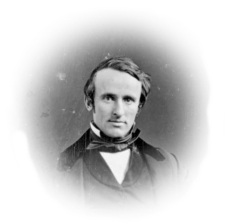
JULY 27, 1861.–From Bellaire to Clarksburg in Virginia. All the way, one hundred and thirty miles, in Virginia, greeted by shouts and demonstrations of joy. The people had seen many three-months men going, leaving western Virginia for home. This, with the defeat at Washington perhaps, led the people to fear that the Union men were left to the Rebels of the eastern part of the State. Our coming relieved them and was hailed with every demonstration of joy. [Today], Saturday, at 2 P.M. [A.M.] reached Clarksburg. Worked like a Turk in the rain all the morning laying out a camp and getting it up, on a fine hill with a pretty scene before us. Clearing off towards the close of the day. Tried to dry clothes. A busy day but a jolly.
In the evening General Rosecrans came over here and ordered Lieutenant-Colonel Matthews to march at 2 A. M. with the right wing in seventy-five waggons, leaving us with left wing and baggage to move at 7 A. M. to Weston. Order of march for our column, ten pioneers, three hundred or four hundred yards in advance of main body; advance guard of thirty, one hundred yards in advance of main body; next, main body; waggon train with baggage, twenty-eight wagons; rear guard of thirty, one hundred and eighty yards in rear of wagons.
Rebel War Clerk
July 27, 2026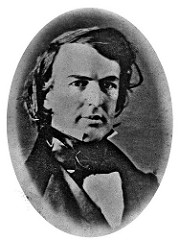
JULY 27th.—A large number of new arrivals are announced from the North. Clerks resigned at Washington, and embryo heroes having military educations, are presenting themselves daily, and applying for positions here. They represent the panic in the North as awful, and ours is decidedly the winning side. These gentry somehow succeed in getting appointments.
Our army does not advance. It is said both Beauregard and Johnston are anxious to cross the Potomac; but what is said is not always true. The capabilities of our army to cross the Potomac are not known; and the policy of doing so if it were practicable, is to be determined by the responsible authority. Of one thing I am convinced: the North, so far from desisting from the execution of its settled purpose, even under this disagreeable reverse, will be stimulated to renewed preparations on a scale of greater magnitude than ever.
“Many had never seen a mountain; none had ever seen such a reception. They stood on top of the cars and danced and shouted with delight.”—Rutherford B. Hayes
July 27, 2026
CLARKSBURG, VIRGINIA, July 27, 1861 (?) (I
believe) Saturday (I know).
DEAR WIFE:–Our second day, from Bellaire to this place, was an exceedingly happy one. We travelled about one hundred and thirty miles in Virginia, and with the exception of one deserted village of Secessionists (Farmington), we were received everywhere with an enthusiasm I never saw anywhere before. No such great crowds turned out to meet us as we saw from Indianapolis to Cincinnati assembled to see Lincoln, but everywhere, in the corn and hay fields, in the houses, in the roads, on the hills, wherever a human being saw us, we saw such honest spontaneous demonstrations of joy as we never beheld elsewhere. Old men and women, boys and children–some fervently prayed for us, some laughed and some cried; all did something which told the story. The secret of it is, the defeat at Washington and the departure of some thousands of three-months men of Ohio and Indiana led them to fear they were left to the Rebels of eastern Virginia. We were the first three-years men filling the places of those who left. It was pleasant to see we were not invading an enemy’s country but defending the people among whom we came. Our men enjoyed it beyond measure. Many had never seen a mountain; none had ever seen such a reception. They stood on top of the cars and danced and shouted with delight.
We got here in the night. General Rosecrans is with us. No other full regiment here. We march tomorrow up the mountains. All around me is confusion–sixteen hundred horses, several hundred wagons,–all the preparations for a large army. Our own men in a crowded camp putting up tents. No time for further description.
Captain McMullen will go to Columbus to return. He will get my pistols of Mr. Platt, if they come to Columbus in time. You would enjoy such a ride as that of yesterday as much as I did. It was perfect. Now comes the hard work. Good-bye; love to all.
Affectionately,
R. B. HAYES.
P.S.–Colonel Matthews showed me a letter from his mother received at the moment of his leaving. She said she rejoiced she was the mother of seven sons all loyal and true, and that four of them were able to go to the war for the national rights.
The view from where I sit is most beautiful–long ranges of hills, a pleasant village, an extensive sweep of cultivated country, the fortified hill where an Indiana regiment prepared to defend itself against overwhelming odds, etc., etc.
Direct all letters and express matters to Clarksburg, Virginia, with my title and regiment until further directions. This is the great depot for operating in western Virginia, and all letters, etc., will be sent from here forward to me.
MRS. HAYES.
Extracts from the journal of Commander Semmes, C.S. Navy, commanding C.S.S. Sumter
July 27, 2026
Saturday, July 27. – A daylight sent a prize crew on board the Abby Bradford and directed her to proceed to New Orleans. At 6 got underway and stood out. As we were weighing anchor discovered a sail seaward, to which we gave chase and captured about 7 miles from the land. She proved to be the bark Joseph Maxwell, of Philadelphia. Sent the master in, with the paymaster, to make propositions to the neutral owner of one-half of the cargo for the delivery to him of his half and for the sale of the other half and of the ship. To my surprise, the governor sent me an order to bring my prize within the port and leave her until the courts of Venezuela could decide the question whether the ship was not captured within the marine league. Stood out to the prize, standing by our guns; sent the master and his family ashore in one of the prize’s boats, and put a prize crew on board and dispatched the prize to a port on the south side of Cuba. At 3 stood on our course to the eastward. At 5 passed a Yankee hermaphrodite brig running within jumping distance of the land.
“Scott sent an inefficient general (known as a perfect windbag among brother officers) without commissariat, without organization, without proper regimental officers, against what he knew to be a fortified camp of a hundred thousand men.” Woolsey Family Letters, Abby Howland Woolsey to Eliza.
July 27, 2026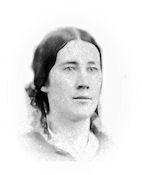
The regiments called out for three months were now about disbanding, though a large number of the men at once re-enlisted for the war.
– – – – – – –
July 27, 10 a. m.
My dear Eliza: I have just been up to the corner to see a sorry sight, the return of the 69th Regiment–oh, so shabby, so worn and weary–all sorts of hats and shirts and some with hardly any clothes at all, staggering along under their knapsacks which they should never have been allowed to carry up Broadway. The surging mass of men and women locking arms and walking with the soldiers, was wonderful. It was a wild, tumultuous, promiscuous rush–not a march. Yesterday afternoon the 8th came through. I could see from the balcony how brown they looked and sturdy, and trimmer than the 69th. The girls and Mother saw them from Brady’s window. The cheers and applause they got down town, I suppose. There was not much of it up here–there was too much crying. Even policemen were in tears. What a dreadful collapse the “Grand Army” of the Potomac suffered. I don’t think the North needed such a lesson! Perhaps they did–perhaps the people have felt as if they could march down to Richmond whenever they chose. . . . Scott sent an inefficient general (known as a perfect windbag among brother officers) without commissariat, without organization, without proper regimental officers, against what he knew to be a fortified camp of a hundred thousand men. The one great blunder was that the battle was fought at all. All other minor blunders–and how many there were! are included in this. . . .
Jefferson Davis is free now to do what he pleases–flushed with success. Everyone says this battle has been as good to him as an increase of a hundred thousand fighting men. . . . He will perhaps attack Washington itself. The papers speak of the danger of this–and we all feel that the city is in greater peril than it was in those April days. Under such circumstances we do not quite relish your idea of going to Alexandria. You would be cut off at once, in that town, from communication or escape. One thought that checked Mother’s desire to go immediately to Washington last Monday was the idea that on reaching there she might find that women and children had been ordered to leave–for fear of an attack from Beauregard. That order may come yet. My dear sisters, I do not want to write anything depressing, but you must make up your minds after this disaster for a long war, an impoverished country, many reverses. So far, you have had but one thought –that of immediate success. General Scott’s plan of closing in on the rebels in Virginia and crushing them as in his fingers, is blown to the winds. We are to have a protracted and somewhat equal struggle, but the North is in earnest; its fault has been over-eagerness. Men there always have been enough of,–let them have proper officers; and as to money, Congress ought to be ashamed to haggle about direct taxation but pass the bill at once and provide ways and means. . . . I am very glad the boxes had all arrived safely. Next day you would get Aunt Emily’s two barrels, and Uncle Edward’s $250 in money. Buy whatever you see is needed or the surgeons and nurses want. Don’t wait for red tape. If it is mattresses, cots, pillows, spirit lamps, food, sheeting, flannel, etc. to wrap wounded men in, or what not. You can have plenty of money, and it could not be better spent than in fitting up a hospital even if that is government work. Carry wanted me to send you some money for her, but I told her I would wait and see whether you could buy the things you needed in Washington, or whether it had better be spent here. Please let me know. We shall have enough more things to fill a barrel early next week. Shall we put in the bandage roller, or are the hospital surgeons provided? I am sorry that Mrs. Leavitt did not send you a list of the contents of her boxes. . . .
Don’t save up things if you see them needed. It is easy to buy more slippers and mosquito net here, and it does not cost us any time or a stitch of effort to send more clothing. The Society has plenty on hand. Mrs. Parker jumped up with pleasure when we sent round the other day to see if she could let us have a few things for the trunk, and granted enough, as you saw, to fill two boxes and over. She was delighted at the idea of their being distributed where she could hear about it, and I must manage to put some scraps of your accounts together and tell her what you say. There is a fresh lot of handkerchiefs under way. Maria Gilman hemmed them on her machine.
“One of our generals has gained a new name from his action while in battle; he is General Jackson, and he has been a professor in the Virginia Military Institute. “—Diary of Susan Bradford Eppes.
July 27, 2026
July 27th, 1861.—Each day brings us fresh news from the battle of Manassas. One of our generals has gained a new name from his action while in battle; he is General Jackson, and he has been a professor in the Virginia Military Institute. He is a strict disciplinarian and his boys at the V. M. I. all knew better than to disobey and the soldiers in his command soon learned the same lesson. Then, too, all who come in contact with him in this new military life are impressed with the personal magnetism he exerts. Uncle Daniel, who was with him several days on business for General Lee, who is in command of the Division in which Uncle Daniel is a Brigadier General, says he is one of the most remarkable men he ever met. In the height of the Battle of Manassas General Jackson had his men drawn up in line facing the enemy; they stood firm, an unwavering line. The newspapers tell it this way. General Bee was trying to rally his Brigade of Georgians; men of undoubted courage, but under fire for the first time. As he waved his sword and urged them on his eyes fell upon General Jackson with his well-drilled Virginians, standing immovable. He cried out to his men, “See, there stands Jackson like a stone wall.” Later in the day General Bee joined “The Immortals,” but ere he went he gave to the quiet professor from the V. M. I. a name which will live forever.
Susan Bradford is 15 years old when this entry was made.
Returned without any disaster.
July 27, 2026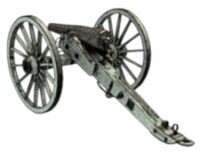
Saturday, July 27.—Men of every detachment were selected to accompany an expedition on board a steamer towards Aquia Creek, to try one of James’ ri?ed guns of heavy calibre upon the rebel battery there. They all returned in the evening without any disaster having occurred.
Return from the Seat of War, Escorted by the New York Seventh Regiment.
July 27, 2026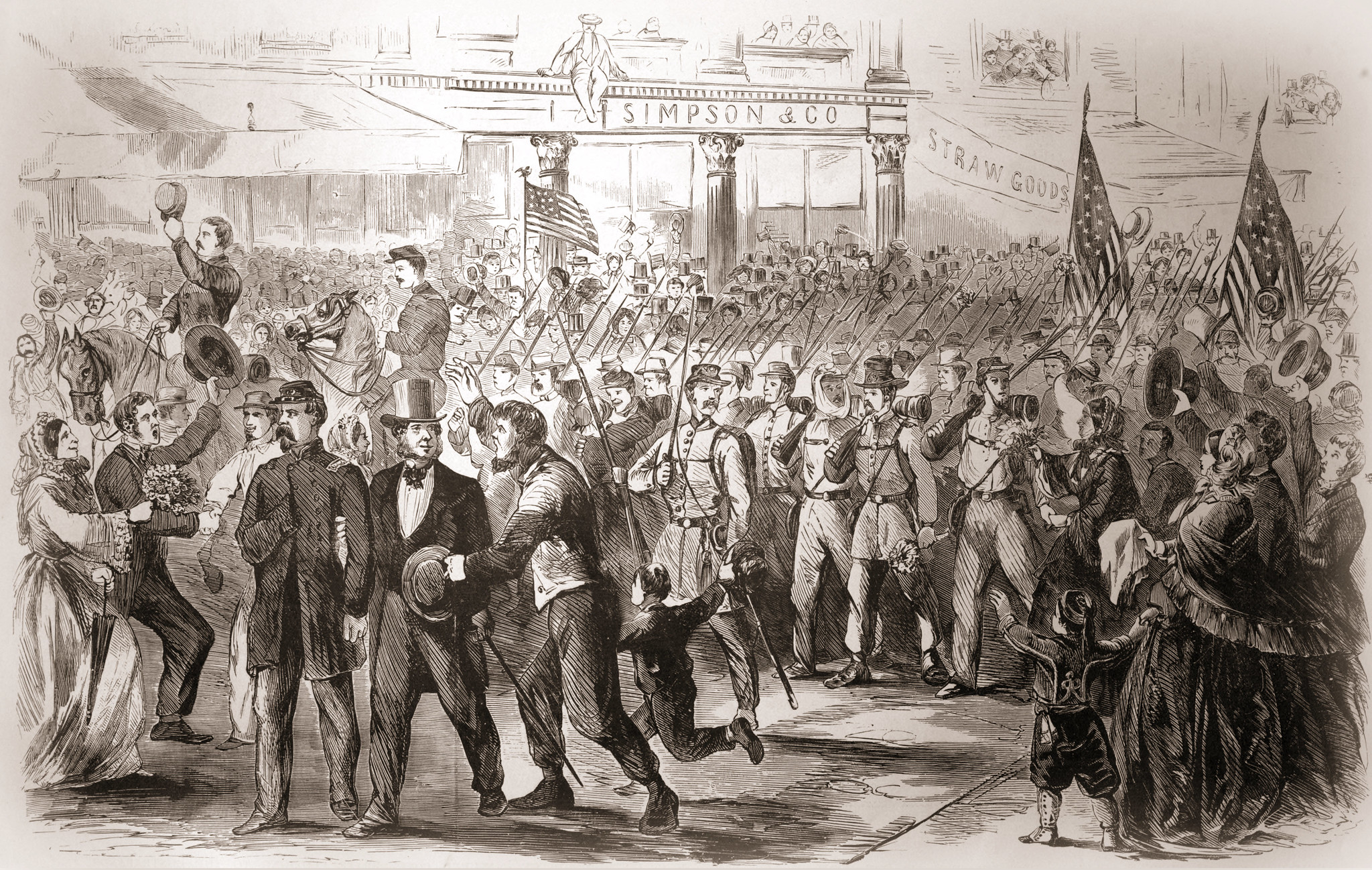
Reception by the People of New York of the Sixty-Ninth Regiment, N. Y. S. M., on Their Return from the Seat of War, Escorted by the New York Seventh Regiment.
The return home of the gallant Sixty-ninth Regiment–composed entirely of Irish citizens–on Saturday. July 27th, 1861, was an ovation as warm and enthusiastic as their endurance and bravery deserved. Their service of three months had been of infinite value to their country and honor to themselves and their State. The Sixty-ninth had rendered good service at Arlington Heights, and especially distinguished itself at the battle of Bull Run. On the morning of their arrival the streets were crowded with people, and the gallant fellows were greeted with shouts of applause along the whole line of march.
(from Frank Leslie’s Illustrated History of the Civil War…, edited by Louis Shepheard Moat, Published by Mrs. Frank Leslie, New York, 1895)
6-pounder
July 27, 2026
The Standard
Clarksville, Tx
July 27, 1861
One of the 6-pounder cannon, cast at the Camden Foundry, was taken to the Sulphur Spring on the 4th, and experiments tried, which proved in every respect satisfactory. Several shots were fired with ball, and the results exceeded all that had been claimed for the piece by its most sanguine friends. The ground was unfavorable for trying how far it would shoot, but enough was shown, to prove that if an opportunity offered, it could knock one of old Abe’s regiments into “pi,”1 at a distance of 1000 yards. There no longer exists a doubt of the Camden Foundry Company being able to manufacture cannon of superior quality.–Camden Herald.
1 The term “pi” is a printing term. “…the pi is made up of small pieces of metal…, called type; and when they are set up in the form, and some careless loafer runs against and upsets things, they say it is knocked into pi!” — from Caskey’s Book: Lectures on Great Subjects, Selected from the Numerous Efforts of that Powerful Orator and Nobel Veteran of the Cross; page 275; Thomas W. Caskey, George Gatewood Mullins, John Burns Publishing Company, 1884
William Howard Russell’s Diary: An intoxicating prescription.
July 27, 2026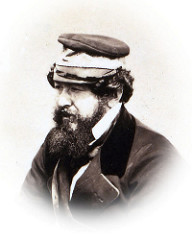
July 27th.–So ill to-day from heat, bad smells in the house, and fatigue, that I sent for Dr. Miller, a great, fine Virginian practitioner, who ordered me powders to be taken in “mint juleps.” Now mint juleps are made of whiskey, sugar, ice, very little water, and sprigs of fresh mint, to be sucked up after the manner of sherry cobblers, if so it be pleased, with a straw.
“A powder every two hours, with a mint julep. Why, that’s six a day, Doctor. Won’t that be–eh ?–won’t that be rather intoxicating?”
“Well, sir, that depends on the constitution. You’ll find they will do you no harm, even if the worst takes place.”
“A rumored attack in prospect on Bird’s Point…”–Army Life of an Illinois Soldier, Charles Wright Wills.
July 27, 2026
Cairo, July 27, 1861
We number now about 60 and have 25 days in which to fill up to 100. Two hundred and fifty of our regiment of three-months’ men have re-enlisted. Two hundred and fifty out of 680, which is considerably better than any eastern regiment that I have seen mentioned. There was not a sick man in our company when we returned, and there is not now. One of the boys just tells me that day before yesterday morning there were but eight in the regiment hospital. Three men from our regiment have died in three and a half months. One of these I know killed himself with imprudence. I have telegraphed to the boys to be in Peoria Wednesday. I have not the least idea that any of them will back out. It does seem real good to be back here again where a fellow can swing himself and lay around loose with sleeves up, collar open, (or shirt off if it suits him better) hair unkempt, face unwashed and everything un-anything. It beats clerking ever so much! We were paid off yesterday. The privates received $56.72 each in gold, silver and copper, which is $24.00 more than we expected.
We are having some more excitement in camp to-day. A rumored attack in prospect on Bird’s Point is the subject. We are putting the recruits through in two-forty-style to get them ready. Twenty rounds of cartridges were served to us at noon to-day, and Prentiss’ aids are galloping round as if tight. About one quarter of the recruits have their accoutrements on, and some of them scoot up on the levee every ten minutes to look at the Point. We have all kinds of rumors of from 2,000 to 15,000 Rebels within from 6 to 15 miles of us, but if 20 preachers would swear to the truth, there’s not one man that has been here three months would believe it. Been fooled too often! Our officers are careful though, and treat every thing from head-quarters as reliable till the contrary is proven. [continue reading…]
A Diary of American Events – July 27, 1861
July 27, 2026
–Major-General Robert Patterson of the Pennsylvania Volunteers, was honorably discharged from the service of the United States.–(Doc. 106.)
–The Odd Fellows’ Hall, jail, and four other buildings in Hampton, Va., were burned by the national troops in apprehension of an immediate attack by the secessionists.–N. Y. Times, July 30.
–In Confederate Congress, at Richmond, Va., documents were read which show the cause of the late flag of truce from the Confederate lines to Washington. One of these was a letter from Davis to President Lincoln, with the threat of retaliation if the privateersmen taken from the Savannah should be hanged.–(Doc. 128.)
–The Sixty-ninth Regiment N. Y. 8. M., arrived in New York from the seat of war.– N. Y. Express, July 27.
–Senator Johnson, of Tennessee, spoke in the Senate in favor of the joint resolution to approve the acts of the President.–(Doc. 129.)
Civil War Day-By-Day
July 27, 2026
July 27, 1861
A Chronological History of the Civil War in America1
- Return of the 69th and other regiments to New York.
- A Chronological History of the Civil War in America by Richard Swainson Fisher, New York, Johnson and Ward, 1863
Village Life in America
July 26, 2026
ALEXANDRIA BAY, July 26.—Anna writes me that Charlie Wells said he had always wanted a set of Clark’s Commentaries, but I had carried off the entire Ed.
“The Committee is investigating the cases of Clerks and others in the different departments who are said to be secessionists, or disloyal to the Govt.”—Horatio Nelson Taft
July 26, 2026
FRIDAY 26
Was required to go before the Committee at the Capitol today at 10 o’clock (John F Porter Chairman). The Committee is investigating the cases of Clerks and others in the different departments who are said to be secessionists, or disloyal to the Govt. Went with Julia after dinner up to the camps on Meridian hill. Saw the Meridian Stone or pillar from which Longitude is computed. We took a long walk. I was very tired. Eddy Foster and McIntire of [Woolcut?] staid with us.
______
The three diary manuscript volumes, Washington during the Civil War: The Diary of Horatio Nelson Taft, 1861-1865, are available online at The Library of Congress.