A Rebel War Clerk’s Diary

A Rebel War Clerk’s Diary at the Confederate States Capital, By John Beauchamp Jones
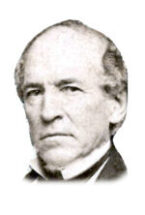
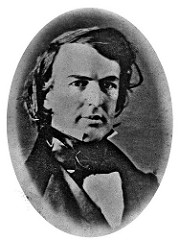
A likeness of Jones when he was editor and majority owner of the Daily Madisonian during President John Tyler’s administration.

March 25th.–Clear and cool.

It is reported that Grant is reinforcing Sherman, and that the latter has fallen back upon Goldsborough. This is not yet confirmed by any official statement. A single retrograde movement by Sherman, or even a delay in advancing, would snatch some of his laurels away, and enable Lee to obtain supplies. Yet it may be so. He may have been careering the last month on the unexpended momentum of his recent successes, and really operating on a scale something more than commensurate with the forces of his command. Should this be the case, the moral effect on our people and the army will be prodigious, and a series of triumphs on our side may be the consequence.

The Northern papers chronicle the rise in flour here–to $1500 per barrel–a few days ago, and this affords proof of the fact that every occurrence of military importance in Richmond is immediately made known in Washington. How can success be possible? But our authorities are confirmed in their madness.

There were some movements yesterday. Pickett’s division was ordered from this side of the river to the Petersburg depot, to be transported in haste to that town; but it was countermanded, and the troops now (9 A.M.) are marching back, down Main Street. I have not learned what occasioned all this.

The marching and countermarching of troops on this side of the river very much alarmed some of the people, who believed Lee was about to evacuate the city.

Eleven A.M. Gen. Lee attacked the enemy’s fort (Battery No. 5) near Petersburg this morning, the one which has so long been shelling the town, and captured it, with 600 prisoners, and several guns. This may interfere with Gen. Grant’s projects on his left wing, against the railroad.

It is rumored that Gen. Grant is moving heavy bodies of troops toward Weldon, to reinforce Sherman.

0 comments

Downing’s Civil War Diary.—Alexander G. Downing.

Diary of Alexander G. Downing; Company E, Eleventh Iowa Infantry

Saturday, 25th–We remained in camp all day. Large foraging parties were sent out to get feed for the mules and horses. Our train loaded with supplies returned from Kingston, down on the river. A construction train came in from Kingston, repairing the railroad. The Twenty-third Corps from Schofield’s army has been moved to Kingston. All the troops are in camp in and around Goldsboro, and it will be but a short time until all our supplies will be brought in from the coast by the railroad. The Thirteenth Iowa received three hundred recruits today.

0 comments

War Diary of Luman Harris Tenney.

War Diary of Luman Harris Tenney.

25th. Ready to march at 6. Took my pockets full of mail to the landing. Dismounted men went by boats. Our regt. in rear of Div. and train. Crossed the Chickahominy on pontoons and reached Harrison’s Landing in evening. Fortifications.

0 comments

A Rebel War Clerk’s Diary

A Rebel War Clerk’s Diary at the Confederate States Capital, By John Beauchamp Jones
A likeness of Jones when he was editor and majority owner of the Daily Madisonian during President John Tyler’s administration.

March 24th.–Clear and very windy. The fear of utter famine is now assuming form. Those who have the means are laying up stores for the day of siege,–I mean a closer and more rigorous siege,–when all communications with the country shall cease; and this makes the commodities scarcer and the prices higher. There is a project on foot to send away some thousands of useless consumers; but how it is to be effected by the city authorities, and where they will be sent to, are questions I have not heard answered. The population of the city is not less than 100,000, and the markets cannot subsist 70,000. Then there is the army in the vicinity, which must be fed. I suppose the poultry and the sheep will be eaten, and something like a pro rata distribution of flour and meal ordered.

There is a rumor of a great victory by Gen. Johnston in North Carolina, the taking of 4500 prisoners, 70 guns, etc.–merely a rumor, I am sure. On the contrary, I apprehend that we shall soon have news of the capture of Raleigh by Sherman. Should this be our fate, we shall soon have three or four different armies encompassing us!

I tried in vain this morning to buy a small fish-hook; but could not find one in the city. None but coarse large ones are in the stores. A friend has promised me one–and I can make pin-hooks, that will catch minnows. I am too skillful an angler to starve where water runs; and even minnows can be eaten. Besides, there are eels and catfish in the river. The water is always muddy.

0 comments

Downing’s Civil War Diary.—Alexander G. Downing.

Diary of Alexander G. Downing; Company E, Eleventh Iowa Infantry

Friday, 24th–We left bivouac at 7 a. m. and marched to the Neuse river, which we crossed near Goldsboro on a pontoon bridge. As we passed through town, we were reviewed by General Sherman, passing him by platoon form, and marching to martial music. The men looked pretty hard after such a long raid, ragged and almost barefooted; but we felt repaid, for we had accomplished the task which we had set out to do when we left Savannah. We went into camp north of town just outside of the town limits. Our corps, the Seventeenth, occupies the right center and the Twentieth Corps the left center, while the Fifteenth Corps occupies the right and the Fourteenth Corps the left. General Schofield’s army, the Twenty-third, Twenty-fourth and Twenty-fifth Corps, is going into camp in the vicinity of Clinton.

0 comments

War Diary of Luman Harris Tenney.

War Diary of Luman Harris Tenney.

24th. Tuesday. Wrote home and to several friends. Went to the landing and procured some little eatables and paper. Paymaster in camp. Saw him. Busy with the Michigan Brigade and 1st Vermont. Marching orders.

0 comments

0

Civil War Diary of Charles H. Lynch, 18th Conn. Vol’s.
Charles Lynch

March 24th. The past few days have been windy, with a cold rain, turning to hail and snow. The wind howling through our camp, coming from the North Mountain. Winter is hanging on. Every day we are led to believe that the war is about over with. No enemy has been reported in this vicinity for a long time. Picket duty is kept up.

0 comments

March 3 to March 24, 1865

Experience of a Confederate Chaplain—Rev. A. D. Betts, 30th N. C. Regiment

March 3, 1865—Regiment goes on picket. Revs. O. J. Brent and NV. H. Moore arrive from N. C. and stop with me.

March 4— Brother Brent goes to Richmond. Brother Moore remains with me.

March 5 (Sunday)—I walk nine miles and preach to my Regiment in picket camp.

March 10 (Friday)—I fast and pray. Preach to my Regiment six times in their quarters. Rain all day. God help our nation in this sore extremity!

March 12 ( Sunday)—Preach to my Regiment. Hold prayers at night.

March 13—Brother Power preaches at night.

March 14—Hear from wife and Brother Willson. Preach at night. Brother Power and I alternate in our chapel, preaching every day and night.

March 18—Go to Petersburg to see John (negro servant) nearly dead. Get him into hospital.

March 19 (Sunday)—Preach to Weiseger’s Brigade in a. m. and ours in p. m.

March 20—Brigade moves near Dunlap’s and relieves Thomas’ Ga. Brigade.

March 21 – Meet Chaplains in Petersburg, and see John and Capt. Allen.

March 22—Go by 11th N. C. Regiment and spend night in 56th with my brother. Preach to R.’s Brigade.

March 24—Meet Cousin Grey Utley in P. He raised three daughters. Two became wives of Rev. L. S. Burkhead, D.D. One Sunday night in October, 1853, Rev. J. L. F. opened the doors of his church in Chapel Hill to receive members. Just as I started forward that good man, Grey Utley, began to sing “Jesus, I my cross have taken.” That soft, sweet voice and the sentiment of that hymn stir my heart to-night in October, 1897, as I write these lines—44 years after that solemn scene.

Jim Davis, of Chapel Hill, my wife’s cousin, comes to see me.

0 comments

A Diary From Dixie.

A Diary From Dixie by Mary Boykin Miller Chesnut.

March 24th.–I have been ill, but what could you expect? My lines, however, have again fallen in pleasant places. Mrs. Da Vega is young, handsome, and agreeable, a kind and perfect hostess; and as to the house, my room is all that I could ask and leaves nothing to be desired; so very fresh, clean, warm, and comfortable is it. It is the drawing-room suddenly made into a bedroom for me. But it is my very own. We are among the civilized of the earth once more.

0 comments

A Rebel War Clerk’s Diary

A Rebel War Clerk’s Diary at the Confederate States Capital, By John Beauchamp Jones
A likeness of Jones when he was editor and majority owner of the Daily Madisonian during President John Tyler’s administration.

March 23d.–Clear, with high wind. Nothing further from North Carolina. A dispatch from Gen. Lee states that he has directed Gen. Cobb to organize an expedition into Tennessee, to cut the enemy’s communications. Gen. Wafford, of Kentucky, is in Georgia, with 2000 mounted men, etc.

Beef in market this morning sold at $12 to $15 per pound; bacon at $20, and butter at $20.

The parade of a few companies of negro troops yesterday was rather a ridiculous affair. The owners are opposed to it.

Gen. Rains sends in an indorsement, alleging that owing to the deception of Quartermaster Rhett (not furnishing transportation), he failed to arrest the approach of the enemy on a narrow causeway; and Columbia, S.. C., and his shells, etc. fell into the hands of the enemy.

A dispatch from Lee states that Gen. Thomas is at Knoxville, and that the enemy has commenced his advance from that direction–is repairing railroads, etc. The same dispatch says Gen. J. E. Johnston is removing his wounded to Smithsville from Bentonville; that the intrenchments of the enemy and greatly superior numbers of Sherman render further offensive operations impracticable.

Grant’s grand combination is now developed. Sherman from the Southwest, 70,000; Grant himself from the South, 70,000; Thomas, from the West, 40,000; and Sheridan, with 15,000 cavalry from the North–some 200,000 men converging toward this point. To defend it we shall have 120,000 men, without provisions, and, without some speedy successes, no communications with the regions of supply or transportation! Now is coming the time for the exercise of great generalship!

Gen. Early has been sent to the West–Tennessee.

0 comments

Downing’s Civil War Diary.—Alexander G. Downing.

Diary of Alexander G. Downing; Company E, Eleventh Iowa Infantry

Thursday, 23d–An order from General Sherman was read this morning, stating that the campaign was over,[1] and that we should now prepare to take a short rest. We left the rifle pits at 7 o’clock, marched fifteen miles, and bivouacked within five miles of Goldsboro. Our army is concentrating there, and we are to get supplies, rest up, and prepare for another campaign.


[1] This battle proved to be our last, and it is known as the battle of Bentonville. We took part later in the surrender of Johnston’s army at Raleigh, N. C. but there was no battle then, or before the surrender, only a little skirmishing.—A. G. D.

0 comments

War Diary of Luman Harris Tenney.

War Diary of Luman Harris Tenney.

23rd. Sun shines out in its fullness. Dreamed of being at home last night. It was Sunday and I at church. Mail came. Glorious news. A child born, a nephew. (Albert Ellis.) Joy is in the household. Prosperity and happiness to the father and mother. Received Tennyson’s “Enoch Arden.” A sweet, sad story. Any number of old papers. Spent the day feasting upon good things. Splendid day.

0 comments

The papers are not allowed to publish any war news, so we are as completely ignorant as you are as to what is going on.

Civil War Letters of Walter and George Battle

There are a good many of our soldiers deserting to the enemy, but I am in hopes we will have enough left to keep the Yankees in check on this line.

WAGON YARD, COX’S BRIGADE, NEAR
PETERSBURG, VA., March 23rd, 1865.

My Dear Mother:
I received your letter, bearing the date of March 14th, a few minutes ago. It seems that about nine days is the average length of time for a letter to come from home here. I wrote you a letter just before we left the old camp, which you have doubtless received ere this. We have moved twice since I wrote that letter. After the first move, we were temporarily attached to Mahone’s Division, the last move we made we joined our own division, which is in the entrenchments in front of Petersburg. Our Brigade is on the extreme left of it, between the Appomattox River and Swift Creek, with the river between us and the Yankees.

I have not been down on the lines since we last moved, but I hear that it is a very good place, inasmuch as we will hardly be attacked in our front as long as we stay there. I am still staying with Capt. Faircloth in the Q. M. Department, but when the campaign opens, I expect to go back to the company, as every man that can handle a gun will be needed there. Richmond and Petersburg have not been evacuated yet, tho’ there is still rumors that the latter place will be. The papers are not allowed to publish any war news, so we are as completely ignorant as you are as to what is going on. I am very uneasy for fear that Sherman’s army will not be checked before we have to evacuate Richmond and Peterburg. If that army could only be whipped, and it must be, or we can’t stay in Virginia, I would still feel confident of the final results. There are a good many of our soldiers deserting to the enemy, but I am in hopes we will have enough left to keep the Yankees in check on this line. I feel a good deal of anxiety on account of Cullen’s having to go in service so soon. I would not have him join this regiment for anything. If he cannot obtain a better place, I will try and get him into Manley’s Battery from Raleigh, which, if he does have to go into active service right away, will be the best place that I can think of. It is on the lines, some two miles to our left, where it has been about ten months, without losing a man in battle. If he was in that company, he would see a much easier time than he would in Infantry, being small, he would be very apt to be made a driver and in time of fights hold the horses in the rear, or in some place where they can be sheltered. What time will he be seventeen? Write to me as soon as you receive this, and let me know what he thinks about it. In the meantime, I will go over to Manley’s Battery and see if I can get him in. I fear that it will be full, as I know a good many young men who joined on coming seventeen. It is a very good company and composed of a great many very nice men. I knew some of them before the war. I am intimately acquainted with all of the officers. Baz. Manley is Capt. Bunny Guion, James Powell and James McKimmon, the Lieutenant, all from Raleigh. Tell Cullen to take my advice and never join this Regiment as long as he can avoid it. However much I would like to have him with me. I am giving him this advice for his own good. Please think about the matter and write me immediately. Give my love to all the family. Where is sister? Is she at Wilson? I will write again in a few days, probably before I hear from you. Tell Cullen to write when you do. Goodbye.

Your affectionate son,
WALTER.


Letters from two brothers who served in the 4th North Carolina Infantry during the Civil War are available in a number of sources online.  Unfortunately, the brothers are misidentified in some places as Walter Lee and George Lee when their names were actually Walter Battle and George Battle. See The Battle Brothers for more information on the misidentification.

0 comments

“The woods have all been burned over here.”–Army Life of an Illinois Soldier, Charles Wright Wills.

Army Life of an Illinois Soldier, Charles Wright Wills, (8th Illinois Infantry)

Bentonville, N. C., March 22, 1865.

The enemy left about 2 a.m. Our brigade was ordered to follow them to Mill creek, about three miles, which we did almost on the double quick, the 26th Illinois in advance pushing their rear guard. The brigade went to Mill creek, but our skirmishers went a mile further, to Hannah’s creek. The 26th had seven wounded. I saw in one place a dead Rebel and one of our men burned horribly. The woods have all been burned over here. In another place a dead Rebel and one of our men with his foot cut half off, one of his toes cut off, several more cuts on his body, and a bullet hole in his temple. Some of the boys saw one of our men with leg cut off in five places. Some surgeon had probably been practicing on the last two men.

They were 14th Corps men. Sherman again says the campaign is over, that he only came out here to show Johnston that he is ready to fight all the time. We start back for Goldsboro (24 miles), to-morrow. Hurrah for mail and clean clothes. Colonel and I occupy the outside of a house to-night, in the inside of which is a Chinese-eyed girl with a Creole mouth. She is as intelligent as a door post. You don’t know how anxious I am to hear from you. I have had a reply to but one letter that I have written since last November (15th). Our little supper is now ready. Don’t see how we will get along without Frank.

0 comments

A Rebel War Clerk’s Diary

A Rebel War Clerk’s Diary at the Confederate States Capital, By John Beauchamp Jones
A likeness of Jones when he was editor and majority owner of the Daily Madisonian during President John Tyler’s administration.

March 22d.–Rained last night; clear and cool this morning. The report of another battle, since Sunday, in North Carolina, is not confirmed.

The “Bureau of Conscription” still lives, notwithstanding the action of Congress! The President himself, who favored its abolition, yet being displeased with some of the details of the act, seems to have finally withheld his approval; and so Col. G. W. Lay, son-in-law of Judge Campbell, is again acting Superintendent. The great weight (wealth) of Gen. Preston perhaps saved it–and may have lost the cause. However, it is again said Judge Campbell will soon retire from office. He considers the cause already lost–the work quite accomplished.

To-day some of our negro troops will parade in the Capitol Square.

The Texas cavalry in Virginia–originally 5000–now number 180!

Congress adjourned without adopting any plan to reduce the currency, deeming it hopeless, since the discovery of a deficiency, in Mr. Memminger’s accounts, of $400,000,000! So the depreciation will go on, since the collection of taxes is rendered quite impracticable by the operations of the enemy. Yet buying and selling, for what they call “dollars,” are still extensively indulged; and although the insecurity of slave property is so manifest, yet a negro man will bring $10,000 at auction. This, however, is only equivalent to about $100. Land, when the price is reduced to the gold standard, is similarly diminished in price.

0 comments

Downing’s Civil War Diary.—Alexander G. Downing.

Diary of Alexander G. Downing; Company E, Eleventh Iowa Infantry

Wednesday, 22d–Companies E and F of the Eleventh Iowa were sent out at 6 o’clock this morning on the skirmish line, but there were no rebels to be seen in our front. They left during the night, crossing the Neuse river, and retreating towards Raleigh, the state capital. Kilpatrick’s cavalry pursued them for several miles. The rebels fought in the pine woods, which were set on fire by the shells from our artillery. The fire compelled them to fall back, and they left their dead and wounded on the battlefield, to the mercy of the flames; the clothing was entirely burned off some of the bodies. The loss was very light on both sides. We remained all day in bivouac at the rifle pits, while the Fourteenth and Twentieth Corps moved back towards Goldsboro.

0 comments

War Diary of Luman Harris Tenney.

War Diary of Luman Harris Tenney.

22nd. Clear. Wind up. Soon after breakfast accompanied Col. Nettleton to the boat which he took for Washington and home on a five days’ leave. Thede and I sent a letter. Would that we could go with him. How happy the home folks will be, especially Melissa and Minnie.

0 comments

“I think this has been as exciting and lively a p.m. as ever I saw.”–Army Life of an Illinois Soldier, Charles Wright Wills.

Army Life of an Illinois Soldier, Charles Wright Wills, (8th Illinois Infantry)

March 21, 1865.

We moved out this morning just before daylight and got within 50 yards of the Rebel skirmish line, but nothing going forward on our right or left, we returned to our original position. Had one man in Company H slightly wounded. We could have held our advanced line just as well as not. I think our right must rest on the river. Some 35,000 or 40,000 Rebels are reported here under Johnston.. Some prisoners report Lee. I would like to see them whaled, but would like to wait until we refit. You see that too much of a good thing gets old, and one don’t enjoy even campaigning after 50 or 60 days of it together. I believe I am surfeited with oven bread—(“death balls” our cook calls them), biscuit, and pork. I feel finely; wet from head to foot, has rained since noon hard most of the time. About 1 p.m. the main line moved out on our skirmish line, and as quick as they get their works up (about one-half hour), our regiment deployed as skirmishers on our brigade front, and our whole corps skirmish line moved forward. I think the 17th drove the enemy on our right at the same time. We took their skirmish pits along the whole front of our division, but they were very close to their main line and we did have a very interesting time holding them, I assure you. I don’t think it was more than 75 yards to the main line of the Rebel works, and they in plain sight, only a straggling scrub oak undergrowth and a few large pines intervening. The Rebels came out of their works twice to retake their pits.

The first time the left of our regiment had to fall back, the brigade on our left giving way and exposing our flank, but we all rallied in a minute and made the Johnnies fairly fly back. The next time our brigade again broke, but our men held their pits, and the 26th Illinois, which was just coming out to relieve our regiment, faced its left wing for the pits occupied by the enemy, and went for them with a first-class yell. You should have seen the Rebels run. It did me a power of good. The other brigade then came back to their position, the 26th relieved me, and we are now ready for bed. We have been wonderfully fortunate to-day, only 10 wounded and none killed. The pride of the regiment, Frank Lermond, had his arm broken by a ball, but a resection operation will leave him a tolerably good arm. I think this has been as exciting and lively a p.m. as ever I saw. Terry’s 24th Army Corps has come up, and lays about six miles back of us to-night.

0 comments

A Rebel War Clerk’s Diary

A Rebel War Clerk’s Diary at the Confederate States Capital, By John Beauchamp Jones
A likeness of Jones when he was editor and majority owner of the Daily Madisonian during President John Tyler’s administration.

March 21st.–Clear and warm. Apricots in blossom. At last we have reliable information that Johnston has checked one of Sherman’s columns, at Bentonville, capturing three guns. This success is a great relief–more as an indication of what is to follow, than for what is accomplished. So Bragg and Johnston have both shown successful fight lately. Beauregard next. Sherman has three full generals in his front, with accumulating forces. A few days more will decide his fate–for immortality or destruction.

There are many red flags displayed this morning in Clay Street, for sales of furniture and renting of houses to the highest bidders. They have postponed it until the last moment to realize the highest possible prices–and they will get them, in consequence of Johnston’s success, which revives the conviction that Richmond will not be evacuated. But they have overreached themselves in demanding extortionate prices–such prices depreciating the currency–$1500 being equivalent to one barrel of flour! If it be determined to abandon the city, what will houses rent for then?

Lord Russell’s letter, forwarded from Washington some days ago, after much consultation here, was sent back to Gen. Lee by the Secretary of State, declining to receive a communication from a neutral power through a hostile one, and expressing doubts of its authenticity. Gen. Lee returns the papers to-day, suggesting that the expression of doubts of the authenticity be omitted–but will, at all events, when returned to him again, have it delivered to Gen. Grant. Mr. Benjamin thinks there is some occult diplomatic danger in the papers–at least he is idle, and wants some diplomatic work on his hands, in the regular way. How to avoid doing anything whatever, diplomatically, with this matter before him, is the very quintessence of diplomacy! He can look at it, read it, handle it, and return it to Lord John, and then diplomatically prove that this government never had any knowledge of its existence!

“The following official dispatch, from Gen. Lee, was received yesterday: [continue reading…]

0 comments

Downing’s Civil War Diary.—Alexander G. Downing.

Diary of Alexander G. Downing; Company E, Eleventh Iowa Infantry

Tuesday, 21st–We advanced our line of battle a half mile, driving in the rebel skirmishers. Our loss was quite large in killed and wounded. All our artillery was brought into action and at times this afternoon the roar of cannon was fearful; but the rebels made no reply. Their loss in killed and wounded was large. There was some hard skirmishing on both sides. The Fifth and Twenty-fourth Corps under command of General Ord joined us this afternoon, thus reinforcing General Sherman’s army. The army is in fine spirits for all that the men are poorly clothed and short of rations; but anything that General Sherman wants done now, they are willing to do. All know that when we gain this battle, we will have a short rest and a chance to draw some clothing, besides securing rations, for forage is scarce.

0 comments

War Diary of Luman Harris Tenney.

War Diary of Luman Harris Tenney.

21st. Clear and beautiful day. Warm. Cleaned up. Went to the landing. Could find nothing which I wanted. Rained. Papers of the 20th received. Everything seems to be moving off prosperously. God grant us an early peace. Dreamed of little Carrie.

0 comments

A Diary From Dixie.

A Diary From Dixie by Mary Boykin Miller Chesnut.

Chester, S. C, March 21, 1865. – Another flitting has occurred. Captain Ogden came for me; the splendid Childs was true as steel to the last. Surely he is the kindest of men. Captain Ogden was slightly incredulous when I depicted the wonders of Colonel Childs’s generosity. So I skilfully led out the good gentleman for inspection, and he walked to the train with us. He offered me Confederate money, silver, and gold; and finally offered to buy our cotton and pay us now in gold. Of course, I laughed at his overflowing bounty, and accepted nothing; but I begged him to come down to Chester or Camden and buy our cotton of General Chesnut there.

On the train after leaving Lincolnton, as Captain Ogden is a refugee, has had no means of communicating with his home since New Orleans fell, and was sure to know how refugees contrive to live, I beguiled the time acquiring information from him. “When people are without a cent, how do they live?” I asked. “I am about to enter the noble band of homeless, houseless refugees, and Confederate pay does not buy one’s shoe-strings.” To which he replied, “Sponge, sponge. Why did you not let Colonel Childs pay your bills?” “I have no bills,” said I. “We have never made bills anywhere, not even at home, where they would trust us, and nobody would trust me in Lincolnton.” “Why did you not borrow his money? General Chesnut could pay him at his leisure?” “I am by no means sure General Chesnut will ever again have any money,” said I.

As the train rattled and banged along, and I waved my handkerchief in farewell to Miss Middleton, Isabella, and other devoted friends, I could only wonder if fate would ever throw me again with such kind, clever, agreeable, congenial companions? The McLeans refused to be paid for their rooms. No plummet can sound the depths of the hospitality and kindness of the North Carolina people.

Misfortune dogged us from the outset. Everything went wrong with the train. We broke down within two miles of Charlotte, and had to walk that distance; which was pretty rough on an invalid barely out of a fever. My spirit was further broken by losing an invaluable lace veil, which was worn because I was too poor to buy a cheaper one–that is, if there were any veils at all for sale in our region.

My husband had ordered me to a house in Charlotte kept by some great friends of his. They established me in the [continue reading…]

0 comments

“Their loss was far greater than ours.”–Army Life of an Illinois Soldier, Charles Wright Wills.

Army Life of an Illinois Soldier, Charles Wright Wills, (8th Illinois Infantry)

One and one-half miles from Neuse River,
March 20, 1865.

We moved about a mile north and then west for five miles. Pushed some Rebel cavalry before us all the time. Our brigade was in advance and lost about 25 men. We are about two miles east of where the battle was fought yesterday by the 14th and 20th corps, and right where the Rebel hospital was. The Rebels are now due west of us, our line running north and south, and I think there can be no difficulty in communicating with Schofield. Goldsboro is undoubtedly evacuated. In the fight yesterday one division of the 14th was worsted at first and driven some distance, but rallied, repulsed the enemy, and the corps getting into line, charged four to six times, and slaughtered the Rebels awfully. Their loss was far greater than ours.

Ten p.m.—A Pennsylvania man, who was wounded in the fight yesterday, and carried in by the Rebels who took off his leg above the ankle, came in to us a few minutes ago. He crawled nearly half a mile, part of the way through a swamp. It seems that the Rebels had a hospital there they evacuated and left him and a half dozen other wounded, two of whom the man saw killed by the skirmish firing. We are on the skirmish line to-night. I suppose it is 400 yards to the Rebel skirmishers, and not a very dangerous line.

0 comments

A Rebel War Clerk’s Diary

A Rebel War Clerk’s Diary at the Confederate States Capital, By John Beauchamp Jones
A likeness of Jones when he was editor and majority owner of the Daily Madisonian during President John Tyler’s administration.

March 20th.–Sunny and pleasant, but hazy in the south.

Cannon heard, quite briskly, south of the city. The papers report that Gen. Hardee repulsed Sherman on the 16th. But the official dispatch of Gen. Johnston says Hardee retired, and Sherman advanced after the fighting was over.

Congress adjourned sine die on Saturday, without passing the measures recommended by the President. On the contrary, a committee of the Senate has reported and published an acrimonious reply to certain allegations in the message, and severely resenting the “admonitions” of the Executive.

When the joint committee waited on the President to inform him that if he had no further communication to make them they would adjourn, he took occasion to fire another broadside, saying that the measures he had just recommended he sincerely deemed essential for the success of the armies, etc., and, since Congress differed with him in opinion, and did not adopt them, he could only hope that the result would prove he was mistaken and that Congress was right. But if the contrary should appear, he could not be held responsible, etc. This is the mere squibbing of politicians, while the enemy’s artillery is thundering at the gates!

The Secretary of War visited Gen. Lee’s headquarters on Saturday afternoon, and has not yet returned. Breath is suspended in expectation of some event; and the bickering between the President and the Congress has had a bad effect–demoralizing the community. [continue reading…]

0 comments

Downing’s Civil War Diary.—Alexander G. Downing.

Diary of Alexander G. Downing; Company E, Eleventh Iowa Infantry

Monday, 20th–Reveille sounded at 1 a. m. At 3 o’clock with the Fifteenth Corps in front, we took up the line of march and moved forward twenty-one miles, where we found the rebels fortified on the west side of the Neuse river near Bentonville. We drove them back inside of their works, and forming a line of battle moved up as close to their works as we could, and then built a line of rifle pits. We left our wagon trains far in the rear under guard. The rebels’ force is reported to be about thirty-five thousand men under the command of General Johnston. General Schofield has been moving up this way from the coast, and we just learned that he reached Goldsboro and took possession of the place this afternoon. We are informed that General Sherman will now open up communications from Goldsboro southeast to Newbern.

0 comments