0

Civil War Diary of Charles H. Lynch, 18th Conn. Vol’s.
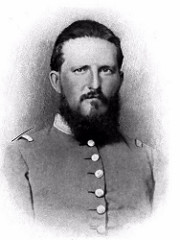
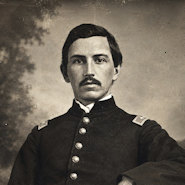
Charles Lynch

March 15th. Orders received for our regiment to report at Martinsburg. Must leave our winter quarters at Halltown. We are relieved by the 144th Indiana Regiment. Busy packing up, as we are to march tomorrow. Will pass one more night in our winter quarters. Time has passed very pleasant in this camp during the winter.

0 comments

A Rebel War Clerk’s Diary

A Rebel War Clerk’s Diary at the Confederate States Capital, By John Beauchamp Jones
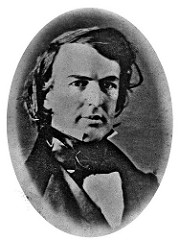
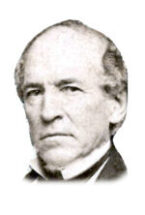
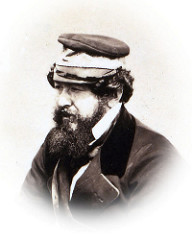
A likeness of Jones when he was editor and majority owner of the Daily Madisonian during President John Tyler’s administration.

March 15th.–Warm and cloudy. My cabbages coming up in the garden.

The papers contain no war news whatever, yet there is great activity in the army.

Sheridan’s column is said to be at Ashland, and Grant is reported to be sending swarms of troops to the north side of the river, below, “in countless thousands.”

The President’s message, for the completion of which Congress was desired to remain, has been sent in. I will preserve this splendidly exordiumed and most extraordinary document. It is a great legal triumph, achieved by the President over his enemies in Congress, and if we are permitted to have more elections, many obnoxious members will be defeated, for the sins of omission and commission. The President strikes them “between wind and water,” at a time, too, when no defense would be listened to, for he says the capital was never in such danger before, and shows that without prodigious effort, and perfect co-operation of all branches of the government, the cause is lost, and we shall have negro garrisons to keep us in subjection, commanded by Northern officers. He will have the satisfaction, at least, of having to say a portion of the responsibility rested with his political opponents. Mr. Benjamin, who is supposed to have written a portion of the message, was very jubilant yesterday, and it is said the President himself was almost jocund as he walked through the Capitol Square, returning home from his office.

It is now rumored that a French agent is in the city, and that the President, besides his message, sent to Congress a secret communication. I doubt–but it may be so.

Gen. Hood is here, on crutches, attracting no attention, for he was not successful.

Judge Campbell, Assistant Secretary of War, said to Mr. Wattles, a clerk, to-day, that we were now arrived at the last days of the Confederacy. Mr. Wattles told me that the judge had been convinced, as far back as 1863, that the cause was nearly hopeless.

Some 1200 of Fitz Lee’s cavalry passed through the city at 2 P.M. Gen. Longstreet has been ordered by Gen. Lee to attack Sheridan. He telegraphs back from north of the city that he “cannot find them,” and this body of cavalry is ordered to reconnoiter their position. I know not how many more men Fitz Lee has in his division, but fear at least half have passed.

0 comments

Through Some Eventful Years

Through Some Eventful Years by Susan Bradford Eppes
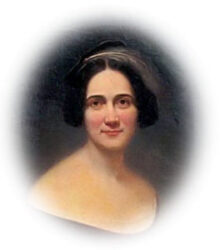
Susa Bradford Eppes

March 15th, 1865.—I am afraid we have the swell-head because we repulsed the enemy and made him take to his gun-boats. It seems to have put new life and hope in us all. The news from the armies is a mixture of good and bad; more funds are needed for the hospitals and Leon County is preparing for a concert, in which the entire musical talent will be called out and great things are expected. It will take some time to get this elaborate entertainment ready for the public, so the 9th of April has been appointed as the most suitable time.

Cousin Bettie will play “Une Pluie du Perle” and cousin Fannie Nash will play “Sleeping I Dreamed Love.” Sister Mart and Cousin Jennie are practising a beautiful German duet. If I knew German I would tell the name but I cannot even be sure I would spell it right and I know I could never pronounce it. Everybody who is at all musical is in this concert but I am only a listener.

These arrangements were made yesterday. Cousin Jewel is going to play a lovely Nocturne. She is a genius in music and she thinks they are taking too much time in preparing for the concert. Isn’t it funny how people differ even in little matters like this?

Father’s fever patients are well again and returned today to camp but Mr. Blount and Mr. Clendenning will never be well again. The enemy have possession of the home, in the Valley of the Shenandoah, where Mr. Blount used to live and Mr. Clendenning’s mother lived in Atlanta, until the Yankees burned her out. Father will keep them until they want to make a change.


Susan Bradford is 18 years old when this entry was made.

0 comments

A Diary From Dixie.

A Diary From Dixie by Mary Boykin Miller Chesnut.

March 15th.–Lawrence says Miss Chesnut is very proud of the presence of mind and cool self-possession she showed in the face of the enemy. She lost, after all, only two bottles of champagne, two of her brother’s gold-headed canes, and her brother’s horses, including Claudia, the brood mare, that he valued beyond price, and her own carriage, and a fly-brush boy called Battis, whose occupation in life was to stand behind the table with his peacock feathers and brush the flies away. He was the sole member of his dusky race at Mulberry who deserted “Ole Marster” to follow the Yankees.

Now for our losses at the Hermitage. Added to the gold-headed canes and Claudia, we lost every mule and horse, and President Davis’s beautiful Arabian was captured. John’s were there, too. My light dragoon, Johnny, and heavy swell, is stripped light enough for the fight now. Jonathan, whom we trusted, betrayed us; and the plantation and mills, Mulberry house, etc., were saved by Claiborne, that black rascal, who was suspected by all the world. Claiborne boldly affirmed that Mr. Chesnut would not be hurt by destroying his place; the invaders would hurt only the negroes. “Mars Jeems,” said he, “hardly ever come here and he takes only a little sompen nur to eat when he do come.”

Fever continuing, I sent for St. Julien Ravenel. We had a wrangle over the slavery question. Then, he fell foul of everybody who had not conducted this war according to his ideas. Ellen had something nice to offer him (thanks to the ever-bountiful Childs!), but he was too angry, too anxious, too miserable to eat. He pitched into Ellen after he had disposed of me. Ellen stood glaring at him from the fireplace, her blue eye nearly white, her other eye blazing as a comet. Last Sunday, he gave her some Dover’s powders for me; directions were written on the paper in which the medicine was wrapped, and he told her to show these to me, then to put what I should give her into a wine-glass and let me drink it. Ellen put it all into the wine-glass and let me drink it at one dose. “It was enough to last you your lifetime,” he said. “It was murder.” Turning to Ellen: “What did you do with the directions?” “I nuwer see no d’rections. You nuwer gimme none.” “I told you to show that paper to your mistress.” “Well, I flung dat ole brown paper in de fire. What you makin’ all dis fuss for? Soon as I give Missis de physic, she stop frettin’ an’ flingin’ trout, she go to sleep sweet as a suckling baby, an’ she slep two days an’ nights, an’ now she heap better.” And Ellen withdrew from the controversy.

“Well, all is well that ends well, Mrs. Chesnut. You took opium enough to kill several persons. You were worried out and needed rest. You came near getting it–thoroughly. You were in no danger from your disease. But your doctor and your nurse combined were deadly.” Maybe I was saved by the adulteration, the feebleness, of Confederate medicine.

–         –         –         –         –         –         –         –

A letter from my husband, written at Chester Court House on March 15th, says: “In the morning I send Lieut. Ogden with Lawrence to Lincolnton to bring you down. I have three vacant rooms; one with bedsteads, chairs, washstands, basins, and pitchers; the two others bare. You can have half of a kitchen for your cooking. I have also at Dr. Da Vega’s, a room, furnished, to which you are invited (board, also). You can take your choice. If you can get your friends in Lincolnton to assume charge of your valuables, only bring such as you may need here. Perhaps it will be better to bring bed and bedding and the other indispensables.”

0 comments

Army Life of an Illinois Soldier, Charles Wright Wills.

Army Life of an Illinois Soldier, Charles Wright Wills, (8th Illinois Infantry)

March 14, 1865.

It is supposed we will be here two or three days, to get some shoes up the river.

0 comments

Downing’s Civil War Diary.—Alexander G. Downing.

Diary of Alexander G. Downing; Company E, Eleventh Iowa Infantry

Tuesday, 14th–I went out early this morning with the foraging party of our division, in search of feed for the horses and mules. We came to a rich plantation about four miles out, with corncribs well filled, and in a short time we had the wagons loaded. Some of us had been put to loading the wagons while others went to get the chickens and other things. After the boys had caught and loaded all the chickens and upset fully a hundred beehives, they called out, “The rebels are coming!” We had just finished loading the wagons, but that call was enough to frighten the teamsters, and they put the whip to the mules, starting off on a dead run. The road ran through a heavy timber, but it was wide and perfectly level, and they galloped the teams the whole way back to our bivouac. It was every fellow for himself, and I never ran faster in my life. A commissioner from Cornell College[1] was in camp today for the purpose of raising money to educate the orphan children of soldiers and sailors. Our company raised $229.00.


[1] College at Mt. Vernon, Iowa.

0 comments

War Diary of Luman Harris Tenney.

War Diary of Luman Harris Tenney.

14th. Moved out at daylight. When 6 miles from the South Anna ground squirrel bridge, my battalion was ordered forward at a trot to support the 1st Conn. in a chase after Early with 300 men. Kept up the chase 12 miles. Crossed the Chickahominy–10 miles from Richmond–scattered the force. Custer offered 30 days’ furlough to the captor of Early. Kept up the trot into Ashland, recrossing Chickahominy. No force. Very sore, chafed and tired. Moved back north of South Anna. Many horses played out. Ours did well. Lost but one. Held them at a square trot. Anniversary of an eventful day in my life. Have thought a great deal today of this day a year ago and the other days near them. It makes me sad to review them.

0 comments

0

Civil War Diary of Charles H. Lynch, 18th Conn. Vol’s.
Charles Lynch

March 14th. This morning the 131st Ohio Regiment located near our camp. A new regiment. Just organized. Real young, fine looking fellows. Hope they won’t be obliged to see hard service, for war is a cruel thing.

0 comments

A Rebel War Clerk’s Diary

A Rebel War Clerk’s Diary at the Confederate States Capital, By John Beauchamp Jones
A likeness of Jones when he was editor and majority owner of the Daily Madisonian during President John Tyler’s administration.

March 14th.–Bright and pleasant, but indications of change.

The papers contain no news from the armies, near or remote. But there was some alarm in the upper portion of the city about 9 P.M. last night, from a signal seen (appended to a balloon) just over the western horizon. It was stationary for ten minutes, a blood-red light, seen through a hazy atmosphere. I thought it was Mars, but my eldest daughter, a better astronomer than I, said it was neither the time nor place for it to be visible. The air was still, and the dismal barking of the ban-dogs conjured up the most direful portents. All my neighbors supposed it to be a signal from Sheridan to Grant, and that the city would certainly be attacked before morning. It was only a camp signal of one of our own detachments awaiting the approach of Sheridan.

Sheridan’s passage of the James River has not been confirmed, and so the belief revives that he will assault the city fortifications on the northwest side, while Grant attacks elsewhere.

Yesterday the President vetoed several bills, and sent back others unsigned, suggesting alterations. Among them is the Conscript and Exemption bills, which he has detained ten days, as Senators say, on a point of constructive etiquette, insisting that the President and Secretary ought to make certain details and exemptions instead of Congress, etc. It is precious time lost, but perhaps in view of the great calamities immediately threatening the country, Congress may yield. But ten days might be enough time lost to lose the cause.

[continue reading…]

0 comments

0

Louise Wigfall Wright — A Southern Girl in ’61

“RALEIGH, March 14th, 1865.

“My dear Wigfall:
“I have just received yours of February 27th. I have been for two weeks looking for an opportunity other than by mail, to send you a letter. But all are reported to me too late.

“What you write me of Lee gratifies me beyond measure. In youth and early manhood I loved and admired him more than any man in the world. Since then we have had little intercourse and have become formal in our personal intercourse. A good deal, I think, from change of taste and habits, in one or the other. When we are together former feelings always return. I have long thought that he had forgotten our early friendship: to be convinced that I was mistaken in so thinking would give me inexpressible pleasure. Be assured, however, that Knight of old never fought under his King more loyally than I’ll serve under Gen. Lee. [In another letter he speaks of serving under Gen. Lee ‘as loyally as my father served under his in the first revolution.’] I have suggested to him what seems to be the only course for us, should Sherman endeavor to join Grant. . . .

“As ever yours,
“J. E. JOHNSTON.”

0 comments

Downing’s Civil War Diary.—Alexander G. Downing.

Diary of Alexander G. Downing; Company E, Eleventh Iowa Infantry

Monday, 13th–The Seventeenth Corps crossed the river this morning and marched out about a mile, where we halted till late in the afternoon, when we moved forward three miles and went into bivouac for the night. Three more boats came up from Wilmington today. They are to be loaded with the refugees and contrabands gathered up by Sherman’s army.

0 comments

War Diary of Luman Harris Tenney.

War Diary of Luman Harris Tenney.

13th. Monday. Reveille at 4 A. M. Out at 5:30. Went out on R. R. and destroyed a great distance of the R. R. The boys worked with a will. Burned several warehouses full of tobacco. Lay in camp from 1 A. M. 1st Div. up the R. R.

0 comments

0

Civil War Diary of Charles H. Lynch, 18th Conn. Vol’s.
Charles Lynch

March 13th. A little excitement this morning. Rebel cavalry made a dash for our picket line. Regiment called out, soon in line. We saw the rebs going up the valley, running their horses. More fresh fish received, as we call the recruits. A muddy time in camp, and bad weather.

0 comments

A Rebel War Clerk’s Diary

A Rebel War Clerk’s Diary at the Confederate States Capital, By John Beauchamp Jones
A likeness of Jones when he was editor and majority owner of the Daily Madisonian during President John Tyler’s administration.

March 13th.–Bright and pleasant.

The reports of the army of Sheridan (mostly mounted infantry) being within a few miles of the city were at least premature. Subsequent reports indicate that none of the enemy’s cavalry have been in the vicinity of Richmond, but that his force, a pretty strong one, is some 20 miles up the river, with pontoon trains, etc., manifesting a purpose to cross the James and cut the Danville Road. In this they will be disappointed probably.

The President vetoed several bills last week, among them the one legislating out of office most of the able-bodied post-quartermasters and commissaries. There is much anxiety to learn the nature of the communication he intends laying before Congress in a few days, and for the reception of which the session has been prolonged. The prevalent supposition is that it relates to foreign complications. Some think the President means to tender his resignation, but this is absurd, for he would be the last man to yield. To-day it is understood the Secretary of War is to be absent from his office, closeted with the President.

Gen. Johnston is concentrating on the Wilmington and Weldon Railroad, and perhaps a battle will occur near Goldsborough. Its issue will decide the fate of Raleigh, perhaps of Richmond. [continue reading…]

0 comments

“There were about 1,000 Rebel cavalry herein who fell back before our boys skirmishing lively..,”–Army Life of an Illinois Soldier, Charles Wright Wills.

Army Life of an Illinois Soldier, Charles Wright Wills, (8th Illinois Infantry)

Fayetteville, N. C., March 12, 1865.

We are camped a couple of miles from town. Marched about 13 miles to-day. Had to put down pontoons at both branches of Rockfish creek. At the town of Rockfish, the 17th A. C. burned a factory, throwing about 150 women out of employment. One of our gunboats came up to this place to-day with dispatches for Sherman. It went back before our division got in and took a lot of mail.

The 14th A. C. is garrisoning this place, but the 17th got in first. The 97th Indiana boys, who were captured back at Lynch’s Creek, all got away from the enemy and back to us to-day, five of them. Sherman said yesterday that the campaign ends only with the war. Hear that Hampton whipped Kilpatrick splendidly. Don’t think that is any credit to him. Also hear that Bragg whipped Schofield at Kingston, that Thomas has Lynchburg, and 30,000 other rumors. In the last 23 days the commissary has issued only two and one half days’ of bread. I lost my sword to-day. Left it where we stopped for dinner. We have lost so much sleep of late that at every halt half the command is asleep in a minute. I lay down and told them not to wake me for dinner nor until the regiment moved. The regiment had started when Frank woke me, and I got on my horse too stupid to think of anything. Did not miss my sword for five miles, when I went back for it, but no use. Foragers for the last week have been counting on rich spoils in the town, and many of them have not reported to their regiments within six or eight days, camping every night with the extreme advance. The day before the place was taken, five men who were 15 miles ahead of the column ventured into town. They were gobbled and one of them killed. Next morning 100 foragers hovered around town until the column was within about six miles, when the foragers deployed as skirmishers, and went for the town.

There were about 1,000 Rebel cavalry herein who fell back before our boys skirmishing lively, clear through the town, when they suddenly charged our fellows and scooped them. Our loss in killed, wounded and captured is 25 or 30. They killed several after they captured them, and one they hung up by the heels and cut his throat. Our boys retreated about a mile from town, and went in again in more solid order. They were too scattered the first time. They were successful and routed Johnny, who left six dead in the streets.

0 comments

Downing’s Civil War Diary.—Alexander G. Downing.

Diary of Alexander G. Downing; Company E, Eleventh Iowa Infantry

Sunday, 12th–We remained in our bivouac all day, the boys putting in the time in mending their shoes and clothing. The Fifteenth Corps came in today. The engineers laid the pontoons across the river. Fayetteville is just across on the east bank of the river, and is at the head of navigation, ninety miles from Wilmington on the coast. A boat came up this morning from Wilmington. Our men did not burn much property in town, only the public buildings were fired.

0 comments

War Diary of Luman Harris Tenney.

War Diary of Luman Harris Tenney.

12th. Sunday. Reveille at 3 A. M. Marched at 5. A snail’s pace all day. Clear and beautiful day. Moved north. 1st Div. moved off to the left. Have thought a good deal of home and friends today. God bless the dear ones at home. Camped at Frederick Hall Station.

0 comments

A Rebel War Clerk’s Diary

A Rebel War Clerk’s Diary at the Confederate States Capital, By John Beauchamp Jones
A likeness of Jones when he was editor and majority owner of the Daily Madisonian during President John Tyler’s administration.

March 12th.–Bright and frosty. About one o’clock last night, there was an alarm, supposed to be the approach of the enemy from the West–Sheridan’s cavalry–and the tocsin sounded until daylight. It was a calm moonlight night, without a cloud in the sky. Couriers reported that the enemy were at the outer fortifications, and had burned Ben Green’s house. Corse’s brigade and one or two batteries passed through the city in the direction of the menaced point; and all the local organizations were ordered to march early in the morning. Mr. Secretary Mallory and Postmaster-General Reagan were in the saddle; and rumor says the President and the remainder of the cabinet had their horses saddled in readiness for flight. About a year ago we had Dahlgren’s raid, and it was then announced that the purpose was to burn the city and put to death the President, the cabinet, and other prominent leaders of the “rebellion.” Perhaps our leaders had some apprehension of the fate prepared for them on that occasion, and may have concerted a plan of escape.

As well as I can learn from couriers, it appears that only some 1200 or 1500 of the enemy’s cavalry advanced toward the city, and are now (10 A.M.) retiring–or driven back by our cavalry. But it is a little extraordinary that Gen. Lee, with almost unlimited power, has not been able to prevent 1200 Federals riding from Winchester to Richmond, over almost impracticable roads, without even a respectable skirmish wherein 1000 men were opposed to them. It is true Early was routed–but that was more than a week ago, and we have no particulars yet. The enemy’s papers will contain them, however.

0 comments

A Diary From Dixie.

A Diary From Dixie by Mary Boykin Miller Chesnut.

March 12th.–Better to-day. A long, long weary day in grief has passed away. I suppose General Chesnut is somewhere–but where? that is the question. Only once has he visited this sad spot, which holds, he says, all that he cares for on earth. Unless he comes or writes soon I will cease, or try to cease, this wearisome looking, looking, looking for him.

0 comments

Diary of a Southern Refugee, Judith White McGuire.

Diary of a Southern Refugee During the War by Judith White McGuire

12th.—A deep gloom has just been thrown over the city by the untimely death of one of its own heroic sons. General John Pegram fell while nobly leading his brigade against the enemy in the neighbourhood of Petersburg. But two weeks before he had been married in St. Paul’s Church, in the presence of a crowd of relatives and friends, to the celebrated Miss H. C., of Baltimore. All was bright and beautiful. Happiness beamed from every eye. Again has St. Paul’s, his own beloved church, been opened to receive the soldier and his bride—the one coffined for a hero’s grave, the other, pale and trembling, though still by his side, in widow’s garb.

0 comments

“The worst road I ever saw.”–Army Life of an Illinois Soldier, Charles Wright Wills.

Army Life of an Illinois Soldier, Charles Wright Wills, (8th Illinois Infantry)

Davis Bridge, Rockfish Creek, March 11, 1865.

Ten miles to-day, full seven of which had to be corduroyed. The worst road I ever saw. The 17th corps occupied Fayetteville to-day. The foragers took the place. It is as large as Columbia and has a large arsenal. Heard of two or three men being captured by the Rebels yesterday and a couple today. They also made a little dash on our rear to-day on the 3d division without accomplishing anything. I do wish you could see the crowd of negroes following us. Some say 2,000 with our division. I think fully 1,000.

0 comments

Downing’s Civil War Diary.—Alexander G. Downing.

Diary of Alexander G. Downing; Company E, Eleventh Iowa Infantry

Saturday, 11th–It is clear again and quite pleasant. We were off at 7 a. m. and marched twelve miles. Went into bivouac within a mile of Fayetteville. Our division had the honor of driving the rebels out of town, but the Fourteenth Corps was placed on garrison duty. All of Sherman’s forces, the four corps, are concentrating at this place to cross the Cape Fear river. Forage is very scarce, the country being so very poor, but we hope soon to strike rich country where we can fill our haversacks.

0 comments

War Diary of Luman Harris Tenney.

War Diary of Luman Harris Tenney.

11th. Saturday. Lay in camp all day. Cleaned up. Two inspections. Bathed and changed my clothes. Details went out for forage. Seemed good to get a day’s rest. Improved it as well as possible with the work to do.

0 comments

A Rebel War Clerk’s Diary

A Rebel War Clerk’s Diary at the Confederate States Capital, By John Beauchamp Jones
A likeness of Jones when he was editor and majority owner of the Daily Madisonian during President John Tyler’s administration.

March 11th.–Bright and frosty. From a published correspondence between Gens. Hampton and Sherman, on the subject of retaliatory executions, it is mentioned by the former that the City of Columbia, S. C., was burned by the latter.

Dispatches this morning inform us of some little successes–Hampton over Kilpatrick in the South, and Rosser over a body of the enemy at Harrisonburg, in the North.

Some 1500 prisoners, paroled, arrived this morning–making some 10,000 in the last fortnight. I fear there will soon be a great scarcity of arms, when the negroes are drilled, etc.

Mrs. Hobson, of Goochland County, a relative of my wife, has offered a home to my eldest daughter Anne. Mr. H. is wealthy, and his mansion is magnificent. It is lighted with gas, made on the plantation.

I am often called upon to lend a copy of the “Wild Western Scenes.” My copy is lost. I learn that new editions of my works are published in the United States, where the stereotype plates were deposited. Here, as in old times in the North, the publishers prefer to issue publications upon which they pay no copyright–and, I believe, most of our publishers are not Southern men by birth, and hence have no care but for the profits of the business.

Congress was to adjourn to-day. But it is said the President has requested them to remain a short time longer, as further legislation will be required growing out of a treaty with France, about to be consummated. It is said as alliance has been agreed upon, offensive and defensive, etc. etc. If this should be true! It is but rumor yet–but was first mentioned, gravely, by Judge Campbell, Assistant Secretary of War.

0 comments

Diary of a Southern Refugee, Judith White McGuire.

Diary of a Southern Refugee During the War by Judith White McGuire

11th.—Sheridan’s raid through the country is perfectly awful, and he has joined Grant, without being caught. Oh, how we listened to hear that he had been arrested in his direful career! It was, I suppose, the most cruel and desolating raid upon record—more lawless, if possible, than Hunter’s. He had an overwhelming force, spreading ruin through the Upper Valley, the Piedmont country, the tide-water country, until he reached Grant. His soldiers were allowed to commit any cruelty on non-combatants that suited their rapacious tempers—stealing every thing they could find; ear-rings, breastpins, and finger-rings were taken from the first ladies of the land; nothing escaped them which was worth carrying off from the already desolated country. And can we feel patient at the idea of such soldiers coming to Richmond, the target at which their whole nation, from their President to the meanest soldier upon their army-rolls, has been aiming for four years? Oh, I would that I could see Richmond burnt to the ground by its own people, with not one brick left upon another, before its defenceless inhabitants should be subjected to such degradation!

Fighting is still going on; so near the city, that the sound of cannon is ever in our ears. Farmers are sending in produce which they cannot spare, but which they give with a spirit of self-denial rarely equalled. Ladies are offering their jewelry, their plate, any thing which can be converted into money, for the country. I have heard some of them declare, that, if necessary, they will cut off their long suits of hair, and send them to Paris to be sold for bread for the soldiers; and there is not a woman, worthy of the name of Southerner, who would not do it, if we could get it out of the country, and bread or meat in return. Some gentlemen are giving up their watches, when every thing else has been given. A colonel of our army was seen the other night, after a stirring appeal had been made for food for the soldiers, to approach the speaker’s stand with his watch in his hand, saying: “I have no money, nor provisions; my property was ruined by Hunter’s raid last summer; my watch is very dear to me from association, but it must be sold for bread.” Remembering, as he put it down, that it had been long worn by his wife, now dead, though not a man who liked or approved of scenes, he obeyed the affectionate impulse of his heart, took it up quickly, kissed it, and replaced it on the table.

0 comments