SEPTEMBER 15th.—And, just as I expected, Mr. Benjamin is to be Mr. Walker’s successor. Col. Bledsoe is back again; and it devolved on me to inform Major Tyler that the old chief of the bureau was now the new chief. Of course he resigned the seals of office with the grace and courtesy of which he is so capable. And then he informed me (in confidence) that the Secretary had resigned, and would be appointed a brigadier-general in the army of the Southwest; and that he would accompany him as his adjutant-general.
American Civil War Chronicles
To be inspected and mustered into State service.
September 15, 2021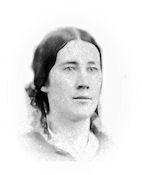
Abby Howland Woolsey
0 comments
Lenox, Sept. 15, 1861.
Charley talks of going down to-morrow to be inspected and mustered into State service with the regiment–the Home-Guard. He thinks his fine for non-attendance will about equal his railroad fare down and up. He is to stay over night and will see Mary at Astoria.
Horatio Nelson Taft
September 15, 2021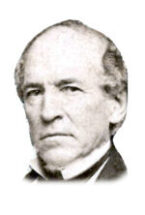
SUNDAY 15
A hot day. M. 86. Went to ch[urch] in the morning with Julia & one of the boys and heard Dr Smith, church well filled. Wife went in the afternoon. Chas & Sallie were up to dine with us. Walked with Dr D. & Chas up to Camp Cameron to see the “Anderson Zouaves.” Saw Capt Lafata of the Co of the French Zouaves. He is an Italian. Came down to tea and went over to Camp Anderson to hear the music of the “Regulars” Band, it was fine.
______
The three diary manuscript volumes, Washington during the Civil War: The Diary of Horatio Nelson Taft, 1861-1865, are available online at The Library of Congress.
Through Some Eventful Years
September 15, 2021
September 15th, 1861.—All the troops are not sent to Virginia, the Dixie Yeomen have been incorporated into the Fifth Florida Regiment and they have gone to Palatka to be drilled. So far the troops, which have been sent had been drilling for some time and were considered fit for service but these fresh companies have to learn.
Brother Junius went to Palatka, and we miss him very much but it is not like he was going away off. Palatka is so much nearer than Virginia, and then, too, they are fighting in Virginia. I must tell you my Diary what happened to Buddy. (I forgot, Mother says I must call him Cousin William.) But this is what happened. He has been practising medicine in this county for twelve years and everybody loves and trusts him. When the men composing the Dixie Yeomen came forward to be sworn into the Confederate service, first one man and then another, until nearly all had spoken, said he could not take the oath nor sign the Roster unless Doctor William Bradford would consent to resign and stay at home. Some of these men grew quite eloquent about it. They said they could not leave their wives and children unless the doctor would stay with them. “I should be obliged to desert,” said one man, “if Doctor Bill was not in call, when my home folks got sick.” So after much discussion he consented to resign. I know his mother rejoices in this for she has consumption and is never well. His young wife and baby need him, too, but then so many wives and babies have to suffer. This is a great compliment to our doctor and Father and Mother are delighted. He is their adopted son, you know. They love him as if he was their very own and no brother could be dearer to me.
Susan Bradford is 15 years old when this entry was made.
The war progresses very slowly and as yet it looks very dark and endless.
September 15, 2021
15 [September]
Heard from Lewis he is satisfied finds a friend in one of the Lieutenants, Tatum, an old schoolmate from Abeville has one hundred and 50 men under his charge and a very good Hospital Steward who saves him much trouble. The letters to Walker are not answered, one from Elizabeth to Mrs W. who was an old friend at school.
The Marion Artilary have been ordered down to Sulivan’s Island. Martin who is now Lieutenant & Berkley W. are with this Company, B. as Commissary they seemed to like it very much. Martin had to purchase a sword and gave in this time of scarcity for an Army sword $40.—the usual price it $15 $20 with belt & chains. The war progresses very slowly and as yet it looks very dark and endless. A must trust in the Good God who has protected us so far.—
Diary and Letters of Rutherford B. Hayes.
September 15, 2021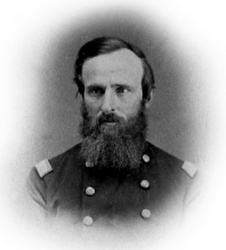
Birch River, Eighteen Miles North
of Summersville, Sunday, September 15, 1861.
Dearest: – We are as happy and care-for-nothing [a] set of fellows here today as you could find anywhere. I have now for a while an independent command of four companies, Twenty-third, Captain Moore, Captain Lovejoy, Woodward, and Drake, two companies of the Thirtieth and a squadron of the Chicago Dragoons. We are now about thirty miles from the battlefield, heading off (if there are any, which I doubt), reinforcements for the enemy. The men are jolly, the anxieties of the battle all forgotten. We seem to be in most prosperous circumstances. I shall rejoin the main army in three or four days.
You have heard about the fight. It was a very noisy but not dangerous affair. . . . Where I was a few balls whistled forty or fifty feet over our heads. The next day, however, with Captain Drake’s company I got into a little skirmish with an outpost and could see that the captain and myself were actually aimed at, the balls flying near enough but hurting nobody. The battle scared and routed the enemy prodigiously. . . .
I hardly think we will [shall] have another serious fight. Possibly, Wise and Floyd and Lee may unite and stiffen up the Rebel back in this quarter. If so we shall fight them. But if not encouraged by some success near Washington, they are pretty well flattened out in this region. We shall be busy with them for a few weeks, but as I remarked, unless we meet with some serious disaster near Washington, they will not, I think, have heart enough to make a stiff battle.
My “Webby,” tell the boys, pricked up his ears and pranced when he heard the cannon and volleys of musketry. He is in excellent condition.
Dr. Joe and McCurdy were very busy with the sick and wounded during and after the battle. Our troops who were taken from Colonel Tyler and retaken by us say they were very well treated by the enemy. McCurdy is now with me. Colonel Scammon couldn’t spare Joe.
The last week has been the most stirring we have had during the war. If in all quarters things go on as well as here we shall end the war sometime. The captured letters show that Governor Floyd’s army were getting tired of the business.
Did I tell you General Benham gave me an awful bowie knife and General Rosecrans a trunk out of the enemy’s spoil? The last much needed.
Well, dearest, this is one of the bright days in this work. I am prepared for all sorts of days. There will be dark ones of course, but I suspect [continue reading…]
Downing’s Civil War Diary.–Alexander G. Downing.
September 15, 2021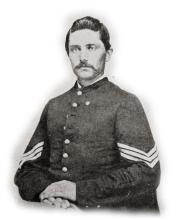
Sunday, 15th–This morning I went to church and Sunday School once more.
“My hospital was in an exposed position, and my sick must be moved.”–Journal of Surgeon Alfred L. Castleman.
September 15, 2021
15th.–I am alone to-night, and tired enough to lie and sleep for twenty-four hours, did not the scenes around call up associations which banish repose, and yet invite it. In the deep, deep woods, in a deep, deeper valley, with a mountain rising high on either side of me, and the semi-roaring babble of a large mountain brook, leaping over stones and precipices just in front of my lonely tent; the night speaks of the wildness of nature, and carries back my imagination to the times when the red man revelled here in the luxury of his mountain hunt. The song of the catydid talks to me of the rural home of my childhood, while the scream of the screech-owl right over my head awakens mingled feelings of aboriginal wildness, and of the ruins of civilization. The night is still, and over the mountain comes the strain of vocal music, with the accompaniment of a martial band, from more than a mile away, where with a regiment of Vermonters our chaplain is holding religious exercises, and “Dundee’s sacred strain,” mellowed by the distance, is in harmony with all around me. These are my nearest settled neighbors to-night, and so far away that I am outside of all their guards, yet near enough to hear the “Halt! who comes there?” of the picket, as he hails the rock, loosened from above, as it comes rushing down the mountain side. The tattoo of the night drums, too, as it comes rumbling over the mountains, and calls the soldier to his hard, but welcomed bed, awakens in the reflecting mind sad stories of the passions of men; of happy homes, deserted; of families, once united, now separated, perhaps forever; of the once freeman, to whom the dungeon now denies all hope of liberty again; of a country, once a unit, which held the world at bay, now an object of the ridicule or pity of nations which but a few short months before trembled at her power; of reflections which, I fear, must convince that “war is the normal condition of man.” There were threats of an attack on us yesterday and to-day. My hospital was in an exposed position, and my sick must be moved. At dark I commenced moving to a more secure place; selected this beautiful ravine ; got my tents here, but not deeming it best to disturb the sick by moving them in the night, am here alone to take care of my tents and stores. And how beautifully the moon sheds its reflections over this quiet little valley, and brightens, as with myriads of diamonds, the ripplings of the little mountain streams! How deliciously sweet the fresh odor of the clean grass, untainted by the stench of the camp. But hark! I hear at this moment, from Fort Corcoran, “the three guns,” a signal of approaching danger, and in another moment the “long roll” may summon us to scenes of trouble. I am still stubborn in the belief that the enemy is only making a feint, and that we shall have no fight here. The long roll does not call me. The “three guns” must have made a false alarm, and so I will retire and “bid the world good-night.”
Civil War Day-By-Day
September 15, 2021
September 15, 1861
- Confederate forces continued their efforts to capture Lexington. 3,600 Union defenders faced 18,000 Confederate troops. Colonel Mulligan, the Union commander of Lexington, waited for reinforcements unaware that all his messages to General Frémont were being read by the Confederates.
A Chronological History of the Civil War in America1
- Skirmish near Darnestown, Va.; rebels repulsed.
- A Chronological History of the Civil War in America by Richard Swainson Fisher, New York, Johnson and Ward, 1863
First Sergeant
September 14, 2021Civil War Era Photographic Portraiture No. 24
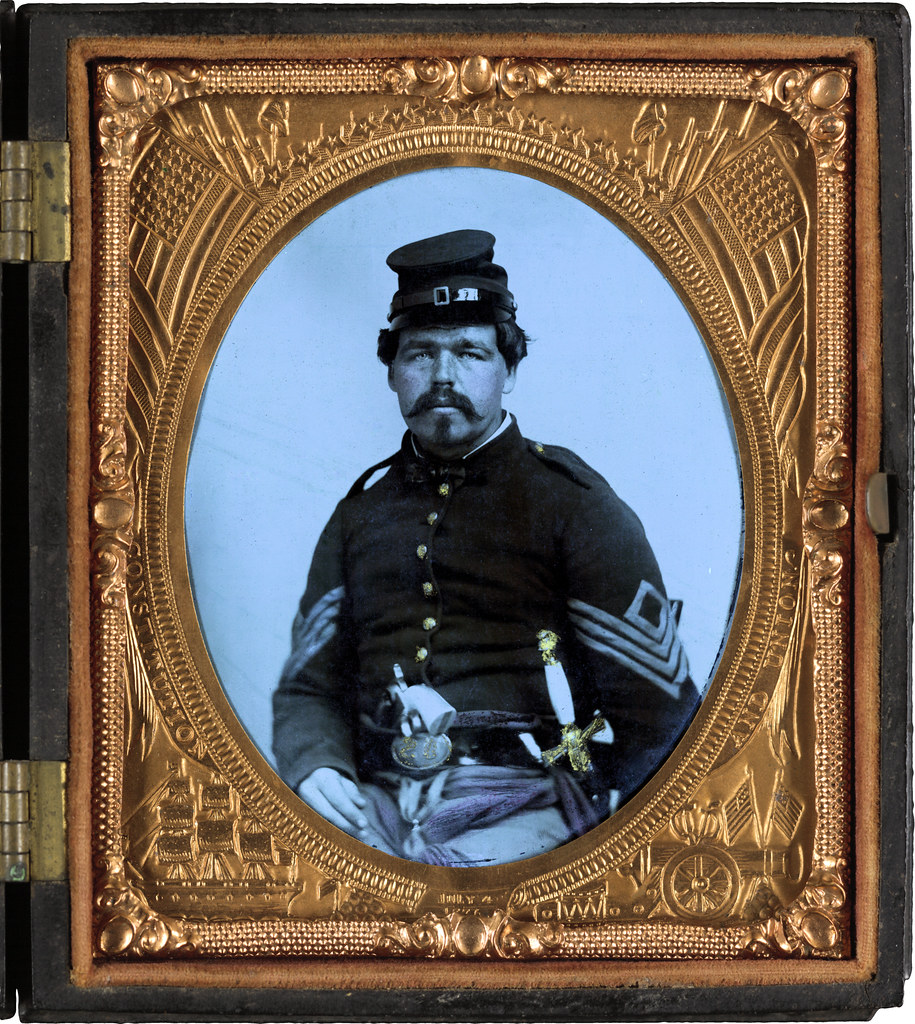
Title: [Unidentified soldier in Union first sergeant’s uniform with militia sword and revolver]
Date Created/Published: [between 1861 and 1865]
Medium: 1 photograph : sixth-plate tintype, hand-colored ; 9.5 x 8.2 cm (case)
Reproduction Number: LC-DIG-ppmsca-34964 (digital file from original item)
Rights Advisory: No known restrictions on publication.
Access Advisory: Use digital images. Original served only by appointment because material requires special handling.
Call Number: AMB/TIN no. 3061 [P&P]
Repository: Library of Congress Prints and Photographs Division Washington, D.C. 20540 USA
Notes:
…..Title devised by Library staff.
…..Case: Berg, no. 2-47S.
…..Gift; Tom Liljenquist; 2012; (DLC/PP-2012:127).
…..More information about this collection is available at http://hdl.loc.gov/loc.pnp/pp.lilj
…..Purchased from: The Horse Soldier, Gettysburg, Pa., 2012.
…..Forms part of: Liljenquist Family Collection of Civil War Photographs (Library of Congress).
…..Forms part of: Ambrotype/Tintype photograph filing series (Library of Congress).
Library of Congress item permalink
__________
Mike’s notes:
Image restoration note – This image has been digitally adjusted for one or more of the following:
– fade correction,
– color, contrast, and/or saturation enhancement
– selected spot and/or scratch removal
– cropped for composition and/or to accentuate subject matter
– straighten image
Image restoration is the process of using digital restoration tools to create new digital versions of the images while also improving their quality and repairing damage.
“But of all the mean business in the world, the most humiliating to a proud and independant man is dancing attendance upon and asking favors from those in power.”—Horatio Nelson Taft
September 14, 2021
SATURDAY 14
Weather fine & bright but a little too hot. M. 82. Have been at the Pat office part of the day. Had an interview with the Comr and a long talk with him, and a pretty plain talk. But of all the mean business in the world, the most humiliating to a proud and independant man is dancing attendance upon and asking favors from those in power. Dr David got in this evening from the other side of the River. I was at the National an hour or so, also called at Willards. City quiet.
______
The three diary manuscript volumes, Washington during the Civil War: The Diary of Horatio Nelson Taft, 1861-1865, are available online at The Library of Congress.
Secretary of War’s intent on giving up the office.—Rebel War Clerk
September 14, 2021
SEPTEMBER 14th.—Some of Mr. Walker’s clerks must know that he intends giving up the seals of office soon, for they are engaged day and night, and all night, copying the entire letter-book, which is itself but a copy of the letters I and others have written, with Mr. Walker’s name appended to them. Long may they be a monument of his epistolary administrative ability, and profound statesmanship!
To Arms
September 14, 2021
Daily Times [Leavenworth, Ks],
September 14, 1861
All good citizens having arms of any description needing repairs, are earnestly requested to bring such arms to the State Armory in the Times building, to be repaired under the supervision and at the expense of the Committee of Safety. The armory will be open for this purpose from 10 o’clock A.M. to 4 o’clock P.M. every day, (Sundays excepted,) until further notice.
By order of the Committee.
S. F. Atwood, Sec’y.
Must be blue
September 14, 2021
Daily Times [Leavenworth, Ks], September 14, 1861
The whole army of the U. S. is to be uniformed in blue. There is to be no more fantastic toggery. Some of the men in the army on the Potomac who were uniformed in grey, are getting ragged, but the Government will not permit any more grey clothes to be used. The boys must wait until they get blue clothes. Gen. McClellan is very energetic in his hostility to all uniforms except the regulation blue.
Company drill.–Alexander G. Downing.
September 14, 2021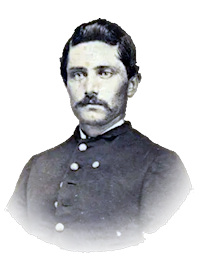
Saturday, 14th–We had company drill this morning, and some five or six new men enrolled. I went home in the afternoon.
“By a pure accident it was discovered that the British Government were secretly entering into connections with the insurgents…”–Adams Family Letters, Henry Adams, private secretary of the US Minister to the UK, to his brother, Charles.
September 14, 2021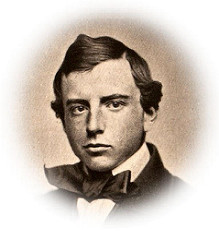
London, September 14, 1861
Your last letter containing principally suggestions on the cotton matter, reached me this week. Also a bundle of newspapers. At present I am busy in another direction, so that I can’t yet take up the subject you recommend, but when my immediate bubbles have burst, or have expanded brilliantly, I mean to see what I can do here. Yet I confess I do not promise myself much from the effort. The main principles which you aim at demonstrating, that the American monopoly of cotton is in fact a curse both to America and to Great Britain, and its destruction might be made the cause of infinite blessings to the whole range of countries under the torrid zone, this principle is and has always been an axiom here. It needs no proof, for the cotton-merchants themselves are the most earnest in asserting it. The real difficulty with regard to cotton does not lie there. It is never the hope of a future good, however great, that actuates people, when they have immediate evils such as this want of cotton will produce right before their eyes. Nor should I answer any real question by proving that in two years the world will be infinitely benefitted by our war, when what they alone ask is whether meanwhile England will not be ruined. My own belief is that she will be ruined. This next winter will, I fear, be a dreadful one in this country in any case, nor will it be bettered if they make war on us. It is not as if the cotton manufacture alone suffered, but the tariff and the war have between them cut off the whole American trade, export and import, and the consequence has been a very bad season, with a prospect of frightful pressure in the winter. Whole counties will have to be supported by subscription. [continue reading…]
“The enemy are no match for us in fair fighting. They feel it and so do our men.”—Rutherford B. Hayes.
September 14, 2021
Birch River, Between Summersville and
Sutton, Virginia, September 14, 1861.
Dear Uncle : – I have no time to write letters. We are getting on finely. Our battle on the 10th at Gauley River, you have no doubt heard all about. Nothing but night prevented our getting Floyd and his whole army. As it was, we entirely demoralized them; got all their camp equipage even to their swords, flag, and trunks (one of the best of which the general gave me). I had an important and laborious part assigned me. An independent command of four companies to be the extreme left of our attacking column. We worked down and up a steep rocky mountain covered with a laurel thicket. I got close enough just at dark to get two men wounded and four others struck in their garments.
This is not a dangerous business; after tremendous firing of cannon and musketry, we lost only thirteen killed, about fifteen badly wounded and fifty or sixty slightly wounded. The enemy are no match for us in fair fighting. They feel it and so do our men. We marched rapidly seventeen miles, reaching their vicinity at 2:30 or 3 P. M. We immediately were formed and went at them. They were evidently appalled. I think not many were killed. Governor Floyd was wounded slightly.
On yesterday morning I was sent on a circuitous march to head off parties hastening to join Wise or Floyd. Four companies of my regiment, two [continue reading…]
Civil War Day-By-Day
September 14, 2021
September 14, 1861
A Chronological History of the Civil War in America1
- Skirmish near Shepherdstown, Va.
- A Chronological History of the Civil War in America by Richard Swainson Fisher, New York, Johnson and Ward, 1863
Private Charles H. Bickford of B Company, 2nd Massachusetts Infantry Regiment as a young boy
September 13, 2021Civil War Era Photographic Portraiture No. 23
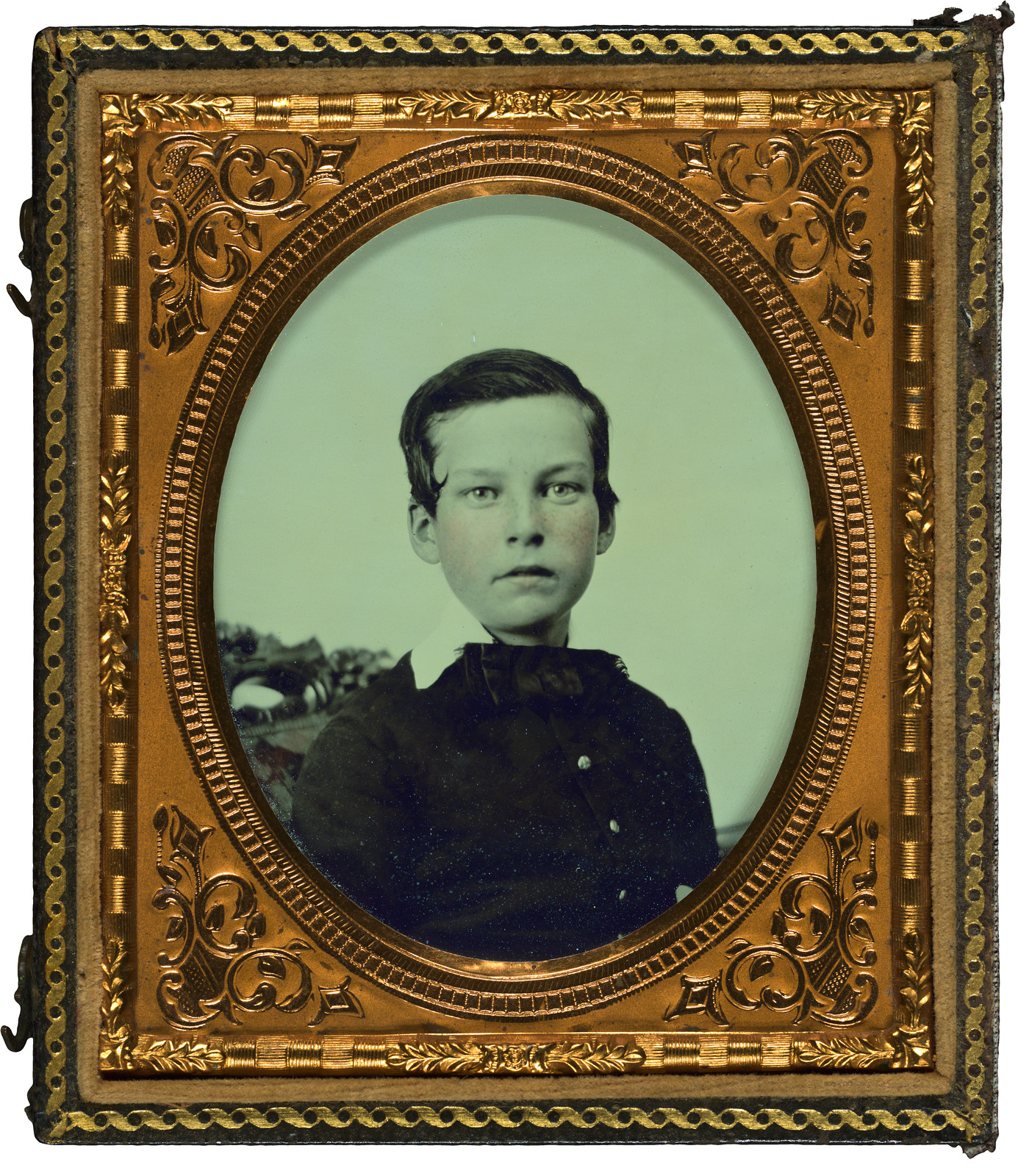
Title: [Private Charles H. Bickford of B Company, 2nd Massachusetts Infantry Regiment as a young boy]
Date Created/Published: [between 1850 and 1855]
Medium: 1 photograph : sixth-plate ambrotype, hand-colored ; 9.3 x 8.1 cm (case) + 1 manuscript.
Summary: Photograph shows identified soldier, as a child.
Reproduction Number: LC-DIG-ppmsca-27242 (digital file from original item, photo) LC-DIG-ppmsca-27243 (digital file from original item, note)
Rights Advisory: No known restrictions on publication.
Access Advisory: Use digital images. Original served only by appointment because material requires special handling.
Call Number: AMB/TIN no. 2380 [P&P]
Repository: Library of Congress Prints and Photographs Division Washington, D.C. 20540 USA
Notes:
….Title devised by Library staff.
….Case: Leather geometric scroll and flowers.
….Name from inscription on handwritten note in case; additional information on note includes date of birth, March 1844, date and place of death, May 3, 1863, at Chancellorsville, Virginia, and name of sister, Georgeanna Hunt.
….Digital photo with mat removed by Mike O’Donnell.
….Gift; Tom Liljenquist; 2010; (DLC/PP-2010:105).
….More information about this collection is available at http://hdl.loc.gov/loc.pnp/pp.lilj
….Forms part of: Liljenquist Family Collection of Civil War Photographs (Library of Congress).
….Forms part of: Ambrotype/Tintype photograph filing series (Library of Congress).
Library of Congress item permalink.
_______________
Mike’s notes:
Image restoration note – This image has been digitally adjusted for one or more of the following:
– fade correction,
– color, contrast, and/or saturation enhancement
– selected spot and/or scratch removal
– cropped for composition and/or to accentuate subject matter
– straighten image
Image restoration is the process of using digital restoration tools to create new digital versions of the images while also improving their quality and repairing damage.
“There seemed to be signal lights there on the hills this evening, one very large fire.”—Horatio Nelson Taft
September 13, 2021
FRIDAY, SEPTEMBER 13, 1861.
I have been much of the day at the Treasury Dept waiting to see the Sec’y on business. While there saw Prof (now) Genl Michel, the Astronomer, who is now in the Army. Also saw and conversed with Genl Burnside of R.I. Genl Pomeroy of Kansas notoriety I saw also. It is reported that our pickets on the other side of the River have been driven in. There seemed to be signal lights there on the hills this evening, one very large fire. Called with wife on Chas & Sallie. Mr Kendig of Phila was there. Walked up to Franklin Square.
______
The three diary manuscript volumes, Washington during the Civil War: The Diary of Horatio Nelson Taft, 1861-1865, are available online at The Library of Congress.
Rebel War Clerk
September 13, 2021
SEPTEMBER 13th.—The Secretary, after writing and tendering his resignation, appointed my young friend Jaques a special clerk with $2000 salary. This was allowed by a recent act.
The Secessionists in our Midst
September 13, 2021
Daily Times [Leavenworth, Ks],
September 13, 1861
That we have in our midst, Secessionists, and those who sympathize with the Southern rebels, in their war upon the Government, is a well-known fact. How to deal with these men, has long been a perplexing, and is fast becoming a practical question. Among them, we have neighbors and personal friends; but the relations they bear towards us, cannot make us forget what is due to our own safety and welfare.
There are residents of Leavenworth, who undoubtedly hold sentiments in relation to the present struggle, that are obnoxious to our people; yet who would not give aid or information to the enemy, nor do aught to injure the city. If such men can keep their objectionable opinions to themselves, there is no reason why they should be harassed or molested. It is time, however, to have one thing distinctly understood: that treasonable doctrines cannot be openly proclaimed with impunity, in Leavenworth.
There are others of the class to which we refer, whose presence, under any circumstances, is dangerous. We are satisfied that there are Secessionists here who hold communication with the Missouri rebels, and who would rejoice to see Kansas overrun by those fiends in human shape. These men should be properly dealt with, either by the civil or military authorities. We want no night forays upon suspected persons, by unauthorized and lawless bands. Such matters are of too much moment, to be left to the arbitration of a few reckless individuals.
Neither would we have the property of those who are charged with Secession proclivities, appropriated to private uses. The Government has wisely and justly determined to confiscate the effects of those who are in arms against it, or who have committed overt acts of treason; but this affords no excuse for seizures of personal property, by men who hold themselves accountable to no law and no authority. Under the influence of a temporary excitement, this community has regarded such acts with leniency and forbearance; but the sober judgment of our citizens will neither approve nor countenance a course fraught with so much danger, and so destructive of every principle of good government. The tendency of these unlawful raids is to provoke a spirit of insubordination to the regularly constituted authorities, which must be checked, or it will soon involve our whole people, Union men as well as others, in anarchy and ruin.
Let us not introduce here the system which prevails throughout Cottondom. Let us not imitate the riotous and arbitrary acts, which have so disgraced the South, and which have marked the progress of this unholy insurrection against the Government. We are fighting for the supremacy of Law. That is our shield and our safeguard, and we must ourselves regard it with reverence, or we cannot hope to enforce its obligations upon others.
Downing’s Civil War Diary.–Alexander G. Downing.
September 13, 2021
Friday, 13th–We made the entire trip of thirty miles from Davenport last night and reached home by daylight. I went up to Tipton this afternoon and was sworn into the State service, my service dating back to August 10th. Our former captain, Mr. McLoney, and some of the other Inland boys are here, besides four of the Le Claire boys. We are trying to form a new company and everything looks good for a new company in a short time, quite a number of the boys having already enrolled. We are boarding at the hotel.
William Howard Russell’s Diary: War cries.
September 13, 2021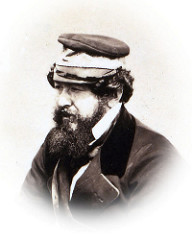
September 12th.–The day passed quietly, in spite of rumours of another battle; the band played in the President’s garden, and citizens and citizenesses strolled about the grounds as if Secession had been annihilated. The President made a fitful appearance, in a grey shooting suit, with a number of despatches in his hand, and walked off towards the State Department quite unnoticed by the crowd. I am sure not half a dozen persons saluted him–not one of the men I saw even touched his hat. General Bell went round the works with McClellan, and expressed his opinion that it would be impossible to fight a great battle in the country which lay between the two armies–in fact, as he said, “a general could no more handle his troops among the woods, than he could regulate the movements of rabbits in a cover. You ought just to make a proposition to Beauregard to come out on some plain and fight the battle fairly out where you can see each other.”
_______
posted on the 13th as there were two entries dated the 11th, with the second one posted on the 12th.
Civil War Day-By-Day
September 13, 2021
September 13, 1861
- The siege of Lexington, also known as the Battle of First Lexington, was a minor conflict of the American Civil War. The siege took place from September 13 to 20, 1861 between the Union Army and the pro-Confederate Missouri State Guard in Lexington, county seat of Lafayette County, Missouri. The victory won by the Missouri Guard bolstered the considerable Southern sentiment in the area, and briefly consolidated Missouri State Guard control of the Missouri River Valley in the western part of the state. Confederate Sterling Price, with 18,000 men, faced a federal force of 3.600 under Colonel James Mulligan. After fighting intensified on September 19, Mulligan surrendered on the 20th.
- Entering Confederate-controlled Pensacola harbor, Lt. John Henry Russell destroys the privateer Judah, marking the first naval action of the Civil War.
A Chronological History of the Civil War in America1
- Booneville, Mo., attacked by rebels, who were repulsed by the Home Guard stationed there.
- Thirteen members of the Maryland Legislature, two editors of secession newspapers, one member of Congress, and the gubernatorial candidate of the secession party arrested in Baltimore.
- C. S. privateer “Judith.” destroyed at Pensacola, Fla., by a boat expedition from the U. S. ship “Colorado.”
- A Chronological History of the Civil War in America by Richard Swainson Fisher, New York, Johnson and Ward, 1863