SEPTEMBER 20th.—Col. J. A. Washington has been killed in a skirmish. He inherited Mount Vernon. This reminds me that Edward Everett is urging on the war against us. The universal education, so much boasted of in New England, like their religion, is merely a humbug, or worse than a humbug, the fruitful source of crime. I shall doubt hereafter whether superior intelligence is promotive of superior virtue. The serpent is wiser than the dove, but never so harmless. Ignorance is bliss in comparison with Yankee wisdom.
American Civil War Chronicles
I dislike the service but must obey, of course. —Diary of Rutherford B. Hayes.
September 20, 2021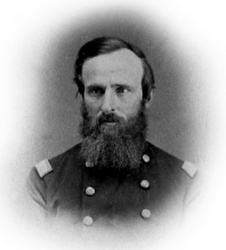
September 20.– I am ordered to the place of judge-advocate and to be attached to headquarters. I dislike the service but must obey, of course. I hope to be released after a few weeks’ service. In the meantime I will try to qualify myself for an efficient discharge of my new duties. I agree with General Rosecrans that courts-martial may be made very serviceable in promoting discipline in the army. I shall try to introduce method and system into the department. I will keep a record of cases, collect a list of sentences proper for different cases, etc., etc.
War Diary of Luman Harris Tenney.
September 20, 2021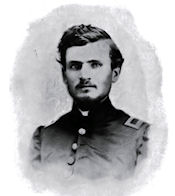
Friday, 20th. Received appointment of Com.-Sergt.
Captain Stearns of Company A of the Eighth Iowa is here encourage enlistments.–Alexander G. Downing.
September 20, 2021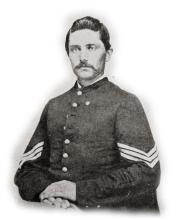
Friday, 20th–Captain Stearns of Company A of the Eighth Iowa arrived today from Davenport, coming to encourage enlistments. Several new men enrolled today. We have a fine drillmaster in John F. Compton of New Liberty, Scott county. He is an Englishman, and has served five years in the Queen’s Guards of England.
“People were beginning to believe that the slaveholding generals were demigods…,”–Adams Family Letters, Charles Francis Adams, U.S. Minister to the U.K., to his son, Charles.
September 20, 2021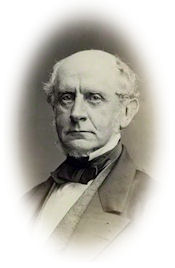
London, September 20, 1861
I deeply sympathise with you in your trials about the part you ought to play in the war. Much as I value your assistance during my absence on this side, I should be very reluctant to continue it at the cost of your own convictions of your duty. If you feel that the crisis demands it, I pray that you set aside every other consideration at once. .. . Whichever way you determine, you will know that I appreciate your motives, and that you will have under every circumstance my sympathy and my prayers.
The late modicum of good news has helped us here a good deal. People were beginning to believe that the slaveholding generals were demigods, on Aristotle’s or Longinus’s principle (I forget which), that mystery is a source of the sublime. The London Times at last frankly admits that if split up we shall no longer be a terror to Europe so that there is no need of going any farther for a reason to explain its crooked policy. Mr. Russell’s last letter went far to justify your inference. He has seen a little light and is willing to admit that we are not so badly off after all. . . .
A Diary of American Events.
September 20, 2021
September 20.–At Lexington, Mo., Colonel Mulligan surrendered to the rebel general, Price, after a fifty-nine hours’ fight without water; the only supply–from the river–having been cut off by the rebels, after a severe fight. The camp ground contained no springs or wells, and embraced ten acres, with breastworks around it, except the river front. The rebels procured bales of hemp and rolled them in advance, and under their cover succeeded in securing a position in the rear. They made but few assaults, their object being to surround the fort and cut off supplies of water, and this accomplished, wait till necessity compelled Mulligan to yield. Previous to the surrender, Colonel Mulligan offered to take a position on a level spot of ground and give General Price the odds of four to one in a fair open fight, but he declined. After the surrender the rebels mounted the breastworks, mad with joy, and trailed the National flag in the dust. A large amount of gold, supposed to be a quarter of a million, fell into the possession of the rebels. It had previously been buried by Colonel Mulligan, but was unearthed by the enemy. The brave Colonel wept like a child when he found himself compelled to surrender. –(Doc. 33.)
–The rebels troops evacuated Mayfield, Ky., this day. They numbered about seven thousand, under the command of General Cheatham, were nearly all armed, but poorly clothed and indifferently fed.
Mayfield is a small town, the seat of Graves County, on the railroad from Paducah to Union City, and midway between the two places. It is about thirty-six miles east of Columbus, Ky. –Chicago Tribune.
–A Federal scouting party from the Thirty-fourth N. Y. regiment at Darnestown, Md., went across the Potomac near the mouth of the Seneca, and were attacked by a superior party of the rebels. One of the Nationals was killed outright and several were wounded; one of the latter was shot through the cheek, but fled, pursued by the attacking party; on reaching a creek he threw off his gun and plunged in himself laying on his back and resting his head upon a stone with his mouth and nostrils above the water. He avoided his pursuers, and after three hours’ submersion he crawled to the shore of the river; his companions, who were concealed on the Maryland side, discovered and rescued him while making a vain attempt to swim across.
A skirmish took place below Fort Holt near Cairo, Ill., between company I, of the Tenth regiment, and a small party of rebels, in which the latter were routed.–Ohio Statesman, September 24. [continue reading…]
Civil War Day-By-Day
September 20, 2021
September 20, 1861
- Lexington finally fell to Confederate forces. Along with 1,600 prisoners, the Confederates also found $1 million – the Union forces payroll. Frémont’s perceived failure to help the Union defenders at Lexington badly counted against him in Washington DC.
A Chronological History of the Civil War in America1
- Surrender of Col. Mulligan at Lexington, Mo., after four days’ struggle with 2,500 men against 26,000 rebels under Gen. Price.
- Skirmish near Tuscumbia, Mo.
- A Chronological History of the Civil War in America by Richard Swainson Fisher, New York, Johnson and Ward, 1863
Mary Chesnut’s Diary.—”The high and disinterested conduct our enemies seem to expect of us is involuntary and unconscious praise. “
September 19, 2021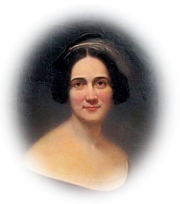
September 19th.–A painful piece of news came to us yesterday–our cousin, Mrs. Witherspoon, of Society Hill, was found dead in her bed. She was quite well the night before. Killed, people say, by family sorrows. She was a proud and high-strung woman. Nothing shabby in word, thought, or deed ever came nigh her. She was of a warm and tender heart, too; truth and uprightness itself. Few persons have ever been more loved and looked up to. She was a very handsome old lady, of fine presence, dignified and commanding.
“Killed by family sorrows,” so they said when Mrs. John N. Williams died. So Uncle John said yesterday of his brother, Burwell. “Death deserts the army,” said that quaint old soul, ”and takes fancy shots of the most eccentric kind nearer home.”
The high and disinterested conduct our enemies seem to expect of us is involuntary and unconscious praise. They pay us the compliment to look for from us (and execrate us for the want of it) a degree of virtue they were never able to practise themselves. It is a crowning misdemeanor for us to hold still in slavery those Africans whom they brought here from Africa, or sold to us when they found it did not pay to own them themselves. Gradually, they slid or sold them off down here; or freed them prospectively, giving themselves years in which to get rid of them in a remunerative way. We want to spread them over other lands, too–West and South, or Northwest, where the climate would free them or kill them, or improve them out of the world, as our friends up North do the Indians. If they had been forced to keep the negroes in New England, I dare say the negroes might have shared the Indians’ fate, for they are wise in their generation, these Yankee children of light. Those pernicious Africans! So have just spoken Mr. Chesnut and Uncle John, both ci-devant Union men, now utterly for State rights.
It is queer how different the same man may appear viewed from different standpoints. ”What a perfect gentleman,” said one person of another; “so fine-looking, high-bred, distinguished, easy, free, and above all graceful in his bearing; so high-toned! He is always indignant at any symptom of wrong-doing. He is charming–the man of all others I like to have strangers see–a noble representative of our country.” “Yes, every word of that is true,” was the reply. “He is all that. And then the other side of the picture is true, too. You can always find him. You know where to find him! Wherever there is a looking-glass, a bottle, or a woman, there will he be also.” “My God! and you call yourself his friend.” “Yes, I know him down to the ground.”
This conversation I overheard from an upper window when looking down on the piazza below–a complicated character truly beyond La Bruyere–with what Mrs. Preston calls refinement spread thin until it is skin-deep only.
An iron steamer has run the blockade at Savannah. We now raise our wilted heads like flowers after a shower. This drop of good news revives us. ¹
______
¹ By reason of illness, preoccupation in other affairs, and various deterrent causes besides, Mrs. Chesnut allowed a considerable period to elapse before making another entry in her diary.
Typhoid… is always lingering.
September 19, 2021
19 Sep
My dear Lotty has had an attack of fever now for 3 or 4 days Dr Geddings says Typhoid which is always lingering. She is the most patient child never says a word and takes her medicine and is still.—
Rebel War Clerk
September 19, 2021
SEPTEMBER 19th.—We hear of several splendid clashes of cavalry near Manassas, under Col. Stuart; and Wise’s cavalry in the West are doing good service.
“Idleness is everywhere pernicious especially in armies, as it leads to vice or stupidity and degrades the profession.”
September 19, 2021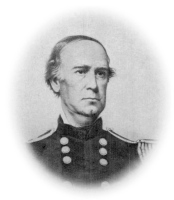
Headquarters Camp of Instruction
Benton Barracks Mo September 18th 1861
General Orders
No. 4
Troops are stationed at this post especially to recruit organize and drill, commanders thereof after the first day (which should be devoted to clearing quarters and accoutrements, and airing tents and clothing) officers and men will be expected to conform to the rules of this contonment. Idleness is everywhere pernicious especially in armies, as it leads to vice or stupidity and degrades the profession. We are paid to labor and should be willing to work: and when we willfully fail to do so, we should lose wages and expect punishment.
To secure daily duty and note delinquencies, frequent roll calls are required, when absentees are to be ascertained and properly reported. The calls for daily duty are to be strictly enforced by the officers. [Reveille and roll call were ordered at 6 A.M., breakfast at 7:15, following a morning drill, drill again following breakfast, dinner call at 12 M., drill again in the afternoon, with retreat at 5:45. Taps and roll call, 9: P.M., lights out 9:15]
__________
General Regulations
Head Quarters
Camp of Instruction Benton Barracks Sept 19, 1861
General Orders
No 5
Order in Camp
It is the special province of the Guard to see that all these and other rules of the service are complied with . . . Foraging, pilfering, rioting, mutiny, drunkeness, profane swearing, and vulgarity, are to be rebuked and restrained ; and all soldiers should unite in preserving the decency and general decorum of all troops who should carry to their homes an unsullied name.
Clothing and Other Articles
September 19, 2021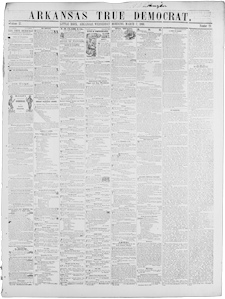
Arkansas True Democrat [Little Rock], September 19, 1861
To the people of Ashley, Desha, Drew,
Dallas, Hot Spring and Union counties,
Arkansas.
Pursuant to an order addressed to the commanders of regiments and battalions composing the army of the north west in Virginia, by the General commanding that division, to select each a suitable officer to return to the places in which the men composing their regiments were enrolled, to receive and convey to them such clothing and other articles as may be required during the winter, and may be furnished by their families, neighbors and friends, I have detailed Lieutenant J. M. D. Sturges for that purpose. Under the army regulations of the Confederate States, the government pays each soldier forty-two dollars per annum in lieu of clothes which are to be supplied by the soldiers themselves.
Justly appreciating the patriotism and devotedness of the people of Arkansas, which seems only to increase with the new demands their country is compelled to make upon them, I deem it only necessary to tell them that the soldiers under my command are operating in the mountains of Virginia, where more and warmer clothing is necessary to their comfort and health, than any where else in the Confederate States, to insure a liberal supply of flannel shirts, drawers, yarn socks, heavy pants, a warm coat for each, and two pairs of heavy shoes. I would suggest that the counties of Union, Ashley, Drew and Desha, make Monticello their depot, and the citizens of Hot Spring and Dallas forward the articles for the soldiers from those counties to the quarter master of the Confederate States at Memphis, there to await the order of Lieut. Sturges. Each parcel should be marked with the name of the person for whom it is designed, and each box addressed to the Captain of the company for whom it contains clothing, to my care. After the goods are delivered into the possession of Lieut. Sturges, he is on no account to become separated from them until they reach their destination.
A. Rust, Colonel
Com’d’g 3d Ark. Reg.
Brigade Headqu’rs, North-west, Va.
September, 1861.
The Free Market
September 19, 2021
Arkansas True Democrat [Little Rock], September 19
They have a free market at New Orleans–free for the families of those who have volunteered in the war. Contrast it with the miserable soup houses of the North, where the starving wives and children of their soldiers draw an allowance of thin soup made of dead horses and a modicum of stale bread.
“The Free Market–The free market was opened yesterday, and 1160 families of volunteers derived from it their provisions for the three following days. The managers had not an easy task; for they had to distribute in the course of the morning 30 barrels of meal, 10 of rice, 10 of sugar, 1 of peas, 9 of beef, 3 of beans, and 5 of molasses; 30 hams, 21 sacks of sweet potatoes, 10 barrels of onions, 5 of dried apples and peaches, and 5 of flour baked into bread, besides a great variety of vegetables.”–N. O. Picayune.
There may be a great deal of wickedness in the Crescent city, but such things as these go far to redeem it. We doubt much if any city, in either confederacy can show greater or nobler charities. Their hospitals, free markets, asylums and relief associations are all on a large scale, denoting a big hearted, generous people.
“Saw the Auctioneer in regard to my sale of furniture. Next Tuesday is the day, 1/2 past 10 a.m. Varnished over some of my furniture.”—Horatio Nelson Taft
September 19, 2021
THURSDAY, SEPTEMBER 19, 1861.
Weather continues delightful. I spent some time at the Pat office. Saw the Comr, could get no decisive answer as to the precise time that I could go back into the office. It would not be long. Saw the Auctioneer in regard to my sale of furniture. Next Tuesday is the day, 1/2 past 10 a.m. Varnished over some of my furniture. Spent the evening with Julia at Chas rooms, Capt Kendig and Dr John [Bulkley?] there. K is a fine singer.
______
The three diary manuscript volumes, Washington during the Civil War: The Diary of Horatio Nelson Taft, 1861-1865, are available online at The Library of Congress.
The Salt Springs of Arkansas
September 19, 2021
Arkansas True Democrat [Little Rock], September 19, 1861
Salt springs are to be found in the counties of Van Buren, Pope, Franklin, Crawford, Hot Spring, Dallas and Sevier. We are led to call attention to them now, because there is every probability that this necessary article will become scarce and high priced, unless the people of the South take immediate steps to furnish themselves. . . .
Since the retreat of the enemy I have been too busy to write.— Diary and Letters of Rutherford B. Hayes.
September 19, 2021
Cross Lanes, Near Gauley River,
South of Summersville, Virginia,
September 19, 1861.
Dear Mother: I am in the best possible health. Since the retreat of the enemy I have been too busy to write. You must look in the correspondence of the Commercial or Gazette for my welfare. If I should lose a little toe, it will be told there long before a letter from me would reach [you]. Their correspondents send by telegraph and couriers every day from this army. Their accounts, making proper allowance for sensational exaggeration, are pretty truthful.
Dr. Joe and his assistant performed their duty and the duty of about half a dozen other surgeons during and after the fight. Everybody was well cared for – even the enemy. The number of killed and badly wounded did not exceed twenty-five; other wounds about seventy-five, mostly very slight. The suffering is not great. Gunshot wounds are accompanied with a numbness which relieves the wounded. Laura’s bandages figured largely.
We are now enjoying ourselves very much; beautiful weather; fine fruit, vegetables, and other food, also pretty nights. Love to all.
Affectionately your son,
R. B. Hayes.
P. S. – You must excuse my short letter. I have a prodigious amount of writing to do. I am acting judge-advocate and have tried five cases lately. – H.
Mrs. Sophia Hayes.
“…the first thing they have to do is to learn military duty.”
September 19, 2021
Camp of Instruction
Benton Barrack
Sept. 19, 1861
Major J. C. Kelton1
Asst. Adt Genl
Sir
The matter of a Company of Sappers and minors raised in Illinois Commanded by Capt. Snyder has been referred to me, with direction to ascertain whether fraud had been practised to prevent the Company from joining Col Bissels Regiment and if so to dispose of them according to the justice of the matter.
The Company was and is divided in Counsils on several questions, but the matters in dispute did not so much refer to their regiment as to the kind of duty they would have to perform. They have been tampered with and to some extent deceived as to their duties by being told Sappers mean one thing Engineers another and Soldiers another. They are generally Mechanics and hope as such to be employed. I have told them as far as the Service would allow they would be so employed but the first thing they have to do is to learn military duty. Upon this injunction they have now settled down to drill and duty. If the regiment called Engineers is to be specially devoted to Mechanical persuits it would be well to attach them to that regiment. If otherwise they could and should remain as the regular Sappers and Minors are, an independent or Separate organization to do mechanical work similar to that done by such corps in the U States Service. They were mustered as Sappers and Minors. The law relating to volunteers authorizes the organization “as in the regular service” and under this clause I can find the only legal authority for carrying out the expectations and promises made to this Company (See Sec 2 Page 21 Statutes 37th Congress) Finding no evidence of fraud towards anybody but finding the company mustered as sappers and minors I report the facts.
Very Respectfully
Your Obt Sert.
Saml. R. Curtis
Camp of Instruction
1. John C. Kelton, U. S. Military Academy, 1851, brvt capt. by May 1861, Capt. Aug. 3, 1861, Col. 9 Missouri Inf. Sept. 19, 1861, Kelton rose in rank after the close of the war to that of brig gen adjt. gen. by 1880.
“I send a Complete requisition for Clothing nine regiments Iowa volunteers.”
September 19, 2021
Benton Barracks Mo
Sept 19. 1861
Dr General
In Conformity with your instructions I send a Complete requisition for Clothing nine regiments Iowa volunteers. When in Washington I made a partial requisition for two regiments but nothing has yet arrived. If it does, it does not matter, as we are receiving from Iowa several more regiments and the clothing will all be properly applied to Iowa troops
To secure proper safety in my absence I wish the boxes directed to Capt Henry Z. Curtis1 Quincy from whence he can supervise the proper direction to the regiments wherever they may be located.
I am very Respectfully
Your Obt Servt
Saml R. Curtis
Brig Geni. U.S.A.
1. Son of S. R. Curtis
War Diary of Luman Harris Tenney.
September 19, 2021
Thursday, 19th. Drilled during the day. Received bundle from home through Delos (Haynes), also a line.
The Preachers’ Regiment
September 19, 2021
Arkansas True Democrat [Little Rock], September 19, 1861
A regiment of Arkansas troops, from the southern part of the State, says the Helena Shield, passed up last Sunday, en route for the seat of war, that should properly be styled the Preachers’ Regiment.–The colonel, Bradley, from Pine Bluff, is a Methodist minister, and besides him there are no less than eight preachers in the regiment–one of whom is over seventy years of age!
One thing in the new appointment: If I can’t get out of it, you may see me one of these days…— Diary and Letters of Rutherford B. Hayes.
September 19, 2021
Cross Lanes, September 19, 1861.
Dearest: It is a lovely moonlight evening. I mailed you a letter this morning, but as Lieutenant Wall of Captain McIlrath’s company has resigned to go with the navy, and will go to Cincinnati tomorrow, I thought I would say a word further while our band plays its finest tattoo tunes. They are sweet, very. I have tried four or five cases on general orders, and here comes an order making me permanently a J. A. [judge-advocate]. It is not altogether agreeable. I shall get out of it after a while somehow. For the present I obey. It is pleasant in one respect as showing that in my line I have done well. Lieutenant Wall will, I hope, call and see you. He is a good soldier and we are sorry to lose him. If this reaches you before other letters from here and Birch River, you may know that two older and longer ones are after you.
One thing in the new appointment: If I can’t get out of it, you may see me one of these days, sooner than you otherwise would, as it confers some privileges, and that would be sweet. Love to all.
Affectionately,
R. B. Hayes.
P. S. – We hear tonight of the death of Colonel Lorin Andrews at Kenyon.[1] We feel it more deeply than in most cases. He was my classmate – a fellow student of Colonel Matthews. He took a great interest in our efforts to get a place in the war, and rejoiced with us when we got a fine regiment. McCook gave me Andrews’ spurs when he left for home, to wear until his return. Alas! we are not to see him. He was an earnest, true man. Hail and farewell! We have been so full of humor tonight and this saddens us. Good-bye again, dearest.
Mrs. Hayes. R.
[1] Lorin Andrews born at Ashland, Ohio, April 1, 1819. Studied law, but soon gave up the practice to devote himself to work of education. He was President of Kenyon College at the outbreak of the war and was the first man in Ohio to offer his services to the country. He was colonel of the Fourth O. V. I. in the first campaign of the war and “died, a martyr to the Union, September 18, 1861.”
Camden Knights
September 19, 2021
Arkansas True Democrat [Little Rock],
September 19, 1861
The “Camden Knights,” Company B, Capt. Logan, reached Memphis last Monday as a part of Col. Smith’s 11th regiment of Arkansas volunteers, and are now encamped near the Fair Grounds. They are represented to be one of the best drilled companies that has yet been raised in the State, and are armed in excellent style for a fight with the Hessians–each one having a minnie musket, a navy repeater, and a ponderous “toothpick,” which they have learned to use in a very expert manner. The company is the thirteenth one that has been furnished to the Confederate service by Washita county, which has a voting population of eighteen hundred.–Memphis Appeal, Sept. 7.
Offered the place of judge-advocate general by General Rosecrans. —Diary of Rutherford B. Hayes.
September 19, 2021
September 19. – Offered the place of judge-advocate general by General Rosecrans. Have served in five cases – [on the] 5th and 6th at Sutton, 16th, 17th and 18th at Cross Lanes (also the 12th) –and a few days between those dates preparing reports of proceedings.
Gone to the Hospital
September 19, 2021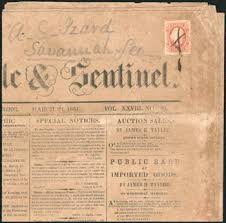
Daily Chronicle & Sentinel [Augusta, GA],
September 19, 1861
On Friday night last two ladies from Atlanta–Mrs. Hiram Jones and Mrs. Bryan, went to Richmond as nurses in the Georgia Hospital. God bless the ladies who are always ready with willing hearts and hands in every good work.
“You must look in the correspondence of the Commercial or Gazette for my welfare.”—Rutherford B. Hayes.
September 19, 2021
Cross Lanes, Near Gauley River,
South Of Summersville, Virginia,
September 19, 1861.
Dear Mother : – I am in the best possible health. Since the retreat of the enemy I have been too busy to write. You must look in the correspondence of the Commercial or Gazette for my welfare. If I should lose a little toe, it will be told there long before a letter from me would reach [you]. Their correspondents send by telegraph and couriers every day from this army. Their accounts, making proper allowance for sensational exaggeration, are pretty truthful.
Dr. Joe and his assistant performed their duty and the duty of about half a dozen other surgeons during and after the fight. Everybody was well cared for – even the enemy. The number of killed and badly wounded did not exceed twenty-five; other wounds about seventy-five, mostly very slight. The suffering is not great. Gunshot wounds are accompanied with a numbness which relieves the wounded. Laura’s bandages figured largely.
We are now enjoying ourselves very much; beautiful weather; fine fruit, vegetables, and other food, also pretty nights. Love to all.
Affectionately your son,
R. B. Hayes.
P. S. – You must excuse my short letter. I have a prodigious amount of writing to do. I am acting judge-advocate and have tried five cases lately. – H.
Mrs. Sophia Hayes.