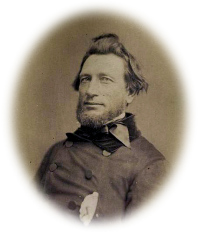
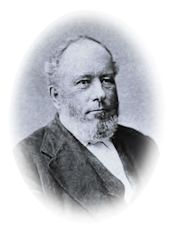
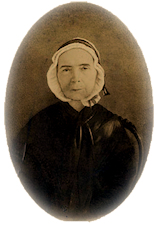
“One of the Halls in the Patent Office is used as a Military Hospital..,”—Horatio Nelson Taft

Diary of US patent clerk Horatio Nelson Taft.

SATURDAY 14

Weather fine yet, dry and not freezing. Nothing new of any great importance. I was in the Office all day. One of the Halls in the Patent Office is used as a Military Hospital, about 100 Soldiers from the Indiana Regts are sick there. Two Dead were carried out today. Prof Sparks, the Linguist, called at our home and spent an hour or two this evening. I have spent the rest of the evening in makeing a foot Stool for the Pew in Church. I work in the Wood House.

______

The three diary manuscript volumes, Washington during the Civil War: The Diary of Horatio Nelson Taft, 1861-1865, are available online at The Library of   Congress.

0 comments

Rebel War Clerk

Civil War Day-by-Day
A likeness of Jones when he was editor and majority owner of the Daily Madisonian during President John Tyler’s administration.

DECEMBER 14th.—Nothing.

0 comments

Army rations.–Alexander G. Downing.

Diary of Alexander G. Downing; Company E, Eleventh Iowa Infantry

Friday, 13th–The Eleventh Iowa is at home now in wedge tents, with four men to a tent, and we are experiencing more changes in living. Irish potatoes have been dropped from our rations and we have no tables now at which to eat our meals. When the orderly sergeant draws the rations, the company cook calls out for every man to come and get his portion–of hardtack, bacon, sugar, salt, pepper, soap and candles. The cook makes the coffee, boils the beans and salt beef (fresh beef twice a week), and at noon calls each man to get his day’s rations of bean soup and meat. The coffee he makes three times a day, each man having his own tin cup for his coffee. Each one prepares his own bacon to suit his taste, many eating it raw between two pieces of hard-tack. Every one has his own plate, knife and fork.

Our regiment received marching orders with ten days’ rations, and so we have to leave just as we were getting settled in our tent camp.

0 comments

“It is singular how still a half million of soldiers can keep.”—Horatio Nelson Taft

Diary of US patent clerk Horatio Nelson Taft.

FRIDAY 13

Another fine cool day, just comfortable with a fire. Was in the office all day. Prof Sparks called upon me and spent sometime. Mr Daws M.C. also brot a Mr Eldridge to me (from Williamstown) to me, who also had a letter of introduction from C R Taft. He is here after office. Think he will have a “hard road to travel.” I have been at work this evening and made a wash bench for the Kitchen. I have plenty of tools and like the exercise. There is no particular war news. It is singular how still a half million of soldiers can keep. But they are all in the field.

______

The three diary manuscript volumes, Washington during the Civil War: The Diary of Horatio Nelson Taft, 1861-1865, are available online at The Library of   Congress.

0 comments

Rebel War Clerk

Civil War Day-by-Day
A likeness of Jones when he was editor and majority owner of the Daily Madisonian during President John Tyler’s administration.

DECEMBER 13th.—One of the papers has a short account of the application of Stone in its columns this morning. One of the reporters was present at the interview. The article bore pretty severely upon the assumption of power by the military commander of the department. Gen. Winder came in during the day, and denied having promised to procure a passport for Stone from Gen. Huger.

0 comments

First Government pay as a soldier in the United States service.–Alexander G. Downing.

Diary of Alexander G. Downing; Company E, Eleventh Iowa Infantry

Thursday, 12th–We received our first month’s pay today. Each man in Company E received pay for twenty-six days of service in the month of October, amounting to $11.25, a little less than a full month’s pay. I received my first Government pay as a soldier in the United States service, getting a ten-dollar gold piece[i] and one dollar and twenty-five cents in silver. I expressed $10.00 home.


[i] This was the first gold I had seen for months and, as it proved, the last I saw during the war.–A. G. D.

0 comments

“The Lincoln Boys have been here twice today after our boys to go there.”—Horatio Nelson Taft

Diary of US patent clerk Horatio Nelson Taft.

THURSDAY, DECEMBER 12, 1861.

A fine cool day but not freezing. No special event has happened that I know of. I have been engaged in the Office as usual. Tonight I put up my Shelf in the lower Hall for a Hat Shelf. I brot it from one of the Camps over the River. Much of the furniture in John A Washingtons house was destroyed, he being a rebel. This Leaf of a Table was brot to the Camp and presented to me. Wife went to meeting this evening. The Lincoln Boys have been here twice today after our boys to go there. Chas & Sallie called this evening & spent an hour.

______

The three diary manuscript volumes, Washington during the Civil War: The Diary of Horatio Nelson Taft, 1861-1865, are available online at The Library of   Congress.

0 comments

Rebel War Clerk

Civil War Day-by-Day
A likeness of Jones when he was editor and majority owner of the Daily Madisonian during President John Tyler’s administration.

DECEMBER 12th.—More of Gen. Winder’s men came with a Mr. Stone, whom they knew and vouched for, and who wanted a passport merely to Norfolk. I asked if it was not his design to go farther. They said yes, but that Gen. Winder would write to Gen. Huger to let him pass by way of Fortress Monroe. I refused, and great indignation was manifested.

0 comments

“The weather is already cold enough to make it uncomfortable in tents and such conveniences as we are able to provide.”–Letters from Elisha Franklin Paxton.

Elisha Franklin Paxton – Letters from camp and field while an officer in the Confederate Army

Winchester, December 12, 1861.

Last Monday night I returned to our camp here, where I had the pleasure of reading the letters of Mary and Helen informing me that your troubles were all over, that we had another little boy in the crib, and that his mamma, as Mary happily expressed it, “Was doing as well as could be expected.” I would have written them to express my gratification at the good news from home, but I had orders to leave again upon another expedition to the Potomac which afforded no time for writing a letter. I reached Charlestown the next morning about daylight and spent most of the day on my horse. The morning started with the forces at one o’clock, passing by Shepherdstown to Dam No. 4 on the Potomac, where we captured eight Federal soldiers whom we found on this side of the river, in which we lost one man wounded–I suppose fatally. We remained there until late in the evening, when we started for Martinsburg, where we arrived about nine o’clock, having made a march of about twenty-six miles. I left Martinsburg the next afternoon and returned to Winchester, where, having been some time engaged in a conference with Jackson, I found a bed and went to sleep, tired enough, I am sure. This morning I returned to camp. So, Love, I have given you together my operations for the last few days, which furnish the reason for my not writing sooner.

To-day I received Mary’s letter of the 9th inst., from which I learn that you are improving, that the baby is doing well, which I am delighted to hear. I really sympathize with you, Love, in your lonely situation. You must be uncomfortable, lying all day and night in bed, though not suffering much with pain. In ten days more, I suppose, you will be able to sit up, and then in a week or so get about, attending to matters at home, as usual. I assure you that I reciprocate your wish for my return home, and heartily wish that I could consistently with my duty remain with you. If I can get a leave for only a few days, I will go before long to give a kiss and a greeting to the little fellow who has such strong claims upon my love and care. Active operations must soon cease, when there will be no reason why a short furlough should not be granted. The weather is already cold enough to make it uncomfortable in tents and such conveniences as we are able to provide. It would be intolerable if we were put upon the march with insufficient means which the men would have of making themselves comfortable.

I suppose by this time the hands have been making considerable progress in getting up the corn crop, and hope they may be able to finish it before Christmas. For the hired hands clothing must be furnished before Christmas. Can you get Annie or your ma to call upon Wm. White and get the goods and have them made up? Give my love to Helen and Mary and say to them I am much indebted to them for their letters and wish them to continue to write until you are able. And now, Love, good-bye again. Give my love to your father, ma and Annie. A kiss to Matthew, Galla and the baby, and for yourself, dearest, my hearty wish for your speedy recovery.

0 comments

A Dutch-American Crimean acquaintance.—The American Lawyers on the Trent affair.—Mr. Sumner.—McClellan’s Army.—William Howard Russell’s Diary.

My Diary North and South – William Howard Russell

December 12th.–A big-bearded, spectacled, moustachioed, spurred, and booted officer threw himself on my bed this morning ere I was awake. Russell, my dear friend, here you are at last; what ages have passed since we met!” I sat up and gazed at my friend. “Bohlen! don’t you remember Bohlen, and our rides in Turkey, our visit to Shumla and Pravady, and all the rest of it?” Of course I did. I remembered an enthusiastic soldier, with a fine guttural voice, and a splendid war saddle and saddle-cloth, and brass stirrups and holsters, worked with eagles all over, and a uniform coat and cap with more eagles flying amidst laurel leaves and U. S.’s in gold, who came out to see the fighting in the East, and made up his mind that there would be none, when he arrived at Varna, and so started off incontinent up the Danube, and returned to the Crimea when it was too late; and a very good, kindly, warm-hearted fellow was the Dutch-American, who– once more in his war paint, this time acting Brigadier General (since killed in action in Pope’s retreat from the north of Richmond.)–renewed the memories of some pleasant days far away; and our talk was of cavasses and khans, and tchibouques, and pashas, till his time was up to return to his fighting Germans of Blenker’s division.

He was not the good-natured officer who said the other day, “The next day you come down, sir, if my regiment happens to be on picket duty, we’ll have a little skirmish with the enemy, just to show you how our fellows are improved.” “Perhaps you might bring on a general action, Colonel.” “Well, sir, we’re not afraid of that, either! Let ’em come on.” It did so happen that some young friends of mine, of H.M.’s 30th, who had come down from Canada to see the army here, went out a day or two ago with an officer on General Smith’s staff, formerly in our army, who yet suffers from a wound received at the Alma, to have a look at the enemy with a detachment of men. The enemy came to have a look at them, whereby it happened that shots were exchanged, and the bold Britons had to ride back as hard as they could, for their men skedaddled, and the Secession cavalry slipping after them, had a very pretty chase for some miles; so the 30th men saw more than they bargained for.

Dined at Baron Gerolt’s, where I had the pleasure of meeting Judge Daly, who is perfectly satisfied the English lawyers have not a leg to stand upon in the Trent case. On the faith of old and very doubtful, and some purely supposititious, cases, the American lawyers have made up their minds that the seizure of the “rebel” ambassadors was perfectly legitimate and normal. The Judge expressed his belief that if there was a rebellion in Ireland, and that Messrs. Smith O’Brien and O’Gorman ran the blockade to France, and were going on their passage from Havre to New York in a United States steamer, they would be seized by the first British vessel that knew the fact. “Granted; and what would the United States do?” “I am afraid we should be obliged to demand that they be given up; and if you were strong enough at the time, I dare say you would fight sooner than do so.” Mr. Sumner, with whom I had some conversation this afternoon, affects to consider the question eminently suitable for reference and arbitration.

In spite of drills and parades, McClellan has not got an army yet. A good officer, who served as brigade major in our service, told me the men were little short of mutinous, with all their fine talk, though they could fight well, Sometimes they refuse to mount guard, or to go on duty not to their tastes; officers refuse to serve under others to whom they have a dislike; men offer similar personal objections to officers. McClellan is enforcing discipline, and really intends to execute a most villanous deserter this time.

0 comments

The Potomac blockade.—William Howard Russell’s Diary.

My Diary North and South – William Howard Russell

December 12th.–The navy are writhing under the disgrace of the Potomac blockade, and deny it exists. The price of articles in Washington which used to come by the river affords disagreeable proof to the contrary. And yet there is not a true Yankee in Pennsylvania Avenue who does not believe, what he reads every day, that his glorious navy could sweep the fleets of France and England off the seas to-morrow, though the Potomac be closed, and the Confederate batteries throw their shot and shell into the Federal camps on the other side. I dined with General Butterfield, whose camp is pitched in Virginia, on a knoll and ridge from which a splendid view can be had over the wooded vales and hills extending from Alexandria towards Manassas, whitened with Federal tents and huts. General Fitz John Porter and General McDowell were among the officers present.

0 comments

“…we are just beginning to realize that a soldier’s life is not all glory.”–Alexander G. Downing.

Diary of Alexander G. Downing; Company E, Eleventh Iowa Infantry

Wednesday, 11th–I am having my first experience of living in a tent. We are under the strictest military rules, and we are just beginning to realize that a soldier’s life is not all glory.

0 comments

Intestinal insurrection—Horatio Nelson Taft

Diary of US patent clerk Horatio Nelson Taft.

WEDNESDAY 11

Quite cool and very windy today. “Willie” is quite Smart today. The trouble with him was all owing to his stomachs having rebelled against the unconstitutional demands which he in his voracity made upon it. A dose of castor oil quelled the insurection and all his internal operations returned to their accustomed quiet state. Nothing new today. Went down to the Ave and made some small purchases, bot some Iron brackets for the mahogany shelf which is a leaf from a Table of John A Washington, brot away from his abandoned house by the soldiers.

______

The three diary manuscript volumes, Washington during the Civil War: The Diary of Horatio Nelson Taft, 1861-1865, are available online at The Library of   Congress.

0 comments

“…by 2 o’clock we had a lot of cavalry and infantry en route for the scene of action. The cavalry started them out of the brush and captured this 16.”–Army Life of an Illinois Soldier, Charles Wright Wills.

Civil War Day-by-Day

Bird’s Point, Mo., December 11, 1861.

Our cavalry brought in 16 prisoners to-night, about 10 last night; a band of Thompson’s men took a couple of boys from our regiment prisoners, out 10 miles from here at the water tank on the railroad. The owner of the house happened to be outside when they surrounded the house and he scooted down here with the news, and by 2 o’clock we had a lot of cavalry and infantry en route for the scene of action. The cavalry started them out of the brush and captured this 16. The Rebels killed one of Colonel Oglesby’s men. They did not recover our men but started up and lost another gang that probably has them.

We will be in our quarters next week although we don’t need them. It is rather pleasant here now. I took a swim yesterday. ‘Twas confounded cold, but I wanted to bathe so I took the river for it. We haven’t had a man complaining in the company for a week. We buried one poor fellow last week, but he would have died at home. When I was home last I weighed 142, now I weigh 160. Can you imagine me.

0 comments

Rebel War Clerk

Civil War Day-by-Day
A likeness of Jones when he was editor and majority owner of the Daily Madisonian during President John Tyler’s administration.

DECEMBER 11th.—Several of Gen. Winder’s detectives came to me with a man named Webster, who, it appears, has been going between Richmond and Baltimore, conveying letters, money, etc. I refused him a passport. He said he could get it from the Secretary himself, but that it was sometimes difficult in gaining access to him. I told him to get it, then; I would give him none.

0 comments

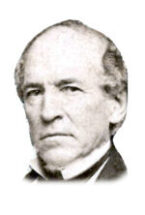
A description of Castleman’s field hospital and the condition of the patients.–Journal of Surgeon Alfred L. Castleman.

Journal of Surgeon Alfred L Castleman.

11th.–I have just received a letter from a lady friend of mine aye, and of the soldiers, too, in which she says she “cannot but think of the suffering patriot-soldier, with nothing but a tent above his head, with no covering but a single blanket, and but so little care when sick.” This induces me to put on record here, the following description for reference, a long time hence, when, if this war continues, I may wish to read it and compare it with the hospitals then existing, with the improvements which experience shall have causes to be adopted:

My hospital at present consists of five large tents, fourteen feet long by fifteen feet wide. They open into each other at the ends, so as to make of the whole one continuous tent, seventy feet long. This will accommodate forty patients comfortably. On an emergency, I can crowd in fifty-five. In the center of the first tent is dug a hole about three feet in circumference and two and a half deep. From this hole there passes through the middle of the tents a trench or ditch two feet wide and of the same depth, which terminates in a large chimney just outside of the fifth tent. It is covered for about ten feet of its length, at the beginning with broad stones, the next fifteen feet with sheet iron, thence to the chimney with stones and earth. A fire is made in the hole at the beginning of this ditch, which, through its large chimneys, has a great draught. The blaze sweeps through its whole length, and by means of this fire, no matter what the weather, or how changeable, the temperature in the hospitals need not vary three degrees in a month, and at all times, night and day, have full ventilation without varying the temperature. Since the adjustment of the difficulties, I have my full quota (10) of nurses, and these are never, night or day, less than two on watch. The cots for the sick are ranged side by side, with their heads to the wall and feet to the center of the tent, leaving just room between their sides for the nurses to move freely, and for the patients to get up and down, and between their ends for the ditch, on which, over the covering already described, is a ladder or rack, with slats so close as not to admit the feet between them when the nurses and patients are walking on them.

So long as there is room in the hospital, no patient of my regiment is permitted to be confined to his tent by sickness. The moment he is sick enough to be confined to bed, he is brought to hospital, where he remains constantly under the eye of the Surgeon and nurses till he recovers. There are, to-day, thirty-six in hospital, each, instead of lying with “nothing but a tent above his head, and with no covering but a single blanket,” is on a comfortable bed of straw, the tick emptied and refilled once in four weeks, with all the covering they want. I have plenty of good sheets, and not less than two blankets for each, besides what they bring with them. They are never without fresh meat, rarely without rice, potatoes, jellies in abundance, tea, coffee, sugar, milk, and I am now purchasing for them two dozen chickens a week; and I have this day a hospital fund of not less than one hundred and seventy-five dollars, which is increasing every day, from from which I can replenish or add to the comforts now allowed.[1] This is a description of my own hospital. I regret to learn from the U. S. Medical Inspector who has visited me to-day, that other hospitals are not so well provided or so comfortable. I regret it, because there is no reason why all may not be provided just as well, so long as we remain near a good market; and if they are not, there is blame either in medical or military departments, which ought to be corrected.

From ninth of November to this date, the time I was shut out from the medical supervision of the camp, there have been more deaths in the regiment than during the whole five months before, including the sickly season of August, September and October. The health of the regiment now, however, is good, and I hope it will remain so during the winter.


[1] It may be a matter of some interest to the reader to know how this hospital fund is realized. It is thus: The soldier is entitled to certain rations every day, and these continue, whether he is sick or well. When well, they are drawn by the captains of companies and distributed to the men. When sick and in hospital, the Surgeon notifies the Commissary of the fact, and they are not issued to the Captain, but credited to the hospital. The Surgeon draws them in whole, in part, or not at all. The days’ rations are worth from 17 to 20 cents per man. Now, any economical and honest Surgeon can feed his sick men well when near a market, and save to the hospital fund at least one third of this amount, for the purchase of delicacies. Give him thirty in hospital, he can realize two dollars per month on each man, ($60 per month.) In a neighborhood where markets are very high, this will be proportionally reduced. Where he cannot buy at all, it will be increased.
0 comments

Unanimity of the South.—William Howard Russell’s Diary.

My Diary North and South – William Howard Russell

December 11th.–The unanimity of the people in the South is forced on the conviction of the statesmen and people of the North, by the very success of their expeditions in Secession. They find the planters at Beaufort and elsewhere burning their cotton and crops, villages and towns deserted at their approach, hatred in every eye, and curses on women’s tongues. They meet this by a corresponding change in their own programme. The war which was made to develop and maintain Union sentiment in the South, and to enable the people to rise against a desperate faction which had enthralled them, is now to be made a crusade against slaveholders, and a war of subjugation–if need be, of extermination–against the whole of the Southern States. The Democrats will, of course, resist this barbarous and hopeless policy. There is a deputation of Irish Democrats here now, to effect a general exchange of prisoners, which is an operation calculated to give a legitimate character to the war, and is pro tanto a recognition of the Confederacy as a belligerent power.

0 comments

Downing’s Civil War Diary.–Alexander G. Downing.

Diary of Alexander G. Downing; Company E, Eleventh Iowa Infantry

Tuesday, 10th–I was on camp-guard all last night, and until 9 o’clock this morning, when I was relieved. The order of the day was cleaning up camp and our clothes. Our camp is on high ground and we have plenty of wood for fires and for cooking. We also have good water, but have to go a half mile for it.

0 comments

David L. Day writes about a walk in the country and the lack of ambition of the local Maryland farmers.

David L Day – My diary of rambles with the 25th Mass

A Walk into the Country.

Dec. 10. The weather holds warm and springlike. We have no need of overcoats, unless doing guard duty nights. The people here tell us it is an unusually mild fall, but that we shall get right smart lots of cold and snow before many days. I took a walk of a few miles into the country yesterday, on a tour of observation. I noticed what appeared to me a great extent of good land, but very badly improved. Occasionally I saw a farm where things seemed to be kept up snug and showed some evidences of thrift, but more of them looked as though the owners studied to see how shiftless they could be and still manage to live. Buildings and fences are going to decay; fields of corn are yet unharvested, the cattle and hogs running through and destroying them. I asked one man why he didn’t harvest his corn. “Oh,” he said, “there is no hurry about that, I have got all winter to do it in, and the corn is just as well off in the field as anywhere.” I came to the conclusion that his plan of harvesting was about as fast as he wanted it to eat. I said to another man I met, “You have good land about here, sir; easy of cultivation and close to a market. I suppose you make a pile of money?” “Oh, no,” he said, “you are mistaken; right poor land about yere, one can hardly make a living on it, but you go over yere a few miles to some creek [the name of which I have forgotten], and you will find right good land; make as much again corn on it as you can on this.” I asked, “What do you value this land at?” “Well,” he replied, “we reckon the land around yere worth about $10 an acre; reckon some of it mought be bought for a little less, but the land around Annapolis is worth from $25 to $50 an acre.” I made up my mind that a man with an ordinary degree of enterprise, with our improved implements for farming and with hired labor, might take this land and make money on it. I am unable to see any profits from slave labor in Maryland; it is poor help at the best; besides they have to be clothed and fed several months in a year during which time they are not earning much, and there is always on a farm employing a dozen or more field hands, a lot of old men and women and small children who are not earning anything, but still have to be supported.

0 comments

“There were Indians from the west at the Presidents last night.”—Horatio Nelson Taft

Diary of US patent clerk Horatio Nelson Taft.

TUESDAY 10

Too warm today for comfort. The Sun was quite oppressive in the middle of the day. Nothing new has taken place that I am aware of worth mentioning. I have spent the evening at home. Miss Mary Middleton called and at 9 o’clock I went over on to NY Ave for Julia, she being at Mr Hartlys. Julia and Martha H seem to be inseparable companions. Willie is quite unwell tonight, complains of his head. All the family except myself were up to the Presidents today. “Bud” brot home a water Lilly for the Aquarium. There were Indians from the west at the Presidents last night.

______

The three diary manuscript volumes, Washington during the Civil War: The Diary of Horatio Nelson Taft, 1861-1865, are available online at The Library of   Congress.

0 comments

Rebel War Clerk

Civil War Day-by-Day
A likeness of Jones when he was editor and majority owner of the Daily Madisonian during President John Tyler’s administration.

DECEMBER 10th.—Nothing new.

0 comments

“a sad disappointment…”–Letters from Elisha Franklin Paxton.

Elisha Franklin Paxton – Letters from camp and field while an officer in the Confederate Army

Unger’s Store, December 10, 1861.

I made application yesterday for leave of absence, but was informed that I could not get it until Col. Echols returned, who has leave for twenty-five days and starts home this morning. It is to me a sad disappointment, but I must bear it as cheerfully as I can. You must do the same. You must make up your mind, too, Love, to stay at home. In the present state of our finances we must save all we can, and this, I feel sure, will be best done by your staying on the farm. I think, too, you will be as happy there as you could be elsewhere.

0 comments

Colonel Seaton, of the National Intelligencer.—William Howard Russell’s Diary.

My Diary North and South – William Howard Russell

December 10th.–Paid a visit to Colonel Seaton, of the National Intelligencer, a man deservedly respected and esteemed for his private character, which has given its impress to the journal he has so long conducted. The New York papers ridicule the Washington organ, because it does not spread false reports daily in the form of telegraphic “sensation” news, and indeed one may be pretty sure that a fact is a fact when it is found in the Intelligencer; but the man, nevertheless, who is content with the information he gets from it, will have no reason to regret, in the accuracy of his knowledge or the soundness of his views, that he has not gone to its noisy and mendacious rivals. In the minds of all the very old men in the States, there is a feeling of great sadness and despondency respecting the present troubles, and though they cling to the idea of a restoration of the glorious Union of their youth, it is hoping against hope. “Our game is played out. It was the most wonderful and magnificent career of success the world ever saw, but rogues and gamblers took up the cards at last; they quarrelled, and are found out.”

In the evening, supped at Mr. Forney’s, where there was a very large gathering of gentlemen connected with the press; Mr. Cameron, Secretary of War; Colonel Mulligan, a tall young man, with dark hair falling on his shoulders, round a Celtic impulsive face, and a hazy enthusiastic-looking eye; and other celebrities.

0 comments

“But it was a mistake, for the ground was cold and damp..,”–Alexander G. Downing.

Diary of Alexander G. Downing; Company E, Eleventh Iowa Infantry

Monday, 9th–We left the cars and marched up through town, where we were met by the Forty-seventh Illinois Infantry, who turned out to receive us, presenting arms. They took us into camp about a mile southwest of town. Here we pitched our tents and for the first time went into camp.[i] I went on guard.


[i] We had left our train standing on a siding east of the city alongside a fine piece of timber, the ground covered with a heavy sward of blue grass. Some of the boys thought the grass would be just the place upon which to lay the ponchos and sleep on them for the night, and they did so. But it was a mistake, for the ground was cold and damp and a number of the boys caught hard colds from which several of them never recovered. My bunkmate, James Fossett, was one of those, and with the cold taken that night and later, he was sent to the hospital suffering from inflammatory rheumatism. He never again returned to the company, being finally discharged for disability, on October 17, 1862. –A. O. D

0 comments

“Affairs in the army are very quiet. I hope that the calm does not portend a storm; I pray that it may be averted.”—Diary of a Southern Refugee, Judith White McGuire.

Diary of a Southern Refugee During the War by Judith White McGuire

Winchester, December 9.—Mr. _____ and myself have been here for three weeks, with Dr. S. and our dear niece. Jackson’s Brigade still near, which gives these warm-hearted people a good opportunity of working for them, and supplying their wants. We see a great deal of our nephews, and never sit at the table without a large addition to the family circle. This is always prepared for, morning, noon, and night, as it is a matter of course that soldiers will be brought in just at the right time, and so cordially received that they feel that they have a perfect right to come again when it is convenient to them.

A regiment or two have been sent to protect the Chesapeake and Ohio Canal near Honeywood. Affairs in the army are very quiet. I hope that the calm does not portend a storm; I pray that it may be averted.

0 comments