Thursday, 19th–We reached Jefferson City this morning at sunup after an uncomfortable night’s ride. The water in the river is very low and it seems that we were fastened on sandbars half the time. Then when the boat was under way, the boat hands, one on each side of the vessel, were constantly calling the soundings, “six feet,” “ten feet,” “no bottom,” etc., in that dreadful, drawling sound, keeping it up all night, and with the thought of that powder on board–it was not a good night for sleeping. But we landed, and marching out to the camp, pitched our tents where we were before. We got back all safe and sound, with one exception, for one of our company took the smallpox and was left at the penthouse at Boonville, with only his bunk-mate to care for him. The weather is quite cool.
American Civil War Chronicles
Poor night for sleeping with all that powder on board.–Alexander G. Downing.
December 19, 2021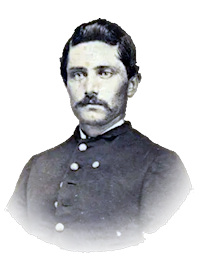
I feel as if I should never get over the fright of the fire and the expected bombardment of the Town
December 19, 2021
19 Dec.
There has been a terrible fire in Town and a destruction of 4 Churches, the Circular, the Catholic Cathedral, and St Peter’s & a Methodist Church & the Quaker Meeting. Many fine houses destroyed and great distress. The fire broke out in a sash & blind factory and the difficulty of getting water and the previous drought and a very high wind which drove the flames caused the general destruction. This fire began at Cooper River and burnt across the City to Ashley River, the Institute Hall, St Andrews Hall, the Savings bank, & Art Museum, all destroyed, many of our friends have been sufferers, among them the Reids. Mr R. is a very kind man, and has often been amiably interested in our affairs, and now in his old age he has been deprived of his home, he is the President of the Bank of South Carolina.—
The fire burnt from 9 o’clock one night to the afternoon of the next day.
The boys have been ordered off on duty as far as John’s Island. Mr Grimball paid us a visit to condole with his friends, & see the destruction. Mrs Butler & Charles & Clementina have gone off to pay a visit to Georgia on business, Mrs B. intends now going to Papas for a visit, and to save money, which with her is getting rather scant.—The expenses of the property are immense and this year the prices were small. The night of the fire Mrs Butler[,] Charlotte[,] Clementina[,] Charles & ourselves sat up and the piaza was crowded with baggage from the Miles house. My 5 sons were in Town from the Camp at the Race Grounds on guard duty & I felt very glad they were here. Lewis was up from the fort and John from his vessel. Lewis is up to day his situation is a strange one he has an appointment from Pickens and is now notified that he will not be paid or recognised he has to go to Richmond to be examined he is not well and it is very annoying these are the ups & downs in this world. I feel as if I should never get over the fright of the fire and the expected bombardment of the Town, my things are all packed up, in trunks and bags and our silver is sent to the Bank at Camden for safety.—Mr Reid had that arranged for us.—The drought continues, and the alarms of fire are frequent.—
“My dear child at home is no better. I may never meet her again.”–Journal of Surgeon Alfred L. Castleman.
December 19, 2021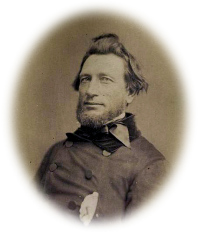
19th.–To-day I have received the expected letter ; but it relieves no part of my sadness. My dear child at home is no better. I may never meet her again. This in another of the trials of this unholy war; but I am selfish. How many have so much more reason to complain than I?
Boxes of luxuries and comforts for the sick received from home to-day. Many of the days which we have spent in this army have been days of gloom and darkness; and, oh! how these stars of kindness do sparkle in the gloom and lighten the darkness around us! The luxuries contained in the boxes are a comfort to the sick, but these are not the comforts which we derive from them. They come from friends at home. They tell of the interest felt by them in the cause for which we suffer, of their interest in us as the defenders of that cause, and that we are not forgotten! Names of many of those who are engaged in this work of kindness are known to us, and whenever heard will call up a thrill of grateful affection so long as memory holds a place among us.
Mutual feelings of the two nations—Rumours of war with Great Britain.—William Howard Russell’s Diary.
December 19, 2021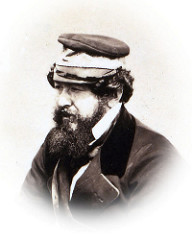
Next day I dined at Mr. Seward’s, as the Minister had given carte blanche to a very lively and agreeable lady, who has to lament over an absent husband in this terrible war, to ask two gentlemen to dine with him, and she had been pleased to select myself and M. de Geoffroy, Secretary of the French Legation, as her thick and her thin umbra; and the company went off in the evening to the White House, where there was a reception, whereat I imagined I might be de trop, and so home.
Mr. Seward was in the best spirits, and told one or two rather long, but very pleasant, stories. Now it is evident he must by this time know Great Britain has resolved on the course to be pursued, and his good humour, contrasted with the irritation he displayed in May and June, is not intelligible.
The Russian Minister, at whose house I dined next day, is better able than any man to appreciate the use made of the Czar’s professions of regret for the evils which distract the States by the Americans; but it is the fashion to approve of everything that France does, and to assume a violent affection for Russia. The Americans are irritated by war preparations on the part of England, in case the Government of Washington do not accede to their demands; and, at the same time, much annoyed that all European nations join in an outcry against the famous project of destroying the Southern harbours by the means of the stone fleet.
“Our forces now appear to be nearly ready to Strike at various points, in Missouri, Kentuckey, and at the South.”—Horatio Nelson Taft
December 18, 2021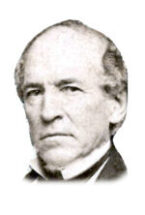
WEDNESDAY, DECEMBER 18, 1861.
The weather continues delightful but there are today indications of rain. We have heard all day heavy guns. Some in the distance are the rebel guns at Centreville. They are practicing too. Troops have been moveing about the City a good deal today. We are expecting important news from various quarters, and the public mind is considerably agitated just now. Our forces now appear to be nearly ready to Strike at various points, in Missouri, Kentuckey, and at the South. I have been at home all the evening.
______
The three diary manuscript volumes, Washington during the Civil War: The Diary of Horatio Nelson Taft, 1861-1865, are available online at The Library of Congress.
Diary of David L. Day.
December 18, 2021
A Look through the Camps.
Dec. 18. I have been looking through the camp around here and am astonished at the amount of offal and swill that is buried up and lost instead of being turned to a valuable account. An enterprising farmer could collect from these camps, manure and swill to the value of $100 a day, costing nothing but simply carting it off, thus enriching his land and fattening hundreds of hogs and cattle; but this lack of energy and enterprise prevents these people from turning anything to account. They content themselves with sitting down and finding fault with the government and their more enterprising and energetic neighbors of the north.
“Newspapers have just come, giving an account of a fight at Cheat Mountain, on the 13th of December, in which we were successful.”—Diary of a Southern Refugee, Judith White McGuire.
December 18, 2021
“The Briars,” December 18.—Sadly negligent of my diary lately. Nothing new has occurred. We pleasantly pursue the even tenor of our way, but are now preparing to go to my brother’s, in Hanover, next week. We have been to “Mountain View” for a couple of days, on a farewell visit to the family. The Bishop has sent his study-carpet to the camp, along with every thing he could possibly spare, for the soldiers’ comfort. He looks cheerfully upon our prospects, and is now listening to “Motley’s Dutch Republic” with “infinite zest.” It is read to him by his daughter-in-law, on these long winter nights. His manner of life is certainly most amiable, as well as pleasant to himself and instructive to others.
Newspapers have just come, giving an account of a fight at Cheat Mountain, on the 13th of December, in which we were successful. Rumours also of a fight on the Chesapeake and Ohio Canal; and another rumour that England has demanded the restoration of “Mason and Slidell,” and in case of non-compliance with the demand, that Lord Lyons should demand his passports. How ardently I do wish that England would break up the blockade!
Rebel War Clerk
December 18, 2021
DECEMBER 18TH.—Men escaped from the Eastern Shore of Virginia report that Mr. Custis had landed there, and remains quiet.
55 kegs of seized powder.–Alexander G. Downing.
December 18, 2021
Wednesday, 18th–The four companies of cavalry that accompanied us up the river (also by boat) went on a scouting expedition yesterday toward the town of Glasgow. They captured and brought in this morning one hundred and fifty-five kegs of powder which they found hid in haystacks. We stored the powder in the hull of our boat, and at 2 p. m. left this place for an all-night run on our return to Jefferson City. But we are quite uneasy for fear of an explosion from our cargo of powder.
“To-morrow I hope I shall hear from home, and get news of the returning health of my family, and then feel better.”–Journal of Surgeon Alfred L. Castleman.
December 18, 2021
18th.–I am disappointed to-night, and feel sadly. I had almost no letters from home lately. None yesterday, to-day none. To-morrow I hope I shall hear from home, and get news of the returning health of my family, and then feel better. It is very hard to be shut up here, hundreds of miles from those we love most dearly, and during their sickness, can have no hope of getting to see them. I suppose the “necessities of war” demands the sacrifice, and we must submit.
Two dead out of hospital; Presidents Levee; McClellan—Horatio Nelson Taft
December 17, 2021
TUESDAY 17
Most beautiful day, warm as May, in the office all day. Two dead Soldiers carried out of the Hospital. They say that there is about one death pr day there. Tonight myself and wife went to the Presidents Levee, first of the Season. Genl McClellan & Lady was there and we were frequently near him and had a good opportunity to observe him. He was the “observed of all observers.” Many other distinguished personages were there. The crowd was not very oppressive. Got home 1/2 past ten, took a cup of tea & and [sic] to bed at 11.
______
The three diary manuscript volumes, Washington during the Civil War: The Diary of Horatio Nelson Taft, 1861-1865, are available online at The Library of Congress.
Rebel War Clerk
December 17, 2021
DECEMBER 17th.—Bravo, Col. Edward Johnson! He was attacked by 5000 Yankees on the Alleghany Mountains, and he has beaten them with 1200 men. They say Johnson is an energetic man, and swears like a trooper; and instead of a sword, he goes into battle with a stout cane in his hand, with which he belabors any skulking miscreant found dodging in the hour of danger.
Search for ‘secesh’ in Boonesboro.–Alexander G. Downing.
December 17, 2021
Tuesday, 17th–This morning we entered the town and made a search of all the houses for “secesh.” We took seven prisoners, besides some arms and ammunition. This being a great apple country, we found stores of apples in the houses, and helping ourselves, we filled our haversacks. By one o’clock we had finished sacking the town and started back to our boats, arriving there at dark.
“Some malicious representations have been made in camp, today, as to the condition of my hospital, and as to my proper disposal of its funds.”–Journal of Surgeon Alfred L. Castleman.
December 17, 2021
17th –This is the anniversary of my advent to this noisy, scheming world of vanity and trouble. What wonderful changes have taken place on this continent, in the life time of a little man like me. I will not attempt to write them here; the changes in myself, are sufficient to keep me constantly in remembrance (without a written journal) of the changes going on around me. I hope those of the world are more palpably for the better, than those which I experience. Some malicious representations have been made in camp, today, as to the condition of my hospital, and as to my proper disposal of its funds. I have written to the Brigade Commander, demanding an immediate and thorough investigation. In consequence of the long time that I could get no settlement with the Commissary, I advanced for the sick, and the hospital is considerably my debtor. I hope I shall succeed in getting a thorough examination.
Downing’s Civil War Diary.–Alexander G. Downing.
December 16, 2021
Monday, 16th–We reached Boonville at sunup, and landing, remained there about two hours, when we again boarded the boat and crossed to the other side of the river. We lay on the boat here till dark, when Company E and three other companies started for Boonesboro, seven or eight miles distant. Reaching the town we surrounded it and waited for daylight. On our way out we marched through some very heavy timber, where the sound of our tramping and the rattle of our bayonets aroused the many wood owls, and of all the hideous noises I ever listened to–it made my hair stand on end!
Uproar over ” the arrest of ‘Mason’ and ‘Slidel’.”—Horatio Nelson Taft
December 16, 2021
MONDAY 16
Delightful day. Some excitement in the City at the news from England in relation to the arrest of “Mason” and “Slidel.” Some predict a war with her. But I do not. It is only giving her a dose of her own Medicine. The Law of Nations is also on our side, and She has always insisted upon the right of Search for herself. I have spent the evening at home making Willie a picture frame. Matty Hartly spent the evening here. Mr H called about 9 for her. Chas & Sallie also called. Put a night latch on the Hall Door.
______
The three diary manuscript volumes, Washington during the Civil War: The Diary of Horatio Nelson Taft, 1861-1865, are available online at The Library of Congress.
Rebel War Clerk
December 16, 2021
DECEMBER 16th.—We hear to-day that the loyal men of Kentucky have met in convention and adopted an ordinance of secession and union with our Confederacy.
Jane Stuart Woolsey writes to Georgeanna and Eliza, her two sisters volunteering in D.C. about: Mason and Slidell.—Burning of Charleston.—War with England?
December 16, 2021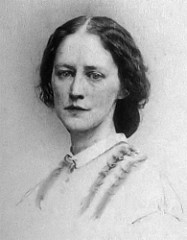
December ‘61.
Dear Girls: “We are in the midst of stirring times,” as the newspapers say–or rather, stirring times are in our midst, as well as all around us. I am prepared to be astonished at nothing, and to regard all events with stoicism bordering on a fiendish glee. New York was sizzling on Monday and Tuesday; shops, omnibuses and everything, full of “don’t give ‘em up” and “come on, Britain.” Wm. Bond was here on Monday evening and said he never saw such a state of things down town. In their office they had drawn up a subscription paper among themselves for one privateer, with two rifled guns; to sail from New London.– “But I thought privateering was a sort of barbarism, Mr. Bond?” – “Oh, no. It is a relic of a bygone age; that is all.”–Mr. B. brought invitations to the breakfast at the Astor House to Gov. Buckingham and the officers of the 11th Conn. Mother, Abby and Charley went yesterday and had a very nice time. . . . The young line officers munched and crunched and giggled and clapped with the keenest enjoyment. The remarks about England were the same in tone that most sensible people make– “prove us wrong and we will apologize like gentlemen; if otherwise then otherwise.” . . . For my part, as to war with England; I do not see it where I stand. Infinite are the resources of diplomacy, and Mr. Seward and Mr. Lincoln are cool hands.–What a horribly satisfactory thing the burning of Charleston is – retribution from within; – Sumter avenged without our responsibility. There is something quite dramatic in the denouement. “As the captain of the Illinois came by, the whole sky was one red glare, with the outlines of Fort Sumter black against it.” . . . A note from Sarah Woolsey says she will be here to-night. I shall take her round to some of the fairs and things of which there is no end. The Union Bazaar is the biggest. Stewart gives a shawl–$1,500–to be raffled for; Dr. Hughes a bronze statue, ditto; Miss King a doll bride with trousseau, trunks, French maid, etc., all complete, ditto; and so on. They took in $3,000 the first night. We have just sent off a lot of old party dresses to the Tracys for doll finery, everything we could find; you may miss something familiar when you come back. . . . I observe that when you write two sheets you speak of it as a letter. When I do it becomes a note.–We had a lot of little things already collected for F. B. and shall send them on as a little Christmas box without waiting to hear. I am going to put “Spare Hours,” by author of Rab, in the box, and the jolliest tin canister of bonbons “as ever you see.” . . . Anna Rockwell read us a lot of interesting letters from Charles. He is “heading home” now; he belongs to the 7th; the 7th may have to turn out yet to garrison the forts. If there is war with England Robert says he shall enlist. . . .
Mr. Sumner on the crisis.—William Howard Russell’s Diary.
December 16, 2021
December 16th.–I met Mr. Seward at a ball and cotillon party, given by M. de Lisboa; and as he was in very good humour, and was inclined to talk, he pointed out to the Prince of Joinville, and all who were inclined to listen, and myself, how terrible the effects of a war would be if Great Britain forced it on the United States. “We will wrap the whole world in flames!” he exclaimed. “No power so remote that she will not feel the fire of our battle and be burned by our conflagration.” It is inferred that Mr. Seward means to show fight. One of the guests, however, said to me, “That’s all bugaboo talk. When Seward talks that way, he means to break down. He is most dangerous and obstinate when he pretends to agree a good deal with you.” The young French Princes, and the young and pretty Brazilian and American ladies, danced and were happy, notwithstanding the storms without.
“…I guess all heaved a sigh of relief in the thought that there would be no fighting today.”–Alexander G. Downing.
December 15, 2021
Sunday, 15th–We landed at the little town of Providence, Missouri, about sunup and experienced our first day’s march after the “secesh.” It was a delightful day. The few belated grasshoppers and crickets which escaped the cold spells were singing their farewell songs. We were all awake and keyed to the highest pitch, felt prepared to meet ten thousand “secesh” at any moment. A detail of cavalry was leading the way, and when at times our marching was delayed, each man anxiously wanting to know the cause, would peer forward over the shoulder of his file leader; but there was nothing to see.
At noon we stacked arms and ate our first lunch upon a march, and in the “secesh’s” country at that. Here we rested about two hours, until the cavalry returned. They reported that there was not a “secesh” to be seen in that part of the country, and I guess all heaved a sigh of relief in the thought that there would be no fighting today. We were ten miles out from our landing. Hastening our return march, we reached our boat at sundown, and boarding it, proceeded up the river.
“Both the Lincoln boys were here this afternoon…”—Horatio Nelson Taft
December 15, 2021
SUNDAY, DECEMBER 15, 1861.
Pleasant as ever today and the nights are now brilliant with a full moon and clear atmosphere. The Military Band in our vicinity performs almost every night an hour or two, discoursing most splendid music last night. They were Seranading Com Wilkes, the Captor of Slidel & Mason. I did not go out to Church, family went. Both the Lincoln boys were here this afternoon looking over the pictures with Bud & Holly. They are evidently not kept on Sundays with puritan Strictness. They like to come here and feel quite “free and easy” with our boys. Went down town this evening, called at Charleys an hour.
______
The three diary manuscript volumes, Washington during the Civil War: The Diary of Horatio Nelson Taft, 1861-1865, are available online at The Library of Congress.
Rebel War Clerk
December 15, 2021
DECEMBER 15th.—The President’s private secretary, Capt. Josselyn, was in to-day. He had no news.
“I think most of our volunteers will quit the service when their year expires…,”–Letters from Elisha Franklin Paxton.
December 15, 2021
Winchester, December 15, 1861.
Life in camp is generally dull with me, and I feel especially dull to-day. I have sometimes had a job, such as road-making at Centreville or my late excursion to the Potomac, which kept me busy enough; but these only happen now and then, and but for them my life would be idle enough, I am sure. When here in camp it really seems that I have no way of employing myself. I sometimes think I would prefer a more active campaign, winter as it is. With my stock of bed-clothes I think I could sleep quite comfortably even at this season in a fence corner, but it would not be so comfortable to the soldiers, who are not so well provided with such means of a comfortable night’s rest. If the weather continues open and the cold not too severe, I think it possible we may have some activity in our operations this winter. But of this no one can speak with any certainty but Jackson, and even he with but little, as his operations depend upon contingencies over which he has no control.
I sometimes look to the future with much despondency. I think most of our volunteers will quit the service when their year expires, and the news I get from Rockbridge gives me but little reason to hope that many more will volunteer to fill the places thus made vacant in our army. If they come at all, I fear it will be by compulsion. I fear there are more who are disposed to speculate off our present troubles, and turn them to pecuniary profit, than there are to sacrifice personal comfort and pecuniary interest and risk life itself for the promotion of our cause. My judgment dictates to me to pursue the path which I believe to be right, and to trust that the good deed may meet with its just reward. Nothing else could induce me to bear this sad separation from my darling wife and dear little children. This distresses me. I care nothing for the exposure and hardships of the service. But, Love, I should be more cheerful, and if sometimes oppressed with a feeling of sadness, should try to suppress it from you; for I should try and detract nothing from your happiness, which I fear I do in writing in so sad a strain.
And now, Love, good-bye. I shall be glad indeed to hear that you are out of your bed, and happier still to know, by a letter in your familiar hand, that you are nearly well and out of danger. When the winter sets in so cold that there can be no possible use for my services here, I shall try and get leave to spend a week with you at home. I don’t think that snow can keep off much longer.
Impressions produced in America by the English Press on the affair of the Trent.—William Howard Russell’s Diary.
December 15, 2021
December 15th.–The first echo of the San Jacinto’s guns in England reverberated to the United States, and produced a profound sensation. The people had made up their minds John Bull would acquiesce in the seizure, and not say a word about it; or they affected to think so; and the cry of anger which has resounded through the land, and the unmistakable tone of the British press, at once surprise, and irritate, and disappoint them. The American journals, nevertheless, pretend to think it is a mere vulgar excitement, and that the press is “only indulging in its habitual bluster.”
Downing’s Civil War Diary.–Alexander G. Downing.
December 14, 2021
Saturday, 14th–We struck our tents early this morning and at sunup marched down to the landing on the Missouri river, where under the quartermaster a large detail of men worked nearly all day loading our commissariat on board the boats. At sundown our regiment, with a part of the Second Illinois Cavalry, started up the river.