Christmas.

Woolsey family letters during the War for the Union
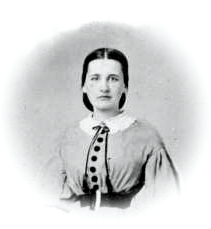
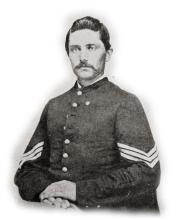
Mother to Georgeanna and Eliza.

Monday, December 24, 1861.

My dear Girls: Col. D. is a godsend! I was in despair at the thought of not getting some little Christmas box off so as to reach you to-morrow, when lo! he appeared, like an angel of mercy and offered to take anything we might have to send. So of course we gathered together our duds, which we had set aside as an impossibility as Christmas gifts, to take their chance in reaching you for New Year, and have just sent off the bonnet box filled with love and best wishes in all the chinks, mixed in with the sugar-plums and covering over everything, to make all acceptable to our noble-hearted girls, who are “extending their benevolence to all within their reach.” . . . I have sent Joe a cake, which you must dress with its wreath and flag, for him to take down to camp. . . . We are going to give little May a Christmas tree and have a beauty now standing in the middle parlor ready to be decorated. It is a very large one, and will take the whole of a box of one hundred colored candles which I have been arranging in little colored tin candlesticks with sharp points which fasten on to the branches. We have also a number of small colored lanterns and a great variety of beautiful and cunning toys. This is to be my Christmas gift to the children. . . .

0 comments

Soldiers in hospital — “…each with his cup of hot tea and his warm thirty-two pound shot at his feet.”

Woolsey family letters during the War for the Union
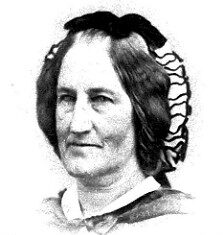
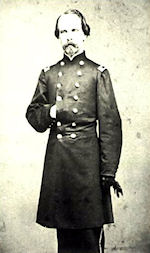
Francis Bacon to Georgeanna Muirson Woolsey.

Tybee Island, Dec. 24, ‘61.

You speak of our hospital as a matter of course; and we are, by and by, to have one, as yet uncommenced; but we owe the medical department no thanks for this when we get it. Dr. Cooper, Medical Director of the expedition, a sensible man, urged the necessity of a hospital; Surgeon-General Finley thought otherwise – “in this mild southern climate tents would do very well for men to have fevers in.” It would suit my views of the fitness of things to have Surgeon-General Finley exposed in scanty apparel to a three days’ Texas norther, by way of enlarging his views of southern climates. . . .

I was just laying the foundations of a log hospital for our men at Port Royal when we were ordered here, and, as I have no compunction about committing any crime short of high treason for a hospital, I had effected a neat little larceny of a lot of windows and sawn lumber which were to work in so sweetly. It was a sad reverse to abandon it!

One great trouble has been to keep our sick men, with their lowered vitality, warm in tents. There is a popular prejudice against cannon balls which I assure you is wholly unfounded. My experience is that there are few pleasanter things to have in the family than hot shot. It would raise the cockles of your heart some of these wretchedly cold nights, to walk between the two long rows of men in my large hospital-tent just after they have been put to bed, each with his cup of hot tea and his warm thirty-two pound shot at his feet, and to see and feel the radiant stack of cherry-red balls in the middle of the floor. This is troublesome and laborious to manage, however, and we greatly need some little sheet-iron stoves. I sent for some a good while since, which should be here shortly. Your inquiry about medicines is a sagacious one, and shows that you have not neglected your hospital-walking opportunities. My dear unsophisticated friend, permit me to indoctrinate you in a dainty device whereof the mind of undepartmental man hath not conceived. Know that there is one supply-table of medicines for hospital use and another for field use. Some very important, almost essential, medicines are not furnished for field service; when your patient needs them he is to go to the hospital. Very good–where is the hospital for us? Now, before we left Washington, with a perfectly clear notion of what was likely to befall us in the way of fevers, and out of the way of hospitals, I made a special requisition for some things not in the field supply table, such as serpentaria, and some of the salts of iron, and went in person to urge it through the purveyor’s office. No use.

Ask any sensible, steady-going old doctor how he would feel with a lively fever clientele upon his hands, and no serpentaria or its equivalent.

I declare, it seemed to me like a special providence that in my pretty extensive “perusings” about these parts, I picked up, here and there, from rebel batteries and deserted houses, both serpentaria and many other needed medicines which have turned to the best account. . . .

If you should hear some day that some rebel Major-General had been rescued from impending death by hemorrhage by the application of Liq. Ferri Persulphat. in the hands of the surgeon of the 7th C. V., you may lay it all to that little bottle which was not the least wonderful content of that wonderful basket sent to Annapolis. The Tennyson and Barber inspired me with emotions too various and complicated here to describe; the bologna cheered and invigorated; the Castile soothed and tranquilized my soul; but at the sight of the Liquor Ferri Persulphatis! – – – what shall I say, except to repeat the words of our own Royston– “a halloo of smothered shouts ran through every vein!” and whenever since, I have started upon any expedition giving promise of bullets, I have popped the bottle into my pocket, hoping to use it upon some damaged rebel.

Our tents, flimsy speculator’s ware at best, are now in a most deplorable state. I am distressed to think of the possibility of a long rainy season overtaking us with no other shelter. . . .

This island upon which we are now encamped, though a lonely wilderness enough and several days farther from home than that which we have left, is on the whole more interesting, as it seems to offer “a right smart chance” of a fight. At any time we can, and often we do, get ourselves shelled from Pulaski by walking upon a certain stretch of the beach. This afternoon a rifled shell came squealing along in its odd way and plumped into the ground without exploding, a few yards from where my brother and I stood. The rascals seem to have defective fuses, and as yet they have hurt no one. By creeping along under bushes we get within Sharps’ rifle range of the great grim fort, and look right into its embrasures. Don’t mention that fact just now. . . . Every day, about the time Pulaski begins her afternoon shelling, “Old Tatnal”[1] runs down his fleet and gnashes his teeth at us from a safe distance, but doesn’t come within range of our new battery or the gunboats. We hear cannon practice at Savannah occasionally, and from one quarter or another great guns growl every few hours. On the whole, a lively place. . . .

Our jolly German neighbors have begun upon their Christmas eve with such rolling choruses right behind my tent, that I must step out to see. . . . –I find that they have a row of Christmas trees through their camp, all a-twinkle with candles, and hung with “hard-tack” curiously cut into confectionary shapes, and with slices of salt pork and beef. Sedate, heavy-bearded Teutons are sedulously making these arrangements, retiring a few paces to observe through severely studious spectacles the effect of each new pendant.

We have all the foliage orthodox for Christmas here, including holly and mistletoe with berries of scarlet and white wax. The jungly unscarred forest of this island is superb. . . . The purple grey depths of the wood all flicker with scarlet grosbeaks like flames of fire, and quaint grey and brown northern birds flit in and out with the knowing air of travelled birds, and plan the nests they will build next summer, in spite of bombs and bayonets, in New England elms and alders. . . .

I owe something to Captain Howland for keeping up my spirits, for, sometimes when I think how utterly these wretched Carolinians throw their best and their all into their bad cause as if they believed in and loved it, and then see, with a sort of dismay, how few, comparatively, of our first-rate men have come personally to the fight with self-sacrifice and out of pure love of the cause, I think of Captain Howland and take comfort of him at least.


[1] “Old Tatnal” originated the expression, “Blood is thicker than water,” when as flag officer of the U. S. squadron in ‘57, he came to the assistance of the English commander in Chinese waters. In 1861 he turned traitor to his flag.
0 comments

News of the death of the Prince Consort.—William Howard Russell’s Diary.

My Diary North and South – William Howard Russell

December 24th.–This evening came in a telegram from Europe with news which cast the deepest gloom over all our little English circle. Prince Albert dead! At first no one believed it; then it was remembered that private letters by the last mail had spoken despondingly of his state of health, and that the “little cold” of which we had heard was described in graver terms. Prince Albert dead! “Oh, it may be Prince Alfred,” said some; and sad as it would be for the Queen and the public to lose the Sailor Prince, the loss could not be so great as that which we all felt to be next to the greatest. The preparations which we had made for a little festivity to welcome in Christmas morning were chilled by the news, and the eve was not of the joyous character which Englishmen delight to give it, for the sorrow which fell on all hearts in England had spanned the Atlantic, and bade us mourn in common with the country at home.

0 comments

“…occupying vacant houses and storerooms and made all the ‘secesh’ skedaddle.”–Alexander G. Downing.

Diary of Alexander G. Downing; Company E, Eleventh Iowa Infantry

Monday, 23d–We arrived at California about sunup, almost frozen; it cleared off during the night and a cold northwest wind was blowing. Leaving the train we entered the several churches in town and built fires to warm by, Company E going into a Catholic church, where the sexton and his wife brought us some hot coffee. We then put into winter quarters, occupying vacant houses and storerooms and made all the “secesh” skedaddle. The companies in quarters here are B, E, G, K and H, under command of Lieut. Col. William Hall. We just learned why it was that we were rushed up here last night. It had been reported at Jefferson City that a train with “secesh” prisoners was to pass through this place today, bound for St. Louis, and that their sympathizers in this locality were planning a raid on the train to liberate the prisoners.

0 comments

Rebel War Clerk

Civil War Day-by-Day
A likeness of Jones when he was editor and majority owner of the Daily Madisonian during President John Tyler’s administration.

DECEMBER 23d.—Gen. T. J. Jackson has destroyed a principal dam on the Chesapeake and Ohio Canal. That will give the enemy abundance of trouble. This Gen. Jackson is always doing something to vex the enemy; and I think he is destined to annoy them more.

It is with much apprehension that I see something like a general relaxation of preparation to hurl back the invader. It seems as if the government were waiting for England to do it; and after all, the capture of Slidell and Mason may be the very worst thing that could have happened. Mr. Benjamin, I learn, feels very confident that a rupture between the United States and Great Britain is inevitable. War with England is not to be thought of by Mr. Seward at this juncture, and he will not have it. And we should not rely upon the happening of any such contingency. Some of our officials go so far as to hint that in the event of a war between the United States and Great Britain, and our recognition by the former, it might be good policy for us to stand neutral. The war would certainly be waged on our account, and it would not be consistent with Southern honor and chivalry to retire from the field and leave the friend who interfered in our behalf to fight it out alone. The principal members of our government should possess the highest stamp of character, for never did there exist a purer people.

0 comments

“Our people are ‘fighting mad’ with England whether the fight comes off now or not.”—Horatio Nelson Taft

Diary of US patent clerk Horatio Nelson Taft.

MONDAY 23

Cold and windy with some snow but not enough to remain on the ground. News from England looks squaly. England is seeking a pretext for engaging in the quarrel on the Side of the rebels. We are likely to have our hands full. Our people are “fighting mad” with England whether the fight comes off now or not. Nothing new from the War. Genl Scott has returned probably on some important business connected with the matter with England. He comes from Paris. I have been home all the evening puting the boys through their lessons, &c.

______

The three diary manuscript volumes, Washington during the Civil War: The Diary of Horatio Nelson Taft, 1861-1865, are available online at The Library of   Congress.

0 comments

Lord Lyons and Mr. Seward—More talk of War with England—William Howard Russell’s Diary.

My Diary North and South – William Howard Russell

December 23rd.–There was a tremendous storm, which drove over the city and shook the houses to the foundation. Constant interviews took place between the President and members of the Cabinet, and so certain are the people that war is inevitable, that an officer connected with the executive of the Navy Department came in to tell me General Scott was coming over from Europe to conduct the Canadian campaign, as he had thoroughly studied the geography of the country, and that in a very short time he would be in possession of every strategic position on the frontier, and chaw up our reinforcements. Late in the evening, Mr. Olmsted called to say he had been credibly informed Lord Lyons had quarrelled violently with Mr. Seward, had flown into a great passion with him, and so departed. The idea of Lord Lyons being quarrelsome, passionate, or violent, was preposterous enough to those who knew him; but the American papers, by repeated statements of the sort, have succeeded in persuading their public that the British Minister is a plethoric, red-faced, large-stomached man in top-boots, knee-breeches, yellow waistcoat, blue cut-away, brass buttons, and broad-brimmed white hat, who is continually walking to the State Department in company with a large bulldog, hurling defiance at Mr. Seward at one moment, and the next rushing home to receive despatches from Mr. Jefferson Davis, or to give secret instructions to the British Consuls to run cargoes of quinine and gunpowder through the Federal blockade. I was enabled to assure Mr. Olmsted there was not the smallest foundation for the story; but he seemed impressed with a sense of some great calamity, and told me there was a general belief that England only wanted a pretext for a quarrel with the United States; nor could I comfort him by the assurance that there were good reasons for thinking General Scott would very soon annex Canada, in case of war.

0 comments

En route to California, Missouri by cattle cars on intensely cold night.–Alexander G. Downing.

Diary of Alexander G. Downing; Company E, Eleventh Iowa Infantry

Sunday, 22d–It snowed all day, the snow falling in large flakes, and the weather is fast turning colder. I was detailed on camp guard and with my overcoat on walked my beat for two hours at a time. At about 4 o’clock in the afternoon five companies of our regiment received marching orders to go at once, and striking our tents we hastened down to the railroad station on the bank of the river, where we had to stack arms and wait four hours for the train. The weather by this time had turned intensely cold and we were compelled to build fires to keep warm, but no firewood was at hand. The boys spied a lot of canoes stored away for the winter under a warehouse; these we appropriated and had used up forty or fifty of them before our train finally came. When the train did come, we discovered to our dismay that it was made up of stock cars, bedded with straw. We boarded the cars at 8 p. m. and settling ourselves as comfortably as possible, with our rifles in hand started at midnight for California, Missouri.

0 comments

“There is no news of importance but news is hourly expected of a fight in Kentuckey.”—Horatio Nelson Taft

Diary of US patent clerk Horatio Nelson Taft.

SUNDAY 22

It is colder today but rains tonight with a prospect of a long rain. I have not been out to church today but staid at home to keep up fires &c and boil hominy. Went down to Willards, found a great crowd. Met Capt Dexter of the R.I. 1st Regt which came here in June (3 months men). He is not now in the Service. Edd Dickerson came up tonight and spent an hour or two. There is no news of importance but news is hourly expected of a fight in Kentuckey. Almeron Field was here this morning. He is on Mass Ave (his old quarters). It rains steadily tonight.

______

The three diary manuscript volumes, Washington during the Civil War: The Diary of Horatio Nelson Taft, 1861-1865, are available online at The Library of   Congress.

0 comments

“Cold, sloppy and nasty!”–Army Life of an Illinois Soldier, Charles Wright Wills.

Civil War Day-by-Day

Bird’s Point, Mo., December 22, 1861.

This is a dark, dismal, snowy and confoundedly disagreeable Sunday. Cold, sloppy and nasty! We moved into our cabin last night but it is not finished yet, as a crack along the comb of the roof and sundry other airholes abundantly testify. The half snow half rain comes in when and where it pleases, and renders our mud floor comfortable in about the 40th degree. Don’t this sound like grumbling, Well, I don’t mean it as such, for I am sure the boys are as cheery as I ever saw them, and I wouldn’t think of these little things except when writing home, and then the contrast between its cozy comforts and soldiering in cold, wet weather makes itself so disagreeably conspicuous to my spiritual eyes that I can’t pass it unnoticed. Love Hamblin came over here last night and is now standing by the fireplace indulging in an ague shake, which if not pleasant is not to my eyes ungraceful.

No more troops have arrived here, and save the whole gunboat fleet being here there are no new signs of the down-river trip we are all waiting so impatiently for.

0 comments

Rebel War Clerk

Civil War Day-by-Day
A likeness of Jones when he was editor and majority owner of the Daily Madisonian during President John Tyler’s administration.

DECEMBER 22d.—Dibble has succeeded in obtaining a passport from the Secretary himself.

0 comments

Rumours—William Howard Russell’s Diary.

My Diary North and South – William Howard Russell

December (Sunday) 22nd.–Lord Lyons saw Mr. Seward again, but it does not appear that any answer can be expected before Wednesday. All kinds of rumours circulate through the city, and are repeated in an authoritative manner in the New York papers.

0 comments

“To-day was very cold,—so cold that we all had to get off our horses and make the greater part of the march on foot.”–Letters from Elisha Franklin Paxton.

Elisha Franklin Paxton – Letters from camp and field while an officer in the Confederate Army

Winchester, December 22, 1861.

We left here, on an expedition to the Potomac, on last Monday morning at seven o’clock, and returned again this evening. We lost one man, Joshua Parks, killed by the enemy; and his body, I suppose, has by this time reached his friends in Lexington to whom it was sent for burial. Present my kind regard to Mrs. Parks, and say to her that I heartily sympathize in the sad bereavement which has fallen upon her. He was a brave and good man, universally esteemed and beloved by his comrades, and his loss is much deplored.

Whilst gone we slept without our tents four nights. I had plenty of blankets, and slept as sound as if I had been in quarters. I really could not have thought I could stand so much exposure with so little inconvenience. I think, if my health continues to improve under such outdoor life, I will soon be able to stand anything but ball and shell. I received Helen’s letter, for which give her my thanks. I was delighted to hear that our baby is well and growing, and that you are improving rapidly. I am much gratified, too, at your pressing invitation to come home. I believe, Love, you must want to see me. It has been my purpose to ask for a furlough as soon as winter had fairly set in so as to render active operations impracticable. To-day was very cold,–so cold that we all had to get off our horses and make the greater part of the march on foot. To-night we have sleet and snow, which, I think, will pass for winter, especially as it now wants only three days of Christmas. So, Love, I shall ask for a furlough some time this week, and, if I can get it, will be off for home. And if you hear a loud rap at the door some night before long, you need not think robbers are breaking in, but that your own dear husband is coming home to see wife and little ones, dearer to him than everything else on earth. But, Love, you must not calculate with too much certainty on seeing me. If I can get the leave I will, but that is not a certainty.


I hope you all may have a happy Christmas, and wish I had the means of sending some nuts and candy for Matthew and Galla. Many who spent last Christmas with wife and children at home will be missing this time–perhaps to join the happy group in merry Christmas never again. But let us be hopeful–at least share the effort to merit fulfilment and fruition of the hopes we cherish so fondly. Now, dearest, good-bye till I see you again, or write. A kiss to the children as my Christmas gift.

0 comments

“The mail bag which was seized the other night on the River contained letters from many people here, implicating some of them in Treasonable practices.”—Horatio Nelson Taft

Diary of US patent clerk Horatio Nelson Taft.

SATURDAY, DECEMBER 21, 1861.

It is cooler tonight and freezes some. The news from Missouri is rcd with great Satisfaction. It now looks as though the Rebels would receive but little else than hard knocks everywhere our troops have got up to the “fighting pitch” and have become too wary to be caught in any more traps. The mail bag which was seized the other night on the River contained letters from many people here, implicating some of them in Treasonable practices. Some have been arrested, and more of the writers will be. I have been at home all the evening with the boys. Wife & Holly went to Market. It is a place which I abominate and this living from “hand to mouth” is no way to live independantly.

______

The three diary manuscript volumes, Washington during the Civil War: The Diary of Horatio Nelson Taft, 1861-1865, are available online at The Library of   Congress.

0 comments

Downing’s Civil War Diary.–Alexander G. Downing.

Diary of Alexander G. Downing; Company E, Eleventh Iowa Infantry

Saturday, 21st–Nothing of importance today. I went on guard. There is some talk of making Jefferson City headquarters for the various detachments of the army within fifty miles of this place.

0 comments

Rebel War Clerk

Civil War Day-by-Day
A likeness of Jones when he was editor and majority owner of the Daily Madisonian during President John Tyler’s administration.

DECEMBER 21st.—Col. Bledsoe was in to-day. I had not seen him for a long time. He had not been sitting in the office two minutes before he uttered one of his familiar groans. Instantly we were on the old footing again. He said Secretary Benjamin had never treated him as Chief of the Bureau, any more than Walker.

0 comments

“I wonder if any body ever imagines the value of a letter to a soldier.”–Battle of Drainesville.–Journal of Surgeon Alfred L. Castleman.

Journal of Surgeon Alfred L Castleman.

21st.–Did ever husband and father need the comforting aid of the help-meets of home as I need them this evening? See my table. Six full foolscap sheets of letters from home –read, re-read, studied, spelled, and now to be answered. I wonder if any body ever imagines the value of a letter to a soldier. His power of estimating must be large indeed, if he can appreciate it. Were it not for this value I should never have the courage to attempt answering all this pile. But then, I have no room to arrange all these with a view to replies, for my whole tent is as crowded as my table, full of evidences of the kindness–I will dare to say, of the affection of so many of my kind lady-friends. The dictates of kindness and benevolence may crowd upon you articles of comfort and utility, but it requires the affections to indicate the numerous little tokens which peep from the packages of useful things now piled around my tent. They strengthen and they cheer me. I shall endeavor, right here, to make mysel worthy of all this confidence. What a field this is for the exercise of the “unseen heroism” of life!

But how in the name of Legerdemain do our friends contrive to get so many things into a little box? Why, my 10×10 tent is absolutely full. It is well, too, that the box was opened just to-day, for things in it were getting considerably “mixed.” Two or three preserve and jelly jars, and a bottle of pickles had been broken. The contents had escaped, and to make amends for their long confinement, like colts let loose, they ran considerably. The pickles had “pitched into” the sugar. The jelly had made a dash at the tea. The nutmegs were luxuriating in a mixture of preserves and coffee. There seemed to be an inclination amongst these belligerents to get into “a muss” generally; but I “offered mediation.” After two or three hours of back-ache work, I got the conglomerates restored to their original elements, and gave the men a look at them. They were gratified and thankful. I do not think one man looked on one of these evidences of home rememberance but felt strengthened in his resolves to perform manfully the duties which he had undertaken.

Yesterday we had the first fight worthy the name, since we joined the army. General McCall sent out a Brigade (about 4,000 men) to reconnoitre. They came upon an equal number of the enemy, and after taking a good look at each other, concluded to “go in.” In this fight we gained a decided victory. No mistake this time. We fought and won.

We lost a few men–about ten killed and some thirty wounded. Amongst the latter is Lieutenant Colonel Kane of the Pennsylvania “Buck Tails.” He is a brother of the late Doctor Kane, of the Arctic Expedition.[1]

Yesterday a few Surgeons met in my tent and gave expressions to their feelings against a self-constituted organization calling itself the ” U. S. Sanitary Commission.” I have had very little acquaintance with its members, or with its mode of doing business. From the almost universal prejudice which the Surgeons have against it, I infer that it must possess many bad or troublesome traits of character. I have naturally enough imbibed impressions which are anything but favorable in regard to it. At our little talk, yesterday, it was determined amongst us’ that the Commission must be ” written down.” I am selected to do the writing, my professional brothers to furnish the data. This morning I commenced my first article, but before it was finished, the roar of cannon and the bursting of shells arrested my attention, and I left my writing to watch the progress of the battle of Drainesville. In a little while, the wounded began to be brought in, and the whole being new to us, the Surgeons, now, for the first, began to examine their stores and appliances for wounded men. We had very few things which we needed, and whilst mourning over the delay necessary to procure them from Washington (some 9 miles distant) the agents of this Commission, having got wind of the progressing fight, had loaded up light wagons with their sanitary stores and rushed to the scene of suffering with the very things most needed. I confess that I feel a little ashamed to have been caught in the act of writing such an article, under such ciscumstances. Something good may come out of Nazareth yet. I think I shall wait and sec} rather than be induced by the prejudices or opinions of others, to commit an act, perhaps a wrong, which I may be sorry for.


[1] Battle of Drainesville.

0 comments

Trent affair.—William Howard Russell’s Diary.

My Diary North and South – William Howard Russell

December 20th.–I went down to the Senate, as it was expected at the Legation and elsewhere the President would send a special message to the Senate on the Trent affair; but, instead, there was merely a long speech from a senator, to show the South did not like democratic institutions. Lord Lyons called on Mr. Seward yesterday to read Lord Russell’s dispatch to him, and to give time for a reply; but Mr. Seward was out, and Mr. Sumner told me the Minister was down with the Committee of Foreign Relations, where there is a serious business in reference to the State of Mexico and certain European Powers under discussion, when the British Minister went to the State Department.

Next day Lord Lyons had two interviews with Mr. Seward, read the despatch, which simply asks for surrender of Mason and Slidell and reparation, without any specific act named, but he received no indication from Mr. Seward of the course he would pursue. Mr. Lincoln has “put down his foot” on no surrender. “Sir!” exclaimed the President, to an old Treasury official the other day, “I would sooner die than give them up.” “Mr. President,” was the reply, “your death would be a great loss, but the destruction of the United States would be a still more deplorable event.” Mr. Seward will, however, control the situation, as the Cabinet will very probably support his views; and Americans will comfort themselves, in case the captives are surrendered, with a promise of future revenge, and with the reflection that they have avoided a very disagreeable intervention between their march of conquest and the Southern Confederacy. The general belief of the diplomatists is that the prisoners will not be given up, and in that case Lord Lyons and the Legation will retire from Washington for the time, probably to Halifax, leaving Mr. Monson to wind up affairs and clear out the archives. But it is understood that there is no ultimatum, and that Lord Lyons is not to indicate any course of action, should Mr. Seward inform him the United States Government refuses to comply with the demands of Great Britain.

Any humiliation which may be attached to concession will be caused by the language of the Americans themselves, who have given in their press, in public meetings, in the Lower House, in the Cabinet, and in the conduct of the President, a complete ratification of the act of Captain Wilkes, not to speak of the opinions of the lawyers, and the speeches of their orators, who declare “they will face any alternative, but that they will never surrender.” The friendly relations which existed between ourselves and many excellent Americans are now rendered somewhat constrained by the prospect of a great national difference.

0 comments

Diary of David L. Day.

David L Day – My diary of rambles with the 25th Mass

A Depot of Supplies.

Dec. 20. We are having cold weather; freezing quite hard at night, and making our lodgings in these little rag houses anything but comfortable. I have been with a detail of men down to the wharf unloading and storing army supplies. Annapolis is a depot of supplies, and immense quantities are landed here and sent by rail to Washington. A person never having given the subject of army preparation and supplies much thought, would be astonished at the immense quantities he would see here, and would begin to calculate how long it would be before Uncle Sam would be bankrupt. Large warehouses are filled and breaking down under the weight of flour, beef, pork, bread, sugar, coffee, clothing, ammunition, etc., while the wharves and adjacent grounds are filled with hay, oats, lumber, coal, guns, mortars, gun-carriages, pontoons and other appendages of an army. I presume the cost of feeding and clothing an army of half a million of men is not really so much as the same number of men would cost at home, but the army being consumers, instead of producers, the balance will eventually be found on the debit page of the ledger.

0 comments

Diary of Horatio Nelson Taft

Diary of US patent clerk Horatio Nelson Taft.

FRIDAY 20

Warm and pleasant but indications of rain, in the office as usual. News tonight of a Union Victory in Missouri. Other Union Victories will soon be heard from. I called at the “Chronicle” office this evening & subscribed for the Chronicle and the “Phil’a Press.” Called over to the Clarendon Hotel, and then upon Hon Mr Daws M.C., then got the evening papers. Called at Charleys Room on my return home. Miss Hartly has spent the evening here. Mr H called at 1/2 past 9 for her. 10 o’ck (weather clear).

______

The three diary manuscript volumes, Washington during the Civil War: The Diary of Horatio Nelson Taft, 1861-1865, are available online at The Library of   Congress.

0 comments

Susan Bradford writes of Christmas preparations in Florida and the death of a cousin’s soldier fiance — both a part of war.

Through Some Eventful Years by Susan Bradford Eppes
Susa Bradford Eppes

December 20th, 1861.—I spent today at Uncle Tom’s. His daughters are just the smartest, busiest people I ever saw. Cousin Mary Bernard and her three children and cousin Frances with her five are there, while Captain Bernard and Cousin Tom are at the front and Christmas is at hand. There are but few toys to be had, so they are dressing a large Christmas tree with most of the decorations of home manufacture. It is a beautiful tree. They have taken the bright-hued autumn leaves, dipped them in wax and pressed them with a warm iron; these are arranged in clusters and they reflect the light from dozens of tiny twisted Confederate lanterns. Long ropes of “Sodom Apples” lend an added brightness and strings of pop-corn make you think of the snow, which comes at Christmas in colder lands. It is so good of these kind, loving aunts to do so much for the children for I know they work with heavy hearts.

Mr. Routh and Cousin Sallie were to have been married in November, he could only have a three days’ leave of absence and the date was not quite certain, so she was almost ready with her preparations when the news of his death reached us. Her wedding dress was made and waiting and only a few last little things remained to be done. She fainted dead away at the terrible tidings and the next day she locked herself in her room and folded and put away, every article which had been made, in a big Saratoga trunk, locked it and hung the key around her neck. She is so pale and sad, it gives me the heart-ache to look at her. And yet, this is a part of war.


Susan Bradford is 15 years old when this entry was made.

0 comments

Rebel War Clerk

Civil War Day-by-Day
A likeness of Jones when he was editor and majority owner of the Daily Madisonian during President John Tyler’s administration.

DECEMBER 20th.—A man by the name of Dibble, the identical one I passed on my way to Montgomery last spring, and whom I then thought acted and spoke like a Yankee, is here seeking permission to go North; he says to Halifax. He confesses that he is a Yankee born; but has lived in North Carolina for many years, and has amassed a fortune. He declares the South does not contain a truer Southern man than himself; and he says he is going to the British Provinces to purchase supplies for the Confederacy. He brought me an order from Mr. Benjamin, indorsed on the back of a letter, for a passport. I declined to give it, and he departed in anger, saying the Secretary would grant it. He knew this, for he said the Secretary had promised him one.

0 comments

Downing’s Civil War Diary.–Alexander G. Downing.

Diary of Alexander G. Downing; Company E, Eleventh Iowa Infantry

Friday, 20th–We finished cleaning our clothing and accouterments and spent the rest of the day in cleaning up our camp and parade ground, besides bringing in firewood from the timber near by. When we got back we found the Thirteenth Iowa here in camp, having arrived on the 11th day of the month, during our absence.

0 comments

Diary of Horatio Nelson Taft

Diary of US patent clerk Horatio Nelson Taft.

THURSDAY 19

Foggy morning but warm during the day. No particular news today. I have been in the office as usual. The boys have been up to the Presidents most of the day. The two Lincoln boys were here after them. They did not return till dark. I have made a wooden model of my Portable Door fastener this evening. Prof Sparks called and brot Julia a French Book. She has spent the evening at Mr Hartleys. I called there with the Prof and staid an hour or so. People are very anxious to know the contents of the dispatches rcd from our Minister, Mr Adams, in reference to the Mason & Slidel affair.

______

The three diary manuscript volumes, Washington during the Civil War: The Diary of Horatio Nelson Taft, 1861-1865, are available online at The Library of   Congress.

0 comments

Rebel War Clerk

Civil War Day-by-Day
A likeness of Jones when he was editor and majority owner of the Daily Madisonian during President John Tyler’s administration.

DECEMBER 19th.—Judge Perkins came in to-day and denounced in bitter terms the insane policy of granting passports to spies and others to leave the country, when every Northern paper bore testimony that we were betrayed by these people. He asked me how many had been permitted to go North by Mr. Benjamin since the expiration of the time named in the President’s proclamation. This I could not answer: but suggested that a resolution of inquiry might elicit the information. He desired me to write such a resolution. I did so, and he departed with it. An hour afterward, I learned it had been passed unanimously.

0 comments