March 15. The boys came out this morning, looking a little the worse for wear, lame, sore and stiff; but with a good bumper of whiskey to lubricate their stiffened joints, and a little stirring around to take the kinks out of their legs, a good breakfast, hot coffee, etc., they soon resumed their normal condition. There is not much doing today except lying around in quarters or looking over the town. Negroes are coming in by the hundred, and the city is full of soldiers and marines traveling about and having things pretty much their own way. Guards are sent out to patrol the streets and assist Capt. Dan, the provost marshal, in preserving order preparatory to putting on a provost guard and bringing the city under law and order. Some enterprising party has hoisted the old flag on the spire of the church on Pollock street. There let it proudly wave; let it catch the first beams of the morning, and let the last rays of the setting sun linger and play amid its folds; let it gladden the hearts of every lover of liberty and loyalty, and let it be a notice to these deluded and ill-advised people around here, that it will never again give place to their traitorous rag of secession.
American Civil War Chronicles
Through Some Eventful Years
March 15, 2022
March 15th, 1862.—Sister Mag has a daughter, born this morning. Poor little girl. She will, in all probability, never see her father’s face. I do not believe the war is going to end in even ninety days. Sister Mag is very ill tonight and I have Eddie upstairs with me, that he may not disturb his mother. He is as sweet and good as can be. When I told him about his baby sister he said, “Don’t bring her upstairs, let her be Aunt Pat’s baby, I is yours.” I certainly love him.
Susan Bradford is 16 years old when this entry was made.
Faith in McClellan shaken.
March 15, 2022
March 14.
One of General Franklin’s aids has been in to say that his Division is now marching into Alexandria and is to embark on Saturday or Sunday, down the Potomac. . . . We went down to Alexandria and took lodgings at Mrs. Dyson’s, on Water street, for over Sunday, and two more wretched or longer days I never passed. Through a drenching storm McDowell’s corps was marched back from Centreville, 35 miles, and arrived at dusk, cold, hungry, wet to the skin, to find no transports ready and no provision made for their shelter or comfort. The city was filled with the wretched men, many crowded into the market stalls and empty churches, others finding shelter in lofts or under sheds and porches, and some, we know, sleeping in the open streets. In the market they had large fires, but with soaking knapsacks, no dry clothing to put on. In one place, the loft of a foundry, where Chaplain Hopkins found shelter for one company, the steam which rushed out as he opened the door was as that of a laundry on washing day. The poor fellows suffered from hunger as well as cold and fatigue, for on Sunday all the stores were closed. Whiskey could be had, which Moritz and G. and H. distributed among tired and wet volunteers on cellar doors. Some of them actually begged for bread or offered to sell their rings and trinkets for food. It was a wretched and heart-sickening day and shook our confidence in McClellan or McDowell, or whoever the responsible person may be. We sent Moritz up to Washington for a half barrel of socks Aunt E. had just sent on and took them to the churches where the soldiers were quartered, and distributed them among the eager and grateful men. The men were lying on the benches and floors, and in the baptistry of the “Beulah Particular Baptist” and the Presbyterian secesh churches, and we stumbled about, holding the end of a candle for light, distributing socks. All ours were soon gone, and Chaplain Hopkins went back to the hospital, and telling the steward to protest, so that he might be shielded from blame, deliberately took ten dozen pairs from the store-closet and distributed them. The two long useless marches with nothing accomplished, no shelter and no food, have shaken the unbounded faith in McClellan. Congress has been debating a bill displacing him; the Star says it was withdrawn to-day. Our soldier, Joe, and the 16th, were not in that wretched plight but were kept in bivouac out of the town. Joe took final command of the regiment that Sunday morning.
A Diary From Dixie
March 15, 2022
March 15th.–When we came home from Richmond, there stood Warren Nelson, propped up against my door, lazily waiting for me, the handsome creature. He said he meant to be heard, so I walked back with him to the drawing-room. They are wasting their time dancing attendance on me. I can not help them. Let them shoulder their musket and go to the wars like men.
After tea came “Mars Kit”–he said for a talk, but that Mr. Preston would not let him have, for Mr. Preston had arrived some time before him. Mr. Preston said “Mars Kit” thought it “bad form” to laugh. After that you may be sure a laugh from “Mars Kit” was secured. Again and again, he was forced to laugh with a will. I reversed Oliver Wendell Holmes’s good resolution–never to be as funny as he could. I did my very utmost.
Mr. Venable interrupted the fun, which was fast and furious, with the very best of bad news! Newbern shelled and burned, cotton, turpentine–everything. There were 5,000 North Carolinians in the fray, 12,000 Yankees. Now there stands Goldsboro. One more step and we are cut in two. The railroad is our backbone, like the Blue Ridge and the Alleghanies, with which it runs parallel. So many discomforts, no wonder we are down-hearted.
Mr. Venable thinks as we do–Garnett is our most thorough scholar; Lamar the most original, and the cleverest of our men–L. Q. C. Lamar–time fails me to write all his name. Then, there is R. M. T. Hunter. Muscoe Russell Garnett and his Northern wife: that match was made at my house in Washington when Garnett was a member of the United States Congress.
Journal of Surgeon Alfred L. Castleman.
March 15, 2022
Vienna, March 15th.–Did not lie down last night, but worked in separating and disposing of my sick. Most of them I have brought to this place to embark such as cannot march to Alexandria, by rail. The Brigade did not meet me here, as I expected, and I got to it at Flint Hill (where I left it) last night. I cannot look upon our possession of this place and the railroad without deeply feeling how much we have been outwitted. Here we have been held still with 150,000 to 200,000 men, since July last, by a little village mounting wooden guns. Poor McClellan, I fear a wooden gun will be the death of him yet, though his failure here may be attributable to the interference of others. I will not hastily condemn him.
Bishop Meade dead.—Diary of a Southern Refugee, Judith White McGuire.
March 14, 2022
March 14th.—Our beloved Bishop Meade is dead! His spirit returned to the God who gave, redeemed, and sanctified it, this morning about seven o’clock. The Church in Virginia mourns in sackcloth for her great earthly head. We knew that he must die, but this morning, when we had assembled for early prayers, it was announced to us from the pulpit, a thrill of anguish pervaded the congregation, which was evident from the death-like stillness. A hymn was read, but who could then sing? A subdued effort was at last made, and the services proceeded. Like bereaved children we mingled our prayers and tears, and on receiving the benediction, we went silently out, as in the pressure of some great public calamity, and some bitter, heartfelt sorrow. Thus, just one week after the solemn public services in which he had been engaged, it pleased Almighty God to remove him from his work on earth to his rest in heaven. During his last illness, though often suffering intensely, he never forgot his interest in public affairs. The blessed Bible was first read to him, each morning, and then the news of the day. He had an eye for every thing; every movement of Government, every march of the troops, the aspect of Europe, and the Northern States, every thing civil and military, and all that belonged to God’s Church upon earth—dying as he had lived, true to Virginia, true to the South, true to the Church, and true to the Lord his God.
Diary of Horatio Nelson Taft.
March 14, 2022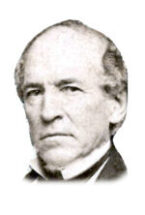
Friday March 14th
Col Dutton is better today. Lieut Col Durkee and nearly all the officers of the Regt have been here to see the Col. The Regt has rcd marching orders and the Col is very uneasy. Mr Short called on me today. He is going down to Fortress Monroe, an attack is to be made upon Norfolk it is supposed. Troops are returning from Virginia to embark down the River.
______
The three diary manuscript volumes, Washington during the Civil War: The Diary of Horatio Nelson Taft, 1861-1865, are available online at The Library of Congress.
Rebel War Clerk
March 14, 2022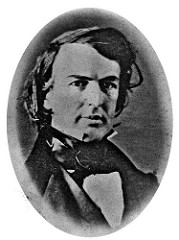
MARCH 14th.—The Provost Marshal, Col. Porter, has had new passports printed, to which his own name is to be appended. I am requested to sign it for him, and to instruct the clerks generally.
Downing’s Civil War Diary.–Alexander G. Downing.
March 14, 2022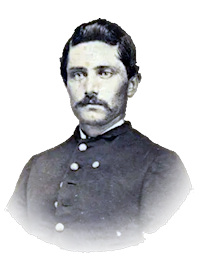
Friday, 14th–We left Fort Henry at dark last night, going on up the river, and arrived at Savannah, Tennessee, this afternoon. The river seems to be lined with transports loaded with troops going up-stream. There are two gunboats in our fleet, also two tugboats and several barges.
War Diary of Luman Harris Tenney.
March 14, 2022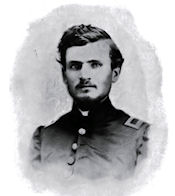
14th. Mail came. Letters from Fannie and home for me. Numerous papers came, Independent and Lorain News. Girls at Amherst.
The Battle.–Diary of David L. Day.
March 14, 2022
The Battle.
We fellows who do the shooting are not counted as any great shakes ordinarily, but yesterday morning we seemed to be regarded as of very great importance, and it took a great amount of swearing and hurrying to and fro of aids and hoarse shoutings of officers to get us around where we were wanted. We were within a half mile of the enemy’s line, and Reno’s and Parke’s brigades were deploying in front of them, on the centre and left of our line. Foster’s brigade was to take the right, and the 25th led off up the road, followed by the 24th Massachusetts and the other regiments of the brigade. We soon came in sight of the enemy’s works, which were only a short rifle-shot from us. Reno’s and Parke’s brigades had already opened the ball along the center and left. We filed out of the road to the right, moving towards the river. As we moved out we were honored with a salute from one of the enemy’s batteries, but the shots passed harmlessly over our heads. The boys looked a little wild, but with steady step moved on until the 25th and 24th Massachusetts were in line on the right of the road; the 27th and 23d Massachusetts and the 10th Connecticut regiments were on the left. Foster’s brigade was now in line of battle and moving forward towards the edge of the woods next to the clearing. The howitzer battery now came up, took position in the road, between the 24th and 27th Massachusetts, and commenced firing. With the exception of the 25th, Foster’s brigade then opened fire. We were on the extreme right and well towards the river, seeing nothing in front of us to draw our fire. The 24th Massachusetts kept up a scattering fire that kept the enemy well down behind their works.
We were ordered, if possible, to turn the enemy’s left. We advanced nearly to the edge of the woods, and only a short distance from the enemy’s line. I was running my eye along it to see where and how it ended, expecting every moment to hear the order to charge, but just then the boats commenced throwing shell over us, towards the Confederate line. They had got a low range and their shells were coming dangerously near, splintering and cutting off the trees, and ploughing great furrows in the ground directly in front of us. In this condition of affairs we [continue reading…]
“This morning the fort and town were found to be evacuated.”–Army Life of an Illinois Soldier, Charles Wright Wills.
March 14, 2022
New Madrid, “by Jingo;” March 14, 1863.
Night before last we received four heavy guns from Cairo and two or three of these infantry regiments planted them during the night within a half mile of the enemy’s main fort and within three-fourths of a mile where their gunboats lay. The seceshers discovered it at daylight and then the fun commenced. Their gunboats and forts, about 30 or 40 pieces in all, put in their best licks all day. We had two regiments lying right in front of our guns to support them against a sortie, and several other regiments behind ready for a field fight The enemy kept in their works though and it was altogether an artillery fight. Our regiment was in the saddle all the a.m., but in the p.m. we lay around our quarters as usual with not a particle more of excitement perceptible than the quietest day in Cairo showed. In the evening the colonel and Major Case and myself went out in the country for our regular little mush, and milk, but that hasn’t anything to do with the story. The firing ceased about an hour after sunset and we turned in for the night with all quiet in camp. About 2 o’clock this morning three Rebel regiments made a little sortie with the intention of doing some devilment, but they ran against a field battery of ours that sent them back kiting. This morning the fort and town were found to be evacuated. I rode down, [continue reading…]
We have retreated from Manassas…
March 14, 2022
March 14, 1862.
Dear Mother:
We are all well as can be expected from the situation that we are now in. We have retreated from Manassas on account of not being able to hold our position. We are now 25 miles from Manassas, across the Rappahannock, and camped upon a high hill that commands a splendid view of that part of the river, which the enemy is compelled to cross.
We left Manassas on Sunday night and traveled until about 1 o’clock. When we camped for the night, everything that we could not carry on our backs was burned up, and I can tell you that you cannot imagine how much we suffered on the march, which consisted of three days’ traveling, loaded down with our baggage and equipment, sleeping on the hard, cold ground, feet sore, half fed on hard dry crackers and meat. Our lot was not to be envied, and it is amazing how we bore up under the circumstances. We have been at this place for a day or two, for what purpose I know not, unless it be for us to recruit up for another march. We have no tents here to sleep in, but we have made ourselves shelters out of cedar bushes. We all seem to flourish, nevertheless.
The night we left Manassas it was burnt down and I expect there was a million of goods consumed on that night, all the soldiers’ clothes they could not carry with them and everything that could have been expected to be at such a place where everything was sent to this division of the army, all was burnt.
I do not know where to tell you to send your letters, for I do not know how long we will stay here, so I reckon you had better not write at all. When I get to a place where it is likely we will stay, I will write again at a better opportunity.
Give my love to all. Goodbye.
Your loving son,
GEORGE.
Letters from two brothers who served in the 4th North Carolina Infantry during the Civil War are available in a number of sources online. Unfortunately, the brothers are misidentified in some places as Walter Lee and George Lee when their names were actually Walter Battle and George Battle. See The Battle Brothers for more information on the misidentification.
A Diary From Dixie
March 14, 2022
March 14th.–Thank God for a ship! It has run the blockade with arms and ammunition.
There are no negro sexual relations half so shocking as Mormonism. And yet the United States Government makes no bones of receiving Mormons into its sacred heart. Mr. Venable said England held her hand over “the malignant and the turbaned Turk ” to save and protect him, slaves, seraglio, and all. But she rolls up the whites of her eyes at us when slavery, bad as it is, is stepping out into freedom every moment through Christian civilization. They do not grudge the Turk even his bag and Bosphorus privileges. To a recalcitrant wife it is, “Here yawns the sack; there rolls the sea,” etc. And France, the bold, the brave, the ever free, she has not been so tender-footed in Algiers. But then the “you are another” argument is a shabby one. “You see,” says Mary Preston sagaciously, “we are white Christian descendants of Huguenots and Cavaliers, and they expect of us different conduct.”
Went in Mrs. Preston’s landau to bring my boardingschool girls here to dine. At my door met J. F., who wanted me then and there to promise to help him with his commission or put him in the way of one. At the carriage steps I was handed in by Gus Smith, who wants his brother made commissary. The beauty of it all is they think I have some influence, and I have not a particle. The subject of Mr. Chesnut’s military affairs, promotions, etc., is never mentioned by me.
Journal of Surgeon Alfred L. Castleman.
March 14, 2022
March 14th.–Received orders early last night to hold ourselves ready to move at a moment’s notice. A few minutes after receiving the above notice, I was ordered to return immediately to Camp Griffin, to look after my sick there–to send such as could not be moved with the Brigade to General Hospital, and the rest to camp, and then to rejoin my Regiment. Our destination is still unknown to us, but we expect that we go either to Norfolk or to join Burnside in the Carolinas. We have been outwitted here, and the rebel army which should have been captured has escaped us.
I fear that my mission here is a failure. My friends expected me to be useful to the Regiment, and if I have had one predominant wish, it was that the expectation might not be disappointed. “The setting of a great hope is like the setting of the sun.” I am in its deep, dark shadows, and fear it will be a long night before I can emerge from the darkness which envelopes the hope. I shall go on and do the best I can in the face of the interference of the military department, but must not be held responsible for consequences, as I am but a subordinate.
Diary of Horatio Nelson Taft.
March 13, 2022
Thursday March 13th
There is no particular news today in the papers. Col Dutton concluded to come down and stay with us until he gets better. Doct David came with him. He appears better tonight, but Doct D stays with him all night. It has been a little wet this evening and there seems to be more rain in prospect. McClellan is, it is said, pursuing the fleeing rebels.
______
The three diary manuscript volumes, Washington during the Civil War: The Diary of Horatio Nelson Taft, 1861-1865, are available online at The Library of Congress.
Rebel War Clerk
March 13, 2022
MARCH 13th.—Nevertheless, I am (temporarily) signing my name to the passports, yet issued by the authority of the Secretary of War. They are filled up and issued by three or four of the Provost Marshal’s clerks, who are governed mainly by my directions, as neither Col. Porter nor the clerks, nor Gen. Winder himself, have the slightest idea of the geography of the country occupied by the enemy. The clerks are all Marylanders, as well as the detectives, and the latter intend to remain here to my great chagrin.
Downing’s Civil War Diary.–Alexander G. Downing.
March 13, 2022
Thursday, 13th–We stopped at Paducah, Kentucky, a short time and then early this morning came up the river to Fort Henry, arriving in the afternoon. There are about twenty transports at this place, loaded with troops. Fort Henry is a dilapidated place. The Tennessee river is very high, the water being out over the banks, and the lowlands are flooded for miles on both sides of the river.
War Diary of Luman Harris Tenney.
March 13, 2022
13th. Saw the boys jay-hawking from countryman who had apples, chickens, eggs, etc. They stole half he had. Read a chapter in Beecher’s “Letters to Young Men.”
The Landing and March.–Diary of David L. Day.
March 13, 2022
The Landing and March.
March 13. —The morning of the 13th was dark and rainy, and we made preparations to land. It always rains where we go; first at Hatteras, then at Roanoke and now here. I think we are rightly named a water division.
We landed in a mudhole, at the mouth of Slocum’s creek. Before noon the troops were all landed, and the march commenced. The 25th taking the advance, we marched up the river bank about a mile, the gun-boats shelling the woods in advance of us. We then struck into the woods, which presented a novel appearance. There was no undergrowth, but a short grass covered the ground, while masses of long gray moss hung in festoons from the branches of the trees, giving them a weird and sombre appearance. We soon came out to a cart road, or horse path, along which we followed for about a couple of miles, when we came to a deserted cavalry camp. I reckon when they heard the sounds of revelry on the river, there was mountings in hot haste, and they sped away to some safer locality. The clouds now broke and the sun shone out hot, which, together with the mud, made the march a toilsome one. A little further on, we came to the carriage road. Here Foster’s brigade halted, to let Reno’s and Parke’s brigades move past us. [continue reading…]
Diary of a Southern Refugee, Judith White McGuire.
March 13, 2022
13th.—Our hearts are overwhelmed to-day with our private grief. Our connection, Gen. James McIntosh, has fallen in battle. It was at Pea Ridge, Arkansas, on the 7th, while making a dashing cavalry charge. He had made one in which he was entirely successful, but seeing the enemy reforming, he exclaimed, “We must charge again. My men, who will follow me?” He then dashed off, followed by his whole brigade. The charge succeeded, but the leader fell, shot through the heart. The soldiers returned, bearing his body! My dear J. and her little Bessie are in Louisiana. I groan in heart when I think of her. Oh that I were near her, or that she could come to us! These are the things which are so unbearable in this war. That noble young man, educated at West Point, was Captain in the army, and resigned when his native Georgia seceded. He soon rose to the rank of Brigadier, but has fallen amid the flush of victory, honoured, admired and beloved by men and officers. He has been buried at Fort Smith. The Lord have mercy upon his wife and child! I am thankful that he had no mother to add to the heart-broken mothers of this land. The gallant Texas Ranger, General Ben McCulloch, fell on the same day; he will be sadly missed by the country. In my selfishness I had almost forgotten him, though he doubtless has many to weep in heart-sickness for their loved and lost.
Bishop Meade is desperately ill to-day—his life despaired of.
Through Some Eventful Years
March 13, 2022
March 13th, 1862.—Brother Amos left this morning and our hearts ache for both of them. The women of the South have much to bear. Father takes me with him every other day to search for certain medicinal plants and roots, from which supplies for hospital use can be made. Medicines of all kinds are scarce in the Confederacy. Occasionally a vessel will run the blockade but not often; the Yankees have succeeded in making us very uncomfortable, to say the least of it.
Last week we sent to the hospital in Richmond a case of iron tonic for convalescents. We are now making a decoction of Boneset for chills and fever; this having been tried at home with good results was considered good enough for our dear soldiers. We make a salve too, from the leaves of what the negroes call “Jimson Weed.” It is healing and soothing and the small quantity of spirits of turpentine, we add to it, makes it more effective. Another salve is made from the root of the elder, grated and stewed in lard. With this salve goes a decoction of elder flowers, these used in conjunction are a preventive of gangrene and will sometimes cure it. Oh, if our poor soldiers could only have half the medicines they need; it is so hard to see them suffer for simple things that all the world besides can have. I think this blockade is devilish.
Susan Bradford is 16 years old when this entry was made.
Evacuating for some time, but, at the last, left in a sort of panic…
March 13, 2022
March 13
While we were cooking some arrowroot in our parlor for a Vermont private, sick in this hotel, Joe came in, back from Fairfax for a ride. The officers had been all over the old battlefield at Bull Run, McDowell crying, and all of them serious enough. The rebel works at Centreville, Joe says, are splendid, as formidable as any of ours about Washington. Their winter quarters were capital log houses, enough to accommodate 100,000 men. The burial ground was near at hand, and not far away a field of hundreds of dead horses. The works at Manassas were very slight, mounted in the most conspicuous places with logs of wood painted black. The rebels had been evacuating for some time, but, at the last, left in a sort of panic, leaving dead bodies lying beside coffins, and quantities of food, clothing and baggage of all kinds, some of it fired.
A Diary From Dixie
March 13, 2022
March 13th.–Mr. Chesnut fretting and fuming. From the poor old blind bishop downward everybody is besetting him to let off students, theological and other, from going into the army. One comfort is that the boys will go. Mr. Chesnut answers: “Wait until you have saved your country before you make preachers and scholars. When you have a country, there will be no lack of divines, students, scholars- to adorn and purify it.” He says he is a one-idea man. That idea is to get every possible man into the ranks.
Professor Le Conte ¹ is an able auxiliary. He has undertaken to supervise and carry on the powder-making enterprise–the very first attempted in the Confederacy, and Mr. Chesnut is proud of it. It is a brilliant success, thanks to Le Conte.
Mr. Chesnut receives anonymous letters urging him to arrest the Judge as seditious. They say he is a dangerous and disaffected person. His abuse of Jeff Davis and the Council is rabid. Mr. Chesnut laughs and throws the letters into the fire. “Disaffected to Jeff Davis,” says he; “disaffected to the Council, that don’t count. He knows what he is about; he would not injure his country for the world.”
Read Uncle Tom’s Cabin again. These negro women have a chance here that women have nowhere else. They can redeem themselves–the “impropers” can. They can marry decently, and nothing is remembered against these colored ladies. It is not a nice topic, but Mrs. Stowe revels in it. How delightfully Pharisaic a feeling it must be to rise superior and fancy we are so degraded as to defend and like to live with such degraded creatures around us– such men as Legree and his women.
The best way to take negroes to your heart is to get as far away from them as possible. As far as I can see, Southern women do all that missionaries could do to prevent and alleviate evils. The social evil has not been suppressed in old England or in New England, in London or in Boston. People in those places expect more virtue from a plantation African than they can insure in practise among themselves with all their own high moral surroundings– light, education, training, and support. Lady Mary Montagu says, “Only men and women at last.” “Male and female, created he them,” says the Bible. There are cruel, graceful, beautiful mothers of angelic Evas North as well as South, I dare say. The Northern men and women who came here were always hardest, for they expected an African to work and behave as a white man. We do not.
I have often thought from observation truly that perfect beauty hardens the heart, and as to grace, what so graceful as a cat, a tigress, or a panther. Much love, admiration, worship hardens an idol’s heart. It becomes utterly callous and selfish. It expects to receive all and to give nothing. It even likes the excitement of seeing people suffer. I speak now of what I have watched with horror and amazement.
Topsys I have known, but none that were beaten or ill used. Evas are mostly in the heaven of Mrs. Stowe’s imagination. People can’t love things dirty, ugly, and repulsive, simply because they ought to do so, but they can be good to them at a distance; that’s easy. You see, I can not rise very high; I can only judge by what I see.
______
¹ Joseph Le Conte, who afterward arose to much distinction as a geologist and writer of text-books on geology. He died in 1901, while he was connected with the University of California. His work at Columbia was to manufacture, on a large scale, medicines for the Confederate Army, his laboratory being the main source of supply. In Professor Le Conte’s autobiography published in 1903, are several chapters devoted to his life in the South.
Journal of Surgeon Alfred L. Castleman.
March 13, 2022
13th.–A sad day is this. The effects of General _____’s vindictive meddling with the Medical Department are beginning to manifest themselves. When he took from me my well-trained hospital attendants and my experienced druggist, on the 5th inst, there were appointed in their places, men, worthless in the ranks, and without knowledge of the important duties which they were to perform in the hospital. The druggist knew not one medicine from another, and today three men are poisoned by a mistake in dispensing medicines. One of them is already dead; the other two suffering severely, though I have hopes that they may yet be saved. Thank God, I was absent at the time, and had nothing to do with either the dispensing or administering; and yet, should I write that the vindictiveness was not yet gratified, would the world credit it? It is even so. I have addressed to the General a respectful letter, setting forth the facts, and urging the restoration of my druggist, but he refuses! Would he decimate his Brigade to gratify his vindictiveness?
Well, we have lain still nearly a year, “surrounding the rebel army,” and, yesterday, when we went to “bag’em,” they were gone! One thing is gained, however, the .Capital is no longer besieged, and the blockade of the Potomac is raised. “Great is Diana.”
I visited some Virginia ladies at their homes to-day, took tea with them, and witnessed from their house the most beautful review of about 10,000 troops, that I ever beheld. The house is a fine old Virginia mansion, overlooking a large plain, where the troops were reviewed by Gen. McClellan. We all enjoyed it greatly. But I enjoyed more the pleasure of sitting down once more to a family table, and exchanging the boisterous society of the camp, for the quiet conversation of refined and civil life. Oh how I longed for a return of that peace which would enable the North, the South, the East, and the West, to feel again the fraternal bonds, and stop the desolations of war.