“I have my own reasons for thinking that they are evacuating Island 10.”–Army Life of an Illinois Soldier, Charles Wright Wills.

Civil War Day-by-Day

Point Pleasant, Mo., March 28, 1862.

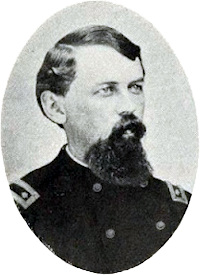
There isn’t a thing to write only that they keep up the infernal “boom, boom,” with their cannons all day and night long. It’s perfectly disgusting the way they waste powder and iron without killing anyone. They have knocked every house in town to flinders, and round shot and grape and shell are lying thick on the ground and yet we haven’t a man touched. They were having a hot time with their cannon and some musketry firing, too, down at Palmer’s last night from 10 p.m. to 2 a.m., but haven’t heard yet what was up. I have my own reasons for thinking that they are evacuating Island 10. If they don’t do it this week I’ll believe that they are waiting for a lot of gunboats to come up from Orleans, and that we’ll have the fun of a naval engagement in the vicinity. If there is one within 40 miles of here I’m going to see it if I have to wade a swamp ten feet deep, as I probably will, but see it I’m bound to. Then if the Rebels whale our craft you’ll be likely to hear the sound of their cannon before long without leaving home, for there’s nothing to prevent their going anywhere after they pass our gunboats. It will be a great joke on Uncle Sam if they do make that riffle. Wonder what would become of the home guards. About the worst feature of the case would be the Southern officers sparking our girls as we do theirs now and the worst yet is, there is no doubt the girls would take to it kindly, for they do here, and I’m satisfied there is no difference in the feminines of the two sections, except that ours do not say “thar” and “whar.” I see that it requires a good many “ifs” and “theirs” to arrange a case of this kind, but I assure you that it is not out of the range of possibilities. How’d you like to see a “Captain St. Clair de Monstachir” with C. S. A. on his buttons, making calls in Canton? I’ll bet ten to one he could enjoy himself in that burg. Bang! Boom! D__n the cannons! It’s awful tiresome. I do hope we’ll get them cleaned out of this ere long. I don’t understand why it is that our mails are so tardy. We get the Chicago and St. Louis papers two days after publication. I almost think that Pope has ordered our mail to lay over in Cairo until further orders.
0 comments

Rebel War Clerk

Civil War Day-by-Day
A likeness of Jones when he was editor and majority owner of the Daily Madisonian during President John Tyler’s administration.

MARCH 28th.—Mr. Benjamin has been promoted. He is now Secretary of State.

His successor in the War Department is G. W. Randolph, a lawyer of modest pretensions, who, although he has lived for several years in this city, does not seem to have a dozen acquaintances. But he inherits a name, being descended from Thomas Jefferson, and, I believe, likewise from the Mr. Randolph in Washington’s cabinet. Mr. Randolph was a captain at Bethel under Magruder; and subsequently promoted to a colonelcy. Announcing his determination to quit the military service more than a month ago, he entered the field as a competitor for the seat in Congress left vacant by the death of President Tyler. Hon. James Lyons was elected, and Col. Randolph got no votes at all.

0 comments

Downing’s Civil War Diary.–Alexander G. Downing.

Diary of Alexander G. Downing; Company E, Eleventh Iowa Infantry

Friday, 28th–It is warm and dry—it is delightful. There is nothing of importance going on. Our camp is well protected on the left by the Tennessee river and by Owl creek on our right flank. Most of the camp ground lies high and just rolling enough to keep the ground dry. Our camp—the First Brigade of the First Division—lies almost due north and south, so arranged for the purpose of giving the brigade a good drill and parade ground. The camps of the different brigades, all through the woods, face in any desired direction, except the regiments out in front, which are so arranged as to be facing the enemy should they have to form a line of battle.

0 comments

War Diary of Luman Harris Tenney.

War Diary of Luman Harris Tenney.

28th. No letters for poor me. Read the latest papers. Rode over with Nettleton for the mail. The boys set the prairie on fire in several places, making one of the grandest sights I ever saw. Slept last night out of doors on the ground with Nettleton.

0 comments

Diary of Horatio Nelson Taft.

Diary of US patent clerk Horatio Nelson Taft.

Friday March 28th

Very pleasant today. Streets quite dry & dusty. A great movement of troops. A stream of men and Govt Wagons have been going down 14th St for a number of hours. The Divisions of Genl Keyes and Casey, 10,000 or 12,000 each, have moved for Alexandria to embark. Doct David called about 6 o’clock this evening on his way down. The 98th had been paid today and he left $730.00 with me to send to his wife. He kept $100. We all felt quite sad at parting with him and his own eyes were quite moist. We walked out to14th St and stood for near two hours seeing the troops pass. It was quite dark before the 98th came down. We could not recognize many of our friends in the Regt. The street through the City and the road beyond the “Long Bridge” was one living moving mass for miles. Artillery, Cavalry, Infantry & Wagons made up an immense procession. No news of importance tonight.

______

The three diary manuscript volumes, Washington during the Civil War: The Diary of Horatio Nelson Taft, 1861-1865, are available online at The Library of Congress.

0 comments

A Diary From Dixie

Civil War Day-by-Day

March 28th.–I did leave with regret Maum Mary. She was such a good, well-informed old thing. My Molly, though perfection otherwise, does not receive the confidential communications of new-made generals at the earliest moment. She is of very limited military information. Maum Mary was the comfort of my life. She saved me from all trouble as far as she could. Seventy, if she is a day, she is spry and active as a cat, of a curiosity that knows no bounds, black and clean; also, she knows a joke at first sight, and she is honest. I fancy the negroes are ashamed to rob people as careless as James Chesnut and myself.

One night, just before we left the Congaree House, Mr. Chesnut had forgotten to tell some all-important thing to Governor Gist, who was to leave on a public mission next day. So at the dawn of day he put on his dressing-gown and went to the Governor’s room. He found the door unlocked and the Governor fast asleep. He shook him. Half-asleep, the Governor sprang up and threw his arms around Mr. Chesnut’s neck and said: “Honey, is it you?” The mistake was rapidly set right, and the bewildered plenipotentiary was given his instructions. Mr. Chesnut came into my room, threw himself on the sofa, and nearly laughed himself to extinction, imitating again and again the pathetic tone of the Governor’s greeting.

Mr. Chesnut calls Lawrence “Adolphe,” but says he is simply perfect as a servant. Mary Stevens said: “I thought Cousin James the laziest man alive until I knew his man, Lawrence.” Lawrence will not move an inch or lift a finger for any one but his master. Mrs. Middleton politely sent him on an errand; Lawrence, too, was very polite; hours after, she saw him sitting on the fence of the front yard.” Didn’t you go? ” she asked. “No, ma’am. I am waiting for Mars Jeems.” Mrs. Middleton calls him now, “Mr. Take-it-Easy.”

My very last day’s experience at the Congaree. I was waiting for Mars Jeems in the drawing-room when a lady there declared herself to be the wife of an officer in Clingman’s regiment. A gentleman who seemed quite friendly with her, told her all Mr. Chesnut said, thought, intended to do, wrote, and felt. I asked: “Are you certain of all these things you say of Colonel Chesnut?” The man hardly deigned to notice this impertinent interruption from a stranger presuming to speak but who had not been introduced! After he went out, the wife of Clingman’s officer was seized with an intuitive curiosity. “Madam, will you tell me your name?” I gave it, adding, “I dare say I showed myself an intelligent listener when my husband’s affairs were under discussion.” At first, I refused to give my name because it would have embarrassed her friend if she had told him who I was. The man was Mr. Chesnut’s secretary, but I had never seen him before.

A letter from Kate says she had been up all night preparing David’s things. Little Serena sat up and helped her mother. They did not know that they would ever see him again. Upon reading it, I wept and James Chesnut cursed the Yankees.

Gave the girls a quantity of flannel for soldiers’ shirts; also a string of pearls to be raffled for at the Gunboat Fair. Mary Witherspoon has sent a silver tea-pot. We do not spare our precious things now. Our silver and gold, what are they?–when we give up to war our beloved.

0 comments

Journal of Surgeon Alfred L. Castleman.

Journal of Surgeon Alfred L Castleman.

28th.–Slept on the ground last night, my saddle for a pillow. Greatly to the chagrin of all of us, after having driven in the enemy’s pickets yesterday, we fell back a mile or two, and to-day fall back about seven miles.

“The King of France, with 40,000 men,
Marched up the hill, and then marched down again.”

Major L and party came into camp this morning, unharmed.

0 comments

“The enemy presses us on every side.”—Diary of a Southern Refugee, Judith White McGuire.

Diary of a Southern Refugee During the War by Judith White McGuire

March 27.—This has been a day of uneasiness to us all. General Jackson has had a fight at Kernstown, near Winchester. No particulars, except that the enemy were repulsed, and our loss heavy. Many that are so dear to us are in that “Stonewall Brigade;” and another day of suspense must pass before we can hear from them. Our Western army under Beauregard are fighting at Island No. 10, with what success we know not. The enemy presses us on every side.

0 comments

Rebel War Clerk

Civil War Day-by-Day
A likeness of Jones when he was editor and majority owner of the Daily Madisonian during President John Tyler’s administration.

MARCH 27th.—It is said Mr. Benjamin has been dismissed, or resigned.

0 comments

War Diary of Luman Harris Tenney.

War Diary of Luman Harris Tenney.

27th. News came that the staff would be paid off. All went to the Fort to sign pay-rolls. Returned to dinner. Rode the Major’s horse. Saw a tame buffalo. Quite a curiosity. Sergeants receive only $17 per month–a joke on their extra stripes.

0 comments

Downing’s Civil War Diary.–Alexander G. Downing.

Diary of Alexander G. Downing; Company E, Eleventh Iowa Infantry

Thursday, 27th–It is warm and dry today. The trees are beginning to leaf out. Troops are arriving every day and going into camp all along the roads about two and a half miles from the Landing.

0 comments

Journal of Surgeon Alfred L. Castleman.

Journal of Surgeon Alfred L Castleman.

27th.–A day of excitement. We are near the enemy. Brigade left camp at 6 A.M.; marched ten miles along the beautiful James River. Almost every building on the route burned. Dreadful devastation. At 12 o’clock came upon the rebel pickets. They ran, leaving camp fires burning. In one tent found a boiler of hot coffee, in another a haversack of hot biscuit. Very acceptable, after a long and muddy march. Major L_____, with two companies, was detailed on a reconnoisance. They have not returned to-night, and we fear they are in danger.

0 comments

“Most of these fellows are bullies at home, and that class makes plunderers in war.”–Army Life of an Illinois Soldier, Charles Wright Wills.

Civil War Day-by-Day

Camp near Point Pleasant, Mo., March 26, 1862.

It is, to-day, very much warmer. I’m altogether too hot to be comfortable in my shirt sleeves. Don’t know what is to become of us in July if it is so hot in proportion. I shake in my boots at the thought of the mosquitoes, flies, etc., we will have to endure. Vegetation is giving the surroundings a greenish appearance already, and have seen a peach tree in nearly full bloom. Wheat is about three or four inches above ground. Makes a very respectable sod. I think there are more Union people here than in any part of Missouri that I have been in, and fewer widows. Men are nearly all at home and putting in their crops as coolly as though there was no war. Some of our soldiers impose on the natives pretty badly. You don’t know how thankful you ought to be that you don’t live in the invaded country. Wherever there is an army, for 10 or 15 miles around it there will be hundreds of stragglers. Some out of curiosity, some to see the natives and talk with them, but the majority to pick up what they can to eat. There is not a farm house within ten miles of camp, notwithstanding the positive orders against straggling, that has not, at least, 50 soldier visitors a day, and they are the poorest soldiers and the meanest men that do all the straggling, or nearly all. They will go into a house and beg what they can and then steal what is left. Rough, dirty, coarse brutes, if they were all shot, our army would be better off. Most of these fellows are bullies at home, and that class makes plunderers in war. I’ve seen enough of war to know that it isn’t the brawling, fighting man at home that stands the bullet whistle the best. A favorite game of these chaps, [continue reading…]

0 comments

Rebel War Clerk

Civil War Day-by-Day
A likeness of Jones when he was editor and majority owner of the Daily Madisonian during President John Tyler’s administration.

MARCH 26th.—The apothecaries arrested and imprisoned some days ago have been tried and acquitted by a court-martial. Gen. Winder indorsed on the order for their discharge: “Not approved, and you may congratulate yourselves upon escaping a merited punishment.”

0 comments

Downing’s Civil War Diary.–Alexander G. Downing.

Diary of Alexander G. Downing; Company E, Eleventh Iowa Infantry

Wednesday, 26th–The weather is getting very warm. We have plenty of firewood near by for the cooking, and running water a short distance away where we do our washing once a week.

0 comments

War Diary of Luman Harris Tenney.

War Diary of Luman Harris Tenney.

26th. Played several games of chess and read. Helped in the Q. M. department.

0 comments

Village Life in America

Village Life in America, 1852 – 1872, by Caroline Cowles Richards

March 26. – I have been up at Laura Chapin’s from 10 o’clock in the morning until 10 at night, finishing Jennie Howell’s bed quilt, as she is to be married very soon. Almost all of the girls were there. We finished it at 8 p.m. and when we took it off the frames we gave three cheers. Some of the youth of the village came up to inspect our handiwork and see us home. Before we went Julia Phelps sang and played on the guitar and Captain Barry also sang and we all sang together, “O! Columbia, the gem of the ocean, three cheers for the red, white and blue.”

0 comments

Journal of Surgeon Alfred L. Castleman.

Journal of Surgeon Alfred L Castleman.

26th.–Remained in camp all day, examined my hospital stores, and put in order what few I have left. At Alexandria, in consequence of my being ordered to Washington to look after the scattered ones, had to entrust the forwarding the few we had there to my assistants. On arrival here I find that they are nearly all left or lost, except the few I picked up in Washington and brought with me. Not a tent, not a cooking utensil, and scarcely any medicines. Hope that I may be permitted in future to look after my own affairs without too much help.

0 comments

Rebel War Clerk

Civil War Day-by-Day
A likeness of Jones when he was editor and majority owner of the Daily Madisonian during President John Tyler’s administration.

MARCH 25th.—Gen. Bonham, of South Carolina, has also resigned, for being overslaughed. His were the first troops that entered Virginia to meet the enemy; and because some of his three months’ men were reorganized into fresh regiments, his brigade was dissolved, and his commission canceled.

Price, Beauregard, Walker, Bonham, Toombs, Wise, Floyd, and others of the brightest lights of the South have been somehow successively obscured. And Joseph E. Johnston is a doomed fly, sooner or later, for he said, not long since, that there could be no hope of success as long as Mr. Benjamin was Secretary of War. These words were spoken at a dinner-table, and will reach the ears of the Secretary.

0 comments

Downing’s Civil War Diary.–Alexander G. Downing.

Diary of Alexander G. Downing; Company E, Eleventh Iowa Infantry

Tuesday, 25th–We had company drill twice today. We have a fine drill ground. Our water here is good, there being several springs a short distance to the east and to the west of our camp. The camp of the Thirteenth Iowa is on our left, while to our right are the Eighth and Eighteenth Illinois. These three regiments with ours, the Eleventh Iowa, form the First Brigade of the First Division of the Army of the Tennessee, under the command of Maj. Gen. John A. McClernand. Col. Abraham M. Hare of our regiment is in command of the brigade. Dresser’s battery of six guns is encamped just in front of the Eleventh Iowa.

0 comments

War Diary of Luman Harris Tenney.

War Diary of Luman Harris Tenney.

25th. Commenced reading Scott’s “Ivanhoe.” Delighted with its principal characters, Rowena and Ivanhoe.

0 comments

Diary of David L. Day.

David L Day – My diary of rambles with the 25th Mass

Warning

The following diary entry contains wording that is offensive to many in the world of today. However, the entry is provided unedited for its historical content and context.
.

Darkies.

March 25. There are swarms of negroes here. They are of all sexes, ages, sizes and conditions. They sit along the streets and fences, staring and grinning at every thing they see, laughing and chattering together like so many black-birds. They have very exaggerated notions of freedom, thinking it means freedom from work and a license to do about as they please. There is no use trying to get them to work, for if they can get their hoe-cake and bacon, it is all they want, and they are contented and happy. When a party of them is wanted to unload a vessel or do any job of work, the commissary or quartermaster requests the colonel to send along the men. The colonel orders one of the companies to go out and pick them up and report with them where they are wanted. A patrol is detailed and put in charge of a non-commissioned officer who starts out to pick up his party. On seeing a good, stout looking fellow, the officer halts his squad, and calling the darky’s attention, says, “Come here, boy!” The unsuspecting darky comes grinning along up and asks, “Wat ‘er want ‘er me?” “Fall in here, I want you,” “Wat I don’ ‘er want me?” “Well, I want you to do something; fall in here,” “O, lor’ a gorra, boss, i’se so busy today i’se couldn’t go nohow, i’se go tomorrer suah.” “Never mind that, fall in here,” and the darky falls in, his eyes rolling around and his thick lips sticking out, feeling about as mad as he well can, doubtless thinking that freedom is no great thing after all.

In that way the whole party is [continue reading…]

0 comments

Typhoid

Journal of Meta Morris Grimball
Meta Morris Grimball

25 March

       John wrote to his father & to me offering the use of his Confederate Bonds and 9 hundred dollars of his pay which is very kind.—I hope Mr Grimball may not be obliged to use it. Berkley made a visit to Pickings & Anderson and found it impossible to procure a suitable place. Mr Kirckland, the Methodist Missionary who resided in our neighborhood offered to rent us his house furnished to put the negroes out to service, to come for the family and proved his sincere goodness in every way. Berkley has such offers of kindness from Mr Paul Felder of land rent free that he went to Orangeburg but did not succeed.

       Mr Robertson the factor offered to let Mr Grimball send his negroes to his plantation, he giving the 4th they made and paying his brother for looking after them. The place is 22 miles from Town and the land poor & the accomodations a barn and Overseer’s house. The plan although not a promising one was being acted on. Mr Aiken offered his vessel to carry the negroes to this place when Professor Porcher sent a letter round with an offer from Mr Duboise Porcher to take the negroes and have them work for their food and clothes. They were all brought from the work house 1, Dick, with Typhoid fever. We have been very much tired with the nursing, Elizabeth & I sit up every night until 12 to give medicine & nourishment. Dick is better but Nat has caught the fever from him and is now quite ill and we have the prospect of a time nursing him. Troubles never come alone & we are now in the midst of many. Mr G. had trouble in selling his corn & M. W. Pringlee the Quarter Master wrote up to the man in Adams Run to take the corn by force at 1.10¢ when all over the Country they were offering 1.50. This letter was shown to Mr Grimball—

0 comments

Journal of Surgeon Alfred L. Castleman.

Journal of Surgeon Alfred L Castleman.

25th.–This A. M., at 6, weighed anchor, and dropped down to Hampton Roads, and disembarked at what was the little town of Hampton. If there be pleasure in the indulgence of sad reflections, how delightful it would be to have all my friends here, to enjoy them with me to-day. For a few hours, whilst the troops have been disembarking, and transferring the baggage and munitions of war from steamer to transportation wagons, I have been walking the streets of this once beautiful, but now desolate little city. Never before had I a conception of the full import of that word–desolate. Shortly after the battle of Bull Run, the rebels, fearing that we should occupy the town as our winter quarters, abandoned and burned it. This little city, amongst the oldest in America, and now giving evidences of a former beauty, possessed by no other I have seen in the South, they burned!

Oh, the demoralization, the misery resulting from this wicked rebellion. I would like to describe here the scenes I have witnessed this morning; but the sad picture, so strongly impressed on the mind, would be blurred and rendered indistinct by any attempt to transfer it to language. I have already an affection for this little city, and a deep-rooted sympathy for its former citizens, now scattered and hunted, exiled and homeless. Its population, I should judge, was about 2,500. ‘Twas compactly built, mostly of brick. The yards and gardens even yet, give evidence of great taste.

The walls of the old Episcopal Church, said to be the oldest orthodox church on the continent, stand almost uninjured, but not a particle of combustible matter is left about it. In its yard are the tombs and the tomb-stones of a century and a half ago. And what a place to study human nature, amongst the 50,000 soldiers strolling around. ‘Tis low tide. All the tiny bays left uncovered by water, are crowded by soldiers “on all fours,” sunk to knees and elbows in the slimy mud feeling for oysters. The gardens are full of soldiers, the church yards are full, each giving an index of his character by the object of his search and admiration. Whilst I have been looking disgusted and indignant at a squad prying the tomb-stones from the vaults to get a look within; at another squad breaking off pieces of the oldest tomb-stones as ” trophies,” my attention is suddenly drawn away from these revolting scenes by the extacies of a poor, ragged, dirty fellow, over a little yellow violet which he had found. He almost screams with delight. Just beyond him is a better and more intelligent looking soldier scratching among the ashes in hope of finding a shilling, or something else, which he can turn to some use; a few seems impressed by the solemnity of the scene. Such are the varieties of human characters and of human natures. For myself, I cannot but think how worse, even, than Sodom and Gomorrah is the fate of this place. To think, whilst looking over the sad ruins, of the young persons who had grown up here, and whose every hour of happiness was in some way associated with their beautiful homes; of old men who had been born and raised here, and who had known no other home; of widowed mothers, with dependent families, whose homes here constituted their sole wealth on earth. To think of all these clustered together on some elevation in that dark and dreary night, turning to take the last sad look at their dear old homes; oh, what aching hearts there must have been there that night! What envyings of the fate of Lot’s wife, as they were leaving the quiet, happy homes for–God knows where, and God knows what! My heart aches for them, and every feeling of enmity is smothered in one of pity. Before disembarking this morning, we got a look at the famous little Monitor. A raft–an iron raft, about two hundred feet long, lying from eighteen to thirty inches above the water, with its great cheese box on one end, with holes in it to shoot from. Were I to attempt a description I should say, it looked for all the world just like the sole of an immense stoga boot lying flat on the water with the heel sticking up. In the afternoon, left Hampton, marched about four miles in the direction of Newport News, and encamped.

0 comments

“Troops are passing through Richmond on their way to Goldsborough, N. C, where it is said that Burnside is expected to meet them.”—Diary of a Southern Refugee, Judith White McGuire.

Diary of a Southern Refugee During the War by Judith White McGuire

24th.—Our people continue to make every effort to repel the foe, who, like the locusts of Egypt, overrun our land, carrying the bitterest enmity and desolation wherever they go. Troops are passing through Richmond on their way to Goldsborough, N. C, where it is said that Burnside is expected to meet them. Everybody is busy in supplying their wants as they pass through. On Sunday, just as the girls of one of the large seminaries were about to seat themselves at table, the principal of the school came in: “Young ladies,” said he, “several extra trains have arrived, unexpectedly, filled with troops. The committee appointed to attend them are totally unprepared. What can we do to help our hungry soldiers?” “Give them our dinner,” cried every young voice at once. In five minutes baskets were filled and the table cleared. When the girls reached the cars, the street was thronged with ladies, gentlemen, children, servants, bearing waiters, dishes, trays, baskets filled with meats, bread, vegetables, etc. Every table in Richmond seemed to have sent its dinner to Broad Street, and our dear, dusty, hungry gray coats dined to their hearts’ content, filled their haversacks, shouted “Richmond forever!” and went on their way rejoicing.

0 comments