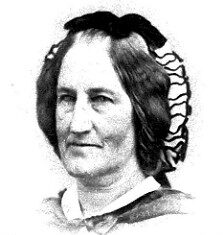
Diary of David L. Day.

David L Day – My diary of rambles with the 25th Mass

We Lose Our Major.

April 1. I learn that Major McCafferty has resigned and is going to leave us. I am sorry to learn that his ambition for fame is so soon gratified. I think a good deal of the major and shall miss him very much. He is a man of great good nature and a good deal of a humorist, and at times he makes considerable sport for the boys. The major’s resignation creates a vacancy which, according to military rules will be filled by the ranking captain which is Capt. Pickett of company A. This will change the formation of the line, bringing company B on the left, and ranking second in the line. So, step by step, we ascend the ladder of fame.

Living High.

We are now living in clover, having little else to do but to keep ourselves, clothes, arms and equipments clean and in good order. We do a little guard duty and the rest of the time is spent in reading, writing, card-playing and walking about town, seeing the fun and enjoying ourselves. Our rations are of good quality and variety. We now have our fresh beef three times a week, with all the soft bread we want. With our government rations, and what we can buy, such as oysters, fresh fish, chickens, eggs, sweet potatoes, etc., we are running at a high rate of speed. We often contrast this with our life at the inlet.

0 comments

Journal of Meta Morris Grimball

Journal of Meta Morris Grimball
Meta Morris Grimball

1 April

       Mr G. has been wonderfully relieved by the placing the negroes with Mr Porcher and is now in the country selling his rice. The Dr has left Nat and I hope they will soon be well enough to go to the country. I feel dull and anxious.

       There was a stampede 66[?] negroes from Combahee the other day 3 hundred from one of the Blakes Walter.

0 comments

A Rainy Day in Camp.

Woolsey family letters during the War for the Union

Mary had written a number of verses for the soldiers, and they had been printed as leaflets, each one floated over by the flag in red and blue, and distributed widely among the enlisted men. The first of these was

A Rainy Day in Camp.
.
It’s a cheerless, lonesome evening,
When the soaking, sodden ground
Will not echo to the footfall
Of the sentinel’s dull round.
.
God’s blue star-spangled banner
To-night is not unfurled;
Surely He has not deserted
This weary, warring world.
.
I peer into the darkness,
And the crowding fancies come:
The night wind, blowing northward,
Carries all my heart toward home. [continue reading…]
0 comments

Church in a hospital tent.

Woolsey family letters during the War for the Union
Eliza Woolsey Howland to Chaplain Hopkins.

Washington, D. C., April 1st, 1862.

Dear Mr. Hopkins: I send some Independents with the “Rainy day” in them. We mentioned that you liked the verses, and Abby sent these on for you to distribute among your patients.

We spent last Sunday near Alexandria . . . glad to be storm-stayed on many accounts, one of which was the opportunity it gave us of going to service in the 16th, the first communion service since Mr. Howland took command. It was pleasant to see the little “church” assemble in a hospital tent in a Virginia field.

0 comments

“I do not think we had over 2500 men engaged, whilst the enemy probably had four times the number, consisting, for the most part, of troops which have been in service for the last year under Rosecrans in Western Virginia”–Letters from Elisha Franklin Paxton.

Elisha Franklin Paxton – Letters from camp and field while an officer in the Confederate Army

Bivouac near Woodstock, April 1, 1862.

Last Thursday I received an order from Gen. Jackson to take charge of four companies and report to Col. Ashby for duty on the advance-guard. I go down occasionally to take a view of the enemy’s pickets, but most of the time have been lying idle. The enemy are encamped around Strasburg and for some four miles this side, where they seem disposed to remain quiet for the present. The whole country here bears the appearance of a funeral, everything is so quiet. In a ride yesterday along our lines, I scarcely saw any person moving about, and all work on the farms seemed suspended; many of the houses seemed to be deserted. The soldiers alone seem to exhibit the appearance of contentment and happiness. A mode of life which once seemed so strange and unnatural habit has made familiar to us, and if peace ever comes many of them will be disqualified for a life of industry.

I have seen, in a Baltimore paper, a list of the prisoners taken from the battle at Winchester. It is very gratifying to find that some are captured whose fate was involved in doubt. Among them I am pleased to find the name of Charley Rollins, whom I saw upon the field behaving very gallantly. Send word to his mother if you have an opportunity. Capt. Morrison and Lieut. Lyle of the College Company are on the list. Two captains and one lieut. were captured from our regiment. Our loss in killed and wounded and captured, I expect, will reach 500. I do not think we had over 2500 men engaged, whilst the enemy probably had four times the number, consisting, for the most part, of troops which have been in service for the last year under Rosecrans in Western Virginia, than whom they have no better troops in the field. I never expect to see troops fight better than ours did. Our force is rapidly increasing from the militia who are coming in and will be used in filling up the volunteer companies. Many of those sick and absent on furlough are returning, and with all, I think, we will have a force sufficient to meet the enemy with success. Until our force is increased and reorganized, I think we shall continue to retreat without another battle.

0 comments

Journal of Surgeon Alfred L. Castleman.

Journal of Surgeon Alfred L Castleman.

April 1st.–An opportunity offers to-day to send letters to the dear ones at home. This privilege is becoming less frequent, and we fear that when we move from here, it will be even more so than now. Visited Newport News to-day. This, though a sad, was a pleasant visit. There, within a stone’s throw of our Fort and guns, stood, a hundred feet above the briny water, the graceful spars of the ill-fated frigate Cumberland, sunk by the iron-clad Merrimac. It seems impossible that this monster ship, yet untried, should venture on her first voyage out, not only in presence of our armed fleet, but under the very port-holes of one of our most powerful land batteries. I listened to many interesting anecdotes of this naval fight, or rather destruction, but I cannot record them now. I could not withstand the temptation to visit what there was of the Cumberland above water. Climbed into the rigging, and discovered at the very peak of the foremast, about one square yard of the American flag, still flying. I determined, if possible, to have a piece of it, and started on the arduous task of climbing a hundred feet to get it. By the aid of ropes, and spars, and rigging, reached the top-gallant. The flag was still fifty feet above me, and there was no way of my reaching it but by climbing that slender, smooth top-mast. I looked at the coveted relic with longing eyes–thought what a treasure it would be– looked into the ocean fifty feet beneath me–looked at a rebel gunboat which was hovering near, as a shark follows and hovers around a vessel with a cadaver ready to be thrown overboard; then I looked at myself, and came to the sage conclusion that there was another relic which wife and chil-children might value even more than they would that flag, though tattered in so noble a cause, and waving still an unimpeachable witness to the bravery and patriotism of the noble crew who went down with it, still floating aloft, they never ceasing to cheer that loved emblem, till choked by the gurgling of the water in their throats, when they sank, to cheer no more forever.

About half a mile below the Cumberland, the wreck of the Congress is just visible above the water. For want of time I did not visit it.

We have no further revelations as to the programme of the war. It looks to me, however, that the plan is, to conquer the banks of the James River, making use of it as the base of our operations till we reach Richmond.

Shall we have a fight at Richmond? I very much doubt it. If we press rapidly forward, we must reach there before the enemy can concentrate any large body of troops or make any formidable defences. They will then, I think, fall back on the Cotton States, luring us on to an enemy more formidable than then- guns–rice swamps, hot weather, and yellow fever. If we delay, however, giving them time to reinforce and fortify, it may be otherwise. So much for a guess.

My Hospital Steward has been for a month under arrest, and though I have constantly applied for the appointment of one to temporarily fill his place, it has been refused me. This has caused me much extra labor. In consequence of this I have to-day disbanded my whole hospital force, sent my sick to quarters, and refused longer to perform the duties of Hospital Steward. Shall I be arrested for insubordination? We shall see.

0 comments

The Fight for Food and Clothing

War Diary of a Union Woman in the South

April 1, 1862.—The last ten days have brought changes in the house. Max R. left with the company to be mustered in, leaving with us his weeping Annie. Hardly were her spirits somewhat composed when her brother arrived from Natchez to take her home. This morning he, Annie, and Reeney, the black handmaiden, posted off. Out of seven of us only H., myself, and Aunt Judy are left. The absence of Reeney will not be the one least noted. She was as precious an imp as any Topsy ever was. Her tricks were endless and her innocence of them amazing. When sent out to bring in eggs she would take them from nests where hens were hatching, and embryo chickens would be served up at breakfast, while Reeney stood by grinning to see them opened; but when accused she was imperturbable. “Laws, Mis’ L., I nebber done bin nigh dem hens. Mis’ Annie, you can go count dem dere eggs.” That when counted they were found minus the number she had brought had no effect on her stolid denial. H. has plenty to do finishing the garden all by himself, but the time rather drags for me.


Note: To protect Mrs. Miller’s job as a teacher in post-civil war New Orleans, her diary was published anonymously, edited by G. W. Cable, names were changed and initials were generally used instead of full namesand even the initials differed from the real person’s initials. (Read Dora Richards Miller’s biographical sketch.)

0 comments

Diary of Horatio Nelson Taft.

Diary of US patent clerk Horatio Nelson Taft.

Monday 31st

It has been pleasant today after the thunder shower which we had last night. Got my months Salary today, bought me a new hat, wore my old one a year and a half. Paid Bills “too numerous to mention.” We know but little of what is going on relating to the War as nothing is allowed to be published in the papers but there must be a great Battle soon in Tennessee betwen Buel & Beauregard. It is thought that the “cord” is tightening round Richmond. We shall probably hear soon. The Ladies Fair of the 4[th] Pres[byterian] Ch[urch] commenced tonight. Julia did not get home till after 11.

______

The three diary manuscript volumes, Washington during the Civil War: The Diary of Horatio Nelson Taft, 1861-1865, are available online at The Library of Congress.

0 comments

Rebel War Clerk

Civil War Day-by-Day
A likeness of Jones when he was editor and majority owner of the Daily Madisonian during President John Tyler’s administration.

Update: As readers have pointed out in the comments, this entry is obviously dated wrong.  The battle at Shiloh is still in the not-to-distant future.

MARCH 31st.—Gen. Joseph E. Johnston is to command on the Peninsula. The President took an affectionate leave of him the other day; and Gen. Lee held his hand a long time, and admonished him to take care of his life. There was no necessity for him to endanger it—as had just been done by the brave Sydney Johnston at Shiloh, whose fall is now universally lamented. This Gen. Johnston (Joseph E.) I believe has the misfortune to be wounded in most of his battles.

0 comments

Downing’s Civil War Diary.–Alexander G. Downing.

Diary of Alexander G. Downing; Company E, Eleventh Iowa Infantry

Monday, 31st–Our regular drills are: Company drill from 10 to 11 a. m., battalion drill from 3 to 5 p. m., and dress parade at 5 p. m. We have a splendid drill ground in a large field. Received orders to get ready for review by General Grant tomorrow morning at 10 o’clock.

The country around here is quite rough and the soil is very poor. There is a great deal of gravel and there are some rocks, but the soil works very easily. The timber here is mostly white oak.

0 comments

0

Civil War Day-by-Day

March 31st. Discovered a portion of a submarine telegraph cable across the river directly under our ship. The cable was destroyed, and a sample brought on board ship.

0 comments

War Diary of Luman Harris Tenney.

War Diary of Luman Harris Tenney.

31st. In the morning read in “Ivanhoe.” Learned to play whist, pleasant game, but unprofitable as all cards are–will not allow myself to play. Rainy and cool.

0 comments

Journal of Surgeon Alfred L. Castleman.

Journal of Surgeon Alfred L Castleman.

31st.–To-day, whilst all were expecting orders to move forward, I received orders to build a log hospital. – What can this mean? The weather is beautiful, roads good, troops in fine condition, warm weather coming on, and here we are preparing as for a summer’s stay. God help us and our little General, but put it into his heart not to remain here till the enemy, whom we have found, has time to fortify against our approach. We have been a long time accomplishing nothing. Although the weather is fine, and it is now first of April, not a forest tree has started its buds. I am disappointed, for I expected by this time, in this climate, to be as in midsummer. But even the trees, and nature, seem to linger, and we should not blame our General.

I visited Fortress Monroe to-day. This is a great Fort, almost surrounded by natural water, besides being entirely enclosed within its own moat. The two walls which surround it are together from thirty to sixty feet thick, of solid granite masonry, and the two together are about three miles long, enclosing by a double wall about eighty acres. It mounts 480 guns, commanding the approaches in every direction. The transports are landing here from 15,000 to 20,000 troops daily. This is no doubt one of the causes of the delay of our army. We wait for the arrival of the remainder, that when we do move, we may march steadily forward without fear of repulse. Start us, and twelve to fifteen days should place us in Richmond, only about seventy-five miles distant. Whilst sitting on the parapet of the Fort, I had a good view of the Rip-Raps, an artificial island, built up in the sea, of huge stones shipped there, and on which is built Fort Wool. These Forts are the key to the great, strong door between the Federal and the Confederate Governments.

0 comments

Diary of Horatio Nelson Taft.

Diary of US patent clerk Horatio Nelson Taft.

Sunday March 30th

This has been a cold rainy day, as uncomfortable for the soldiers as could well be. It rained so hard that none of us went to church in the morning. Wife and the boys went in the afternoon. I have not been out, staid in the house reading.

______

The three diary manuscript volumes, Washington during the Civil War: The Diary of Horatio Nelson Taft, 1861-1865, are available online at The Library of Congress.

0 comments

Rebel War Clerk

Civil War Day-by-Day
A likeness of Jones when he was editor and majority owner of the Daily Madisonian during President John Tyler’s administration.

MARCH 30th.—Gen. Lee is to have command of all the armies—but will not be in the field himself. He will reside here. Congress passed an act to create a commanding general; but this was vetoed, for trenching on the executive prerogative—or failed in some way. The proceedings were in secret session.

0 comments

Downing’s Civil War Diary.–Alexander G. Downing.

Diary of Alexander G. Downing; Company E, Eleventh Iowa Infantry

Sunday, 30th–This is our first Sunday in camp in the “Sunny South.” We had company inspection with all accouterments on, by the colonel of our regiment, Colonel Hare.

0 comments

War Diary of Luman Harris Tenney.

War Diary of Luman Harris Tenney.

30th. Sunday. Brigade review, Second Ohio Cavalry, Ninth Wisconsin Infantry and Rabb’s Battery practiced with guns. Helped foot up officers account with Q. M. Received and answered a good letter from Fannie.

0 comments

Journal of Surgeon Alfred L. Castleman.

Journal of Surgeon Alfred L Castleman.

30th–Slept in the open air again last night; it rained, and I awoke in a pool of water. Strange that we do not take cold from such exposure. I never felt better, and I notice that very few of the soldiers take cold from any amount of exposure at this season of the year.

0 comments

“Poor, noble Winchester, to what degradation is she brought!”—Diary of a Southern Refugee, Judith White McGuire.

Diary of a Southern Refugee During the War by Judith White McGuire

29th.—After much anxiety, more authentic information from the “Valley” received this morning. We gave them a good fight, but the field was left in the enemy’s hand. Poor, noble Winchester, to what degradation is she brought! Our dear W. B. C. was shot through the hip; the wound painful, but not mortal; he was carried to Staunton, and his mother has gone to him. The rest of our own peculiar “boys” are safe, but many lives were lost. It is thought that a great crisis is at hand. The Peninsula is the place appointed by rumour for a great battle. The croakers dread much from their numbers; my trust is in One who can save by many or by few.

0 comments

Downing’s Civil War Diary.–Alexander G. Downing.

Diary of Alexander G. Downing; Company E, Eleventh Iowa Infantry

Saturday, 29th–A large detail from the brigade was sent to cut and clear away some timber between Jones’ Field and a small field just to the south, so as to throw the two fields together, making it possible for the First Division to form a continuous line to be reviewed by the commanding general of the army, General Grant. Companies A, B and C received Belgian rifles today for their old muskets.

0 comments

War Diary of Luman Harris Tenney.

War Diary of Luman Harris Tenney.

March 29th. Had a good bath in the creek, and washed my clothes–new experience. Very warm and sultry.

0 comments

0

Civil War Day-by-Day

March 29th. Nothing of importance is occurring now-a-days to mark one day from another. Yesterday, Capt. Bell, with the gunboats Kennebeck, Wissahickon and Winona, ascended the river to the forts, when Fort Jackson opened fire on them, and after firing about one hundred rounds at us our vessels hauled off. They discovered the position of the defenses, also a chain stretched across the river just below Forts Jackson and St. Philip, on eight schooners anchored between the forts. Our squadron is still gradually collecting. Capt. Porter’s mortar fleet is already here, but our large ships are not all over the bar.

0 comments

Snow.—Heavy and continual thunder.—Hundreds of camp fires in all directions.

Woolsey family letters during the War for the Union
From Mother’s Journal.

Saturday, March 29.

To camp again. Snow-storm. Stayed at Mrs. Bright’s cottage Saturday night and drove up to camp on Sunday. Service in hospital tent, Dr. Miller, of the 16th, and Dr. Adams, of the 5th Maine, officiating. Communion–about thirty soldiers and several officers partaking. Heavy and continual thunder, with everything outside covered with snow–a singular combination of summer and winter, and rendering this interesting occasion still more strange and impressive.

Stopped Sunday night again at the Brights’, a clean and comfortable cottage at the head of Cameron Lane. All around us were the tents d’abri and other tents, and hundreds of men without any tents at all, bivouacking on the hills and in the fields and swamps everywhere; one cavalry regiment had arrived and their tents were pitched while we were out at the 16th. The camp fires at night were a new feature to me, and strangely did they loom up in the darkness, bringing to view groups of soldiers gathered round them;–hundreds of these fires in all directions.

0 comments

Journal of Surgeon Alfred L. Castleman.

Journal of Surgeon Alfred L Castleman.

29th.–We are in camp again, about two miles from Newport News. Nothing doing, and this gives me an opportunity to realize the condition of my hospital. Up to the time of our leaving Camp Griffin in the early part of this month, we had not in all our moves, lost to the amount of a candle. Now, with only two moves since, we are here to-day, in the face of the enemy, expecting a battle, without a tent, an ambulance, a litter, a blanket, or a comfort for the wounded –not even a reliable nurse at my command. Well, I suppose all this is a small matter, so long as the commanders who brought it about are comfortable. They can be taken care of, and why need they trouble themselves about the men?

0 comments

0

Civil War Day-by-Day

by Horatio Nelson Taft

Friday March 28th

Very pleasant today. Streets quite dry & dusty. A great movement of troops. A stream of men and Govt Wagons have been going down 14th St for a number of hours. The Divisions of Genl Keyes and Casey, 10,000 or 12,000 each, have moved for Alexandria to embark. Doct David called about 6 o’clock this evening on his way down. The 98th had been paid today and he left $730.00 with me to send to his wife. He kept $100. We all felt quite sad at parting with him and his own eyes were quite moist. We walked out to14th St and stood for near two hours seeing the troops pass. It was quite dark before the 98th came down. We could not recognize many of our friends in the Regt. The street through the City and the road beyond the “Long Bridge” was one living moving mass for miles. Artillery, Cavalry, Infantry & Wagons made up an immense procession. No news of importance tonight.

0 comments