A Confederate Girl’s Diary

Civil War Day-by-Day

July 21st.

It is impossible to discover the true story of last night’s alarm. Some say it was a gang of negroes who attacked the pickets in revenge for having been turned out of the Garrison; others say it was a number of our soldiers who fired from the bushes; and the most amusing story is that they took alarm at an old white horse, which they killed, mistaking him for the Confederates. One regiment has refused to do picket duty; and the story runs among these poor soldiers that our army, which is within a mile, is perfectly overwhelming. The excitement still continues.

I have been writing to the Brunots the news confirming the death of McClellan, the surrender of his army, and the good tidings of our Ram’s recent exploits above Vicksburg, and her arriving safely under the guns there. If we could keep all the dispatches that have passed between us since the battle of the forts, what a collection of absurdity and contradiction it would be! “Forts have been taken.” “Their ships have passed; forts safe; Yankees at our mercy.” “Ships at New Orleans. City to be bombarded in twelve hours.” “Forts surrendered.” “City under British protection.” “No, it is n’t.” “City surrendered.” “Mistake.” “Baton Rouge to be burned when Yankee ships come.” And so on, sometimes three times a day, each dispatch contradicting the other, and all equally ridiculous.

The crowd here seems to increase. The streets are thronged with the military, and it will soon be impossible to go even to Mrs. Brunot’s, which will be a great privation to me. . . . Five thousand are to come next week, and then it will really be impossible to go in the streets.

0 comments

Downing’s Civil War Diary.–Alexander G. Downing.

Diary of Alexander G. Downing; Company E, Eleventh Iowa Infantry

Monday, 21st–It is very warm and dusty today. There are some fine orchards around Corinth and the apples and peaches are beginning to ripen now. Fresh fruit will help out our rations and add freshness and variety.

0 comments

War Diary of Luman Harris Tenney.

War Diary of Luman Harris Tenney.

21st. Rested and wrote some.

0 comments

A Diary From Dixie

Civil War Day-by-Day

July 21st.–Jackson has gone into the enemy’s country. Joe Johnston and Wade Hampton are to follow.

Think of Rice, Mr. Senator Rice, ¹ who sent us the buffalo-robes. I see from his place in the Senate that he speaks of us as savages, who put powder and whisky into soldiers’ canteens to make them mad with ferocity in the fight. No, never. We admire coolness here, because we lack it; we do not need to be fired by drink to be brave. My classical lore is small, indeed, but I faintly remember something of the Spartans who marched to the music of lutes. No drum and fife were needed to revive their fainting spirits. In that one thing we are Spartans.

The Wayside Hospital ² is duly established at the Columbia Station, where all the railroads meet. All honor to Mrs. Fisher and the other women who work there so faithfully! The young girls of Columbia started this hospital. In the first winter of the war, moneyless soldiers, sick and wounded, suffered greatly when they had to lie over here because of faulty connections between trains. Rev. Mr. Martin, whose habit it was to meet trains and offer his aid to these unfortunates, suggested to the Young Ladies’ Hospital Association their opportunity; straightway the blessed maidens provided a room where our poor fellows might have their wounds bound up and be refreshed. And now, the “Soldiers’ Rest” has grown into the Wayside Hospital, and older heads and hands relieve younger ones of the grimmer work and graver responsibilities. I am ready to help in every way, by subscription and otherwise, but too feeble in health to go there much.

Mrs. Browne heard a man say at the Congaree House, “We are breaking our heads against a stone wall. We are bound to be conquered. We can not keep it up much longer against so powerful a nation as the United States. Crowds of Irish, Dutch, and Scotch are pouring in to swell their armies. They are promised our lands, and they believe they will get them. Even if we are successful we can not live without Yankees.” “Now,” says Mrs. Browne, “I call that man a Yankee spy.”   To which I reply, “If he were a spy, he would not dare show his hand so plainly.”

“To think,” says Mrs. Browne, “that he is not taken up. Seward’s little bell would tinkle, a guard would come, and the Grand Inquisition of America would order that man put under arrest in the twinkling of an eye, if he had ventured to speak against Yankees in Yankee land.” [continue reading…]

0 comments

By-the-by, isn’t a bed delicious?

Woolsey family letters during the War for the Union

The whole staff of the Wilson Small seems now to have scattered and “fallen back” on Washington. The letter of July 21 is from Miss Katherine P. Wormeley. She and Mrs. William P. Griffin had been delightful friends to us. We were the four “staff” women on the Wilson Small through the whole Peninsular campaign. Miss W. came home on our old hospital ship the Daniel Webster, in charge of her last load of wounded from the Peninsula, Mrs. Griffin remaining at Hampton Roads in a receiving hospital for some weeks longer.

Miss Wormeley to Georgeanna Woolsey.

Newport, R. I., July 21st, ’62.

Dear Georgy: How did you take to civilization? I got along perfectly till I was caught going off the boat without paying my fare. Captain T’s mother was on board, which was a capital thing, and induced him to behave himself. I found intimate friends on board who were dear to me because they escorted me to supper. Georgy! if you ever take passage on the Metropolis, go down to supper for my sake and imagine how it affected me. My friends rather apologized for their desire to go down; for my part all I could do was to conceal my disappointment at not being able to eat everything. It seemed to me there was everything good that I had ever heard of, ending with peaches and ice cream.

I put the wounded captain into an express wagon (the nearest thing to an ambulance) and got home myself at 4 o’clock, to be finely cackled over by Mother. The next day the town called on me, beginning, like a Fourth of July procession, with the mayor and clergy. The next day I stayed in bed till after visiting hours. By-the-by, isn’t a bed delicious? I can’t believe it is the same mattress, the same blanket and sheets that I had before I went away. Of course you know that Dr. Wheaton with 1,700 men are here (six miles from here). Excursion boats run from here and from Providence to the camp. It is the fashionable drive, and the dear creatures are all female sutlers with baskets of pies and cakes and pickles and sweetmeats. Colonel Valium is here. I have sent him word that if I can do anything sensible with authority I will, meanwhile I do not intend going near the camp. . . . I am truly sorry that Colonel Howland’s furlough is shortened. Fanny Russell told me about it, and we spent all the time we were together in adoring “Mrs. H.” I have said one hundred times “I will tell that to Georgy,” but behold I have forgotten everything. Yesterday was a happy day to me, the dear little chapel was so peaceful and full of love and praise. I thought of Mr. – as I sat there. . . . No large mind doubts God or the excellence of life with Him merely through looking at the mean lives of others.

Good-bye, love to Mrs. Howland and C. W. W. I am yours faithfully,

K. P. Wormeley.

0 comments

Rebel War Clerk

Civil War Day-by-Day
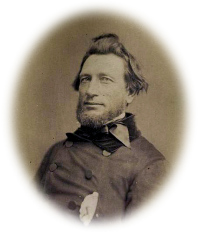
A likeness of Jones when he was editor and majority owner of the Daily Madisonian during President John Tyler’s administration.

JULY 20th.—I am back again, signing passports to the army. But yesterday, during the interregnum, the Beaverdam Depot was burnt by the enemy, information of its defenseless condition having been given by a Jew peddler, who obtained no passport from me.

0 comments

A Confederate Girl’s Diary

Civil War Day-by-Day

July 20th, Sunday.

Last night the town was in a dreadful state of excitement. Before sunset a regiment, that had been camped out of town, came in, and pitched their tents around the new theatre, in front of our church. All was commotion and bustle; and as the pickets had been drawn in, and the soldiers talked freely of expecting an attack, everybody believed it, and was consequently in rather an unpleasant state of anticipation. Their cannon were on the commons back of the church, the artillery horses tied to the wheels; while some dozen tents were placed around, filled with men who were ready to harness them at the first alarm. With all these preparations in full view, we went to bed as usual. I did not even take the trouble of gathering my things which I had removed from my “peddler sack”; and slept, satisfied that, if forced to fly, I would lose almost everything in spite of my precaution in making a bag.

Well! night passed, and here is morning, and nothing is heard yet. The attack is delayed until this evening, or to-morrow, they say. Woman though I am, I am by no means as frightened as some of these men are. I can’t get excited about it. Perhaps it is because they know the danger, and I do not. But I hate to see men uneasy! I have been so accustomed to brave, fearless ones, who would beard the Devil himself, that it gives me a great disgust to see any one less daring than father and the boys.

I have been so busy preparing to go to the city that I think if the frolic should intervene and prevent my departure, I would be disappointed, though I do not want to go. It would be unpleasant, for instance, to pack all I own in my trunk, and just as I place the key in my pocket to hear the shriek of “Van Dorn!” raised again. This time it is to be [continue reading…]

0 comments

Downing’s Civil War Diary.–Alexander G. Downing.

Diary of Alexander G. Downing; Company E, Eleventh Iowa Infantry

Sunday, 20th–No news of importance. The weather is very hot. We had company inspection this morning, after which, because of the intense heat, the men remained in their tents. None were out during the day except those detailed on duty.

0 comments

War Diary of Luman Harris Tenney.

War Diary of Luman Harris Tenney.

20th. Reveille at 2 A. M. Marched at 4 A. M. Left Co. “A” to keep up communications. Encamped after 12 miles march. Major Burnett left with an escort for Leavenworth with orders and papers about Wier’s arrest.

0 comments

Frights and Perils in Steele’s Bayou

War Diary of a Union Woman in the South

Sunday, July 20, 1862.—A little way down the Yazoo on Friday we ran into McNutt’s Lake, thence into Chickasaw Bayou, and at dark landed at Mrs. C.’s farm, the nearest neighbors of H.’s uncle. The house was full of Confederate sick, friends from Vicksburg, and while we ate supper all present poured out the story of the shelling and all that was to be done at Vicksburg. Then our stuff was taken from the boat, and we finally abandoned the stanch little craft that had carried us for over one hundred and twenty-five miles in a trip occupying nine days. The luggage in a wagon, and ourselves packed in a buggy, were driven for four or five miles, over the roughest road I ever traveled, to the farm of Mr. B., H.’s uncle, where we arrived at midnight and hastened to hide in bed the utter exhaustion of mind and body. Yesterday we were too tired to think, or to do anything but to eat peaches.


Note: To protect Mrs. Miller’s job as a teacher in post-civil war New Orleans, her diary was published anonymously, edited by G. W. Cable, names were changed and initials were generally used instead of full namesand even the initials differed from the real person’s initials. (Read Dora Richards Miller’s biographical sketch.)
0 comments

Rebel War Clerk

Civil War Day-by-Day
A likeness of Jones when he was editor and majority owner of the Daily Madisonian during President John Tyler’s administration.

JULY 19th.—This morning early, while congratulating myself on the evidence of some firmness and independence in the new Secretary, I received the following note:

“RICHMOND, July 19th, 1862.

“Mr. J. B. JONES.
          “SIR:—I have just been directed by the Secretary of War that he has turned over the whole business of passports to Gen. Winder, and that applications for passports will not be received at this office at all.
“Very respectfully,                    
“A. G. BLEDSOE,          
Asst. Sec. War.”

Of course I ceased operations immediately. So large a concourse of persons now accumulated in the hall, that it was soon necessary to put up a notice that Gen. Winder would grant them passports. But the current set back again. Gen. Winder refused to issue passports to the relatives of the sick and wounded in the camps, well knowing the generals, his superiors in rank, would not recognize his authority. He even came into the department, and tore down the notice with his own hands.

0 comments

Downing’s Civil War Diary.–Alexander G. Downing.

Diary of Alexander G. Downing; Company E, Eleventh Iowa Infantry

Saturday, 19th–Everything is very quiet. With the exception of a few cases, the health of the men in camp is generally good. But the men are becoming restless. All would rather be in active service, for this camp service will never bring the war to a close.

0 comments

War Diary of Luman Harris Tenney.

War Diary of Luman Harris Tenney.

19th. Kept up after eleven and packed up. The circumstances of the trouble with Wier are these: On account of drunkenness and his seeming determination to starve us out, Col. S., all the officers in his brigade and most of the others approving, concluded to arrest him; sent the adjutant with a detail of 100 men who ordered him under arrest. He refused the order. The detail presented bayonets and took him prisoner. Took him to Col. S.’s tent, where were officers representing most of the regiments. When he saw Capt. Allen of the Battery, he said, “And are you here?” and burst into tears. I never saw so much excitement. All were glad. Before this Col. S. had determined if rations did not come by Monday to march his brigade north. Left the Indians there, marched 39 miles to our old second camp, slept on the prairie as usual. Nettleton came along slowly during the day. Officers began to be frightened after 4 or 5 hours, and ordered an ambulance to go back for him. Just then he came up.

0 comments

“I guess there are no hopes of a fight there until autumn. I’m getting tired of doing nothing…”–Army Life of an Illinois Soldier, Charles Wright Wills.

Civil War Day-by-Day

July 19, 1862.

I don’t know whether I have any business sending such a document as I enclose, but guess its no difference. Two spies came in to-night and report that there are not more than 15,000 or 20,000 of the enemy left at Tupelo and Saltillo. Bragg took a large force with him and went over in the direction of Chattanooga a few days since. A fortnight, nearer a month, since we had quite a large force stationed at Boonville. One of the men started to go back to Rienzi on business, and had not been heard of since until day before yesterday, when his body was found midway between the two places with four bullet holes through it. It lay some distance from the road, and was discovered by a man of the 2d Brigade while looking for water. He was undoubtedly murdered by some citizen. Day before yesterday Mrs. Pierce, wife of a captain in the 36th Illinois, rode out in an ambulance, escorted by a corporal, to get some fruit in the country. A party of guerrillas gobbled the party up while they were inside of our pickets, and took them to Ripley. They sent Mrs. Pierce back yesterday. She was well treated. I guess there are no hopes of a fight there until autumn. I’m getting tired of doing nothing, although I certainly should be satisfied, having easier times than almost any one in the service.

Halleck left here yesterday for Washington. Trains are running down here from Corinth every day now, so we are only three days behind the dates of papers received, which is better than eight or ten, as heretofore. We have had the most splendid rains for a few days, and the weather is very seasonable in temperature. We are living almost wholly on fruit: apples, pears and blackberries, fresh, and peaches and strawberries canned. Don’t want for anything, but I still (so unreasonable is man) at times, think that I’m not enjoying myself as well as I used to in the 8th. I know I couldn’t stay out of the service while the war continues, but I would like so well to have peace once more, and be civilized awhile. There’s a good time coming. Don’t it come slowly? I write all the colonel’s letters now except those to his wife, and shouldn’t wonder if he’d have me do that next. At first he used to read them over very closely, but now he often signs without asking what they are about. To-night he told me was going to make me inspector general for brigade. Making two generals out of one lieutenant isn’t fair. I’m too lazy and modest for such a position and think I can coax him to appoint a chap I have my eye upon.

0 comments

If you come back feeling weak, you will be obliged to leave again.

Woolsey family letters during the War for the Union

Joseph Howland kept up constant communication with the 16th and his commanding generals, always in the hope of going back, in spite of all discouragements.

Gen. Henry W. Slocum writes to him:

Harrison’s Landing, July 19, ’62.

My dear Colonel: Yours of the 16th has just come to hand. I am sincerely glad that you are doing so well and I shall be rejoiced to see you back. I think the major is doing well, but there is nothing like having the head present. Still I hope you will not think of returning till you are fully recovered. If you come back feeling weak, you will be obliged to leave again. This climate is very debilitating, and nearly all the officers, even the strongest, are affected by it. . . . My advice to you is to remain at home until some move is made here.

. . . As to your conduct and that of your regiment on the 27th, I hear but one opinion–all speak in terms of praise, the strongest terms.

. . . General Franklin told me to say to you that you must not come back till you are well. He (Franklin) is about half sick. I am in the same condition–too sick to be worth much and too well to go home. . . . Remember me to Mrs. Howland and tell Miss Georgy that her favor has been received and that I will “follow them with a sharp stick ” as requested.

Yours truly,

H. W. Slocum.

0 comments

Rebel War Clerk

Civil War Day-by-Day
A likeness of Jones when he was editor and majority owner of the Daily Madisonian during President John Tyler’s administration.
JULY 18th.—To-day several ladies applied in person to the Secretary of War for passports to Norfolk and Baltimore, and he sent me written orders to grant them. They next applied to Gen. Winder to go with the flag of truce, exhibiting their passports. He repudiated them, however, and sent the ladies back to me, saying he wanted something with the Secretary’s signature, showing me to be authorized to sign them. I wrote such a note as I supposed he wanted, and the Secretary signed it as follows:
“RICHMOND, July 18th, 1862.
“BRIG.-GEN. J. H. WINDER.
          “SIR:—The passports issued by J. B. Jones from this Department to pass the lines of the Confederate armies, and the lines of the Confederate States, are granted by my direction, evidences of which are on file in the Passport Office.
“Respectfully,                    
“G. W. RANDOLPH,          
“Secretary of War”

This, one of the ladies delivered to him. I hope I am now done with Gen. Winder and his “Plug Ugly” dynasty.

0 comments

Downing’s Civil War Diary.–Alexander G. Downing.

Diary of Alexander G. Downing; Company E, Eleventh Iowa Infantry

Friday, 18th–The weather is very hot. Colonel Hare took the regiment out on the drill ground for battalion drill, but we remained out only a half hour, since four or five men were overcome with the heat and had to be taken back to their tents.

0 comments

War Diary of Luman Harris Tenney.

War Diary of Luman Harris Tenney.

18th. Ordered to commence on half rations. Visited Capt. Nettleton. Sick since going to Fort Gibson, weak. At 11 P. M. orders came to march at 2 A. M. Second Battalion in advance. Colonel Wier under arrest and a prisoner, Colonel Salomon commanding.

0 comments

Journal of Surgeon Alfred L. Castleman.

Journal of Surgeon Alfred L Castleman.

18th.–I regret exceedingly to feel that there may be too much truth in the following extract of a letter received today: I would not libel my fellow officers, but I have no hesitation in declaring that, notwithstanding I have spent fifty years of a life of excitement in this little world, I have witnessed more drunkenness amongst officers of the army within one year, than I have seen in the same class of men in all my fifty years of civil life. The letter says: “After you left me I was lonely, rarely having any of the officers call at my tent. I spent my time, when not engaged in official duties, in reading and in writing. This was rather agreeable, notwithstanding I could hear in all the tents around me the social hiliarity of officers visiting each other. It seemed pleasant to me, and I sometimes almost envied them. One morning there could be seen in my tent three boxes. On the end of one, in large print: “Prime Bourbon;” on another, “1 Doz. each Old Q and Cogniac;” the third, ” Fine Sherry.” On top of the boxes sat three bottles, each marked correspondingly with the box from which it was taken; and by side of the bottles, glasses, and a bucket of ice water. It soon began to be found out that I had .the shadiest, airyest tent, and that I was one of the most jovial fellows on the ground. Privates, who had previously frequented my tent for instruction and advice, disappeared, cocked hats and shoulder straps crowded about me; I had a good cook, and occasionally my friends dined with me. * * * * * Can you imagine how, after my long seclusion, I enjoyed this change of socialty? Let me tell you: I have become most supremely disgusted with myself, my liquors, my comrades, and almost feel that the world, or at least the military portion of it, is a failure. Thank God my liquors are gone; my friends and I now know each other, and those who loved me for my good liquors will love me no more forever. A few with whom I was thus brought into contact, are fine fellows, and our intimacy will continue.”

The enemy are attempting to blockade the river below us, and thus cut off our supplies. Should they succeed, we must capitulate, or fight our way to Fortress Monroe, a distance of seventy or eighty miles, without provisions.

In the year that we have been in the field our fine army has been frittered away, without having accomplished anything. I fear General McClellan is a failure. I would not be an alarmist, but I fear that without a change of leaders our cause must be abandoned. The ring of General Pope’s proclamation is right, just right, I cannot take one exception. But the expediency of its coming from General Pope is questionable. I have not too much confidence in the disinterestedness of our Potomac officers, and this proclamation may be applied by some of them personally, and make trouble. Nevertheless, the tone of it is right. I hope he will be able to come up to “the sounding tenor of the munifesto.”

0 comments

Frights and Perils in Steele’s Bayou

War Diary of a Union Woman in the South

Friday morning, July 18, 1862. (House of Col. K., on Yazoo River.)—After leaving the raft yesterday all went well till noon, when we came to a narrow place where an immense tree lay clear across the stream. It seemed the insurmountable obstacle at last. We sat despairing what to do, when a man appeared beside us in a pirogue. So sudden, so silent was his arrival that we were thrilled with surprise. He said if we had a hatchet he could help us. His fairy bark floated in among the branches like a bubble, and he soon chopped a path for us, and was delighted to get some matches in return. He said the cannon we heard yesterday were in an engagement with the ram Arkansas, which ran out of the Yazoo that morning. We did not stop for dinner to-day, but ate a hasty lunch in the boat, after which nothing but a small piece of bread was left. About two we reached the forks, one of which ran to the Yazoo, the other to the Old River. Max said the right fork was our road; H. said the left, that there was an error in Max’s map; but Max steered into the right fork. After pulling about three miles he admitted his mistake and turned back; but I shall never forget Old River. It was the vision of a drowned world, an illimitable waste of dead waters, stretching into a great, silent, desolate forest. A horror chilled me and I begged them to row fast out of that terrible place.

Just as we turned into the right way, down came the rain so hard and fast we had to stop on the bank. It defied trees or umbrellas and nearly took away the breath. The boat began to fill, and all five of us had to bail as fast as possible for the half-hour the sheet of water was pouring down. As it abated a cold breeze sprung up that, striking our wet clothes, chilled us to the bone. All were shivering and blue—no, I was green. Before leaving Mr. Fetler’s Wednesday morning I had donned a dark-green calico. I wiped my face with a handkerchief out of my pocket, and face and hands were all dyed a deep green. When Annie turned round and looked at me she screamed and I realized how I looked; but she was not much better, for of all dejected things wet feathers are the worst, and the plumes in her hat were painful.

About five we reached Colonel K.’s house, right where Steele’s Bayou empties into the Yazoo. We had both to be fairly dragged out of the boat, so cramped and weighted were we by wet skirts. The family were absent, and the house was headquarters for a squad of Confederate cavalry, which was also absent. The old colored housekeeper received us kindly and lighted fires in our rooms to dry the clothing. My trunk had got cracked on top, and all the clothing to be got at was wet. H. had dropped his in the river while lifting it out, and his clothes were wet. A spoonful of brandy apiece was left in the little flask, and I felt that mine saved me from being ill. Warm blankets and the brandy revived us, and by supper-time we got into some dry clothes.

Just then the squad of cavalry returned; they were only a dozen, but they made much, uproar, being in great excitement. Some of them were known to Max and H., who learned from them that a gunboat was coming to shell them out of this house. Then ensued a clatter such as twelve men surely never made before—rattling about the halls and galleries in heavy boots and spurs, feeding horses, calling for supper, clanking swords, buckling and unbuckling belts and pistols. At last supper was dispatched, and they mounted and were gone like the wind. We had a quiet supper and good night’s rest in spite of the expected shells, and did not wake till ten to-day to realize we were not killed. About eleven breakfast was furnished. Now we are waiting till the rest of our things are dried to start on our last day of travel by water.


Note: To protect Mrs. Miller’s job as a teacher in post-civil war New Orleans, her diary was published anonymously, edited by G. W. Cable, names were changed and initials were generally used instead of full namesand even the initials differed from the real person’s initials. (Read Dora Richards Miller’s biographical sketch.)
0 comments

Rebel War Clerk

Civil War Day-by-Day
A likeness of Jones when he was editor and majority owner of the Daily Madisonian during President John Tyler’s administration.

JULY 17th.—The people are too jubilant, I fear, over our recent successes near the city. A great many skulkers from the army are seen daily in the streets, and it is said there are 3000 men here subject to conscript duty, who have not been enrolled. The business of purchasing substitutes is prevailing alarmingly.

0 comments

Downing’s Civil War Diary.–Alexander G. Downing.

Diary of Alexander G. Downing; Company E, Eleventh Iowa Infantry

Thursday, 17th–It rained all last night and everybody is thankful, as it has become so dry and dusty. There are a few cases of sickness in our regiment, due to the extremely hot weather—a few cases of typhoid fever and some are suffering from chronic diarrhea.

0 comments

War Diary of Luman Harris Tenney.

War Diary of Luman Harris Tenney.

17th. Played a little chess. Wrote to Aunt Luna. Slept on the prairie. All the horses of the regiment were out.

0 comments

A Confederate Girl’s Diary

Civil War Day-by-Day

July 17th, Thursday.

It is decided that I am to go to New Orleans next week. I hardly know which I dislike most, going or staying. I know I shall be dreadfully homesick; but –

Remember – and keep quiet, Sarah, I beg of you. Everything points to an early attack here. Some say this week. The Federals are cutting down all our beautiful woods near the Penitentiary, to throw up breastworks, some say. Cannon are to be planted on the foundation of Mr. Pike’s new house; everybody is in a state of expectation. Honestly, if Baton Rouge has to be shelled, I shall hate to miss the fun. It will be worth seeing, and I would like to be present, even at the risk of losing my big toe by a shell. But then, by going, I can save many of my clothes, and then Miriam and I can divide when everything is burned – that is one advantage, besides being beneficial by the change of air. They say the town is to be attacked to-night. I don’t believe a word of it.

Oh, I was so distressed this evening! They tell me Mr. Biddle was killed at Vicksburg. I hope it is not true. Suppose it was a shot from Will’s battery?

0 comments

“There is an awful sight of bombast and lying about army reports. Beat politicians all hollow.”–Army Life of an Illinois Soldier, Charles Wright Wills.

Civil War Day-by-Day

Camp at Rienzi, July 17, 1862.

I think there is more point and policy in that General Order 92 than in any one that has yet been issued in the West, or East either for that matter; but still I do not think it remarkable for perspicuity, and it is neither as strong nor as definite as the army demands. If I know anything of the “laws of war and humanity,” the soldiers will bless “92” for one thing, its relieving them from guarding the property of secessionists, and if they don’t make sundry potato patches, cabbage gardens and fields of roasting ears that I know of, “hop” ’twill surprise me much. There will be some wondrous sudden conversions to Unionism when these butternuts get the drift of that order. An old pup in this town that drank “Southern Independence or the World in Flames” the other evening, in the presence of several United States officers has Union soldiers guarding his property, to preserve it from the Northern vandals, and he has used language equally insulting, times without number, yet the guard is kept up. I suppose, to conciliate him. General Ashboth visits all the secesh and rides around town with the daughter of the man I’ve been speaking of, who is more intensely secesh than her father, if that is possible. Maybe I’m jealous of him, for the girl is very handsome, but I don’t think a United States general at all excusable in such conduct, though it may be overlooked in a lieutenant. Did you see Beauregard’s answer to Halleck? I honestly think there is more truth in that document, than in any other military paper of the kind I have seen. Suppose you have seen Granger’s review thereof. You notice he don’t touch any of the principal points and shows his whole object in publishing the article, in these four words, “I led the pursuit.” I’ll swear we haven’t taken, in deserters, prisoners and sick, since the evacuation of Corinth, 500 men (although hundreds have doubtless deserted who did not enter our lines.) I know this because we have had the advance all the time, and on the only roads there have been fighting and prisoners, and all the deserters have passed through our hands. There were about 18 cars burned, but the ruins show there was nothing of much value on them. ‘Twas not intentional, of course, but Elliott did burn several men in the depot, or else the people of Boonville are liars, to a man. That fight the other day at Boonville amounted to nothing. The enemy’s official report of their loss is four killed and ten wounded. There is an awful sight of bombast and lying about army reports. Beat politicians all hollow. We have had very heavy rains for the last 36 hours, and as water can now be procured on the hitherto dry ground between the armies, I expect some cavalry skirmishing, at least, and if the enemy is yet in force at Tupelo, now is the time for them to attack us, for our army is scattered for 300 miles, almost along the Tennessee line, and cannot be concentrated in time to resist a large force. Many of the officers expect a big fight, but your brother don’t.

0 comments