JULY 24th.—Already the flood-gates of treasonable intelligence flowing North seem to be thrown wide open. The Baltimore papers contain a vast amount of information concerning our condition, movements in progress, and projected enterprises. And to crown all, these rascals publish in the same papers the passports given them by Gen. Winder. I doubt not they are sold by the detectives, Winder being ignorant.
American Civil War Chronicles
0
July 24, 2022
We had now reached the 24th of July, and the climate had become deleterious to the health of our sailors, mostly in the shape of a malarious fever, which was prostrating a dozen a day. We had a sick list of about one hundred men, and we now most gladly started down the river, leaving the command with Commodore Davis. The mortar boats had previously been removed, and we now sailed for New Orleans.
A Confederate Girl’s Diary
July 24, 2022
Thursday, July 24th.
Yes; that must be the date, for one day and two nights have passed since I was writing here. Where shall I begin the story of my wanderings? I don’t know that it has a beginning, it is all so hurried and confused.
But it was Tuesday evening that the Federals were seized with a panic which threw the whole town in alarm. They said our troops were within eight miles, ten thousand in number. The report was even started that the advance guard was skirmishing with the Federals; the shots were heard distinctly, a dozen people were ready to swear. The Yankees struck their tents, galloped with their cannon through the streets with the most terrific din, troops passed at double-quick on their way to the Garrison, everything was confusion. Mr. Tunnard told us yesterday he was present when part of them reached the gate of the Garrison, and saw one of the officers spring forward, waving his sword, and heard him cry, “Trot, men! Gallop, I say! Damn you! run in!” –with a perfect yell at the close; whereupon all lookers-on raised a shout of laughter, for the man was frightened out of his wits. A Federal officer told him that their fright was really a disgrace; and if one thousand of our men had come in town, the whole thirty-five hundred would have been at their mercy. Even the naval officers denounce it as a most arrant piece of cowardice; for instead of marching their troops out to meet ours, they all rushed into the Garrison, where, if attacked, their only retreat would have been into the river. The gunboats were ordered into the middle of the stream, in front of the Garrison; and cooped up there, these valiant men awaited the assault in such trepidation that yesterday they freely said the force could be purchased for fifty cents, they are so ashamed of their panic.
Imagine what effect this had on the inhabitants! Soon, an exodus took place, in the direction of the Asylum, and we needs must follow the general example and run, too. In haste we packed a trunk with our remaining clothes, – what we could get in, – and the greatest confusion prevailed for an hour. Beatrice had commenced to cry early in the evening, and redoubled her screams when she saw the preparations; and Louis joining in, they cried in concert until eight o’clock, when we finally got off. What a din! Lilly looked perfectly exhausted; that look on her face made me heartsick. Miriam flew around everywhere; mother always had one more article to find, and the noise was dreadful, when white and black assembled in the hall ready at last. Charlie placed half of the trunks on the dray, leaving the rest for another trip; and we at last started off. Besides the inevitable running-bag, tied to my waist, on this stifling night I had my [continue reading…]
Downing’s Civil War Diary.–Alexander G. Downing.
July 24, 2022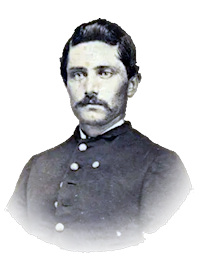
Thursday, 24th–We were relieved from picket this morning by the Thirteenth. Wild fruit is becoming plentiful and while on picket we added quite a variety to our rations.
War Diary of Luman Harris Tenney.
July 24, 2022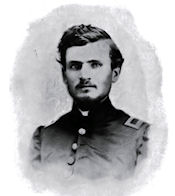
24th. Marched at 3 A. M. Reveille at 2 A. M. Marched 12 miles. Encamped.
Journal of Surgeon Alfred L. Castleman.
July 24, 2022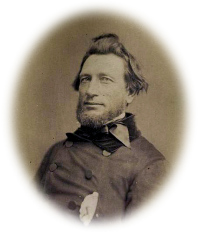
24th.–No active work to-day, save of my mind. The condition of the country and of the army, past, present, and prospective, is the material on which it has worked. Notwithstanding that one year ago our little army had been repulsed at Bull Run, and the heart of the nation was sorrowful, yet the “whole broad continent was ours.” And with our little army in spirits, though momentarily baffled, we were almost unembarrassed to go where we pleased. The country, confident in its leaders, had risen as one man to sustain the best Government the world ever saw. Three hundred thousand troops were called for, and the question was not who shall be obliged to go, but who shall have the privilege of going. A few weeks later, this “Grand Army of the Potomac,” two hundred and twenty thousand strong, had, like the spirited steed, to be restrained by the strong arm of power from rushing forward to the contest. Summer passed, amidst impatient appeals of the men to be led against the enemy. Winter came, with joyful assurance that we were not to go into quarters, because they were soon to advance upon the enemy and to end the war. But spring found them still in canvas tents, impatient for the word to move. At length, with 130,000, shortly afterwards swelled to nearly 160,000 men, such as no General ever led to battle, we sailed and marched till we met the enemy, about three thousand strong, entrenched at Young’s Mill, when we turned around and marched back. After waiting till they had left, we again took up our march, and overhauled them at Yorktown, now increased to seven or eight thousand strong. Instead of crushing them at once, we settled down and digged, lest they should crush us. After they had tired of waiting for us, they quietly packed up and left our General, with his one hundred and forty thousand men, to enjoy his diggings in the swamps of Warwick. They went to Williamsburg, and having had plenty of time, they had swelled their force to about thirty thousand men. They gave us no time to dig here, but came out to meet us. They punished us severely, but were driven, and instead of following actively in pursuit, we settled down and cried for help! The patience of the soldiers was exhausted; their patriotism was worn out. The malaria of the marshes, and the fatigues of digging, produced low grades of fever which began to carry off the men. And on the 25th of June, although the muskets and the bayonets and the artillery of the enemy had scarcely marked our army, we brought out to meet the opposing foe, which had now swelled to a monster army, less than eighty thousand of the one hundred and sixty thousand men. One half of this eighty thousand dragged themselves to battle, but yet fought like heroes. And now that noble army, instead of moving where it pleased, as it could a year ago, is shut up in a little circuit, with a radius of less than a mile and a half, and cannot leave it. I am induced to hope that in all this there is nothing worse than incompetency. But I doubt the ability of any other set of honest men to use up such an army with so little fighting. There is another call for three hundred thousand men, but before it is filled I fear the hydra-head of party will rear itself and give us trouble. But in whatever manner raised, here this remnant of a great army must remain besieged until a new one is drafted, drilled, and brought to relieve us. Somebody has failed. The men have not.
“The Commission would, of course, be glad to have you and your sister take passage upon the returning hospital ship if you wish…”
July 24, 2022Eliza Woolsey Howland and Georgeanna… were planning to join the hospital service again, and keep near [Eliza’s husband] Joe, under the Sanitary Commission auspices.
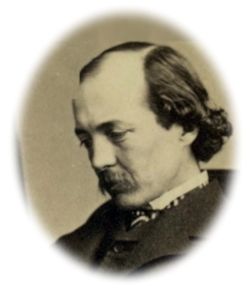 Frederick Law Olmsted to Eliza Woolsey Howland
U. S. Sanitary Commission,
New York Agency, 40 Broadway.
New York, 25th July, 1862.
Dear Mrs. Howland: I have just received your note of the 22d.
It is expected that the “Euterpe” will leave here on Saturday for Old Point, there to “await orders.” Dr. Jenkins writes me that Dr. Cuyler changed his mind and his orders about the use of the hospital vessels two or three times a day, and he could form no plans. . . .
I hope some decided and tangible line of work may be determined on. At present everything remains as when we left James River. . . .
The Commission would, of course, be glad to have you and your sister take passage upon the returning hospital ship if you wish; and you can do so without placing yourself under any obligation to remain upon her. You could, upon arrival at Fortress Monroe, determine, by consultation with Dr. Jenkins, whether you could find duty at Berkely. Most respectfully yours.
Early in August Joseph Howland broke down once more with malarial fever and was sent home by the army surgeons, this time not to return to the regiment, and our going to the front was given up.
Diary of a Southern Refugee, Judith White McGuire.
July 23, 2022
23d.—Letters and papers to-day. It is reported that Hindman has captured Curtis and his whole command in Arkansas. Delightful, if true. The army in Virginia, and our dear ones, well.
The Yankees seem now to have given up the idea of attacking Charleston.
July 23, 2022
23 July
We have heard from John, he has been through a severe fight in the Arkansas and was unhurt.
There is a Mrs Stevens up here who is the wife of the 1 Lieutenant on board the Arkansas & we have seen her. She sent me word she had just lost her Mother and was not visiting, but would be glad to see me. I went there with Mrs Irwin and found a very graceful educated woman. She has no children and is very anxious to join her husband. Yesterday she wrote me a note enclosing a telegram from her husband saying John was well. This was the second note she has written to me about letters &c received from her husband.—
We pay $40 per Month for this East Wing of the St John’s College. Papa stays with us & has the use of the 3 rooms down stayrs a stable for his horse and the waiting of his man & his maid. This last was brought up here to please her husband Adam and he pays $40 per Month at the Walker House he payed 38 but Charles was boarded had a room & much command of scraps here he shares with our servants and they have daily 10 quarts of Meal & Clabber for breakfast & soup for dinner made of half a Cow head we get them from Market for 10¢ a piece. Our Cow which cost us $24 is quite a comfort she has a calf and grazes in the enclosure 75 acres with Mrs Irwin’s Cows & is fed with mash and husks morning and evening. The Calf is kept up and ensures her return.—
Elizabeth teaches Lotty & Harry, and through her kindness they are not left in perfect ignorance. I am afraid it tries her temper greatly. There is a State Institution near this Village for the Blind & Deaf & Dumb. We visited it and were pleased with the exercises. Mr Grimball is now here dull & miserable at the prospects of the family for the future when the money we have now is spent what will become of us. I hope we will be provided for, sufficient unto the day is the evil thereof.
Elizabeth hears from Clementina she says “Our pay has been reduced and still I put up every Month a treasure for Charles, he says he walks up and down his room and thinks of the sums he has squandered on trinkets[“] &c, &c.—
We are 3 quarters of a mile from the Village and can easily walk there, we go to Church on Sunday. Papa drives me there but he is now disgusted with the Services being irregular, and that the people the Vestry, have refused Mr Hunter the priviledge of preaching, saying he is a Yankee, (which is true,) and that he is trying to get the place from Mr McCollock who is the Clergyman, he is to preach one Sunday here, & 1 at Union. Mr Hunter had a Church on Santee & a Planting interest which he sold out,—and while he was allowed to preach here alternated with Mr McCollock.—
Mrs Hunter is a very pretty & agreeable woman we have seen her often.—
The Repulse of the enemy on James Island in which the Sumpter Guards played so conspicuous a part and in which Captain King, Mrs Sue Petigrue husband was killed & Lieutenant Edwards and several others,—was a very great matter. The Yankees seem now to have given up the idea of attacking Charleston. The Victories before Richmond and the success of the Arkansas at Vicksburg all make one hope the war will not now be long & the cotton famine in England seems slowly & surely progressing. We have some brave Partisan Officers Col Morgan is now in Kentucky ravaging the Yankee stores & taking little Towns.—
Rebel War Clerk
July 23, 2022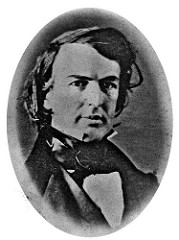
JULY 23d.—To-day I received the following note from the Secretary:
“JULY 23D, 1862.”
“J. B. JONES, ESQ.
“Sir:—You will not issue passports except to persons going to the camps near Richmond.
“Passports elsewhere will be granted by Brig.-Gen. Winder.
“Sir:—You will not issue passports except to persons going to the camps near Richmond.
“Passports elsewhere will be granted by Brig.-Gen. Winder.
“Respectfully,
“GEO. W. RANDOLPH,
“Secretary of War.”
“GEO. W. RANDOLPH,
“Secretary of War.”
Downing’s Civil War Diary.–Alexander G. Downing.
July 23, 2022
Wednesday, 23d–Our regiment is out on picket today. It rained all day. We seldom see any of the rebel cavalry in this locality, yet we always maintain a strong picket line so as not to be taken by surprise. We are expecting them to make a raid upon Corinth any time.
War Diary of Luman Harris Tenney.
July 23, 2022
23rd. Visited the rich mansion of Louis Ross, brother of John. Splendid place. The destruction seemed terrible. Owned 160 slaves. Good piano. Marched 12 miles and camped at 11.
His suffering was plainly seen
July 23, 2022By July 22 [Colonel] Joe [Howland] could not be kept away from the army, and only half well, he started back, probably in a hospital return boat, to the regiment at Harrison’s Landing. It was, however, only to break down again. The Historical Sketch of the 16th, prepared for their reunion at Potsdam in 1886, says: “Colonel Howland visited the regiment for the first time since the battle of Gaines’ Mill, His suffering was plainly seen, and the men showed their love for him by going to his tent and relieved each other’s guard, so that everyone might take him by the hand.”
Eliza writes him from Astoria, July 23:–
 Dear Joe: It is the dull twilight of a dull November-like day and I am afraid you have had a cold, dreary passage. Once at Harrison’s Landing, however, cold weather will be better and healthier for you than hot. I suppose you must have arrived to-day. . . Georgy and I drove out yesterday with Robert, found Mary well and the children asleep. To-day we have had the full benefit of them within doors and have fought with the little rebel Bertha and played with the strange child Una, and studied the fascinations of the little new baby, most of the time. Georgy is an unusually sweet, bright little baby, and Una is a real beauty. Bertha’s affectionate greeting was : “I throw you in the bushes, and pull your head off for me dinner.”
. . . The Elizabeth at Harrison’s Landing is the Sanitary Commission store boat and has plenty of hospital clothing and supplies, and the Medical Director’s boat has plenty of farinaceous food, farina, arrowroot, etc. . . .
“The troops are drilling, and there is every indication that the troops will rest here for some time.”–Letters from Elisha Franklin Paxton.
July 23, 2022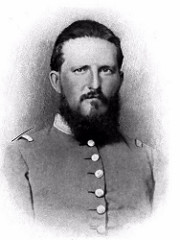
Camp near Gordonsville, July 23, 1862.
I reached here on yesterday, and now hold the place which I had when I left–volunteer aide to Gen. Jackson. The position is very agreeable, and the only objection to it is that I draw no pay and pay my own expenses. I feel quite at home, and am entirely satisfied to spend the rest of the war in this position. Everything here seems so quiet. The troops are drilling, and there is every indication that the troops will rest here for some time. Considering the severe hardships through which they have passed since the war began, it is very much needed. Everything has a happy, quiet appearance, such as I have not seen in the army since we were in camp this time last year after the battle of Manassas.
I am sorry to have left you with so much work on hand, but hope you may bear it patiently. There is more need now than ever that as much should be made from the farm as possible, as I am drawing no pay. And now, darling, good-bye. I will write you frequently and let you know how I am getting along. I hope you will be as contented and happy as possible, and manage matters just as you please, and I will be satisfied.
Wild Times in Mississippi
July 23, 2022
This morning there was a most painful scene.1 Annie’s father came into Vicksburg, ten miles from here, and learned of our arrival from Mrs. C.’s messenger. He sent out a carriage to bring Annie and Max to town that they might go home with him, and with it came a letter for me from friends on the Jackson Railroad, written many weeks before. They had heard that our village home was under water, and invited us to visit them. The letter had been sent to Annie’s people to forward, and thus had reached us. This decided H., as the place was near New Orleans, to go there and wait the chance of getting into that city. Max, when he heard this from H., lost all self-control and cried like a baby. He stalked about the garden in the most tragic manner, exclaiming:
“Oh! my soul’s brother from youth up is a traitor! A traitor to his country!”
Then H. got angry and said, “Max, don’t be a fool!”
“Who has done this?” bawled Max. “You felt with the South at first; who has changed you?”
“Of course I feel for the South now, and nobody has changed me but the logic of events, though the twenty-negro law has intensified my opinions. I can’t see why I, who have no slaves, must go to fight for them, while every man who has twenty may stay at home.”
I, also, tried to reason with Max and pour oil on his wound. “Max, what interest has a man like you, without slaves, in a war for slavery? Even if you had them, they would not be your best property. That lies in your country and its resources. Nearly all the world has given up slavery; why can’t the South do the same and end the struggle? It has shown you what the South needs, and if all went to work with united hands the South would soon be the greatest country on earth. You have no right to call H. a traitor; it is we who are the true patriots and lovers of the South.”
This had to come, but it has upset us both. H. is deeply attached to Max, and I can’t bear to see a cloud between them. Max, with Annie and Reeney, drove off an hour ago, Annie so glad at the prospect of again seeing her mother that nothing could cloud her day. And so the close companionship of six months, and of dangers, trials, and pleasures shared together, is over.
- This entry is undated. Since, in the book, it is the first entry in a new chapter, Wild Times in Mississippi, it makes sense that it would be a different date than the previous entry.
Note: To protect Mrs. Miller’s job as a teacher in post-civil war New Orleans, her diary was published anonymously, edited by G. W. Cable, names were changed and initials were generally used instead of full names—and even the initials differed from the real person’s initials. (Read Dora Richards Miller’s biographical sketch.)
Rebel War Clerk
July 22, 2022
JULY 22d.—Today Gen. Winder came into my office in a passion with a passport in his hand which I had given, a week before, to Mr. Collier, of Petersburg, on the order of the Assistant Secretary of War–threatening me with vengeance and the terrors of Castle Godwin, his Bastile! if I granted any more passports to Petersburg where he was military commander, that city being likewise under martial law. I simply uttered a defiance, and he departed, boiling over with rage.
A Confederate Girl’s Diary
July 22, 2022
July 22d, Tuesday.
Another such day, and there is the end of me! Charlie decided to send Lilly and the children into the country early to-morrow morning, and get them safely out of this doomed town. Mother, Miriam, and I were to remain here alone. Take the children away, and I can stand whatever is to come; but this constant alarm, with five babies in the house, is too much for any of us. So we gladly packed their trunks and got them ready, and then news came pouring in.
First a negro man just from the country told Lilly that our soldiers were swarming out there, that he had never seen so many men. Then Dena wrote us that a Mrs. Bryan had received a letter from her son, praying her not to be in Baton Rouge after Wednesday morning, as they were to attack to-morrow. Then a man came to Charlie, and told him that though he was on parole, yet as a Mason he must beg him not to let his wife sleep in town to-night; to get her away before sunset. But it is impossible for her to start before morning. Hearing so many rumors, all pointing to the same time, we began to believe there might be some danger; so I packed all necessary clothing that could be dispensed with now in a large trunk for mother, Miriam, and me, and got it ready to send out in the country to Mrs. Williams. All told, I have but eight dresses left; so I’ll have to be particular. I am wealthy, compared to what I would have been Sunday night, for then I had but two in my sack, and now I have my best in the trunk. If the attack comes before the trunk gets off, or if the trunk is lost, we will verily be beggars; for I pack well, and it contains everything of any value in clothing.
The excitement is on the increase, I think. Everybody is crazy to leave town.
Downing’s Civil War Diary.–Alexander G. Downing.
July 22, 2022
Tuesday, 22d–We removed our tents and had a general cleanup of the camp. We made brush brooms, took down all tents, swept the ground, then pitched our tents again.
0
July 22, 2022
We lay here two or three days taking in coal, &c., and it was finally arranged that the iron-clad Essex should run down by the batteries, with a prospect of destroying the ram, and of relieving the wooden ships which had already been ordered down the river. Accordingly, on the morning of the 22d we got under way, and awaited the appearance from above, ready to attack the ram or assist the Essex, as the case might require. At six o’clock firing commenced, and soon the Essex appeared, followed by a small wooden ram, and proceeded down through the batteries, giving the ram a broadside as she passed her, while the whole rebel line opened upon her. I here witnessed a most sublime picture in naval operations,–a lone vessel running the gauntlet of some thirty cannon placed in the hillside, raining a shower of shot and shell thickly around her. She escaped, however, with the loss of one man killed, and a single shot through her armor.
War Diary of Luman Harris Tenney.
July 22, 2022
22nd. Read in “Guy Mannering.” Issued rations for eleven days. Horses got away. Looked all over the country until the next day at 4 P. M., when we marched.
July 17 to 23, 1862
July 22, 2022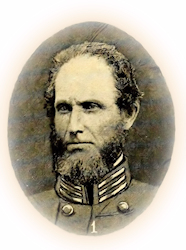
July 17th—Find Lieut. Grier at Dunlop and Moncure Hospital, badly wounded. Glad to see the good man. Ride to camp and spend night on ground.
July 18th—Ride to Pa’s. Wife and I visit Lieut. Shaw and find him dying. One of the noblest men I ever knew. We visit Lieut. Grier.
July 19th—Walk to Camp Winder Hospital. Ride to camp and find J. J. Wicker dead. Spend night in camp.
July 20th—Preach and visit sick. Ride to Pa’s late.
July 21—Ride to camp with wife and children and find Capt. D. C. Allen, Lieutenant Cain, Sergeant Ellis and many others sick. In the afternoon visit Leonard, Galloway, Grier, etc.
July 22—Ride to Mechanicsville with wife and children. Visit battlefield. Bury A. D. McPherson.
July 23—Visit Grier. Last visit. He dies on 26th. Get permission to go to North Carolina with sick child.
Journal of Surgeon Alfred L. Castleman.
July 22, 2022
22nd.–I have received letters from my family to-day. One of them says, “We are not feeling well this morning.” “Who is not, and what is the matter? It is a dreadful thought that we must be thus separated from family without the slightest prospect of being able to see them when we know they are suffering.
“…though it was an awful job.”
July 22, 2022
Somewhere about July 14, ’62, Charley and G. must have gone home from Harrison’s Landing, probably in a returning hospital ship. The record is lacking–Sarah Woolsey’s letter of July 22 being the first mention of it. She had been serving all this time at the New Haven Hospital.
Sarah Chauncey Woolsey to Georgeanna Woolsey.
New Haven.
At The Barrack Hospital, July 22.
When the family leave you a little gap of time, write me one line to make me feel that you are really so near again. I cannot help hoping that if you go back, there may be a vacancy near you which I can fill. The work here is very satisfactory in its way, but is likely to come to an end before long if the decision about “Hospitals within military limits” is carried out. . . .
This is Sunday, and I have been here since half past nine–it being about 5 P.M. now . . . It has not been very Sunday-like, as I’ve mended clothes, and given out sheets, and made a pudding, but somehow it seems proper. Mary would laugh if she knew one thing that I’ve been doing–distributing copies of “A Rainy Day in Camp” to sick soldiers, who liked it vastly. I had it printed in one of our papers for the purpose. To-morrow I am going to change employments–take Miss Young’s place in the kitchen, and let her have a day’s rest, while Mrs. Hunt supplies mine here. Meantime as a beginning I must go and heat some beef tea for a poor fellow who hates to eat, and has to be coaxed into his solids by an after promise of pudding and jelly. . . .
P. S –Have come back from service and administered the beef tea, though it was an awful job. The man gave continual howls, first because the tea was warm, then because I tried to help him hold a tumbler, then because I fanned him too hard, and I thought each time I had hurt him and grew so nervous that I could have cried. Beside, there is a boy in that tent–an awful boy with no arms, who swears so frightfully (all the time he isn’t screeching for currant pie, or fried meat, or some other indigestible), that he turns you blue as you listen.
“No news from the Army of the Potomac.”—Diary of a Southern Refugee, Judith White McGuire.
July 21, 2022
21st.—Mr. _____ sick, but better to-day. This is the anniversary of the glorious battle of Manassas. Since that time we have had many reverses, but our victories, of late, have atoned for all, except the loss of life.
We have had another naval fight on the Mississippi, just north of Vicksburg. Our large gun-boat, Arkansas, ran into the Federal fleet of twelve or thirteen gun-boats and rams, and overcame them completely. Vicksburg stands the bombardment with unflinching gallantry. No news from the Army of the Potomac. It is reported that General Jackson has gone to meet General Pope, who is on this side of the Blue Ridge, marching, it is supposed, to join McClellan.
Mr. _____ takes a ride to-day; the first since his sickness. My heart is full of gratitude for public and private blessings.
Rebel War Clerk
July 21, 2022
JULY 21st.—A Marylander, a lieutenant employed by Gen. Winder to guard the prisoners (the generals and other high Yankee officers), came to me to-day, with a friend who had just arrived from Baltimore, and demanded passports to visit Drewry’s Bluff, for the purpose of inspecting the defenses. I refused, fearing he might (I did not like his face) have been corrupted by his prisoners. He said very significantly that he would go in spite of me. This I reported to the Assistant Adjutant-General, and also wrote a note to Gen. Wise, to examine him closely if he came within his lines.