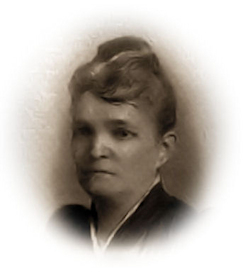
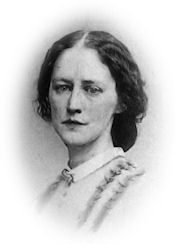
Woolsey family letters during the War for the Union

Woolsey family letters during the War for the Union

Abby Howland Woolsey to her sister, Goergeanna.

New York, October 6th.

Jane wishes me to tell you that she leaves here by the same route that you took for Portsmouth Grove, on Wednesday, 8 A. M. She has sent word to Sarah to meet her on the train at New Haven. . . .

Charley proposes that you shall call your house the (H)’Omestead, in compliment to F. L. Olmsted.

0 comments

Downing’s Civil War Diary.–Alexander G. Downing.

Diary of Alexander G. Downing; Company E, Eleventh Iowa Infantry

Sunday, 5th–The entire Sixth Division, taking up the line of march[1] this morning at 6 o’clock, marched five miles and then formed a line of battle. We heard some very heavy cannonading out on the Hatchie river, in our front. General Hurlbut had cut off the retreat of the rebels at the bridge crossing the river, but after a hard fight they got away and continued their retreat to the south, on the east side of the river. We resumed our march at 1 p. m. and after covering ten miles stopped for the night. The Second Iowa Cavalry was ordered back to Corinth.


[1] As we passed the field hospital of the Confederates on the Corinth battlefield, we saw eighteen of their dead, evidently having died from wounds, lying side by side, and almost black in the face, which at the time was said to have been caused by their drinking a mixture of water, vinegar and gunpowder. Our army had barrels of vinegar, one for each regiment, so stationed as to permit the men to come and help themselves. Now, our quartermaster, in hastily removing the commissary’s supplies back of the inner lines during the battle, had, for lack of facilities, left standing these barrels of vinegar. It is supposed that the Confederates took the vinegar and made a drink of it, for after the battle there was no vinegar to be found.—A. G. D.

0 comments

War Diary of Luman Harris Tenney.

War Diary of Luman Harris Tenney.

Sunday, 5th. In the morning rode about town and visited the different places of interest connected with the battle. Went into the stable where the Dutch were confined. At noon, after a hearty meal got up by us non-commissioned officers, started south. Capt. Seward came on and took command. N. officer of the day. Encamped on Big Indian, 15 miles from Pineville.

0 comments

Robert M. McGill

Robert M. Magill – Personal Reminiscences of a Confederate Soldier Boy, 39th Georgia Regiment of Infantry

Sunday, 5th.—Marched six miles; halted and cooked two days’ rations; but started forward again at midnight. Halted at 4 A. M., near Versailes and rested until 9 A. M. Passed through Versailes 10 A. M. Very nice place; halted 2 P. M., two miles from Kentucky River, 11 P. M., started forward, crossed Kentucky River at mid-night.


(Note: picture is of an unidentified Confederate soldier.)

0 comments

“I fear our troops are to suffer much from want of clothing, and that our supplies will prove greatly inadequate for our wants.”–Letters from Elisha Franklin Paxton.

Elisha Franklin Paxton – Letters from camp and field while an officer in the Confederate Army

Bunker Hill, Va., October 5, 1862.

The army was never so quiet as now, the general impression prevailing that we contemplate no advance upon the enemy and that he contemplates none upon us. We are lying quiet to gather in our absentees and recover from the losses which we have sustained in the active work of the last sixty days. When this is accomplished winter will probably have set in, and the work of this year closed. I fear our troops are to suffer much from want of clothing, and that our supplies will prove greatly inadequate for our wants.

Whilst the army has been apparently idle, I have been unusually busy during the last week. Everybody seems to be making application for something, and my office is crowded with business. I do scarcely any writing, leaving it all to my clerk, Mr. Figgat. If I undertook to do the writing, my eyes would not last long. But as it is, I think I shall be able to do my work without injury. My office is one of much importance and responsibility, and I trust I may be able to fill it without suffering injury to my sight. I think, Love, if this war lasts much longer, you will get to be a pretty good farmer. It really seems as if it would last forever. Both parties seem getting used to it, and the signs of peace and quiet are less, if anything, now than this time last year.

I heartily wish I were at home with you and our dear little boys. It is the wish of many thousands of my comrades who have left loved wives and children at home to mourn their absence and grieve over the danger and hardships to which they are exposed. God grant that we may all soon be gratified–that the fervent prayer for our return may soon be answered. When we do, I think it will be with a more grateful appreciation of the blessings which we were accustomed every day to enjoy.

Now, darling, I will bid you good-bye. Think of me often and cherish the fond love which has marked our intercourse thus far through life as our greatest source of happiness.


______________

The office which General Paxton held at this time was that of Acting Assistant Adjutant-General on Jackson’s staff. The following letter from General Jackson shows the esteem in which he was at this time held by that officer.

Headquarters V. District

September 23, 1862.

General: I respectfully recommend that Maj. E. F. Paxton be appointed Brigadier-General and assigned to the command of the brigade lately under Brigadier-General C. L. Winder. Last year he was major of the 27th Regt. of the brigade and ranked all the officers at present in the brigade, except three. Upon the reorganization of the Volunteer Regiment, Major Paxton was not retained. As he served under me in the line, and at various times I assigned important duties to him, and as for several months he has been my A. A. A. General, my opportunities for judging of his qualifications have been remarkably good; and there is no officer under the grade proposed whom I can recommend with such confidence for promotion to a Brigadier-Generalcy.

I am, General, your obt. servant,

T. J. Jackson,

Major-General.

To Genl. S. Cooper,

Adjt. & Insp.-Gen’l C. S. A.

0 comments

A Confederate Girl’s Diary

Civil War Day-by-Day

October 4th, Saturday.

While Anna and Miriam went out riding last evening, just as I put down my pen, I went out for a solitary walk down the road that Gibbes would have to pass; but saw nothing of the carriage. When I got back, they told me he was wounded. My fears were well founded, then. With what anxiety we waited for his coming it would be impossible to describe. Every wagon rattling through the fields made us stop and listen; every canestalk waving in the moonlight brought us to our feet.

At last, after supper, far off in the clear light we saw the carriage. I could not sit still. I walked down the steps and stood under the tree in front, followed by Anna. I did not like her to stand nearer the spot where it would stop than I, even. All the rest remained on the balcony. We did not know how serious the wound might be; we must be careful. Eugene Carter advised caution for more reasons than one. “Look out!” he cried; “suppose it should be Colonel Breaux?” “Then I am afraid the Colonel will get a kiss,” I answered nervously, shuffling from one foot to the other. “But suppose it is Mr. M––?” he persisted. “Oh, thank you for the caution! I will look carefully before I greet him!” I returned, moving to the other side, for nearer around the circle moved the carriage. I heard his voice.

“O Gibbes, where is it?” “Left shoulder; mere scratch,” he answered. The carriage stopped, “Gibbes! Gibbes!” I cried. “My darling!” and he had his great strong arm around me; the left was hanging in a sling. Slowly the others moved down the steps towards him. What a meeting! My heart was in my throat, I was so happy. [continue reading…]

0 comments

Downing’s Civil War Diary.–Alexander G. Downing.

Diary of Alexander G. Downing; Company E, Eleventh Iowa Infantry

Saturday, 4th–During the night all was quiet and our brigade fell back to the last line of fortifications which, extending almost around the town, had been built in the last few days. Here we lay in line of battle all night. The rebels commenced to throw shells into town this morning at daylight. I was still on guard with the teams and we had to get out of that place in double quick. The rebels threw some ten or twelve shells before our battery in Fort Robinet could get the range of them, but when they did, they opened on them some sixty-four-pounders and soon put the rebel’s battery out of commission. I was relieved and went to join the regiment, which had been advanced to support a battery. About 10 o’clock the rebels made a charge upon Fort Robinet, to our right, and tried to break our lines at that point but failed. This charge was made by a Texas cavalry, dismounted; they came clear over into the fort, driving some of our artillerymen from their guns, but they were soon overpowered, some being killed and some taken prisoner. The colonel of the regiment planted their flag on our fort, but he was almost immediately killed. The rebels’ dead just outside of the fort lay three or four deep and the blood ran in streams down the trenches. The rebels finally withdrew about 4 p. m., leaving their dead and wounded. The Iowa Brigade was placed to the left of Fort Robinet, in support of a battery, but did not become engaged during the day. Some of our forces started after the fleeing rebels. We received orders to be ready to march in the morning, and have to lie in line of battle all night.

0 comments

War Diary of Luman Harris Tenney.

War Diary of Luman Harris Tenney.

Saturday, 4th. Rainy and cold early. At sunrise got in sight of the enemy at Newtonia. Got batteries and men into position and fired upon them. The scene of the cannonading of our troops and the enemy was grand. The enemy in force are massed behind a fence and upon the plain near the woods. Our troops occupied the surrounding hills. The enemy at first scatter at the artillery fire, then collect again and commence a retreat. Rabb’s Battery, infantry and cavalry follow. We had been support to this battery. Now we change to the 2nd Battery, our own, which had been shelling the town and driven 100 men out. Boys rush into town and soon report 23 wounded of the Dutch retaken. Soon camped for the day. Horses saddled. The enemy fight Rabb. He follows closely and pours shell into them. Boys lay down, half frozen, and slept. One adj. regiment and one Adj. General captured. Took one piece of artillery, a long wire arrangement. Got rails and water and had coffee. Horse grows stronger. Rode about town.

0 comments

Robert M. McGill

Robert M. Magill – Personal Reminiscences of a Confederate Soldier Boy, 39th Georgia Regiment of Infantry

Saturday, 4th.—Left camp on Elk Horn Creek 7 A. M. Arrived at Frankfort at 11 A. M. Our brigade sent in to the city and inaugurated Hawes’ Provisional Governor of Kentucky. Generals Bragg, Kirby Smith, Buckner and several other generals present at the inauguration. When over, a salute of several guns was fired. We then marched up river two miles and began preparing to cook rations, but were ordered off in the direction of Versailes. Reported 15,000 Federals near Frankfort; perhaps that hurried us off. Governor Hawes came with us, anyway. Don’t think he got to occupy the chair as chief executive of the State more than about three hours.


(Note: picture is of an unidentified Confederate soldier.)

0 comments

Rebel War Clerk

Civil War Day-by-Day
A likeness of Jones when he was editor and majority owner of the Daily Madisonian during President John Tyler’s administration.

OCTOBER 4th.—A splendid aurora borealis last night.

Yesterday, most of the delegation in Congress from Kentucky and Tennessee petitioned the President to order Gen. Breckinridge, at Knoxville, to march to the relief of Nashville, and expel the enemy, without waiting for orders from Gen. Bragg, now in Kentucky. The President considers this an extraordinary request, and will not, I suppose, grant it.

It is said Gen, Lee is advancing against Gen. McClellan at Martinsburg. If Lee attacks him, and beats him, he will probably be ruined, for the Potomac will be in his rear.

The enemy’s paper, printed at Nashville, thinks Bragg has taken Louisville. I hope so. I think we shall get Nashville soon.

Gen. Butler, the Yankee commander in New Orleans, has issued an order to all the inhabitants of that city, sympathizing with the Southern Confederacy, to present themselves immediately, and take the oath of allegiance, when they will be recommended for pardon. If they do not comply with the order, they will be arrested by his police, cast into prison, and their property confiscated. These are the orders which rally our men and make them fight like heroes. How many Yankees will bleed and die in consequence of this order? And Lincoln’s Emancipation Proclamation will seal the doom of one hundred thousand of his own people!

A letter from Gen. Lee, dated October 1st, says that McClellan has not crossed the Potomac. Some of his scouts have been at Martinsburg, or in its vicinity. It is not to be supposed that Lee can be amused by McClellan, while a force of any magnitude is sent against Richmond. Some fear this, but I don’t.

0 comments

Woolsey family letters during the War for the Union

Woolsey family letters during the War for the Union

Sarah Chauncey Woolsey to her cousin, Georgeanna at Portsmouth Grove.

New Haven, October, ’62.

And now for Miss Wormeley’s delightful letter; my dear, it sounds too good to come true, all of it, and yet I can’t help thinking that Providence smiles on the scheme and will bring about papa’s consent. . . . We shall have it working beautifully in a short time, I see–and oh, G., what a happy winter we shall have! . . . Abby remarks in her last to Mary–”Sarah’s going and Jane’s (! !) I regard in the light of an agreeable fiction, but it will do for them to play at for a little while.” . . .

I shall be ready any day after Monday.

0 comments

“You know, of course, that my lucky star still rules, and that I have been elected captain.”–Army Life of an Illinois Soldier, Charles Wright Wills.

Civil War Day-by-Day

Camp Peoria, October 3, 1862.

I suppose this is the commencement of another series of letters from your army correspondent. You can’t imagine how kind of old-fashioned good it seems to be in camp again. You know, of course, that my lucky star still rules, and that I have been elected captain. I think I have an excellent company, though I have but few men that I ever knew before. Charley Mattison is my first lieutenant, and John Dorrance, my second. The first lieutenant is able, willing and industrious. Dorrance will make a great deal better officer than you imagine. Think I will manage to visit you before we march, but can’t promise. I am confined very closely, and have a great deal of work to do. But thank fortune, I partly understand it.

0 comments

Diary of a Southern Refugee, Judith White McGuire.

Diary of a Southern Refugee During the War by Judith White McGuire

3d.—University Of Virginia.—Arrived here yesterday, and met with a glowing reception from the friends of my youth, Professor and Mrs. Maupin. My sister, Mrs. C, and daughters, staying next door, at Professor Minor’s. In less than five minutes we were all together—the first time for many anxious months. They are refugees, and can only hear from home when our army finds it convenient to clear “The Valley” of invaders. One of her sons, dear R., was ordered last, winter, by General Jackson, to command a body of soldiers, whom he sent to break the dam in the Potomac, which at that point supplied the Ohio and Chesapeake Canal with water—(it also worked his mother’s mill)—and the breaking of which, if effectually done, would prevent the Yankees from using the canal for transportation. This dangerous project was undertaken most cheerfully, and was most thoroughly effected. It was necessarily done in the night, to elude the vigilance of the Yankees on the Maryland shore. In the dead hour of the winter’s night did some of the first gentlemen’s sons in the South, who happened to belong to that portion of the army, work up to their waists in water, silently, quietly, until the work was finished; nor were they discovered until day dawned, and revealed them retiring; then shot and shell began to fall among them furiously. One of the brave band fell! Notwithstanding their danger, his companions could not leave him, but lifted him tenderly, and carried him to a place of safety, where he might at least have Christian burial by sympathizing friends. The large old mill, which had for many years sent its hundreds and thousands of barrels of flour to the Baltimore and Georgetown markets, still stood, though its wheels were hushed by the daring act of the night before. It had been used of late by the Yankees for their own purposes. The enemy seemed to have forgotten to destroy it, but the Union men could not allow their old friend and neighbour, though the widow of one whom they had once delighted to honour, to have such valuable property left to her; they immediately communicated to the Yankees that it belonged to the mother of the leader of the party who broke the dam. It was, of course, shelled and burned to the ground, except its old stone walls, which defied their fury; but if it helped the cause, the loss of the property did not weigh a feather with the family. This son has just been promoted to the lieutenant-colonelcy of the Second Regiment. His mother expressed her gratification, but added, that he had been so successful as captain of the company which he had raised, drilled, and led out from his own county, that she dreaded a change; besides, in that Second Regiment so many field-officers had fallen, that she had almost a superstitious dread of it. My dear R., his heart is so bound up in the cause, that self-preservation is the last thing that ever occurs to him. Oh! I trust that all evil may be averted from him. [continue reading…]

0 comments

Downing’s Civil War Diary.–Alexander G. Downing.

Diary of Alexander G. Downing; Company E, Eleventh Iowa Infantry

Friday, 3d–I was on camp guard all last night, on the second relief. Troops were coming in all night. This morning about daylight the Sixth Division was ordered out, and marching out about two miles to the northwest, we met the rebels in force and formed a line of battle. Our pickets having been attacked about sunrise, the battle now commenced in earnest and lasted all day. There was some hard fighting in the afternoon, particularly off on the right, and our men soon fell back to the first line of breastworks. About 3 p. m. the Iowa Brigade was flanked and had to fall back to the second line of breastworks, but the brigade, with the exception of the Fifteenth Regiment, did not get into the thick of the fight. The fighting continued till dark, and after that there was some very heavy cannonading.[1]


[1] The record of the losses of our brigade is as follows: The Fifteenth, eleven killed, sixteen wounded; the Thirteenth, one killed, fourteen wounded; the Sixteenth, one killed, twenty-one wounded; the Eleventh, three killed, eight wounded.–A. G. D

0 comments

War Diary of Luman Harris Tenney.

War Diary of Luman Harris Tenney.

Friday, 3rd. Was going to the river to wash when I was detailed for picket guard. My first experience. Reported with 14 men. Relieved 12 on the Granby road and stayed there till 10 P. M. Drawn in to go with command. Whole body moved at 12. Got ready and fell in. N. gave me the command of a platoon of 20 men. Quite an honor! Horse had belly-ache. Bled him most to death. Had to leave him. Saw Sturtevant coming. Had the rear guard.

0 comments

Robert M. McGill

Robert M. Magill – Personal Reminiscences of a Confederate Soldier Boy, 39th Georgia Regiment of Infantry

Friday, October 3d.—Aroused this morning at 4 o’clock and ordered to cook two days’ rations; rained. 12 M., had an election for second lieutenant. Candidates, L. Brown, N. A. Bryant and L. Y. Park. Brown elected over Bryant by two votes and over Park by eleven votes. Very unwell. 9 A. M., A. M. McCallister, Company B, killed instantly by an accidental discharge of his gun. Regiment on general review.


(Note: picture is of an unidentified Confederate soldier.)

0 comments

Rebel War Clerk

Civil War Day-by-Day
A likeness of Jones when he was editor and majority owner of the Daily Madisonian during President John Tyler’s administration.

OCTOBER 3d.—Gen. Wise was countermanded in his march against Williamsburg, by Major-Gen. Gustavus W. Smith. He had 2700 men, the enemy 1500, and he would have captured and slain them all. Gen. Wise was the trusted and revered Governor of Virginia, while Smith was the Street Commissioner in New York.

A strong letter from Vice-President Stephens is published to-day, in which it is successfully maintained that no power exists, derived either from the Constitution or acts of Congress, for the declaration of martial law. He says all punishments inflicted by military governors on civilians are clearly illegal.

There is a rumor that we have Louisville, but it does not seem to be authentic. We have nothing from Lee, and know not exactly where McClellan is.

Many people thought the President himself would take the field. I doubt not he would have done so if the Provisional Government had continued in existence until independence was achieved.

0 comments

Wild Times in Mississippi

War Diary of a Union Woman in the South

Oak Haven, Oct. 3.—To get a house in V. proved impossible, so we agreed to part for a time till H. could find one. A friend recommended this quiet farm, six miles from ______ (a station on the Jackson Railroad). On last Saturday H. came with me as far as Jackson and put me on the other train for the station.

On my way hither a lady, whom I judged to be a Confederate “blockade runner,” told me of the tricks resorted to to get things out of New Orleans, including this: A very large doll was emptied of its bran, filled with quinine, and elaborately dressed. When the owner’s trunk was opened, she declared with tears that the doll was for a poor crippled girl, and it was passed.

This farm of Mr. W.’s1 is kept with about forty negroes. Mr. W., nearly sixty, is the only white man on it. He seems to have been wiser in the beginning than most others, and curtailed his cotton to make room for rye, rice, and corn. There is a large vegetable garden and orchard; he has bought plenty of stock for beef and mutton, and laid in a large supply of sugar. He must also have plenty of ammunition, for a man is kept hunting and supplies the table with delicious wild turkeys and other game. There is abundance of milk and butter, hives for honey, and no end of pigs. Chickens seem to be kept like game in parks, for I never see any, but the hunter shoots them, and eggs are plentiful. We have chicken for breakfast, dinner, and supper, fried, stewed, broiled, and in soup, and there is a family of ten. Luckily I never tire of it. They make starch out of corn-meal by washing the meal repeatedly, pouring off the water and drying the sediment. Truly the uses of corn in the Confederacy are varied. It makes coffee, beer, whisky, starch, cake, bread. The only privations here are the lack of coffee, tea, salt, matches, and good candles. Mr. W. is now having the dirt-floor of his smoke-house dug up and boiling from it the salt that has dripped into it for years. To-day Mrs. W. made tea out of dried blackberry leaves, but no one liked it. The beds, made out of equal parts of cotton and corn-shucks, are the most elastic I ever slept in. The servants are dressed in gray homespun. Hester, the chambermaid, has a gray gown so pretty that I covet one like it. Mrs. W. is now arranging dyes for the thread to be woven into dresses for herself and the girls. Sometimes her hands are a curiosity.

The school at the nearest town is broken up and Mrs. W. says the children are growing up heathens. Mr. W. has offered me a liberal price to give the children lessons in English and French, and I have accepted transiently.


¹On this plantation, and in this domestic circle, I myself afterward sojourned, and from them enlisted in the Confederate army. The initials are fictitious, but the description is perfect.—G.W.C. (the editor of the published diary, George Washington Cable.)

Note: To protect Mrs. Miller’s job as a teacher in post-civil war New Orleans, her diary was published anonymously, edited by G. W. Cable, names were changed and initials were generally used instead of full namesand even the initials differed from the real person’s initials. (Read Dora Richards Miller’s biographical sketch.)
0 comments

A Confederate Girl’s Diary

Civil War Day-by-Day

October 2d, Thursday.

With what extraordinary care we prepared for our ride yesterday! One would have thought that some great event was about to take place. But in spite of our long toilet, we stood ready equipped almost an hour before Colonel Breaux arrived. I was standing in a novel place – upon the bannisters looking over the fields to see if he was coming – and, not seeing him, made some impatient exclamation, when lo! he appeared before me, having only been concealed by the wood-pile, and O my prophetic soul! Captain Morrison was by his side!

There was quite a cavalcade of us: Mr. Carter and his wife, Mrs. Badger and Mrs. Worley, in two buggies; the three boys, who, of course, followed on horseback, and the two gentlemen, Miriam, Anna, and I, riding also. It was really a very pretty sight, when Captain Morrison and I, who took the lead going, would reach the top of one of the steep hills and look down on the procession in the hollow below. Fortunately it was a very cloudy evening; for, starting at four, it would have been very unpleasant to ride that distance with the sun in our faces.

As we reached the town we heard the loud report of two cannon which caused the elder ladies to halt and suggest the propriety of a return. But if it was a gunboat, that was the very thing I was anxious to see; so we hurried on to the batteries. [continue reading…]

0 comments

Downing’s Civil War Diary.–Alexander G. Downing.

Diary of Alexander G. Downing; Company E, Eleventh Iowa Infantry

Thursday, 2d–We started this morning at 7 o’clock, and reaching Corinth at 10, we marched out two miles west of town where we pitched our tents in the timber for camp. Water is very scarce. I took six canteens and started to find water, but to get it I must have traveled in all four miles. The balance of the day I served on camp guard.

0 comments

War Diary of Luman Harris Tenney.

War Diary of Luman Harris Tenney.

Thursday, 2nd. Renewed our march without breakfast. Scoured the woods for our old friends. Took five men and acted as skirmishers. No bird discovered. Reached camp in the P. M. Heard the boys relate their stories about the fight. Somewhat tired.

0 comments

Robert M. McGill

Robert M. Magill – Personal Reminiscences of a Confederate Soldier Boy, 39th Georgia Regiment of Infantry

Thursday, 2d.—Started to march in direction of Frankfort at 12 M. Camped on Elk Horn Creek, four and one-half miles from Frankfort; stood guard at house until midnight.


(Note: picture is of an unidentified Confederate soldier.)

0 comments

Rebel War Clerk

Civil War Day-by-Day
A likeness of Jones when he was editor and majority owner of the Daily Madisonian during President John Tyler’s administration.

OCTOBER 2d.—News from the North indicate that in Europe all expectation of a restoration of the Union is at an end; and the probability is that we shall soon be recognized, to be followed, possibly, by intervention. Nevertheless, we must rely upon our own strong arms, and the favor of God. It is said, however, an iron steamer is being openly constructed in the Mersey (Liverpool), for the avowed purpose of opening the blockade of Charleston harbor.

Yesterday in both Houses of Congress resolutions were introduced for the purpose of retaliating upon the North the barbarities contemplated in Lincoln’s Emancipation Proclamation.

The Abolitionists of the North want McClellan removed—I hope they may have their will. The reason assigned by his friends for his not advancing farther into Virginia, is that he has not troops enough, and the Secretary of War has them not to send him. I hope this may be so. Still, I think he must fight soon if he remains near Martinsburg.

The yellow fever is worse at Wilmington. I trust it will not make its appearance here.

A resolution was adopted yesterday in the Senate, to the effect that martial law does not apply to civilians. But it has been applied to them here, and both Gen. Winder and his Provost Marshal threatened to apply it to me.

Among the few measures that may be attributed to the present Secretary of War, is the introduction of the telegraph wires into his office. It may possibly be the idea of another; but it is not exactly original; and it has not been productive of good. It has now been in operation several weeks, all the way to Warrenton; and yet a few days ago the enemy’s cavalry found that section of country undefended, and took Warrenton itself, capturing in that vicinity some 2000 wounded Confederates, in spite of the Secretary’s expensive vigilance. Could a Yankee have been the inventor of the Secretary’s plaything? One amused himself telegraphing the Secretary from Warrenton, that all was quiet there; and that the Yankees had not made their appearance in that neighborhood, as had been rumored! If we had imbeciles in the field, our subjugation would be only pastime for the enemy. It is well, perhaps, that Gen. Lee has razed the department down to a second-class bureau, of which the President himself is the chief.

I see by a correspondence of the British diplomatic agents, that their government have decided no reclamation can be made on us for burning cotton and tobacco belonging to British subjects, where there is danger that they may fall into the hands of the enemy. Thus the British government do not even claim to have their subjects in the South favored above the Southern people. But Mr. Benjamin is more liberal, and he directed the Provost Marshal to save the tobacco bought on foreign account. So far, however, the grand speculation has failed.

0 comments

Who is to reap next year’s crops? Who is to sow them?

Woolsey family letters during the War for the Union

On September 17th the fierce battle of Antietam was fought by the Army of the Potomac,–a drawn battle, little better than a defeat for us; and though the rebels retired there was no following up on our part, and no result worth the enormous loss of life.

And now the moment had come for the war-measure Mr. Lincoln had held in reserve. The Government had been fighting to uphold the Government, and announcing all along that if the abolition of slavery proved needful to that end, then slavery should cease.

On September 22, 1862, Mr. Lincoln issued a preliminary proclamation declaring that in all States found in rebellion on January 1, slaves should “thenceforth and forever be free.” Congress, however, delayed to take the action urged upon them by the President, until the time limit expired..

Jane Stuart Woolsey to a friend abroad.

8 Brevoort Place, N. Y.

October, 1862.

The fighting at Cedar Mountain and Gainesville and on futile fields of Manassas, the mysterious ups and downs of commanders, the great invasion scare, the mean dissensions and the sad delays, have kept us constantly agitated, the more so that we were in the tauntingly still and sweet country, where the newspaper train was sure to fail in great emergencies. There was a time,–I confess it because it is past, when your correspondent turned rather cold and sick and said “It is enough!” . . . and when my sister Abby, (who acknowledged the Southern Confederacy when the rebel rabble got back unpursued across the river from Winchester), went about declaiming out of Isaiah, ” To what purpose is the multitude of your sacrifices; your country is desolate, strangers devour it in your presence.” . . . We came out of that phase, however, at any rate I did, and concluded that despondency was but a weak sort of treason; and then with the first cool weather came the Proclamation, like a.

“Loud wind, strong wind, blowing from the mountain,”.

and we felt a little invigorated and thanked God and took courage. . . . In Litchfield we followed with great interest the growth of the 19th Connecticut recruited in that county, all the little white crumbs of towns dropped in the wrinkles of the hills sending in their twenty, thirty, fifty fighting men; Winsted, Barkhamsted, Plymouth companies, and companies clubbed by the very little villages, marching under our windows every day to the camp ground. Almost all the young men in Litchfield village have gone; the farmers, the clerks in the shops, the singers in the choir. Who is to reap next year’s crops? Who is to sow them? Everyone spoke well of the new recruits. There was not a particle of illusion for them. They understood very well to what they were going; disease, death, a common soldier’s nameless grave. They made themselves a new verse to the marching song: [continue reading…]

0 comments

Diary of a Southern Refugee, Judith White McGuire.

Diary of a Southern Refugee During the War by Judith White McGuire

October 1st.—Letters from Winchester, giving cheering accounts of our army. It is stationed at Bunker’s Hill, twelve miles from Winchester, greatly increased since our recent fights, and in fine spirits. We leave Lynchburg to-morrow, and after spending a few days with our friends at the University, proceed to Richmond and Ashland.

0 comments