0

Civil War Day-by-Day

October 8, 1862, Galveston Weekly News

. . . As well as we can learn the result of the last interview with the enemy was that four days from Saturday night, should be allowed for the removal of the women and children and of all who desired to leave, but whether the terms embraced a surrender of the city at the end of the four days, we cannot learn. It is said that during this time the enemy agreed not to bring their gunboats nearer the city

Since this suspension of hostilities the inhabitants of the city have been removing as fast as practicable, and the cars and one steamer are now constantly engaged day and night in removing the people with their effects.

0 comments

0

Civil War Day-by-Day

October 8, 1862, The New York Herald

General McClellan has issued an order to the Army of the Potomac relative to the late emancipation proclamation of the President, in which he states that it is the first duty of the soldier to obey the civil authorities as represented by the Executive, who is charged with the administration of federal laws. While not seeking to restrict the right of discussion, upon all public questions, in the camps, he recommends that it may be restrained within proper limits, and confined to the respectful expression of opinion. He reminds them that the remedy for political errors is to be found at the polls, and adds:  ‘In thus calling the attention of his army to the true relation between the soldiers and the government, the general commanding merely adverts to an evil against which it has been thought advisable during our whole history to guard the armies of the republic, and in so doing he will not be considered by any right minded persons as casting any reflection upon that loyalty and good conduct which has been so fully illustrated upon so many battle fields. In carrying out all measures of public policy this army will, of course, be guided by the same rules of mercy and Christianity that have ever controlled its conduct towards the defenceless.’

Some activity is manifested by our army on the Upper Potomac, which in all probability precedes a vigorous movement and an approaching battle.

Advices from Frederick state that recent reconnoissances have established the fact that General Lee is rapidly falling back towards Richmond. A detachment from General Sumner corps drove in the rebel pickets at Charlestown on Sunday, and it is evident that the retreating enemy is to be closely followed up.

A deserter from the Second Virginia cavalry, Mumford brigade, captured near Fairfax Court House, states that General Jo. Johnston is to supersede General Bragg in Kentucky. He says that he heard rebel officers admit the loss of the rebels at Antietam [continue reading…]

0 comments

0

Civil War Day-by-Day

October 8, 1862, Arkansas True Democrat, Little Rock

The federal paper published at Nashville, gives an account of a riot there between soldiers and negroes. At the theatre, the negroes were ejected, being kicked or thrown from the top to the bottom of the stairs. For several succeeding days, when a negro ventured on the street with federal uniform on, the Ohio troops attacked him, tore the clothes into shreds, and otherwise maltreated him. The result is that not a darkey dares to wear even an army cap.

0 comments

0

Civil War Day-by-Day

October 8, 1862, Nashville Dispatch (Tennessee)

The city was thrown into an unusual state of excitement yesterday morning, by the current rumor that a number of Confederate prisoners had been brought into town. It was generally known that a large force had left about midnight on Monday, taking the Murfreesboro pike and as it was supposed the Confederates were in force at Lavergne, a fight was of course expected. From what one can hear from parties who are likely to know the truth, the following statement is probably mainly correct: The force which left here about midnight was so divided and disposed of as to get around the Confederate pickets, whom they made prisoners this side of the Lunatic Asylum, say about five miles from town. Sending them to the rear, the Federal troops proceeded slowly and quietly as possible, until they reached a Confederate camp, which they speedily surrounded, and captured the entire force. They then went on to within half a mile of Lavergne, where they encountered about 2,000 Confederates. Without loss of time a shell was thrown into the Confederate camp, which penetrated the magazine and caused its explosion, killing and wounding a large number of Confederates. A brisk fight ensued, which ended in the complete rout of Gen. Anderson’s command, he himself escaping, it is said, on a locomotive. Between forty and fifty Confederates were killed and wounded, and 240 taken prisoners, including some citizens.

The Federals captured all the rebel camp equipage, and a large lot of guns and ammunition; also, a number of horses and other articles. Three cars were captured, and after the contents were secured, they were burned.

All the prisoners have arrived in town, and are located in the Penitentiary and the work-house. The Federal loss was twenty-five or thirty killed and wounded.

Several of the soldiers brought in trophies from the battle field, among them a very handsome regimental flag.

0 comments

Downing’s Civil War Diary.–Alexander G. Downing.

Diary of Alexander G. Downing; Company E, Eleventh Iowa Infantry

Tuesday, 7th–We kept on the march last night till 1 a. m., when we stopped in bivouac. The men were all very tired, yet were willing and anxious to go on if only they could capture Price, or even a part of his army. Leaving our bivouac at 8 o’clock this morning, we again started after Price. We soon came upon the rebels and shelled their rear guard almost all day. We took a great many prisoners. It is reported that they are breaking up into small bands and getting away through the timber and are scattering in every direction.

0 comments

War Diary of Luman Harris Tenney.

War Diary of Luman Harris Tenney.

Tuesday, 7th. Commenced a letter to Fannie after the morning work. Went to the river and washed some shirts with Sergt. Smith, Co. K., a boy whom I like much from short acquaintance. Mail arrived about noon, letters from Fannies A. and H., Sarah Felton, Fred and George Ashman. Went to 9th Kansas surgeon to get medicine for Sturtevant. Finished good Fannie’s letter. Sick with carbuncle and I with boils afflicted. I am so disappointed that I can not see her and home friends this fall. Bunked with Capt. N., Co. K. tent. Read part of a letter from Melissa, good sister. Read the late Cleveland papers. We lay and talked about boy and girl friends.

0 comments

Robert M. McGill

Robert M. Magill – Personal Reminiscences of a Confederate Soldier Boy, 39th Georgia Regiment of Infantry

Tuesday, 7th.—Orders to be ready to move at a moment’s notice. Some cannonading at a distance. Left camp at 2 P. M. Wagons all left behind; marching back in the direction of Versailes; crossed Kentucky River at McCowans Ferry, at sundown; camped on old camping-ground.


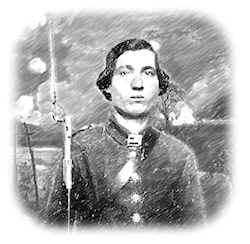
(Note: picture is of an unidentified Confederate soldier.)

0 comments

Rebel War Clerk

Civil War Day-by-Day
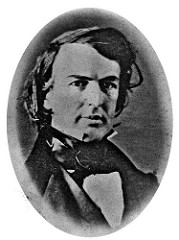
A likeness of Jones when he was editor and majority owner of the Daily Madisonian during President John Tyler’s administration.

OCTOBER 7th.—Nothing further has been heard from Corinth. A great battle is looked for in Kentucky. All is quiet in Northern Virginia.

Some 2500 Confederate prisoners arrived from the North last evening. They are on parole, and will doubtless be exchanged soon, as we have taken at least 40,000 more of the enemy’s men than they have captured of ours.

Yesterday, Congress, which has prolonged the session until the 13th instant, passed a bill increasing the pay of soldiers four dollars per month. I hope they will increase our pay before they adjourn. Congress also, yesterday, voted down the proposition of a forced loan of one-fifth of all incomes. But the Committee of Ways and Means are instrutcted to bring forward another bill.

This evening Custis and I expect the arrival of my family from Raleigh, N. C. We have procured for them one pound of sugar, 80 cents; one quart of milk, 25 cents; one pound of sausage-meat, 37 ½ cents; four loaves of bread, as large as my fist, 20 cents each; and we have a little coffee, which is selling at $2.50 per pound. In the morning, some one must go to market, else there will be short-commons. Washing is $2.50 per dozen pieces. Common soap is worth 75 cents per pound.

0 comments

October 1 to October 7, 1862

Experience of a Confederate Chaplain—Rev. A. D. Betts, 30th N. C. Regiment

October 1, 1862—Carry sundry letters to their places. Receive pay for July and August.

Oct. 3—Hear from wife, at Chapel Hill. Babe is better. She went from Bladen to Chapel Hill with three children and a nurse (about one hundred miles) by private conveyance.

Sunday, Oct. 5—Preach to a large, attentive audience. Fine day. Bright night.

Oct. 6—Pay Captain Allen my mess bill for May June and July.

Oct. 7—Ride to Winchester in ambulance with the sick. Visit E. Fletcher Bobbitt at Academy Hospital. Last interview with a lovely man. Brother of Rev. Drs. W. H. and J. B. Bobbitt of the North Carolina Conference Left his family in Warren county. Joined army in May ’62, and died in Richmond, October 23 1862 Roster says 1863; but my book is right. I never can forget how tenderly he spoke of his wife, saying he did not know how to appreciate her till the war took him from her. Carry Rev. Vaughn, chaplain of 3rd Regiment, to camp.

0 comments

0

Civil War Day-by-Day

October 7, 1862, Savannah Republican(Georgia)

As a specimen of the right spirit to animate the Southern people at the present crisis, we would mention two instances of liberality that have come to our notice, with the hope that the parties will forgive us for the liberty we take with their names:

Messrs. W. H. Wiltberger & Co., the worthy and public-spirited proprietors of the Pulaski House, called on us yesterday, through a member of their firm, and offered the entire stock of carpets of their establishment, to be converted into covering for the soldiers. Some idea of the munificence of the donation may be formed when we state that it comprises the carpeting of one hundred and twenty rooms, and when cut up will make over five hundred comfortable and good sized blankets.

The second is not less commendable. Our old friend, Mr. S. Z. Murphey, the faithful Superintendent of Union Society’s farm at Bethesda, and a man of very moderate means, called on me Saturday and left $50 as his contribution to the needy soldiers.

If there are many such men in the country, there will soon be no needy soldiers.

0 comments

0

Civil War Day-by-Day

October 7, 1862, The New York Herald

President Lincoln’s late visit to the army of General McClellan is an incident the importance of which, we are entirely confident, will soon be made manifest in the grandest military movements and Union victories. It was neither holiday recreation nor idle curiosity that took the President on this excursion, but the all-absorbing business of this war. His mission was to see for himself the condition and strength of McClellan’s army, and its efficiency for the immediate resumption of active operations. Having satisfied himself upon these points, and having freely instructed General McClellan in regard to the new campaign about to be inaugurated, and the part therein which he is expected to perform, the President has returned to the White House, and General McClellan will promptly proceed to execute the important task assigned him.

With his army reinvigorated by this late interval of pleasant weather and much needed rest, and immensely strengthened by reinforcements, and amply supplied with subsistence and munitions of war, General McClellan may be expected at any moment to advance upon the enemy. We may safely promise, too, that if, with his hastily collected, severely taxed, rapidly marched and much inferior forces in point of numbers, he was still able to beat, to put to flight and drive out of Maryland the vast and insolent rebel army of General Lee, the remains of that army will soon be driven from the Shenandoah valley, from the country east of the Blue Ridge, from Richmond and out of Virginia into the woods of North Carolina. We have absolute confidence in these results; for while the army of Lee, defeated, cut up, demoralized, in rags and upon half rations, is much weaker now in every respect than it was when it entered Maryland, the army of General McClellan, in every way, is immensely stronger than it was at Antietam. From Manassas across to Winchester the rebel recruiting sergeants have been scouring the country and running down their conscripts like rabbits and foxes; but these reinforcements will not save the army of Lee. It will surely be beaten, captured, dispersed or driven out of Virginia. [continue reading…]

0 comments

0

Civil War Day-by-Day

October 7, 1862, The New York Herald

HEADQUARTERS, ARMY OF THE POTOMAC, Oct. 4, 1862.

The President has to-day completed the grand review of all the troops in McClellan’sarmy. Excepting the actual appearance of the men in action, it was the most interesting, sublime and suggestive sight we have witnessed since the army was organized. We say of the great battle of Antietam, that there never has been anything like it seen upon this continent. The same may be said of this review. The grand review of the Army of the Potomac which took place at Bailey’s Cross Roads, in front of Washington, nearly a year ago, when the army was fresh and the soldiers knew nothing of the scenes of conflict and captivity they have since gone through, may have been more magnificent; but this last review of the shattered columns of the same army, after it has fought and won so many battles, and so recently achieved such a signal victory, occurring near the scene of the Antietam battle field and at this peculiar crisis in the nation’s history, possesses particular interest and importance. The utility of reviews of troops is often regarded by many people as insignificant; but it is anticipated that the results expected to flow from this review will prove of great importance to the country. The President would not have left his summer seat at the Old Soldier’s Home in the suburbs of the capital, come up here, and voluntarily subjected himself to the inconvenience and exhaustion incident to riding three or four days up and down the mountains of this region, and through long lines of troops, exposed the while, with head uncovered, to the broiling sun, if he did not deem the object to be gained of great importance. This visit of the President is evidently an indication that McClellan’s brief but brilliant campaign in Western Maryland will soon be followed by a still more vigorous prosecution of the war, and perhaps the speedy restoration of the Union. McClellan is prepared; indeed active operations have already been begun.

The grand review to-day commenced with General Burnside corps, which is encamped [continue reading…]

0 comments

0

Civil War Day-by-Day

October 7, 1862, The New York Herald

OUR SPECIAL ARMY CORRESPONDENCE.

HEADQUARTERS ARMY OF THE POTOMAC. Oct. 2, 1862.

ON MARYLAND AND LOUDON HEIGHTS.

President Lincoln having arrived at Harper’s Ferry yesterday afternoon, and reviewed the troops on Bolivar Heights, under General Sumner, and visited the ruins of the bridges and buildings destroyed at Harper’s Ferry, passed the night with General Sumner, at his headquarters on the Heights of Bolivar. This morning he proceeded to review the troops on Loudon and on Maryland Heights, in that vicinity. Immediately after breakfast, the President, on horseback, accompanied by Major General Sumner, Brigadier Generals Hancock, Howard, Meagher and Gorman, with their respective staffs, and the gentlemen who composed the Presidential party, left the headquarters of the corps on Bolivar, and rode down to Harper’s Ferry, on their away to Loudon Heights, across the Shenandoah. Every one in town was out to see the President and party as they passed. Crossing the Shenandoah river on a pontoon bridge, the cavalcade commenced the difficult ascent of Loudon Heights. The road, which was full of stones and rocks, led along and up the side of the mountain parallel with the river for a considerable distance, and then bore off to the left through the dense woods away to the highest summit. Up the horses tugged and toiled, over the stones and rocks. At one point during the ascent one of the regiments of the division which holds the Heights was drawn up in line where the road turned to the left. The soldiers presented arms as the President passed.

When the Presidential party reached the summit the troops were found drawn up in line awaiting his arrival. General Augurs’ old division, now commanded by General Geary, was formed in one long single line of battle on the hill. General Geary, who was wounded some time ago, returned yesterday and took command of the division. He is still compelled to carry his arm in a sling. He received the President just as Mr. Lincoln reached the summit, and immediately conducted him along the division line. The drums were beat and bugles sounded, the ensigns dipped their colors and the troops presented arms. At the same time a light howitzer battery fired the Presidential salute of twenty-one guns. The President and party rode through the smoke, which completely enveloped them for a while, in passing to the further end of the division line. Loud and repeated cheers were given for the President as he rode along the line again on his return. This division formed part of General Banks’ old command. The troops were stationed on a point from which they could view the scene of their long and faithful service. They have been operating for the most part in the Shenandoah valley, except during the time when they joined in the brief campaign about Manassas under Pope, and participated in the battle of Antietam under McClellan.

It was painfully suggestive to see that fine command drawn up in line of battle. The men were in excellent spirits and presented a fine appearance, but the regiments were greatly reduced in numbers. Some of the brigadier generals had been stricken down at the head of their brigades, most of the colonels were either killed or wounded I saw only one or two colonels in the whole command and many of the captains and lieutenants had likewise fallen in battle, while hundreds and thousands of privates originally on the muster rolls were not now to be found in the ranks. They, too, had been stricken down during different engagements with the enemy. A major now commands a brigade, many regiments are in charge of captains, some under lieutenants, while sergeants and corporals command the remnants of companies. And yet the remaining men looked splendid, and were in excellent spirits.

The President was highly pleased to find the soldiers in such a comfortable condition. He said he had not expected to see them looking so well. After he had passed along the line the second time the regiments returned to their tents and the President and party, joined by Generals Geary and Green, began the descent of the mountain. Reaching the foot in safety they recrossed the pontoon bridge to Harper’s Ferry.

Passing through the town again the company attracted as much attention as before. Without delay they proceeded to the pontoon bridge over the Potomac, near the railroad bridge, which the rebels had destroyed. The Presidential party presented a very picturesque appearance while crossing the river on that splendid pontoon bridge. Having safely landed on this side the President led the party up the Maryland Heights. The fog has prevented the signals being seen on the mountain in the morning, and the messenger which was subsequently sent did not reach the headquarters on the heights in time with the orders for the troops to prepare for review, so that the visit of the President took them completely by surprise. As soon as the President appeared, however, the division under General Gordon was hastily formed at different points on the mountain. One of the batteries, planted so as to command Loudon Heights, from which we had just descended, opened a sudden fire, and belched forth the Presidential salute. The reverberations of the heavy guns went rolling beyond the mountain summits. The President rode past the battery, and the men presented sabres. Thence he went to the other points on the heights, where soldiers were stationed, and while he rode in front of the lines, with hat in hand, the troops loudly cheered him as before.

He had inspected the troops, and was on his way down the mountain when he met General Gordon coming up, when an interchange of civilities took place.

On arriving at the bridge again at Harper’s Ferry the President and party remained a while awaiting the arrival of his baggage and the ambulances to convey them to McClellan’s headquarters, eight or ten miles distant. The ambulances soon arrived. General Sumner and the other generals took leave of the President. It was now noon, and, while they returned to their respective headquarters, he proceeded on the Sharpsburg road to McClellan.

ON THE BATTLE FIELD.

After a delightful ride through this picturesque portion of the country, Mr. Lincoln reached Gen. McClellan’s headquarters about three o’clock in the afternoon. Lieutenant Colonel Sweitzer conducted him to the General’s tent upon the hill. The President had arranged with Gen. McClellan to visit the Antietam battle field during the afternoon. The guests partook of a hasty lunch previous to leaving for the field. Gen. McClellan, with several members of his staff and a number of his generals, and attended by an escort of cavalry, dashed on in front, while the President and the gentlemen with him from Washington rode to the battle field in ambulances. They first proceeded to the commanding hill from which McClellan viewed the battle and directed the operations of the Union army during the engagement. From this hill a splendid view is obtained of the whole surrounding country, embracing within its scope the positions occupied by the hostile armies from the right to the left of the opposing lines. Among the officers who composed General McClellan’s brilliant cavalcade, was Colonel Colburn, Colonel Wright, Colonel Sackett, Major Hammerstein, Captain Abert and Captain Arthur McClellan, of his personal staff; General Beaufort, Chief of Cavalry, and Colonel Hunt, Chief of Artillery of the Army of the Potomac; Generals Cox and Sturgis, of Burnside’s corps; Generals Meade and Reynolds, with members of their staffs and other officers. These were followed by the splendid cavalry escort. In the ambulances with the President was Major General McClernand and Colonel Matthew, his chief of artillery; Mr. Garrett, President of the Baltimore and Ohio Railroad; and Marshal Lamon. The other gentlemen of the party followed immediately behind. General Marcy, Chief of McClellan’s staff, also accompanied the President over the battle field.

On arriving on the hill, which I have mentioned, the company dismounted, and General McClellan pointed out to the President the various positions occupied by the troops on the field, and in a clear, comprehensive and animated style explained the part they performed in the battle. General McClellan detailed the movements of the army from the time the columns were moving up on Monday before the battle. He explained to Mr. Lincoln the orders he issued when he ascended that very hill on Tuesday, under a sharp artillery fire from the enemy, and surveyed the ground orders to fall into position if they found the enemy in force, but not to attack till he said the word and then he gave him a graphic description of the grand battle and our victory on the following Wednesday. The President listened with marked attention, and manifested the greatest interest in everything connected with the victory and the officers who displayed distinguished bravery and valor. Then the party went over the field, and examined different points from the right of the line, where Hooker fought; past the centre, where Sumner was; along to the left, where Burnside’s troops contended so bravely for the bridge over the Antietam.

It was almost evening when the guests arrived on the immediate battle field, and the limited interval between sundown and dark had to be industriously improved so as to have an opportunity to visit the principal points of interest. The President and General McClellan were still upon the ground after the daylight had disappeared and the moon shone out upon the memorable battle field.

A very pretty and picturesque scene occurred at this time. General McClellan, observing some Sisters of Charity, in their curious costume, and a faithful Father of the Roman Catholic church, following to the grave, amid the suggestive moonlight, the remains of a brave Union soldier who had died in one of the hospitals upon the field, from wounds received in the battle, rode up, took off his hat and held a brief conversation with the principal participators in that solemn scene. The kindly offices of these self-sacrificing sisters are dearly cherished by the wounded and dying soldiers. Those who now occupy the hospitals on the battle field are the most severely wounded, who could not be removed. When a gallant fellow dies of the wounds received in battle he is buried by these sisters of Charity on the field.

The battle field was an object of peculiar interest to the President. Hundreds of dead horses, many of which had been burned, were lying on the field. Hundreds of human graves, where the dead of both armies lay buried, were seen at different points on the ground. The field was still strewn with the clothing of the wounded and the dead. In one place there was a monster grave, over which there was this inscription: “Here lies the body of General Anderson and eighty other rebels.” And on another mound we could read by the early moonlight: “Here lie the bodies of sixty rebels. The wages of sin is death.”

The party returned by moonlight to General McClellan headquarters, where arrangements were made for the President to pass the night in camp. As the President arrived the band struck up “Hail to the Chief.” Dinner was served immediately after their return. At the table the President kept the company in the best of humors by his apt remarks and amusing stories. During the evening he was serenaded by the splendid band of the Second cavalry, which was stationed on the hill. It was playing some fine selections when the President retired to his couch in the tent.
0 comments

0

Civil War Day-by-Day

October 7, 1862, The New York Herald

The official despatches of General Grant relative to the late battle at Corinth confirm the news which we published yesterday. They are dated from Jackson, Tenn., on Sunday, and represent that, at that time, a large portion of General Rosecrans’ forces had advanced as far as Chevalla, in pursuit of the flying enemy. General Hurlbut was at the Hatchie river, following them with 5,000 men, and General Ord had met them on the south bank of the Hatchie, drove them across the stream, taking two batteries and two hundred prisoners, and obtaining possession of the heights on the other side. General Grant says that as things then looked he could not see any escape for the enemy without losing everything but their small arms.

Scouts from General Sigel’s army made a reconnoissance to Thoroughfare Gap yesterday, and brought in some prisoners, who report that the rebel army is falling back on Richmond, and that General Longstreet has already gone there. There was another expedition of our scouts to Newmarket and Gainesville, at which latter place they captured a rebel scouting party of Mississippians under Lieutenant Roberts.

We give today a full and highly interesting account of all the incidents of the President’s visit to General McClellan army, the grand review of the troops, and his interview with the Commanding General. A visit to the battle field of Antietam is finely described, and will give our readers some vivid conception of the sanguinary nature of that battle.

Advices received from Grenville, Missouri, state that the Texan rebel forces under General McBride, 2,000 strong, have been ordered back to Texas in consequence of Union victories gained at Marshal, Texas, and Shreveport, Louisiana. These victories were probably won by the Union troops who were reported as having gone up the Red river from Helena some time since. [continue reading…]

0 comments

0

Civil War Day-by-Day

October 7, 1862, Nashville Daily Union (Tennessee)

We are informed that there are about seven hundred guerrillas at Lavergne, badly armed and worse dressed, whose chief business is to forage and drive off cattle. May be it would not be amiss to give these excellent gentlemen, and defenders of the South, some other employment.

0 comments

0

Civil War Day-by-Day

October 7, 1862, The New York Herald

Brigadier General Richard J. Oglesby, reported dangerously wounded, is a man of about thirty-eight years of age. He was born in Kentucky, but removed into Illinois at a very early age, and became a citizen of the latter State. He served during the Mexican war as first lieutenant of Company C of the Fourth regiment of Illinois twelve months volunteers, for three months service. The regiment was organized in April, 1861, at Springfield, and was stationed at Camp Defiance, at Cairo, where they re-enlisted bodily for the war, at the end of their three months term. On the 12th of June, 1861, Col. Oglesby commanded the expedition that sailed from Cairo, in the City of Alton, on a reconnoitering expedition to Columbus, which trip resulted in the cutting down and bringing away of a rebel flag from that point. After the reorganization of the regiment it was transferred to the command of Gen. McClernand, and was engaged in several little skirmishes in Missouri, in the vicinity of Cairo. On the 1st of February, by general order, Col. Oglesby was appointed acting brigadier general, and his brigade formed part of the reconnoitering party under Grant, in the rear of Columbus, and also formed part of the land force in the taking of Fort Henry. During the bombardment of Fort Donelson Col. Oglesby acted as brigadier general, commanding the First brigade of the First division, then commanded by Gen. McClernand. For gallant and meritorious services on that occasion he was made a brigadier general of volunteers. He took part with the First division, Gen. McClernand, in the famous battle of Shiloh or Pittsburg Landing, and was engaged in the siege of Corinth. Since that time the brigade of Gen. Oglesby has been located in those parts of the Southwest where Gen. Grant has been in command, and has been, during the recent reorganization of the army of that department, placed in the corps d’ of Gen. Rosecrans.

0 comments

0

Civil War Day-by-Day

October 7, 1862, Daily Times (Leavenworth, Kansas)

W. F. Downs, late of Wyandot, has charge of Pomeroy’s Colonization Office in Washington. These gentlemen start for Chiriqui about the 10th inst., with a pioneer colony of negroes, about five hundred in number.

0 comments

0

Civil War Day-by-Day

October 7, 1862, The Charleston Mercury

On last Saturday afternoon a very large concourse – including many ladies – assembled on the South Bay Battery, to witness the review of the Forty Sixth Georgia Regiment, Col. COLQUITT, by Gen. BEAUREGARD. At five o’clock the General and Staff appeared upon the ground, and the review began. Both in the manual and in its evolutions the regiment displayed great precision of movement, and Gen. BEAUREGARD expressed his gratification at the evidences of its efficiency and discipline.

The 46th Georgia Regiment, since its arrival here, has proved itself a model of good discipline and orderly bearing. Its conduct has been honorable to our sister State, and is highly conducive of that mutual respect and regard which should exist between citizens of the two States. The Colonel of the regiment bears a name endeared to every State Rights man in the South, and identified with secession as son of the eloquent and lion-hearted leader of the party in its origin in Georgia in 1851. He himself, long champion of the cause in evil report and in good report, is now on our soil with this fine array to defend the right. When the stern trial of manhood shall come, we know the noble 46th will do their whole duty – both officers and men. We are happy to have such allies, and only wish we had more of the same sort.

0 comments

0

Civil War Day-by-Day

October 7, 1862, Weekly Columbus Enquirer (Georgia)

The condition of our market is getting truly deplorable. There is not a pound of salt or a bushel of corn for sale at retail, and very little meal or flour, and we are informed that all the bacon has suddenly disappeared from the market. Everything else is very scarce.–Rome Courier, 30th.

0 comments

Diary of a Southern Refugee, Judith White McGuire.

Diary of a Southern Refugee During the War by Judith White McGuire

W., Hanover County, October 6th.—We left the University on the 4th, and finding J. B. N. on the cars, on ” sick-leave,” I determined to stop with him here to spend a few days with my sisters, while Mr. –– went on to Richmond and Ashland. I do nothing but listen—for my life during the last three months has been quiet, compared with that of others. J. gives most interesting accounts of all he has seen, from the time he came up the Peninsula with the army in May, until he was broken down, and had to leave it, in Maryland, after the battle of Sharpsburg. As a surgeon, his personal danger has not been so great as that of others, but he has passed through scenes the most trying and the most glorious. My sisters and M. give graphic descriptions of troubles while in the enemy’s lines, but, with the exception of loss of property, our whole family has passed through the summer unscathed. Many friends have fallen, and one noble young relative, E. B., of Richmond County; and I often ask myself, in deep humility of soul, why we have been thus blessed, for since our dear W. P. and General McIntosh fell, the one in December, the other in March, we have been singularly blessed. Can this last, when we have so many exposed to danger? O, God, spare our sons! Our friend, Dr. T., of this neighbourhood, lost two sons at Sharpsburg! Poor old gentleman! it is so sad to see his deeply-furrowed, resigned face.

McClellan’s troops were very well-behaved while in .this neighbourhood; they took nothing but what they considered contraband, such as grain, horses, cattle, sheep, etc., and induced the servants to go off. Many have gone—it is only wonderful that more did not go, considering the inducements that were offered. No houses were burned, and not much fencing. The ladies’ rooms were not entered except when a house was searched, which always occurred to unoccupied houses; but I do not think that much was stolen from them. Of course, silver, jewelry, watches, etc., were not put in their way. Our man Nat, and some others who went off, have returned—the reason they assign is, that the Yankees made them work too hard! It is so hard to find both families without carriage horses, and with only some mules which happened to be in Richmond when the place was surrounded. A wagon, drawn by mules, was sent to the depot for us. So many of us are now together that we feel more like quiet enjoyment than we have done for months.

0 comments

A Confederate Girl’s Diary

Civil War Day-by-Day

October 6th.

Last night, I actually drew from Gibbes the outlines of Jackson’s campaign. He told me of some heroic deeds of his fellow soldiers; but of his own, not a word. I have seen his name too often in the papers, to believe that he has no deeds of his own to relate, if he only would.

0 comments

Downing’s Civil War Diary.–Alexander G. Downing.

Diary of Alexander G. Downing; Company E, Eleventh Iowa Infantry

Monday, 6th–We started this morning at daylight and crowded the rebels very hard all day, capturing their trains and some of their artillery—ammunition, arms and caissons. I never saw such a stampede in all my life. They drove their wagons and artillery through the timber, over fallen trees, two and three abreast, wiggling through the standing timber as best they could with every teamster for himself. Some of the artillery men took the cannon off the running gears, and throwing them into gullies, covered them with leaves. Everything imaginable was strewn along the road–tents, bake ovens, corn meal, fresh beef and a great many other things; some of their supplies they burned up, to keep from falling into our hands. We captured some of General Price’s headquarters’ supplies, among such a buffalo robe which the men tore up for souvenirs.[1]


[1] During that day’s march I saw, I think, the meanest man in the Union army. We had just started up a long, steep hill when I noticed one of our men coming out of a one-room log hut by the roadside. As he passed us, with an oath, he growled that he had gone into the hut to get something to eat, but all he could find was a half-bushel bag of corn meal. This the woman, who by the way had the courage to stay with her home, begged him not to take, as it was all the food she had, but he took it. Then when about halfway up the hill, the bag of meal, in addition to his accouterments, becoming too heavy, he with another oath, dumped half the meal out on the ground and ran on to catch up with his command. For such a man I cannot find words to express my contempt.—A. G. D

0 comments

War Diary of Luman Harris Tenney.

War Diary of Luman Harris Tenney.

Monday, 6th. Got all ready to start. Ordered to lie still for a day or two for train supply to arrive. Went out on forage detail under Welch and Shattuck, four miles, got plenty of sweet potatoes and apples and honey. Sergt. Smith, Sturtevant and I got up a good meal. Had a good visit with the boys–very warm day. Shattuck said I had been reserved to stay in the regiment. Most of the boys mustered out. A regular officer, a captain, is to be our Colonel.

0 comments

Robert M. McGill

Robert M. Magill – Personal Reminiscences of a Confederate Soldier Boy, 39th Georgia Regiment of Infantry

Monday, 6th.—Passed through Salvisa at daylight; took up camp two miles south of town; orders for no person to leave camp.


(Note: picture is of an unidentified Confederate soldier.)

0 comments

Rebel War Clerk

Civil War Day-by-Day
A likeness of Jones when he was editor and majority owner of the Daily Madisonian during President John Tyler’s administration.

OCTOBER 6th, Monday.—A Jew store, in Main Street, was robbed of $8000 worth of goods on Saturday night. They were carted away. This is significant. The prejudice is very strong against the extortionists, and I apprehend there will be many scenes of violence this winter. And our own people, who ask four prices for wood and coal, may contribute to produce a new Reign of Terror. The supplies necessary for existence should not be withheld from a suffering people. It is dangerous.

There is great diversity of opinion yet as to the locality of McClellan’s army and Lee’s intentions.

A dispatch from Gen. Van Dorn, in West Tennessee, indicates that we are gaining a victory over Rosecrans. The battle was in progress, not completed.

0 comments