0

Civil War Day-by-Day
Charles Lynch

October 1st. I was detailed with twenty members of our company under the command of Lieutenant Merwin to take boats and to row to a long bridge over a branch of the Patapsco River, there to remain on guard duty for ten days. It was about eight miles from the fort. It proved to be a picnic for us. Our duty was to guard the bridge. When off duty we tramped through the country for miles. It was a fine fruit section of Maryland. We bathed in the fine, clear salt water and white sandy beach. The ten days passed quickly when we were relieved and obliged to report to our company at the old fort, when we resumed our duty of various kinds, drilling and guard duty, also keeping the camp clean.

Our rations remained the same from day to day, fresh beef, salt beef, pork, hard-tack, and soft bread. Our supper remained the same every night, a cup of black coffee, a plate of boiled rice with very black molasses, called by the boys coal tar, two slices of soft bread. We became so tired of rice that we could not eat it.

0 comments

0

Civil War Day-by-Day

October 1, 1862, The New York Herald

It is evident, from the tone which the rebel journals have recently assumed, that a desire for peace is gaining strength in the South. It is even reported, although upon very vague authority, that a commission, or something of that kind, has been appointed by the rebel Congress to make propositions of peace upon certain terms. We give all the particulars touching this rumor in our editorial and news columns today.

General McClellan has furnished an official report to Major General Halleck of some of the results of the battles of South Mountain and Antietam. General McClellan confines himself almost exclusively to the extent of the loss which our army suffered, referring also to the probable loss of the enemy, which he estimates at a considerably higher number. Our loss in the two battles he puts down as 14,794; but he says that we lost neither a gun nor a flag, while we captured thirty-nine rebel colors and thirteen guns.

General Halleck has issued a circular to the Governors of the several States, urging them to fill up the vacancies of commissioned officers who have fallen in battles in such large numbers recently, by appointing deserving non-commissioned officers and privates who have distinguished themselves in battle and have evinced a capacity to command to the vacant places – an excellent suggestion, which, if carried out, will provide our army with many competent officers, and will thus supply a want greatly needed.

General Stahel, from Sigel’s command, has made another reconnoissance from Washington as far as Salem and White Plains, but found no rebels there. On his way he fell in with a few wounded and sick wretches belonging to the enemy at the village of Warrenton, whom he captured and paroled. It was reported at Alexandria that some portion of General Sigel’s forces had captured all the locomotives and cars which the rebels left un-destroyed after their demolition of Bristow Station and Warrenton Junction. [continue reading…]

0 comments

A Confederate Girl’s Diary

Civil War Day-by-Day

October 1st, Wednesday.

Just after sunset yesterday, Anna and I were walking down the road towards the sugar-house, she reading occasionally from Abbott’s “Napoleon,” and then pausing for me to explain the very difficult passages she could not understand, when we suddenly became aware of the approach of a horse, and raising our bowed heads, beheld Colonel Breaux and another before us, to our infinite surprise and astonishment. The Colonel sprang from his horse and advanced on foot; his companion slowly followed his example, and was introduced as Captain Morrison. We adjourned our historical fit for some future period, and walked home with the gentlemen. Miriam did not get back from her excursion to the cane-patch until it was quite late; when after sitting down a few moments, she ran upstairs to change her dress. She had just put it on an hour before, but nothing would do but she must dress up fine; so she put on her handsomest organdie. In vain I pointed to my simple pink muslin with a white body that I had worn all day, and begged she would not make the contrast between us more striking than ever, as I felt I could not change it without exciting remark. She was obdurate; dressed herself in gorgeous array, and, as usual, I looked like her lady’s maid.

Colonel Breaux paid my hair the most extravagant compliments. He said he could not say his prayers for looking at it in church, Sunday before last. Perhaps that is the reason St. Paul said a woman should not worship in church with her head uncovered! But as the Yankees stole my bonnet, I am reduced to wearing my black straw walking-hat with its curled brim, trimmed in black ribbon with golden sheaves of wheat. Two years ago this fall, father threw me a banknote at table, and I purchased this with it. Now it is my only headgear, except a sunbonnet. Before leaving, which was not until quite late, this evening was named for our ride to the fortifications, to our infinite delight, as we have dreamed and talked of nothing else for a week. . . .

A dispatch just received from Gibbes, from Mobile, on his way home. I am so happy! But what can bring him? I fear Lydia has gone to Clinton to meet him at Lilly’s.

0 comments

Downing’s Civil War Diary.–Alexander G. Downing.

Diary of Alexander G. Downing; Company E, Eleventh Iowa Infantry

Wednesday, 1st–The Eleventh Iowa was ordered down into town last night, for it was expected that the rebels would make a charge into town to burn our rations. We think, however, that they want our rations for their own haversacks. We formed a line of battle and lay in the streets all night, but the rebels did not show themselves. We received orders to march at daylight this morning. The cars came in from Corinth at 4 o’clock this morning, and the sick men, our baggage, and the remainder of our stores were loaded up and sent to our headquarters at Corinth. By noon Iuka was expected to be entirely evacuated by our men. Our regiment marched twenty-three miles and bivouacked for the night within six miles of Corinth.

0 comments

War Diary of Luman Harris Tenney.

War Diary of Luman Harris Tenney.

Wednesday, 1st. Up at 5 o’clock. Commenced work at 5:25. Divided into three reliefs. I took charge for four hours. Boys went for provisions to a house three miles and got some breakfast at an empty house. Kept at work–after breakfasting at 10–till noon. Then marched homewards. Bivouacked 2 miles west of Carthage. Slept with A. B. N. My birthday anniversary (twenty one) . Charge of advance guard.

0 comments

Rebel War Clerk

Civil War Day-by-Day
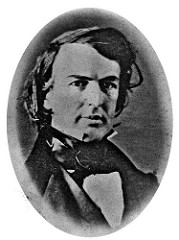
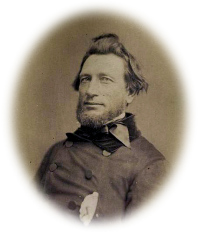
A likeness of Jones when he was editor and majority owner of the Daily Madisonian during President John Tyler’s administration.

OCTOBER 1st.—They are still striking at martial law in the Senate, as administered by Gen. Winder. A communication from the Secretary of War admits that Gen. W. was authorized to suppress substitute agencies—”but this did not justify impressment and confiscation.” It appears that Gen Winder ordered the agents to be impressed into the service, and the money paid for substitutes to be confiscated! Notwithstanding his blundering ignorance is disavowed, he is still retained in command.

The enemy are at Warrenton; and McClellan’s army has crossed the Upper Potomac. Another battle is imminent—and fearful will be the slaughter this time. Lee had but little if any more than 40,000 in the battle of Sharpsburg; the Northern papers said McClellan had 200,000! a fearful odds. But Lee now has 70,000–and, besides, he will be defending Virginia. McClellan, with his immense army, must advance, or else relinquish command. The Abolitionists of the North have never liked him, and they wield the power at present. A defeat of Lee near Winchester would produce consternation here.

There are, as usual, thousands of able-bodied men still in our streets. It is probable every man, able to march, will be required on the field of battle. If we can get out all, we shall certainly gain the day, and establish our independence.

How shall we subsist this winter? There is not a supply of wood or coal in the city—and it is said there are not adequate means of transporting it hither. Flour at $16 per barrel, and bacon at 75 cts. per pound, threaten a famine. And yet there are no beggars in the streets. We must get a million of men in arms and drive the invader from our soil. We are capable of it, and we must do it. Better die in battle than die of starvation produced by the enemy.

The newspapers are printed on half sheets—and I think the publishers make money; the extras (published almost every day) are sold to the newsboys for ten cents, and often sold by them for twenty-five cents. These are mere slips of paper, seldom containing more than a column—which is reproduced in the next issue. The matter of the extras is mostly made up from the Northern papers, brought hither by persons running the blockade. The supply is pretty regular, and dates are rarely more than three or four days behind the time of reception. We often get the first accounts of battles at a distance in this way, as our generals and our government are famed for a prudential reticence. When the Northern papers simply say they have gained a victory, we rejoice, knowing their Cretan habits. The other day they announced, for European credulity, the capture and killing of 40,000 of our men: this staggered us; but it turned out that they did capture 700 of our stragglers and 2000 wounded men in field hospitals. Now they are under the necessity of admitting the truth. Truth, like honesty, is always the best policy.

0 comments

Winter clothes

Civil War Day-by-Day

NEAR BUNKER HILL, VA., October 1st, 1862.

Dear Mother:

I have just received a letter from you, dated Sept. 2nd. It is the first word I have heard from home since I left Richmond (I forgot I did receive one letter down at Anderson’s station, 30 miles from Richmond). It appears that you have not received the letter I wrote from the Potomac, opposite Berlin, though you must have gotten it before now. I heard that Pat Simms will be in Wilson for a short time as detail for our winter clothing. He can tell you all about that trip. It has been so long that I have forgotten almost all about it. I shall send this by Dr. Stith, as he starts in the morning. You can get him to tell you a good deal of news if you choose. Dr. Stith and Pat Wooten came up this morning. I haven’t been up to see them yet. I must sleep and stay at head quarters nearly all the time, as it is more convenient and I get plenty of something to eat, and often something extra. If Pat Simms goes home, as I think he will, you may send me my two flannel shirts and my drawers, also two pair of woolen socks. I reckon I will have to make out with shoes this winter, though if you can have me a good pair of winter sewed boots made (large 6s) you may send them also, and the price. If I can’t wear them myself I can sell them for any price I may choose to ask. See if Pat is willing to bring them first and if he is certain that he can get them here without being lost. Write often by some of the boys that are coming.

Your affectionate son,
WALTER.


Letters from two brothers who served in the 4th North Carolina Infantry during the Civil War are available in a number of sources online.  Unfortunately, the brothers are misidentified in some places as Walter Lee and George Lee when their names were actually Walter Battle and George Battle. See The Battle Brothers for more information on the misidentification.

0 comments

Diary of a Southern Refugee, Judith White McGuire.

Diary of a Southern Refugee During the War by Judith White McGuire

30th.—The Richmond Examiner of yesterday contains Lincoln’s Proclamation, declaring all the negroes free from the 1st of January next! The Abolition papers are in ecstasies; as if they did not know that it can only be carried out within their lines, and there they have been practically free from the moment we were invaded. The New York Tribune is greatly incensed at the capture of Harper’s Ferry; acknowledges that the battle of Sharpsburg was a disaster to them—Sumner’s corps alone having lost 5,000 men in killed and wounded. It says it was the “fiercest, bloodiest, and most indecisive battle of the war.” Oh, that their losses could convince them of the wickedness of this contest! but their appetite seems to grow on what it feeds upon. Blood, blood, is still their cry. My heart sickens at the thought of what our dear soldiers have yet to pass through. Arise, O God, in thy strength, and save us from our relentless foes, for thy great name’s sake !

Mr.–– has improved so much in health that we return in a few days to Richmond, that he may again enter upon the duties of his office. Ashland is our destiny for next year; the difficulty of obtaining a house or board in Richmond has induced us to join a party of refugee friends in taking a cottage there. Our children are already there, and write that a comfortable room is awaiting us. Last night we received a message from Mrs. and Miss S., of Alexandria, that they were in this place, having run the blockade, from their oppressed home, during the battles around [continue reading…]

0 comments

A Confederate Girl’s Diary

Civil War Day-by-Day

Tuesday, September 30th.

It required very little persuasion to induce those gentlemen to stay to supper, the other evening, and it was quite late before they took their leave. Dr. Addison I was very much pleased with, and so were all the rest. Mr. M––, none of us fell desperately in love with. He is too nonchalant and indifferent, besides having a most peculiar pronunciation which grated harshly on my ears, and that no orthography could fully express. “Garb,” for instance, was distorted into “gairb,” “yard” into “ yaird,” “Airkansas,” and all such words that I can only imitate by a violent dislocation of my lower jaw that puts Anna into convulsions of laughter – only she would laugh the same if it was not funny. This Kentuckian pronunciation grates “hairshly” on my Southern ears. Miriam addressed herself exclusively to the Doctor, so I was obliged to confine my attention entirely to neglected Mr. M––, in which pious duty I was ably and charitably seconded by the General. Speaking of the bravery and daring displayed by the Southern soldiers during this war, Mr. M–– mentioned the dangerous spot he had seen us in the first day we went down to the “Airkansas” and said that, lying directly across the point from the Essex, they expected every instant to see one of her shells explode among us, and were very uneasy about our position, as we did not seem to know the danger. I asked him if he had observed anything peculiar among the dozen planters and overseers standing a short distance from us, when the Captain sent us word that our position was a very dangerous one, as they expected the Essex to open fire every instant, and we had best stand below the levee, higher up, where we would be safe from shells. “I noticed that before any of you understood your position, every man had disappeared as though by magic.” Now I had noticed that myself. When I turned, under shelter of the levee, our gallant planters were galloping off in the distance. While Ginnie and I looked and laughed, we suddenly found ourselves the sole objects on the horizon; the other girls were in the road below, going carelessly toward the carriage; so we followed, having lost sight of the brave representatives of Southern chivalry, being the last to leave the supposed field of danger. To my former remark, let me add that there is only one set who take better care for their safety than married women; and that set is composed exclusively of the “Home Guard.” Timid girls, either through ignorance or fun, compose the majority of the brave “men” that the volunteer service has not absorbed.

0 comments

Downing’s Civil War Diary.–Alexander G. Downing.

Diary of Alexander G. Downing; Company E, Eleventh Iowa Infantry

Tuesday, 30th–Nothing of importance. We received orders to drill.

0 comments

Robert M. McGill

Robert M. Magill – Personal Reminiscences of a Confederate Soldier Boy, 39th Georgia Regiment of Infantry

29th and 30th.—Marched back to Georgetown and camped on our old camping-ground, three-fourths of a mile west of town.


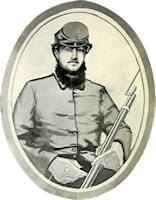
(Note: picture is of an unidentified Confederate soldier.)

0 comments

Rebel War Clerk

Civil War Day-by-Day
A likeness of Jones when he was editor and majority owner of the Daily Madisonian during President John Tyler’s administration.

SEPTEMBER 30th.—Lincoln’s proclamation was the subject of discussion in the Senate yesterday. Some of the gravest of our senators favor the raising of the black flag, asking and giving no quarter hereafter.

The yellow fever is raging at Wilmington, North Carolina.

The President, in response to a resolution of inquiry concerning Hyde, the agent who procured a substitute and was arrested for it, sent Congress a letter from the Secretary of War, stating that the action of Gen. Winder had not been approved, and that Mr. Hyde had been discharged. The Secretary closes his letter with a sarcasm, which, I think, is not his own composition. He asks, as martial law is still existing, though the writ of habeas corpus is not suspended, for instructions as to the power of the military commander, Winder, to suppress tippling shops! Several members declared that martial law existed in this city without any constitutional warrant. There is much bad feeling between many members and the Executive.

No fighting has occurred on the Peninsula, and I believe Gen. Wise has returned with his forces to Chain’s Bluff.

0 comments

September 21 to 30, 1862

Experience of a Confederate Chaplain—Rev. A. D. Betts, 30th N. C. Regiment

Sep. 21—Hear Rev. A. A. Watson, chaplain 2nd Regiment, preach. Write to Mary by Mr. Van Bokelin.

Sep. 22—Ride to the wagons to rest. Five years ago this afternoon my second son, Willie, was born. God bless him and spare us to see each other. Ride to Martinsburg in afternoon. Lie beside my horse at night, gazing at the stars and thinking of Mary and my little ones. “What is man, that Thou art mindful of him?”

Sep. 23—Visit 18th and 28th Regiments.

Sep. 25—Dine with Harry Thomas, near Martinsburg, a thrifty farmer, fine-looking, genial gentleman. I met Mr. Thomas afterwards in another section and greeted him as such. He looked at me as if he did not remember me. I gave him my name and said: “Is this Mr. Harry Thomas?” He said: “No, it is his brother Jack.” I told him I had met his brother and was glad to meet him. Some time after I met Mr. Thomas and called him Thomas. He evidently did not remember me. I quickly asked him if he was Mr. Harry or Jack. He said it was neither, but their brother Jake! I wish I could see the three together.

Sunday, Sep. 28, 1862—Preach in camp.

Sep. 29—Ride to Winchester with sick men. Meet Captain Drake and Captain Witherspoon on road with mail. Get letter from wife. Little Mary quite ill on 12th. May now be in Heaven. Father, into thy hands I commend my child. Stop with Rev. W. G. Eggleston, P. E. of this District of the Baltimore Conference. Lately lost his wife. Has a family of children.

Sep. 30.—Ride to camp and carry Brigade mail. Meet Rev. J. A. Robbins, a schoolmate, now from Georgia.

0 comments

There has not been a rising in Maryland as was expected…

Journal of Meta Morris Grimball
Meta Morris Grimball

30th September

       There has not been a rising in Maryland as was expected and as far as rumor gives us information we have not gone on so gloriously as was expected, but only by hard-fought battles kept our ground against our treacherous foe.

       Miss Juliet Elliott invited Elizabeth to pass a day with her and take a ride to Glenns Springs she went yesterday. I am glad of a little diversion for her she has such hard work teaching Harry.—

       Mr Irwin who is a perfect chronicle of parish events came to see us the other evening and told us that Mrs Wilson had left Mrs Tompson’s with a half Month unpaid $47 that she talked very freely about people & would lead those she spoke to into the belief no one was of any account except her family, the Gibbes. I liked her very well her manners are easy but she comes of a family not considered truthful and on that account not much regarded.—

       Dr Boyds wife a Miss Tompson Mrs I. says drank, and was subject to fits brought on by the use of stimulants he had a life of it with her. She died young and left 7 children inheritors of her habit, for I believe intemperance is inherited,—just as much as gout or scrofulous consumption.

       We got our shoes from the Mute Rogers $ paid $4. 25 for each 1 pair for Ella & Lotty & 1 pair for myself. They look like strong well made shoes I have ordered a pair for Harry to be done in six weeks. This seems to be a district of a low character in Morals I do not hear of any one being more correct than another. Mrs I. says Mrs Legg who was a Miss Kenedy married a man much beneath her in family and it came about in this way. The Kenedys moved up here from Charleston for the health of Mr K and Miss L was pleased with this Mr Legg and engaged herself to him not knowing anything about him and after her marriage found he had very low relations.–Which shows the imprudence of marrying among strangers.—

0 comments

Journal of Surgeon Alfred L. Castleman.

Journal of Surgeon Alfred L Castleman.

30th.–Left Hagerstown at 8 this forenoon. Stopped five hours at Harrisburg, Pennsylvania, and now again am on the way to ––, and I hope to meet with no more delays.

31st.–Reached home a little after midnight, found my family all well, and I verily believe are glad to see me.

[The month of October was spent away from camp, and I omit my private journal during the time.]

0 comments

Downing’s Civil War Diary.–Alexander G. Downing.

Diary of Alexander G. Downing; Company E, Eleventh Iowa Infantry

Monday, 29th–We were relieved from picket this morning, and for the first time in several days we rested in camp all day. The weather is hot and sultry, with quite cool nights. The rebel cavalry seem to be all around us, but for fear of getting hurt they keep their distance.

0 comments

War Diary of Luman Harris Tenney.

War Diary of Luman Harris Tenney.

Monday, 29th. Spent some time mending up my old clothes. After watering my horses had a visit with Trotter, taken prisoner at Fort Gibson–some interesting facts. 3,000 of the enemy, poor arms and worse clothes, frightened to death for fear of attack. Went out in P. M. for forage, 4 miles–corn. Saw a pretty, modest maiden weave, barefooted, blushed. Went off the road a mile and got peaches, the man a prisoner at Springfield. Wrote home. Order for detail of 25 men and officers for scout. I go. Success and fun ahead I hope. Boys start for Fort Scott.

0 comments

Rebel War Clerk

Civil War Day-by-Day
A likeness of Jones when he was editor and majority owner of the Daily Madisonian during President John Tyler’s administration.

SEPTEMBER 29th.—We have Lincoln’s proclamation, freeing all the slaves from and after the 1st January next. And another, declaring martial law throughout the United States! Let the Yankees ruminate on that! Now for a fresh gathering of our clans for another harvest of blood.

On Saturday the following resolutions were reported by Mr. Semmes, from the Committee of the Judiciary, in the Senate:

“1st. That no officer of the Confederate Government is by law empowered to vest Provost Marshals with any authority whatever over citizens of the Confederate States not belonging to the land and naval forces thereof, or with general police powers and duties for the preservation of the peace and good order of any city, town, or municipal district in any State of this Confederacy, and any such exercise of authority is illegal and void.

“2d. That no officer of the Confederate Government has constitutional or other lawful authority to limit or restrict, or in any manner to control, the exercise of the jurisdiction of the civil judicial tribunals of the States of this Confederacy, vested in them by the Constitution and laws of the States respectively ; and all orders of any such officer tending to restrict or control or interfere with the full and normal exercise of the jurisdiction of such civil judicial tribunals are illegal and void.”

We shall see what further action will follow. This is in marked contrast to the despotic rule in the Yankee nation. Nevertheless, the Provost Marshal here keeps his establishment in full blast. He was appointed by Gen. Winder, of Maryland, who has been temporarily subordinated by Major-Gen. Smith, of New York.

Since Gen. Smith has been in command, the enemy has made raids to Leesburg, Manassas, and even Warrenton, capturing and paroling our sick and wounded men. Who is responsible?

Accounts from Nashville state that our cavalry is beleaguering that city, and that both the United States forces there, and the inhabitants of the town, are reduced nearly to starvation.

Buell, it is said, has reached Louisville. We hope to hear soon of active operations in Kentucky. Bragg, and Smith, and Price, and Marshall are there with abundant forces to be striking heavy blows.

Beauregard is assigned to the defense of South Carolina and Georgia.

Harper’s Ferry is again occupied by the enemy—but we have removed everything captured there. The Northern papers now admit that the sanguinary battle of Sharpsburg was without result.

I sent my wife money to-day, and urged her to return to Richmond as soon as possible, as the enemy may cut the communications—being within forty miles of the railroad. How I should like to think they were cut to pieces! Then they would let us alone.

Hitherto 100,000 sick and wounded patients have been admitted into the army hospitals of this city. Of these, about 10,000 have been furloughed, 3000 discharged from the service, and only 7600 have died. At present there are 10,000 in the hospitals. There is not so much sickness this year as there was last, nor is it near so fatal.

Many of the Northern papers seem to dissent from the policy of Lincoln’s proclamation, and hope that evil consequences may not grow out of it. But how can it be possible for the people of the North to submit to martial law? The government which directs and enforces so obnoxious a tyranny cannot be sure of its stability. And when the next army of invasion marches southward, it will be likely to have enemies in its rear as well as in its front. The Tribune exclaims “God bless Abraham Lincoln.” Others, even in the North, will pray for “God to _____ him!”
0 comments

Antietam/Sharpsburg

Civil War Day-by-Day

HEAD QUARTER’S ANDERSON’S BRIGADE,
MAR. BUNKER’S HILL, VA.,
Sept. 29, 1862.

My Dear Mother:

It has been some time since I last wrote you. I hope you have not been uneasy about me, for I have never been in better health in my life. During the past two months we have been on the march almost constantly, sometimes resting one or two days, but never longer.

On Sunday, the 14th of September, we left our camp at 4 o’clock in the morning and marched some six miles to the top of the Blue Ridge and drew up in line of battle. We were not long waiting for the Yankees, they came in very large columns and we fought until after dark. That night our troops fell back through Boonsboro some few miles and drew up in line of battle little after sunrise, very little fighting was done on that day, only some cannonading. We continued in our position until the 17th inst., when we had almost a general engagement. The line of battle of our Brigade was some two hundred yards in front of a house in which General D. H. Hill and General Anderson had their Head Quarters. The fight commenced in the morning before I awoke (long before sunrise), soon after light the wounded from the Artillery commenced coming in, pretty soon the wounded infantry came in by the dozens. There wasn’t a surgeon on the battle field from our Brigade, but Gus Stith. He stayed there to the last. He, his two assistants and myself dressed the wounds until the Yankees got in 30 yards of the house. General Anderson was anxious to get off before the Yankees got nearer. He did not want to be taken prisoner by them. He would prefer being shot through the head, so Capt. Gales, his A. A. General, myself and two other men of the Ambulance Corps carried him through a field that looked like it was impossible for man to walk ten steps without being killed, though we got out safe. A piece of shell struck me on the knee, which occasioned some little inconvenience for a few days, but nothing else. The house in which we were was the hottest part of the battle field, we were exposed to a cross fire of two Yankee Batteries and from the front by musket balls. The house, kitchen, trees and everything else was torn and shot all to pieces. We had a large pot full of chicken on the stove, cooking for dinner, when a bomb took off one-half of the kitchen and turned the stove bottom upwards. That stopped the splendid dinner we had in preparation. You must get Gus Stith to tell you all about our campaign, adventures, etc. He can do it better than I can write it. Every day’s march through Maryland I could write a long letter, but when it is all past and forgotten I can’t think of one thing that I wished to write. If I ever live to get home I can think of one thing at a time, and tell you a great many little incidents of interest. The Northern part of Virginia and some parts of Maryland is the most beautiful country that I ever saw. I don’t know how it is in the winter, but from the looks of the soil, it’s as muddy as Manassas, I reckon. We (our company) lost several in the two battles, none killed, but some badly wounded, others taken prisoners or have not come up yet, may be wounded and left on the battlefield and had to be left in the hands of the Yankees when we fell back this side of the Potomac. We are now encamped on the Turnpike from Martinsburg to Winchester, some ten miles from the latter place.

I don’t know where to tell you to direct your next letter, Richmond, though, I reckon. Our mail for this Brigade is at Winchester, we will get that to-day. I hope to get some letters from home when it comes. I must close this so as to have it ready when Gus Stith starts, he can’t tell when, so I must have it ready. I may get something in the mail before this gets off.

Your loving son,
WALTER.


Letters from two brothers who served in the 4th North Carolina Infantry during the Civil War are available in a number of sources online.  Unfortunately, the brothers are misidentified in some places as Walter Lee and George Lee when their names were actually Walter Battle and George Battle. See The Battle Brothers for more information on the misidentification.

0 comments

Journal of Surgeon Alfred L. Castleman.

Journal of Surgeon Alfred L Castleman.

29th.–To-day received the anxiously expected furlough, and now for my dear, dear home, from which I have been absent for nearly a year and a half. Now for a visit to my dear wife and children! I have ridden since night to Hagerstown, where I shall stop till morning, then hie me onward. My hand is very painful and much swollen, but I anticipate no results from it more serious than severe pain.

0 comments

A Confederate Girl’s Diary

Civil War Day-by-Day

September 28th.

We were roused up at four o’clock last night by the arrival of Lydia and Eugene Carter,[i] the first from Virginia and the second from Tennessee; and, of course, there was very little sleep for any of us, so anxious were we to hear the news they brought. First I learned that Gibbes was safe up to the 17th; that George, in spite of the advice of his surgeon, had rejoined Stonewall Jackson in Maryland; and Jimmy was midshipman on the ironclad Palmetto State at Charleston. How thankful I was to hear that much, I need not say. Lydia said they all three looked remarkably well; Jimmy handsomer than ever. After that, news of all kinds came indiscriminately. The boys were very anxious about us, but had no idea of our misfortunes or whereabouts. They believed us still in Baton Rouge, and feared we had been there during the battle. Lydia only heard of our house having been plundered when she reached Alabama, so of course they are still ignorant of it. They were all very homesick, but said that we were their only trouble.

A few of the C––s’ stories had reached them through brother officers; and George swore to make himself understood by those ladies if he ever saw them again. A gentleman from Cooper’s Wells told Lydia that they never tired of repeating their stories to every new arrival; and no man was suffered to depart without having heard a few. If a gentleman friend of ours or the boys inquired if they knew the Miss Morgans of Baton Rouge, “Oh, yes!” would be the answer, “intimately! But you know they have turned Yankee. Received Federal officers every day, and placed all their property under Yankee protection. I” (or “my sister,” as it happened who was retailing the lie, meaning Mrs. S––) “slept in their house when it was surrounded by a Yankee guard. Oh, they are perfectly in favor of the Yankees,” and so on. Think of a common, low soldier who stopped for buttermilk somewhere where Anna was, introducing the subject. “It is all false!” Anna interrupted. The man answered, “Oh, Miss! you don’t suppose we believe it? We would not believe such stories of any young ladies, much less these; for if they are true, their conduct must have been perfectly disgraceful. But though we know these stories to be lies, it does not prevent their being discussed in camp.” [continue reading…]

0 comments

Downing’s Civil War Diary.–Alexander G. Downing.

Diary of Alexander G. Downing; Company E, Eleventh Iowa Infantry

Sunday, 28th–It rained all day. I went out on picket. David Huff, Leroy Douglas, Wm. Esher and I were together at one post. We had strict orders to keep a sharp lookout for the rebel cavalry. We are expecting to be attacked.

0 comments

War Diary of Luman Harris Tenney.

War Diary of Luman Harris Tenney.

Sunday, 28th. In the morning went to the creek and washed. 3rd Indian regiment came in. Chilly and misty. In the P. M. Archie, Chamberlain and I went out to hunt peaches. Went three miles, found no peaches. Plenty of good wild grapes. Got some milk from a minister. Written on house “Thou shalt not steal”– pretty lady. Read “Virginia” in Macaulay’s Essays. In the evening Chamberlain read Horatius to us–lying under the oak and the fly cover of our tent. Enjoyed it.

0 comments

Robert M. McGill

Robert M. Magill – Personal Reminiscences of a Confederate Soldier Boy, 39th Georgia Regiment of Infantry

Sunday, 28th.—J. R. Parker preached at 10 A. M. “Why will ye die.” 3 P. M., J. W. Brady preached, Job xxii. 21.


(Note: picture is of an unidentified Confederate soldier.)

0 comments

Journal of Surgeon Alfred L. Castleman.

Journal of Surgeon Alfred L Castleman.

28th.–Rode to Sharpsburg to-day to procure some medicines, of which we are sadly deficient. Found a purveyor there, but he had no medicines except morphine and brandy. I passed over Antietam battle-field. The smell was horrible. The road was lined with carriages and wagons conveying coffins and boxes for the removal of dead bodies, and the whole battle-field was crowded with people from distant States exhuming and removing the bodies of their friends. ‘Twas a sad, sad sight, and whilst the world is calculating the chances of war, and estimating its cost in dollars, I am dotting down in my memory the sad scenes I witness as small items in the long account of heart-aches.

0 comments