NOVEMBER 6th.—I believe the commissaries and quartermasters are cheating the government. The Quartermaster-General sent in a paper, to-day, saying he did not need the contributions of clothes tendered by the people of Petersburg, but still would pay for them. They were offered for nothing.
The Commissary-General to-day says there is not wheat enough in Virginia (when a good crop was raised) for Gen. Lee’s army, and unless he has millions in money and cotton, the army must disband for want of food. I don’t believe it.
There are 5000 negroes working on the fortifications near the city, and 2500 are to work on the Piedmont Railroad.
We are all hoping that New York and other States declared against the Republicans, at the elections in the United States, on Tuesday last. Such a communication would be regarded as the harbinger of peace. We are all weary of the war, but must and will fight on, for no other alternative remains. Everything, however, indicates that we are upon the eve of most interesting events. This is the time for England or France to come to the rescue, and enjoy a commercial monopoly for many years. I think the Secretary of War has abandoned the idea of trading cotton to the enemy. It might cost him his head.
6th.–Marched ten or twelve miles to-day. Crossed railroad below Manassas Gap, and encamped near the village of White Plains. There has been no firing in hearing yesterday or to-day.
Wednesday, 5th.—Raining. . Troops passing down railroad daily.
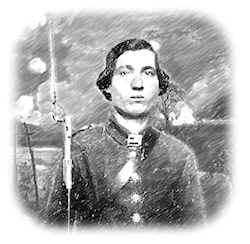
(Note: picture is of an unidentified Confederate soldier.)
Wednesday, 5th–It was cold last night to lie in open bivouac. A cold northwest wind was blowing, and although we built fires to sleep by, yet the night was very uncomfortable, for while one was warm on the side next to the fire he was freezing on the other. We lay still all day to rest, but many of the boys slipped out in small squads for forage; they ran all over the country and fetched in fresh pork by the wholesale. I was in a squad of six with our corporal and we came in with our haversacks filled with sweet potatoes. On returning to camp, we passed too close to the colonel’s tent, and he happened to be standing outside taking a sun bath. He called the corporal to his side, asked him where he had been, where he belonged, and taking out his penknife, cut from the corporal’s blouse his chevrons and gave him an order to his captain, reducing him to the ranks.[1] The rest of us passed on to our tents. While we were out foraging, the colonel issued an order directing each orderly sergeant in the regiment to have his company fall in line every thirty minutes for roll call, and every man not answering to his name was either to be put in the guardhouse or on extra duty. I was caught, but being a pretty good friend of the orderly. I got off easy. He ordered me to carry a kettle of water to the company cook, telling me that since this was my first offense, he would let me off with that. None of the boys was punished very hard.
[1] This, it has always seemed to me, was a mean, contemptible thing for the colonel to do.–A. G. D.
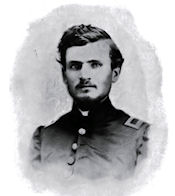
Wednesday, 5th. Up at 3 A. M. After breakfast started for Jones’ Mills, with two companies of 6th Kansas. Some 10th Kansas–two howitzers. Pitched tents and made ourselves comfortable.
NOVEMBER 5th.—Major Ruffin, in the Commissary Department, says the army must go on half rations after the 1st of January next.
It is alleged that certain favorites of the government have a monopoly of transportation over the railroads, for purposes of speculation and extortion!
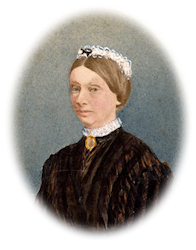
November 5th
Papa went off this morning with his man and his maid and I hope he will get down comfortably and be able to stay on his plantation. He went off feeling very sad and with heavy forebodings, but the times cause that.—The poor old gentleman we shall miss him very much, all his ridgid ways were sometimes very distressing. He disliked Harry and I can’t wonder at that for he is a most disagreeable child, excitable and worrying and without feelings of proper respect for those older, a noisy & trying child. The stately and old time politeness which was kept up between Mr Grimball & Papa is not often seen now. Mr Grimball read history to him and he made remarks and the two looked like specimens of long forgotten breeding only to be met in books: he heard more books talked of by Mr G. than he ever heard in his life.
Berkley Wilkins came up here to bring his wife to stay with Mrs Faber her Aunt; B. took down a carpet we sent for the soldiers, and 2 blankets & $50.—
Arthur has moved to Town and sent up for his clothes and as I had no trunk they were put in a bag. He was quite in want of a trunk and some more clothes: poor child Mr Grimball went out this morning to try & get him some shoes & pants.
5th.–Broke camp at 2 in the afternoon; moved four or five miles in a southerly direction, still keeping a few miles to the east of the Blue Ridge. No enemy encountered, and none found to-day by our advanced guard. Troops in fine health and spirits.
Tennessee.
Tuesday, 4th.—Reported that Breckinridge has surrounded Nashville and given them two days in which to surrender.
(Let me state just here that I give these reports simply to show the kind of news the private soldiers were continually receiving; very seldom a newspaper reached the hands of the private soldier, and less often were “Official Reports” made. Generally these rumors were as wide of the truth as it was possible for them to be.)
(Note: picture is of an unidentified Confederate soldier.)
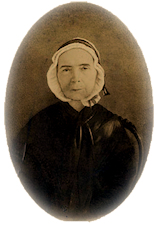
November 4.—A letter from my dear S. at Winchester. She says she is wearing herself down in the Confederate service; but there are so many soldiers in the hospitals that she is too much interested to give up nursing them even for a day. Our army still at Bunker’s Hill. We are expecting daily to hear that it is falling back. When they leave the Valley all the sick that can be moved will be brought down to the Richmond hospitals, which are now comparatively empty.
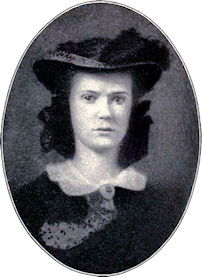
November 4th, 1862.
O what a glorious time we had yesterday! First, there were those two gentlemen to be entertained all day, which was rather a stretch, I confess, so I stole away for a while. Then I got the sweetest letter from Miss Trenholm, enclosing Jimmy’s photograph, and she praised him so that I was in a damp state of happiness and flew around showing my picture to everybody, Mr. Bradford included, who pronounced him a noble boy, and admired him to my satisfaction. Then came a letter from Lilly, saying mother had decided to remain in Clinton, and wanted us to join her there. O my prophetic soul! My heart went below zero! Then Colonel Allen sent to Port Hudson for the band to serenade us, and raised my spirits in anticipation of the treat. While performing my toilet in the evening, Waller Fowler arrived, on his way to Vicksburg, bringing a letter to Miriam from Major Drum! Heaven only knows how it got here! Such a dear, kind letter, dated 6th of August, only! Affairs were very different then, and he said that Lavinia’s distress about us was such that he must try to send her nearer to us. And such an unexpected piece of news! Oh, my heart fails me! I cannot fancy Lavinia a mother.
Slowly I dressed myself, and still more slowly I combed Anna. I could think of nothing else until I heard Miriam and Mr. Bradford call us to take a walk, when we hurried down to them. A race down to the railroad, a merry talk standing on the track mingled with shouts of laughter in which I tried to drown fears for Lavinia, made the early sunset clouds pass away sooner than usual, to us, and moonlight warned us to return. Mrs. Worley passed us in her buggy, coming to stay all night; and halfway a servant met us, saying two soldiers had come to call on us. Once there, I was surprised to find that one was Frank Enders, the one I least expected to see. The other was a Mr. Harold. I need not describe him, beyond this slight indication of his style. Before half an hour was over, he remarked to Anna that I was a very handsome girl, and addressed me as – Miss Sally! That is sufficient. [continue reading…]
Tuesday, 4th–We started rather early this morning and arrived at Grand Junction at 9 o’clock in the evening. The army has burned the fences along the road and set fire to many deserted houses.[1]
[1] Our march these two days was marred by the disgraceful spectacle of the waste and destruction of property. Some men set fire to the autumn leaves in the fence corners along the road. A high wind blowing soon spread the fire, which laid waste the timber and burned some farm buildings, together with their contents. Such destruction of property was the disgrace of our army—but it was at the seat of war.—A. G. D
Tuesday, 4th. During the day got a report of horses in detachments. Bill and I washed some clothes. Before dark orders came for a company of 2nd O. V. C. to report to Col. Weir with 3 days’ rations. Capt. N. went with 40 men, I along. Reported and after waiting an hour or two returned till daylight the next morning. Got a good sleep. Caught some cold from damp clothes.
NOVEMBER 4th.—An exposé of funds in the hands of disbursing agents shows there are nearly seventy millions of dollars not accounted for!
The members of the legislature are fearful of an attack on the Southern Railroad, and asks that Gen. Mahone be sent to Petersburg.
The government is impressing flour at $12 per barrel, when it is selling at $24; and as the railroads are not allowed to transport any for private use, it may be hoped we shall have our bread cheaper some of these days. But will the government make itself popular with the people?
The Examiner says a clerk in the War Department is making money in the substitute business. If this be true, it is rank corruption! But, then, what is the cotton business?
The Chief of Ordnance Bureau, Col. J. Gorgas (Northern by birth), recommends the Secretary of War to remove the lighter guns, some sixty in number, from the lower tiers of Forts Sumter, Moultrie, and Morgan, for the defense of the rivers likely to be ascended by the enemy’s gun-boats.
I saw, to-day, the President’s order to revoke the authority heretofore given Gov. Baylor to raise a brigade, and in regard to his conduct as governor (ordering the massacre of the Indians after collecting them under pretense of forming a treaty of peace). The President suggests that nothing be done until the Governor be heard in his own defense. It was diabolical! If it had been consummated, it would have affixed the stigma of infamy to the government in all future time, and might have doomed us to merited subjugation.
4th.–We have marched about ten miles, and are encamped at Union, a dirty little worn out village. It looks as if it was dying of dry gangrene, and was too weak to wash its face. Cannonading heard all day, and although we are marching from ten to fourteen miles a day; we do not seem to get nearer to it. We are now again over twenty miles into Virginia, and everything looks like a general movement which is “to be continued.”
Monday, 3d.—Brother Marshall came and brought us nice basket of provisions.
(Note: picture is of an unidentified Confederate soldier.)
Monday, 3d–We started at 8 this morning, and marched eighteen miles. We cannot get much sleep at night because the army is so large; it is about 10 o’clock every night before we get into camp. But the weather is quite cool and the roads are good for marching. We went into bivouac for the night in a large vacant field. We passed through some rich farming country today, which the foraging parties had not found. The farms have good buildings and fences, and the crops are bountiful.
Monday, 3rd. Orders to march at 7. Up at 3 A. M. Breakfasted and in saddle at 7. Advance guard. Marched 8 or 10 miles to Osage Spring 5 miles south of Bentonville, Ark., on Burns’ farm. Got the lady to bake some bread. Went out and killed some chickens. Quite tired at night.
NOVEMBER 3d.—The right wing of Lee’s army has fallen back as far as Culpepper County, and the enemy advances. Active movements are speedily looked for; many suppose a desperate attempt to take Richmond.
Our government has decided that no one shall be permitted to go North for thirty days.
A requisition for heavy guns to defend Cumberland Gap, elicited from the Inspector of Ordnance a statement of the fact that we are “short” of guns for the defense of Richmond.
There was a rumor yesterday that the enemy was marching in force on Petersburg. This, at all events, was premature.
A letter from Hon. C. C. Clay, Senator, says there is much defection in North Alabama, and that many people are withdrawing themselves to avoid conscription.
Just at this time, if it were not for Lincoln’s proclamation, if the war were conducted according to the rules of civilized nations, I verily believe a very formidable party in favor of RECONSTRUCTION might spring up in the South. With a united South, two million of Abolitionists could not subjugate us.
3d.–Division left camp at 7 this A. M., crossed the Potomac at Berlin, on a pontoon bridge, and march in a southwestern direction through Lovettsville. The Blue Ridge loomed up all day, to our right, and separated us from the Shenandoah Valley. All day we hear heavy firing beyond the Ridge, at Snicker’s Gap, through which the enemy was driven yesterday. General Pleasanton is after them.
Sunday, 2d.—Moved half-mile. Brother Harvey came to see us.
(Note: picture is of an unidentified Confederate soldier.)
Sunday, November 2d.
Yesterday was a day of novel sensations to me. First came a letter from mother announcing her determination to return home, and telling us to be ready next week. Poor mother! she wrote drearily enough of the hardships we would be obliged to undergo in the dismantled house, and of the new experience that lay before us; but n’importe! I am ready to follow her to Yankeeland, or any other place she chooses to go. It is selfish for me to be so happy here while she leads such a distasteful life in Clinton. In her postscript, though, she said she would wait a few days longer to see about the grand battle which is supposed to be impending; so our stay will be indefinitely prolonged. How thankful I am that we will really get back, though! I hardly believe it possible, however; it is too good to be believed.
The nightmare of a probable stay in Clinton being removed, I got in what the boys call a “perfect gale,” and sang all my old songs with a greater relish than I have experienced for many a long month. My heart was open to every one. So forgiving and amiable did I feel that I went downstairs to see Will Carter! I made him so angry last Tuesday that he went home in a fit of sullen rage. It seems that some time ago, some one, he said, told him such a joke on me that he had laughed all night at it. Mortified beyond all expression at the thought of having had my name mentioned between two men, I, who have thus far fancied myself secure from all remarks good, bad, or indifferent (of men), I refused to have anything to say to him until he should either explain me the joke, or, in case it was not fit to be repeated to me, until he apologized for the insult. He took two minutes to make up a lie. This was the joke, he said. Our milkman had said that that Sarah Morgan was the proudest girl he ever saw; that she walked the streets as though the earth was not good enough for her. My milkman making his remarks! [continue reading…]
Sunday, 2d–We struck our tents, packed our knapsacks and sent them into Corinth for storage. The sick were all left in the hospital at Corinth. We started at 2 p. m. and marched fourteen miles, when we bivouacked for the night. The roads are very dusty and the weather is quite cool, but we are breaking the chill by building campfires.
Sunday, 2nd. In the morning read Oct. Atlantic. In the P. M. finished Fannie’s letter. Detail came for Lt. or trusty Srgt. to go out with 30 men as escort to brigade forage teams. Officers said they proposed sending me. I agreed if they wished it, to start at 7:30 A. M.
NOVEMBER 2d, SUNDAY.—I watch the daily orders of Adjutant and Inspector-Gen. Cooper. These, when “by command of the Secretary of War,” are intelligible to any one, but not many are by his command. When simply “by order,” they are promulgated by order of the President, without even consulting the Secretary; and they often annul the Secretary’s orders. They are edicts, and sometimes thought very arbitrary ones. One of these orders says liquor shall not be introduced into the city; and a poor fellow, the other day, was sentenced to the ball-and-chain for trying to bring hither his whisky from Petersburg. On the same day Gov. Brown, of Georgia, seized liquor in his State, in transitu over the railroad, belonging to the government!
Since the turning over of the passports to Generals Smith and Winder, I have resumed the position where all the letters to the department come through my hands. I read them, make brief statements of their contents, and send them to the Secretary. Thus all sent by the President to the department go through my hands, being epitomized in the same manner.
The new Assistant Secretary, Judge Campbell, has been ordering the Adjutant-General too peremptorily; and so Gen. Cooper has issued an order making Lieut.-Col. Peas an Acting Assistant Secretary of War, thus creating an office in defiance of Congress.