0

Louise Wigfall Wright — A Southern Girl in ’61

November 9, 18621

         “We had quite a snow-storm day before yesterday, and it is still very cold. I am afraid our poor soldiers will suffer dreadfully from the weather this winter, as I heard yesterday that we had upwards of 10,000 men without shoes!
         “Genl. Johnston2 is improving, and speaks of reporting for duty in two weeks, but Papa says he doubts if he is able.”


  1. Writing from Richmond, Virginia
  2. October found us delightfully situated in a comfortable house on Grace Street. General and Mrs. Joseph E. Johnston, ourselves, and Major Banks, composed our “Mess.”—Louise Wigfall Wright.
0 comments

Rebel War Clerk

Civil War Day-by-Day
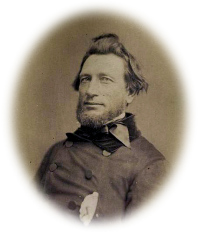
A likeness of Jones when he was editor and majority owner of the Daily Madisonian during President John Tyler’s administration.

NOVEMBER 9th.—It is too true that Charleston, Va., and the great Kanawha salt works have been abandoned by Gen. Echols for the want of an adequate force to hold them, If the President had only taken Gen. Lee’s advice a month ago, and ordered a few thousand more men there, under the command of Gen. Ed. Johnson, we should have kept possession of the works. The President may seem to be a good nation-maker in the eyes of distant statesmen, but he does not seem to be a good salt-maker for the nation. The works he has just relinquished to the enemy manufacture 7000 bushels of salt per day—two million and a half a year—an ample supply for the entire population of the Confederacy, and an object adequate to the maintenance of an army of 50,000 in that valley. Besides, the troops necessary for its occupation will soon be in winter quarters, and quite as expensive to the government as if in the valley. A Cæsar, a Napoleon, a Pitt, and a Washington, all great nation-makers, would have deemed this work worthy their attention.

Only three days ago the President wrote to the Secretary that the idea of trading cotton to the enemy must be postponed until the first of January, and perhaps indefinitely, but now he informs Mr. Randolph that he has sent the requisite authority to his friend, Gov. Pettus, to launch out in that trade.

No, the people have made the nation. It is a people’s war, and it is the momentum of a united, patriotic people, which carries everything with it. Our brave men win victories under adverse circumstances, and often under incompetent officers, and the people feed and clothe the armies in spite of the shortcomings of dishonest commissaries and quartermasters. They are now sending ten thousand pairs of shoes to Lee’s army in opposition to the will of the Jew Myers, Quartermaster-General, who says everything must be contracted and paid for by his agents, according to red-tape rule and regulation.

The weather continues cold, 38°, and snow still lies on the ground. This must produce a cessation of hostilities, and afford Lincoln’s drafted recruits opportunity for meditation.

If it be true that the Democrats have carried the day in the North, I think the war is approaching a termination.

0 comments

Barefoot men march in snow.

Experience of a Confederate Chaplain—Rev. A. D. Betts, 30th N. C. Regiment

Nov. 9—Division moves to Strasburg. Barefoot men march in snow. Bury H. Y. Kirkpatrick at night in Presbyterian cemetery. He enlisted at nineteen, from Mecklenburg county. Lovely Christian. Died in the house of Mrs. Davis, November 8th, 10:30 p. m. How sad the sight! How tenderly a few of his comrades raked away the snow, dug the grave and laid the noble youth away! The chaplain’s prayer is that he and they may meet him on the Resurrection Day.

0 comments

Journal of Surgeon Alfred L. Castleman.

Journal of Surgeon Alfred L Castleman.

Sunday, 9th.–How little like Sunday the day has been; marching, whooping, hollering. Few even know it is Sunday. From present appearances, one would judge that–

“The sound of the church going bells,
These valleys and rocks never heard.”

March to-day with all teams in advance. What does it mean? Are we again retreating with our two hundred thousand of the best troops the world ever saw? I will not believe it yet, though McClellan’s friends claim that he is the best retreater known in modern warfare. We are encamped to-night near New Baltimore, a Virginia town, which once boasted a blacksmith shop and two houses.

0 comments

“I have received an order conferring upon me the title of Brigadier-General and assigning me to the command of Jackson’s old brigade. I made no application for it…,”–Letters from Elisha Franklin Paxton.

Elisha Franklin Paxton – Letters from camp and field while an officer in the Confederate Army

Camp near Port Royal, November 9, 1862.

The day before yesterday we had a snow, and the weather is now quite cold. Winter seems to have set in, and it finds us sadly prepared for it. A large number of our soldiers are entirely barefooted, and very many without blankets. Living in the open air, without tents and with a very small supply of axes to cut wood for fires, there is much suffering. Those of our people who are living at home in comfort have no conception of the hardships which our soldiers are enduring. And I think they manifest very little interest in it. They are disposed to get rich from the troubles of the country, and exact from the Government the highest prices for everything needed for the army. I trust the Government will soon take the matter in hand, fix its own prices, and take what it wants for the army. Everything here indicates that we move to-morrow– where, there is no telling. But I trust we may soon find ourselves settled for the winter. If active operations were suspended for the winter, our men could soon build huts and make themselves comfortable. If, however, we have active operations, the sufferings of our men must be intense.

So you growl about Sunday letters. They are written on that day because all work in the army is suspended on that day and I always have leisure then. They are not interesting, you say. I am sorry for it. It is because I have but little to write about that would interest you. They always tell you I am alive and doing well. Isn’t that always interesting intelligence?

You never mentioned in your letter which company White Williamson is in. Let me know and I will go to see him. Give my love to Martha, and tell her I say she has good quarters in Lexington and she had better stay there. Our army is a moving concern, and there is no telling where it will be a month hence. Possibly we may be here, quite as likely at Richmond.

You speak of the army as my idol, but you never were more mistaken. I had a good deal rather live in a house than a tent, though I can bear the change, as there is no helping it. I had a good deal rather be with you and the children than with my idol, the army, your opinion to the contrary notwithstanding. And now, Growler, good-bye.

P. S. Since that was written, I have received an order conferring upon me the title of Brigadier-General and assigning me to the command of Jackson’s old brigade. I made no application for it, and if I had consulted my own inclination should have been disposed to remain in my present position.

0 comments

Robert M. McGill

Robert M. Magill – Personal Reminiscences of a Confederate Soldier Boy, 39th Georgia Regiment of Infantry

Saturday, 8.—Brother Lon gone to Marshall’s. Drew tents for company.


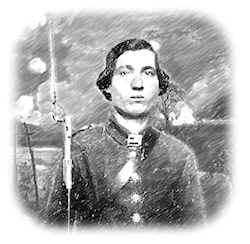
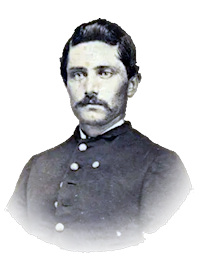
(Note: picture is of an unidentified Confederate soldier.)

0 comments

0

Civil War Day-by-Day

November 8th. Came to anchor off South-West Pass at nine A. M. We were saluted with thirteen guns by a large French man-of-war which was lying to anchor at this place. We returned the salute. At three thirty P. M., Richmond got under way and attempted to cross the bar, but unfortunately she grounded; signalized for steamer Tennessee to assist in getting her over; after about two hours hard working they succeeded in passing over; in the meantime we got under way and steamed over the bar without any difficulty.

Again in the old Mississippi river. At six forty-five P. M., passed the steamer Potomac going down, bound for New York. At ten P. M., arrived at the forts; here a gun was fired as a signal for us to come to; after ascertaining who we were we were allowed to pass on. It will be remembered that on the eventful morning of April 24th, 1862, there was more than one gun fired at us as a signal for us to come to. Not deeming it expedient to stop, we continued on our course. Our conduct in this particular was considered by those occupying Forts Jackson and St. Philip at that time impudent and insulting in the extreme. Finding that we took no heed to the gun which they first fired, they immediately fired another, and another. Thinking therefore, that we had been very finely saluted, it was considered proper that we should return it, so accordingly, finding that our battery was in order and in fine trim, we paid our compliments to Mr. Secesh by giving them a few broadsides, making brick and mortar fly in all directions. Not liking our style altogether, the firing soon became general, and it was not long before it was ascertained that somebody was missing. However, continuing on our course we passed the quarantine grounds at eleven P. M. Having a very good pilot on board, we were able to run all night, reaching the city on the following morning.

0 comments

Downing’s Civil War Diary.–Alexander G. Downing.

Diary of Alexander G. Downing; Company E, Eleventh Iowa Infantry

Saturday, 8th–Nothing of importance. A large detail from the Sixth Division was sent to clear a place for a drill ground down on the second bottom of the creek south of our bivouac.

0 comments

War Diary of Luman Harris Tenney.

War Diary of Luman Harris Tenney.

Saturday, 8th. Still southwest to Rhea’s Mills ten miles and then breakfast–fresh beef and no salt. Col. Philips here two nights before, two of his Indians shot. Two girls wounded severely by rebels firing into a house. After breakfast went to my own men with Capt. Gave Capt. Lucas detachment–the advance. Direction southeast. Rode 7 or 8 miles to Cane Hill–Boonsboro– hilly country. Pickets fired upon at Cane Hill. Captured a secesh saddle and equipments. Went into town. Col. made inquiries and moved on. Col. always with the advance. Went a couple of miles and bang, bang, went guns. Soon 60 or 70 men showed themselves in the woods on a hill half a mile to our left. Sharp’s rifles and carbines came into play–no effect–distance too great. Howitzers came up, cavalry fell back into the woods and shell went whizzing over the cornfield. They skedaddled. One fellow whom 8 or 10 men started for, ran forward and threw down the fence and then ran back behind a tree. Blue overcoat. Did not take him. Bold fellow. They took two or three prisoners. After some delay, Col. learned that the rebels, 400 or 500, were one mile farther on. Went on a mile, saw pickets on a distant hill. Sharpshooters advanced, and then command moved forward. Found camp just vacated–fires still burning. Went over the Boston mountains. Over the mountains at the foot, our extreme advance came in sight of rear guard of the enemy. A charge was ordered and away we flew with loose reins and set spurs, up hill and down hill, across and back again Cove Creek, a very rough road. After three miles we began to see stirrups, blankets, corn and a thousand things strewn along the road. The Col. was up with us. He commenced yelling, which was kept up by all the men. More things scattered along. After ten miles in the midst of excitement, back came a volley of shot and bullets from the bush at a point a little elevated just ahead of us. The extreme advance fell back a few rods. Up we rode upon a charge into the bush as we were ordered. We rode up and fired away. Still farther up into the road we were ordered. We hurried up and formed along the road facing the bush. The bullets whistled merrily for a season. Not over 20 or 25 were up. We fired all our rounds, then a sabre charge was ordered. We had our sabres drawn and ready for a charge, when Capt. Lucas’ horse was shot and the rebels were running by a byroad. The color-bearer was shot through the head and colors captured, 13 stars–two others were reported killed. Waited for signs of the enemy, but in vain. Went down and helped about unloading wagons and burned them. None of us harmed. Started back. Returned 4 or 5 miles and camped. All the boys got some little trap–baggage and equipments of Mo. Provost Guard commanded by Provost Gen. McDonald. Private correspondence of Col. Sevier of Marseilles, Mo. One excellent letter from his Aunt Phil on the war.

0 comments

Rebel War Clerk

Civil War Day-by-Day
A likeness of Jones when he was editor and majority owner of the Daily Madisonian during President John Tyler’s administration.

NOVEMBER 8th.—The European statesmen, declining intervention in our behalf, have, nevertheless, complimented our President by saying he has, at all events, “made a nation.” He is pleased with this, I understand. But it is one of the errors which the wise men over the water are ever liable to fall into. The “nation” was made before the President existed: indeed, the nation made the President.

We have rumors of fighting near the mouth of the Shenandoah, and that our arms were successful. It is time both armies were in winter quarters. Snow still lies on the ground here.

We have tidings from the North of the triumph of the Democrats in New York, New Jersey, etc. etc. This news produces great rejoicing, for it is hailed as the downfall of Republican despotism. Some think it will be followed by a speedy peace, or else that the European powers will recognize us without further delay. I should not be surprised if Seward were now to attempt to get the start of England and France, and cause our recognition by the United States. I am sure the Abolitionists cannot now get their million men. The drafting must be a failure.

The Governor of Mississippi, (Pettus) informs the President that a Frenchman, perhaps a Jew, proposes to trade salt for cotton—ten sacks of the first for one of the latter. The Governor says he don’t know that he has received the consent of “Butler, the Beast” (but he knows the trade is impossible without it), but that is no business of his. He urges the traffic. And the President has consented to it, and given him power to conduct the exchange in spite of the military authorities. The President says, however, that twenty sacks of salt ought to be given for one of cotton. Salt is worth in New Orleans about one dollar a sack, cotton $160 per bale. The President informed the Secretary of what had been done, and sends him a copy of his dispatch to Gov. Pettus. He don’t even ask Mr. Randolph’s opinion.

0 comments

November 1 to 8, 1862—Water freezes by my side as I lie on the ground.

Experience of a Confederate Chaplain—Rev. A. D. Betts, 30th N. C. Regiment

Nov. 1—Bro. Power and I walk up the mountain and spend two or three hours. Fine view. Pray together up there.

Nov. 2—Bro. Power begins to preach et 10: 30, but troops are ordered out and fall back toward Paris and lie in line of battle all night.

Nov. 5—Brigade in camp near Fort Royal. Call on Rev. Dr. Hough, pastor of M. E. Church, South. Lovely man and wife.

Nov. 6—Hoarse and feeble. Bad cold. Move across river after night. Very cold. Men wade and walk a mile to camp, some without shoes. Water freezes by my side as I lie on the ground.

Nov. 7—Snow begins to fall at 10 a. m. Bad day on bare feet.

Nov. 8—General Hill calls for volunteers to render daring, dangerous service for two or three days. We have prayers at our fire.

0 comments

Journal of Surgeon Alfred L. Castleman.

Journal of Surgeon Alfred L Castleman.

8th.–More pleasant than yesterday. In camp all day. There is a rumor that the enemy have taken one hundred and fifty of our teams in the Shenandoah Valley, and that they are again at Harper’s Ferry. The report is not credited here,[1] but it is certain that they have cut the railroad four miles east of us, stopping our supplies from Washington. Hard times ahead.


[1] Proved to be false.

0 comments

Robert M. McGill

Robert M. Magill – Personal Reminiscences of a Confederate Soldier Boy, 39th Georgia Regiment of Infantry

Friday, 7th.—Brother Tom gone to Brother Marshall’s, on Fork Creek, to-day; snowing.


(Note: picture is of an unidentified Confederate soldier.)

0 comments

“Between here and Bolivar, some 30 miles, I think there is not a house left or rail left unburned, and ’twas all done on our trip down.”–Army Life of an Illinois Soldier, Charles Wright Wills.

Civil War Day-by-Day

Camp at Lagrange, West Tennessee, November 7, 1862.

To say that we have been crowded, jammed, put through, hustled, skited, etc., don’t half express the divil-of-a-hurry headquarters has shown and is showing us. We left Peoria one week ago last night, crossed the bridge at precisely 6 o’clock p.m. Since that we have traveled one day and one night on the cars, a day resting, beside stacked arms waiting orders, the first quarter of a night pitching tents, then received orders to march with five days’ rations at daylight, and the rest of the night spent in preparation therefor, then two days’ marching through the awfullest dust you ever saw, so thick we almost had to kick it out of the way to get our foot to the ground, then a day of rest and fat living off secesh pork, etc., and the seventh day a march of 20 miles by our whole brigade, after a little party of Rebel cavalry that couldn’t more than eat a hog a day. Pretty good work for a green regiment, wasn’t it? It seems real natural to be down in Secessia, the country where a 300-pound porker don’t cost any more than a chicken that costs nothing. But some things we have to buy for our mess, and to show you what they cost, I will mention the items of flour and salt. The former is worth 50 cents per pound, and the latter $1 a pound. We wouldn’t have to buy them of citizens, but scarcity of transportation obliged our A. C. S. to leave everything but traveling rations, viz.; Bacon, sugar, coffee and crackers. There is a man making boots in town at $45 a pair, and he can’t get leather to fill his orders. Fine country. Between here and Bolivar, some 30 miles, I think there is not a house left or rail left unburned, and ’twas all done on our trip down. The fires were all lit by troops that marched ahead of us, and although the smoke and heat were disagreeable enough, yet I think the 103d generally approved of the proceedings. Yet I was glad enough when the colonel, by the general’s orders, called us to answer the question, “Do you know that any of your men burned rails, houses, or destroyed any property on the march from Bolivar?” that the 103d had not participated. Major General McPherson, commanding this corps, disapproves of such conduct and will severely punish offenders if caught, which latter item is not at all probable. Tis generally understood that the Union Tennessee Cavalry did the work. The 7th Illinois is here with us and all are well that you know.

We have good tents and are otherwise better prepared for soldiering than I ever was before.

We have between 30,000 and 40,000, I suppose, between here and a point eight miles east. Price is supposed to be in the neighborhood of Holly Springs, 30 miles southwest, with 40,000 to 60,000. They say we are waiting for the Memphis troops to join us before we go down and scoop him. We have the half of the old army of the Mississippi here, and part of the army of West Tennessee, nearly all experienced troops.
0 comments

Diary of a Southern Refugee, Judith White McGuire.

Diary of a Southern Refugee During the War by Judith White McGuire

November 7.—The snow falling rapidly—the trees and shrubs in full leaf, and the rose-bushes, in bright bloom, are borne down by the snow. Our poor soldiers! What are they to do to-night, without shelter, and without blankets? Everybody seems to be doing what they can to supply their wants; many persons are having carpets made into soldiers’ blankets. My brother J. told me that he had every chamber carpet in the house, except one, converted into coverlets; and this is by no means a singular instance. A number of coverlets, made of the most elegant Brussels carpeting, were sent by Mr. B., of Halifax County, the other day, to our hospital, with a request to Miss T. that blankets should be given from the hospital to the camp, as more easily transported from place to place, and the carpeting retained in the hospital. This was immediately done. The blankets that could be spared from private houses were given last winter. How it gladdens my heart when I see that a vessel has run the blockade, and arrived safely at some Southern port, laden with ammunition, arms, and clothing for the army! The Bishop and J. have just left us, for the council of the Southern Church, to meet at Augusta, Georgia. Oh that their proceedings may be directed by the All-wise Counsellor!

0 comments

0

Civil War Day-by-Day

November 7th. It is just two months and eighteen days since we first cast our anchor in Pensacola Bay. Up to the present time nothing has occurred worthy of note. It was the general impression on our arrival here that we came to Pensacola for the purpose of making every necessary preparation for an attack upon Mobile. All of the vessels attached to our fleet required more or less repairing, particularly the old Hartford, but now it seems the programme for the season is changed, and we are once more to pay our compliments to the old Mississippi river. Our Admiral has been informed by the commanding officer whom we left in the river to guard the city, that the rebels are building more batteries along the banks of the river some miles above the city. We are informed that they are strongly fortifying Port Hudson, which is one hundred and sixty-four miles above New Orleans, situated on high bluffs similar to Vicksburg. I sincerely hope that if we are called upon to do more fighting in this vicinity, as I presume we shall according to the aspect of things at present, then may we clean them out thoroughly.

Our ship is once more under way, bound for New Orleans. This morning at ten o’clock we weighed anchor, and started ahead, followed by the U. S. steam sloop Richmond, and U. S. transport Tennessee. Arrived off Mobile at six P. M., found the U. S. sloop of war Brooklyn at anchor here, which vessel has been lying here for some time, doing blockade duty. We came to here, while Capt. Bell of the Brooklyn came on board to report to the Admiral. At eight P. M., started ahead, shaped our course for South-West Pass, Mississippi.

0 comments

Downing’s Civil War Diary.–Alexander G. Downing.

Diary of Alexander G. Downing; Company E, Eleventh Iowa Infantry

Friday, 7th–The weather is fine with quite cold nights. We are on half rations now, because there are no trains through from Corinth.

0 comments

War Diary of Luman Harris Tenney.

War Diary of Luman Harris Tenney.

Friday, 7th. Capt. Quigg after examination released “Dr. Brissel” without a parole. Capts. Lucas and Nettleton and all the boys think the man fooled us–black hair and whiskers, good looking and very gentlemanly. Heard no mean expression. When I bade him good morning, three miles out, he shook hands with me, and said if we ever got into trouble, he would be glad to do what he could for us. At 11 A. M. got orders to march with two days’ rations, at 12 M. Had no bake kettles and no rations but beans and flour. Got me a canteen full of bean soup. Ready at noon. 25 2nd Ohio and 25 6th Kansas. Had charge of platoon of twelve–our boys. Went west, trotted most of the time. Got to the tannery at 3 P. M. 13th at work getting out the hides from the vats. Soon Col. Cloud with 250 or 300–and all went to work. A grand scene. Would like to see it represented in Leslie. Burned up twenty or twenty-five thousand dollars worth of property. Started in about dark–southwest. Went 15 or 20 miles, mostly on a trot. Then stopped at a field of corn and lay down by fires till 4 or 5 A. M. Changed platoons to get 2nd Ohio together. Capt. N. with Kansas platoons.

0 comments

Rebel War Clerk

Civil War Day-by-Day
A likeness of Jones when he was editor and majority owner of the Daily Madisonian during President John Tyler’s administration.

NOVEMBER 7th.—Yesterday I received from the agent of the City Councils fourteen pounds of salt, having seven persons in my family, including the servant. One pound to each member, per month, is allowed at 5 cts. per pound. The extortionists sell it at 70 cts. per pound. One of them was drawing for his family. He confessed it; but said he paid 50 cts. for the salt he sold at 70 cts. Profit $10 per bushel! I sent an article to-day to the Enquirer, suggesting that fuel, bread, meat, etc. be furnished in the same manner. We shall soon be in a state of siege.

Last night there was a heavy fall of snow.

The authorities of Charleston, with the concurrence of Beauregard, advise all the non-combating population to leave the city, and remove their personal property. The city will be defended to the last extremity.

What a change in the Executive Department! Before the election, the President was accessible to all; and even a member of Congress had no preference over the common citizen. But now there are six aids, cavalry colonels in rank and pay, and one of them an Englishman, who see the people, and permit only certain ones to have access to the President. This looks like the beginning of an imperial court. But what may not its ending be?

I see that Mr. Hurlbut, incarcerated once as a spy, or as a writer for an Abolition paper in New York, and a Northern man himself, after being protected by Mr. Browne (the English A.D.C. of the President) and released by Mr. Benjamin from prison, has escaped to the North, and is out in a long article in the Times! He says he got a passport from Gen. Winder’s Provost Marshal. Mr. James Lyons thought he had made H. a Southern man; what does he think now?

The “290″ or Alabama, the ship bought in Europe, and commanded by Capt. Semmes, C. S. N., is playing havoc with the commerce of the United States. If we had a dozen of them, our foes would suffer incalculably, for they have an immense amount of shipping. I see Semmes had captured the Tonawanda, that used to lie at the foot of Walnut Street, Philadelphia; but he released her, first putting the master under bond to pay President Davis $80,000 after the war. I hope he will pay it, for I think the President will want the money.

0 comments

0

Louise Wigfall Wright — A Southern Girl in ’61

“CULPEPER C. H., Nov. 7th, 1862.

“My dear General,1
“Your kind favor of 17th ulto. was duly received. I have been waiting to have your son’s decision before writing.

“I heard yesterday that you and the President had had an unpleasant interview. It is no business of mine, but I would like to take the liberty to beg you not to allow anything to bring about any difference between you. We think that all our hopes rest upon you and the hopes of the country rest upon the army. You will readily perceive what weight you have to carry. Most truly and sincerely yours,

“J. B. LONGSTREET.”


  1. In a letter from Genl. Longstreet allusion is made to the break in the friendship between my father and the President. — Louise Wigfall Wright
0 comments

Journal of Surgeon Alfred L. Castleman.

Journal of Surgeon Alfred L Castleman.

7th –Cold and blustery last night. Ice half an inch thick, with driving snow storm this morning; very uncomfortable. No move to-day.

0 comments

A Confederate Girl’s Diary

Civil War Day-by-Day

November 6th.

We three girls fancied a walk last evening, and immediately after dinner prepared to walk to Mrs. Breaux’s, only a mile, and get her to come to the sugar-house. But as we put on our bonnets, Captain Bradford, brother of the one who left in the morning, was announced, and our expedition had to be abandoned. This is the third of the five brothers that I have met, and if it were not for the peculiarity in their voices, I should say that there was not the most distant relationship existing between them. This one is very handsome, quiet, and what Dickens calls “in a high-shouldered state of deportment.” He looks like a moss-covered stone wall, a slumbering volcano, a – what you please, so it suggests anything unexpected and dangerous to stumble over. A man of indomitable will and intense feeling, I am sure. I should not like to rouse his temper, or give him cause to hate me. A trip to the sugar-house followed, as a matter of course, and we showed him around, and told him of the fun we had those two nights, and taught him how to use a paddle like a Christian. We remained there until supper-time, when we adjourned to the house, where we spent the remainder of the evening very pleasantly. At least I suppose he found it so, for it was ten o’clock before he left.

– – – – – – – –

Just now I was startled by a pistol shot. Threatening to shoot her, Mr. Carter playfully aimed Miriam’s pistol at her, and before he could take fair aim, one barrel went off, the shot grazing her arm and passing through the armoir just behind. Of course, there was great consternation. Those two seem doomed to kill each other. She had played him the same trick before. He swore that he would have killed himself with the other shot if she had been hurt; but what good would that do her?

0 comments

Downing’s Civil War Diary.–Alexander G. Downing.

Diary of Alexander G. Downing; Company E, Eleventh Iowa Infantry

Thursday, 6th–The Sixth Division remained in bivouac here at Grand Junction, while a part of the army moved on to Holly Springs. We have roll call now every hour during the day.

0 comments

War Diary of Luman Harris Tenney.

War Diary of Luman Harris Tenney.

Thursday, 6th. In the morning went out with four men to forage three and one-half miles south. Load of oats for 6th and 2nd. The owner just up from Vanburen with two bushels of salt. Seemed to have considerable information, so took him in to Capt. Quigg. One of the boys met me with my horse to go with Capt. and 20 men on scout. Had to gallop a good distance to catch up. Within seven miles of Fayetteville, fifteen miles distant from camp, took a prisoner from Col. Armstrong’s conscripts. He was at home–on furlough–been sick. Out with horse saddled, talking with his wife washing by the clear stream of water. She seemed a very pretty lady, pitied her–innocent looking man. Before reaching Fayetteville two miles out, Capt. sent me with three men, Porter, Morgan and Shaw. After going a mile, found a fire; soon spied two mounted men with glistening guns around a point of woods, watching us and quietly disappearing. Sent back word. No answer and went on. After half a mile we got within sight of them, but did not know whether to shoot or not–no instructions. They took a final look and went pellmell down the hill. Sent word to Capt. No instructions again. Neared town–women and girls at windows and doors–perfectly ignorant! Didn’t know that there were any secesh in town. Passed by a large house. Big negro woman stood on the stoop, showing her teeth and pointing to town ominously, and shook her head. Such were appearances. By the tannery stood a grey horse, looking like the one the picket was riding; were discussing whether to take it or not, when two men came out, citizens apparently; said there were but two or three dozen in town. Capt. halted his command and overtook us and asked what we had learned. Told us not to go further for the present. Turn back if he whistled. After enquiries whistled and turned back. Porter and I kept in the rear in hope that they would follow us. Three miles out saw a man at a house near by. Rode out and learned that he had charge of a hospital at F. Had no papers to show it. Took him to Capt. He brought him to camp. Rode along beside him all the way in. Had been in the service one year last May, on Raines’ staff. Dressed in a field officer’s uniform, coat, black pants, neat gloves and cap and patent leather boots. Was perfectly sanguine of success eventually–perfectly posted in regard to our movements. A lady was out riding with him, out to see some sick. Very indignant. Waited at a private house with him for supper, while Capt. went to camp and back. Ladies very much pleased to see him. Very sure he is an officer of rank. Said he had no commission as surgeon. Showed an appointment as assistant surgeon by surgeon of 8th Div. Mo. State Guards.

0 comments

Rebel War Clerk

Civil War Day-by-Day
A likeness of Jones when he was editor and majority owner of the Daily Madisonian during President John Tyler’s administration.

NOVEMBER 6th.—I believe the commissaries and quartermasters are cheating the government. The Quartermaster-General sent in a paper, to-day, saying he did not need the contributions of clothes tendered by the people of Petersburg, but still would pay for them. They were offered for nothing.

The Commissary-General to-day says there is not wheat enough in Virginia (when a good crop was raised) for Gen. Lee’s army, and unless he has millions in money and cotton, the army must disband for want of food. I don’t believe it.

There are 5000 negroes working on the fortifications near the city, and 2500 are to work on the Piedmont Railroad.

We are all hoping that New York and other States declared against the Republicans, at the elections in the United States, on Tuesday last. Such a communication would be regarded as the harbinger of peace. We are all weary of the war, but must and will fight on, for no other alternative remains. Everything, however, indicates that we are upon the eve of most interesting events. This is the time for England or France to come to the rescue, and enjoy a commercial monopoly for many years. I think the Secretary of War has abandoned the idea of trading cotton to the enemy. It might cost him his head.

0 comments