Sunday, 2nd. In the morning read Oct. Atlantic. In the P. M. finished Fannie’s letter. Detail came for Lt. or trusty Srgt. to go out with 30 men as escort to brigade forage teams. Officers said they proposed sending me. I agreed if they wished it, to start at 7:30 A. M.
American Civil War Chronicles
Rebel War Clerk
November 2, 2022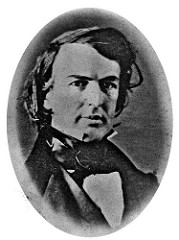
NOVEMBER 2d, SUNDAY.—I watch the daily orders of Adjutant and Inspector-Gen. Cooper. These, when “by command of the Secretary of War,” are intelligible to any one, but not many are by his command. When simply “by order,” they are promulgated by order of the President, without even consulting the Secretary; and they often annul the Secretary’s orders. They are edicts, and sometimes thought very arbitrary ones. One of these orders says liquor shall not be introduced into the city; and a poor fellow, the other day, was sentenced to the ball-and-chain for trying to bring hither his whisky from Petersburg. On the same day Gov. Brown, of Georgia, seized liquor in his State, in transitu over the railroad, belonging to the government!
Since the turning over of the passports to Generals Smith and Winder, I have resumed the position where all the letters to the department come through my hands. I read them, make brief statements of their contents, and send them to the Secretary. Thus all sent by the President to the department go through my hands, being epitomized in the same manner.
The new Assistant Secretary, Judge Campbell, has been ordering the Adjutant-General too peremptorily; and so Gen. Cooper has issued an order making Lieut.-Col. Peas an Acting Assistant Secretary of War, thus creating an office in defiance of Congress.
Journal of Surgeon Alfred L. Castleman.
November 2, 2022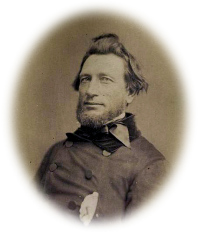
Sunday, 2d.–All quiet to-day, preparatory to moving. Spent most of the day in calling on and receiving calls from the officers and soldiers of the regiment. All seemed glad to welcome me back. I hope and believe they were sincere. Went to church in the afternoon, but heard no sermon.
“We then hoped a few months would end the war and we would all be at home again. Sadly we were disappointed.”–Letters from Elisha Franklin Paxton.
November 2, 2022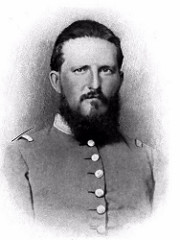
Berryville, Clark Co., November 2, 1862.
I have just returned from a ride down to the camp of my old comrades, with whom I have spent a very pleasant day. The old tent in which I quartered last spring and winter looked very natural, but the appearance of the regiment was very much changed. But few of the officers who were with me are in it now. In my old company I found many familiar faces in those who went with me to Harper’s Ferry last spring a year ago. We then hoped a few months would end the war and we would all be at home again. Sadly we were disappointed. Many of our comrades have gone to their long home, and many more disabled for life. And now when we look to the future we seem, if anything, farther from the end of our troubles than when they began. Many of us are destined yet to share the fate of our dead and wounded comrades, a few perhaps survive the war, enjoy its glorious fruits, and spend what remains of life with those we love. We all hope to be thus blessed; but for my part I feel that my place must be filled and my duty done, if it cost me my life and bring sorrow to the dear wife and little ones who now watch my path with so much anxiety and pray so fervently for my safe deliverance. The sentiment which I try to hold and cherish is God’s will and my duty to be done, whatever the future may have in store for me. I am glad to feel, darling, that although I have been writing to you for nearly eighteen months, and this has been the substitute for our once fond intercourse, I feel when I write now that I miss you none the less than I did when this cruel war first placed the barrier of separation between us. I hope as fondly as ever that the day may soon come when we will live in peace and quiet together. Eight years ago to-day, Love, we began our married life, very happy and full of hope for the future. Thus far it has been made of sunshine and shadow, joy and sorrow, strangely intermingled. The darker shade of life has for a long time predominated; may we not hope for a change of fortune ere long?
Robert M. McGill
November 1, 2022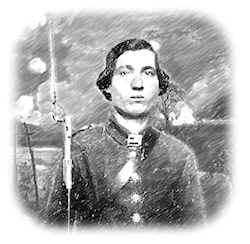
Saturday, November 1st.—Uncle Nathan Anderson and Aunt Matilda and Cousin Mary Conley came to see us to-day.
(Note: picture is of an unidentified Confederate soldier.)
Downing’s Civil War Diary.–Alexander G. Downing.
November 1, 2022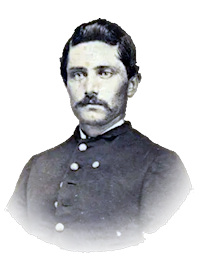
Saturday, 1st–I was on guard today. The Sixth Division received orders to march in the morning.[1] We are to go in light equipment, leaving here our knapsacks and tents, which are to be put in storage.
[1] The Eleventh Iowa regiment was within fifty miles of Corinth for two hundred and thirty-four days, and in that time took active part in the two days’ battle at Pittsburg Landing, the siege of Corinth, two months of garrisoning and fortifying Corinth, forty-two days in fortifying and garrisoning Bolivar, the battle of Iuka and garrison duty there, the two days’ battle of Corinth and then the pursuit of the enemy and return to Corinth. During all this time Company E was with the regiment performing its full duty. The losses of our company were nine killed in battle and five dying of disease, making fourteen of the company whose bodies were laid away under the green sod.—A. G. D.
War Diary of Luman Harris Tenney.
November 1, 2022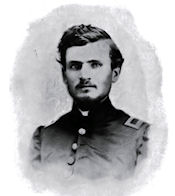
Saturday, 1st. Lay in camp. Men save ours were mustered for pay. The boys went out and got the body of the Butternut, and buried him in the cornfield–shot in the neck. Wrote home. Bought a jacket of T. R. S. Saw Major P.’s ring we boys have bought for him–nice. Went to bed rather early. Commenced a letter to Fannie. Interrupted to go out scouting. In the P. M. Capt. Welch with Stewart and Lisering and 25 men went out seven or eight miles expecting to find some bushwhackers seen by a 9th Wis. Found nobody. Stopped at three houses and got horses. One girl, husband pressed into rebel army, plead so earnestly for her pony. It was touching. Finally the captain gave it back. Reached camp at 1 A. M.
Rebel War Clerk
November 1, 2022
NOVEMBER 1st.—Gen. Winder’s late policemen have fled the city. Their monstrous crimes are the theme of universal execration. But I reported them many months ago, and Gen. Winder was cognizant of their forgeries, correspondence with the enemy, etc. The Secretary of War, and the President himself, were informed of them, but it was thought to be a “small matter.”
Gen. Lee made his appearance at the department to-day, and was hardly recognizable, for his beard, now quite white, has been suffered to grow all over his face. But he is quite robust from his exercises in the field. His appearance here, coupled with the belief that we are to have the armistice, or recognition and intervention, is interpreted by many as an end of the war. But I apprehend it is a symptom of the falling back of our army.
I have been startled to-day by certain papers that came under my observation. The first was written by J. Foulkes, to L. B. Northrop, Commissary-General, proposing to aid the government in procuring meat and bread for the army from ports in the enemy’s possession. They were to be paid for in cotton. The next was a letter from the Commissary-General to G. W. Randolph, Secretary of War, urging the acceptance of the proposition, and saying without it, it would be impossible to subsist the army. He says the cotton proposed to be used, in the Southwest will either be burned or fall into the hands of the enemy; and that more than two-thirds is never destroyed when the enemy approaches. But to effect his object, it will be necessary for the Secretary to sanction it, and to give orders for the cotton to pass the lines of the army. The next was from the Secretary to the President, dated October thirtieth, which not only sanctioned Colonel Northrop’s scheme, but went further, and embraced shoes and blankets for the Quartermaster-General. This letter inclosed both Foulkes’s and Northrop’s. They were all sent back to-day by the President, with his remarks. He hesitates, and does not concur. But says the Secretary will readily see the propriety of postponing such a resort until January—and he hopes it may not be necessary then to depart from the settled policy of the government—to forbear trading cotton to the Yankees, etc. etc.
Mr. Benjamin, Secretary of State, has given Mr. Dunnock permission to sell cotton to the Yankees and the rest of the world on the Atlantic and Gulf coast. Can it be that the President knows nothing of this? It is obvious that the cotton sold by Mr. Dunnock (who was always licensed by Mr. Benjamin to trade with people in the enemy’s country beyond the Potomac) will be very comfortable to the enemy. And it may aid Mr. Dunnock and others in accumulating a fortune. The Constitution defines treason to be giving aid and comfort to the enemy. I never supposed Mr. Randolph would suggest, nay urge, opening an illicit trade with “Butler, the Beast.” This is the first really dark period of our struggle for independence.
We have acres enough, and laborers enough, to subsist 30,000,000 of people; and yet we have the spectacle of high functionaries, under Mr. Davis, urging the necessity of bartering cotton to the enemy for stores essential to the maintenance of the army! I cannot believe it is a necessity, but a destitution of that virtue necessary to achieve independence. If they had any knowledge of these things in Europe, they would cease their commendations of President Davis.
Mr. Randolph says, in his letter to the President, that trading with ports in possession of the enemy is forbidden to citizens, and not to the government! The archives of the department show that this is not the first instance of the kind entertained by the Secretary. He has granted a license to citizens in Mobile to trade cotton in New Orleans for certain supplies in exchange, in exact compliance with Gen. Butler’s proclamation. Did Pitt ever practice such things during his contest with Napoleon? Did the Continental Government ever resort to such equivocal expedients? A member of Washington’s cabinet (and he, too, was a Randolph) once violated the “settled policy of the government,” but he was instantly deprived of the seals of office. He acted under the advice of Jefferson, who sought to destroy Washington; and the present Secretary Randolph is a grandson of Jefferson. Washington, the inflexible patriot, frowned indignantly upon every departure from the path of rectitude.
I can do nothing more than record these things, and WATCH!
Journal of Surgeon Alfred L. Castleman.
November 1, 2022
November 1st.–At 12 o’clock, night, I reached camp, two miles north of Berlin, Maryland. Again I have left the pleasures of a cheerful, happy home, to encounter the hardships of camp life and to engage in the turmoil, the trials and the dangers of a war in which it is difficult to tell whether the hope of manufacturing political capital or of sustaining a government is the dominant motive.
Downing’s Civil War Diary.–Alexander G. Downing.
October 31, 2022
Friday, 31st–This was general muster day, and we were reviewed this afternoon by the commanding officer, General McArthur. The general says our division is hard to beat, declaring that it would be difficult to find a better-looking number of men armed for active service than the Sixth Division. After the review we were mustered for pay. The weather is very warm and the roads are dusty.
Robert M. McGill
October 31, 2022
Friday, 31st.—Two men from each company furloughed for ten days. Harvey Montgomery came to see us to-day.
(Note: picture is of an unidentified Confederate soldier.)
War Diary of Luman Harris Tenney.
October 31, 2022
Friday, 31st. Reveille between two and three A. M. Breakfasted and off in advance at five on backward track. Reported that our rations had run short, a train been captured, etc.–again that we were to join Schofield, etc. Nothing of interest till we reached camp 10 miles from Bentonville, near where they were fired upon before. I had gone ahead to see if there was a spring up a ravine, advance a little ahead–halted–suddenly, “bang, bang, bang.” Drew revolver and waited. Nothing appeared. Saw Hoppy, Co. B, running by–followed. Heard him telling a woman to show him where to find the rebels. I told him we knew enough and two of us rushed up the hill and others followed. Burr, Co. G, rushed ahead. I saw nobody, soon heard shouting–Burr–saw him and followed. Got off half a mile. Foolishness to pursue so far with such a start. Followed a distance and was returning when we met Capt. Welch’s command. Scouted the woods some and went to camp. One man was overtaken, his arms taken and himself shot. Got dinner at the house. Considerable excitement.
Rebel War Clerk
October 31, 2022
OCTOBER 31st.—If it be not a Yankee electioneering trick to operate at the election in New York, on the fourth of November, the Northern correspondence with Europe looks very much like speedy intervention in our behalf.
Winder has really dismissed all his detectives excepting Cashmeyer, about the worst of them.
If we gain our independence by the valor of our people, or assisted by European intervention, I wonder whether President Davis will be regarded by the world as a second Washington? What will his own country say of him? I know not, of course; but I know what quite a number here say of him now. They say he is a small specimen of a statesman, and no military chieftain at all. And worse still, that he is a capricious tyrant, for lifting up Yankees and keeping down great Southern men. Wise, Floyd, etc. are kept in obscurity; while Pemberton, who commanded the Massachusetts troops, under Lincoln, in April, 1861, is made a lieutenant-general; G. W. Smith and Lovell, who were office-holders in New York, when the battle of Manassas was fought, are made major-generals, and the former put in command over Wise in Virginia, and all the generals in North Carolina. Ripley, another Northern general, was sent to South Carolina, and Winder, from Maryland, has been allowed to play the despot in Richmond and Petersburg. Washington was maligned.
October 25 to October 31, 1862
October 31, 2022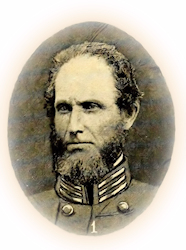
Oct. 25—Division moves and begins to tear up track of W and Harper’s Ferry R. R. Our Brigade operates on track below Charlestown during the night in a cold rain.
Sunday, Oct. 26—Cool rain. Sit till noon under tent in front of fire. Brigades of troops passing to and fro through rain. Men suffer. Very cool rain and wind all night. Large fire in front of tent all night.
Oct. 27—Brigade goes off to tear up railroad track. Revs. Power, Long and I go to Charlestown and ride on the spot of John Brown’s execution, and see the prison in which he was confined. Lovely little town.
Oct. 31, 1862—Cross Shenandoah river at Berry’s Ferry. Men wade. Cross mountain at Ashby’s Gap.
Wild Times in Mississippi
October 31, 2022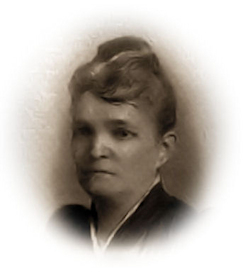
Oct. 31.—Mr. W. said last night the farmers felt uneasy about the “Emancipation Proclamation” to take effect in December. The slaves have found it out, though it had been carefully kept from them.
“Do yours know it?” I asked.
“Oh, yes. Finding it to be known elsewhere, I told it to mine with fair warning what to expect if they tried to run away. The hounds are not far off.”
The need of clothing for their armies is worrying them too. I never saw Mrs. W. so excited as on last evening. She said the provost-marshal at the next town had ordered the women to knit so many pairs of socks.
“Just let him try to enforce it and they’ll cow-hide him. He’ll get none from me. I’ll take care of my own friends without an order from him.”
“Well,” said Mr. W., “if the South is defeated and the slaves set free, the Southern people will all become atheists, for the Bible justifies slavery and says it shall be perpetual.”
“You mean, if the Lord does not agree with you, you’ll repudiate him.”
“Well, we’ll feel it’s no use to believe in anything.”
At night the large sitting-room makes a striking picture. Mr. W., spare, erect, gray-headed, patriarchal, sits in his big chair by the odorous fire of pine logs and knots roaring up the vast fireplace. His driver brings to him the report of the day’s picking and a basket of snowy cotton for the spinning. The hunter brings in the game. I sit on the other side to read. The great spinning wheels stand at the other end of the room, and Mrs. W. and her black satellites, the heads of the elderly women in bright bandanas, are hard at work. Slender and auburn-haired, she steps back and forth out of shadow into shine following the thread with graceful movements. Some card the cotton, some reel it into hanks. Over all the firelight glances, now touching the golden curls of little John toddling about, now the brown heads of the girls stooping over their books, now the shadowy figure of little Jule, the girl whose duty it is to supply the fire with rich pine to keep up the vivid light. If they would only let the child sit down! But that is not allowed, and she gets sleepy and stumbles and knocks her head against the wall and then straightens up again. When that happens often it drives me off. Sometimes while I read the bright room fades and a vision rises of figures clad in gray and blue lying pale and stiff on the blood-sprinkled ground.
Note: To protect Mrs. Miller’s job as a teacher in post-civil war New Orleans, her diary was published anonymously, edited by G. W. Cable, names were changed and initials were generally used instead of full names—and even the initials differed from the real person’s initials. (Read Dora Richards Miller’s biographical sketch.)
0
October 30, 2022
October 30th. Camp fires were kept burning very late last night. The boys are singing, dancing, making speeches, and having a very merry old time. All seem happy. This morning the regiment formed in line for our march out of the old fort. When outside of the walls cheering began as the happy boys went marching on.
The regiment made a fine appearance as they marched through Baltimore. Every man seemed to be trying to do his best. Stopping for a rest in one of the streets, a grocer treated us to apples. Citizens cheered us as we marched along. Passed through Baltimore on out to the east side, going into camp near Fort Marshall on Snake Hill. Camp being established it was named Emory in honor of the General. Seven companies sent out for guard duty along the Baltimore & Philadelphia Railroad. Bridges had been set on fire at times. There was much sympathy for the South in Maryland. Companies A, B, and C remained in camp. Regimental headquarters a pleasant location for a camp. Guard duty, drilling, dress parade, with an occasional tramp through the country on skirmish drill was about the daily routine of duty, weather permitting. One of the very pleasant things about camp life was the writing and receiving of letters.
Our duty at Camp Emory was not very laborious. Allowed to visit the city quite often on passes. After Sunday morning inspection no more duty required of us until dress parade. Guard duty must be done all the time.
Downing’s Civil War Diary.–Alexander G. Downing.
October 30, 2022
Thursday, 30th–The weather is quite warm again. We were at work getting ready for general inspection, cleaning camping ground, clothing and accouterments. Our camp is now in fine shape and the men are well rested. Some of the sick and wounded who have been absent for some weeks are returning to camp.
Robert M. McGill
October 30, 2022
Thursday, 30th.—Left camp at 6:30 A. M. Arrived at Lenoirs at 3 P. M. Reported that our regiment has been transferred to General Taylor’s Brigade.
(Note: picture is of an unidentified Confederate soldier.)
War Diary of Luman Harris Tenney.
October 30, 2022
Thursday, 30th. In the rear guard again. Till noon getting to Maysville, a little place, mostly forsaken, a few old people. Tried to catch a hog. Didn’t succeed. Letters from home, Sept. 30th, and an Independent. Read Lorain News. Little article about N. and me being taken prisoners.
Rebel War Clerk
October 30, 2022
OCTOBER 30th.—The Commissary-General is in hot water on account of some of his contracts, and a board of inquiry is to sit on him.
The President has delayed the appointment of Gen. E. Johnson, and Gen. Echols writes that several hundred of his men have deserted; that the enemy, 10,000 or 15,000 strong, is pressing him, and he must fall back, losing Charleston, Virginia, the salt works, and possibly the railroad. He has less than 4000 men!
But we have good news from England—if it be true. The New York Express says Lord Lyons is instructed by England, and perhaps on the part of France and other powers, to demand of the United States an armistice; and in the event of its not being acceded to, the governments will recognize our independence. One of the President’s personal attendants told me this news was regarded as authentic by our government. I don’t regard it so.
Yesterday the whole batch of “Plug Ugly” policemen, in the Provost Marshal’s “department,” were summarily dismissed by Gen. Winder, for “malfeasance, corruption, bribery, and incompetence.” These are the branches: the roots should be plucked up, and Gem Winder and his Provost Marshal ought to resign. I believe the President ordered the removal.
0
October 29, 2022
October 29th. Marching orders received. Our last day and night at Fort McHenry. Great rejoicing over the prospect of leaving the old place. Packing up and getting ready for an early start on the morrow. Singing and very happy in camp.
Downing’s Civil War Diary.–Alexander G. Downing.
October 29, 2022
Wednesday, 29th–The Eleventh Iowa was detailed to clean up and smooth a tract of ground for inspection. We are to have general inspection of the army here at Corinth, and it is to be made by General Grant.
Robert M. McGill
October 29, 2022
Wednesday, 29th.—Passed Copper Hill, 11 A. M. Some of our mess foraged to-day; had very good luck; bought bucket each of apple-butter and preserves. Preserves stolen from us that night, but caught the thief before he got to eat any of them.
(Note: picture is of an unidentified Confederate soldier.)
War Diary of Luman Harris Tenney.
October 29, 2022
Wednesday, 29th. Up at daybreak. In the rear guard. Waited several hours for the train to get by. Stewart and Jacobah came up and joked. Read a Leslie. Very slow work today, so many halts. Can not admire Capt. Seward. Had the impudence to keep me carrying water for him to drink. Lingered to guard a sutler, whose stock he tried–the miserable poison. Advance guard fired upon near a mill, three stories. Got into camp at Price’s old headquarters three miles from Maysville–an old Free Love Institute, they say. Had a little conversation with our guide of the 1st Arkansas. Bill and I went to work to get supper–soon others joined us.
Diary of David L. Day.
October 29, 2022
Col. Upton Leaves Us.
Oct. 29. Our regiment is now left with only one field officer, Major Pickett. Col. Upton left us yesterday and Lieut. Col. Sprague and Adjutant Harkness left us two weeks ago. Lieut. Col. Sprague left to take command of a nine months’ regiment already recruited in the city of Worcester. Adjutant Harkness is commissioned major of the same regiment. Col. Upton resigned on account of failing health, which I hope he may speedily recover after reaching home. All three of these officers have had the confidence and respect of the regiment in a marked degree, and our best wishes attend them in other fields. As a slight token of their regard for Col. Upton, the enlisted men are having manufactured a $1000 sword, which they intend to present to him. Major Pickett will succeed to the colonelcy, and according to military usage, Capt. Moulton of company II will be lieutenant colonel and Capt. Atwood of company C will be major. This will fill the field again, and occasion some changes and promotions in the line. I reckon if I was of an ambitious turn of mind, I should aspire to some of these places of honor and emolument, but remembering the promise that whoever humbleth himself shall be exalted, I will continue to wait on.
Reinforcements.
Massachusetts boys are getting thick as blueberries about here, and we are glad to see them. Three regiments of nine months’ troops have just arrived, the 3d, 5th and 44th regiments, and I hear that more are coming. A good many of the new comers have called on us and seem desirous of making our acquaintance, to which we are not averse, seeing they are good appearing fellows and have plenty of money, which is not a bad qualification, especially when introduced to the sutler. I learn that Gen. Foster leaves tomorrow on an expedition, taking with him nearly all the force here, including the three new regiments. That will be breaking them in pretty quick after getting here. They, of course, have not had much drill and probably half of them never fired a gun. But to us, a little trip up the country is cheering news. After being shut up in camp so long any change is gladly accepted.