A Rebel War Clerk’s Diary

Civil War Day-by-Day
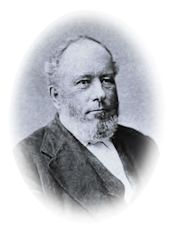
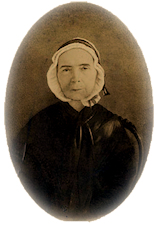
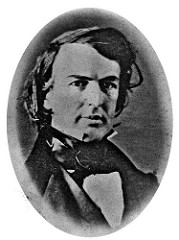
A likeness of Jones when he was editor and majority owner of the Daily Madisonian during President John Tyler’s administration.

FEBRUARY 2d.—After the feat at Charleston, Gen. Beauregard and Commodore Ingraham invited the consuls resident to inspect the harbor, and they pronounced the blockade raised, no United States ship being seen off the coast. Then the general and the commodore issued a proclamation to the world that the port was open. If this be recognized, then the United States will have to give sixty days’ notice before the port can be closed again to neutral powers; and by that time we can get supplies enough to suffice us for a year. Before night, however, some twenty blockaders were in sight of the bar. It is not a question of right, or of might, with France and England—but of inclination. Whenever they, or either of them, shall be disposed to relieve us, it can be done.

There was a fight near Suffolk yesterday, and it is reported that our troops repulsed the enemy.

The enemy’s gun-boats returned to the bombardment of Fort McAlister, and met no success. They were driven off. But still, I fear the fort must succumb.

Senator Saulsbury, of Delaware, has been arrested by the Sergeant-at-Arms of the Senate, for his denunciation of Lincoln as an “imbecile.” And a Philadelphia editor has been imprisoned for alleged “sympathy with secessionists.” These arrests signify more battles–more blood.
0 comments

0

Civil War Day-by-Day

February 2, 1863, The New York Herald

The operations of the Sumter, when she first began her depredations upon American commerce, put up insurance premiums so high upon all freights taken in American vessels as to cause many American merchants to turn their vessels over to English owners, who sail them under the English flag. Since then we have had the Alabama, and now the Florida and the Retribution, and probably the Harriet Lane, to prey upon American commerce, which is being driven into English vessels. Should the rebel privateers be allowed any further impunity in their raids against American commerce they must bring it to a close, as we shall be unable to find shipments for American vessels. It must be apparent to all that, should two or three rebel vessels of war get into the Pacific, they would cause a total cessation of American commerce on that ocean. We make these statements to call President Lincoln attention to facts which clearly concern him. If his officials are not competent it is his duty to procure the services of others who may prove equal to the emergencies of the hour. He cannot from sheer carelessness allow our commerce to be annihilated by two or three rebel privateers.

0 comments

0

Civil War Day-by-Day

February 2, 1863, The New York Herald

The Navy Department received a despatch last night announcing that the Union gunboat Isaac P. Smith – one of the recent government purchases – went ashore in Stono river on Saturday, and was captured by the enemy. She was commanded by Lieutenant Connover. The Richmond Examiner of that date gives a different version of the disaster. It represents that the gunboat, with a crew of two hundred and thirty men, surrendered unconditionally after a sharp engagement, and with heavy loss on our side. This story comes to Richmond from Charleston. It is said that another Union gunboat was engaged, and in a crippled condition. The Navy Department had no details of the affair up to this morning, except those contained in the brief despatch referred to. We give today a map of the locality where the disaster occurred.

An important rumor was prevalent in Havana when the Columbia left there on the 28th that the rebel steamer Florida had been destroyed. The facts of the case appear to be thus: – On Tuesday, January 27, it was reported in Havana that heavy firing had been heard at Matanzas and Cardenas, as if coming from vessels of war engaged in a serious contest at sea. It was also stated that the Florida or some other rebel vessel had been chased by several Union gunboats; but with what result had not been learned. It was then believed at Matanzas that the firing and chasing were connected with the same vessel. This rumor was strengthened by the arrival of the Creole, from New York, on the following day, which reported that she had been spoken by the Union gunboat Cayuga, which vessel reported that she had observed a steamer on fire, supposed to be the Florida, and that three other vessels were firing into her with great rapidity. The locality of this engagement was not definitely stared; but that it was in the vicinity of the Cayes, off Cardenas and Matanzas.

The excitement in Havana was very great on the receipt of this news. Our correspondent there gives us some interesting news from that city, and details the particulars of the firing of a Spanish war steamer into a federal vessel. [continue reading…]

0 comments

0

Civil War Day-by-Day

February 2, 1863, The New York Herald

There are men whom fate marks as its own – men who seem irresistibly to attract the masses, and who, almost without an effort, gain influence and power. Those men are instruments in the hands of Providence, and are imperatively called upon to fulfill their missions. Events the most untoward seemingly, events which would annihilate others, but add to the power and influence of such as we refer to – the predestined. Their names become endeared to the people, who feel in them a confidence inexplicable, if you will, but irresistibly attractive. Their least actions become to the masses significant of good, and, spite of themselves, they grow more and more popular, until, at last, their influence becomes paramount, and for good or evil they hold the destinies of their fellow beings in their grasp.

A most striking example of this wonderful and daily increase of popularity is General McClellan. Day by day his personal influence is increasing. Day by day he is becoming the idol of the people; and yet he is as quiet and retiring as a schoolgirl, as undemonstrative and modest as a bashful miss. His detractors aver he has achieved no great success, has made no wonderful change in our painful position, is out of station and power. Grant all that for the sake of argument, and yet he cannot go from place to place without receiving ovations, without attracting crowds, without being deafened by the cheers and plaudits of the multitude. How can we account for this unless we admit the fact that the people feel that he is an individual from whom much may be expected? The shouts and acclamations of the masses are evidences of the presentiment which is fast pervading all classes of Americans – namely, that General McClellan will yet save the country. In vain will the radicals harp and cavil at this conviction becoming so general. A deep rooted faith in General McClellan’s ability exists; the people know him to be honest and patriotic, and they admire the man’s self control and moral greatness. They are aware that a word from him would cover his enemies at Washington with shame and obloquy, and yet they see him calmly bear the heavy load of injustice and detraction showered upon him. Not one word of complaint or faultfinding – all patriotism and patience. Others resent attack: he stands quiet in the dignity of his conscious innocence and scorns to repay insult with insult. He unknowingly bides his time. Fate has marked out for him a career. When the proper moment comes he will then be as active as he is now passive.

His influence grows apace. Any allusion, however far-fetched, to himself or his actions is met with favor by the public. [continue reading…]

0 comments

0

Civil War Day-by-Day

February 2, 1863, The Charleston Mercury

Not since the memorable Saturday and Sunday which succeeded the fall of Fort Sumter, has our community been as elated as during the two days just gone by. Our ability to cope with and sink the hostile vessels which have so long sealed our harbor, is at length indisputably proved. the gallant naval officers, who for months have been longing to meet their country’s foe upon the water, have vindicated the reputation of our young navy in a style that will fairly take rank with the exploits of the Merrimac and the achievements of SEMMES. The blow that has been struck, in realizing the long cherished hope of our noble women, to give to Charleston the means of offence as well as of defence, will, we know, richly repay them for all their labors and all their sacrifices.

The project of attacking the blockading fleet is one that has been entertained for some weeks. On Friday night, everything being in readiness, Commodore DUNCAN N. INGRAHAM gave the order to start. Accordingly, at half past 9, p.m., the Palmetto State, Capt. RUTLEDGE, the Chicora, Capt. TUCKER, with the steamers Clinch, Etiwan and Chesterfield as tenders, left the wharves and steamed slowly down the harbor. The whole expedition was under the command of Commodore INGRAHAM, who was aboard the Palmetto State. It was a fine night. The moon was shining brightly, though the horizon was misty, and a light breeze scarcely ruffled the surface of the water. As it was not intended to reach the bar until the moon had set, the trip down occupied several hours. At half past 3, a.m., the iron-clads had reached Beach Channel, when the crews were beat to quarters and prepared for action. At four o’clock the lookout of the Palmetto State (which led the way) descried the outline of a Yankee vessel directly ahead. The long coveted moment was now at hand. When within about fifty yards of the blockade, the engines of the Palmetto State were stopped, and the iron monster darted forward with irresistible momentum towards the doomed ship. At this juncture a voice from the enemy’s decks was heard crying: ‘Back her, or you’ll run into us!’ – The next moment the crash came, the bow of the iron-clad striking the Yankee steamer on the port quarter and crashing fearfully through her timbers. Scarcely had the ram wedged itself into the enemy’s quarter, when the bow gun of the Palmetto State (a 7 inch rifle) was fired and the shell tore its way through the enemy’s hull, bursting the boiler and shattering the engine in its passage. The two vessels hung together for a few seconds only. As the iron-clad was backing, preparatory to another onset, the [continue reading…]

0 comments

0

Civil War Day-by-Day

February 2, 1863, The Charleston Mercury

In Saturday’s issue we briefly announced the capture of the Yankee gunboat Isaac P. Smith in the Stono River. We are now enabled to present to our readers the full particulars of the exploit.

Several days ago a secret expedition was organized, under the command of Lieutenant Colonel YATES, of the 1st South Carolina Regular artillery, and despatched to John’s Island, to attack the gunboats which occasionally prowl along the Stono. The force consisted of the following troops: The Siege Train, Cos. A and B, commanded respectively by Capt. B.C. Webb and Lieut. L.W. WILSON, Major CHARLES ALSTON, Jr., being in command of the battalion; Co. F, of the Palmetto Battalion of Light Artillery, under Capt. F.C. SCHULZ; Co. D, 1st South Carolina (regular) Artillery, with a Light Battery, Capt. F.H. HARLESTON; one Parrott gun, in charge of Lieut. T.E. Gregg; Co. I, 1st South Carolina (regular) Artillery, Capt. J.C. Mitchel; Cos. H and I, of 20th S.C.V., commanded respectively by Capt. S.M. Roof and Lieut. M. Gunter, and acting as Sharpshooters. During Thursday night these troops were posted at LEGARE’S Point Place, and GRIMBALL’S, on John’s Island; Major ALSTON commanding the batteries at GRIMBALL’S; Capt. HARLESTON those at LEGARE’S Point Place, and the Sharpshooters being under charge of Capt. MITCHEL.

In the meantime a detachment of LUCAS’ (regular) battalion, under Captain JOHN H. GARY, was posted at Mr. THOMAS GRIMBALL’S place on James Island, and further up the Stono. They had three 24 pounder rifled guns, which were put in position 150 yards apart, and about 400 yards from the banks of the river. The guns were manned by detachments of Companies A, C, and C, under Lieutenants W.G. OGIER and E.B. COLHOUN and Captain T.B. HAYNE. Further down the Stono, and on the James Island side, Major J. WELSMAN BROWN, with two rifle guns, in charge of a detachment of the 2d Regiment S.C. Artillery (late LAMAR’S), and with a detachment of the Georgia Battalion as Sharpshooters, took up a position so as to command the channel.

On Friday afternoon, at half past four o’clock, the enemy gunboat Isaac P. Smith steamed up the river passing the batteries of Major Brown and Colonel YATES, and came to anchor a little above, nearly opposite the residence of Mr. THOMAS GRIMBALL, and within fair range of the guns of Capt. GARY. The Yankees made no attempt to land, and, [continue reading…]

0 comments

0

Civil War Day-by-Day

February 2, 1863, The New York Herald

The great, and to all appearance decisive, point of the war is the opening of the Mississippi river. With the exception of some small movements on the coast, all the most important operations of the campaign are now concentrated in that direction. The great Northwest demands the opening of the Mississippi; our government is determined to effect it at any cost, and the rebels are equally resolved to prevent it, in order that by keeping this great channel of water communication closed they may compel the Northwest to disintegrate itself from the Union. It will therefore be seen that the military and naval operations now being carried on at Vicksburg and Port Hudson are of the most vital importance to the crushing out of the rebellion. In one despatch received from Vicksburg it is stated that it will take one hundred and fifty thousand men to capture that place, and by the last rebel accounts we learn that General Johnston was concentrating that number of rebel troops for its defence; so that the battle impending there promises to be more desperately contested and of greater magnitude than any that has been fought since the commencement of the rebellion.

Vicksburg and Port Hudson are the only two great rebel strongholds on the Mississippi which operate as obstacles to the opening of that river. They are of great strength, and their natural advantages for defence have been improved to the utmost by the rebel generals. Besides the ample resources which we possess for reducing Vicksburg by force of arms, we have another means of effecting the object which we have in view by its capture. The operations of Gen. McClernand in opening what is called “Williams cut- off,” or canal across the tongue of land formed by the bend of the river at that place, will, if successful, be made available for the passage of our gunboats in a couple of weeks, thereby destroying all the plans and calculations of the rebels so far as Vicksburg is concerned. The great point of contention for the command of the Mississippi will then become Port Hudson, where the means of a desperate resistance have been accumulating for some months past. Thus, whilst Hooker is effecting his arrangements for a series of fresh operations, having the capture of Richmond in view, and Hunter and Foster and DuPont and Lee, with their iron-clads, are making demonstrations more or less successful against Savannah, Charleston or Wilmington, it is probable that what the English military author Creasy would call […..] decisive battle of the war will be fought on the Mississippi. We have two grounds for hoping for a successful result to the impending struggle on that river: first, in the magnitude of our preparations, and next, in the impossibility, from its distance from the capital, of Washington generalship interfering with and defeating the plans of those in command.

0 comments

“I tell you, between ourselves, that of the 30 line officers there are not more than six that are worth their salt.”–Army Life of an Illinois Soldier, Charles Wright Wills.

Civil War Day-by-Day

Camp 103d Illinois Infantry, Jackson, Tenn.,
February 1, 1863.

I’m on duty as “field officer of the day,” and have been temping around in the mud looking to policing, guards, etc., and just now a detail has come for me to go on picket to-morrow. I was only relieved from picket yesterday morning. We are very short of officers, having only 11 for duty in the regiment. All sick. D—n ’em, they ought to resign and let men draw the pay who do the work. I have seven men in the hospital now, one of whom is going to die. Poor fellow, how I do pity him. I never thought as much, even of my sick comrades in the 8th, as I do of my men when they get sick. James Colton is the one’s name who is the sickest. He is a real good young man and has a wife. Lives in the west part of the country. Mine is the only company that has no deserters yet, and I don’t believe I will have any. Half of these desertions are the fault of officers. I have been out this evening calling on a family named Stephens, living near our camp. They are strongly secesh, but very fine people. No girls in the family but a splendid looking young wife. I guess that we are cut out of that Vicksburg fight, though if this place is evacuated, there is a chance yet. That is the only one though, for all the troops except our brigade have left here. Some to Memphis, and I suppose, below. It makes our duty pretty heavy. Picket every third day, besides police, foraging, and fatigue and camp guard. But I always enjoy duty better than quiet camp life. I’m afraid this agitation North is going to play the d—l with the army. The great body is loyal enough but can’t help being discouraged and, in a degree, disappointed when treason is preached openly in the North and unrebuked. Confining a lot of those traitors would have an excellent effect on the soldiers; but I believe that Lincoln is almost afraid to try that again. If this regiment is paid off before there is the change in officers there should be, I’m afraid desertions will be very numerous. I begin to feel some of the old soldier’s prejudice against the “forty-dollar man,” but I do believe we can, if properly officered, make a crack regiment. I tell you, between ourselves, that of the 30 line officers there are not more than six that are worth their salt. The others do 100 times more harm than good to the service. I modestly count myself one of the six, so that you can judge better what I think they are. I read Dick Oglesby’s speech to-day. The sentiment is all right, but he can talk much better than that. Suppose he is out of practice. We are a little afraid of the result of the Vicksburg fight. If we get whipped I’d like to die there, for I believe if that army is whipped it will be annihilated; and the cause about lost, which little event I don’t care to live to hear. You can’t imagine bow careful the commanders are here of secesh property. Well, if ’tis through the right motive, I say all right, and I guess it is, but it hurts me anyway. I can’t help hoping that this town will be burned when evacuated, for it is the most intensely secession place of all. It first unfurled the Rebel flag in this State, and sticks to its colors nobly. It is rumored that Van Dorn is coming in this direction again. I do hope he will come here, for if we can drive him off, it would hurt the natives so much to see him whipped.

0 comments

War Diary of Luman Harris Tenney.

War Diary of Luman Harris Tenney.

Columbus, Ohio

1st. Went up to Melissa’s after breakfast in the rain. N. there. Stayed to dinner. About 2 started out with N. in a drizzle for Camp Chase. Rather tires me walking. Enjoyed rehearsing my good visit home with Ma, F. and other friends.

0 comments

Downing’s Civil War Diary.–Alexander G. Downing.

Diary of Alexander G. Downing; Company E, Eleventh Iowa Infantry

Sunday, 1st–We had an all day rain and the river is rising; the bottom land on the east side of the river is already under water. It came my turn to go on fatigue today. A detail of four hundred men was again sent down to work on the break in the levee. Our chaplain preached to the regiment this afternoon.

0 comments

Diary of Horatio Nelson Taft.

Diary of US patent clerk Horatio Nelson Taft.

Washington. Feb’y 1st 1863. Sunday.

Went to the Capitol today and heard the Chaplin Dr Stockton. He is rather dry and tedious, his sermons this winter have been more of a doctrinal, than a practical character. I believe in practical Christianity and practical preaching. I dont suppose that I am very orthodox, for it does not matter much to me whether a man believes this or that particular dogma, or belongs to this or that denomination. If he acts like a christian from day to day. If he is always ready to do as he would be done by. To forgive as he would wish to be forgiven, I am bound to believe that he has the spirit of Christs teachings in him and is a christian. After all my experience in the world I am much given to judging the tree by its fruit, professions of faith and all the “thirty nine Articles” to the contrary notwithstanding. After dinner I walked up to the “Stone Hospital,” got very muddy. Staid there a couple of hours and walked back in a drizzling rain. Not many NY Soldiers there. One, Robert White, must have his foot taken off. He is a brave boy, not over eighteen, says he wants it done soon, as he can then go home after a little while, poor lad, he has much to suffer yet. He is from Westchester Co. of the 9th NY Militia. I have not been out since I returned. Got two good letters from home this morning, one from Wife, and one from Julia. They seem much elated because I spoke in my last of going home in a month or so. I will go if I can consistantly with my duties in the office.

0 comments

Diary of David L. Day.

David L Day – My diary of rambles with the 25th Mass

The Major’s Eagles.

Feb. 1. At last the major’s eagles, which have so long been winging their flight this way, have alighted on his shoulders, and he looks as pert and gamy as a wildcat. Bully boy! long may you wave! Promotions will now come along right smart, and I have no doubt I have been thought of for some important position, but I shall decline all promotions; I had rather be a doorkeeper at the guardhouse than to dwell in the tents of wickedness.

0 comments

A Rebel War Clerk’s Diary

Civil War Day-by-Day

FEBRUARY 1st.—The Virginia Legislature, now in session, has a bill under discussion for the suppression of extortion. One of the members, Mr. Anderson, read the following table of the prices of

AGRICULTURAL PRODUCE.

Before the war.

Now

White wheat, per bushel

$1 50

White wheat, per bushel

$4 50

Flour, per barrel

7 50

Flour, per barrel

22 00

Corn, per bushel

70

Corn, per bushel

3 50

Hay, per hundred

1 00

Hay, per hundred

3 50

Hides, per pound

7

Hides, per pound

40

Beef, per pound

8

Beef, per pound

50

Bacon, per pound

13

Bacon, per pound

60

Lard, per pound

15

Lard, per pound

1 00

Butter, per pound

30

Butter, per pound

1 50

Irish potatoes

1 00

Irish potatoes

5 00

Sweet potatoes

1 00

Sweet potatoes

6 00

Apple brandy

1 00

Apple brandy

15 00

Wool, per pound

30

Wool, per pound

2.00

MANUFACTURES.

Bar iron, per pound

4

Bar iron, per pound

20

Nails, per pound

4

Nails, per pound

60

Leather, sole, per pound

25

Leather, sole, per pound

2 50

“upper, per pound

33

“upper, per pound

3 50

COTTON GOODS.

Osnaburgs, per yard

10

Osnaburgs, per yard

75

Brown cotton, per yard

10

Brown cotton, per yard

75

Sheeting, per yard

15

Sheeting, per yard

1 25

WOOLEN GOODS.

Coarse jeanes

45

Coarse jeanes

4 00

Crenshaw’s gray

2 00

Crenshaw’s gray

28 00

MISCELLANEOUS.

Coarse shoes

1 50

Coarse shoes

15 00

High-quartered shoes

3 50

High-quartered shoes

25 00

Boots

7 50

Boots

60 00

Wool hats, per dozen

7 00

Wool hats, per dozen

50 00


STOCKS.

Dividends on stocks in cotton companies, worth in May, 1861, $25 to $50 per share, now from $112 to $140.

It is doubtful whether the bill will pass, as most of the members are agriculturists.

It is said and believed that several citizens from Illinois and Indiana, now in this city, have been sent hither by influential parties, to consult our government on the best means of terminating the war; or, that failing, to propose some mode of adjustment between the Northwestern States and the Confederacy, and new combination against the Yankee States and the Federal administration.

Burnside has at last been removed; and Franklin and Sumner have resigned. Gen. Hooker now commands the Federal Army of the Potomac–if it may be still called an army. Gen. R_____, who knows Hooker well, says he is deficient in talent and character; and many years ago gentlemen refused to associate with him. He resigned from the army, in California, and worked a potatoe patch, Yankee like, on speculation–and failed.

0 comments

0

Civil War Day-by-Day

February 1, 1863, The New York Herald

The expected fight at the Blackwater has come off. General Corcoran had a brilliant action with the rebel chief, Roger A. Pryor, on the night of the 29th, and completely defeated him. The conflict took place at a point ten miles from Suffolk, and the battle opened by an artillery duel by moonlight. After two hours firing the rebel artillery began to slacken, when General Corcoran ordered a charge of his infantry and cavalry. The enemy fell back before our troops for two miles, and there made another stand, and the fight continued for over seven hours. There as every prospect yesterday that there would be another battle.

General Corcoran had a narrow escape from a shell which burst directly in front of him. Our loss was about one hundred and four. We give a list of the killed and wounded today, together with a comprehensive map of the battle.

There is nothing new from the Rappahannock Army today. General Hooker paid a flying visit to Washington yesterday, to arrange some details in reference to the quartermaster’s and commissary departments of his army.

It is said in Washington that Generals Cadwallader, Martindale and Van Alen, are to compose the new court of inquiry in the case of Major General Wm. B. Franklin.

We give an interesting account in another column of the capture of the brig Estelle by the pirate Florida, as reported by the captain of the Estelle, who arrived here yesterday. The history of the Florida, as it was related to Captain Brown, of the Estelle, by the rebel commander of the pirate ship, will be read with much interest. She was built for the Sardinian government, and was then know as the Oreto. She took in her armament from a schooner lying off the Bahama Islands, the guns having been sent from the port of Nassau.

We give a map of the locality about Ossibaw Sound, where it is believed that an attack was made by our forces and gunboats on Savannah, and the rebels defeated. Nothing positive or official has yet been promulgated relative to this affair, but all the probabilities point to its truth. The information, it will be remembered, comes from rebel sources, and originated, as we stated yesterday, in a report from General Pryor to General Peck, near Suffolk, Va.

0 comments

0

Civil War Day-by-Day

February 1, 1863, The New York Herald

With the report of a neat little victory achieved by General Corcoran on Friday last, near the Blackwater river, in Southeastern Virginia, our attention is naturally called to the movements and objects of the campaign in that quarter, on both sides.

From Suffolk (which is some twenty miles southwest of Norfolk, on a navigable creek of the James river) there is an air line railroad due northwest to Petersburg, some fifty or sixty miles. From Suffolk another railroad of about the same length runs due southwest to Weldon N.C.; and at Petersburg, or Weldon, we strike the great southern seaboard railroad which runs from Virginia to Georgia. The rebel forces in Virginia on the south side of the James are there to protect this road between Petersburg and Weldon, and especially at the former place, which is of some importance to them as an outpost of Richmond. They will lose not only their main railroad artery southward in losing Petersburg, but a considerable city, and a point from which, only twenty miles distant, a deliberate advance might be made upon Richmond by land and water on the south side. Whether the object of General Peck, in his demonstrations from Suffolk, is to feel his way to Petersburg or to some other point, we do not pretend to know; but he has undoubtedly succeeded in drawing down a considerable rebel force to guard the south side approaches to Richmond.

The late affair on the eastern side of the Blackwater would, however, seem to indicate a design on the part of the rebels to take the offensive and to push into Suffolk; and the prospect of capturing there a large amount of army supplies is to them a strong temptation to undertake the expedition. It is probable, on the other hand, that the crossing of the river by that redoubtable rebel Bobadil Pryor was for the purpose of a reconnoissance, and that his repulse will be followed by another trial with a larger force. In any event, we count upon a good report from General Peck and the Corcoran Legion.

In the James river peninsula, since the late successful Union raid up the York and Pamunkey rivers, the rebels appear to have adopted the idea that another advance is threatened against them by way of Yorktown. General Wise; for a long time in eclipse, has turned up again, and at our last accounts of his designs he had resolved upon clearing Yankees out of the peninsula down to Fortress Monroe. But it seems that after setting out on this enterprise he reconsidered the matter, and marched back again. From such military charlatans as Wise and Pryor there is not much danger; but there may be larger game behind them. Whatever may be the real strength of the rebel forces in the peninsula and below the [continue reading…]

0 comments

0

Civil War Day-by-Day

February 1, 1863, The New York Herald

The intelligence from Savannah, via rebel sources, is very important. General Pryor, who commands the rebels on the Blackwater, informed General Peck that he received information of a recent engagement near Savannah, in which the rebels had suffered defeat.

The probable locality of the said defeat is on the Ogeechee river, which runs into the Ossibaw Sound near Raccoon Key, Georgia. It will be remembered that the Nashville – a vessel that has succeeded so often in running the blockade – several months ago ran up the Little Ogeechee river, where she anchored under the protection of several sand batteries. It was the intention of the officers of the Nashville to run the vessel to sea in a manner similar to that by which the Oreto escaped from Mobile. A Union expedition was therefore organized to prevent the carrying out of this plan, and on Saturday morning, January 24, the Montauk, towed by the James Adger, left Hilton Head, in company with several gunboats, for that purpose. The plan of operations was for the iron clad battery Montauk to engage the rebel sand batteries and drive out those who manned them, while the capture or destruction of the Nashville was to be undertaken by the wooden vessels which accompanied her.

The Montauk and her companions arrived safely at the mouth of the Ogeechee river on Saturday afternoon, the 24th, and during the morning of the 26th the reports of several heavy guns firing in that direction were heard even at Hilton Head. This would certainly indicate that the fight had been begun in those waters, and, if the rebel General Pryor’s statement is to be believed, with some degree of success to the Union cause.

There is little doubt but that if the gunboats could not bring the Nashville out of the waters above the batteries, they have at least succeeded in destroying her some way or other.

But, at the same time, it was expected that another combatant would appear on the scene.

There is no remaining doubt of the completion of the Fingal. She bears the name, since she became part of the rebel navy, of the Atlanta, and her first duty was to be that of cutting out our gunboats in the Ogeechee river and aiding the rebel steamer Nashville in escaping to sea. Information which has been deemed trustworthy has been received to the [continue reading…]

0 comments

Robert M. McGill

Robert M. Magill – Personal Reminiscences of a Confederate Soldier Boy, 39th Georgia Regiment of Infantry

Saturday, 31st.—Cannonading up the river again this morning. Gunboats moved down little nearer city.


(Note: picture is of an unidentified Confederate soldier.)

0 comments

Diary of a Southern Refugee, Judith White McGuire.

Diary of a Southern Refugee During the War by Judith White McGuire

31st.—We are in statu quo, and our armies quiet. The Northern army seems to be in commotion. Burnside has resigned, and “fighting Joe Hooker” has been put in his place. Sumner and Franklin have also resigned their “grand divisions.” Pourquoi ? Won’t the men advance?Perhaps the Stafford mud has been more than a match for them. Burnside had issued but a few days ago an address to his men, saying they were about to “strike the final blow at the rebellion.” All was in readiness, and the “Grand Army” moved forward; just then the “rain descended and the floods came,” and, attempting to cross the Rappahannock ten miles above Fredericksburg, ambulances, wagons, big guns and all stuck in the mud; the order, “To your tents, O Israel,” had to be given, and the “rebellion” still flourishes.

0 comments

War Diary of Luman Harris Tenney.

War Diary of Luman Harris Tenney.

Jan. 31st. Saturday. We went to Camp Cleveland and saw the boys. Then to Auntie Jones’ to dinner. Down to Alfred’s, Mattie’s and back to Uncle’s. Then with Thede went to see Lizzie Cobb. Not at home. Called on Mrs. H. Cobb. A pleasant time. Off at 6:45. C. G. at the depot. Put up at the National for the night.

0 comments

Downing’s Civil War Diary.–Alexander G. Downing.

Diary of Alexander G. Downing; Company E, Eleventh Iowa Infantry

Saturday, 31st–A scouting party of about two hundred men mounted on horses and mules, and carrying one piece of light artillery, came upon a rebel camp some eighteen miles out and engaged in a fierce fight. After standing their ground for two hours the rebels left for the tall timber. They left their supplies to our men, who burned all that they could not bring with them, and returned to camp with only five or six men wounded, bringing one lone prisoner.

0 comments

A Rebel War Clerk’s Diary

Civil War Day-by-Day
A likeness of Jones when he was editor and majority owner of the Daily Madisonian during President John Tyler’s administration.

JANUARY 31st.—We have dispatches from Charleston, to-day, which reconcile us to the loss of the cargo captured by the blockading squadron early in the week. An artillery company captured a fine gun-boat in Stone River (near Charleston) yesterday evening. She had eleven guns and 200 men.

But this morning we did better still. Our little fleet of two iron-clads steamed out of Charleston harbor, and boldly attacked the blockading fleet. We crippled two of their ships, and sunk one, completely raising the blockade, for the time being. This will frustrate some of their plans, and may relieve Wilmington.

The attack on Fort McAlister was a failure. The monitor which assaulted the fort sustained so much injury, that it had to retire for repairs.

Several blockade-runners between this and Williamsburg were arrested and sent to Gen. Winder to-day by Lieut. G. D. Wise. Gen. W. sent them to Gen. Rains. Mr. Petit and Mr. James Custis (from Williamsburg) came with them to endeavor to procure their liberation. Gen. Rains sent them back to Gen. W., with a note that he had no time to attend to such matters. Such business does not pertain to his bureau. I suppose they will be released.

Major Lear, of Texas, who was at the capture of the Harriet Lane, met on the captured steamer his mortally-wounded son, the lieutenant.

A few days ago, Lieut. Buchanan was killed on a United States gun-boat by our sharpshooters. He was the son of Admiral Buchanan, in the Confederate service, now at Mobile. Thus we are reminded of the wars of the roses—father against son, and brother against brother. God speed the growth of the Peace Party, North and South; but we must have independence.

Mr. Hunter was in our office to-day, getting the release of a son of the Hon. Jackson Morton, who escaped from Washington, where he had resided, and was arrested here as a conscript. The Assistant Secretary of War ruled him entitled to exemption, although yesterday others, in the same predicament, were ruled into the service.

0 comments

Diary of Horatio Nelson Taft.

Diary of US patent clerk Horatio Nelson Taft.

Washington Saturday Jan’y 31st 1863

The month of Jan’y has passed away and in looking back I find matters connected with the War in much the same condition they were in a month ago. It seems no nearer a close, but on the whole I think matters look more bright for us generaly. The Rebels through their papers repudiate all ideas of our Peace men at the North as to a “re-construction of the Union.” Nothing Short of entire Independence on their part will bring peace. Well, it seems [to] be a question of endurance, and we will see who can stand it the longest. We are expecting successes now and nothing else, two or three victories would do wonders for us during the next month, as many defeats would ruin us. I think we are pretty well prepared for the former. An immense force must now be near Vicksburgh and we are expecting to hear of a terrible fight there soon. Genl Grant is in command. I have been in the office as usual today. After dinner I called upon Vanmaster and staid an hour and then attended a meeting at Mr Sweatlands rooms convened to make arrangements for a Musical Concert to come off next week for the benefit of the NY Soldiers. P H Ostrander is the active man in the affair. Nothing of importance in the way of news. Congress is squabling over the Negro Regiment Bill. Gold 1.58 today. It is speculation, a sort of [“Morus Multicaulus”?] fever that is raging. Genl Benj F Butler is at the “National.” Many other celebrities are are [sic] in town. Called at Charleys rooms. “Sallie” is quite ill. The baby Jessie sucks her thumb and grows fat.

0 comments

Robert M. McGill

Robert M. Magill – Personal Reminiscences of a Confederate Soldier Boy, 39th Georgia Regiment of Infantry

Friday, 30th.—Cannonading up the river; roll-call every hour.


(Note: picture is of an unidentified Confederate soldier.)

0 comments

Diary of Horatio Nelson Taft.

Diary of US patent clerk Horatio Nelson Taft.

Washington Friday January 30th 1863

Not an unpleasant day over head but the Streets are in an awful condition, being unpaved they are almost impassible. Assisted Mrs Reed in the “N York Soldiers Relief association” Room in packing a Box to send to one of the Regts over the River. The room is in the basement of the Pat office and is cramed with all sorts of things which have been sent from NY State for the Soldiers from NY. Some member of the association visits each Hospital and ascertains what is needed and gives his order to some Soldier who goes with it to the room where it is honored. Sometimes the Visitor takes the articles himself to the Hospital and distributes them. But frequent impositions are practiced by the soldiers and playing “destitute” is quite a “game.” There are plenty of jews here to buy the articles of clothing and the money brings whiskey and the guard house also. Spent an hour at the Ascension Hospital talking with the boys. They are generaly cheerful and contented. There are many there badly wounded but doing well. Called at Doct Munsons. He joins the Army tomorrow much against the will of himself and family, but he is ordered away. Was in at Willards awhile, talked with the celebrated Gift Enterprize Man, Genl Perham. He has his plan for subdueing the Rebels. I have his pamphlet. He goes for an armed occupation by Sutlers from the North. He will provide Excursion Tickets for them on all Rail Roads!! Got back to my room about eight o’clock. Wrote an article for a morning paper & this page, 11 o’clk.

0 comments

A Confederate Girl’s Diary

Civil War Day-by-Day

Friday, January 30th.

A whole week has passed since I opened this book, a week certainly not spent in idleness, if not a very interesting one. For I have kept my room almost all the time, leaving Miriam and Anna to entertain their guests alone. Even when Mr. Halsey called on Sunday, I declined going down. Why, I wonder? I felt better than usual, was in a splendid humor for talking, yet – my excuses took my place, and I lay quietly in bed, dreaming by the firelight, and singing hymns to myself. Once in a while the thought would occur to me, “Why don’t I go down?” But it was always answered with a wry face, and the hymn went on. Yet I knew he had come expecting to see me.

On the table near me stood a bunch of snowdrops that Miriam had culled for her beloved Captain Bradford. An idea struck me so suddenly that my voice died instantly. The spirit of mischief had taken possession of me. Laughing to myself, I caught them up, drew three long bright hairs from my head – they looked right gold-y in the firelight – and tied them around the flowers – I thought I should never get to the end while wrapping them. Thus secured, a servant carried them into the parlor with “Miss Sarah’s compliments to Mr. Halsey.” Poor Miriam’s cry of surprise at finding her flowers thus appropriated, reached my ears and caused me to laugh again. It was rather cool! But then it was better fun than going down. And then did n’t it flatter his vanity! O men! you vain creatures! A woman would receive a whole bunch of hair and forty thousand bouquets, without having her head turned; while you – Well! I heard enough from Miriam to amuse me, at all events. [continue reading…]

0 comments