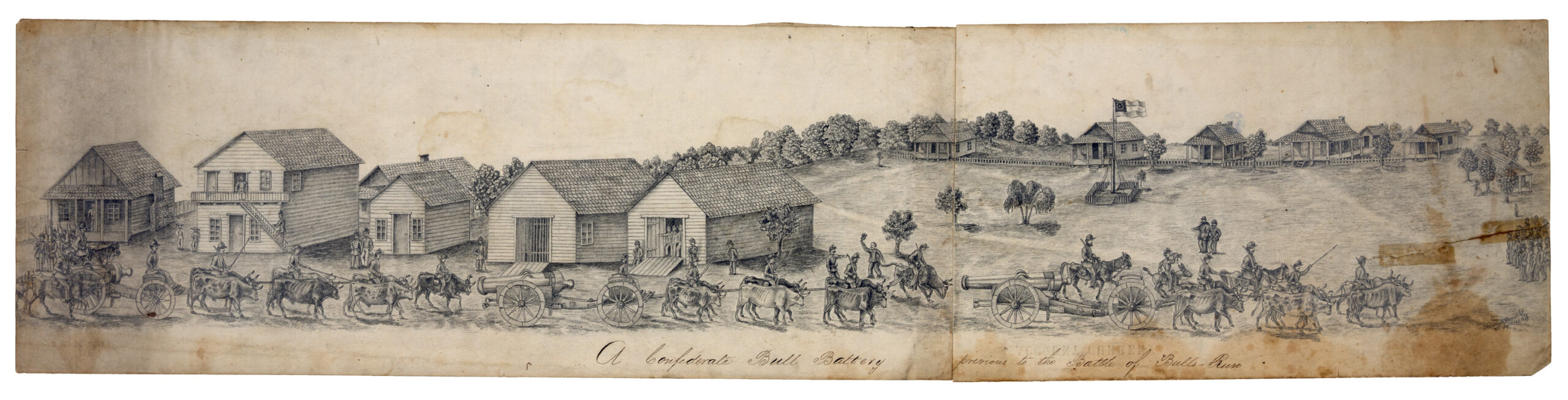
A Confederate Bull Battery Previous to the Battle of Bull Run

Library of Congress
A Confederate Bull Battery Previous to the Battle of Bull Run

(click on image for larger versions)

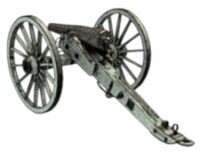
Canon and limber chests drawn by bulls in foreground. Military camp consisting of several wooden plank buildings. One building has vertical bars over entranceway – probably a prison. Confederate flag flies center image. Details include several soldiers in uniform.

Published [1861]

Library of Congress permalink

0 comments

Rebel War Clerk

Civil War Day-by-Day

JULY 19th.—We had fighting yesterday in earnest, at Bull Run! Several brigades were engaged, and the enemy were repulsed with the loss of several hundred left dead and wounded on the field. That was fighting, and we shall soon have more of it.

Brig.-Gen. Holmes, my friend and fellow-fugitive, now stationed near Fredericksburg, has been ordered by Gen. Beauregard to be ready to march at an hour’s notice. And Col. Northrop’s chin and nose have become suddenly sharper. He is to send up fighting rations for three days, and discerns the approach of sanguinary events.

Mr. Hunter calls every evening, just as the dusky shades of eve descend, to inquire if we have any news.

0 comments

Extracts from the journal of Commander Semmes, C.S. Navy, commanding C.S.S. Sumter

War of the Rebellion: from the Official Records of the Union and Confederate Armies and Navies
Friday, July 19.—Wind unusually blustering this morning, with partial obscuration of the heavens. Refitting engine, battery, rigging, etc. An English bark entered to-day from Liverpool.
0 comments

… the firing at Bull’s Run.

Woolsey family letters during the War for the Union

Our regiment had only been camped a few days on Cameron Run when the advance against the enemy at Manassas was ordered, and we two (Georgeanna and Eliza) watched the brigade break camp and march down the peaceful country road, carrying Joe away from us. We stood alone, and looked after them as long as they were in sight, and then made our way back to Washington.

After skirmishing at Fairfax Court House and Centreville, in which the regiment was engaged more or less, the battle of Bull Run was fought, July 21st, the regiment taking position on the extreme left at Blackburn’s Ford.

Here Colonel Davies, owing to the unfortunate condition of Colonel Miles, was left virtually in command of the reserve division.

——

Joseph Howland writes from Camp near Centreville.

July 19, 1861.

We had hardly got here yesterday when we heard heavy cannonading in the S. W. It proved to be the firing at Bull’s Run, where our troops were repulsed. A complete blunder–the old story of a masked battery and an insufficient infantry force sent against it. We expected a renewal of the fight last night. We slept on our arms, and were prepared for action at any hour. Nothing occurred, however. Our scouts bring in word that the enemy are receiving large reinforcements, and we on our side are also getting them. Everything points to a great battle.

0 comments

Quiet all day.

Diary of Battery A, First Regiment, Rhode Island Light Artillery, by Theodore Reichardt
Friday, July 19.—Camp near Centreville. The troops remained quiet all day. Fresh beef as rations.
0 comments

Mary Chesnut’s Diary: “I was in hopes there would be no battle until Mr. Chesnut was forced to give up his amateur aideship to come and attend to his regular duties in the Congress.”

A Diary From Dixie by Mary Boykin Miller Chesnut.

July 19th.–Beauregard telegraphed yesterday (they say, to General Johnston), “Come down and help us, or we shall be crushed by numbers.” The President telegraphed General Johnston to move down to Beauregard’s aid. At Bull Run, Bonham’s Brigade, Ewell’s, and Longstreet’s encountered the foe and repulsed him. Six hundred prisoners have been sent here.

I arose, as the Scriptures say, and washed my face and anointed my head and went down-stairs. At the foot of them stood General Cooper, radiant, one finger nervously arranging his shirt collar, or adjusting his neck to it after his fashion. He called out: “Your South Carolina man, Bonham, has done a capital thing at Bull Run–driven back the enemy, if not defeated him; with killed and prisoners,” etc., etc. Clingman came to tell the particulars, and Colonel Smith (one of the trio with Garnett, McClellan, who were sent to Europe to inspect and report on military matters). Poor Garnett is killed. There was cowardice or treachery on the part of natives up there, or some of Governor Letcher’s appointments to military posts. I hear all these things said. I do not understand, but it was a fatal business.

Mrs. McLane says she finds we do not believe a word of any news unless it comes in this guise: “A great battle fought. Not one Confederate killed. Enemy’s loss in killed, wounded, and prisoners taken by us, immense.” I was in hopes there would be no battle until Mr. Chesnut was forced to give up his amateur aideship to come and attend to his regular duties in the Congress.

Keitt has come in. He says Bonham’s battle was a skirmish of outposts. Joe Davis, Jr., said: “Would Heaven only send us a Napoleon!” Not one bit of use. If Heaven did, Walker would not give him a commission. Mrs. Davis and Mrs. Joe Johnston, “her dear Lydia,” were in fine spirits. The effect upon nous autres was evident; we rallied visibly. South Carolina troops pass every day. They go by with a gay step. Tom Taylor and John Rhett bowed to us from their horses as we leaned out of the windows. Such shaking of handkerchiefs. We are forever at the windows.

It was not such a mere skirmish. We took three rifled cannon and six hundred stands of arms. Mr. Davis has gone to Manassas. He did not let Wigfall know he was going. That ends the delusion of Wigfall’s aideship. No mistake to-day. I was too ill to move out of my bed. So they all sat in my room.

0 comments

Intensest interest now in every tramp of the soldiery.

Woolsey family letters during the War for the Union

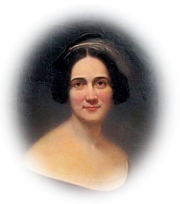
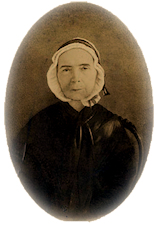
Our regiment, the Sixteenth New York, was about two weeks stationed at “ Camp Woolsey,” near the Capitol, and then crossed the Potomac and pitched its tents on Cameron Run, a little west of Alexandria, in the fields which were once the property of our great-great-Aunt Ricketts, whose plantation was famous for its flour, ground by the mill on the Run. This Aunt Ricketts, a sweet-faced woman, whose likeness was among those taken by Saint Memin about 1805, brought up your dear grandmother (left an orphan in 1814), whose letter of July 19th speaks of those days:–

——

Mother to Georgeanna and Eliza

8 Brevoort Place, Friday, July 19, 1861.

My dear Girls: A loving morning kiss to you both, and three hearty cheers for the success of the grand forward movement thus far. I have just been devouring the “Times”–that part of it, at least, and that only, which tells of the war movements–everything else is passed over with a very slighting glance. We feel the intensest interest now in every tramp of the soldiery as they advance southward, and wait with great impatience from night till morning, and from morning till night again, for our papers. Georgy, how deeply interesting was your letter to us, written in the doorway of the tent at Alexandria!–not the first tent letter we have had from you, but how different the circumstances of this last from any other! and how strange to me that poor old Alexandria, where all of my eleven brothers and sisters were born, and where my father and mother and relatives lie buried, should be the scene of such warfare–the camping ground of my children under such circumstances! You must have been very near the graves of your grandparents, and that of my dear venerated great-aunt, Mary Ricketts, who was a loving mother to me after the death of my own, and in whose house Abby was born. Cameron, too, was one of the places and homes of my childhood. It was the country-seat of this same good aunt, and on the grounds, some distance from the dwelling-house, stands a dilapidated building, in its day a fine “mansion” for that part of the country, which was the original home of the family, and where my mother was married to a then “affluent merchant” of Alexandria.

“Cameron Run” was the scene of all our childish sports, where we used to fish and sail and bathe and have all sorts of good times; it was then a wide deep stream, and formed the boundary line along the bottom of the garden at Cameron, and was lined on either side by magnolia trees; and when the old family coach, with its grey horses, was called up to the door on Sunday mornings to take us into town for church, we each had our magnolia in hand, showing where our morning walk had been, and our side of the old church was known by its perfume. All this is as fresh in my memory as though fifty years had been but as many days! I perfectly remember every spot about the old place;–but everything had changed almost entirely when I was last there, though I look back to it still as it was in my childhood. More than ever do I now regret my not having kept a diary of my early life, which might have been interesting to my children.

I feel very much as you do, my dear Eliza, that “somehow or other I cannot write letters now,” and, indeed, I cannot sit down very long at anything. My mind is in a state of unsettledness, if I may coin a word –a sort of anxious suspense, all the while, and I feel better when on the jump, going about. I have been making up a lot of currant jelly, some of which I will send on to the hospitals. I am going out by and by to get a work basket for little May–her birthday present. She is to keep her birthday and little Bertha’s together, to-morrow, by having a tea-party on the lawn. I shall fill the basket with goodies for them. . . . What an imposing sight it must have been when the troops all set forward together, and then the arrival at Fairfax! and then at Centreville! the rebels flying before them and leaving all their goods behind! I hope this may be the case all along, that they will throughout have a bloodless victory! . . . We look any instant for your letters. I say constantly to myself, “What will be the next news?” I dread to hear from Manassas, but hope the enemy will continue to retreat, until the whole land is clear of rebels. I cannot help thinking it will be an easy victory, and without bloodshed. May God bless and keep you, my dear children, and graciously prepare us for whatever may be his will. Give my love and blessing to Joe when you write.

Most tenderly and lovingly yours,

Mother.

——

Our letters from Camp Cameron were among those lost in the Morrell fire, but late in the war, when the Sanitary Commission wanted items for its paper, G. sent the following sketch of the camp:

“It was a pretty spot, our camp in a valley in Virginia–the hillside, covered with white tents, sloping to a green meadow and a clear bright little river. The meadow was part of my great-great-aunt’s farm years ago, and in the magnolia-bordered stream my grandfather’s children had fished and paddled. Now, we, two generations afterwards, had come back and pitched our tents in the old wheat fields, and made ready for war, and there were no magnolia blossoms any more.

“On the hills all about us the army was gathering, white tents springing up like mushrooms in the night. With their coming, came sickness, and sickness brought men of the next brigade into a poor little shanty close behind our headquarters. There we found them, one day, wretched and neglected, and ‘most improperly’ at once adopted them as our own. We asked no one’s permission, but went to work; had the house cleaned from top to bottom, shelves put up and sacks filled with straw; then we prescribed the diet and fed them just as we pleased. All this was a shocking breach of propriety, and I have no doubt the surgeon of the regiment was somewhere behind a fence, white with rage. Never mind, our men were delighted, and one dear little blue-eyed boy, who had blown his lungs through his fife, was never tired of saying and looking his thanks. Finally we persuaded the General to break up the little den, and order all the sick sent to general hospitals, and our breaches of etiquette came to an end.”

0 comments

“I shall make an effort today to be re-instated in office as the Times are not at all promising for any one out of business.”—Horatio Nelson Taft

Diary of US patent clerk Horatio Nelson Taft.

FRIDAY 19

A day of great excitement in the City, all looking for news from the Army. A thousand reports flying about, but nothing to be relied on when I left Willards at 9 o’clock tonight. I shall make an effort today to be re-instated in office as the Times are not at all promising for any one out of business. The sun has been hot today but there has been a good air or breeze all day. H N Jr in his sleep last night got out of a three story window on to the roof of the back wing two stories high. I got him in without accident.

______

The three diary manuscript volumes, Washington during the Civil War: The Diary of Horatio Nelson Taft, 1861-1865, are available online at The Library of   Congress.

0 comments

William Howard Russell’s Diary: General Scott’s quarters.—General Mansfield.—Bull’s Run.

My Diary North and South – William Howard Russell

July 19th.–I rose early this morning in order to prepare for contingencies and to see off Captain Johnson, who was about to start with despatches for New York, containing, no doubt, the intelligence that the Federal troops had advanced against the enemy. Yesterday was so hot that officers and men on the field suffered from something like sun-stroke. To unaccustomed frames to-day the heat felt unsupportable. A troop of regular cavalry, riding through the street at an early hour, were so exhausted, horse and man, that a runaway cab could have bowled them over like nine pins.

I hastened to General Scott’s quarters, which were besieged by civilians outside and full of orderlies and officers within. Mr. Cobden would be delighted with the republican simplicity of the Commander-in-Chief’s establishment, though it did not strike me as being very cheap at the money on such an occasion. It consists, in fact, of a small three-storied brick house, the parlours on the ground floor being occupied by subordinates, the small front room on the first floor being appropriated to General Scott himself, the smaller back room being devoted to his staff, and two rooms up-stairs most probably being in possession of waste papers and the guardians of the mansion. The walls are covered with maps of the coarsest description, and with rough plans and drawings, which afford information and amusement to the orderlies and the stray aide-de-camps. “Did you ever hear anything so disgraceful in your life as the stories which are going about of the affair yesterday?” said Colonel Cullum. “I assure you it was the smallest affair possible, although the story goes that we have lost thousands of men. Our total loss is under ninety–killed, wounded, and missing; and I regret to say nearly one-third of the whole are under the latter head.” “However that may he, Colonel,” said I, “it will be difficult to believe your statement after the columns of type which appear in the papers here.” “Oh! Who minds what they say?” “You will admit, at any rate, that the retreat of these undisciplined troops from an encounter with the enemy will have a bad effect.” “Well, I suppose that’s likely enough, but it will soon he swept away in the excitement of a general advance. General Scott, having determined to attack the enemy, will not halt now, and I am going over to Brigadier M’Dowell to examine the ground and see what is best to be done.” On leaving the room two officers came out of General Scott’s apartment; one of them said, “Why, Colonel, he’s not half the man I thought him. Well, any way he’ll be better there than M’Dowell. If old Scott had legs he’s good for a big thing yet.”

For hours I went horse-hunting; but Rothschild himself, even the hunting Baron, could not have got a steed. In Pennsylvania Avenue the people were standing in the shade under the selanthus trees, speculating on the news brought by dusty orderlies, or on the ideas of passing Congress men. A party of captured Confederates, on their march to General Mansfield’s quarters, created intense interest, and I followed them to the house, and went up to see the General, whilst the prisoners sat down on the pavement and steps outside. Notwithstanding his affectation of calm and self-possession, General Mansfield, who was charged with the defence of the town, was visibly perturbed. “These things, sir,” said he, “happen in Europe too. If the capital should fall into the hands of the rebels the United States will be no more destroyed than they were when you burned it.” From an expression he let fall, I inferred he did not very well know what to do with his prisoners. “Rebels taken in arms in Europe are generally hung or blown away from guns, I believe; but we are more merciful.” General Mansfield evidently wished to be spared the embarrassment of dealing with prisoners.

I dined at a restaurant kept by one Boulanger, a Frenchman, who utilised the swarms of flies infesting his premises by combining masses of them with his soup and made dishes. At an adjoining table were a lanky boy in a lieutenant’s uniform, a private soldier, and a man in plain clothes; and for the edification of the two latter the warrior youth was detailing the most remarkable stories, in the Munchausen style, ear ever heard. “Well, sir, I tell you, when his head fell off on the ground, his eyes shut and opened twice, and his tongue came out with an expression as if he wanted to say something.” “There were seven balls through my coat, and it was all so spiled with blood and powder, I took it off and threw it in the road. When the boys were burying the dead, I saw this coat on a chap who had been just smothered by the weight of the killed and wounded on the top of him, and I says, ‘Boys, give me that coat; it will just do for me with the same rank; and there is no use in putting good cloth on a dead body.’” “And how many do you suppose was killed, Lieutenant?” “Well, sir! it’s my honest belief, I tell you, there was not less than 5000 of our boys, and it may be twice as many of the enemy, or more; they were all shot down just like pigeons; you might walk for five rods by the side of the Run, and not be able to put your foot on the ground.” “The dead was that thick?” “No, but the dead and the wounded together.” No incredulity in the hearers–all swallowed: possibly disgorged into the note-book of a Washington contributor.

After dinner I walked over with Lieutenant H. Wise, inspected a model of Steven’s ram, which appears to me an utter impossibility in face of the iron-clad embrasured fleet now coming up to view, though it is spoken of highly by some naval officers and by many politicians. For years their papers have been indulging in mysterious volcanic puffs from the great centre of nothingness as to this secret and tremendous war-engine, which was surrounded by walls of all kinds, and only to be let out on the world when the Great Republic in its might had resolved to sweep everything off the seas. And lo! it is an abortive ram! Los Gringos went home, and I paid a visit to a family whose daughters–bright-eyed, pretty, and clever–were seated out on the door-steps amid the lightning flashes, one of them, at least, dreaming with open eyes of a young artillery officer then sleeping among his guns, probably, in front of Fairfax Court House.

0 comments

Skirmish of Blackburn’s Ford—War Letters of William Thompson Lusk.

War Letters of William Thompson Lusk.

Near Centreville, July 19th, 1861.

My dear Mother:

I am happy to write you of my continued health and good spirits. We had an adventurous time since I wrote you so hurriedly a few days ago. Leaving our encampment we marched on, halting often to remove trees and such other impediments as a retreating foe could place in our way. The first night we passed in Vienna. The next day we advanced on toward Fairfax Court House. We were drawn up about two miles off in line of battle upon rolling ground, and the batteries placed where they could play upon the enemy. Five shots from our guns sufficed to start our friends the foe again, so we advanced further, passing a deserted battery on the way. At noon we were in Germantown, which place we found deserted, and soon the soldiers were ransacking the houses for food, destroying and burning what they could not use themselves. I am happy to say the boys in my company had little hand in these doings, as such paltry work finds little countenance from its officers. Germantown is but a poor place though and $200 would probably cover any damage done to it. At night we bivouacked upon fields where the enemy’s fires were still burning, not far from Centreville. Here we were but a mile or two from the Secessionists, and the firing of pickets caused frequent alarms, calling us to our posts once in the middle of the night. We were all awakened by the long roll of the drum, which is the signal of an advance. We heard then what seemed to us all, in our half sleepy state, the tramp of cavalry upon us. Our toilettes were hastily made you can imagine, and soon we stood in silence not knowing whence the attack would come, but after an hour’s anticipation all became still, so the “chivalry” must have changed their minds and returned back to their posts. I cannot enumerate all the alarms we have had, for there is only paper enough to tell of our part in yesterday’s fight. About noon, I should think, for I have no means of calculating the time, we heard cannon firing not far off. There was no alarm sounded, so we lay around, sleeping, talking, and laughing with the utmost indifference. About 3 o’clock we were called to arms and, in the highest spirits, were marched off at a “Double Quick,” hoping that the 79th might have some share in the conflict now at hand. We found a Massachusetts Captain, an acquaintance of one of our sergeants. “We are going to give them fits” says the Captain. It was not half an hour afterwards we saw his body borne back in one of our ambulances. When near the field of action we were divided off in line, concealed in the edge of the wood. The cannon balls whipped about us on all sides. The enemy, either by accident, or knowing of our presence, had us directly in their range. One man in my platoon was struck in the leg. Thank God our loss was not greater. We were totally unaware of our destination. It was found afterwards we had been stationed out to cover the retreat of the Brigade already in action. After a while the cannon ceased firing and we were marched off to our present bivouack.

You must know the particulars of yesterday’s skirmish by the papers a thousand times better than I can tell you.

Excuse the style of this letter, for it is written with the paper on the side of an axe. An order has just been issued imposing the severest penalties upon all those who shall in any wise trespass on private property. I am now ready to march forward with a lighter heart, for it was not pleasant to be connected with thieves – call thieving confiscation or what you will.

My best love, dearest Mother, for all. Keep up a light heart and trust in the Power of Him who ruleth all.

Very affec’y.,
W. T. Lusk,
Lieut. 10th Co. 70th Regt.

_______

A part of this letter was published in the Norwich Morning Bulletin of July 23d, 1861.


0 comments

“Yesterday evening we were startled by the sound of myriads of horses, wheels, and men on the turnpike.”—Diary of a Southern Refugee, Judith White McGuire.

Diary of a Southern Refugee During the War by Judith White McGuire

July 19.—This day is perhaps the most anxious of my life. It is believed that a battle is going on at or near Manassas. Our large household is in a state of feverish anxiety; but we cannot talk of it. Some sit still, and are more quiet than usual; others are trying to employ themselves. N. is reading aloud, trying to interest herself and others; but we are all alike anxious, which is betrayed by the restless eye and sad countenance. Yesterday evening we were startled by the sound of myriads of horses, wheels, and men on the turnpike. We soon found the whole of General Johnston’s army was passing by, on its way to join Beauregard, below the mountain. A note from J. M. G., written with a pencil at the Longwood gate, was soon brought in, to say that they would halt at Millwood. The carriages were soon ready, and as many of the family as could go went to Millwood to meet them. I gave up my seat to another, for I felt too sad to meet with those dear boys marching on to such danger. Mr. _____ and the girls went. They saw my nephews, R. C. W. and B. B., and others who were very dear to us. They report them all as in fine spirits. The people all along the road, and in the village of Millwood, went out to meet them with refreshments. While halting at Millwood, General Johnston announced to them that General Beauregard had been successful in a fight the day before, near Manassas, and that another fight was hourly pending. The troops became wild with excitement. It is said that General Patterson has gone to join McDowell. I trust that General Johnston may get there in time. They were passing here from about four in the afternoon until a late hour in the night. After midnight the heavy army wagons were lumbering by, and we ever and anon heard the tap of the drum. We did not retire until all was still, and then none of us slept.

0 comments

A Diary of American Events – July 19, 1861

The Rebellion Record – A Diary of American Events; by Frank Moore

–Last night a party consisting of Capt. Holliday, Capt. Edward W. Jenkins, Lieut. Johnson and private Small, of the Naval Brigade, Maj. T. Edward Rawlings, of the Kentucky Light Cavalry, and R. W. Shurtliff, left Hampton, Va., without permission, on a scout. –They were poorly armed, and but one of them mounted. At 4 ½ o’clock this morning the party were surprised in the woods, a short distance beyond New Market bridge, by twenty dismounted horsemen, who fired upon them. Rawlings was instantly killed by a bullet through his head. Lieutenant Johnson and Mr. Shurtliff were also seen to fall, and have been carried off prisoners. The rest of the party escaped.–Baltimore American, July 20.

–By an order from the War Department at Washington, it was forbidden to muster any soldier into the service who is unable to speak the English language. By the same order, Brevet Second-Lieutenants Clarence Derrick, James P. Parker, and Frank A. Reynolds, (having tendered their resignations in face of the enemy) were dismissed from the service of the United States.–(Doc. 105.)

–To-day the Virginia Legislature, in session at Wheeling, adopted the following resolutions:

Resolved, That the Governor be and is hereby requested to apply to the President of the United States for authority to contract with come individual or individuals, on behalf of the General Government, for necessary clothing for each of the volunteers of Northwestern Virginia as have been, or may be, mustered into the service of the United States for three years.

Resolved, That a copy of the foregoing resolution be forwarded to our Senators and Representatives in Congress, with a request that they unite with the Governor in his efforts to obtain the authority indicated in the foregoing.

–The Third Regiment of Massachusetts Militia arrived at Boston this morning from Fortress Monroe, and encamped at Long Island. –N. Y. Evening Post, July 19.

–The general order of the War Department at Washington, transfering General N. P. Banks to the command of the National forces on the upper Potomac, was issued to-day.–(Doc. 106.)

–General Cadwallader of the Pennsylvania Volunteers, was honorably discharged from the service of the United States.–General Order, War Department, No. 46.

–Brigadier-general John Pope, commanding the National troops in Northern Missouri, issued a proclamation to the people of that district, warning all persons taken in arms against the Federal authority, who attempt to commit depredations, or who molest peaceful citizens, that they will be dealt with, “without awaiting civil process.”–(Doc. 107.)

–In general orders of this date, Maj.-Gen. McClellan expresses his satisfaction with and confidence in the soldiers of his command, “the Army of the West;” and recapitulates their recent exploits.–(Doc. 108.)

–All of the vessels previously reported as prizes to the privateer Sumter, and by her sent into a Cuban port, were liberated by the Captain-General of Cuba.–N. Y. Express, July 29.

0 comments

Civil War Day-By-Day

Civil War Day-by-Day

July 19, 1861

A Chronological History of the Civil War in America1

  • Gen. Banks superseded Gen. Patterson in command on the Potomac.

  1. A Chronological History of the Civil War in America by Richard Swainson Fisher, New York, Johnson and Ward, 1863
0 comments

A Diary of American Events – December 27, 1860

The Rebellion Record – A Diary of American Events; by Frank Moore

—A meeting of the citizens of Pittsburgh, Pa., was held, to give expression to the public indignation created by the removal of ordnance to the Southern forts. General William Robinson presided. Resolutions were adopted, declaring loyalty to the Union, deprecating any interference with the shipment of arms under government orders, however inopportune or impolitic the order might appear; deploring the existing state of things in connection with the administration of important deportments of the public service, so as to have shaken confidence in the people of the free Slates; that, while Pennsylvania is on guard at the Federal capital, it is her special duty to look to the fidelity of her sons, and in that view call on the President as a citizen of this Commonwealth, to see that the public receive no detriment at his hands. It behooves the President to purge his cabinet of every man known to give aid and comfort to, or in any way countenancing the revolt of any State against the authority of the constitution and the laws of the Union.—Evening Post, Dec. 28.

—“Captain N. L. Coste, U. S. R. Service, in command of the cutter William Aiken, betrayed his vessel into the hands of the State authorities of South Carolina.

“The crew, on being notified of the position of Captain Coste, under the State ordinance concerning the customs, promptly volunteered to remain under his command as an officer of South Carolina under that ordinance.”

(See Statement of Lieutenant Underwood, N. Y. Times, Jan. 9, 1861.)

—A meeting was held this evening at Richmond, Va., to give expression of opinion on the present crisis. Several speeches were made, favoring prompt secession measures, and others advocating a resort to negotiation.—Herald, Dec. 29.

—The Governor of South Carolina is tendered the services of troops from Georgia, Alabama, and different portions of Carolina.

0 comments

“On account of the diminished business of the Patent office a number of the Examiners were removed today, myself among the rest.”—Horatio Nelson Taft

Diary of US patent clerk Horatio Nelson Taft.

THURSDAY, JULY 18, 1861.

Rather too warm today for comfort but a good air stirring. It is supposed that a great Battle has taken place at Mannasses junction — as our troops were near there this morning. On account of the diminished business of the Patent office a number of the Examiners were removed today, myself among the rest. The Pat office fund is pretty well exhausted, the expenses being about $10,000.00 per month in excess of receipts for the last six months. Called at Willards to see Mr A D [Polhamus?], an immense crowd.

______

The three diary manuscript volumes, Washington during the Civil War: The Diary of Horatio Nelson Taft, 1861-1865, are available online at The Library of   Congress.

0 comments

“The indications are that we shall soon move.”—Rutherford B. Hayes

Diary and Letters of Rutherford Birchard Hayes

CAMP CHASE, July 18, 1861.

DEAR UNCLE:–I have just read your letter of the 16th. I hope it is good proof that you are mending rapidly. It is pleasant to see your own handwriting again.

Our men are uniformed and we are daily receiving our needful equipments. The indications are that we shall soon move. In what direction and under whose command, we do not know. We are not very particular. We prefer the mountainous region of Virginia or Tennessee.

If Ned, Jr. was down here, I would try what could be done with him. But the travelling is done so much by rail, that I hardly need two horses. My sorrel is a good one.

My notion is that we shall go within a fortnight. Lucy and the two boys will stay until we go with Platt. Come down if you can, but not at the risk of health. Write often. No letters are so good as yours.

Sincerely,

R. B. HAYES.

S. BIRCHARD.

0 comments

Rebel War Clerk

Civil War Day-by-Day

JULY 18th.—The major is sick again, and Jacques is away; therefore I have too much work, and the colonel groans for me. He is proud of the appointments he made with such rapidity, and has been complimented. And in truth there is no reason why the thousands of applications should not be acted on promptly; and there are many against delay. A large army must be organized immediately, and it will be necessary to appoint thousands of field and staff officers—unless all the governors are permitted to do as Gov. Brown desires to do. The Secretary is in better health, and quite condescending. My work pleases him; and I shouldn’t be astonished if he resented the sudden absence of Mr. Jacques. But he should consider that Mr. J. is only an amateur clerk getting no pay, rich, and independent of the government.

0 comments

Rations and rumors.–Diary of Josiah Marshall Favill.

Diary of a Young Officer – Josiah Marshall Favill (57th New York Infantry)

July 18th. To-day great droves of beef cattle were driven into camp and slaughtered, and three days’ cooked rations prepared, and issued to all the troops; we got enough to completely fill our haversacks, and load us down uncomfortably. Nothing occurred during the day worth mentioning, the band played frequently while we cleaned our muskets, filled our cap pouches and cartridge boxes, and otherwise prepared for the great battle so near at hand. The camp is full of rumors, but nothing trustworthy.

0 comments

Extracts from the journal of Commander Semmes, C.S. Navy, commanding C.S.S. Sumter

War of the Rebellion: from the Official Records of the Union and Confederate Armies and Navies
Thursday, July 18.—Fresh trade wind and clear. Employed refitting and repairing the small damages of our late cruise. Sent a lieutenant with my card to call on the governor and to excuse my not calling in person on account [of] indisposition. I was visited to-day by a Venezuelan, who spoke English and who represented himself as a messenger or agent of President Castro, who is now here in exile with four of his cabinet ministers, and who proposed to me, on the part of Castro, to take him (Castro ) and some twenty officers with some arms and ammunition to the mainland opposite. I declined this proposition, first, because I was not going in the direction indicated, and, second, if I were it would be an undue interference on the part of a neutral with the revolutionary parties now contending for the control of Venezuela. It was remarked that Castro was the de jure president, to which I replied that we did not look into these matters, the opposite party being in the de facto possession of the Government. No arrival in the harbor.
0 comments

“…intelligence came that our troops got worsted and the contest was given up.”

Diary of Battery A, First Regiment, Rhode Island Light Artillery, by Theodore Reichardt
Thursday, July 18.—Advance at daylight. A part of the Union army, Gen. Tyler’s troops, engaged. This con?ict the rebels call battle of Bull Run1. While the contest was raging, our division halted two miles to the left of Fairfax Court House, at a place called Germantown. We could plainly hear the distant booming of artillery, and were impatiently waiting for the order, “forward.” Towards four o’clock P. M., we advanced again; preparations were made to get in action; sponge buckets ?lled with water, and equipments distributed among the cannoniers. But when we approached Centreville, intelligence came that our troops got worsted and the contest was given up. Our division went to camp within a mile and a half of Centreville. Strong picket lines we drawn up.

  1. Battle of Blackburn’s Ford
0 comments

Norton P. Chipman to Samuel Ryan Curtis

The Letters of Samuel Ryan Curtis
Norton P. Chipman

“Camp Lyon” July 18th 61

Col Curtis

Dear Sir.

An opportunity offering to send you a word I embrace it. Enclosed is a petition for your appointment as Brig. Genl. Capt Huston1 undertook to engineer it thro’ & as we all supposed sent it a week ago: he didn’t do it however & Lieut Archer2 this day handed me to send you. ‘Twill reach you too late doubtless for any purpose. ‘Twont make any material difference I apprehend as no one would doubt the desire of your own Reg’t to see you promoted.

I don’t know of any very anxious aspirant to the Reg’t for position should your post become vacant except Lieut Col Tuttle & Capt Huston. Both are evidently alarmed. Col T from Maj Crocker, Capt H from some quarter.

The Reg’t are enthusiastic in their preferences [for] Maj. Crocker over Col T. In relation to myself as prospective Candidate for Major I can only say that for some reason, I’m fearful not by merit, (for my position as adj’t necessarily wouldn’t develop qualities for Major) an idea prevails that I deserve promotion, which I by no means discourage, very modestly however holding myself back. Since you left I have had a great deal to do not legitimately belonging to my office, bringing me in contact with all the Regt & instead of my going to the Col to learn everything as when you were here, the scale is somewhat reversed, & I am made a kind of general intelligencer. I hope you may find that your humble adjutant hasn’t gone aside from a modest discharge of his duty whatever else he may have done major [before] hand. But leaving this matter I desire only to urge upon your attention one thing which above all others I feel a deep interest in. That is the elevation of Major Crocker to the Colencey.

As I was more than enthusiastic to secure you as our Col, if we have to lose you, the reputation of the Reg’t its effectiveness demand some one as its leader beside Col T–. And be the sacrifice what it may I will make it to secure some one else. I ought not to talk so perhaps but you will pardon. Let me cite an instance of his generalship. He led an expedition to Maryville East of Savannah, 3 companies, from the information which led to the detachment’s going only, he had every reason to expect to meet 600 rebels. In the march from Savannah to Maryville a distance of 30 miles, he allowed his Command to string out for 5 miles, Cos intermingling weary men dropping off in force [?] [illegible] & the Col some time a half mile in advance, alone, this is an example but I don’t want to always be found complaining. I will support him cordially in a military way if chosen over us, but sincerely hope I many never have to. I must close hastily–Cars about to leave.

I regret to send you tidings of the death of Lieut Strong3 Co “E”–died today–brain fever–was sick but few days–we have sustained a severe loss in him. He was a gentleman of modest attainm’ts, amiable, strongly endeared to his company. We all feel deeply the loss.

Health of Camp is pretty good. I am enquired of a hundred times a day when is Col Coming home. You are tho’t of continually.

Your good letter was rec’d yesterday & did me much good.

Truly
N P Chipman


1. Richard H. Huston. Keokuk, appointed Capt. Co. A, 2nd Iowa Inf. May 27, 1861, resigned Sept. 3, 1862, for disability.

2. Sampson M. Archer. Keokuk, 2nd. Lt. 2nd Iowa Inf., resigned Oct. 8, 1861, elected Capt. Co. C, 17th Iowa Inf. March 25. 1862, major, Jan. 23, 1863, lt. col. June 3, 1863, col. June 12, 1865.

3. George Strong, Fairfield, Iowa, 1st It., Co. E., May 28. 1861. died July 18, 1861, St. Joseph, Mo.

0 comments

William Howard Russell’s Diary: Popular excitement.—Lord Lyons.—General M’Dowell’s movements.—Retreat from Fairfax Court House.

My Diary North and South – William Howard Russell

July 18th.–After breakfast. Leaving head-quarters, I went across to General Mansfield’s, and was going upstairs, when the General (since killed in battle) himself, a white-headed, grey-bearded, and rather soldierly looking man, dashed out of his room in some excitement, and exclaimed, “Mr. Russell, I fear there is bad news from the front.” “Are they fighting, General?” “Yes, sir. That fellow Tyler has been engaged, and we are whipped.” Again I went off to the horse-dealer; but this time the price of the steed had been raised to £220; “for,” says he, “I don’t want my animals to be ripped up by them cannon and them musketry, and those who wish to be guilty of such cruelty must pay for it.” At the War Office, at the Department of State, at the Senate, and at the White House, messengers and orderlies running in and out, military aides, and civilians with anxious faces, betokened the activity and perturbation which reigned within. I met Senator Sumner radiant with joy. “We have obtained a great success; the rebels are falling back in all directions. General Scott says we ought to be in Richmond by Saturday night.” Soon afterwards a United States officer, who had visited me in company with General Meigs, riding rapidly past, called out, “You have heard we are whipped; these confounded volunteers have run away.” I drove to the Capitol, where people said one could actually see the smoke of the cannon; but on arriving there it was evident that the fire from some burning houses, and from wood cut down for cooking purposes had been mistaken for tokens of the fight.

It was strange to stand outside the walls of the Senate whilst legislators were debating inside respecting the best means of punishing the rebels and traitors, and to think that amidst the dim horizon of woods which bounded the west towards the plains of Manassas, the army of the United States was then contending, at least with doubtful fortune, against the forces of the desperate and hopeless outlaws whose fate these United States senators pretended to hold in the hollow of their hands. Nor was it unworthy of note that many of the tradespeople along Pennsylvania Avenue, and the ladies whom one saw sauntering in the streets, were exchanging significant nods and smiles, and rubbing their hands with satisfaction. I entered one shop, where the proprietor and his wife ran forward to meet me. “Have you heard the news? Beauregard has knocked them into a cocked hat.” “Believe me,” said the good lady, “it is the finger of the Almighty is in it. Didn’t he curse the niggers, and why should he take their part now with these Yankee Abolitionists, against true white men?” “But how do you know this?” said I. “Why, it’s all true enough, depend upon it, no matter how we know it. We’ve got our underground railway as well as the Abolitionists.”

On my way to dinner at the Legation I met the President crossing Pennsylvania Avenue, striding like a crane in a bulrush swamp among the great blocks of marble, dressed in an oddly cut suit of grey, with a felt hat on the back of his head, wiping his face with a red pocket-handkerchief. He was evidently in a hurry, on his way to the White House, where I believe a telegraph has been established in communication with M’Dowell’s head-quarters. I may mention, by-the-bye, in illustration of the extreme ignorance and arrogance which characterise the low Yankee, that a man in the uniform of a Colonel said to me to-day, as I was leaving the War Department, “They have just got a telegraph from M’Dowell. Would it not astonish you Britishers to hear that, as our General moves on towards the enemy, he trails a telegraph wire behind him just to let them know in Washington which foot he is putting first?” I was imprudent enough to say,”I assure you the use of the telegraph is not such a novelty in Europe or even in India. When Lord Clyde made his campaign the telegraph was laid in his track as fast as he advanced.” “Oh, well, come now,” quoth the Colonel, “that’s pretty good, that is; I believe you’ll say next, your General Clyde and our Benjamin Franklin discovered lightning simultaneously.”

The calm of a Legation contrasts wonderfully in troubled times with the excitement and storm of the world outside. M. Mercier perhaps is moved to a vivacious interest in events. M. Stoeckl becomes more animated as the time approaches when he sees the fulfilment of his prophecies at hand. M. Tassara cannot be indifferent to occurrences which bear so directly on the future of Spain in Western seas; but all these diplomatists can discuss the most engrossing and portentous incidents of political and military life, with a sense of calm and indifference which was felt by the gentleman who resented being called out of his sleep to get up out of a burning house because he was only a lodger.

There is no Minister of the European Powers in Washington who watches with so much interest the march of events as Lord Lyons, or who feels as much sympathy perhaps in the Federal Government as the constituted Executive of the country to which he is accredited; but in virtue of his position he knows little or nothing officially of what passes around him, and may be regarded as a medium for the communication of despatches to Mr. Seward, and for the discharge of a great deal of most causeless and unmeaning vituperation from the conductors of the New York press against England.

On my return to Captain Johnson’s lodgings I received a note from the head-quarters of the Federals, stating that the serious action between the two armies would probably be postponed for some days. M’Dowell’s original idea was to avoid forcing the enemy’s position directly in front, which was defended by movable batteries commanding the fords over a stream called “Bull’s Run.” He therefore proposed to make a demonstration on some point near the centre of their line, and at the same time throw the mass of his force below their extreme right, so as to turn it and get possession of the Manassas Railway in their rear: a movement which would separate him, by-the-bye, from his own communications, and enable any general worth his salt to make a magnificent counter by marching on Washington, only 27 miles away, which he could take with the greatest ease, and leave the enemy in the rear to march 120 miles to Richmond, if they dared, or to make a hasty retreat upon the higher Potomac, and to cross into the hostile country of Maryland.

M’Dowell, however, has found the country on his left densely wooded and difficult. It is as new to him as it was to Braddock, when he cut his weary way through forest and swamp in this very district to reach, hundreds of miles away, the scene of his fatal repulse at Fort Du Quesne. And so, having moved his whole army, M’Dowell finds himself obliged to form a new plan of attack, and, prudently fearful of pushing his under-done and over-praised levies into a river in face of an enemy, is endeavouring to ascertain with what chance of success he can attack and turn their left.

Whilst he was engaged in a reconnaissance to-day, General Tyler did one of those things which must be expected from ambitious officers, without any fear of punishment, in countries where military discipline is scarcely known. Ordered to reconnoitre the position of the enemy on the left front, when the army moved from Fairfax to Centreville this morning, General Tyler thrust forward some 3000 or 4000 men of his division down to the very banks of “Bull’s Run,” which was said to be thickly wooded, and there brought up his men under a heavy fire of artillery and musketry, from which they retired in confusion.

The papers from New York to-night are more than usually impudent and amusing. The retreat of the Confederate outposts from Fairfax Court House is represented as a most extraordinary success; at best it was an affair of outposts; but one would really think that it was a victory of no small magnitude. I learn that the Federal troops behaved in a most ruffianly and lawless manner at Fairfax Court House. It is but a bad beginning of a campaign for the restoration of the Union, to rob, burn, and destroy the property and houses of the people in the State of Virginia. The enemy are described as running in all directions, but it is evident they did not intend to defend the advanced works, which were merely constructed to prevent surprise or cavalry inroads.

I went to Willard’s, where the news of the battle, as it was called, was eagerly discussed. One little man in front of the cigar-stand declared it was all an affair of cavalry. “But bow could that be among the piney woods and with a river in front, major?” “Our boys, sir, left their horses, crossed the water at a run, and went right away through them with their swords and six-shooters.” “I tell you what it is, Mr. Russell,” said a man who followed me out of the crowd and placed his hand on my shoulder, “they were whipped like curs, and they ran like curs, and I know it.” “How?” “Well, I’d rather be excused telling you.”

0 comments

“Our relations with this country are now in a promising condition.”–Adams Family Letters, Charles Francis Adams, U.S. Minister to the U.K., to his son.

Adams Family Civil War letters; US Minister to the UK and his sons.

London, July 18, 1861

I Have engaged a house1 which will I hope be more convenient. It is not in quite so fashionable or so noisy a situation, but it is amply and in some respects richly furnished, and is in a very good neighborhood. My engagement is only for a year, and even that may be shortened if the Earl of Derby should come into the ministry. For my landlord, who is in Parliament, hopes to get back to the same place he had before, Under Secretary for Foreign Affairs, in which contingency he will want his house in May next. In the exact condition of our affairs I have not considered the arrangement so bad as I might otherwise have done. Our relations with this country are now in a promising condition. I have no idea that anybody means war. But a blockade which shuts up the cotton crop is not unlikely to try the nerves of our friends a little, and to elicit causes of difference that may prove difficult to settle. . . .

I think I have attained a tolerable idea of the texture of London society. I have seen most of the men of any reputation, literary or political. The conclusion is not favorable, so far as the comparison with other periods is concerned. Lord Palmerston, Mr. Gladstone, Lord John Russell and Lords Derby and Ellenborough are the orators. Mr. D’Israeli perhaps might be included. Thackeray, Senior, Monckton Milnes, Grote, Lord Stanhope, and Mr. Reeve, the editor of the Edinburgh Review, constitute pretty much the literature. Perhaps I should include Milman. Gladstone and Cornewall Lewis are the scholar politicians. Intermixed with all these are men of education, if not of eminence, who contribute a share to the common stock of society. But I have not yet been to a single entertainment where there was any conversation that I should care to remember. This is not much of a record as compared with the early part of the present or the close of the last century, with the days of Queen Anne, or of Elizabeth. The general aspect of society is profound gravity. People look serious at a ball, at a dinner, on a ride on horseback or in a carriage, in Parliament or at Court, in the theatres or at the galleries. The great object in life is social position. To this end domestic establishments are sustained to rival each other. The horses must be fine, the carriage as large and cumbrous as possible, the servants as showy in livery as anybody’s, the dinners must be just so, the china of Sevres and the plate of silver, the wines of the same quality and growth, not because each person takes pleasure in the display, but because everybody else does the same thing. And so it is through all the economy of social life. The difference is only in the amount of wealth applicable to each particular instance. Yet with all this there is a studied avoidance of all appearance of ostentation. It is not the fashion to parade titles, scarcely even to use them. I do not think I have heard even the most ordinary forms of address to the nobility resorted to more than a dozen times or so. At one dinner I was surprised to hear a lady spoken to several times as “Duchess” rather than “your Grace.” But etiquette is rigid. A white cravat at dinner is indispensable, as well as patent leather shoes, and each person has his distinct place according to the rules which are laid down in the books, in which he must fulfil all his duties to every other person in every, the most exact particular.

Some people say this is true of the London season only. When these same people go to their estates in the country the case is altered. There they are easy and sociable. It may be so, but I doubt it. The Englishman is formal by nature, and he is made so by education. The only question with him is upon the greater or the less. His kindness is all according to rule. If he invites you to his house, he does not think it any part of his duty to put you at your ease there. You must work your own way to acquaintance. He will not help you unless you ask him to do so, and if you do, you subject yourself to a chance of being repelled, unless your situation is such as to make your acquaintance deemed desirable. This is the reason why strangers make so little headway in incorporating themselves into society, and why they seek other countries to dwell in. I know of many Americans in London, but I see scarcely any in the places I am invited to, and these owe their admission to some exceptional recommendation rather than civility or good will. . . .

_______

1 No. 5 Mansfield Street, belonging to Sir William Robert Seymour Vesey Fitzgerald

0 comments

“The soldiers from the far South have never had measles, and most unfortunately it has broken out among them, and many of them have died of it…,”—Diary of a Southern Refugee, Judith White McGuire.

Diary of a Southern Refugee During the War by Judith White McGuire

July 18.—During the last ten days we have been visiting among our friends, near Berryville, and in Winchester. The wheat harvest is giving the most abundant yield, and the fields are thick with corn. Berryville is a little village surrounded by the most beautiful country and delightful society. Patriotism burns brightly there, and every one is busy for the country in his or her own way. It is cheering to be among such people; the ladies work, and the gentlemen—the old ones—no young man is at home—give them every facility. But Winchester, what shall I say for Winchester that will do it justice? It is now a hospital. The soldiers from the far South have never had measles, and most unfortunately it has broken out among them, and many of them have died of it, notwithstanding the attention of surgeons and nurses. No one can imagine the degree of self-sacrificing attention the ladies pay them; they attend to their comfort in every respect; their nourishment is prepared at private houses; every lady seems to remember that her son, brother, or husband may be placed in the same situation among strangers, and to be determined to do unto others as she would have others to do unto her.

War still rages. Winchester is fortified, and General Johnston has been reinforced. He now awaits General Patterson, who seems slowly approaching. [continue reading…]

0 comments

A Diary of American Events – July 18, 1861

The Rebellion Record – A Diary of American Events; by Frank Moore

–This morning a general order was issued at Fairfax Court House, Va., by General McDowell, deprecating the disorderly conduct of the troops under his command in destroying the property of the inhabitants of the town, and appointing a police force from each regiment to secure the preservation of such property. It was read to every regiment in the army of the Potomac.–(Doc. 100.)

–A large and enthusiastic Union meeting composed of the citizens of Broome and Chenango counties, New York, was held to-day. Addresses were made by Daniel 8. Dickinson and George Baillet, and resolutions approving the acts of the Federal Government in the present crisis, were unanimously adopted.– (Doc. 101.)

–The Tammany Regiment or Jackson Guard, N. Y. S. V., under the command of Colonel Wm. D. Kennedy, left its encampment at Great Neck, Long Island, for the scene of the war.– N. Y. World, July 19.

–In the House of Representatives, Washington, the Committee to whom was referred the resolution to inquire whether or not the Hon. Henry May, of Maryland, was in criminal intercourse with those in armed rebellion against the Government, submitted a report that there was no evidence of Mr. May’s guilt in that particular, the resolution having been based on mere newspaper statements. The report also exculpated the President and General Scott from all suspicion of a correspondence with though rebels through Mr. May’s agency. Upon the adoption of this report, Mr. May addressed the House upon the subject of the inquiry, warmly denouncing it as an unparalleled outrage upon his constituents, whose rights as freemen, he said, had been previously stricken down and trampled in the dust by the Administration, through its military power. His remarks were interrupted by Mr. Stevens, of Pennsylvania, who interposed a point of order, which, being sustained by the House, Mr. May declined to avail himself of the permission to proceed in order, announcing his purpose to vindicate himself on a future occasion. He presented the memorial of the Police Commissioners of Baltimore. Ex-Governor Thomas, of Maryland, replied to Mr. May in a vigorous speech, in which he maintained that the recent election demonstrated conclusively the fact that a vast majority of the people of Maryland entirely approved the military measures of the Administration, and of the present attitude of the State.

In the United States Senate the bill for the better organization of the military establishment being under consideration, Mr. Powell moved an amendment declaring that no part of the Army or Navy should be used for the subjugation of any sovereign State, or in any way to interfere with African slavery. A sharp debate followed on the purposes of the war. Mr. Sherman, Republican, said the war was not one of subjugation, but merely intended to maintain the integrity of the Union, and moved as a substitute for Mr. Powell’s amendment a resolution declaring that “the military be employed to preserve the Union and protect the public property.”

–The Philadelphia Press of to-day contains an interesting account of affairs in Richmond, Va. It will be seen that the steel-clad steamer Yorktown is about to attempt to force her way through our fleet, and that infernal machines are being prepared to injure our vessels and forts. A very decided reaction in public sentiment among the working classes has recently occurred, and, like many of the troops, they are heartily sick of the Secession movement, and anxious for the re-establishment of the National authority over the whole country. The slaves are well apprised of the movements of our army, and many of them earnestly desire its success. Several regiments have recently been sent from “West Tennessee into the eastern part of that State to overawe the Union men there. The effects of the blockade are seriously felt, but some important articles are still obtained from the North.–(Doc. 102.)

–This afternoon Major Van Horn’s command of United States Reserve Home Guards of Kansas City, Mo., numbering about 170 men, was attacked by 600 rebels under Capt. Duncan, thirteen miles north of Harrisonville. The fight lasted four hours, during which time a continued firing was kept up on both sides. At twenty minutes past six o’clock the rebels withdrew, leaving the United States troops victorious. The loss of the rebels was fourteen killed, including two officers, and several wounded; while that of the United States forces was only one killed. At 12 o’clock the United States troops continued their march, crossing Grand River, but they were compelled to leave three of their baggage wagons on the bank of the river in consequence of high water. Major Van Horn left Kansas City on the 17th for the purpose of reinforcing Maj. Dean, now holding West Point, Missouri, with a small force, he having routed 1,000 rebels at that place. Major Van Horn’s command was attacked while at dinner. They planted their flag-staff at 2 o’clock, never giving way an inch nor removing the flag till after the rebels withdrew. The rebels endeavored to flank them on the left with a company of cavalry, but were completely routed by a detailed force under Captain Butler.–N. Y. World, July 23.

–The Federal army left Fairfax Court House, Va., this morning and took up its line of march in the direction of Centreville. General McDowell, in a despatch to head-quarters at Washington, gives the position of the several divisions of his army to-day.–(Doc. 103.)

–An engagement took place at Blackburn’s Ford, four miles south of Centreville, Va., this afternoon. General Tyler’s division encamped last night a few miles east of Centreville, and this morning proceeded toward that point. Centreville was passed in safety, and the troops turned from Little River turnpike road to the Manassas road. On the road information was received that a masked battery was on the left of the road ahead, and Colonel Richardson, in command of the Fourth Brigade, was ordered to reconnoitre, while the remainder of the division remained in the vicinity of Centreville.

Col. Richardson proceeded with three companies of the Massachusetts First Regiment, being the Chelsea company, the Fusileers, and the National Guards. They passed across an open ravine and again entered the road, which was densely surrounded by woods, when they were received by a raking fire from the left, killing a number of the advance.

They gallantly sustained their position and covered the retreat of a brass cannon of Sherman’s battery, the horses having been completely disabled by the fire, until relieved by the Michigan Second, and the New York Twelfth Regiments, when they fell back.

The Federal forces then took a position on the top of a hill. Two rifle cannons were planted in front, supported by Captain Brockett’s Company B, Second Cavalry, with a line of infantry composed of the Second Regiment of Michigan, and the Twelfth Regiment of New York in the rear. A steady fire was kept up on both sides in this position.

The rebels had two batteries of eight pieces in a position commanding the road. They used their guns well, except that they fired sometimes too high,–but they were gallantly forced by the national troops. “They did not reply to our regular fire for half an hour,” says a correspondent, “during which time they were receiving large reinforcements. In the mean time Col. Richardson’s brigade reconnoitered the woods. While we were again thus advancing we were met with a raking fire. Our guns were again put in position, and we poured grape and canister among the enemy till the supply was exhausted.”

At half-past four o’clock, General Tyler ordered his troops to retire, it being necessary to relieve Captain Brackett’s cavalry, which had alone the most effective service. The day was exceedingly hot, and the horses thirsted for water, which could only be obtained at Centreville.–(Doc. 104.)
0 comments