A Rebel War Clerk’s Diary

Civil War Day-by-Day
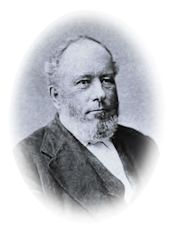
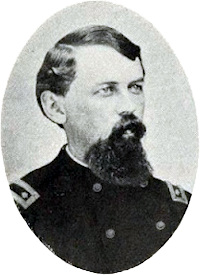
A likeness of Jones when he was editor and majority owner of the Daily Madisonian during President John Tyler’s administration.

MARCH 20th.—The snow is eight inches deep this morning, and it is still falling fast.

Not a beggar is yet to be seen in this city of 100,000 inhabitants!

Hood’s division, mostly Texans, whose march to the Rappahannock was countermanded when it was ascertained that the enemy had been beaten back across the river, were all the morning defiling through Main Street, in high spirits, and merrily snow-balling each other. And these men slept last night out in the snow without tents! Can such soldiers be vanquished?

Yesterday Floyd’s division of State troops were turned over to the Confederacy—only about 200!

We have no further particulars of the fight on the Rappahannock; we know, however, that the enemy were beaten, and that this snow-storm must prevent further operations for many days. Several Eastern Shore families, I learn, are about to return to their homes. This is no place for women and children, who have homes elsewhere. We are all on quarter-rations of meat, and but few can afford to buy clothing at the present prices.

0 comments

Diary of Belle Edmondson

Diaries and Letters of Belle Edmondson

March FRIDAY 20, 1863

I came in this morning to spend a few days with Shallie (Kirk] & Florence [Molloy], although in the Federal lines. We all attended prayer meeting, and observed our President’s fast day. Mrs. B. has not gone yet, met her at prayers.

0 comments

…tis terible to live under Yankee Tyranny—

Diaries and Letters of Belle Edmondson

March FRIDAY 20, 1863

Left at daylight, arrived at my Fathers about ten OC. Mrs B. and I staid, the rest went on to Memphis. She will remain several days—until the talk of our arrival has died away. I am happy to reach home yet tis terible to live under Yankee Tyranny—found all well, and everything unchanged at home.

0 comments

0

News of the Day

March 20, 1863, The New York Herald

The most important news of a late date from Vicksburg and Port Hudson which reach us from rebel sources is the disaster which occurred to Admiral Farragut’s fleet at the latter place, resulting in the burning of the Mississippi and the disabling of the Hartford. The Richmond papers claim it as complete […..] victory, but we will take that for what it is worth. Despatches from Jackson, Miss., dated the 14th inst., have reached Richmond, stating that St. Helena was attacked in the rear on Monday, the 9th, and that heavy firing was heard there on the 13th. St. Helena is about twenty-five miles in rear of Port Hudson in an easterly direction, and when we remember that the forces of General Banks have been for some time moving in that direction from Baton Rouge towards Port Hudson by the Amite river, the heavy firing may probably be accounted for by the fact that Port Hudson is being invested by land and water. The position of both arms of the service engaged will be readily seen by the map in another column. It is a remarkable fact in this connection that the Richmond Whig of the 18th instant […..] over the reverses in the Southwest;” and it is equally remarkable that a despatch from Port Hudson was read in the rebel Senate the same day which caused a lively sensation.

The intelligence from the Yazoo expedition is not very encouraging. We learn from Memphis that our fleet has met with a check at the mouth of the Tallahatchie and Yallabusha rivers, where a battery of five heavy guns opened upon the Chillicothe, and did serious damage to her, one shot killing four of her crew and wounding fourteen, through the porthole. The firing continued all day Friday last. She received sixty-four shots in all. At latest accounts our fleet was three miles above the junction of the two rivers above mentioned, a distance of about 150 miles from Yazoo City.

The rebel account of this affair is given in a Richmond paper. “Fort Pemberton, at the mouth of the Tallahatchie river, was bombarded on the 12th instant. We have lost some valuable gunners and a few others. Our loss [continue reading…]

0 comments

0

News of the Day

March 20, 1863, The New York Herald

The reports of the burning of the Mississippi and the disabling of the Hartford, which have reached us through rebel sources, have led to many suppositions among naval officers. It is evident that Admiral Farragut intended to run the batteries at Port Hudson under the cover of night – a favorite and hitherto successful manoeuvre with him – and when above the rebel fortifications to work upon them from above, while the land forces should attack from below. If the map of the river is consulted it will be seen that the Union fleet must advance up a long reach and against a strong current; and no doubt the vigilance of the rebel pickets gave the different garrisons a timely warning, so that their guns opened upon the fleet as soon as they were within range.

To this raking fire the Hartford could only reply with two guns, the Mississippi one, and the Richmond one; so that this small return of metal would affect but little the steadiness and accuracy of the enemy’s fire. Owing to the strong current and the slow speed of the vessels, of course they were subjected to a terrible fire for a considerable length of time; and experience has long since taught us that under such circumstances it is fair to presume that the vessels were in some measure damaged.

The Mississippi is a large side-wheel steamer, and even in the darkness of the night she makes a good target for a disciplined gunner. Her machinery has always been liable to be injured by shot, while her paddle wheels were in no manner protected, nor could they be. In passing the forts below New Orleans she had a narrow escape from being disabled by a shot striking her wheel; but fortunately it struck at such an angle as to glance off. She may have been crippled in her wheels, and been unable to move, or her steam may have given out, so that when she was set on fire by the enemy’s shells there was no motive power to work the fire engines.

As to the Hartford, the rebels have no more positive knowledge of her being disabled because she withdrew from action [continue reading…]

0 comments

0

Civil War Day-by-Day

March 20, 1863, The Charleston Mercury

(CORRESPONDENCE OF THE MERCURY.)

RICHMOND, Monday, March 16.

A curious wrangle has been going on in the Virginia Legislature about salt. Certain patriots own certain salt works, and out of the same have coined abundant money; wherefore certain other more patriotic patriots propose to turn the owners out of their works and supply salt at reduced rates – a cool and sline proposition, which has been defeated so far.

Rosecrans has gone into the pen and ink business. Having dosed the Legislature of Ohio, he now doses that of Indiana, and lambastes the rebels most unmercifully. Wheeler and Van Dorn have made him […..] mad.’

It appears Hooker has been receiving reinforcements. Hence the late stir in his camps. Seventeen deserters from his army swam the river the other night, and say the rest will never fight; for they are too dissatisfied and in too bad a fix. More than eighty converts have been made by the revival in Lee’s army. Rev. W. H. Carrol, of Selma, Ala.; Mr. West, Chaplain of the 13th Miss, and Messrs. McDaniel, Green and Pettigrew, privates of the Thirteenth and Eighteenth Mississippi Regiments, are among the officiating ministers.

The disaster at the Laboratory is more serious than at first supposed, if we except the street rumors the morning the explosion occurred, which put the loss at between two and three hundred. The list this morning foots up thirty-four dead and [continue reading…]

0 comments

0

News of the Day

March 20, 1863, The Charleston Mercury

The British iron screw steamer Georgiana, Capt. HUDSON, left Nassau (N. P.) on Sunday afternoon, March 15, for this city, having on board a valuable cargo of medicines, dry goods, and some six pieces of field artillery of the WHITWORTH and BLAKELY patterns. About one o’clock, on Thursday morning, off Dewees’ Breakers, she made a schooner and a steamer. These, although very close, were passed successfully, and without notice; but, on proceeding a short distance, she discovered several others ahead, and, a rocket about this time going up, the blockaders soon commenced chasing and firing. The Georgiana kept on her course for the Bar, until her rudder was disabled by the explosion of a shell under her stern, and her hull was penetrated by several shots, one of which, it is reported, passed entirely through her. At one time the Yankees were so close that the order to fire and the direction to train their guns could be distinctly heard. To prevent capture the Georgiana was run ashore on Long Island Beach, and the pipes leading into the vessel were cut, letting a large amount of water into the hold, which, it is hoped, will prevent the enemy from securing the vessel or cargo. The Captain, Pilot, and most of the crew, have reached the city in their boats. One of the boats is still missing, but she may yet be heard from. The coal burnt by the Georgiana, it is said, made much smoke, and it is thought that this led to her discovery by the Yankees.

The Georgiana was owned by English parties, and was consigned to Messrs. JOHN FRASER & CO.

A rumor reached the city yesterday that the Yankees had set the Georgiana on fire, but it may prove to be incorrect.

0 comments

0

News of the Day

March 20, 1863, The New York Herald

Brigadier General Leonard F. Ross, the military commander of the Yazoo river expedition, is a native of Illinois, in which State he was born in the year 1823. He is, therefore, about forty years of age. He was a first lieutenant of the Fourth Illinois Volunteers during the Mexican war, and commanded Company K during part of the term of that regiment service, which lasted from July, 1846, to May, 1847. At the commencement of the present rebellion he resided at Lewiston, Fulton county, and when the call was made for three years volunteers he raised the Fourth District or Seventeenth regiment of Illinois Volunteers, and was chosen the colonel of the same, with a commission dating from May 20, 1861. The regiment was stationed at Peoria, Ill., until the middle of June, 1861, when it was sent to Alton, on the Mississippi river. It stayed there for one month, when it was remove into Missouri, and after being stationed at St. Louis for a short time was sent to Warrenton, a station of the North Missouri Railroad, where the subject of our sketch had to contend with the guerillas and bridge burners of that portion of the State. They were next sent of Pilot Knob, to help protect that region from the ravages of the rebel forces under Jeff. Thompson. They next garrisoned the town of Frederickton, Southeast Missouri, for a short time, after which they were sent to Cape Girardeau, Mo., on the Mississippi river, where some powerful works were being erected by the Bissel engineers. They next, in September, 1861, garrisoned Jackson, Mo., and for some time operated in other parts of Southeastern Missouri, until about the beginning of December, when Colonel Ross was placed in command of the post at Cape Girardeau. It was about this time that General Grant prepared for his advance into Kentucky. In the following January Ross’ command garrisoned Fort Holt, Kentucky, and formed part of the reconnoitering force to the rear of Columbus, Ky. During the siege and capture of Fort Donelson, from February 13 to 16, his regiment formed part of the Third brigade (General Paine) of General McClernand division of General Grant’s army. It also participated in the battle of Shiloh, where Colonel Ross gained some distinction, and his regiment lost – in killed, wounded and missing – nearly one hundred and fifty men. On the 25th of April, 1862, he was made a brigadier general of volunteers, and during the siege of Corinth commanded the Third brigade of General Judah (formerly McClernand) division of General Grant’s army. During the summer and fall of 1862 his brigade formed a portion of the force under General McClernand that guarded the Memphis and Charleston Railroad. When General Grant reorganized the Department of the Tennessee, on the 22d of December, 1862, General Ross was placed in command of the Eighth division in the Sixteenth Army corps, then under General Hurlbut. On the 8th of February he was transferred to the command of the Fifteenth division of the same army, General J. E. Smith taking charge of the Eighth division. His newly appointed force was then stationed at Helena, of which post he was placed in command. From this position he was again removed to take charge of the Yazoo Pass expedition, of which he is now military commander.

0 comments

0

News of the Day

March 20, 1863, The Charleston Mercury

This gun, which was introduced by the French Emperor into service, as superseding all other smooth bore field artillery, is a lighter gun than the former twelve pounder, and thus capable of being manoeuvred by six horses on the field. It has a smaller charge of powder than the old twelve pounder, and is employed to project either shot or shell; hence called by the French ‘Gun Howitzer.’ This gun, by order of the Ordnance Bureau, is to supersede all other smooth bore field artillery in the Confederate service, which latter will be accordingly gradually withdrawn and replaced as above. These guns are now being manufactured rapidly at the Government foundry and machine works in Augusta, Ga., which will soon be able to cast and complete one every twenty-four hours. Experiments are now being made, under the direction of Col. RAINS, on the new Austrian gun metal, which is a combination of bronze, zinc, and wrought iron, and some guns have already been made for trial. The metal is exceedingly tough, hard, and elastic. The gun carriages, caissons, travelling forges, and battery wagons are fully equal, in quality and workmanship, to any made in the Federal service. It is designed to make the Government Works at Augusta a great arsenal of construction, where ammunition, field and siege artillery, projectiles, and ordnance stores in general, will be made in large quantities, for the use of the army. The powder works are daily increasing in capacity when finished, will be the largest works of the kind existing. They are now superior to any known, possessing all the improvements that experience suggested, many of which are due to Col. RAINS, who has considerably furthered the process of manufacturing powder, the quality of which is fully equal to the best standard of European and Federal works, proved by tests made with the ballistic and gun pendulums. The productions of these works have already exceeded the entire cost, and saved the Government nearly two millions of dollars.

0 comments

Vicksburg

War Diary of a Union Woman in the South

March 20th.—The slow shelling of Vicksburg goes on all the time, and we have grown indifferent. It does not at present interrupt or interfere with daily avocations, but I suspect they are only getting the range of different points; and when they have them all complete, showers of shot will rain on us all at once. Non-combatants have been ordered to leave or prepare accordingly. Those who are to stay are having caves built. Cave-digging has become a regular business; prices range from twenty to fifty dollars, according to size of cave. Two diggers worked at ours a week and charged thirty dollars. It is well made in the hill that slopes just in the rear of the house, and well propped with thick posts, as they all are. It has a shelf, also, for holding a light or water. When we went in this evening and sat down, the earthy, suffocating feeling, as of a living tomb, was dreadful to me. I fear I shall risk death outside rather then melt in that dark furnace. The hills are so honeycombed with caves that the streets look like avenues in a cemetery. The hill called the Sky-parlor has become quite a fashionable resort for the few upper-circle families left here. Some officers are quartered there, and there is a band and a field-glass. Last evening we also climbed the hill to watch the shelling, but found the view not so good as on a quiet hill nearer home. Soon a lady began to talk to one of the officers: “It is such folly for them to waste their ammunition like that. How can they ever take a town that has such advantages for defense and protection as this? We’ll just burrow into these hills and let them batter away as hard as they please.”

“You are right, madam; and besides, when our women are so willing to brave death and endure discomfort, how can we ever be conquered?”

Soon she looked over with significant glances to where we stood, and began to talk at H.

“The only drawback,” she said, “are the contemptible men who are staying at home in comfort when they ought to be in the army if they had a spark of honor.”

I cannot repeat all, but it was the usual tirade. It is strange I have met no one yet who seems to comprehend an honest difference of opinion, and stranger yet that the ordinary rules of good breeding are now so entirely ignored. As the spring comes on one has the craving for fresh, green food that a monotonous diet produces. There was a bed of radishes and onions in the garden, that were a real blessing. An onion salad, dressed only with salt, vinegar, and pepper, seemed a dish fit for a king, but last night the soldiers quartered near made a raid on the garden and took them all.


Note: To protect Mrs. Miller’s job as a teacher in post-civil war New Orleans, her diary was published anonymously, edited by G. W. Cable, names were changed and initials were generally used instead of full namesand even the initials differed from the real person’s initials. (Read Dora Richards Miller’s biographical sketch.)

0 comments

0

Cruise of the U.S. Flag-Ship Hartford -Wm. C. Holton

March 19th. This morning we were taken a little by surprise. Not expecting to meet with any opposition along here, we were not altogether prepared for it, as we have been on all former occasions. As no fighting had been anticipated the watch below was allowed to sleep in their hammocks, while the watch on deck got the ship under way. At five A. M. weighed and started ahead, steaming along slowly, and at six forty-five, as we came within range of the enemy’s guns, which they had mounted on high cliffs at this place, known as Grand Gulf, the enemy opened fire upon our ship, causing great excitement as a matter of course. We beat to quarters immediately; as soon as our guns could be brought to bear, we fired our broadside into the enemy’s batteries, and not until we had fired our broadside guns did the watch below know of what was going on. The excitement of those below sleeping, being awakened from their sound slumbers by the report of guns right over their heads, and the enemy’s shots striking the ship in many places, may be more easily imagined than described. We steamed ahead as rapidly as possible, and before our guns could be reloaded we had passed beyond range, although not altogether out of range of the enemy’s guns. We endeavored to train our guns so as to pay them back in their own coin for the damage they had done us, but we were not able to do them any, as our ship had by this time passed too far beyond. The enemy continued to shell us at long range, and the only retaliation we could make was with one heavy rifled gun which we had mounted on the poop deck. The battle was [continue reading…]

0 comments

Downing’s Civil War Diary.–Alexander G. Downing.

Diary of Alexander G. Downing; Company E, Eleventh Iowa Infantry

Thursday, 19th–I was again on duty today. Company drill at 9 o’clock and battalion drill at 2 o’clock. The troops which were in camp at the south side of the lake are on the move, going aboard transports to go down the river to find higher camping ground.

0 comments

War Diary of Luman Harris Tenney.

War Diary of Luman Harris Tenney.

19th. In the morning cared for Rowena and gave out the bread. Read “Thirteen Months in the Rebel Service” by Stevenson, very interesting. No lesson in the evening. Capt. and Lt. Case gone home. Studied mine but did not care much about reciting. Wish I could go home now, too.

0 comments

Through Some Eventful Years

Through Some Eventful Years by Susan Bradford Eppes

March 19. Heavy northeast storm blowing this morning. Steamer starts down the river and enters the sound about 10 o’clock, wind increases, the sound grows rough, the boat rolls, the boys grow sick, the water breaks on deck and many of them get wet; altogether the passage is rather unpleasant. We arrive at the north end of the sound, near the entrance to Croaton sound, about 9 p. m., and anchor for the night.

0 comments

Diary of a Southern Refugee, Judith White McGuire.

Diary of a Southern Refugee During the War by Judith White McGuire

19th.—My birthday. While in Richmond, this morning, brother J. and myself called on some friends, among others our relative Mrs. H., who has lately been celebrating the marriage of her only son, and took us into the next room for a lunch of wine and fruit-cake. We had never, during two years, thought of fruit-cake, and found it delightful. The fruit consisted of dried currants and cherries from her garden, at her elegant James River home, Brandon, now necessarily deserted. She fortunately was enabled to bring her furniture to Richmond, and is the only refugee that I know who is surrounded by home comforts.

0 comments

A Rebel War Clerk’s Diary

Civil War Day-by-Day
A likeness of Jones when he was editor and majority owner of the Daily Madisonian during President John Tyler’s administration.


MARCH 19th.—Snowing. It is estimated that we lost 250 men, killed, wounded, and taken, in the fight on the Rappahannock; the enemy’s loss is not known, but certainly was heavy, since they were defeated, and fled back, hotly pursued.

Confederate money still depreciates, in spite of the funding act. Some of the brokers are demanding ten dollars Confederate notes for one in gold! That is bad, and it may be worse.

The enemy are advancing from Corinth, and there are not sufficient troops to resist them. Gen. Johnston says if men are taken from Bragg, his army may be destroyed; and none can be ordered from Mobile, where there are only 2500 for land defense.

0 comments

“’Twas certainly censurable in our post commander’s sending so light a guard with so large a train..,”–Army Life of an Illinois Soldier, Charles Wright Wills.

Civil War Day-by-Day

Camp 103d Illinois Infantry, Lagrange, Tenn.,
March 19, 1863.

Nine whole days of the most beautiful sunshiny weather imaginable. Warm as our home June, almost. The boys bathe in the river that runs near our camp. The little birds warble in the trees, the beautiful young ladies walk out to enjoy the gentle spring breezes. Seldom now do we hear those gloomy omens of cold in the head, viz.: sneezes, and nature, grand old mother nature, almost in human tongue proclaims this balmy Southern spring atmosphere, a sure cure for the wheezes. Poetry, my dear, is the soul of—Sis, I’m getting under the influence of this weather, as happy as a clam, and as lazy as I can be, that is when I have nothing to do. I enjoy it intensely. Lieutenant Nick’s resignation has been accepted and he will be at home within a few days. I send this by him, probably. I came pretty near having a fight a few days since. I had 40 men out guarding a forage train of some 125 wagons. There was also about 50 cavalry. We stationed the cavalry as pickets while the teams were loading, and 50 guerrillas attacked and drove our cavalry in (only 20 of our boys). We got ready for a muss, but the other thirty of our horsemen charged secesh and scattered them, wounding several and capturing two. ‘Twas certainly censurable in our post commander’s sending so light a guard with so large a train, which was over a mile long. My men showed the right spirit. That is the nearest to a fight any of the 103d have yet been.

10 p.m.–I want you to be sure and get “Harpers Weekly” of March 14th, and read that army story about the officers captured by pretended guerrillas. It is all true and happened near Waterford, Miss., while we were there. I know the two women well. Don’t fail to get the paper or you’ll miss one of the best things of the war. I have just returned from a whist party. Colonel Wright, Dr. Morris and Dr. Shaw, of the 6th Iowa, and no liquor. I don’t drink any, and intend to continue my habits in that respect. Very few of our officers drink.

0 comments

—passed all of our Cavalry on retreat

Diaries and Letters of Belle Edmondson
March THURSDAY 19, 1863
 

Left Senatobia very late, having to wait for the Ambulance. Arrived at Hernando at 3 OC—passed all of our Cavalry on retreat, at Cold Water Ferry.1 Bivouaced for the night at MrChristophers ten miles from Hernando. Mrs B. and I have been quite buisy making preparations to enter the Federal lines to morrow.


  1. The area, from the Coldwater River to Nonconnah Creek, 3 miles from the Edmondson home, was a region where cavalry from both sides skirmishes nad raided.
0 comments

0

News of the Day

March 19, 1863, The New York Herald

FORTRESS MONROE, March 18, 1863.

The rebels made an attack on Newbern, N.C., last Friday, but were repulsed. This attack was, no doubt, made under the direction of the rebel General D. H. Hill, who has just been placed in command of the rebel troops in North Carolina. The Union troops are under the command of Major General Foster.

There was fighting on the Blackwater yesterday, but no particulars are received at this point.

DETAILS OF THE BATTLE ON THE BLACKWATER.

SUFFOLK, Va., March 17, 1863.

At one o’clock this morning two sections of Capt. Davis’ Seventh Massachusetts battery and the Eleventh Pennsylvania cavalry were despatched by Major General Peck, under command of Colonel Spear, to attack the enemy in his intrenchments on this side of the Blackwater, opposite Franklin.

We were to make the attack at daylight, but, owing to the bad condition of the roads, found it impossible to do so until nine A. M.. At this hour the attack was made in good earnest. Small arms, heavy guns and cavalry were used on both sides.

The fight lasted for nearly an hour, and was highly spirited in its character. Two separate cavalry charges were made on the fortifications. These were found to be literally lined with infantry, who poured a deadly fire into our ranks, wounding many in the first charge, which was made by Major Stratton. The major was wounded in the shoulder, also Lieut. [continue reading…]

0 comments

0

News of the Day

March 19, 1863, The Charleston Mercury

We are rejoiced to hear from all quarters of the wonderful healthfulness of our soldiers in the field. While the enemy is from time to time shipping from Stafford and Murfreesboro’ such large bodies of sick and demoralized troops as to induce the belief that he is changing his base, our men are enjoying a vigor unprecedented. This difference in the sanitary condition of the hostile armies is easily accounted for. The Yankees are unwilling warriors, and they sleep in tents. The hearts of our soldiers are in the contest, and having, fortunately, worn out all their tents, and being unable to procure new ones, they take their rest in the open air, with nothing above them but their blankets and the canopy of heaven, and in their universally robust condition is seen the wisdom of the words of the great NAPOLEON, that […..] destroyed armies, and not artillery.’

0 comments

0

News of the Day

March 19, 1863, The New York Herald

Attack on Port Hudson and the Reported Repulse of the Union Naval Force.

The following important telegraphic despatch was received last evening:–

FORTRESS MONROE, March 18, 1863.

The Richmond papers of the 17th say that on the 14th Admiral Farragut attacked Port Hudson and was repulsed. The Mississippi was burnt. Admiral Farragut went down the river in his flagship, which was disabled. The land force did not join in the attack.

Whether or not this news be true, of course remains to be proved by the arrival of the despatches from our forces at New Orleans and the Lower Mississippi.

There is, however a shadow of probability that a portion of the report may be true, so far as the attack upon the place is concerned. But there is also a fact that stands out clearly in the above despatch, and that is that the land forces were not engaged. It therefore shows that the movement was a mere reconnoissance to draw the fire of the rebels preparatory to a general attack; and even if it has cost us the loss of a vessel, as stated by the rebels, it may have also given us the desired information that will be the means of entirely subduing the rebel stronghold – for strong it certainly is both naturally and by the aid of art. The force at the place is also variously estimated between 10,000 and 70,000; but there is little doubt but that the rebels have at least from 15,000 to 20,000 men at Port Hudson, independent of the force they may have at Vicksburg, Natchez, Jackson and other intermediate places. From New Orleans we learn that the rebel cavalry but recently patroled and scoured the district in the vicinity of the Amite river, back of Port Hudson.

One of the facts that gives a degree of probability to the rebel despatch is, that General Banks left the city of New Orleans on the night of March 7, in company with his staff and General Grover, who had but recently left Baton Rouge for [continue reading…]

0 comments

0

News of the Day

March 19, 1863, The Charleston Mercury

The warm sunshine and the genial breezes of Spring have now released the mud-brown armies and the bloody work seems about to begin. From Tennessee we hear that the condition of the roads is the only consideration that postpones the conflict between the armies of BRAGG and ROSECRANS. A week of such weather as we now have will effectually remove the obstacle, and the doubtful struggle for Murfreesboro’ will be fought over again. The condition of our army at Tullahoma is said to be excellent. The Conscription Act has been rigidly enforced in that section of the country by General PILLOW, and its operation has increased the strength of the army to an extent which exceeds the hopes of the most sanguine advocates of the measure. So that, when we next encounter the army of ROSECRANS, it will be without the fearful disparity of numbers, under which our men have hitherto fought in that department. From the lines of the Rappahannock, the wires bring us the news of another fight. It is the old story of Southern troopers against the Yankees. But skirmishes like these must soon give place to more important conflicts. It is a time for every man to be at his post. The results of the fighting during the next ninety days will probably have an important influence upon the duration of the war. Let the skulkers everywhere be driven back to the ranks in time to take their proper places in the picture.

0 comments

0

News of the Day

March 19, 1863, The New York Herald

News of much importance, if it be true, reaches us from Fortress Monroe, based upon the statements of rebel newspapers at Richmond, to the effect that the fleet of Admiral Farragut has been repulsed by the rebels at Port Hudson, the frigate Mississippi burned and the flagship Hartford disabled. It would appear from the account of this affair, that our land forces were not engaged, and it may have been merely a naval reconnoissance, attended probably with some disaster, which has been considerably exaggerated at the rebel sources of information – the only ones from which we derive any intelligence so far. We give today a map of the locality and sketches of the vessels engaged.

Despatches from Cairo state that the report of the capture of Yazoo City is premature. the conviction, however, exists there that a decisive collision has occurred on the Yazoo.

A very spirited battle took place on the Blackwater on Tuesday morning. General Peck despatched the Eleventh Pennsylvania cavalry and two sections of the Seventh Massachusetts battery to attack the enemy’s intrenchments, commanded by General Jenkins, of South Carolina, opposite Franklin. The fight commenced at nine o’clock A.M., and was carried on briskly for an hour. Two separate cavalry charges were made on the fortifications. These were found to be literally lined with infantry, who poured a deadly fire into our ranks, wounding many in the first charge, which was made by Major Stratton, who was wounded in the shoulder. The second charge was conducted by Major Cornog, who led his men up to the fortifications to try and jump the ditch, but the move was soon found to be impracticable. The enemy opposed a heavy force of infantry and cavalry to the right and left of our position, in order to try and outflank our troops, but without success. The fight had not ended when our correspondent left the field. The enemy’s reinforcements were coming up to defend the pass.

The rebels have recently been considerably reinforced from Petersburg, and a battle had been expected in that quarter. They made an attack on Newbern, N.C., last Friday, but were repulsed. The attack was most likely directed by General D.H. Hill, who has just been placed in command of the rebel troops in North Carolina.

Some skirmishing is going on upon the Rappahannock. On Monday a rebel camp was discovered in the vicinity of Hartwood church, near Stafford Court House, and a force of cavalry and artillery was sent in that direction to reconnoitre. Heavy firing was heard in that direction on Tuesday, which would indicate that a fight was going on. A body of General Averill’s cavalry had a brush with the enemy near Kelley Ford, five miles above Falmouth, capturing twenty-five of them. A short distance from the shore General Averill’s command encountered the rebel cavalry under Stuart and Fitzhugh Lee, who had hastened from Culpepper to prevent our passage. They made some dashing charges upon our troops, who repulsed and in turn charged them with fatal effect, using sabres only in the conflict. The battle lasted five hours, and was a series of charges and hand to hand conflicts, resulting in the falling back of the enemy. The forces were about two thousand on each side.

By the arrival of the supply steamer Union, from Galveston and other points on the Gulf, we learn that the rebels have erected some formidable batteries at Galveston, which are mounted with the guns taken off the Harriet lane and Westfield. Three batteries are on the island on which the city is located, while Pelican island is fortified equally strong. Our fleet, which consists of four gunboats and the frigate Brooklyn approach to within a mile and a half of the town, where they anchor, and occasionally throw shells into the town and forts; but they cannot bring their broadsides to bear, and have to operate exclusively with their rifled pivot guns. On the 12th ult. the Brooklyn steamed up to easy range of Pelican Island, and threw a number of shells into the fort, shooting down the flagstaff, and on the 24th she sent a few shells into the town and fired the city in three different places, which was soon put out. The Brooklyn had to withdraw, however, as the forts began to send shot from their fifteen-inch rifles, one of which cut her rigging.

It has been ascertained from deserters from the rebels, who came off to our fleet from Mobile a few days since, that an attempt was made by Admiral Buchanan, with four steamers and a ram, about four weeks ago, to attack our vessels at midwatch, and was only prevented by one of his vessels running on a snag. The attempt, however, is to be made again, and we trust that, our fleet being now forwarned, will be ready for the emergency. Five rebel gunboats are being constructed at Selma, Ala., two of which are now on their way to Mobile.

The rebel privateers are still moving in the Gulf. Captain Ames, of the bark Mollie Metcalf, reports when at St. Thomas, that the bark Sarah A. Nichols, from Buenos Ayres for Cuba, was chased into port by the rebel privateer Florida. The authorities at St. Thomas detained the Florida twenty-four hours after the bark sailed.

The highly important intelligence of the capture of the City of Mexico by the French army is announced in the Richmond papers of the 17th instant, and probably reached Richmond on the 16th inst. by telegraph from Houston, Texas, by way of Port Hudson, on the Mississippi; having come to Houston across the Rio Grande by some of the trains that are now continually passing to and from Mexico across the Rio Grande.

Mexico was splendidly defended, and unless the French reduced Puebla on their march to the capital – which they could hardly do without meeting a stubborn resistance – the capture of Mexico looks problematical. We give a fine map of the vicinity today.

0 comments

0

Cruise of the U.S. Flag-Ship Hartford -Wm. C. Holton

March 18th. This morning, at five o’clock, got under way, and proceeded on up the river, No act of violence occurred to our ship during last night while laying off Natchez. During the day the ship’s company have been engaged in making preparations to prevent the enemy’s steamers from coming alongside to board us, by securing chain cable out to the lower yard-arms; also preparing boarding nettings. At six P. M. came to anchor for the night, about seven miles below Grand Gulf.

0 comments

Downing’s Civil War Diary.–Alexander G. Downing.

Diary of Alexander G. Downing; Company E, Eleventh Iowa Infantry

Wednesday, 18th–We now have company drill four hours a day. The fatigue duty at this camp has not been very laborious, as the officers put negroes to work, very few of our men working any toward the last. The lake is still rising and already overflowing the bottom land at places. We are expecting to receive orders to leave soon. The weather is warm, the trees are all leafed out, and everything is growing fine.

0 comments