JULY 23d.—Jacques is back and as busy as a bee; and, in truth, there is work enough for all.
American Civil War Chronicles
A Rebel War Clerk’s Diary at the Confederate States Capital by John Beauchamp Jones
July 23, 2026
Extracts from the journal of Commander Semmes, C.S. Navy, commanding C.S.S. Sumter
July 23, 2026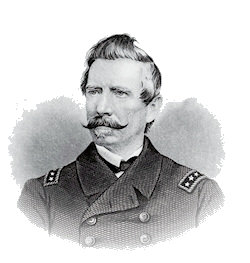
Tuesday, July 23.—Still coaling, refitting, painting, etc. Weather more cloudy and wind not so constantly fresh within the last few days. Took sights for chronometers; longitude 68° 58′ 30 ” W.
To take care of the wounded.—Woolsey family letters; Robert Shaw Howland to Georgeanna.
July 23, 2026
Astoria, July 23.
We are trying to look things in the face,–like the great apostle, cast down but not disheartened.
Of course the first thought of us civilians is to take care of the wounded. I send enclosed a cheque from Cousin Edward and one from myself. If you find you cannot use these amounts satisfactorily at Washington let us know and we will send materials as they may be wanted. Telegraph to Howland and Aspinwall (to G. G. for me) if anything is wanted immediately. . . . If you want anything specifically in the way of hospital stores, wines, currant jellies, &c., telegraph first and write more fully afterwards.
Through Some Eventful Years
July 23, 2026
July 23rd, 1861.—Today we had a thanksgiving service at Mount Zion Church. Mr. Blake conducted the services and his text was “The race is not to the swift nor the battle to the strong but Thou, Oh Lord, giveth the victory.” He made the most beautiful prayer I ever listened to and he prayed so earnestly and tenderly for those who had fallen in battle and for those who had lost their loved ones.
A telegram this afternoon tells of the deaths of Generals Bee and Bartow, both Georgians and both relatives of the Whitehead family.
Susan Bradford is 15 years old when this entry was made.
Henry Knowlton
July 23, 2026Civil War Era Photographic Portraiture #008
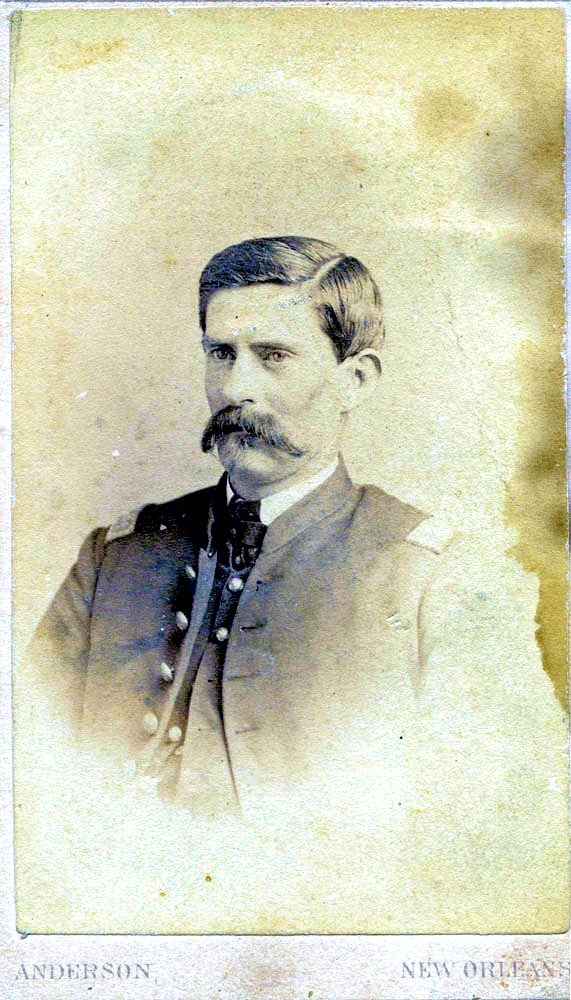 Henry Knowlton was commissioned a second lieutenant on September 5, 1862, and mustered into Company K, 33rd Missouri Infantry on September 11, 1862. On May 4, 1863, he was promoted to first lieutenant; promoted to captain on January 30, 1865, he was assigned to command Company D.
The 33rd Missouri Infantry was engaged in the Battle of Helena and participated in the Red River campaign, including the Battle of Pleasant Hill. The regiment also fought at the battles of Tupelo, Nashville, and Fort Blakely.
Knowlton mustered out with the regiment on August 10, 1865.
Carte-de-Visite by Anderson & Turner, New Orleans, La.
The Trans-Mississippi Theater Photo Archive image and information.
News from South Western Missouri
July 23, 2026
Daily Times
Leavenworth, Kansas,
July 23, 1861
We conversed yesterday with five families who have just been driven out from Southwestern Missouri, and are on their way to Illinois. They appear to be intelligent, industrious and honest people. They are from Jasper County, and about six miles from where the battle of Carthage was fought.–They say that the battle was far more desperate than we had heretofore supposed; that fifteen hundred secessionists were killed; that they were from Friday until the next Thursday, in burying the dead. They say that Siegel’s artillery was terrible in the work of death; that all along the line of the retreat, the ground was covered for miles with the dead–men and horses; that the day after the battle, the battle field presented a scene of terrible carnage. They report that the loss of the Federal troops was small, owing to the great skill of their commander, and the superior management of their artillery.
About thirty families are following them–all driven out because they are loyal to the Government. Thus is Missouri being desolated, depopulated and ruined. This is the fruit of treason.
William Howard Russell’s Diary: Want of order and authority.—Newspaper lies.—Alarm at Washington.—Confederate prisoners.—General M’Clellan.—M. Mercier.—Effects of the defeat on Mr. Seward and the President.
July 23, 2026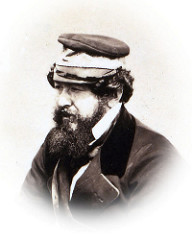
July 23rd.–The morning was far advanced when I awoke, and hearing the roll of waggons in the street, I at first imagined the Federals were actually about to abandon Washington itself; but on going to the window, I perceived it arose from an irregular train of commissariat carts, country waggons, ambulances, and sutlers’ vans, in the centre of the street, the paths being crowded as before with soldiers, or rather with men in uniform, many of whom seemed as if they had been rolling in the mud. Poor General Mansfield was running back and forwards between his quarters and the War Department, and in the afternoon some efforts were made to restore order, by appointing rendezvous to which the fragment of regiments should repair, and by organising mounted patrols to clear the streets. In the middle of the day I went out through the streets, and walked down to the long bridge with the intention of crossing, but it was literally blocked up from end to end with a mass of waggons and ambulances full of wounded men, whose cries of pain echoed above the shouts of the drivers, so that I abandoned the attempt to get across, which, indeed, would not have been easy with any comfort, owing to the depth of mud in- the roads. To-day the aspect of Washington is more unseemly and disgraceful, if that were possible, than yesterday afternoon.
As I returned towards my lodgings a scene of greater disorder and violence than usual attracted my attention. A body of Confederate prisoners, marching two and two, were with difficulty saved by their guard from the murderous assaults of a hooting rabble, composed of civilians and men dressed like soldiers, who hurled all kinds of missiles they could lay their hands upon over the heads of the guard at their victims, spattering them with mud and filthy language. It was very gratifying to see the way in which the dastardly mob dispersed at the appearance of a squad of mounted men, who charged them boldly, and escorted the prisoners to General Mansfield. They consisted of a picket or grand guard, which, unaware of the retreat of their regiment from Fairfax, marched into the Federal lines before the battle. Their just indignation was audible enough. One of them, afterwards, told General M’Dowell, who hurried over as soon as he was made aware of the disgraceful outrages to which they had been exposed, “I would have died a hundred deaths before I fell into these wretches’ hands, if I had known this. Set me free for five minutes, and let any two, or four, of them insult me when my hands are loose.”
Soon afterwards a report flew about that a crowd of soldiers were hanging a Secesssionist. A senator rushed to General M’Dowell, and told him that he had seen the man swinging with his own eyes. Off went the General, ventre à terre, and was considerably relieved by finding that they were hanging merely a dummy or effigy of Jeff. Davis, not having succeeded in getting at the original yesterday.
Poor M’Dowell has been swiftly punished for his defeat, or rather for the unhappy termination to his advance. As soon as the disaster was ascertained beyond doubt, the President telegraphed to General M’Clellan to come and take command of his army. It is a commentary full of instruction on the military system of the Americans, that they have not a soldier who has ever handled a brigade in the field fit for service in the North.
The new commander-in-chief is a brevet-major who has been in civil employ on a railway for several years. He went once, with two other West Point officers, commissioned by Mr. Jefferson Davis, then Secretary-of-War, to examine and report on the operations in the Crimea, who were judiciously despatched when the war was over, and I used to see him and his companions poking about the ruins of the deserted trenches and batteries, mounted on horses furnished by the courtesy of British officers, just as they lived in English quarters, when they were snubbed and refused an audience by the Duke of Malakhoff in the French camp. Major M’Clellan forgot the affront, did not even mention it, and showed his Christian spirit by praising the allies, and damning John Bull with very faint applause, seasoned with lofty censure. He was very young, however, at the time, and is so well spoken of that his appointment will be popular; but all that he has done to gain such reputation and to earn the confidence of the government, is to have had some skirmishes with bands of Confederates in Western Virginia, in which the leader, Garnett, was killed, his “forces” routed, and finally, to the number of a thousand, obliged to surrender as prisoners of war. That success, however, at such a time is quite enough to elevate any man to the highest command. M’Clellan is about thirty-six years of age, was educated at West Point, where he was junior to M’Dowell, and a class-fellow of Beauregard.
I dined with M. Mercier, the French minister, who has a prettily situated house on the heights of Georgetown, about a mile and a-half from the city. Lord Lyons, Mr. Monson, his private secretary, M. Baroche, son of the French minister, who has been exploiting the Southern states, were the only additions to the family circle. The minister is a man in the prime of life, of more than moderate ability, with a rapid manner and quickness of apprehension. Ever since I first met M. Mercier he has expressed his conviction that the North never can succeed in conquering the South, or even restoring the Union, and that an attempt to do either by armed force must end in disaster. He is the more confirmed in his opinions by the result of Sunday’s battle, but the inactivity of the Confederates gives rise to the belief that they suffered seriously in the affair. M. Baroche has arrived at the conviction, without reference to the fate of the Federals in their march to Richmond, that the Union is utterly gone– as dead as the Achaian league.
Whilst Madame Mercier and her friends are conversing on much more agreeable subjects, the men hold a tobacco council under the shade of the magnificent trees, and France, Russia, and minor powers talk politics, Lord Lyons alone not joining in the nicotian controversy. Beneath us flowed the Potomac, and on the wooded heights at the other side, the Federal flag rose over Fort Corcoran and Arlington House, from which the grand army had set forth a few days ago to crush rebellion and destroy its chiefs. There, sad, anxious, and despairing, Mr. Lincoln and Mr. Seward were at that very moment passing through the wreck of the army, which, silent as ruin itself, took no notice of their presence.
It had been rumoured that the Confederates were advancing, and the President and the Foreign Minister set out in a carriage to see with their own eyes the state of the troops. What they beheld filled them with despair. The plateau was covered with the men of different regiments, driven by the patrols out of the city, or arrested in their flight at the bridges. In Fort Corcoran the men were in utter disorder, threatening to murder the officer of regulars who was essaying to get them into some state of efficiency to meet the advancing enemy. He had menaced one of the officers of the 69th with death for flat disobedience to orders; the men had taken the part of their captain; and the President drove into the work just in time to witness the confusion. The soldiers with loud cries demanded that the officer should be punished, and the President asked him why he had used such violent language towards his subordinate. “I told him, Mr. President, that if he refused to obey my orders I would shoot him on the spot; and I here repeat it, sir, that if I remain in command here, and he or any other man refuses to obey my orders, I’ll shoot him on the spot.”
The firmness of Sherman’s language and demeanour in presence of the chief of the State overawed the mutineers, and they proceeded to put the work in some kind of order to resist the enemy.
Mr. Seward was deeply impressed by the scene, and retired with the President to consult as to the best course to pursue, in some dejection, but they were rather comforted by the telegrams from all parts of the North, which proved that, though disappointed and surprised, the people were not disheartened or ready to relinquish the contest.
The accounts of the battle in the principal journals are curiously inaccurate and absurd. The writers have now recovered themselves. At first they yielded to the pressure of facts and to the accounts of their correspondents. They admitted the repulse, the losses, the disastrous retreat, the loss of guns, in strange contrast to their prophecies and wondrous hyperboles about the hyperbolic grand army. Now they set themselves to stem the current they have made. Let any one read the New York journals for the last week, if he wishes to frame an indictment against such journalism as the people delight to honour in America.
“…if it lasts a year, it will be a war of abolition.”–Adams Family Letters; Charles Francis Adams, Jr., To His Father.
July 23, 2026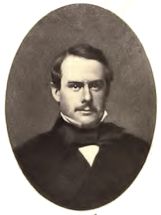
Boston, July 23, 1861
I don’t see any good in my saying anything of the disgraceful and disastrous battle of yesterday. The impression here is very general that Scott’s policy was interfered with by the President in obedience to what he calls the popular will and at the instigation of Sumner, Greeley and others, and the advance was ordered by Scott only after a written protest. The result was a tremendous and unaccountable panic, such as raw troops are necessarily liable to on a field of battle in a strange country, and it all closed in the loss of guns, colors, equipage, and even honor. Almost the first idea that occurred to me was the disastrous effect of this affair on you in your position. I do not see how foreign nations can refuse to acknowledge the Confederacy now, for they are a government de facto and this result looks very much as though they could maintain themselves as such. In any case I no longer see my way clear. Scott’s campaign is wholly destroyed and he must now go to work and reconstruct it. While our army is demoralised, theirs is in the same degree consolidated. Their ultimate independence is I think assured, but this defeat tends more and more to throw the war into the hands of the radicals, and if it lasts a year, it will be a war of abolition. Everything is set back for at least six months and just now, though not at all discouraged or disheartened, we feel here much as if we had been knocked over the head and had not yet recovered the use of our senses. . . .
“How can I record the death of our young friends, the Conrads of Martinsburg, the only sons of their father, and such sons!”—Diary of a Southern Refugee, Judith White McGuire.
July 23, 2026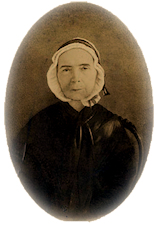
Tuesday.—The victory is ours! The enemy was routed! The Lord be praised for this great mercy.
Evening.—Mr. _____ and myself have just returned from a neighbouring house where we heard the dread particulars of the battle. We saw a gentleman just from the battlefield, who brought off his wounded son. It is said to have been one of the most remarkable victories on record, when we consider the disparity in numbers, equipments, etc. Our loss, when compared with that of the enemy, was small, very small; but such men as have fallen! How can I record the death of our young friends, the Conrads of Martinsburg, the only sons of their father, and such sons! Never can we cease to regret Tucker Conrad, the bright, joyous youth of the “High School,” and the devoted divinity student of our Theological Seminary! Noble in mind and spirit, with the most genial temper and kindest manners I have ever known. Mr. _____ saw him on Thursday evening on his way to the battle-field, and remarked afterwards on his enthusiasm and zeal in the cause. Holmes, his brother, was not one of us, as Tucker was, but he was in no respect inferior to him—loved and admired by all. They were near the same age, and there was not fifteen minutes between their deaths. Lovely and pleasant in their lives, in their deaths they were not divided. But my thoughts constantly revert to that desolated home—to the parents and sisters who perhaps are now listening and waiting for letters from the battle-field. Before this night is over, loving friends will bear their dead sons home. An express has gone [continue reading…]
“It is a miracle that I escaped with my life, so many falling dead around me.”–Letters from Elisha Franklin Paxton.
July 23, 2026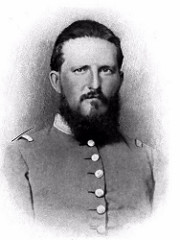
Manassas, July 23, 1861.
My Darling: We spent Sunday last in the sacred work of achieving our nationality and independence. The work was nobly done, and it was the happiest day of my life, our wedding-day not excepted. I think the fight is over forever. I received a ball through my shirt-sleeves, slightly bruising my arm, and others, whistling “Yankee Doodle” round my head, made fourteen holes through the flag which I carried in the hottest of the fight. It is a miracle that I escaped with my life, so many falling dead around me. Buried two of our comrades on the field. God bless my country, my wife, and my little ones!
A Diary of American Events – July 23, 1861
July 23, 2026
–All classes of citizens of Virginia are called upon to contribute their quota of forage for Beauregard’s army, and with those who are forgetful of their obligations, the general says that “constraint must be employed.”– (Doc. 115.)
–The Missouri State Convention, in session at Jefferson City, passed a resolution this morning, by a vote of 65 to 21, declaring the office of President, held by Gen. Sterling Price at the last session of the Convention, as vacant. Gen. Robert Wilson, the former Vice-President, was unanimously elected President. He is a Union man.–A motion was made to declare the office of doorkeeper vacant, as the present incumbent was elected as a Union man, but has since been editing a secession paper.–Uriel Wright made a violent disunion speech, denouncing the Administration as revolutionary, desperate, and usurping unwarrantable powers, and denouncing the Union leaders at St. Louis and the State. The matter was referred to a committee of three. –A committee of seven–one from each Congressional district–was elected, whose duty it is to report to the Convention what action they deem it advisable to take in the present disturbed condition of the State. The following gentlemen were elected, all being Union men, from the seven Congressional districts : Messrs. Broadhead, Henderson, W. P. Hall, W. Douglas, Hendricks, and Bogy.–Philadelphia Press, May 21.
–Lieutenant-governor Arnold of Rhode Island issued a proclamation, paying a tribute to the dead soldiers of that State and calling for the enlistment of more men.–A large and spirited meeting was held this morning in Market Square, Providence, to express the determination of Rhode Island, to redouble its exertions in support of the Government. Mayor Knight presided, and eloquent speeches were made by Hon. L. A. Jenckes, Rev. Dr. Sears, Hon. C. A. Updyke, Bishop Clark, Rev. Dr. Caswell, Bishop McFarland, A. Payne, Governor Hoppin, Hon. Thos. Davis, P. A. Sennott, Dr. Wayland, ex-Mayor Rodman, Rev. Dr. Hall, Rev. Mr. Keyers, and Governor Arnold. -{Doe. 11C.)
–Tns Third and Fourth Regiments of Massachusetts Volunteers, who have been on duty at Fortress Monroe, Va., returned to Boston.– N. Y. Times, July 24.
–Major General McClellan, under instructions from the War Department at Washington, this morning left Beverly, Va., to assume the command of the Federal forces on the Potomac in Virginia, his departure was announced in the following order:–
__________
Headquarters Department of the Ohio
and Western Virginia,
Beverly, July 22, 1861
In compliance with instructions which have been received from the War Department, the undersigned hereby relinquishes the command of the army of occupation of Western Virginia and the Department of Ohio. The same devolves upon Brigadier-General Rosecrans, United States Army.
Geo. B. McClellan, Major-General.
(illegible) Williams, Major and Act. Asst. Adjutant-General.
–Cincinnati Gazette, July 25.
__________
–Caleb Lyon of Lyonsdale, presented to Mrs. Lincoln at Washington, a finely-wrought silk flag captured by the Zouaves from a Louisiana Regiment. The flag was 6 or 7 feet long, ln the union was an embroidered cotton bale, with the name of the regiment–”Tensas Rifles.” –Louisville Journal, July 26.
–General Banks requested the Massachusetts Sixth Regiment, at the Relay House, whoso time had expired, to remain in the service ten days longer, and the regiment, as one man, cheerfully acceded to his request. Among the first to go to the defence of their country’s honor, the gallant Sixth will be the last to leave the post of danger or of duty while their country needs their aid. All honor to them!–National Intelligencer, July 20.
–The First Regiment of the Excelsior Brigade, N. Y. S. V., under the command of Col. Daniel E. Sickles, left Staten Island, N. Y., for the seat of war.–N. Y. Times, July 23.
–The Twelfth Regiment Massachusetts Volunteers under the command of Colonel Fletcher Webster, left Boston to-night for the seat of war. The streets along their line of march were densely thronged. It was the occasion of the greatest demonstration since the reception of Daniel Webster, in 1832.–Boston Transcript, July 24.
–The Twenty-Third Regiment of Pennsylvania State Militia returned to Philadelphia from the seat of war, their term of enlistment having expired on the 21st. The regiment is composed entirely of citizens of Philadelphia.– Philadelphia Press, July 24.
–Doctor Belt of Prince Georges County, Maryland, was arrested at Washington, D. C, on a charge of uttering treasonable language against the Government, he would have been hung by the mob, but for the active interference of army cavalry officers, a squad of whom assisted in taking him to jail. Henry Banon, and J. D. Catlin of Georgetown, were also arrested and jailed on a charge of conspiring against the Government.–National Intelligencer, July 24.
–Much severity is displayed against General Patterson, for not continuing the pursuit of the rebel General Johnston, and preventing his junction with General Beauregard at Manassas. General Patterson, in a letter from Harper’s Ferry, says :–”General Johnston retreated to Winchester, whore he had thrown up extensive intrenchments and had a large number of heavy guns. I could have turned his position and attacked him in the rear, but he had received largo reinforcements from Mississippi, Alabama, and Georgia, a total force of over thirty-five thousand Confederate troops, and five thousand Virginia Militia. My force is less than twenty thousand, nineteen regiments, whose term of service was up or will be within a week. All refused to stay one hour over their time, but four, viz.: two Indiana Regiments, Frank Jarrett’s, (the Eleventh Pennsylvania,) and Owen’s, (the Twenty-Fourth Pennsylvania.) Five regiments have gone home. Two more go to-day, and three more to-morrow. To avoid being cut off with the remainder, I fell back and occupied this place.”–(Doc. 117.)
Civil War Day-By-Day
July 23, 2026
July 23, 1861
- Major General John Dix ordered to take command of the Department of Maryland; Brigadier General William S. Rosecrans ordered to take command of the Department of the Ohio
- A Chronological History of the Civil War in America by Richard Swainson Fisher, New York, Johnson and Ward, 1863
“They are evidently deserters.”—Diary of a Southern Refugee, Judith White McGuire.
July 22, 2026
Monday.—We can hear nothing from Manassas at all reliable. Men are passing through the neighbourhood giving contradictory reports. They are evidently deserters. They only concur in one statement—that there was a battle yesterday.
“What a calamity!”—Diary of Rutherford B. Hayes
July 22, 2026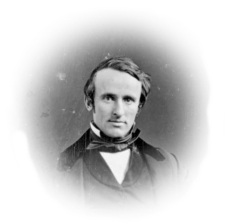
July 22.–Just received news of a dreadful defeat at Manassas, or beyond Centreville. General McDowell’s column pushed on after some successes, were met apparently by fresh troops, checked, driven back, utterly routed! What a calamity! Will not the secession fever sweep over the border States, driving out Kentucky, Missouri, (Baltimore) Maryland, etc., etc.? Is not Washington in danger? I have feared a too hasty pushing on of McDowell’s column into ground where the Rebels have camped and scouted and entrenched themselves for months. My brother-in-law, as surgeon, is with the Second Ohio Regiment in advance, and is doubtless among those in the worst position. But private anxieties are all swallowed up in the general public calamity. God grant that it is exaggerated!
Our regiments are now likely, I think, to be speedily needed at Washington or elsewhere. I am ready to do my duty, promptly and cheerfully. Would that I had the military knowledge and experience which one ought to have to be useful in my position! I will do my best, my utmost in all ways to promote the efficiency of our regiment. It is henceforth a serious business.
Clara Barton to her father
July 22, 2026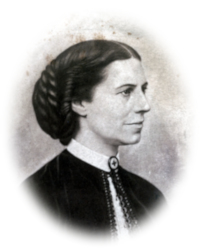
Washington D.C. July 22nd 1861
Monday Evening 6 o’clock P.M.
My dear father,
It becomes my painful duty to write you of the disaster of yesterday. Our Army has been unfortunate, that the results amount to a defeat we are not willing to admit, but we have been severely repulsed, and our troops returned in part to their former quarters in, and around the city. This has been a hard day to witness, sad, painful, and mortifying, but whether in the aggregate it shall sum up a defeat, or a victory, depends (in my poor judgment) entirely upon circumstances the tone and spirit in which it leaves our men, if sad and disheartened, we are defeated, the worst, and sorest of defeats, if roused to madness, and revenge, it will yet prove victory. But no mortal could look in upon this scene tonight, and judge of effects, how gladly would I close my eyes to it if I could. I am not fit to write you now. I shall do you more harm than good. (Continued on July 26)
Richmond
July 22, 2026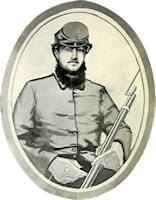
RICHMOND, VA., July 22, 1861.
My Dear Mother:
As George wrote two or three times since I have, I told him I would write when we got to Richmond. The first thing I knew this morning was that he was writing home, so I told him to leave some room for me and I would write some in his letter.
There is not much to write, as we are about four miles from the center of the city. We don’t hear any news, though we heard yesterday that they were fighting at Manassas Gap all day. We heard none of the particulars. Captain rather expects to leave to-day, but I do not think we will. Col. Anderson came along with us. We left half of the regiment at Camp Hill (five companies). My opinion is that we will stay here until the other five companies come, and all of us leave together.
David Carter and little lawyer Marsh are both Captains in our regiment. George got the bundle you sent him yesterday. We are enjoying camp life now to perfection. Heretofore we have had a plank floor, but now we pitch our tents, spread our blankets on the ground and sleep as sound as you please. I never slept better in my life than I did last night. If it stops raining this morning I expect to go up town shopping, and if I have time I want to have myself and George’s likeness taken together and send it home, as you may never see either of us again.
I can’t tell you anything about Richmond yet, as we have not seen any part of it but one street, that was about four miles long, and led out of town to our camp. We are much obliged for the bed quilts. They do us a great deal of good. We do not trouble ourselves to carry them, but roll them up in our tents. We got blankets before we left our camps. Some of them were the finest I ever saw. I was detailed to give the blankets and knapsacks out, so I kept the best out for all the boys in our tent. They are so fine and nice I hate to spread them on the ground.
Fitzgerald, Henry Warren, Billy Barnes, Tom Stith, George and myself compose the inhabitants of our tent. We have a very respectable crowd. I like it much better than being in a room with the whole company. As we are we have just as nice and quiet a time of it as if we were in a private room.
Give my love to sisters, and believe me, as ever, your sincere and affectionate son,
WALTER.
P. S. I don’t know where to tell you to direct your letters in future, as it is uncertain how long we stay here.
Letters from two brothers who served in the 4th North Carolina Infantry during the Civil War are available in a number of sources online. Unfortunately, the brothers are misidentified in some places as Walter Lee and George Lee when their names were actually Walter Battle and George Battle. See The Battle Brothers for more information on the misidentification.
Mary Chesnut’s Diary.—”A great battle has been fought. Joe Johnston led the right wing, and Beauregard the left wing of the army. Your husband is all right.”
July 22, 2026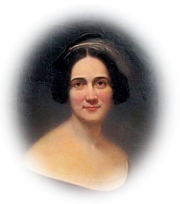
July 22d.–Mrs. Davis came in so softly that I did not know she was here until she leaned over me and said: “A great battle has been fought. ¹ Joe Johnston led the right wing, and Beauregard the left wing of the army. Your husband is all right. Wade Hampton is wounded. Colonel Johnston of the Legion killed; so are Colonel Bee and Colonel Bartow. Kirby Smith ² is wounded or killed.” I had no breath to speak; she went on in that desperate, calm way, to which people betake themselves under the greatest excitement: “Bartow, rallying his men, leading them into the hottest of the fight, died gallantly at the head of his regiment. The President telegraphs me only that ‘it is a great victory.’ General Cooper has all the other telegrams.”
Still I said nothing; I was stunned; then I was so grateful. Those nearest and dearest to me were safe still. She then began, in the same concentrated voice, to read from a paper she held in her hand: “Dead and dying cover the field. Sherman’s battery taken. Lynchburg regiment cut to pieces. Three hundred of the Legion wounded.”
That got me up. Times were too wild with excitement to stay in bed. We went into Mrs. Preston’s room, and she made me lie down on her bed. Men, women, and children streamed in. Every living soul had a story to tell. “Complete victory,” you heard everywhere. We had been such anxious wretches. The revulsion of feeling was almost too much to bear.
To-day I met my friend, Mr. Hunter. I was on my way to Mrs. Bartow’s room and begged him to call at some other time. I was too tearful just then for a morning visit from even the most sympathetic person.
A woman from Mrs. Bartow’s country was in a fury because they had stopped her as she rushed to be the first to tell Mrs. Bartow her husband was killed, it having been decided that Mrs. Davis should tell her. Poor thing! She was found lying on her bed when Mrs. Davis knocked. “Come in,” she said. When she saw it was Mrs. Davis, she sat up, ready to spring to her feet, but then there was something in Mrs. Davis’s pale face that took the life out of her. She stared at Mrs. Davis, then sank back, and covered her face as she asked: “Is it bad news for me.” Mrs. Davis did not speak. “Is he killed?” Afterward Mrs. Bartow said to me: “As soon as I saw Mrs. Davis’s face I could not say one word. I knew it all in an instant. I knew it before I wrapped the shawl about my head.”
Maria, Mrs. Preston’s maid, furiously patriotic, came into my room. “These colored people say it is printed in the papers here that the Virginia people done it all. Now Mars Wade had so many of his men killed and he wounded, it stands to reason that South Carolina was no ways backward. If there was ever anything plain, that’s plain.”

______
¹ The first battle of Bull Run, or Manassas, fought on July 21,1861, the Confederates being commanded by General Beauregard, and the Federals by General McDowell. Bull Run is a small stream tributary to the Potomac.
² Edmund Kirby Smith, a native of Florida, who had graduated from West Point, served in the Mexican War, and been Professor of Mathematics at West Point. He resigned his commission in the United States Army after the secession of Florida.
A day of rest
July 22, 2026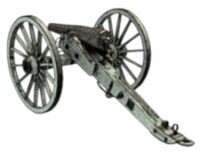
Monday, July 22.—Arrived at, and effected our passage across the Long Bridge, by ten o’clock, and found ourselves once more at Camp Clark, where we had a day of rest after our debut on the battle-?eld yesterday, under the scorching sun of Virginia.
Richmond
July 22, 2026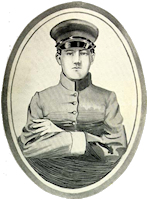
RICHMOND, VA., July 22, 1861.
Dear Mother:
We arrived here yesterday, and had to walk about four miles to our camps, with our knapsacks on our backs, and everything necessary to soldiers. Before we left Camp Hill, we got our state uniform, blankets and all the accouterments. We were nearly worn out after having walked four miles to our encampment, the knapsack straps hurt our shoulders, besides the weight. We expect to leave here for Manassas to-day, but I do not think we will, as it is raining.
We are enjoying ourselves finely. I have not had anything to eat since yesterday morning, except some cake and apples. We slept on the ground last night, and I felt sorter chilly this morning, but we will soon get used to that. I must close now. Give my love to all.
Goodbye.
Your affectionate son,
GEORGE.
Letters from two brothers who served in the 4th North Carolina Infantry during the Civil War are available in a number of sources online. Unfortunately, the brothers are misidentified in some places as Walter Lee and George Lee when their names were actually Walter Battle and George Battle. See The Battle Brothers for more information on the misidentification.
“My nephew Saml Androus of the Michigan 1st is said to be killed. That Regt suffered terribly.”—Horatio Nelson Taft
July 22, 2026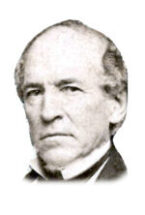
MONDAY 22
Yesterday proved a disastrous day to our troops. They were compelled to retreat and remnants of Regts and squads of soldiers have been pouring into the City all day. Most of the Regts which I saw pass the long Bridge a week ago have returned badly cut up. The two RI, the NH 2nd, the 71st NY, and the NY 27th are here again, having lost at least 1/4 of their numbers. The Ellsworth Zuaves are all cut to pieces, only about 250 left out of 1100. My nephew Saml Androus of the Michigan 1st is said to be killed. That Regt suffered terribly.
______
The three diary manuscript volumes, Washington during the Civil War: The Diary of Horatio Nelson Taft, 1861-1865, are available online at The Library of Congress.
John Beauchamp Jones’ Diary.—”The battle had been won, and the enemy were flying from the field before the President appeared upon it.”
July 22, 2026
JULY 22d.—Both Col. B. and I were in a passion this morning upon finding that the papers had published a dispatch from their own agent at Manassas, stating that the President did not arrive upon the field until the victory was won; and therefore did not participate in the battle at all. From the President’s own dispatch, and other circumstances, we had conceived the idea that he was not only present, but had directed the principal operations in the field. The colonel intimated that another paper ought to be established in Richmond, that would do justice to the President; and it was conjectured by some that a scheme was on foot to elect some other man to the Presidency of the permanent government in the autumn. Nevertheless, we learned soon after that the abused correspondent had been pretty nearly correct in his statement. The battle had been won, and the enemy were flying from the field before the President appeared upon it. It had been won by Beauregard, who, however, was materially assisted by his superior in command, Gen. Joseph E. Johnston. Gen. J. remained in the rear, and brought up the reinforcements which gained the day. Beauregard is, to-day, the most popular general in the service. Besides some 500 prisoners, the enemy, it is said, had 4500 killed and wounded. The casualties would have been much greater, if the enemy had not broken and fled. We lost some 2000 men, killed and wounded.
The President returned to-day and made a speech at the Spottswood Hotel, wherein he uttered the famous words: “Never be haughty to the humble, or humble to the haughty.” And he said that no doubt the Confederate flag then floated over Fairfax C. H., and would soon be raised at Alexandria, etc. etc. Never heard I more hearty cheering. Every one believed our banners would wave in the streets of Washington in a few days; that the enemy would be expelled from the District and from Maryland, and that a peace would be consummated on the banks of the Susquehanna or the Schuylkill. The President had pledged himself, on one occasion, to carry the war into the enemy’s country, if they would not let us go in peace. Now, in that belief, the people were well pleased with their President.
Thank Heaven! — Woolsey family letters, Abby Howland Woolsey to Georgeanna and Eliza
July 22, 2026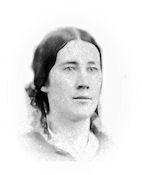
July 22, 1861.
My dear Girls: Since Mother’s letter was sent this morning we have had some heavy hours. At noon we got the first extra with the despatch announcing the defeat and retreat of our troops–defeat, because retreat, or vice versa, whichever it was. It is a total rout of our grand army of the Union. All guns gone, etc.; but the saddest is the vast number of wounded and half dead. I have no doubt your hands are full, at some one of the hospitals. Hour after hour to-day went on and we heard nothing from you; had nothing but the horrible extras and our consciousness of your anxiety and suspense. We packed the trunk for you very busily and tried not to think too hard. At five p. m. your despatch came, dear E., and such a load was removed from our hearts. Joe not only was safe, but you had seen him. Thank Heaven! We could hardly make out from the confused papers what his position had been in the fight. . . .
Mary and Robert drove in at six to hear what we had heard, and met Ned at the Ferry, carrying out your despatch. Robert brought his valise in case Mother wanted him to escort her to Washington, but the immediate anxiety she felt for you having been relieved, she feels it is safest to wait till she gets a letter from you. So many troops will probably encumber the roads on the way to Washington to-morrow, and there is so much chance of a riot in Baltimore, as Robert suggests–that it is more prudent to wait. She wants to go for her own satisfaction as well as yours you know, so you must not think it desirable for you to oppose it. If she could only have been with you these two horrible days she would have been so glad. She is anxious to do something for the army and thinks she ought to go on and be matron in the Alexandria Hospital. We laugh, and remind her of her fortitude when Dr. Buck tried to vaccinate her! . . . And now for the boxes. Mrs. Willard Parker is ready to make the largest grants. Has packed one box to-day, and is anxious to have it go to you that she may know what disposition is made of the things. Let us know when you receive them–one French black trunk, one wooden packing box. Mrs. Parker has a huge box packed, but I shall advise that one going to the Sanitary Commission. Your box has six dozen sheets in it from her, and the trunk is filled with our shirts, slippers, etc.
In haste and with all love,
A. H. W.
P. S. Also one box of currant jelly. All will be directed to the Ebbitt House, except Mrs. Parker’s box.
Thread and needles are invaluable in camp. We hear that after every march bits of uniforms fly all over the camp, and that one man patched his black shoulder with a sky-blue scrap begged from a brother volunteer. You know the men haven’t always a sixpence to spare for the sutler every time a button is needed, and our two hundred thread cases will go very little way in a regiment. . . . Everybody is knitting yarn socks for the men–all the young girls and all the old women. Everybody means to make one pair each before winter. Cousin Margaret Hodge has set all her old ladies at work at the Asylum. We have set up four to-night for ourselves, and Kate and Mary the cook are to have their turn too.. . . But the deed of Mrs. Lowell of Boston, sister-in-law of the poet, puts all others to insignificance. She being a lady of means and leisure, took the Government contract for woolen shirts in Massachusetts and is having them cut and made under her own eyes by poor women at good prices, and the sum that would have gone into some wretched contractor’s pocket has already blessed hundreds of needy women.
Extracts from the journal of Commander Semmes, C.S. Navy, commanding C.S.S. Sumter
July 22, 2026
Monday, July 22.—Warped alongside a wharf in the edge of the town and commenced receiving coal. Refitting and repainting ship. In the afternoon I took a stroll through the town. It is a quaint, picturesque looking place, with some evidences of improvements, as the building of new houses, etc., but the general air was that of little business and want of thrift. The St. Thomas packet sailed.
We have now had the newspaper accounts as far as they go…Woolsey family letters; Jane Eliza Woolsey to her daughters, to Georgeanna and Eliza.
July 22, 2026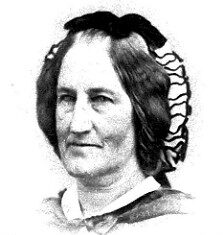
Monday, July 22, 1861.
My dear Girls We have had an exciting night and morning. Just as we were going to bed last night we heard the distant sound of an “Extra;” it was very late; everybody in bed. We had been out to the meeting of the Evangelical Alliance at Dr. McAuley’s Church. We were all undressed, but waited with anxiety till the sound approached nearer and nearer; but made up our minds not to rush down and buy one, as it might be a hoax–till at last a tremendous howl of three boys through 10th street gave us the news of a “great battle at Bull’s Run.” “Rebels defeated! Batteries all taken!” We thanked God for this much, and went to our beds to try and sleep patiently till morning. We have now had the newspaper accounts as far as they go, but long for further and later. Your two letters of Saturday, Georgy, we have also this morning; many thanks for both; rejoiced to hear good news from Joe so direct, and that you are both well and busy. It is better so. I feel this morning as if I could fly right off to Washington, and can scarcely resist the impulse to start at once. Would you like to see me? . . .
The girls are packing a box for your distribution at the hospitals,–Jane rolling a fresh lot of bandages. Poor Kate, our housemaid, looks quite distressed to-day, thinking her brother may have been foremost in the ranks, as the paper stated “the First Massachusetts led in the advance, and had suffered much.” . . . Dr. Tyng made an inspiriting address last night to a densely crowded audience. He said he was greatly surprised to see such an assemblage when he had supposed the city deserted, and thought such an audience was a sufficient appeal without a word from him, as showing the deep interest manifested in this “righteous” cause– “I say righteous, for I firmly believe if there ever was a righteous, holy war, direct from the hand of God, this is one.” . . . There were some very interesting letters read from the different chaplains, and some from the men themselves of different regiments. Dr. Hoge has resigned, and left his charge to Dr. Spring, on account of his attachment to the South! and his desire to be there at this time. I say joy go with him, but some of the people are unwilling to receive his resignation. . . . I have no news for you; we see no one, and are supposed to be out of town. It is perfectly cool and comfortable here, and we are at present better satisfied to be here. By and by we may run off for a while. God bless you both, my dear children! I wish I were close at your side.
Your loving Mother.
Susan Bradford Eppes’ Diary—”General Beauregard is the hero of the hour.”
July 22, 2026
July 22nd, 1861.—Joy! Joy!! There has been a great victory for our side. Yesterday the Battle of Manassas was fought in Virginia and it was a complete victory for the Confederates. Our army chased the Yankees almost to Washington city. General Beauregard is the hero of the hour although there are so many who are heroic, it is hard to discriminate. Our loss has not yet been ascertained; nor do we know the enemy’s loss. The telegraph office is crowded all the time and day and night the people are flocking thither for news of the great battle.
Susan Bradford is 15 years old when this entry was made.