June 25th. Early this morning, before daylight, slight firing of musketry and artillery commenced, and continued during nearly the whole day, at Port Hudson.
American Civil War Chronicles
0
June 25, 2023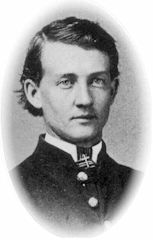
From the diary of Osborn H. Oldroyd
JUNE 25TH.–We have orders to stay in camp, ready to move at a moment’s notice. Our marching orders are still delayed, so we have enjoyed a good rest. We are now out of hearing of the guns at Vicksburg, and it seems very still around us, indeed.
The term of the enlistment of some members of our regiment has now expired, and they seem to want to get home again to see their mamas; but go they can not until our “rabbit is caught.” Shame on them for wanting to leave before the flag flies over Vicksburg. Many of them have had letters from friends at the North, urging them not to stay after their time is out. But they may as well make up their minds that Grant will hold them till Vicksburg is taken.
A Rebel War Clerk’s Diary
June 25, 2023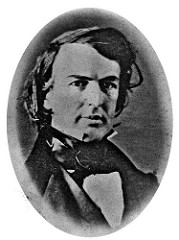
JUNE 25th.—The excitement has subsided. No doubt small detachments of the enemy were seen at the places indicated, and Gen. Elzey (who some say had been drinking) alarmed the Governor with a tale of horror. The reports came through Gen. Winder’s detectives, one-half of whom would rather see the enemy here than not, and will serve the side that pays most. Yet, we should be prepared.
I saw an indorsement by the President to-day, that foreigners should give guarantees of neutrality or be sent out of the city.
Nothing from Lee.
0
June 25, 2023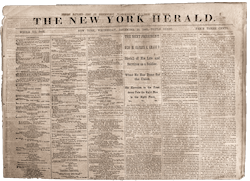
June 25, 1863, The New York Herald
All the news from Harrisburg would indicate that the rebels are moving directly upon that city, though slowly, not only with cavalry, but with a large army of infantry and artillery to support them. They were only six miles from Carlisle yesterday, and were still advancing. Our troops abandoned Shippensburg at one o’clock yesterday, the telegraph operator clearing out to Gleason’s Station. Deserters report that the whole of Gen. Ewell’s forces are now in Pennsylvania. At half past four o’clock last evening the rebel infantry were reported coming over the mountain from Mercersburg, where they were in large force.
Information received at General Schenck’s headquarters yesterday morning from Frederick says that the rebels, with a considerable force of infantry, cavalry and artillery are again threatening that city, and are half way between Middletown and Boonsboro, crossing South Mountain.
Our latest advices from Vicksburg are to the 20th, from rebel sources at Jackson. They state that at that time a heavy engagement was going on at Big Black bridge between our troops and the rebel cavalry under Jackson. The firing of musketry and artillery is said to have been terrific. Heavy firing was also heard in the direction of Vicksburg. Official despatches from General Grant, dated the 18th, say that everything is progressing well, Johnston’s forces are at Yazoo City, Brownsville and Clinton, that we scarcely ever lose a man now. It was intended to open upon the city with hot shot upon the 20th. [continue reading…]
0
June 25, 2023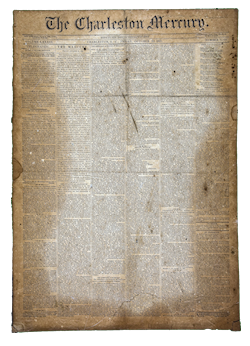
June 25, 1863, The Charleston Mercury
Early last winter the people of the Confederate States were horrified at the miserable plight into which our brave troops had fallen for the want of clothes, and shoes, and blankets. A little foresight and enterprise in the Quartermaster department at Richmond might readily have avoided such a condition of things. But, we believe, an agent was sent abroad by the Government to buy, and the shoes, cloth and blankets were not early or sufficiently imported. So soon as the disgraceful fact of the army’s necessities became known by publication in the newspapers, the people made desperate efforts to meet the soldiers’ wants, and private mercantile firms, by importations, remedied the evil. A few cargoes sufficed.
We call these facts to mind now, not with a view to find fault with the Government or its officers, but that the same thing may not again occur. We trust that the Quartermaster-General will this year exercise more forecast, and see in time that clothes, shoes and blankets are ready to give out on the approach of cold weather. We call attention to the matter because this is the season to make provision.
We also venture to suggest for the Commissary General, that the wheat crop is now harvesting and abut to be harvested, and that it would be a good plan to engage and purchase the crops for the Government from the planters or their factors, at fair prices, before they pass into the hands of speculators. In vain, last year, did we urge this policy. [continue reading…]
0
June 25, 2023
June 25, 1863, The New York Herald
The new campaign has now developed itself. It is a campaign of genuine invasion; but what is the prize? The theory that Lee, under cover of a pretended invasion, was sending away his army to Bragg, is exploded. Far more likely it is that Bragg has sent away his army to Lee. So, too, the idea of an invasion of Ohio by way of Western Virginia is dissipated into thin air. The other hypothesis, that Lee merely intended to spend the summer in the valley of the Shenandoah and the Upper Potomac, making raids upon Cumberland valley for subsistence and plunder, is also disposed of. It will be seen by a telegraphic despatch from Baltimore that the rebels had already crossed South Mountain, and are marching with infantry, cavalry and artillery upon Frederick, the capital of Maryland, out of which a small force sent in advance had previously been driven by some Union cavalry. Yesterday morning they were half way between Middletown and Boonsboro; so that by this time they are probably in possession of Frederick. What that means we shall presently see. In the same way the force that recently threatened Harrisburg retired; but now a larger force is advancing against it, and the Union troops are retreating before the invaders. There is no doubt that the rebels would be glad to get possession of Harrisburg; but they can hardly expect that at present. Their immediate object is to destroy the bridge there, or induce our troops to do it, and to destroy the other bridges on the Susquehanna.
Thus, by a bold and rapid movement of the rebel general, the theatre of war in Virginia has been transferred northeastward from the Rappahannock to the Potomac, and even to the Susquehanna. Lee has successfully achieved the most difficult and dangerous [continue reading…]
0
June 25, 2023
June 25, 1863, Mobile Register And Advertiser
This, we learn from the Jacksonville (Ala.) Republican, is the real name of the young heroine who mounted the horse behind Gen. Forrest and conducted him to the ford on Black Creek, in his pursuit of the Yankee marauders. At a meeting of Capt. Fouche’s company, held in Rome, Ga., on Saturday last, the company was, by a unanimous vote, called the “Sansom Rangers,” in honor of this young lady. Not only so, but it was decided that in the event she changed her name–a thing contemplated by every young lady we know, or of which history gives us any account–then the name of the company should be changed to correspond.
0
June 25, 2023
June 25, 1863, The Charleston Mercury
THE NEWS FROM RICHMOND.
RICHMOND, June 23. – Sixteen hundred Yankee prisoners arrived this evening from Winchester including 208 officers. We have nothing by the Central train this evening.
Telegraphic communication with Knoxville by the Western line has been re-established.
About a thousand negros were captured at Winchester; also a number of tories and leading Yankees.
It is reported that Suffolk was on yesterday abandoned and burned by the Yankees.
A letter from Gen. LEE to Gen. STUART compliments the latter on his skilful management of our troops in the battle of Brandy Station. Gen. LEE says that result of the action calls for grateful thanks to Almighty God, and is honorable alike to the officers and men who were engaged.’
(Later.)
RICHMOND, June 24. – We have reliable information that HOOKER has crossed the Potomac. Other news received indicates that the next battle will be fought in Maryland. There has been no important engagement since the affair at Middleburg.
Gov. LETCHER has issued a call to the citizens and others to assembly in the Capitol [continue reading…]
0
June 25, 2023
June 25, 1863, The New York Herald
Our Baltimore Correspondence.
BALTIMORE, June 19, 1863.
General Lee’s delay in attacking Hooker has led to some doubts as to whether Washington is really the object at the capture of which he is aiming. But of this there can be no doubt, in view of the following facts, which I have learned today. It is evident from these facts that the delay, so far from affording cause for congratulation, is really a most ominous circumstance.
On crossing the Rappahannock to move northward Gen. Lee took with him a very large pontoon train, which was sent up to him from Gordonsville, but which was said to come from Richmond. The boats are all new and the train is compete in all its appliances. What river does General Lee intend to cross with these pontoons? Certainly not the Upper Potomac, for that is easily fordable. Certainly not the Susquehanna, for there are no indications of a movement of the rebel forces towards that river. The whole rebel force that has been in Pennsylvania was only two thousand mounted guerillas, and they have probably left the State now. The fact that General Lee has this pontoon train with him I know to be true.
It is stated on authority heretofore proved worthy of credence that, on leaving Warrenton for Thoroughfare Gap, General Lee detached one whole corps, at least thirty thousand strong, who are now en route for Dumfries, by way of Brentsville. It is stated [continue reading…]
0
June 25, 2023
June 25, 1863, The New York Herald
Mr. DeKay Mortimer’s Letter.
NEW ALBANY, Ind., June 20, 1863.
The people of this portion of the State have been little dreaming of a visit from the rebels, though they have long been prepared for it. It may well be imagined that the events of the past two days caused much astonishment. Less than a year ago a small force of the enemy entered Indiana from Kentucky, and after a stay of twelve hours recrossed and escaped. This time they manifested their regard by making a more extensive ride and a longer stay. They entered day before yesterday, and are still with us. They have acted so nobly that we are now showing them every attention in our power. We are feeding and lodging them, and at the same time carefully watching the hotels where they stay. No one designing to do them any harm shall be allowed to get near them. We do not know how long they may stay with us. Some of them manifest a desire to go to Kentucky; but we are not yet through with our hospitalities.
Last week a raid was made into Elizabethtown, Ky., by what was then supposed to be a force of guerillas. They did little damage except to plunder the stores and help themselves to whatever portable property struck their fancy. Horses suffered particularly, they being a self-moving article of plunder. Medicines, wearing apparel and boots and shoes were also much in demand. After a stay of a few hours in the town, the rebels moved off to the southward, and it was supposed they had retired to the Cumberland river. They stated that they belonged to Capt. Hind’s company of the Second Kentucky cavalry, and were attached to Morgan’s brigade. They were well armed with sabres, carbines and revolvers, and uniformed in the regular uniform of rebel cavalry. They were estimated from eight to one hundred and thirty strong – probably much nearer the former number. [continue reading…]
0
June 25, 2023
June 25, 1863, The New York Herald
Rebel Occupation of Frederick.
Mr. S.M. CARPENTER’S LETTER.
FREDERICK CITY, Md., June 22, 1863.
All quiet on the Monocacy. The agony is over, the grand excitement has partially abated, and the citizens of Frederick tonight sit upon their doorsteps, smoking the pipe of peace, with no one to molest or make them afraid. It was my fortune to be within the captured city during its occupation by the enemy, and I must confess that the tumult exceeded anything of the kind ever witnessed in my history. All last week the rebels were expected, and prominent Unionists hastened off, while the secessionists smiled and gathered on the corners, awaiting the appearance of the chivalry. The wildest reports flew through the town. Sometimes rumor had a host of the enemy dashing down from Middletown; then there had been a terrible fight between Hooker and Lee, and Ewell was retreating from Williamsport; and next we would hear that our forces were at Monocacy, waiting for the rebels to come over the mountains. The week passed off, and no rebels appeared. Yet all seemed confident that they would come, and continued their preparations for saving property and welcoming the expected visitors. Many of the stores were emptied of their most valuable goods, the banks sent off their specie, horses were hurried out into the country, and the saloons stripped of their best liquors. About three o’clock on Saturday afternoon the squad of cavalry attached to the signal corps [continue reading…]
0
June 25, 2023
June 25, 1863, The New York Herald
The Harrisburg Telegrams.
HARRISBURG, Pa., June 24, 1863.
Great alarm prevails here. The rebels have advanced to Shippensburg in force. Captain Boyd called in his pickets, and the telegraph operator left.
The opinion of Generals Franklin and Couch is that the rebels are now advancing with serious intent upon the State capital. Their move is necessarily slow, as the cavalry march with the infantry. Every preparation has been made to give them a proper reception, and our soldiers are buoyant with the hopes of a speedy brush. The people are passive under the exciting intelligence, but the politicians are leaving.
Reports from McConnellsburg state that the rebels are in that vicinity, about thirty thousand strong.
The Shippensburg operator has just arrived at Newville, a distance of eleven miles from the former place. Captain Boyd could not inform the operator either as to the character or force of the advancing rebels. He came the eleven miles on a hand car in fifty minutes.
A despatch form Altoona to the Governor states that the rebels, marching on Shippensburg, have a supply train with them three miles long.
A refugee here, who has means of collecting information, informs the Governor from three sources, as follows: – A lady who saw the rebels in Greencastle, saw eight pieces of artillery on the Diamond, or public square of that place, and a large force of infantry; another refugee counted seventeen pieces of artillery, judges their force to between six and eight thousand good men, and John Whitmore whose farm they occupied, counted eighteen pieces of artillery, and estimates their force to be as above. [continue reading…]
I’ve lost my nerve.
June 25, 2023
June 25th.—A horrible day. The most horrible yet to me, because I’ve lost my nerve. We were all in the cellar, when a shell came tearing through the roof, burst upstairs, and tore up that room, the pieces coming through both floors down into the cellar. One of them tore open the leg of H.’s pantaloons. This was tangible proof the cellar was no place of protection from them. On the heels of this came Mr. J., to tell us that young Mrs. P. had had her thighbone crushed. When Martha went for the milk she came back horror-stricken to tell us the black girl there had her arm taken off by a shell. For the first time I quailed. I do not think people who are physically brave deserve much credit for it; it is a matter of nerves. In this way I am constitutionally brave, and seldom think of danger till it is over; and death has not the terrors for me it has for some others. Every night I had lain down expecting death, and every morning rose to the same prospect, without being unnerved. It was for H. I trembled. But now I first seemed to realize that something worse than death might come; I might be crippled, and not killed. Life, without all one’s powers and limbs, was a thought that broke down my courage. I said to H., “You must get me out of this horrible place; I cannot stay; I know I shall be crippled.” Now the regret comes that I lost control, for H. is worried, and has lost his composure, because my coolness has broken down.
Note: To protect Mrs. Miller’s job as a teacher in post-civil war New Orleans, her diary was published anonymously, edited by G. W. Cable, names were changed and initials were generally used instead of full names—and even the initials differed from the real person’s initials. (Read Dora Richards Miller’s biographical sketch.)
0
June 24, 2023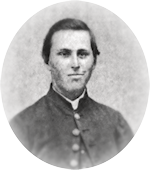
June 24th. Orders received from General Hooker to evacuate the Maryland Heights. All supplies and munitions that could be moved loaded on canal boats and taken to Washington by way of the Ohio & Chesapeake Canal. Great quantity of stores was left, salt beef, pork, beans, rice, coffee, and sugar. Some of it was gathered up by people from Harper’s Ferry. A guard was sent with the boats but most of the troops were ordered to join the Army of the Potomac on its march up through Maryland to meet the Confederates who seem to be pushing on up into Pennsylvania. Our detachment was sent on guard with the canal boats. We left on the last two boats. There were about thirty in all. The rebels, under the cavalry leader J. E. B. Stuart, captured the first fifteen boats. After helping themselves to the supplies the boats were burned up. We passed the boats that had been destroyed. It took us two days and one night to complete the trip, a distance of sixty miles. Left the boats at Georgetown, then marched through the town to Tenallytown, going into camp. At the time our brigade consisted of the 12th West Virginia, the 5th Maryland, and our detachment. These regiments having been with us at Winchester and had lost many members.
War Diary of Luman Harris Tenney.
June 24, 2023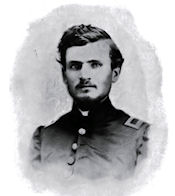
24th. A rainy, unpleasant day, such as they say Englishmen commit suicide in. Melancholy. Kept pretty close to the tent. Read Independent of May 28th, and some in “Barnaby Rudge.” In the evening wrote part of a letter to Fannie. Am about free of diarrhÅ“a. Feel encouraged.
Downing’s Civil War Diary.–Alexander G. Downing.
June 24, 2023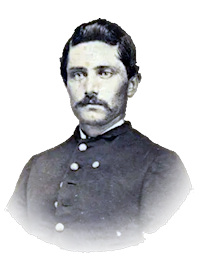
Wednesday, 24th–I was on picket today, each man going out every other day, and the orders are very strict, no one being allowed to go through the lines unless he can show a pass signed by General Grant. Our men are digging tunnels under the rebel forts and laying powder to blow them up. When a fort is blown up our forces are to make a charge at that point and capture the rebels. The report is that the rebels are planning to cut their way out through our lines. News came that Port Hudson has been taken, together with a great many prisoners.
0
June 24, 2023
June 24th. At seven thirty A. M. the steamer Bee came down the river with despatches. All quiet at Port Hudson.
A Rebel War Clerk’s Diary
June 24, 2023
JUNE 24th._We have nothing additional from Vicksburg or from the Potomac, but there is a rumor of fighting near Leesburg.
The first installment of Winchester prisoners reached the city yesterday, 1600 in number, and there are over 4000 more on the way. So much for Milroy’s 2000 or 3000!
To-day the President desired the Secretary of War to send him all the correspondence with Gen. Johnston, as he intends to write him a confidential letter touching reinforcements, and he wishes to inform him of the military situation of affairs everywhere.
This afternoon some excitement prevails in the city, caused by a notification of the Governor placarded at the corner of the streets, calling on the citizens to assemble at the Capitol Square at 7 o’clock P. M., and announcing that reliable information has been received of the landing of the enemy (how many is not stated) at Brandon, on the James River, and at the White House, on the York, some thirty-five miles below. There was also a meeting of the clerks of the departments, and it was agreed that at the sounding of the tocsin they should assemble (day or night) with arms at their respective offices.
This may be another Pawnee alarm of the government, and it may be the wolf. If some 30,000 of the enemy’s troops make a dash at Richmond now, they may take it. But it will, of course, be defended with what means we have, to the last extremity.
Still, I think it nothing more than a strategical movement to save Washington or to embarrass Lee’s operations, and it will fail to retard his movement. We shall soon see what it is.
0
June 24, 2023
From the diary of Osborn H. Oldroyd
JUNE 24TH.– Awaiting orders to march is as tiresome as waiting at a station for a train. We were ready for marching orders again this morning, but failed to get them.
The weather is hot. Some of the rebel prisoners have said we could not stand this heat, but I guess the Yanks can stand it if they can, and if it should actually get too hot, we will just cool their country off. The nights are pleasant enough and we are thankful for the comfort of the sleep which they allow us. We have a chance out here to forage a little, and though but little, any change from army rations becomes agreeable.
It is amazing what progress soldiers make in foraging. They began committing such depredations as to cause an order on the subject to be issued, and on the eighth of May last the commanding General required a general order, prohibiting foraging, to be read throughout the army five times a day. Not long after that, two soldiers of the 13th corps were arrested and brought before General A. J. Smith, at his headquarters in a fine grove of stately poplars, where the General was informed by the guard that the men had been caught in the act of stealing chickens. The gallant General appeared to be revolving the heinousness of the charge as he looked aloft among the poplars, and presently the guard inquired what should be done with the men, when the General, after another glance upward, turning to the guard, replied, “O, damn ’em, let ’em go. There ain’t any tree here high enough to hang ’em on.”
0
June 24, 2023
June 24, 1863, Austin State Gazette
The “News” published a letter from Parker county, without date, from which we extract the following:
“A few days ago four Indians rode up to one of those old pioneers’ better half as she was going for a bucket of water with a gun on her shoulder. The Indians cursed her and told her leave. The brave old lady cursed them in return, and told them if they did not leave instantly, she would put a ball through them, at the same time fumbling about her gun preparatory to a shot. The red devils took the old lady at her word, and scampered off at “double quick.” Forty head of horses were stolen out of Parker county on the 30th ult., making one hundred and forty from that county in less than three weeks. No person killed the last drive.”
0
June 24, 2023
June 24, 1863, The New York Herald
The recent great battle between General Pleasanton’s cavalry forces and those of the rebel Stuart, in which the former were victorious, goes to prove the superiority of that branch of our service. It was supposed by the rebels that their cavalry was able to defeat ours under any circumstances; the repulse of their vaunted General Stuart will dispel the illusion. It must be evident that were our cavalry forces tripled we could soon put an end to the raids of the rebels, and in fact penetrate into regions in the South which as yet have not suffered from the effects of the war. Had we, say fifty thousand cavalry, under the command of such officers as Pleasanton, Buford, Gregg, Kilpatrick, the dashing English baronet Sir Percy Wyndham, Stahl and Grierson, we could soon show to the world that Northerners make as good cavalry as the rebels – a fact which would be proved to the great discomfiture of the latter. They from the first understood the utility of a large cavalry force. It was, owing to this foresight, that they were enabled to commit so many depredations upon our soil. Our administration has seemed unwilling to take the lesson taught them by the successful raids of the rebels; but now, that our own forces are proving the great efficiency of this branch of the service, we may reasonably look for a large increase of our cavalry.
With fifty thousand mounted men we could prevent the rebels from making those captures of horses which give them the opportunity of recruiting their broken down cavalry, and as a speedy result the effectiveness of this rebel arm would soon be impaired. We should hear no more of such daring raids as they are in the habit of making if they were aware that an overwhelming force of cavalry was ever ready to swoop down upon them should they dare invade our soil. We could also then cut to pieces the enemy when in retreat. In fact, the need of a large cavalry force is so imperative that the War Department should see to its immediate enrolment. There are officers, men and horses enough. The government could easily raise a cavalry force of one hundred thousand; there should be no delay in this matter. By all means let us have an overwhelming cavalry force.
0
June 24, 2023
June 24, 1863, Galveston Weekly News
Letter from Parker County.
Mr. Editor.–Since I last wrote you, rumors and numerous predictions have been afloat here, and I find a vast portion of the community are ready to succumb to the hordes of the fanatical abolitionists of the North; but it makes me proud to know that the majority are loyal citizens to the South, and the soft shells are watched, and ere long they will be pounced upon, and such stretching of necks–Oh Lordy! General Order, No. 4, gives to the recruiting officer of Hood’s brigade, and the Arizona brigade, all persons between the age of 18 and 40 years, and your humble servant being a recruiting officer for the latter brigade, deems it advisable to solicit the surplus of several counties in North-Western Texas. On the 9th of June is the day appointed for them to report to me. Time will show how many will report. The Enrolling Officer of Comanche county was shot full of holes for doing his duty, and other Enrolling Officers have been threatened. If I had my company here I would bring them in or die in the attempt. These young men who refuse are principally renegades from Eastern Texas, Arkansas and Missouri. They have rushed on the frontier to keep from going to the war. They won’t fight–they are constitutionally cowards, thus causing the Indians to be so bold, for sir, as soon as they get a slight glimpse of a red-skin, the first impulse of these cowardly rascals is to distance “Gilpin” in speed, and away they dash in search of some hiding place, with Mr. Indian in close pursuit, the result of which leaves a white man minus a top knot. If they would stand their ground like the hardy pioneers of yore, the Indians would not dare to penetrate so far into the country. A few days ago four Indians rode up to one of these old pioneers’ better half, as she was [continue reading…]
0
June 24, 2023
June 24, 1863, The New York Herald
The news from the Pennsylvania invasion continues to be the most absorbing topic, and the intelligence today is exciting enough.
The enemy reoccupied Chambersburg at eleven o yesterday morning in considerable force. General Knipe, with his command, fell back to Shippensburg.
There were no signs of the rebels around Frederick yesterday. The train from there arrived at Baltimore last evening. The Union troops of General Couch’s corps were then in possession of the city.
The rebels gutted all the stores in Greencastle and Chambersburg, and robbed the whole country of cattle and horses. There appears to be very little doubt that an army of considerable force – of infantry, cavalry and artillery – is advancing upon Harrisburg. At seven o’clock last night the news was that the advance of our troops was entering the town of Carlisle, falling back before the rebels, and that the citizens were flying towards Harrisburg. The Eighth and Seventy-first New York regiments are positively stated to have arrived at Carlisle yesterday morning, looking well and in fine spirits. Yesterday afternoon the rebels, one thousand strong, were at Scotland, six miles nearer to Harrisburg than Chambersburg. The people were everywhere flying before them. [continue reading…]
0
June 24, 2023
June 24, 1863, The Charleston Mercury
We are gratified to learn that one of our worthy and philanthropic citizens, after long and tedious efforts, has at last succeeded in effecting arrangements with Major H.C. GUERIN, of the Commissary Department, by which a most wholesome and indispensable articles of food will be furnished to a certain class of our fellow citizens, who appear to have suffered largely during the past year, in consequence of the extravagant price of provisions. There are many – very many families – who, though not classed among the poor, are still in circumstances of want, and from their limited resource, unable to obtain necessary supplies of food, especially beef and other animal nutriment. The shameful practice heretofore so generally prevalent, of butchers’ boys monopolizing the hearts, livers and other portions of cattle slaughtered for this market, and charging whatever prices they please for such, has prevented many deserving families from purchasing, and therefore entirely deprived them of the use of meat. We are rejoiced to know that this virtual prohibition is removed, and that, through the timely arrangements now inaugurated, this monopoly will be effectually crushed, and our citizens who cannot afford to purchase beef and other meats, may now obtain, at reasonable rates, the hearts, liver, heads and shanks, of beeves, at Stalls Nos. 27 and 28, Lower Wards Market.
As this provision is designed especially for the class of citizens above alluded to, it is hoped that none others will apply for relief, as the quantity of these articles may be insufficient for those for whom they were intended.
We refer those interested to the public notice in another column of this paper.
0
June 24, 2023
June 24, 1863, Menphis Daily Appeal (Atlanta, Ga)
Within the limits of a single civil district in Franklin county, there are twenty-five families whose hands are “off in the wars.” These good wives and children found themselves at the beginning of the present harvest without the means of gathering the coming crop. Some were poor, some were sick and all were unused to field labor. The spring days were on and the warm suns shone, “the showers of rain did fall,” and the ripening grain made the air breezy with its plaints for the sickle and the reaper. Now what did the Good Lord send to aid the families of the brave soldiers thus left alone? He sent the women and the children of all the surrounding country. Ladies who never before exposed themselves to the rays of the mid-day heat, went boldly out among the sheaves and cut, and bound and stacked; and girls and boys, accustomed rather to school books and play than toil in the fields, lent the vigor of little hands but stout hearts, to this labor of love; and in no great while these twenty-five families rejoiced in a gathered harvest, full and secure, with its plentiful hope for the future year. Men, women and children all over the land “go ye and do likewise.”–Chattanooga Rebel.