Owners of Slaves

News of the Day

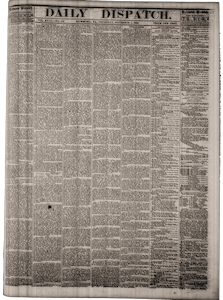
Daily Dispatch, Richmond VA, November 1, 1860.

It appears from returns in possession of the Auditor of Public Accounts that there are at the present time, in Virginia, 53,456 slave owners over 24 years of age. This is about one-fourth of the entire portion of the population who have arrived at years of maturity. The statement refutes the oft-repeated assertion of the Northern journals that a comparatively small proportion of the inhabitants of Virginia are interested in the institution of slavery. The irrepressible conflict will find the Old Dominion ready to defend slavery, in which she is so materially concerned.

0 comments

Larceny

News of the Day

Daily Dispatch, Richmond VA, November 1, 1860.

John, a slave, was arraigned before the Mayor yesterday, on a charge of stealing a piece of calico from his master, Joseph Rosenbaum. As John acknowledged the theft, but little time was occupied in disposing of his case, and he was sentenced to thirty lashes. The calico was left with Mary Cooper, a free negro woman, living in the basement of Ann Stevenson’s house, in “Solitude,” and she was punished for receiving the stolen goods. Virginia Turner and Harriet Hellum, two white women boarding with Ann Stevenson, were also up on the charge of receiving the calico, but the evidence being insufficient, they were set at liberty.

0 comments

Negro Suffrage to be Tested in Congress

News of the Day

Daily Dispatch, Richmond VA, November 1, 1860.

In the Sixteenth Congressional District of Ohio, Cutler, Republican, was elected by sixty-four majority over Jewett, Democrat. In a large number of precincts negroes voted the Republican ticket, and in consequence the Democratic candidate was defeated. The Marietta Republican gives the number of negroes voting in several precincts.–enough to decide the result — and intimates that the election will be contested. As the Constitution of the State provides that no one shall vote if he is not a white citizen of the United States, all persons of negro blood are disqualified from voting. This is a plain proposition, which the House of Representatives affirmed, in the contested election case of Vallandigbam vs.Campbell, two years ago!

0 comments

Gen. Houston and Mexico

News of the Day

Daily Dispatch, Richmond VA, November 1, 1860.

A letter from Texas, written by a Virginia officer of the K. G. C.’s to the Norfolk Argus, says that organization is laboring under unexpected difficulties effecting their plans, which, however, they expect to overcome. He adds:

Gen. Houston, with whom Gen. Bickley and myself had a conference this morning, not only assured us, but he promised the people of San Antonio, last week, in a public speech, that he should again take the held and cross the Rio Grande with the largest possible force of Texans and other volunteers against Vera Cruz.— Affairs on the orders in this State, in Mexico and throughout the South, are certainly assuming a critical position, and you need not be surprised to learn at any time within the next six weeks, or two months, that soldiers will swarming on both banks of the Rio Grande, struggling for the country which furnishes the only outlet to the institutions of the South.

0 comments

Killed

News of the Day

Daily Dispatch, Richmond VA, November 1, 1860.

James Brooks, baggage master on the Nashville and Chattanooga Railroad, was killed near Murfreesboro’, Tenn., on the 26th ult. He was standing on the top of a car as the train passed beneath a bridge, when his head struck the lower beam of the bridge, and he was instantly killed.

0 comments

Vigilance Committees

News of the Day
1860s newsprint

[Little Rock] Old-Line Democrat, November 1, 1860

State of Arkansas,}
County of Greene.}

On this 10th day of October, 1860, at a regular session of the County Court of Greene county, Arkansas, it was brought to the notice of the County Court, that the property of our citizens was daily endangered by the acts of unknown persons, who have in the course of a few weeks past, stolen and conveyed off a considerable amount of property in slaves and horses; as the officers of law, have as yet, been unable to discover traces of the persons who are committing said depredations—It is, therefore, recommended to the citizens of the different townships of this county, that they organize Vigilance committees to ferret out the perpetrators of these above cited acts, and also to detain and examine all suspicious characters, who may be going about without any ostensible business, and make them account for their presence among us; and that the following persons be requested to act and take the lead in the formation of said Vigilance committees:

Chalk Bluff Township.—A. M. Boyd, Wm. Liddell and H. W. Granade.
Concorde Township.—F. S. White, E. M. Allen and W. R. Kibler.
Bradshaw Township.—Henry Holcomb, Watson Forest and T. Dalton.
Union Township.—A. H. Davies, T. H. Wyse and J. B. Williamson.
St. Francis Township.—J. C. Graham, J. W. Knight and A. Strickland.
Cache Township.—G. B. Croft, J. R. Grambling and S. Willcoxon.
Salem Township.—J. Lamb, J. S. Anderson and Wm. C. Thompson.

And that the Little Rock Old-Line Democrat and Pocahontas Weekly Advertiser, be requested to publish the above Resolutions, and request other papers to copy; and that the same be spread upon the records of this court.

Thomas Clark, Judge,
True copy: Geo. Leech, As’t. J. W. Rogers, Assistant.

0 comments

The Secession of North Carolina

War of the Rebellion: from the Official Records of the Union and Confederate Armies and Navies

ADJUTANT-GENERAL’S OFFICE,
Washington, D. C., November 1, 1860.

Lieut. Gen. WINFIELD SCOTT, General-in-Chief U. S. Army:

GENERAL: The Secretary of War requests that you will please give the necessary orders for the company of Second Artillery now at Fort Hamilton, N. Y., to proceed to Fayetteville, N. C., and take post at the North Carolina Arsenal.

…………I am, sir, very respectfully, your obedient servant,

S. COOPER,
Adjutant-General.

0 comments

Operations in Charleston Harbor

War of the Rebellion: from the Official Records of the Union and Confederate Armies and Navies

ORDNANCE OFFICE, WASHINGTON, D. C.,
October 31, 1860.

Hon. J. B. FLOYD,
Secretary of War:

SIR: There is at Fort Sumter, Charleston Harbor, now in course of construction, besides a part of its armament, a considerable quantity of   ammunition, &c., and it has been suggested by the Engineer officer in charge of the work that a few small-arms placed in the hands of his workmen for the protection of the Government property there might be a useful precaution. If the measure should, on being communicated, meet with the concurrence of the commanding officer of the troops in the harbor, I recommend that I may be authorized to issue forty muskets to the Engineer officer.

With much respect,

H. K. CRAIG,
Colonel of Ordnance.


[Indorsement.]

WAR DEPARTMENT,
October 31, 1860.

Approved:

J. B. FLOYD,

Secretary of War.

0 comments

Emigration

News of the Day
1860s newsprint

Daily Advocate  [Baton Rouge, LA], October 29, 1860

Scores of Texas and North Louisiana bound emigrants now line our thoroughfares. A majority of those passing through this place we observe are of the wealthy class, who having to abandon the old and worn out lands of Alabama, Georgia and the Carolina’s, are seeking new homes in Texas and the northern portion of our State. If provender required by travelers is as scarce through the country as at this point, we would advise them to take things off of wheels until there is a moving of the waters.—Harrisonburg Independent.

0 comments

Letter to George D. Prentice

Civil War Day-by-Day

(Private and confidential.)

SPRINGFIELD, ILLINOIS, October 29, 1860.

My dear Sir: Yours of the 26th is just received. Your suggestion that I in a certain event shall write a letter setting forth my conservative views and intentions is certainly a very worthy one. But would it do any good? If I were to labor a month I could not express my conservative views and intentions more clearly and strongly than they are expressed in our platform and in my many speeches already in print and before the public. And yet even you, who do occasionally speak of me in terms of personal kindness, give no prominence to these oft-repeated expressions of conservative views and intentions, but busy yourself with appeals to all conservative men to vote for Douglas,—to vote any way which can possibly defeat me,—thus impressing your readers that you think I am the very worst man living. If what I have already said has failed to convince you, no repetition of it would convince you. The writing of your letter, now before me, gives assurance that you would publish such a letter from me as you suggest; but, till now, what reason had I to suppose the “Louisville Journal,” even, would publish a repetition of that which is already at its command, and which it does not press upon the public attention?

And now, my friend,—for such I esteem you personally,—do not misunderstand me. I have not decided that I will not do substantially what you suggest. I will not forbear from doing so merely on punctilio and pluck. If I do finally abstain, it will be because of apprehension that it would do harm. For the good men of the South—and I regard the majority of them as such—I have no objection to repeat seventy and seven times. But I have bad men to deal with, both North and South; men who are eager for something new upon which to base new misrepresentations; men who would like to frighten me, or at least to fix upon me the character of timidity and cowardice. They would seize upon almost any letter I could write as being an “awful coming down.” I intend keeping my eye upon these gentlemen, and to not unnecessarily put any weapons in their hands.

Yours truly,                                                                                                                               A. LINCOLN.

[The following indorsement appears on the back:]

(Confidential.)

The within letter was written on the day of its date, and on reflection withheld till now. It expresses the views I still entertain.

A. LINCOLN.

0 comments

From John D. Defrees to Abraham Lincoln

The Abraham Lincoln Papers at the Library of Congress

City of New York.
Astor House, Oct 28, 1860

Dear Sir:

John D. DefreesI am here on business, but shall be at home in a few days.

Inclosed I send you a letter written by me and the comments upon it by the Herald of this city. In its endeavor to make something out of it the Herald assigns to me the position of a “confidential friend” to you.—There is nothing in the letter intimating that such a relation exists between us, and, certainly, no act or word of mine, on any occasion, could give rise to such an impression. I write you this for fear that you might, possibly, think I had said or done something to create such an impression, trusting believing, at the same time, that your acquaintance with me is sufficient to answer you that I could not stoop to an such an act.

The letter itself is but a plain statement of the “Republican Gospel” as I understand it; and, I think it will meet the approval of the Bishops of our Church everywhere!

You notice that Cobb1 and others have been here to try to create a panic among the money capitalists so as to affect the election in this State! It will give us strength instead of weakness. Our majority in this State will be over 80.000! In Pennsylvania it will be over 50.000! Our State will be over 20.000. In short we will have all the free States except possibly California.

I saw Wigfall,2 Senator from Texas, yesterday. He said that S. Carolina, Alabama & Mississippi would be out of the Union in less than 30 days! He is as rabid as a lunatic. They will cool off before the 4th of March next.

Yours truly,

Jno. D. Defrees


¹ Howell Cobb, a prominent Georgia politician, was a member of the U.S. House of Representaives (1845-51, 1855-57), governor of his state (1853-55) and Secretary of the Treasury in James Buchanan’s cabinet (1857-60). Though he favored sectional compromise and the preservation of the Union during the 1850s, Cobb became an advocate of secession after Lincoln’s election and resigned from his cabinet post a few days after issuing a public letter in which he urged secession. Cobb helped organize the Confederate government and served in the Confederate army, where he rose to the rank of major general.

² Louis Wigfall had been an advocate of secession since 1844 and moved from his native South Carolina to Texas in 1848. Wigfall was active in state politics and elected to the U.S. Senate in 1859, where he advocated a federal slave code for the territories and supported Breckinridge in the 1860 presidential campaign. During the Civil War, Wigfall attained the rank of brigadier general in the Confederate army and served in the Confederate Senate.

0 comments

Disgraceful Slur

News of the Day
1860s newsprint

The Constitutional [Alexandria, LA], October 27, 1860

 The most disgraceful slur upon the poor man appeared in the Breckinridge torch-light procession at Alexandria on the night of the 13th inst. The transparency bore upon it, a lean haggard individual with his clothes worn thread bare and torn, with his rifle, leading a dog of lean and miserable appearance, with the motto, “a DOUGLAS VOTER.” Are the poor men of our country to have slurs of this kind cast upon them, because they see proper to vote for the man of their choice, by a set of office holders who have been living for years off of the poor man’s hard earnings.

The poor man has rights, and we know they dare maintain them. We wish that every man in the parish could have seen it. They would not support men who would dare attempt to cast redicule upon them on account of their poverty.

0 comments

An Editor’s Hardest Work

News of the Day
1860s newsprint

The Constitutional [Alexandria, LA], October 27, 1860,

Every one who has had any experience in the newspaper business will heartily concur in the views presented by a Virginia paper, in the following article:

“Many people estimate the ability of a newspaper and the industry and talent of the editor, by the quantity of editorial matter it contains. It is comparatively an easy task for a frothy writer to pour out daily columns of words. His ideas may flow in one everlasting flood, and yet his paper be a meagre and poor concern. But what is the labor and toil of such a man, to that imposedon the judicious, informed editor, who exercises his vocation with an hourly consciousness of its responsibilities and duties to devote himself to the conduct of his paper with the same care and assiduity that a sensible lawyer bestows upon a suit, or a humane physician to a patient, without regard to show or display. Indeed it is but a small portion of the work. The industry is not even shown there. The care, the time employed in selecting is far the most important.

0 comments

K. G. C.

News of the Day

The Ranchero [Corpus Christi, TX], October 27, 1860

The arrival and return of squads of men to and from this point, who belong to this mysterious order, and the apparent mismanagement on the part of their leaders, has been a matter of much comment in our community. The knights who arrived here seemed to be in as much need of light upon the subject as ourselves. The following letter written by Gen. Bickley, dated Austin, Oct. 9th, and published in the Galveston News of the 20th, may serve to partially enlighten our readers upon the subject:

I regret very much that it was not in my power to remain long enough in Galveston to address your citizens in behalf of the K. G. C. I desired this, because I feel perfectly confident that the principles involved in the success of this organization have not been fully appreciated in Southern Texas, or I should not have met with so much opposition from a portion of the press.

 The obstacles which I have had to overcome have been greater than my most sanguine friends could have anticipated. For instance—many of the most prominent men in the organization believe that no attempt should be made until the first of December, at which time we may be more needed at home than abroad. Again, it has been reported that no provisions can be had in Texas to sustain our men while organizing, and this has rendered the men timid about remaining upon the frontier long enough to collect our forces. Many sanguine friends have gone to the Rio Grande without being duly prepared and these must necessarily become discouraged. To procure the arms and necessary materials with which to open the campaign, I have had to traverse every section of the Southern States—to combat misrepresentation, and build up an influence for the order, before anything could be done. This work has fallen altogether on me. Besides, the recent failure of Gen. Walker in his expedition to Honduras, and the silence of our Government in reference to the intervention of the British, has caused many to fear that our task would be more difficult than had been previously supposed. The difficulty of transporting large quantities of materials and troops across the country, and the approaching Presidential contest, have all shown how necessary to success is the element of time. Arms that ought to have been at our rendezvous have not arrived, and agents have to be sent in search of them. Corn must be shipped from the Ohio river and the force in this State simultaneously assembled. All this is the work of time. To throw ourselves in a body of 400 or 500 men only across the river would insure disaster. This will not do—if I cross, it must be with every element of success in my hands, viz: men, arms, and material. We shall cross at the earliest possible moment, and I only ask our friends and the press to give us that assistance which we ought to expect of them. Give us a few weeks, and all will come out right. I shall thoroughly canvass the State, and then, if Texas refuses to assist me, I cannot succeed, for I am only one man, and am strong only as I am surrounded by strong men.

 The Matamoros correspondent of the N. O. Crescent, seems to take a vice versa view of this would be warlike order. He writes:

Talking of war puts me on my guard to caution all you folks not to be caught in Gen. Bickley’s new humbug—the Golden Circle. The authorities here do not know hide nor hair of the matter, and it will meet with resistance from all classes. What foundation Gen. Bickley has for his movement is past my comprehension, for I know that he is not authorized to raise men on behalf of the Mexican Government. I think that all engaged in it are on a fool’s errand, and that Gen. Bickley is only manoeuvering  the public out of its money.

0 comments

Driving Off the Mexicans, Rumors

News of the Day

The Ranchero [Corpus Christi, TX], October 27, 1860

There are many rumors afloat in regard to there being a large body of armed men, mostly from other counties, in the upper portion of this, with the avowed intention of running off every Mexican inhabitant. We hope the rumor may prove untrue, although it is founded on almost positive authority. If it is true, it is a species of high-handed agrarianism, which must inevitably meet with the hearty condemnation of every citizen who loves his country and her laws; and we would remind those who are engaged in this unlawful business, that their acts are in defiance of the very letter of the law, to which all should submit, and to which every citizen owes allegiance.

From what we can learn, this sad state of affairs is brought about by representations being made of the menacing attitude of certain parties, in which there is no truth. We hope the sober second thought will bring the conclusion that it is better to be vigilant under the law as a standard of morals, than to be vigilant under “higher law” with no such standard. Drive off the Mexicans and the trade with Mexico will be stopped, which will destroy the commercial interests of this place, as well as the cotton interests of this county, as our planters have to depend principally upon Mexican labor.

0 comments

Discontinuance of the Pony Express

News of the Day

Daily Times [Leavenworth, KS], October 27, 1860

California papers inform us that, owing to the rearrangement of the Salt Lake and Denver mails, the famous pony express has been placed upon the retired list. The state of mind of the pony, upon receiving this cheering intelligence may be more easily imagined than described. Our special correspondent in that section of the country gives us a few interesting particulars in connection with the subject. The news was at first received by the Pony with an incredulous horse-laugh, but no sooner was he assured of the truth of it than, kicking his shoes in the air, he abandoned himself to a fantasia of festive dances, in which the galop, of course, was a leading feature. He has since issued invitations to a great many fillies and colts of his acquaintance to a hay dansante, a provocation to which none of them are likely to say Neigh.

0 comments

Anti-Wide Awakes

News of the Day
1860s newsprint

Indianola [TX] Courier, October 27, 1860
Correspondence of the Crisis.]

Anti-Wide Awakes.

 Saluria, Texas, Oct. 10, 1860.

 Messrs. Editors:–Feeling a deep and abiding interest in the wellbeing of the South and its institutions, and the perpetuity of the Union—hallowed by so many glorious achievements— founded upon integrity, honor, and a just regard to the equality and rights of the several States constituting it, and the feelings and prosperity of their citizens; entertaining an abhorrence of the rapine, murder, insurrection, pollution and incendiarism which have been plotted by the deluded and vicious of the North, against the chastity, laws and prosperity of innocent and unoffending citizens of the South; and regarding with irrepressible indignation and contempt, a threat conveyed in a speech recently delivered by W. H. Seward, of N. Y., in which he exults in the early advent of the “irrepressible conflict,” (of which he is the arch instigator,) which he declares to be already on hand; congratulates the “Wide-Awakes” upon their timely organization, and exhorts them to maintain it until after the election; and believing that Lincoln is the chosen champion for this conflict and this organized Northern canaille for “repressing” and degrading the South; the undersigned respectfully submits to his fellow-citizens of Texas, the following propositions, commending them to the true men of the North and South.

1st. That in the event of Lincoln’s election as President of the United States, in November next, the undersigned will contribute one thousand dollars towards arming and equipping the first company of anti-Wide Awakes, of one hundred men, that may be raised, officered and uniformed, in the State of Texas.

2d. That he will give said company, or any other of like character that may be raised in Texas, one hundred dollars each, not exceeding ten in number, who may expel from this State any appointees, who may accept office under Lincoln. Believing them to be the most dangerous enemies to the peace, prosperity and continued Union of the States.

The above propositions are separate and distinct, and I ask you to retain this, my obligation, and deliver it to the company or companies entitled to its benefits and who claim its execution. To the fulfillment of which I hereby pledge my sacred honor; and solemnly appeal to my fellow citizens, whether the times do not call for action, not resolves, when four hundred thousand Northern bayonets are bristling, ready to be plunged into the best blood of the South?

 Hugh W. Hawes.

0 comments

Troops to Guard N. Carolina Arsenal

War of the Rebellion: from the Official Records of the Union and Confederate Armies and Navies

WAR DEPARTMENT, October 27, 1860.

Hon. ARCHIBALD MCLEAN, Mayor, Fayetteville, N.C.

SIR: I have received your communication of the 25th instant at the hands of Mr. Fuller, and at once reply by saying that the guard you desire shall be furnished as soon as it can be done. There may be delay in meeting your wishes in consequence of the difficulty of finding troops that are available at once.

Very respectfully, your obedient servant

JOHN B. FLOYD,
Secretary of War.

0 comments

Canvassing for a Vote, a painting and John Beauchamp Jones

Miscellaneous document sources

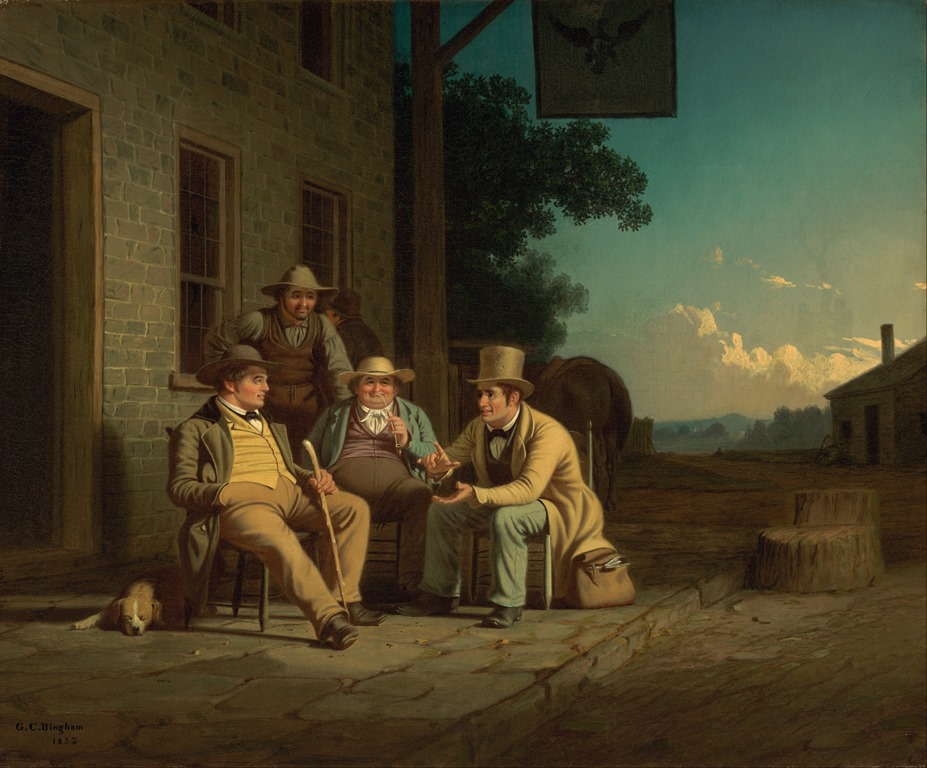
George Caleb Bingham - Canvassing for a VoteGeorge Caleb Bingham – Canvassing for a Vote

“George Caleb Bingham1 was active in Missouri politics for most of his adult life. Canvassing for a Vote reflects his full faith in the democratic system, even as he recognized its shortcomings. Set in the artist’s hometown of Arrow Rock, Missouri, the composition shows a politician and trio of potential voters in a solid pyramid at the center of the painting, representing the campaign process at work. Bingham also suggests some of the problems of 1850s American politics. A sleeping dog and a man whose back is turned to the solicitation may imply political disenfranchisement and disinterested citizens. Bingham may also be commenting on the dubious character of certain politicians by placing the horse’s rump in line with the canvasser’s head.”

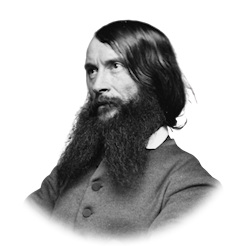
John Beauchamp Jones in George Caleb Bingham's 'Canvassing for a Vote'

John Beauchamp Jones in George Caleb Bingham’s “Canvassing for a Vote”

In Arrow Rock, Bingham became friends with John Beauchamp Jones, a business owner who would later become a newspaper publisher, novelist, and the author of A Rebel War Clerk’s Diary at the Confederate States Capital2. Bingham is featured in Jones’s novel,  The Life and Adventures of a Country Merchant  (1854).  Bingham may have reciprocated. According to Robin Grey3, in Bingham’s famous election “genre” studies, Jones is the seated figure on the left in the painting Canvassing for a Vote (1851—52:

“Bingham, in fact, is featured as an artist and political stump
speaker in (John Beauchamp) Jones’s novel The Life and Adventures of a Country Merchant  (1854). Reciprocally, Bingham painted scenes from their lives in Missouri in his famous  studies called the Election Series; Stump Speaking (1850 – 51);  Canvassing for a Vote (1851 – 52), in which Jones is depicted (the  seated  figure on the left in the painting accompanying this essay…”

“This is my own attribution based on photographs of J. B. Jones from various archives. Although other figures in the painting have been identified, this figure has not. It is noted, moreover, in Paul C. Nagel’s George Caleb Bingham that Jones’s autobiographical character Nap Wax (in Life and Adventures of a Country Merchant) was told that every citizen in the town was likely to be in the picture or in the Election Series:  ‘Me, too, with my pot-belly. I’ve seen the first sketch of it, and it ’ll be a famous picture . . . better than an advertisement.'”


  1. From Canvassing for a Vote – 1852. (Google Art Project)
  2. John Beauchamp Jones, author profile on this site.
  3. Edgar Allan Poe, John Beauchamp Jones, and George Caleb Bingham: Southern Patronage and the Road Not Taken by Robin Grey.
0 comments

Letter to Major David Hunter

Civil War Day-by-Day

(Private and confidential.)

SPRINGFIELD, ILLINOIS, October 26, 1860.

My dear Sir: Your very kind letter of the 10th was duly received, for which please accept my thanks. I have another letter, from a writer unknown to me, saying the officers of the army at Fort Kearny have determined, in case of Republican success at the approaching presidential election, to take themselves, and the arms at that point, South, for the purpose of resistance to the government. While I think there are many chances to one that this is a humbug, it occurs to me that any real movement of this sort in the army would leak out and become known to you. In such case, if it would not be unprofessional or dishonorable (of which you are to be judge), I shall be much obliged if you will apprise me of it.                                                                 Yours very truly,

A. LINCOLN.

0 comments

Request for Troops to Protect a North Carolina Arsenal

War of the Rebellion: from the Official Records of the Union and Confederate Armies and Navies

TOWN OF FAYETTEVILLE, N. C.,
October 25,   1860.

Hon. J. B. Floyd, Secretary of War

SIR : In accordance with their wishes I indorse the request submitted to me by a number of our most respectable citizens, setting forth their reasons for asking that troops may be put in charge of the United States Arsenal at this place. Concurring generally in the view that wherever there is a large depository of arms and munition there should be adequate force for their protection, I respectfully submit the petition for your consideration. I may mention that the subject has been presented to the worthy officer in command, and I beg to refer you to the inclosed copies of the correspondence between us.
Hoping the subject may command your early attention,

……… I am, very respectfully, your obedient servant,

ARCHIBALD McLEAN, Mayor.

0 comments

Lincoln at Home

Library of Congress

Lincoln at Home in Springfield Ill with his youngest two sons
Lincoln at Home in Springfield Ill with his youngest two sons.

This photo by John Adams Whipple of Abraham Lincoln and his home was taken, probably in 1860, when he still lived in Springfield, Illinois.  A cropped portion of the image shows a clean shaven Lincoln, whose beard was full developed by the time he left Springfield in February 1861.

Cropped portion of Lincoln at Home in Springfield Ill with his youngest two sons

The presidential campaign of 1860 saw four major candidates vying for the presidency.  The oldest party, the Democrats, had literally split over the issue of slavery in the territories, with Stephen Douglas eventually gaining the party nomination and furious Southern delegates reconvening, including many who had boycotted the convention, to nominate John C. Breckinridge as the candidate of the Southern Democratic Party for the presidency. The Republicans later nominated Lincoln and a third group of political leaders formed the Constitutional Union Party, nominating John Bell of Tennessee.

Political tradition held that the candidate for president stayed off of the public stump.  Lincoln stayed home in Springfield receiving delegations who came to pay their respect.  Breckinridge gave only one speech and Bell said nothing, but Douglas broke with tradition and campaigned all over the nation. Each party sent hundreds of activists out on the campaign trail.

0 comments

Kansas Drought and Famine

Miscellaneous document sources

Washington, October 24, 1860.

Hon. John B. Floyd,

Secretary of War:

Sir : Being about to furnish the President with some statistics in reference to the unprecedented drought which has afflicted Kansas Territory for more than fourteen months, I have to request that you will favor me with replies to the following queries, viz:

1st. What amount of rain has fallen in that Territory during the last fourteen months?

2d. What has been the state of the atmosphere ?

Together with such comments as you may deem proper to submit as to the causes of the existing famine in said Territory.

I have the honor to be, sir, very respectfully,

THADDEUS HYATT.


0 comments

An Actor Shot, Mr. J. W. Booth

News of the Day
1860s newsprint

Daily Gazette & Comet [Baton Rouge, LA], October 24, 1860

The Columbus (Ga.) Sun announces that Mr. J. W. Booth the young tragedian, connected with the theatrical company now performing there, was seriously wounded, a few nights since, by the accidental discharge of a pistol in the hands of Mr. Canning. He (Mr. Canning) was loading the pistol, and when pressing on the cap it discharged, the contents entering Mr. Booth’s thigh, causing a severe wound. Fortunately the ball took a downward direction and escaped the important vessels lying near its course. The accident will disable him for some time.


According to the History Channel, John Wilkes Booth “accidentally shot himself in the thigh with a co-star’s pistol.”

0 comments

The Putnam Phalanx

Frank Leslie’s Illustrated Newspaper

Quasi-Military Group, from an October 24, 1860, Hartford, Connecticut Parade.

as presented in Frank Leslie’s Illustrated Newspaper, November 10, 1860.

The Putnam Phalanx1, as many of our readers are aware, is a military organization wearing the old Continental uniform. It was founded in August, 1858, when a number of the most respectable citizens of Hartford, Connecticut, being desirous of celebrating the return of their fellow-townsman, Hon. Horatio Seymour, from his mission to Russia, determined to organize a volunteer corps and parade in the uniform of the Revolution.

On the 22d day of December, 1858, the Phalanx made its first parade, on the occasion of the presentation to it of a handsome banner, bearing a portrait of General Putnam, adorned with silk and gold, and surmounted by a staff wrought from the Charter Oak. This was given.to the company—with an eloquent speech—by General James T. Pratt, of Rocky Hill, on behalf of the heirs of Putnam. Speeches by several orators of great ability—among them Judge Stuart and a banquet closed the festivity.

On October 4, 1859, the Phalanx! started to make a pilgrimage to Bunker Hill, Boston, Charlestown, and and Providence. A full account of the incidents of this journey, their welcome by Mayor Lincoln, of Boston, the numerous hospitalities extended to them by the military companies of Boston, the reviews and parades, their visit to Bunker Hill, Charlestown and Providence, the many speeches and poems incident to the ceremonies, and finally their return home. have all been fully published in a book, which is, we may say, one of the most exquisite specimens of typography ever published in this country. The work in question, printed by Case, Lockwood & Co., of Hartford, contains a fine steel portrait of General Putnam, and a beautiful poem on that hero, by Mrs. L. H..Sigourney.

The discipline and high character in every respect of the Putnam Phalanx are celebrated over the country. We are pleased to have an opportunity of making them known to our readers.

The present officers of the Putnam Phalanx are (intentionally omitted)

October 24, 1860, also witnessed a brilliant parade. At one o’clock they proceeded to the South Green of Hartford, where they received the Colt Guard, Company B., and escorted them to the steamer which the Guard took en route for New York. At three o’clock the battalion was reviewed by Lieutenant-Governor Catlin, at the State House.

In its comments on this parade of the Phalanx, the Hartford Courant remarks that “An artist, Mr. Davis, of Frank Leslie’s paper, who followed the Prince during his entire travels on this Continent, was present, and took several views of the Phalanx, with a view of illustrating in Leslie’s paper the weightier affairs of this city. It is quite a feather in the caps of the battalion that a compliment like this should be tendered them from the metropolis.”


  1. The Putnam Phalanx of Hartford, Connecticut, United States, was a quasi-military unit, originally organized as ceremonial honor guard in 1858 and functioned as a social club, a social-patriotic-military organization. While  it had the outward appearance of a military unit, such as the wearing of military uniforms, use of military language and address, drilling and marching; it never fought as a unit of the armed forces, and had no battle history as a unit
0 comments